
Review · MOUNT FUJI TOURS
Mount Fuji Adventures Private English Tour With Hotel Pick Up
Fuji in a day, minus the chaos. This private tour is interesting because hotel pickup simplifies your biggest problem in Tokyo, getting out of the city without juggling trains. I also like the flexible route idea, since your driver can help shape the day around weather and timing, plus the stops are classic Mount Fuji hits. The main drawback to consider is that visibility can be hit or miss, and reaching the Mount Fuji 5th Station depends on van access and conditions.
You get a private vehicle, not a cattle-car bus, so you can breathe a little during the long drive. Many groups also like the small comfort extras like Wi-Fi in the vehicle, which makes the ride feel less like a commute and more like the day starts on a good note.
This is a strong choice if you want Mount Fuji and the Fuji Five Lakes area with minimal planning, and you value English support from your driver. It is less ideal if you want total DIY freedom and do not care about paying for convenience.
Key things to know before you go
- Hotel pickup and a private van save you time and stress compared with public transport
- Mount Fuji 5th Station is conditional, depending on weather and van access
- You get multiple iconic viewpoints in one day, including Chureito Pagoda, Lake Kawaguchiko, Oishi Park, and Oshino Hakkai
- Lake Kawaguchiko optional cruise costs extra, so budget for what you want to do
- Guides often help with timing, including suggestions to start early to dodge traffic
- Bring patience for crowds and weather since Fuji area traffic and visibility can change fast
Why this private Fuji and Hakone plan feels easier than DIY
Tokyo to Mount Fuji and Hakone can be a long day even when you are good at trains. With this setup, you skip the mental load of transfers and schedules. Your driver handles the driving, the tolls and gas are included, and you have one point of contact for the day.
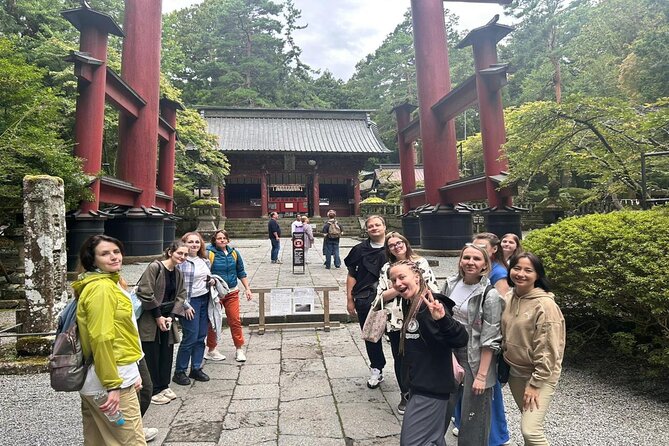
I especially like how the route is built around places that give you different Mount Fuji angles. You do not only look at Fuji from one viewpoint. You get a shrine-and-pagoda scene near Arakura Sengen area, then Lake Kawaguchiko for a wider view, then Oishi Park for that postcard slope-and-lake perspective, and finally Oshino Hakkai, which slows the whole day down in a different way.
The value idea here is simple: when you add up the cost of transport, time, and hassle, a private van for up to five people can start to look very reasonable. At $474.22 per group, splitting among a full group makes it far easier to justify than solo travel.
You can also read our reviews of more private tours in Tokyo
Timing, traffic, and why starting early matters here
The drive from Tokyo is about two hours each way, and the rest of the day is packed. That makes early timing a big deal, because the Fuji area can get crowded and road flow can change quickly.
You will see patterns in how guides run the day: many drivers suggest an earlier start, commonly around 6:30 a.m., to reduce traffic and improve your odds of clearer skies. That does not guarantee visibility, but it often gives you more flexible time buffers at the stops.
A practical tip: treat the day like a photo and sightseeing window, not a strict check-list. When your driver asks what you care about most, answer plainly. If Mount Fuji views are your priority, say so early, because that can affect the order and how long you linger at each viewpoint.
The private ride from Tokyo, plus what you should expect in the vehicle
This is not a guided walking tour in the city. This is a private road trip with planned stops, and the comfort of the vehicle matters more than you might think when you are sitting for long chunks of time.
You can expect a comfortable private vehicle and a private driver, and the tour includes highway tolls and gas. The day is also designed around reducing fatigue from logistics, so you do not need to worry about maps or station navigation during the hardest part of the journey.
One more nice detail: Wi-Fi access in the vehicle is listed, so you can catch messages, update plans, or handle the little things that pile up when you are out all day.
Mount Fuji 5th Station, what you get and why it can change
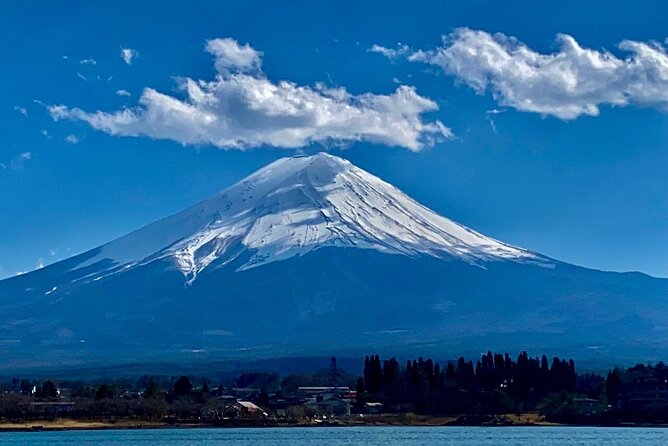
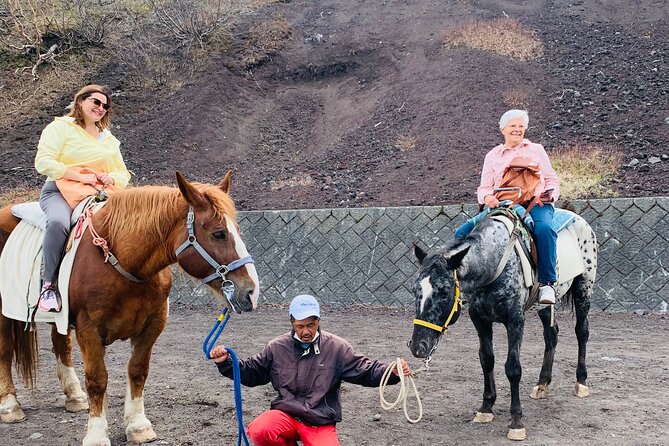
The Mount Fuji 5th Station stop is the mountain moment. Even if you are not climbing, it is where the setting feels real and steep and high-elevation. It is also a popular starting point for climbers, so you get energy around you even when you are just there to look.
There is one key reality check: the 5th Station visit is only if it is open for vans and if weather permits. That means you should be prepared for the possibility of different decisions on the day if conditions are poor.
Also, the 5th Station admission fee is not included, listed as ¥2,100 per booking. If this stop is your must-do, budget for it and do not assume it is guaranteed.
How to make this stop work for you:
- Wear layers, since conditions around Fuji can feel colder and windier than Tokyo.
- Keep your camera ready, because the lighting can shift fast when clouds move.
- Be ready to adjust if your driver says visibility is not great at first glance, since the Fuji area often changes quickly.
Chureito Pagoda and Arakura Sengen area: the classic photo setup
After the mountain drive, you hit one of Japan’s most recognizable Fuji compositions: Chureito Pagoda. It sits near the Arakura Sengen Shrine area, and it was built as a memorial in 1963. That is a fun detail to keep in mind while you take photos, because it adds meaning beyond the postcard look.
This stop is quick, about 30 minutes. Quick can be good. You get in, take your shots, and keep moving before the light changes or crowds thicken.
Near the pagoda area, the day also includes Arakura Fuji Sengen Shrine for about one hour. This matters because it gives you more than one type of experience. Chureito Pagoda is the view and the angles. The shrine stop adds atmosphere, walking space, and a more grounded feel among trees and paths.
What can trip you up:
- Since the pagoda and shrine are close and scenic, the area can get busy. If you want that clean line-of-sight photo, pay attention to timing and position, and be ready to share space with other photographers.






Lake Kawaguchiko: the calm middle of a long day
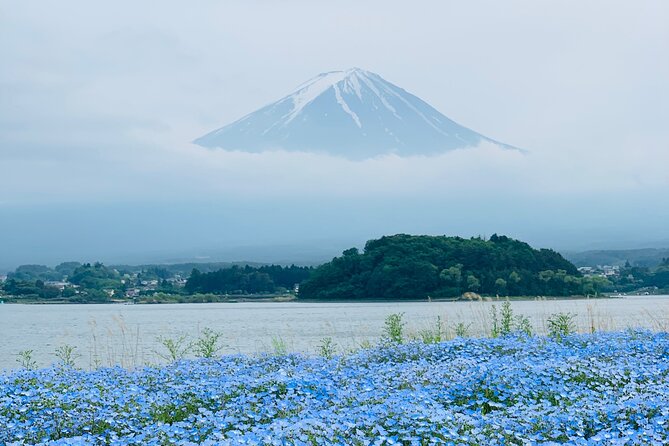
Lake Kawaguchiko is one of the Fuji Five Lakes and usually the place where people slow down. You get about one hour here, which is enough for a leisurely stroll and to enjoy the lake-and-mountain framing.
Many groups use Lake Kawaguchiko for two styles of time:
- Walk and watch the water and sky.
- Add one activity if you want a little motion and a different perspective.
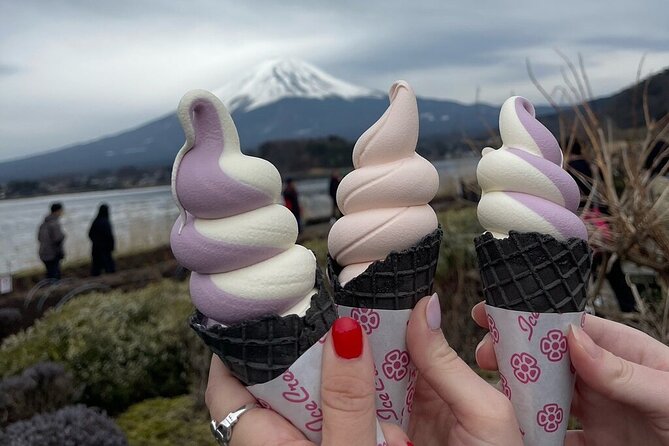
You can rent boats or do activities, but the cruise ride is listed as an extra cost: ¥900 per person. That means you should decide in advance what you want to buy your time with. If you want a seated, scenic option, the cruise can be worth it. If you prefer maximum walking and fewer ticket lines, skip it.
Budget note: meals are not included in the tour price either. The lake stop is often when you will be thinking about food, so plan on buying lunch or snacks in the area.
Oishi Park: where you want to spend your best photo minutes
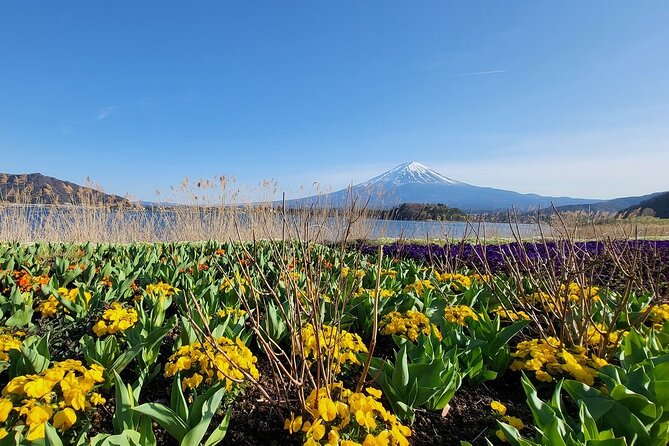
Oishi Park is a short stop at about 30 minutes, but it is one of the best places to catch Fuji and the lake together. It is known as a popular photo spot, and it is easy to understand why: you get wide-angle views without needing a lot of hiking gear or energy.
This is also where your pacing matters. If the sky is clear, you can lose time chasing the perfect spot. If clouds roll in, you do not want to spend too long waiting in one spot. Ask your driver how the view is trending and what they recommend for maximizing your odds.
A good strategy:
- Spend the first few minutes getting oriented.
- Take your main shots early.
- If Fuji shows up sharply, keep moving slightly for different framing rather than standing in one place for the whole time.
Oshino Hakkai: ponds, fish, and a slower, human scale
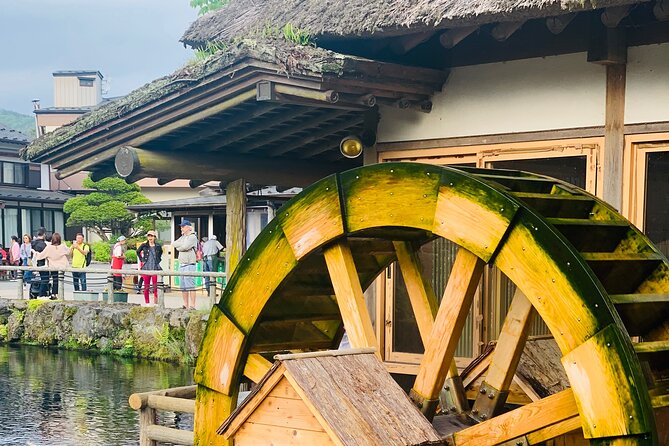
Oshino Hakkai is the most relaxing stop on the list for many people, partly because it is about old village charm and fresh springs. The highlight is the eight ponds. They are known for changing colors and for having fish inside, which makes the scene feel lively even without a view of Fuji at every moment.
You also get time for a museum inside the village. That adds texture to the day, because it balances the more scenic, viewpoint-heavy parts of the itinerary.
This stop is about 30 minutes. That is enough to walk the pond area and soak up the atmosphere, but it is not enough to treat it like a full museum day. If you love detail, pick one direction, scan the ponds, and then decide if you want to linger at the museum or keep moving.
Practical tip: bring a little cash for snacks or small purchases. Meals are not included, and the village area can be a convenient place to grab something light.
Hakone time and how flexibility actually helps on a full day
The tour description includes Hakone and more, but the exact Hakone sights are not fully spelled out in the summary you have. What is clear is that you have a private driver and flexibility to customize the route.
That flexibility is not just a nice marketing line. On a long day, it is how you handle the biggest variables:
- traffic patterns
- weather and fog
- which viewpoints are working at that moment
In real terms, this means you should communicate what you want from Hakone. Is it about scenery, a certain viewpoint, shopping time, or a photo stop? Tell your driver early, and do not wait until the day gets late.
One more heads-up from common on-the-day realities: if your route includes optional transport like a ropeway or other paid add-on, check how much time it consumes. Long lines can eat into your Fuji view time, and you might feel time pressured at the end of the day.
Budget and value: what your $474.22 group price really covers
Here is the value picture in plain terms.
Included:
- private transportation (private vehicle and private driver)
- highway tolls and gas
- comfortable vehicle
- Wi-Fi access in the vehicle
- mobile ticket
Not included:
- Mount Fuji 5th Station entry fee, ¥2,100 per booking
- Lake Kawaguchiko cruise ride, ¥900 per person (optional)
- meals and drinks
Duration is about 8 to 10 hours. That makes this closer to a full day plan than a quick excursion. If you are deciding whether it is worth it, think about your alternatives:
- Public transport can work, but you will spend time transferring and you lose spontaneity.
- Taxis can get expensive fast, especially for groups.
So this tour makes the most sense for groups of two to five who want one driver, less planning, and a smoother ride in exchange for paying a day-tour premium.
If you travel as a solo person, it can still be great for convenience, but you might compare the per-person cost against DIY if you enjoy planning.
Weather and visibility: how to set expectations without ruining your day
Mount Fuji is famous for being photogenic. It is also famous for being stubborn. Clouds, fog, and low visibility can change quickly, and the 5th Station stop depends on weather and van access.
That is why I think flexibility is a must-have feature in this category. If your driver has the ability to adapt the order or lean into other stops when the mountain is not visible right away, you protect your day from becoming a disappointment.
Still, do not go into it with the belief that you will see Fuji from every stop. Instead, aim for a better mindset:
- Expect at least one strong Fuji moment if conditions cooperate.
- Accept that some stops may feel more about place than mountain visibility.
- Use the early start and smart pacing as your best tools.
If visibility is poor at first, ask your driver what the plan is. Your guide should be able to explain tradeoffs like spending more time near viewpoints versus moving on. The best outcomes happen when you communicate your priorities and stay flexible.
Who should book this tour, and who might prefer another style
I recommend this tour most for:
- small groups who want private transport without driving themselves
- families who need simpler logistics and a consistent schedule
- travelers who care about getting to Mount Fuji without train stress
- photographers who want multiple viewpoint stops in one day
I would think twice if:
- you hate paying for optional add-ons like the Lake Kawaguchiko cruise
- you want a deep Hakone itinerary with specific attractions and lots of time to wander
- you only want the 5th Station experience and nothing else, because the stop is conditional
Should you book this Mount Fuji and Hakone private tour?
Book it if you want the classic Fuji hits with the least friction. You get hotel pickup, a private driver, Wi-Fi on the road, and multiple stops that cover both big views and calmer Fuji-area culture. At $474.22 per group up to five, it often pencils out well when shared.
I would not book it blindly if you treat perfect mountain visibility as guaranteed. The 5th Station depends on conditions, and weather can change your day. If you can handle a plan that adapts, this is one of the easiest ways to make Fuji happen within a single Tokyo-based day.
If you go, do two things that improve your odds fast: start early when possible, and tell your driver what matters most to you so the day stays focused.
FAQ
Is hotel pickup included for this private Mount Fuji and Hakone tour?
Yes. Pickup from your hotel or specified pickup location is offered, and it is designed to make the trip easier than public transport.
How long is the tour from Tokyo to Mount Fuji and back?
The tour runs about 8 to 10 hours total, with roughly two hours driving each way between Tokyo and the Fuji area.
Do I need to pay extra for the Mount Fuji 5th Station?
Yes. The 5th Station entry fee is listed as ¥2,100 per booking, and it is not included.
Is there Wi-Fi during the drive?
Yes. Wi-Fi access in the vehicle is included.
Is Lake Kawaguchiko cruise included in the price?
No. The cruise ride is listed as an extra cost of ¥900 per person.
Are meals included on this tour?
No. Meals and drinks are not included.
Does the tour depend on the weather for visiting the 5th Station?
Yes. The plan includes going to the 5th Station if it is open for vans and if weather permits.
What language support do I get?
The tour is described as a private English tour.
How many people are in a group for this private tour?
It is priced per group up to five people, and only your group participates.
More Private Tours in Tokyo
More Tours in Tokyo

More Tour Reviews in Tokyo
Not for you? Here's more nearby things to do in Tokyo we have reviewed












Mount Fuji Tours, side by side.
 ★ 5.0Mt Fuji and Hakone 1-Day Bus Tour Return by Bullet TrainFrom $16326,383 reviews
 ★ 4.0Mt Fuji & Hakone Cruise, Drum Show Bullet Train 1 Day from TokyoFrom $1497,413 reviews
 ★ 4.4Tokyo Mt Fuji 5th St & Hakone Cruise Bus Tour w/Bullet TrainFrom $1545,024 reviews
 ★ 4.5From Tokyo: Mount Fuji Full-Day Sightseeing TripFrom $684,970 reviews
 ★ 4.7Mt. Fuji Tour, Hakone Ropeway, Owakudani, Lake AshiFrom $544,002 reviews
 ★ 4.2Mt. Fuji 5th Station & Hakone Cruise 1-Day Bus TourFrom $1292,381 reviews
 ★ 4.7Mt Fuji Top 5 Spots Day Tour: Arakurayama Park,Oshino HakkaiFrom $532,066 reviews
 ★ 5.0Private Tour to Mt. Fuji and Hakone (Fully Licenced Operator)From $4971,910 reviews