
Review · MOUNT FUJI TOURS
Private 2-Day Tour: Mt Fuji Hakone & Kamakura + Onsen Ryokan
Fuji views, then onsen calm. This private 2-day trip strings together Mount Fuji lookouts and cultural stops with smooth hotel-to-hotel convenience. You’ll get classic photo points near Lake Kawaguchi, iconic shrines, and the big Kamakura Great Buddha without the stress of planning transport yourself.
I especially like the way the tour balances viewpoints with time to breathe. On your route, you’ll pause at places like Oishi Park and Ushino Hakkai for real scenery time, then still make room for walkable shrines and short city stops.
One thing to plan around: Mount Fuji visibility depends on weather. The schedule may shift if skies are cloudy or hazy, so you will want to keep your expectations flexible.
Key highlights to know before you go
- A private driver in a Toyota Alphard or Hiace, picked up and dropped off inside Tokyo 23 wards
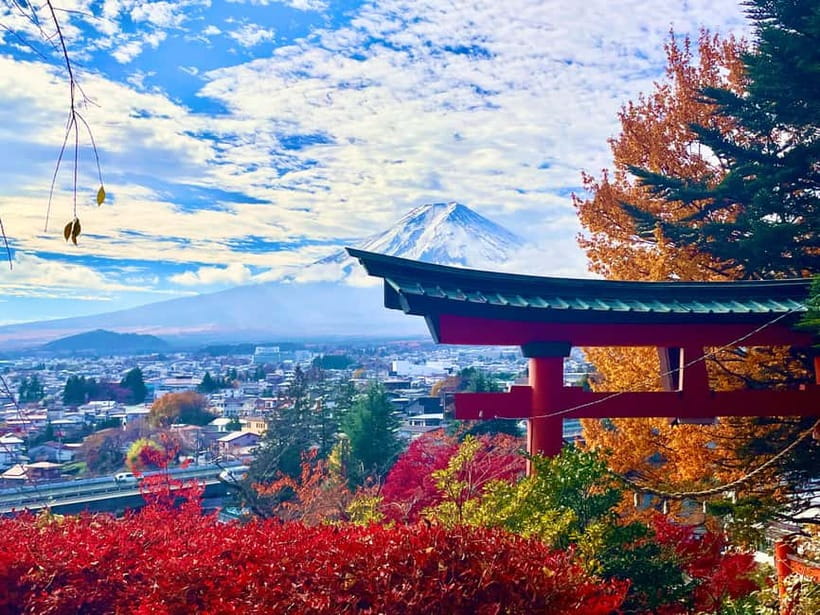
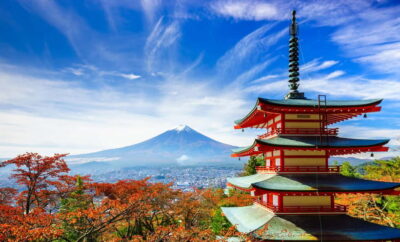
- Arakura Sengen Shrine with its five-story pagoda and Fuji-in-the-background photo moment
- Owakudani’s sulfur vents and black eggs, for a very Hakone kind of geology
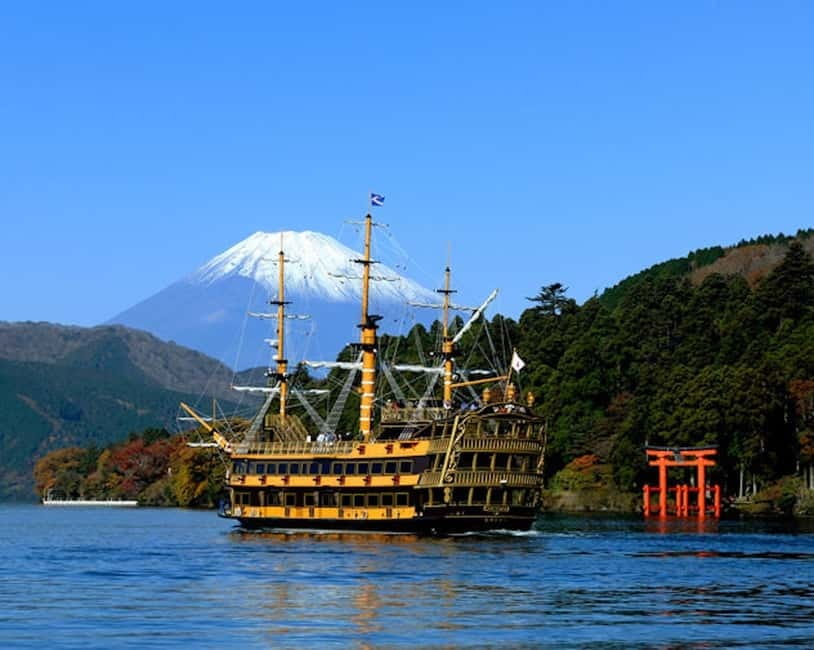
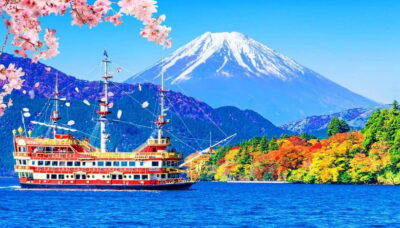
- Lake Ashi boat ride (about 45 minutes) that gives you Fuji views from the water
- An onsen ryokan night with a kaiseki dinner and a proper Japanese breakfast
- Kamakura Daibutsu, a huge bronze landmark that anchors the second day
How This Private Fuji, Hakone, and Kamakura Tour Works in Real Life
This is the kind of tour that feels “easy” because the hard parts are handled for you. You step into a comfortable Toyota Alphard or Hiace, your English-speaking driver meets you at your hotel in Tokyo, and your day moves as one continuous plan.
I also like that it is not just a checklist. You get enough time at each stop to actually look around, not just race through. The pace works well when you want Fuji and Hakone, but you do not want to spend half your trip decoding train transfers.
The standout for me is the mix of natural sights and built heritage, and then ending with the right kind of recovery. After big scenery days, you get an onsen ryokan night with a traditional kaiseki dinner, which is where this tour really earns its value.
You can also read our reviews of more private tours in Tokyo
Tokyo to Lake Kawaguchi: Oishi Park, Ushino Hakkai, and Fuji Angles That Actually Help
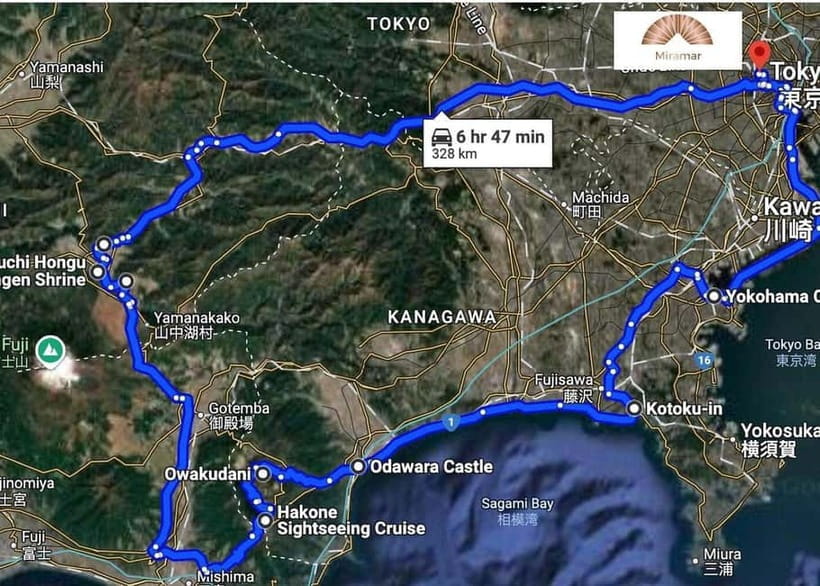
Day 1 begins with a hotel pickup in Tokyo 23 wards and a drive out toward the Fuji area. The early transfer is about 2 hours before you reach the Lake Kawaguchi zone, which is just enough time to shake out the morning and settle in.
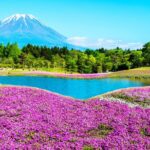
Oishi Park is your first major scenery stop, with around 30 minutes of free time. This is a smart start because it puts you in front of the classic Lake Kawaguchi view, where Fuji often frames the horizon. Even if clouds move in, the lake and shoreline still give you a calm, “Japan-at-a-postcard” baseline.
Next comes Ushino Hakkai (also called Ushino Springs). This is quieter and more relaxed than the big-name photo spots. The springs and clear-water feel different from the manicured viewpoints, and it’s a good place to slow down and take in the natural setting before you head into shrines and shopping areas.
Why these stops are worth it
You are not just collecting views. You are getting different types of Fuji perspectives: lakeshore calm at Oishi Park, then a natural spring walk at Ushino Hakkai. That contrast is part of why a 2-day format works better than a rushed day trip.
Arakura Sengen Shrine: Pagoda Photos With Fuji in the Same Frame
After your Fuji-region lakeside time, you head to Arakura Sengen Shrine. This is famous for its five-story pagoda and the way Mount Fuji can rise behind it. You get about an hour here, which matters because climbing the approach paths takes a little time and you may want a few angles before you commit to one “best” shot.
This stop is also a nice culture moment without feeling like a museum. You are walking through a living religious site, not just standing at a viewpoint. If the light is good and the sky cooperates, it’s one of those places where you can understand why the postcard version sticks.
A practical tip
Wear comfortable shoes. The walk is not long, but it is outdoors and you will want sure footing, especially when weather around Fuji changes fast.
More Tokyo tours and experiences for the shortlist


Kitaguchi Hongu Fuji Sengen Shrine: Pilgrimage-Route Spiritual History
Next up is Kitaguchi-hongu Fuji Sengen Shrine. You get about 30 minutes, including time to visit and sightsee. This is a historic shrine tied to the pilgrimage route to Fuji-san, and the atmosphere is noticeably more grounded than the “only photo” stops.
I like this balance. Arakura gives you the iconic, postcard skyline view. Kitaguchi Hongu adds the cultural context, so the whole Fuji story feels bigger than one mountain silhouette.
Oshino Hakkai and Houtou Lunch: A Short Shopping Stroll That Feels Local
Then you head to Oshino Hakkai, where you can browse, walk, and take in the spring-fed ponds. You get about an hour here, which is enough for a relaxed stroll and some casual shopping if you want snacks or small Fuji-region souvenirs.
Lunch on Day 1 is included, and it’s houtou, a traditional Yamanashi noodle dish. That choice is a good fit for this tour because it feels regional, and it’s the kind of meal you can eat without slowing down your day too much. After hours outside, hot noodles also make a big difference if the weather turns cool.
What to watch for
Oshino Hakkai is a place where you may want to pace yourself. There’s walking and sightseeing packed into an hour, so if you prefer minimal strolling, plan on a lighter pace and skip extra shops.
Tōnosawa Ichinoyu Honkan Ryokan: Onsen Recovery and Kaiseki Dinner
The day ends at a traditional Japanese ryokan with onsen. You arrive in time for dinner, free time, and an overnight stay at Tōnosawa Ichinoyu Honkan.
This is where the trip shifts from sightseeing intensity to actual rest. You will have time for an onsen experience for a few hours, which is the right kind of reset after long days of walking and outdoor viewing. Then you enjoy a kaiseki dinner, a multi-course meal built around seasonal ingredients and fresh seafood. It’s a special way to slow down, enjoy regional flavors, and end the day in a place that feels like Japan, not just a hotel stop.
Why the ryokan night is the real value
You could do Fuji and Hakone as day trips. But the ryokan changes how the places feel. You get a full night away from Tokyo rhythms, and you wake up to a calmer pace.
Day 2 Starts With a Traditional Breakfast, Then the Lake Ashi Boat Ride
Day 2 begins with a traditional Japanese breakfast at the ryokan. Expect fresh fish, rice, pickles, and miso soup. It’s the kind of meal that keeps you steady through another full day.
Then you head to the boat portion of Hakone. The Lake Ashi boat ride departs at 9:30 AM and takes about 45 minutes, with views of Mount Fuji, the surrounding hills, and the lake’s clear waters. The ride ends at Togendai Port.
This boat time is not just transport. It’s the best way to see this area’s scale. From the water, you get a wider sense of how volcanic Hakone sits around the lake, and you also get another chance at Fuji visuals.
If visibility is poor
If Fuji is not visible on Day 2, you still get lake scenery and the Hakone setting. The tour notes that adjustments may happen if visibility is weak, so you are unlikely to feel stuck with a wasted plan.
Owakudani Valley: Sulfur Vents, Volcanic Views, and the Black Eggs
Next you visit Owakudani Valley, the volcanic heart of the Hakone experience. Here you see sulfur vents, smell that distinct volcanic air, and get the famous black eggs idea. The eggs are boiled in the sulfuric hot springs, and that quirky detail is exactly what makes Owakudani memorable.
You have about 45 minutes here for photos, sightseeing, free time, and shopping. That is a good window. You can walk the scenic areas, find a viewpoint, and still avoid feeling rushed.
The main drawback
This is outdoors and can be windy or cool. Bring warm layers, and expect that the ground area can feel active and hot near vents.
Odawara Castle: Samurai-Era History With Real Garden Time
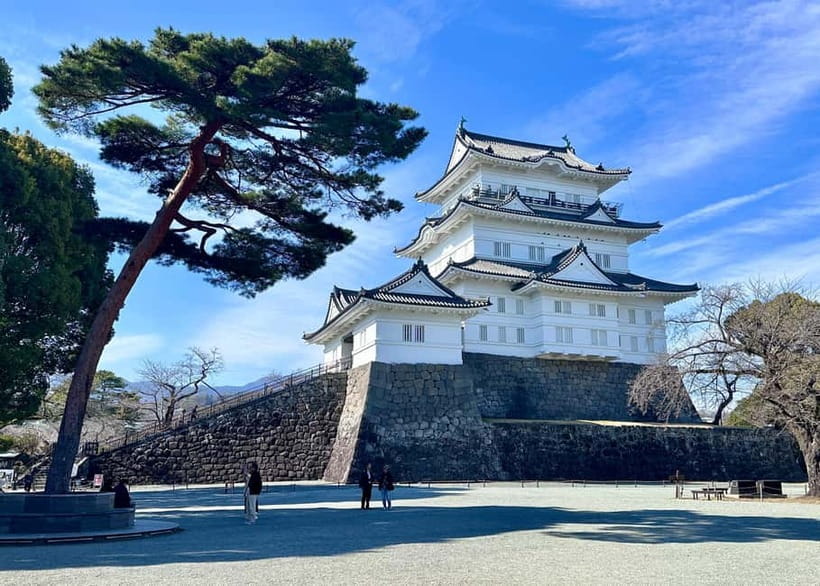
From Owakudani, you head toward Odawara Castle. You get about 45 minutes, including a self-guided style visit.
Even if you are not a hardcore history person, the value here is the mix of museum context and garden space. From the higher viewpoints, you also get panoramic sightlines that fit naturally after the volcanic valley.
This is a good “reset stop” between Hakone nature and Kamakura’s big landmark.
Kamakura Daibutsu and the Yokohama Chinatown Option
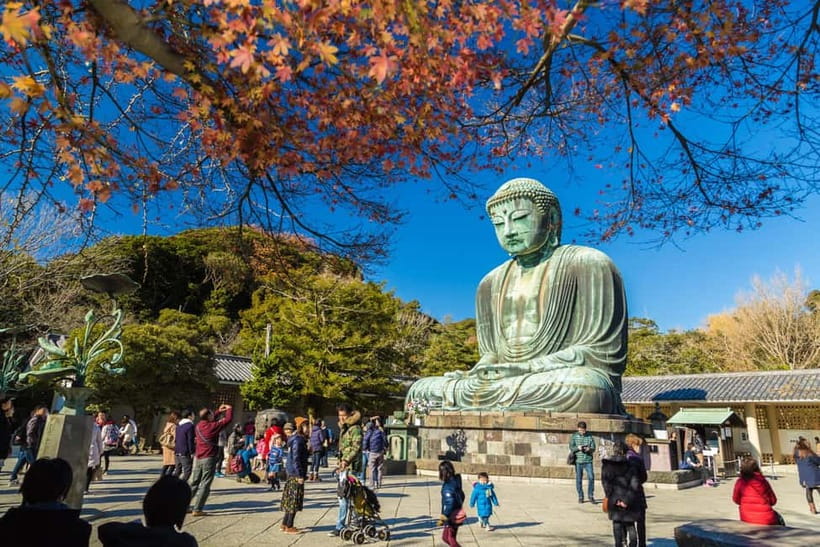
The second day’s famous cultural finish is Kamakura Daibutsu, the Great Buddha. You’ll get about 30 minutes for the stop. This bronze statue is over 13 meters tall, and the scale hits you quickly. It’s one of those landmarks where standing there makes it hard to think about anything else.
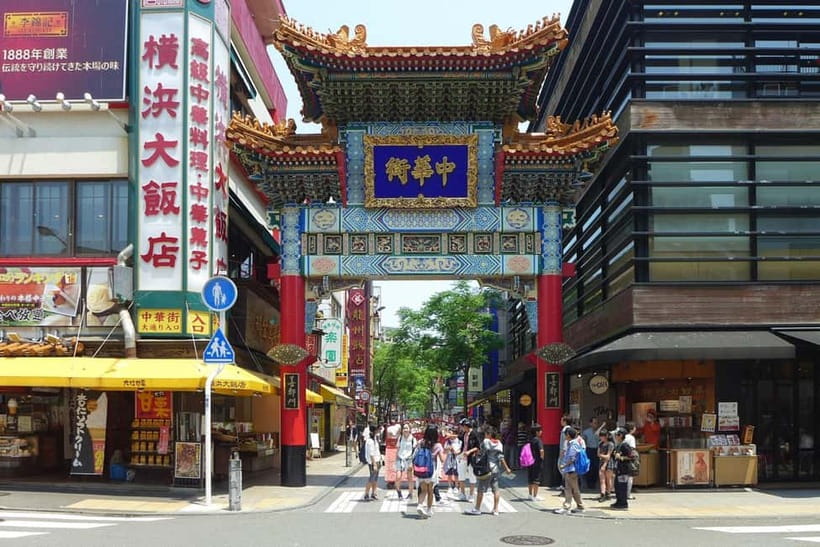
If time allows, the tour may include Yokohama Chinatown. It’s a short photo stop plus shopping and a walk of about 30 minutes.
A practical way to use the Chinatown stop
Go hungry enough to try something small, but do not plan a full meal if the schedule is tight. This stop works best for quick snacks and browsing rather than a long sit-down.
Price and Value: Is $838 Per Person Worth It?
At $838 per person for a 2-day private experience, this is not a budget outing. But when I look at what you get, the price starts to make sense.
You are paying for:
- Private Toyota Alphard or Hiace transport with hotel pickup and drop-off in Tokyo 23 wards
- Entrance fees for the major listed sites
- A full onsen ryokan night with onsen time
- Meals included on Day 1 and breakfast on Day 2, with Day 1 lunch as houtou and dinner as kaiseki
- A Lake Ashi boat ride (about 45 minutes)
If you were to price those pieces separately, especially the ryokan night and private car logistics, the total quickly climbs. The biggest “value win” is that you are not forced into tight public transport connections while traveling between Fuji area, Hakone, and Kamakura.
When it may not be the best fit
If you love building your own itinerary and you are comfortable with trains and timing, you might spend less on transport. But if you want the smoothest route with less friction, the private format is where the money goes.
Who This Tour Suits Best (and When to Choose Something Else)
This tour fits you if you want:
- Fuji, Hakone, and Kamakura in 2 days, without train stress
- A real Japanese night, with onsen and a kaiseki dinner
- A private driver who can adjust within the plan when needed, especially around weather
It is also a solid choice for couples and small groups who want flexibility. The experience notes customization is possible upon request, including pickup location, sightseeing stops, and meal arrangements.
Who might want a different style
If you prefer long, slow stays in just one region, this two-day format is likely too packed. You cover many highlights, and while each stop gets time, it is still a lot to do in a short window.
Final Call: Should You Book This Private Tour?
Yes, I’d book it if your goal is maximum scenery with minimum logistics headaches. The combination of Lake Kawaguchi viewpoints, two Fuji-related shrines, Hakone’s volcanic Owakudani, and a ryokan onsen night is a strong package. Add Kamakura Daibutsu and the option for Yokohama Chinatown, and you get variety that still feels organized.
The one reason to hesitate is simple: Fuji visibility is weather dependent. If you can be flexible and you pack warm layers, this tour gives you multiple chances to catch the mountain and still enjoy the day even if the sky changes.
If you want a trip that feels thoughtfully paced, with a comfortable private car and an onsen ryokan night that is genuinely part of the experience, this is a very practical pick.
FAQ
What does this tour include?
It includes private transportation in a Toyota Alphard or Hiace, hotel pickup and drop-off within Tokyo 23 wards, entrance fees to the mentioned sites, Day 1 lunch (houtou), a traditional Japanese dinner at the ryokan, the ryokan’s onsen overnight stay, traditional Japanese breakfast, and the Lake Ashi boat ride.
Is this tour private?
Yes, it is a private group tour with an English-speaking driver. The driver language is listed as English and Chinese.
What time is the Lake Ashi boat ride?
The Lake Ashi boat departs at 9:30 AM and the journey is about 45 minutes.
Are meals included on both days?
Lunch is included on the first day. The second day’s lunch is not included. Breakfast at the ryokan is included.
Where will I be picked up and dropped off?
You’ll be picked up and dropped off at your hotel inside the Tokyo 23 wards. You may also be dropped off at your hotel in central Tokyo after the tour.
What should I bring, and is there anything I should avoid?
Bring warm clothing and a change of clothes, plus comfortable walking shoes. Pets are not allowed (assistance dogs are allowed). Smoking is not allowed in the vehicle or indoors.
More Private Tours in Tokyo
More Tours in Tokyo





More Tour Reviews in Tokyo


Not for you? Here's more nearby things to do in Tokyo we have reviewed












Mount Fuji Tours, side by side.
 ★ 5.0Mt Fuji and Hakone 1-Day Bus Tour Return by Bullet TrainFrom $16326,383 reviews
 ★ 4.0Mt Fuji & Hakone Cruise, Drum Show Bullet Train 1 Day from TokyoFrom $1497,413 reviews
 ★ 4.4Tokyo Mt Fuji 5th St & Hakone Cruise Bus Tour w/Bullet TrainFrom $1545,024 reviews
 ★ 4.5From Tokyo: Mount Fuji Full-Day Sightseeing TripFrom $684,970 reviews
 ★ 4.7Mt. Fuji Tour, Hakone Ropeway, Owakudani, Lake AshiFrom $544,002 reviews
 ★ 4.2Mt. Fuji 5th Station & Hakone Cruise 1-Day Bus TourFrom $1292,381 reviews
 ★ 4.7Mt Fuji Top 5 Spots Day Tour: Arakurayama Park,Oshino HakkaiFrom $532,066 reviews
 ★ 5.0Private Tour to Mt. Fuji and Hakone (Fully Licenced Operator)From $4971,910 reviews
This tour also belongs to