
Review · HIKING & TREKKING
Private Local Hiking to enjoy the nature and culture of Mt.Fuji
Mt Fuji on a trail beats the crowds.
This private, culture-and-nature hike keeps you away from the busiest viewpoints and mixes sacred places with real walking. I like how the route connects Mt Fuji belief and eruption history to what you can see on foot, and I especially like that Yuki, a certified mountain guide who has climbed Mt Fuji over 40 times, guides the day with local insight.
Two things I love: the moderate effort (about 1 hour up and 30 minutes down on the main climb) and the thoughtful pacing around calm, meaningful stops instead of sprinting for photos. One consideration: sunrise to sunset views depend on weather and cloud cover, so you should be ready for a day that can be more about atmosphere and forest than a perfect Fuji panorama.
Key highlights worth planning around
- Private hiking with Yuki’s Mt Fuji experience, built on repeated climbs and local knowledge
- Aokigahara, the sea of trees, tied to eruption history and quiet paths
- Ryugudoketsu cave, a sacred stop with Mt Fuji worship lore
- Sankodai viewpoint hike, with a chance to see Fuji plus sea of trees and Lake Saiko together
- Gear included for comfort, like shoes, poles, and rain layers
- Udon and matcha finish, including time to relax in a Japanese garden
A private half-day that feels local, not touristy
This tour is designed for the Mt Fuji side that does not require a full bus schedule or a lineup of cameras. You start near Fujikawaguchiko-machi, then work your way through lake viewpoints, shrine connections, and forest terrain. The tone is gentle but focused: you walk, you learn why these places matter, then you eat and slow down.
What makes it special is the mix. You are not only hiking for a summit shot. You are also stepping into how people in this region talk about mountains, eruptions, and faith. And when the day is done, you get a proper reset with local food and matcha in a quiet garden.
You can also read our reviews of more private tours in Fujikawaguchiko machi
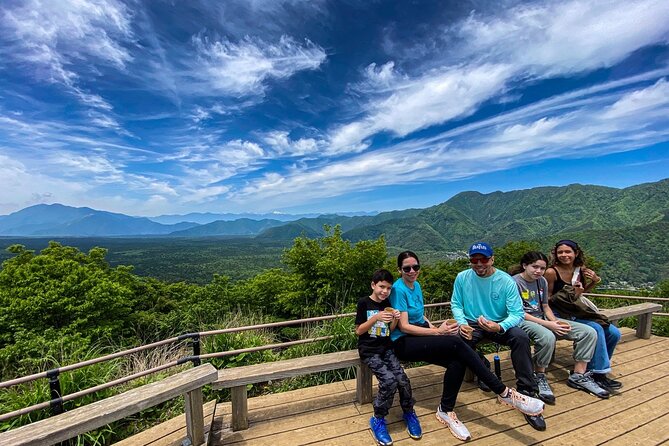
Meet Yuki: a guide with lots of climbs and a sharp eye

The guide here is Yuki (ゆうき), a certified mountain guide who has climbed Mt Fuji over 40 times. That matters because he can read the trail, adjust pacing, and help you move safely on uneven ground. He is also a licensed local hunter, which hints at the kind of field-like attention to plants, terrain, and how people use the land.
From the way the tour is described and how it is led, you should expect a guide who keeps things calm and practical. In past outings, Yuki has been noted for patient, helpful guidance, and for bringing small comfort touches like coffee or snacks during the hike. Even if you are not a strong hiker, that kind of support can make the experience feel smooth.
And because this is a private tour, you are not stuck with a pace that fits someone else. You can ask questions, linger at a viewpoint, or take breaks without feeling rushed.
Price and logistics: what $131.38 really covers
At $131.38 per person for a 5 to 6 hour tour, the value comes from what is included up front. You get:
- Private transportation
- Guide fee
- Trekking shoes, trekking poles, rain jackets and pants, gloves
- Admission is listed as free for each stop on the route
- Mobile ticket and the option for group discounts (if applicable)
Lunch is not included, and neither is insurance. Lunch is typically around JPY 1,000, and the local meal stop also notes about JPY 1,000 per person for the food you choose. The matcha and Japanese sweet option at the garden is also listed as around JPY 1,000 per person if you want it.
So the practical way to think about price is this: you are paying for a guided half-day plan, transportation, and the gear that can save you from last-minute shopping. If you already own good hiking shoes and poles, you might still like not having to manage rain layers and gear on a trip.
Where pickup works near Kawaguchiko and Fujiyoshida
Pickup is offered, but with a clear boundary. The pickup service is available only if you are staying in the Kawaguchiko or Fujiyoshida area, or if you can make your own way to the meeting areas.
Start time is 9:00 am, and the tour is designed to run for about 5 to 6 hours. If you are outside that pickup zone, plan on reaching the area yourself so you do not waste time.
The first views: Lake Kawaguchiko when the sky cooperates
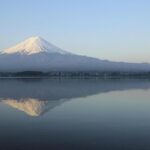
The day begins with Lake Kawaguchiko, the most popular of the Fuji five lakes. It is busy for a reason: the lake front gives you one of the classic “Mt Fuji plus water” scenes. The tour uses this stop as a kickoff, not as the whole event.
From there, you also get the chance to see the iconic mountain from the trail when it is sunny. This is important advice for your expectations. If the sky clears, you get that classic payoff. If it does not, the trail experience still works because you will spend real time in the shrine, forest, and viewpoints.
You can also read our reviews of more hiking tours in Fujikawaguchiko machi
Fuji Omuro Sengen Shrine: faith tied to eruption history
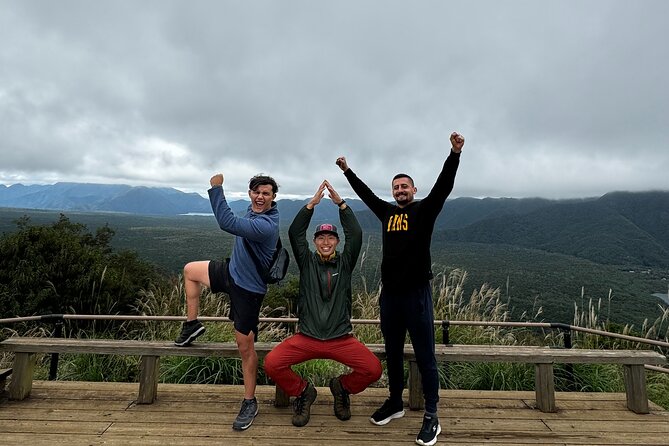
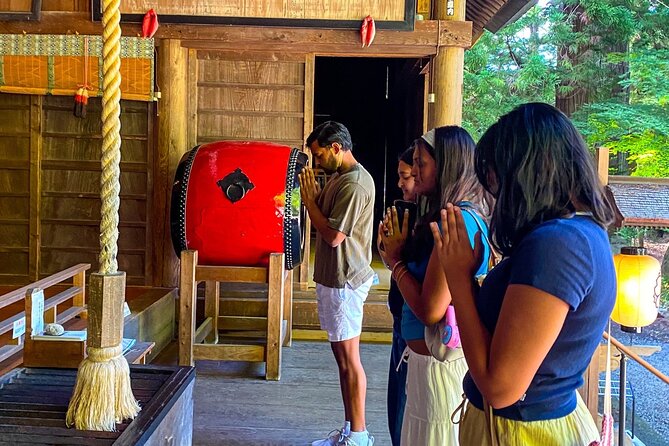
Your first named stop is Fuji Omuro Sengen Shrine. Admission is free, and the point of the visit is context: this shrine has a deep connection with Mt Fuji worship and the biggest eruption. The idea is that ancestors built the shrine to help settle the eruption and that worship practices began from that belief.
Even if you are not religious, shrine sites like this are a fast way to understand why a mountain is treated as more than scenery here. You also get a calm start to the day before you head into walking terrain.
Saiko Lake: the quieter Fuji-lake pause
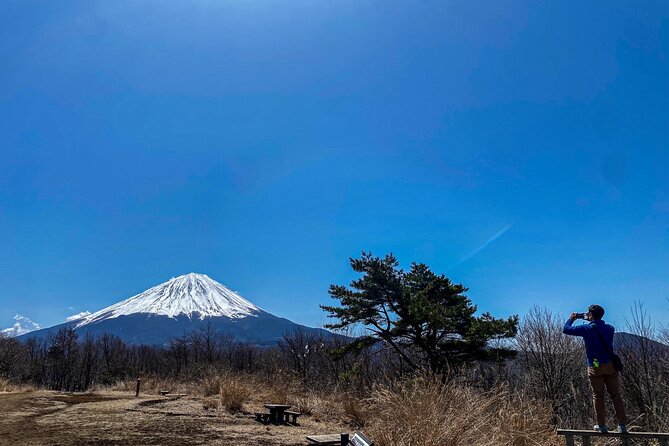
Next up is Saiko Lake. Admission is free, and the pitch is simple: it is quieter than Lake Kawaguchiko. From the path and viewpoint moments, the goal is to take in stunning views of Lake Saiko with Mt Fuji when conditions allow.
Why I like this stop: it gives you a breathing moment. After a shrine, you get nature without pressure. Even on less-clear days, a quieter lake can feel like a reset button before the forest section.
Aokigahara forest: sea of trees plus eruption-shaped terrain
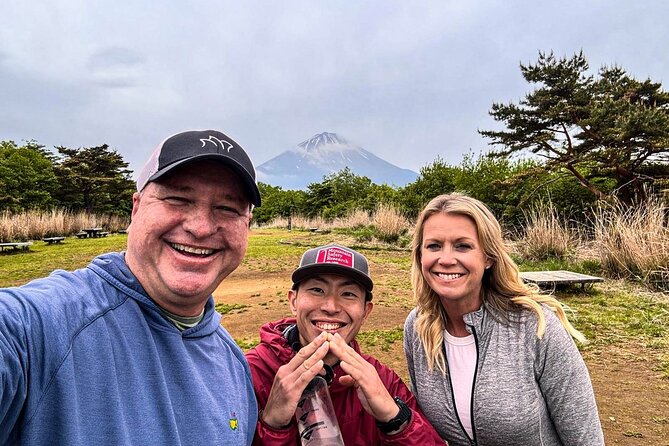
Now you move into Aokigahara Forest, often called Jukai, meaning sea of trees. The forest earns that name because, from a viewpoint, it looks like an ocean of trunks.
The tour also ties this place to what shaped the ground. It notes that one of the biggest eruptions happened about 1200 years ago and created the forest area you are walking through. This is where the tour becomes more than scenery. You are walking across land with an eruption story you can physically sense through the path and the terrain.
Expect a steady, walkable experience rather than a technical scramble. It is still outdoor time, so take your pace from the guide and your own energy.
Ryugudoketsu cave: praying to the goddess of Mt Fuji
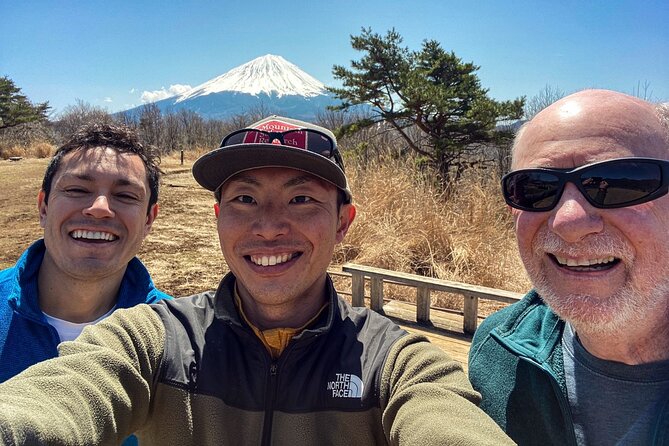
The stop at Ryugudoketsu-iriguchi takes you from trees to a sacred cave area. Admission is free, and the lore is the point: people used to visit to pray for the goddess of Mt Fuji before climbing. They believed the inside of the cave was like the goddess’s domain, which explains why people started prayers here.
This kind of stop adds texture to the day. Instead of repeating the same photo angle of Mt Fuji, you get a place where faith and landscape overlap. It is also a nice change of pace before the main viewpoint hike.
Sankodai viewpoint hike: moderate climb, beginner-friendly plan
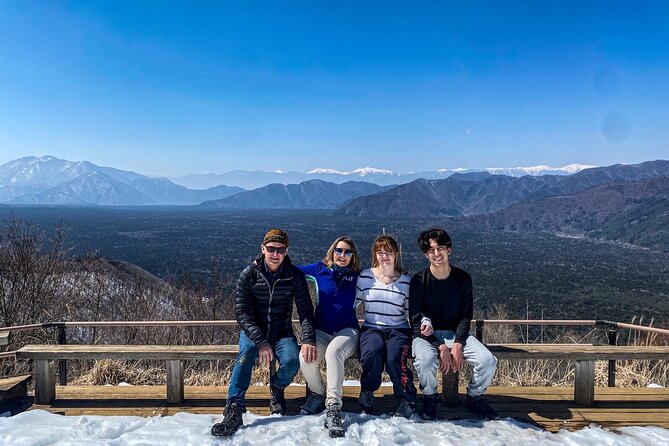
The main hike stop is Sankodai, with a viewpoint goal that brings together a few big elements at once. The description highlights a view that can include Mt Fuji, the sea of trees (Jukai), and Lake Saiko at the same time.
Timing is straightforward: the trail is described as suitable for outdoor beginners. The overview says the overall hike effort is moderate, about 1 hour up and 30 minutes down. The Sankodai portion is described as about an hour hike one way to the viewpoint, so expect steady uphill walking and a rewarding lookout when you arrive.
This is where the included gear really helps. Trekking poles reduce stress on the downhill return, and rain layers keep you comfortable if clouds turn into drizzle. If you have knees that do not love descents, poles are your friend here.
Also, in past days, guides have been able to adjust routes to match the conditions. One cloudy-morning outing was considered ideal for trekking, because the walking feels easier when the light is softer and you are not overheating.
Menkyo-kaiden local food stop: budget around JPY 1,000
Next you head to Menkyo-kaiden, described as the signature food stop of the area. The guide takes you to a place that is not the typical tourist magnet. The cost is about JPY 1,000 per person, which lines up with the tour’s note that lunch is extra.
The tour overall also highlights a local meal featuring Yoshida Udon, which is the kind of dish that tastes better after walking than it does as a random roadside bite. I like this structure: you are not forced into a set menu you do not want, but you do get a guide-driven choice that matches the region.
Practical tip: decide in advance what you can handle. This is a hiking day, so something warm, filling, and not too heavy on spice tends to be an easy win.
Fujisan Onsen Hotel Kaneyamaen garden: matcha and a slow finish
The final stop is Fujisan Onsen Hotel Kaneyamaen. Admission is listed as free, and the big draw is the large Japanese garden that is open to the public. After time on uneven ground, this is the perfect transition.
You can enjoy matcha with a Japanese sweet for optional JPY 1,000 per person, or just relax with a cup of matcha and enjoy the garden at your own pace. The tour’s overall promise includes real matcha tea, and that final sit-down matters because it turns the hike into a complete experience, not just a workout.
Weather reality: plan for good days, and still be happy on cloudy ones
This is a weather-dependent tour because the goal includes chances to see Mt Fuji from viewpoints and trails. The description also says the experience requires good weather. If poor weather causes a cancellation, you are offered a different date or a full refund.
Here is the realistic way to approach it: even if Fuji hides behind clouds, you still get meaningful time at shrines, caves, and forest. Cloudy conditions can even make walking feel more comfortable, and soft light can make the trail experience easier.
What to wear and pack, given the included gear
The tour includes a lot of comfort support: trekking shoes, poles, rain jackets and pants, and gloves. That means you can travel lighter and still feel prepared.
Still, think about your own body. Bring a small daypack if you like, water if allowed by your guide, and dress in layers because mornings around lakes can shift fast. If you run cold, keep an extra layer in your pack.
Also remember, this is outdoors time on uneven ground. Even though the hike is moderate and beginner-friendly, your legs will work. Comfortable clothing and trekking shoes are not optional here, even with rentals.
Should you book this Mt. Fuji private hiking tour?
If you want Mt Fuji with context, this is a strong choice. You get a guided route that mixes shrine culture, lake calm, Aokigahara forest terrain, and a sacred cave stop, then you finish with local udon and matcha in a Japanese garden. It feels designed for people who like nature walks with meaning, not just a photo chase.
Book it if:
- You want a private experience with pacing you can control
- You like hiking but want moderate effort
- You care about learning what you are seeing, especially around faith and eruption history
- You want gear handled for you, including rain layers
Skip it or adjust expectations if:
- Your main goal is a guaranteed, crystal-clear Mt Fuji view. Visibility can vary.
- You prefer meals fully included, since lunch and optional sweet are extra.
Overall, I think this is a good value day tour because so much is handled for you, and the itinerary keeps you moving through places you would not likely find and interpret on your own.
FAQ
How long is the Mt. Fuji nature and culture hike?
It runs about 5 to 6 hours (approx.) starting at 9:00 am.
Is this hike difficult?
The hike is described as moderate, with about 1 hour up and 30 minutes down. It is also noted as suitable for outdoor beginners.
What is included in the tour price?
The tour includes trekking shoes, trekking poles, rain jackets and pants, gloves, plus private transportation and the guide fee. Admission at listed stops is free.
Is pickup available?
Pickup is available only for people staying in the Kawaguchiko or Fujiyoshida area. If you are not staying in those areas, you can come on your own to the meeting areas.
What should I budget for food?
Lunch is not included. The tour notes lunch around JPY 1,000, and the local food stop lists about JPY 1,000 per person. Matcha with a Japanese sweet at the garden is optional and listed around JPY 1,000 per person.
Does the tour require good weather?
Yes. The experience requires good weather. If it is canceled due to poor weather, you are offered a different date or a full refund.
Is travel insurance included?
No. Insurance is not included.
More Hiking & Trekking Tours in Fujikawaguchiko machi
More Private Tours in Fujikawaguchiko machi
More Tour Reviews in Fujikawaguchiko machi


Not for you? Here's more nearby things to do in Fujikawaguchiko machi we have reviewed

Hiking & Trekking, side by side.
 ★ 5.0Full Day Hiking Tour at Mt.Takao including Hot SpringFrom $11852 reviews
 ★ 5.0Hike Hakone HachiriFrom $23148 reviews
 ★ 5.0Hike Japan Heritage Hakone Hachiri with certified mountain guideFrom $15846 reviews
 ★ 5.0Traverse Outer Rim of Hakone Caldera and Enjoy Onsen Hiking TourFrom $15830 reviews
 ★ 4.9Hakone Hachiri: Old Tokaido Highway Hiking TourFrom $16722 reviews
 ★ 5.0Hike Japan Heritage Hakone Hachiri (Half Day)From $11418 reviews
 ★ 5.0Mt.Fuji Trekking 1 Day Tour up to the summitFrom $2,93914 reviews
 ★ 4.5Kamakura One Day Hike Tour with Government-Licensed GuideFrom $15312 reviews
This tour also belongs to