
Review · KAMAKURA DAY TRIPS
Kamakura One Day Hike Tour with Government-Licensed Guide
Kamakura feels like a history rewind. I love the 6km Daibutsu Trail hike that links the Great Buddha area to Jochi-ji, and I love that you can shape the day around what you actually want to see, since you choose 3 to 4 stops from the options. This is a government-licensed guide-led day that keeps the story clear, not lecture-y, as you move from samurai-era shrines into Zen temple quiet.
One possible drawback: if you’re doing Kamakura as a Tokyo day trip, the logistics can bite. Plan for serious travel time, so the time you spend on the ground might feel tighter than you expect, especially if you’re hoping to see more than the guided route.
Key points to know before you go
- Government-Licensed guide interpreter: you’ll get explanations grounded in Japanese culture and history, not just general facts.
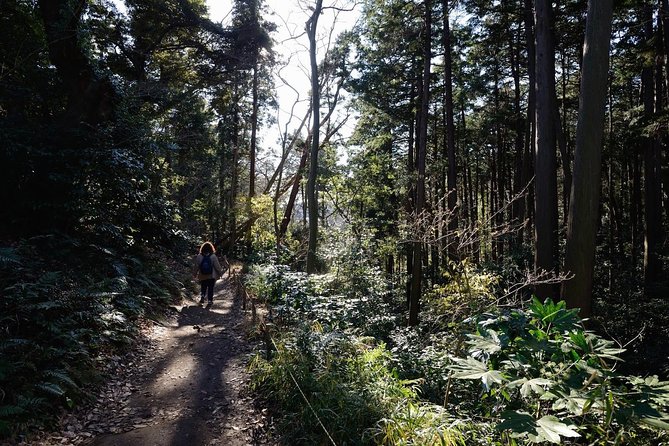
- Daibutsu Trail is the heart of the tour: it runs about 3.7 miles (6km) between the Great Buddha area and Jochi-ji.
- Your day is customizable: you pick your must-see spots from the provided list and can set your start time.
- A samurai-to-Zen mix: the route commonly pairs shrines like Tsurugaoka Hachimangu with major Zen temples such as Engaku-ji and Kencho-ji.
- Weather matters on the hike: I’ve seen firsthand that slick conditions after rain can change how comfortable the trail feels, so good footwear helps.
- Enoshima can add a photo moment: if skies cooperate, Enoshima can offer a chance to photograph Mt. Fuji from the area.
A 6km hike with the samurai story in your pocket
Kamakura is one hour from Tokyo, but it feels like a different chapter of Japan. This tour focuses on walking the Daibutsu Trail and tying it to what you’re seeing along the way. You start with iconic sites, then shift into the temple-hills rhythm that makes Kamakura such a satisfying place to explore on foot.
The standout here is how the guide connects dots. You don’t just get names and dates. You get why a shrine matters to samurai clans, how Zen temples fit into power and patronage, and why the trail route between the Great Buddha and Jochi-ji became such a meaningful walk. That context makes the day feel purposeful.
Also, this isn’t a huge throw-everything-in buffet. It’s a private group walking tour, and you select your 3 to 4 sites from the options, so you can avoid the stress of trying to cram everything in solo.
You can also read our reviews of more guided tours in Yokohama
Price and logistics: what you pay for, and what you don’t
The tour is listed at $153.50 per person for about 6 hours of guided walking. For many people, the value isn’t that it’s cheap. It’s that you’re buying something hard to DIY well: a government-licensed English guide interpreter plus a structured plan around a known hiking route and temple cluster.
What you should budget extra for is clear. Transportation fees, entrance fees, lunch, and personal expenses are not included. Some stops are free (like Tsurugaoka Hachimangu and the Zeniarai Benten shrine), and some are not included, so your final cost may depend on which sites you choose.
One more logistics detail that matters: pickup is offered, but it’s still a walking tour. You meet your guide within a designated Kamakura or Yokohama area, and you’re walking from there. If you’re hoping for long taxi rides or a totally car-based day, this isn’t that.
Choosing your route, 3 to 4 stops you actually want
The tour can be personalized. You tell the local partner what time you want to start, where you’re staying, and which must-see stops you want from the provided list. The tour model is basically, pick your focus and let the guide build a sensible flow around it.
I like this approach because Kamakura is big enough to get overwhelming fast. With 3 to 4 selected stops plus the trail segment, you’re more likely to feel what you’re seeing, instead of just moving between ticket gates.
A practical tip: think about your priorities in pairs. For example, if you want history and views, you might combine a shrine start with the Great Buddha area and part of the hill trail toward Jochi-ji. If you prefer Zen gardens and atmosphere, you might lean into the Engaku-ji and Kencho-ji cluster plus one or two smaller hillside temples.
Tsurugaoka Hachimangu: starting at the samurai shrine
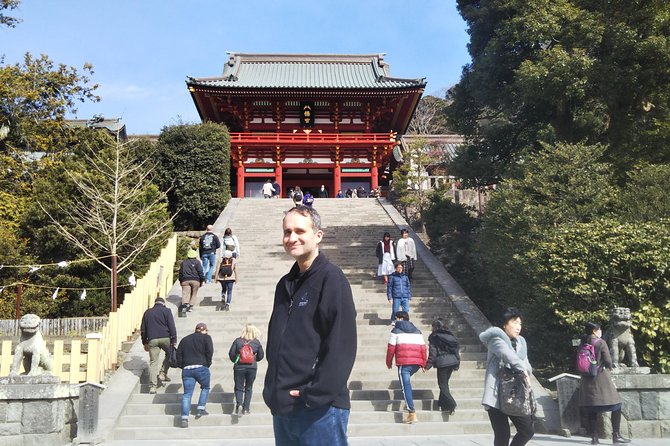
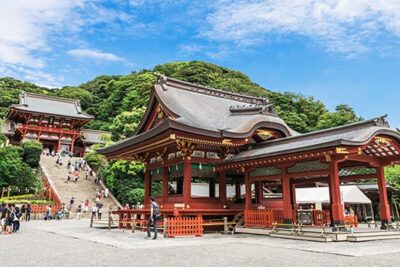
Most Kamakura days feel best when you start with the city’s big symbolic anchor. Tsurugaoka Hachimangu Shrine is dedicated to Hachiman, patron god of the Minamoto family and of samurai in general. It also connects to deified spirits tied to Emperor Ojin, which helps you understand why this place carries weight beyond tourism.
This is a good first stop because it gives you a framework. Once you understand the shrine’s samurai roots, the rest of the day makes more sense, especially when you move from political-religious sites into temple worlds that developed under the Kamakura shogunate.
It’s also low-pressure timewise. Admission is free, and the stop is roughly 30 minutes, which works well as an easy warm-up before walking.
Kotoku-in Great Buddha and the start of the Daibutsu Trail
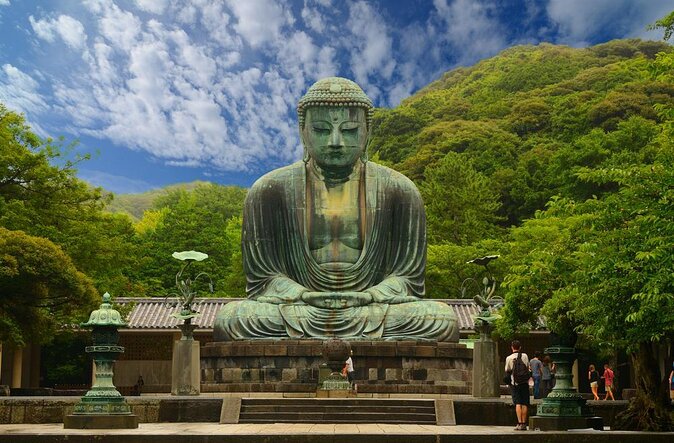
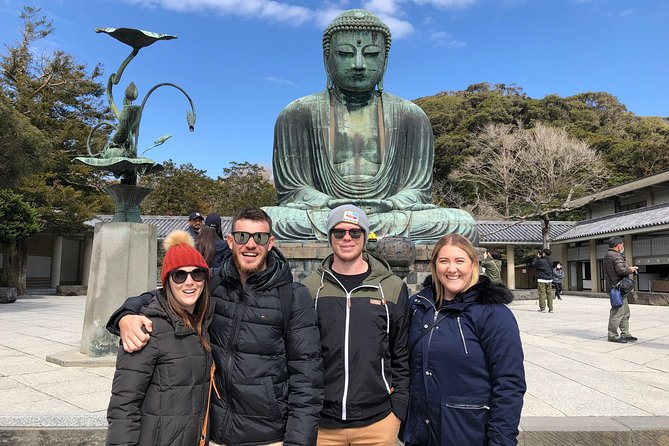
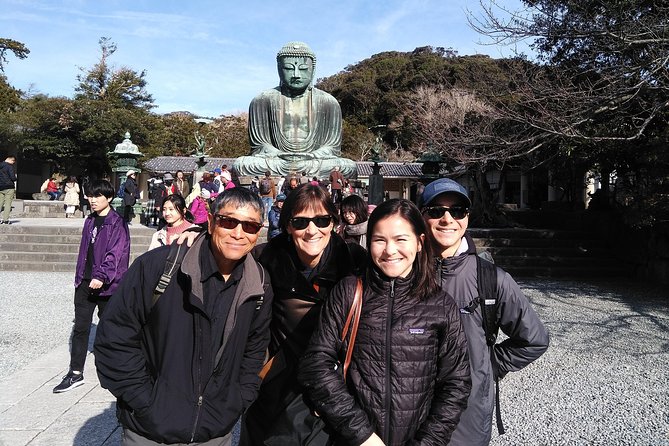
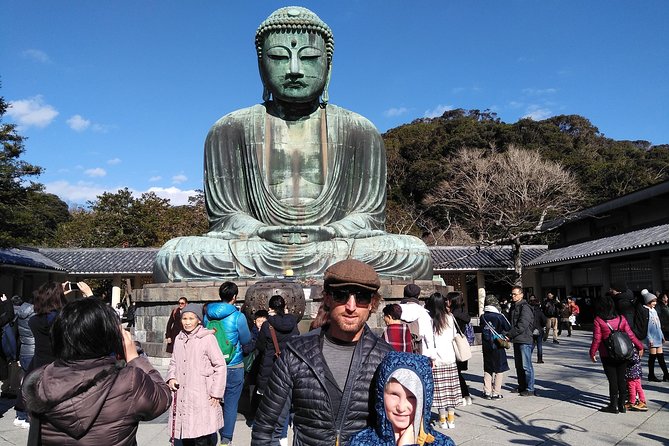
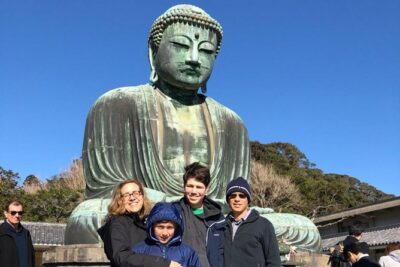
Then comes the anchor view: the Great Buddha of Kamakura at Kotoku-in. The statue is a bronze figure of Amida Buddha, about 11.4 meters tall, set on the grounds of Kotokuin Temple. This is one of those sights that instantly makes Kamakura feel real and old, not like a theme park.
Here’s why this matters for your day: the Great Buddha area is also where the Daibutsu Trail begins in the classic logic of the walk. The trail runs between the Great Buddha in the south and Jochi-ji Zen temple toward the north, about 6km total.
You get a visual and story connection in one package. You’re not hiking “because it’s outdoors.” You’re hiking along a route that mirrors how places in Kamakura link together geographically and spiritually.
Admission for Kotoku-in is not included, so decide in advance if you want to pay for it as part of your chosen stops.



Temple rhythm on the hills, Hasedera, Hokoku-ji, and bamboo quiet
From the Great Buddha side, the tour options often steer you toward the temple-hills that make Kamakura feel intimate. Two stops that are especially worth aiming for are Hasedera and Hokoku-ji.
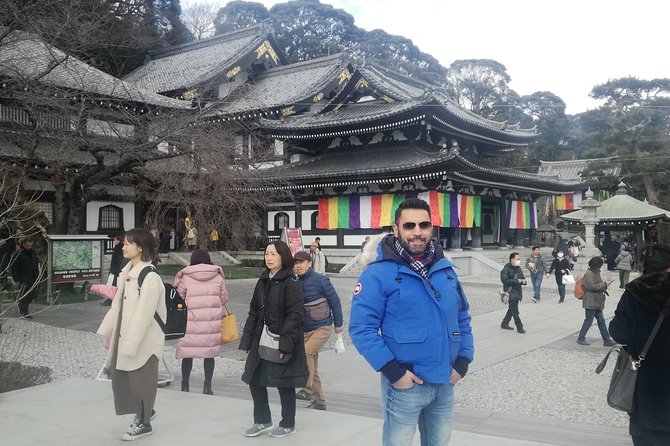
At Hasedera, the famous draw is the eleven-headed statue of Kannon, goddess of mercy. The gilded wooden statue is 9.18 meters tall and is regarded as one of the largest wooden sculptures of its kind. Even if you don’t know all the Buddhist terminology, the scale and focus help you understand why people plan their day around this temple.
Then there’s Hokoku-ji, where the bamboo grove behind the main hall is the star. You walk past over 2,000 dark green bamboo stalks, and the atmosphere shifts fast. It’s the kind of stop where you slow down without trying.
These temple stops are commonly short (often around 5 to 30 minutes depending on what’s selected), but they do real work for your day. They break up the walking with a change in scene, light, and sound.
Zen temple power in Kamakura, Engaku-ji and Kencho-ji
If you want the Kamakura feel to turn from historic shrine to deep Zen atmosphere, the big hitters are Engaku-ji and Kencho-ji.
Engaku-ji is a major Zen temple in Eastern Japan and is listed as the number two of Kamakura’s five great Zen temples. It was founded by regent Hojo Tokimune in 1282. This stop is typically around 30 minutes in the options, which gives you enough time to settle in rather than sprint through.
Kencho-ji is the number one of those five great Zen temples and is described as the oldest Zen temple in Kamakura, founded by ruling regent Hojo Tokiyori in 1253. The stop can be short in the itinerary options, but the point is that you’re seeing Zen authority in its historical setting, not just a pretty gate photo.
What I like about including these is that they change the pace. You’ll still be walking and learning, but the feel is different from shrine day. The temples’ identity comes through in how the grounds are arranged and how the guide explains their role over time.
Hillside shrines and seasonal moments, Zeniarai Benten to Meigetsuin
Kamakura also has those playful, local traditions that add color to the day. Zeniarai Benten Shrine is one. It’s a popular spot in western Kamakura where people wash their money, since zeniarai means coin washing. The idea is that money washed at the shrine is said to bring good fortune.
This is typically a 30-minute stop and admission is free. It’s short, memorable, and it gives your day a human touch. You’re not only seeing old structures, you’re watching ongoing faith and ritual.
Another stop that’s seasonal is Meigetsuin, also known as the Hydrangea Temple because hydrangea bloom is abundant on the grounds. The temple is part of the Rinzai Zen sect, founded in 1160. The itinerary option is short, but it’s the kind of place where the surrounding grounds matter, not just the buildings.
If you’re traveling outside hydrangea season, you can still enjoy the calm and the temple setting. But if flowers are your priority, plan around the season expectations for hydrangeas.
Heading toward Jochi-ji, the branch-temple circuit
The reason the Daibutsu Trail works is that it naturally leads you toward Jochiji Temple, which is part of Kamakura’s big Zen map. In the tour options, you may also visit other temples that connect to the Kamakura five great Zen temple network.
A few of the hillside stops that show up in the options include:
- Jochiji, described as the number four of the five great Zen temples, and a branch temple of the Engakuji school of the Rinzai sect.
- Engaku-ji related branches like Zuisen-ji, set in a narrow valley surrounded by wooded hills, and Tokeiji, a smaller branch temple within the same Engakuji school.
- Ranked temple spots like Jomyo-ji, described as ranked fifth among the five great Zen temples and founded by the influential Ashikaga family.
Some of these stops are only listed as short visits in the options (often 5 minutes). Don’t treat that as a negative. In practice, quick stops can be great because they keep your hike moving and prevent the day from turning into temple fatigue.
If you’re the type who likes to compare how different temples express Zen, these shorter stops can be a smart way to sample variety without adding hours.
Enoshima island stop and the possible Mt Fuji payoff
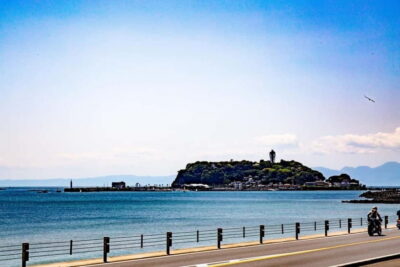
Many people add Enoshima Island to extend the day. It’s only a short train ride west of Kamakura in the tour options, connected by bridge with the mainland. The island is known for a mix of shrine space and coastal attractions.
The practical reason to like it is simple: Enoshima is a change of scenery. You get sea air after hill paths, and you also get a better chance of getting a skyline photo.
In one guide-led experience, a photo request for Mt. Fuji came up, and the group ended up seeing Mt. Fuji from Enoshima when the weather cooperated. You can’t force clear skies, but it’s still a smart place to include if you like that extra payoff.
Since admission is listed as free for the Enoshima stop in the options, it’s often an easier add than a paid temple ticket stop.
What it feels like on the trail, pace, photos, and weather
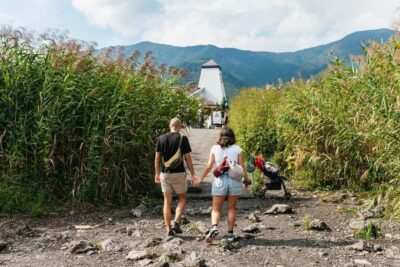
This is a walking tour, so how you prepare matters. Even if you’re not a hardcore hiker, plan for a solid day on your feet. The core hike is the 6km Daibutsu Trail, plus walking between the selected stops.
Weather can change comfort level. In at least one experience with guide Shinji Komiyama, the day started with rain the day before, making the trail a bit slippery. The group still walked without trouble, but it was comforting to hear the guide assess and keep things safe. Translation for you: bring grippy shoes and expect your pace to slow down if conditions feel slick.
Photo strategy matters too. If you care about views, ask your guide early. A helpful move is to mention what you want to photograph, like the possibility of Mt. Fuji from Enoshima, so the guide can position timing and stop choices around it.
And a small detail that says a lot about guide style: one group noted how Shinji asked what they were interested in before the tour and matched the day to that goal, including giving them a clean overview of Kamakura history along the route. That kind of personalization turns a route into a story.
Should you book this Kamakura one day hike tour?
If you want Kamakura in one day without drowning in research, this tour makes sense. The Daibutsu Trail gives you a built-in hike that connects key sites, and the government-licensed English guide interpreter role adds real value for understanding what you’re walking through.
Book it if:
- You like guided explanations and want the samurai and Zen context explained clearly.
- You’re okay with a walking-heavy day and can handle about 6 hours of movement.
- You’ll choose your 3 to 4 stops thoughtfully instead of trying to see everything.
Skip it or rethink it if:
- You’re strict about squeezing Kamakura into a Tokyo day trip and want maximum free time. The travel time can crowd your day.
- You’re trying to avoid paying for any entrances beyond what’s listed as free. Some selected temples have admissions not included.
Bottom line: this is a strong pick when you want a well-structured walking day with an actual guide behind it, not just a route you found online. Pick your stops based on your mood, lace up your shoes, and let the trail do the heavy lifting.
FAQ
How long is the Kamakura hike tour?
The tour is about 6 hours long.
Is there pickup, or do I meet the guide somewhere specific?
Pickup is offered. You meet your guide on foot within a designated area in Kamakura or Yokohama.
How far is the Daibutsu Trail hike?
The Daibutsu hiking trail is about 3.7 miles, or 6km, and it runs between the Great Buddha area and Jochi-ji Zen temple.
Can I customize which temples and shrines I visit?
Yes. You can personalize the day by selecting your must-see spots from the options in the tour information, and you will customize your route around 3-4 sites.
Are entrance fees included?
Some admissions are free, but entrance fees are generally not included. Entrance fees and lunch are listed as not included, and guide entry fees are only covered for sights listed under what to expect.
Is this tour private?
Yes. It is a private tour/activity, and only your group participates.
How do tickets work?
You receive a mobile ticket.
More Guided Tours in Yokohama


More Tours in Yokohama


More Tour Reviews in Yokohama


Not for you? Here's more nearby things to do in Yokohama we have reviewed






Kamakura Day Trips, side by side.
 ★ 4.5Kamakura & Enoshima Day Trip including Temple TicketsFrom $581,375 reviews
 ★ 4.5Mt. Fuji, Kamakura, Big Buddha, & Lake Ashi Day TripFrom $49867 reviews
 ★ 4.5From Tokyo: Kamakura & Enoshima 1-Day Bus TourFrom $66189 reviews
 ★ 5.0Kamakura Historical Walking Tour with the Great BuddhaFrom $98129 reviews
 ★ 5.0Kamakura Private Tour: Temples, Nature, and the Great BuddhaFrom $98121 reviews
 ★ 5.0Kamakura Walking Tour – The City of ShogunFrom $35100 reviews
 ★ 5.0Kamakura 8 hr Private Walking Tour with Licensed Guide from TokyoFrom $20180 reviews
 ★ 4.1Kamakura & Enoshima Day Tour with Pickup & Train RideFrom $1361 reviews
This tour also belongs to