
Review · MOUNT FUJI TOURS
Private Sightseeing to Mt Fuji and Hakone with English Driver
A Fuji day feels tight, unless it is private. This English-driver tour is a full-day route you can steer, with key Mt Fuji viewpoints and Shinto stops, plus the option to shape the day around what your group cares about most.
I especially like the flexibility. The itinerary is a suggestion, not a cage, so you can shorten a stop, linger for photos, or swap within the general Fuji area, as long as timing works.
One thing to consider: the best views depend on weather, and the road up to the 5th Station can involve tolls, seasonal shuttle rules, and sometimes partial closures in winter snow.
What makes this tour worth your time
- Private, customizable routing for a smoother day and less wasted time
- English-driver support so you are not stuck translating every detail
- Fuji photo stops in smart order, from classic viewpoints to the lake shores
- Oshino Hakkai springs inside the Mt Fuji World Heritage setting
- Mt Fuji 5th Station logistics that you learn about before you climb the last stairs
- Seasonal scenery like flower carpets at Oishi Park and winter Diamond Fuji possibilities
Why this Tokyo-to-Fuji day works (even when your schedule is tight)
A Mt Fuji day can turn into a logistics headache if you rely on trains and buses. With a private car and an English driver, you get one main thing you want on a big sightseeing day: fewer transfers, less backtracking, and a route that actually fits your pace.
The day is about 10 hours, so it is long enough to see multiple highlights but short enough that you still feel human afterward. Also, the pickup concept is offered, and the tour meets up near public transportation, which matters if you are staying outside the densest hotel zones.
Now, Hakone is in the tour name, but the provided route is very Fuji-focused. The good news is that because this is private, you can often nudge the plan toward Hakone if time and road conditions allow. I would still treat Hakone as a possible add-on, not a guarantee, and plan your expectations around Mt Fuji and the surrounding lakes.
You can also read our reviews of more private tours in Tokyo
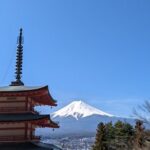
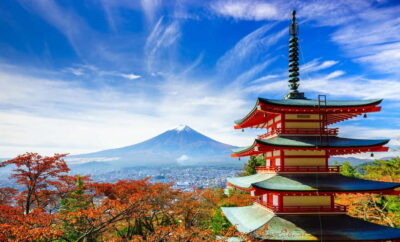
Chureito Pagoda: the stairs-to-view moment you will remember
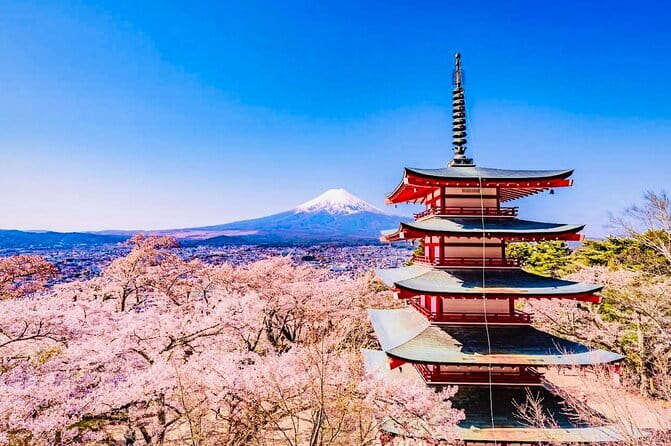
This is the classic Fuji-and-little-tower scene, and it has a lot going for it beyond the photos. The stop sits in a peace memorial park with Shinto shrines, and you climb up to the observatory area through a long stair set, up to about 400 steps.
What I like here is that the view changes as you go. You are not just waiting at one spot, you are moving through layers of elevation, and that makes the whole experience feel like a gradual reveal.
Practical note: 400 steps is not extreme trekking, but it is real walking. If anyone in your group has knee issues or gets tired on stairs, I would set expectations that this is the physical checkpoint of the day. Plan a slower pace and give yourselves extra time for photos.
Best use: arrive ready for pictures, but also take a moment to notice the shrines on the way. It is an easy place to connect the landscape to Japanese faith and memorial culture without it feeling like a museum tour.
Oshino Hakkai springs: clear water, heritage vibes, and winter drama
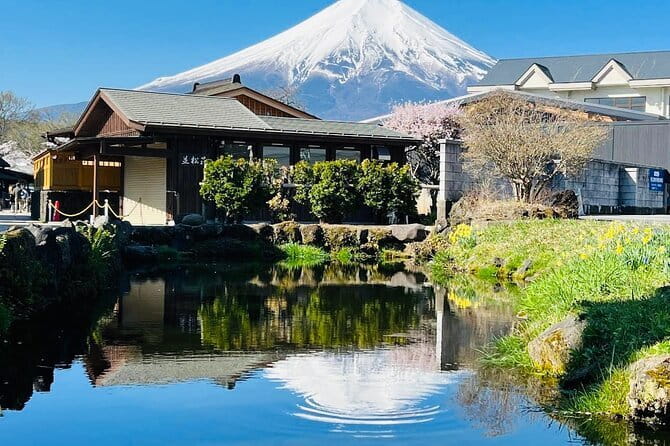
Oshino Hakkai is a small but meaningful stop. You are seeing eight springs fed by Mount Fuji’s aquifer water, and it sits within the Mt Fuji World Heritage setting.
The water clarity is the star, and the setting makes it easy to enjoy a calm walk and pause for close-up photos. If you visit in winter, this area can offer the chance for the striking Diamond Fuji effect, when sunrise or sunset aligns with the peak so the caldera looks like it is cupping the sun. The catch is simple: the view depends on the sky and alignment, so you treat it as a bonus, not a promise.
There is also a small open-air museum area around the larger pond, Hannoki Bayashi Shiryokan. A small admission fee applies there, so if you want more than just strolling, factor in a bit of extra cash and time.
Best use: keep this stop easy and scenic. It is a nice contrast to the more intense viewpoint energy later at the 5th Station.
Kitaguchi Hongu Fuji Sengen Jinja: a quick shrine stop that adds meaning
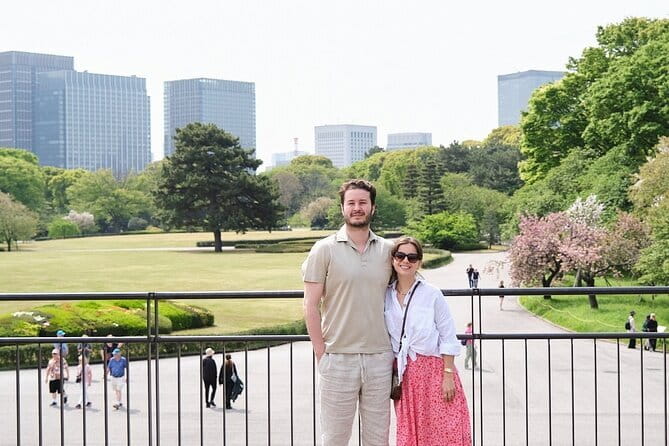
At the base of the mountain, Kitaguchi Hongu Fuji Sengen Jinja is your Shinto connection point. It is a straightforward stop, about 30 minutes, and the goal is not a long deep dive, it is to see the shrine atmosphere and break up the day.
What I like about stops like this is that they anchor the scenery in place. Mt Fuji is not only a mountain to photograph, it is also a sacred object in Japanese culture. Even a short visit helps your day feel more grounded.
Practical note: this is time-efficient. If you want a longer temple moment, a private format makes that possible.
Oishi Park by Lake Kawaguchiko: flower colors, easy strolling, and a break from crowds
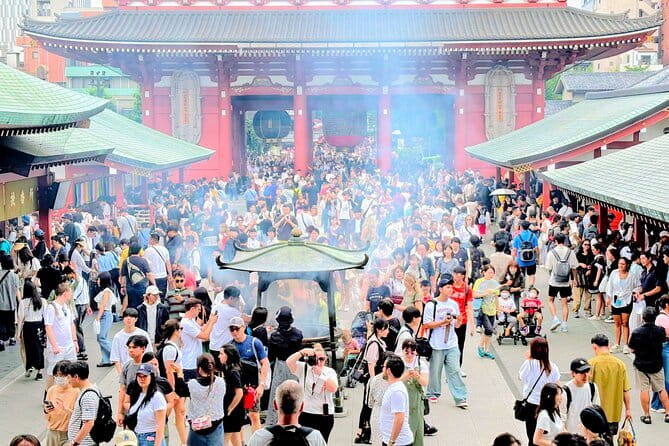
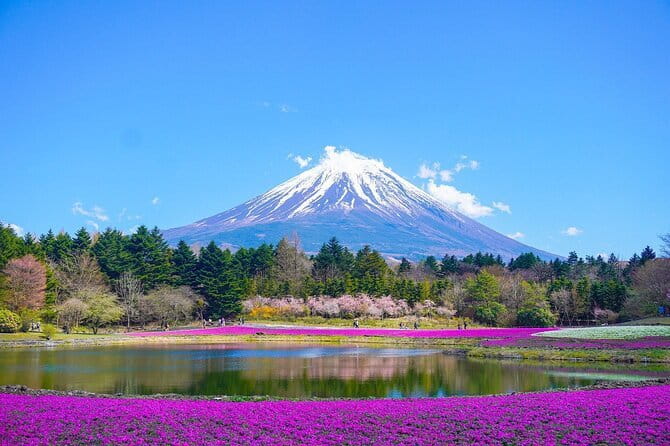
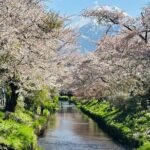
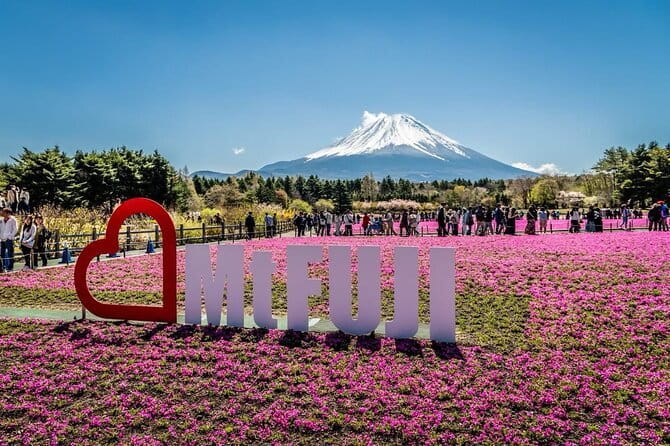
Oishi Park is a public park on the north shore of Lake Kawaguchi, and it is built for gentle walking with constant photo angles. There is a 350 meter walking path with flowers planted along it, and each season has its own look.
If you go in spring, you can catch moss phlox that spreads out like a pink carpet, often from early April to late May. In early summer, lavender can bloom from late June into late July. In autumn, kokia shrubs can turn red from mid to late October.
Even if you miss the perfect bloom timing, the idea remains solid: Fuji framed by a lakeside park gives you a different kind of viewpoint than the steep mountain stops. It is scenic, slower, and good for resetting before the higher altitude portion.
You also have optional add-ons in this area. The Kawaguchiko Natural Living Center runs experiences like fruit jam making and an all-you-can-eat cherry and blueberry picking course. There is also a cafe where you can try blueberry ice cream.
Best use: use this as your day’s breathing space. If your group wants snacks, casual shopping, or just time to slow down, this is where it fits.
More Tokyo tours and experiences for the shortlist

Mt Fuji 5th Station: the altitude highlight, plus the real-world road rules
This is the main mountain stop, accessible by car up to about 2,200 meters. It is the closest point you can get to the top by vehicle, and it is a natural magnet for hikers and viewpoint seekers.
From here, you get big views, sometimes including city areas, and you get a stronger sense of the scale of the mountain than you do from lake shores.
Now the practical part, because it matters: getting here involves the Fuji Subaru Line, a scenic toll road. The toll is listed as 2,100 yen. In winter, it may have partial closures due to heavy snow.
During the main climbing season, July 5 to September 10 (noted for 2024), private vehicles are restricted on the road. Shuttles operate between designated parking lots and the 5th Station. That means your driver needs to plan around seasonal access rules, and it can add time.
Also, the 5th Station admission fee is not included in the tour listing you provided. I would treat the mountain fee as an extra budget line rather than something you assume is free.
Best use: keep your expectations flexible. If clouds roll in, the altitude still delivers a sense of place even when the classic peak photo is harder to get. If conditions are clear, this is where the day earns its name.
Lake Kawaguchiko: viewpoints, ropeway energy, and a chance to slow down
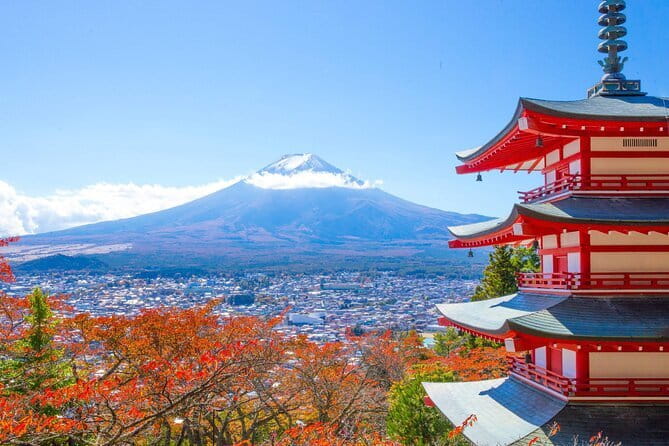
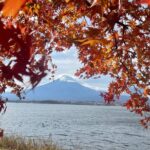
After the mountain, you shift back to the lakes. Lake Kawaguchiko is the second largest of the Fuji five lakes, and it gives you wide, calming scenery with Fuji as the anchor.
One highlight in this area is the Kachi Kachi Ropeway, which goes up to an observation point near the summit of Mount Tenjo. From there, you can see Lake Kawaguchiko and Mount Fuji together. The listing does not say it is included, so if you want that ride, you should plan for a separate ticket.
There are also hot springs available around the lake area. The listing positions this as a way to relax after a sightseeing day, even if your exact stop depends on your driver’s route and timing.
Best use: keep this part light. If your group is photo-heavy, this is where you can shoot from a more relaxed pace without climbing stairs again.
English-driver value: what you gain besides translation
A private day with an English driver is not only about language. It is about how the day flows when you hit real-life problems like traffic or changing road access.
In one account shared in the information you provided, a driver named Bajwa contacted the group the evening before and adjusted departure to 7am instead of 8am to avoid heavy traffic. That kind of detail can make or break a Fuji day, because the bottleneck moments are always earlier than you expect.
Another note from the information: a driver named Ali was helpful with suggestions, and the driver worked to minimize travel time, including choosing alternate routes when traffic was an issue. That matters because Fuji-area roads can get crowded fast, and you want someone focused on time efficiency, not just waiting at the roadside.
So if you care about seeing multiple stops without feeling rushed, this format is a strong match.
Price and value: what $60 really means on a 10-hour private day
The listed price is $60 for about 10 hours, and it includes private transportation and an air-conditioned vehicle. For Tokyo-to-Fuji distances, that is often where the value comes from, because the car is the expensive part.
But you should also budget for what is not included. The listing says all fees and taxes are not included. That lines up with what you see in the route details: some stops have free admission, while others may require extra money.
In particular, plan for possible costs such as:
- Mt Fuji 5th Station admission fees (listed as not included)
- The Fuji Subaru Line toll of 2,100 yen
- Any small admissions like the Hannoki Bayashi Shiryokan museum area around Oshino Hakkai
- Optional add-ons like the ropeway, if you choose to ride
When you do the math, the value still makes sense if you want a private, air-conditioned day with multiple highlights, rather than trading time for public transit. If your group is comfortable with buses and trains and you are traveling with budget limits, you might compare costs carefully. But if you want fewer hassles, a private car day is usually the easiest way to see Fuji without burning your whole itinerary on commuting.
How to get the most out of your day (without turning it into a sprint)
If I were building a smart plan for you, I would optimize for two things: clear views and comfortable pacing.
First, aim to start early. Even small shifts in departure time help, since the busiest traffic patterns can hit before you even think about them. The Bajwa example in the provided information shows how moving from 8am to 7am can help.
Second, treat the day as a sequence. You will do the stair and shrine atmosphere at Chureito Pagoda, then switch into a calmer springs stop at Oshino Hakkai, then a quick shrine visit, then a lakeside park with seasonal flowers. That flow is actually good, because it alternates energy levels.
Third, watch footwear. You will walk, stand, and likely climb stairs. Even if the tour timing says each stop is around an hour, your feet will do more work than you expect.
Finally, keep one rule for expectations: Fuji is weather-dependent. If clouds move in, focus on the still-beautiful lake views, the shrine atmosphere, and the experience of being in the Fuji region rather than only chasing the perfect summit photo.
Should you book this private Mt Fuji and Hakone day?
Book it if you want the easiest path from Tokyo to Mt Fuji viewpoints, Shinto sites, and lake scenery in one day, and you care about doing it with less stress. This tour format is especially good for groups that dislike strict schedules or want a driver who can react to traffic and conditions.
Skip or adjust expectations if you want a fully Hakone-centered itinerary, because the provided route is heavily Fuji and lakes focused. Also, if anyone in your party struggles with stairs, be ready for the Chureito Pagoda climb with about 400 steps.
If the weather is decent, your odds of a memorable day are strong. And with the private setup, you have the best chance to see the most important sights without cutting your day into exhausting pieces.
FAQ
Is pickup available for this tour?
Pickup is offered. The information also notes the pickup is near public transportation.
How long is the private Mt Fuji and Hakone sightseeing tour?
It runs about 10 hours.
What is included in the tour price?
The listing includes private transportation and an air-conditioned vehicle.
Are admission fees included?
No. The listing says all fees and taxes are not included. Some stops list free admission, but Mt Fuji 5th Station admission is not included, and there can be small admission fees at certain areas.
What ticket format do I get?
A mobile ticket is provided.
Do I need to pay tolls to reach the 5th Station?
Yes, the Fuji Subaru Line toll is listed as 2,100 yen. The road rules can also change in certain seasons.
What happens if weather is poor?
The experience requires good weather. If it is canceled due to poor weather, you will be offered a different date or a full refund. You can cancel for a full refund up to 24 hours in advance.
More Private Drivers in Tokyo
More Private Tours in Tokyo
More Tour Reviews in Tokyo






Not for you? Here's more nearby things to do in Tokyo we have reviewed












Mount Fuji Tours, side by side.
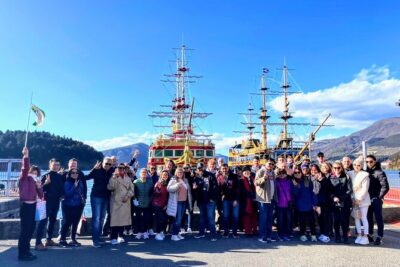 ★ 5.0Mt Fuji and Hakone 1-Day Bus Tour Return by Bullet TrainFrom $16326,383 reviews
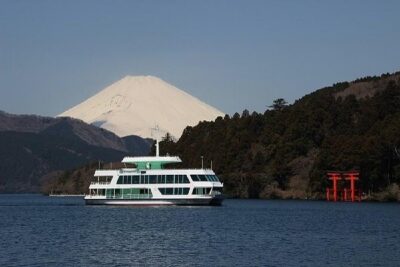 ★ 4.0Mt Fuji & Hakone Cruise, Drum Show Bullet Train 1 Day from TokyoFrom $1497,413 reviews
 ★ 4.4Tokyo Mt Fuji 5th St & Hakone Cruise Bus Tour w/Bullet TrainFrom $1545,024 reviews
 ★ 4.5From Tokyo: Mount Fuji Full-Day Sightseeing TripFrom $684,970 reviews
 ★ 4.7Mt. Fuji Tour, Hakone Ropeway, Owakudani, Lake AshiFrom $544,002 reviews
 ★ 4.2Mt. Fuji 5th Station & Hakone Cruise 1-Day Bus TourFrom $1292,381 reviews
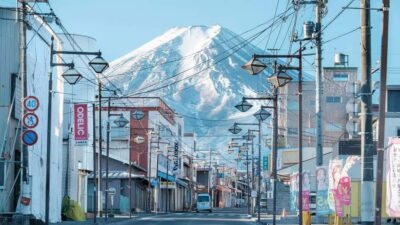 ★ 4.7Mt Fuji Top 5 Spots Day Tour: Arakurayama Park,Oshino HakkaiFrom $532,066 reviews
 ★ 5.0Private Tour to Mt. Fuji and Hakone (Fully Licenced Operator)From $4971,910 reviews
This tour also belongs to