
Review · TOKYO SAMURAI EXPERIENCES
Samurai Sword Training and Katazome Dyeing Experience in Tokyo
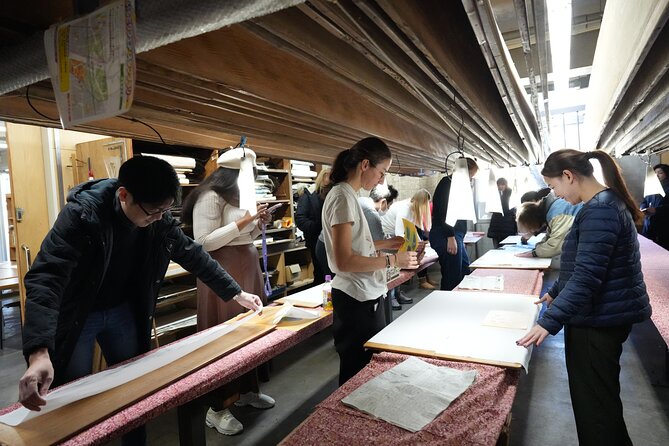
Two samurai skills in one short session. This Tokyo workshop pairs Katazome dyeing (with Edo Komon patterns used in samurai clothing) with hands-on samurai sword training in a real dojo, all in about two hours. I love that you get personalized instruction in a small group of up to 8, and I also like that your dyeing work turns into something practical you can wear, a headband made from your own tenugui. One thing to consider: the dojo part happens after you’ve been working with fabric, so you’ll want to be ready for a quick change of pace and a shoe-off environment right after.
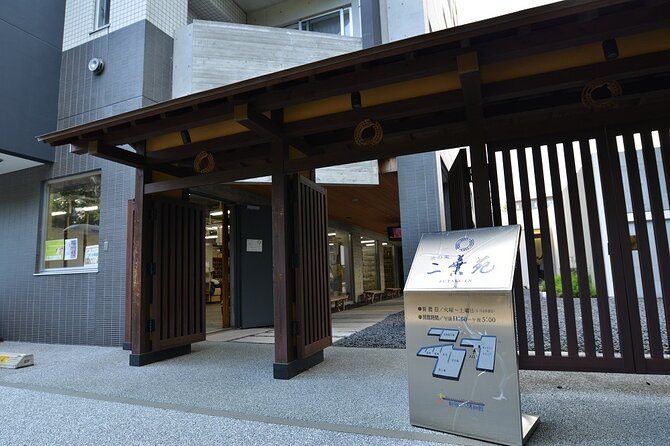
If you’re the type who likes Tokyo culture that you can touch, this is a strong choice. You start at 染の里おちあい (染の里おちあい 二葉苑) in Shinjuku, make and dye your cloth, then move into 武蔵国無外会 for a sword demonstration and basic defensive training with toy swords. The whole flow is built for maximum hands-on time, and it’s a nice way to see a less-known side of the city without spending half a day commuting.
Key highlights worth planning for
- Edo Komon pattern talk tied to samurai kamishimo, so the dyeing has a clear cultural link
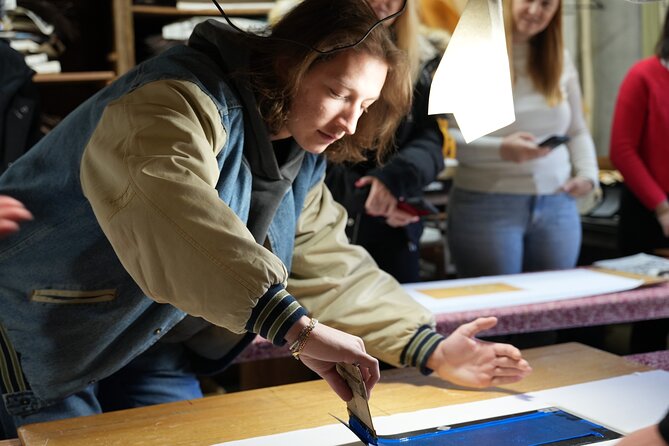
- 40 minutes of hands-on tenugui dyeing, with instruction from artisans at 染の里おちあい 二葉苑
- You leave with a wearable headband, wrapped from the dyed tenugui you make
- A real sword demonstration first, before you practice with toy swords
- Defensive-action training in the dojo, built around clear explanations and short, teachable drills
- Small-group attention (max 8), which matters for getting feedback while you work
Katazome at 染の里おちあい 二葉苑: tenugui dyeing with a samurai connection
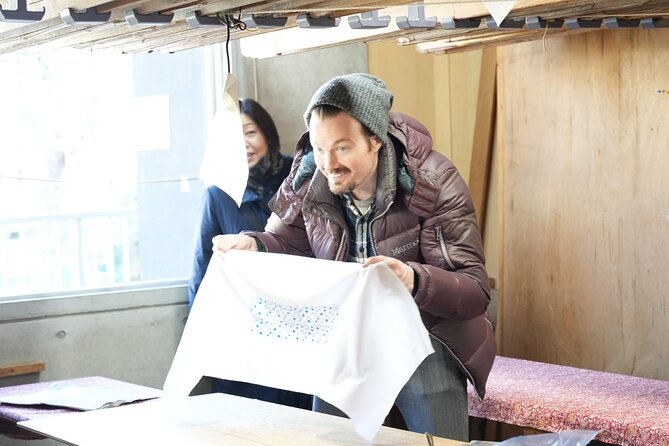
Start your morning at 染の里おちあい (染の里おちあい 二葉苑), in Shinjuku’s Kamiochiai area. The workshop begins with an introduction to Edo Komon patterns and how stencil-dyeing connects to samurai attire, specifically samurai kamishimo. That matters because a lot of dyeing experiences stay purely artistic. Here, you’re given a reason to care about the patterns you’re making, and that makes the technique feel less random.
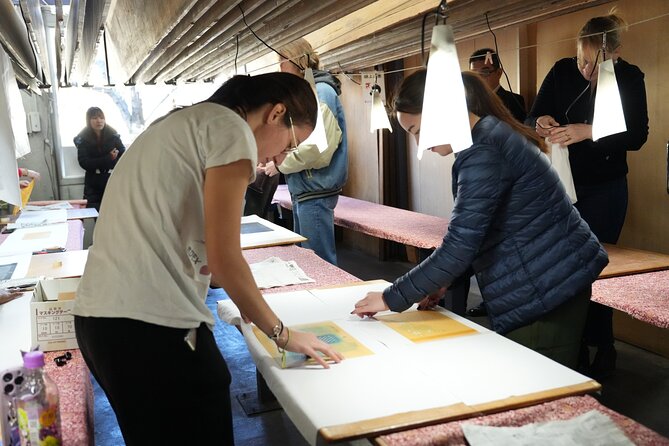
Then you jump into the real fun: a tenugui dyeing session with artisans guiding you through the process. Tenugui is a traditional hand towel format, and in this workshop it becomes your canvas. You get instruction and hands-on time, including Komon pattern dyeing. Practically, that means you’re not just watching someone else work, and you’re not left guessing what to do next.
Time-wise, this part is the centerpiece, around 40 minutes. In a city where many cultural tours move at a museum pace, I like that you get a real chunk of making time. You also get a short slot for wrapping up at the end, where you’ll take your dyed tenugui and wrap it as a headband before moving on.
One small drawback to plan around: since it’s a dyeing workshop, you should expect some mess potential, even if the shop keeps things organized. If you’re wearing light-colored clothes or a favorite outfit, consider dressing a level down in “I’m okay if this gets a little stained” territory.
You can also read our reviews of more tours and experiences in Tokyo.



Turning your dyed tenugui into a headband you’ll actually use
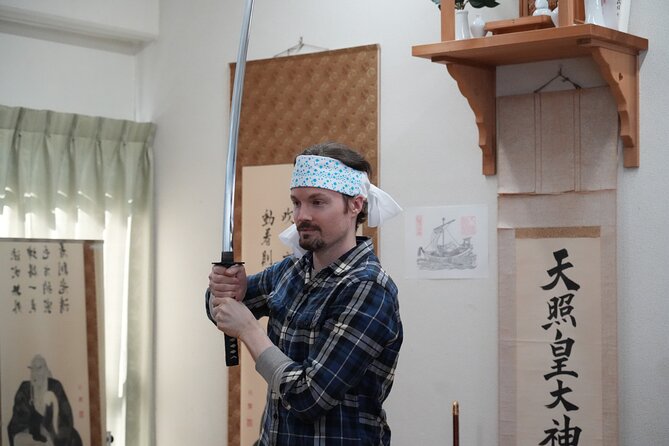
One of the smartest details in this experience is that your work does not stop at a finished piece of cloth that sits in a bag. After dyeing, you wrap the dyed tenugui as a headband. That turns a craft activity into something you can use immediately on your Tokyo day, and it also helps you remember what you made because you’re wearing it while you learn the next part.
That hands-on, wearable outcome is part of why this tour feels more satisfying than a quick demonstration. It’s also the kind of souvenir that isn’t just “take a photo and go.” You’ll likely keep wearing it back home, or at least you’ll have a tangible reminder that you did the work yourself.
The workshop also gives you a short transition, about 10 minutes, before you leave Somenosato Ochiai and head toward the dojo. This isn’t a long walk, but it’s long enough to switch mental gears from textile craft mode to sword training mode.
From workshop to dojo: the shoe-off moment and what to expect
About a minute walk after you depart, you’ll enter the dojo at 武蔵国無外会, and you’ll take off your shoes. That’s one of those details you want to remember early so you’re not scrambling at the last second. Since the tour is two workshops in one, the setting changes fast, and the dojo environment is more rules-based than the craft shop.
Once you’re inside, expect a short rhythm: sword demonstration, then explanations with toy swords, then hands-on training. This is not a long “watch and wait” class. It’s paced so you see the real thing first, and then you learn the logic behind movements using training tools.
Even if you’ve never done anything like this, the dojo segment is designed to be approachable. Toy swords are used for defensive actions, and you’re given explanations before you start. I like this teaching approach because it reduces guesswork, and it keeps the lesson grounded in technique rather than intimidation.
The dojo experience at 武蔵国無外会: demonstration to first practice
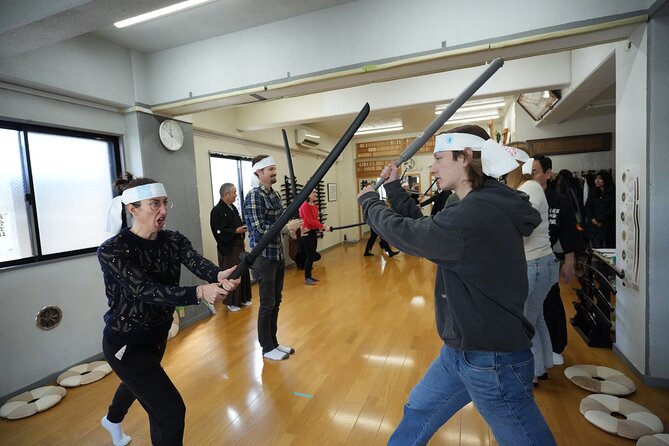
The sword portion starts with a real sword demonstration, about 15 minutes. Watching someone demonstrate first is a smart setup, because it gives you a visual target. You’ll see what the movements look like in the context of sword technique, not just in theory.
Then you move to the explanation phase with toy swords, another 15 minutes. This is where the class tries to give you practical meaning: defensive actions are explained so you understand what you’re doing and why. If you like learning the “how” behind a skill, this portion is the key bridge between art and action.
After that, you begin training, around 30 minutes. That’s plenty of time for repetition at a basic level, especially in a small-group setup. In my experience, short, focused training beats long lectures. You get to do the motions, get your bearings, and build muscle memory fast.
Because the group max is 8, you’re not just fighting for attention. Smaller groups usually mean the teacher can correct more than one person, and that helps you avoid practicing the wrong thing for the rest of the session.
Toy-sword defensive training: how to get the most out of 30 minutes
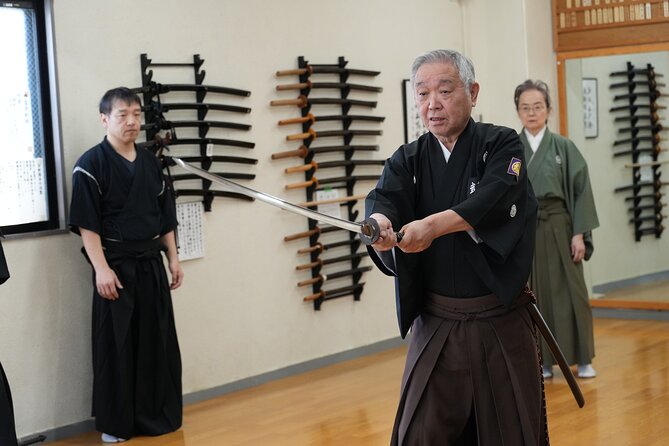
You might think toy swords are just a way to keep things safe, but here they play a bigger role. The structure is defensive actions, with explanations first, then practice. That means your goal is not performance flair, it’s learning what happens when someone attacks and how defense is executed in a controlled way.
To get the most out of the 30 minutes, go in with a simple mindset: focus on form and timing, not power. Toy swords can make you want to swing hard, but the class is built around defensive technique. If you pay attention to the instructions during the explanation phase, the training portion usually clicks faster.
Also, remember you just came from a dyeing workshop. Your body might feel a little stiff from sitting and handling fabric. Do a quick warm-up in your head. Keep your shoulders relaxed and take your first few repetitions slowly. The class format gives you enough time to settle in, so you don’t have to “start perfect” on rep one.



Price and value: why around $97.73 can make sense for a Tokyo 2-hour combo
At $97.73 per person for about two hours, this tour isn’t the cheapest activity in Tokyo. But it’s also not trying to be. The value is in the combination: you’re getting two guided workshops in one day segment, and they’re taught in different settings, a dyeing workshop and a dojo.
There’s also real value in the small group cap of up to 8. With a bigger group, hands-on craft time can shrink and sword training can turn into standing in line. Here, the format is set up so instruction can stay personal. That’s the difference between a “look and leave” experience and one where you come away with skills and a tangible result.
Finally, the tour includes mobile ticketing, and the structure is compact. You’re not spending your whole morning traveling across multiple neighborhoods for separate bookings. If you want more culture per hour, this kind of combo workshop tends to win.
Who should book this, and what to consider before you go
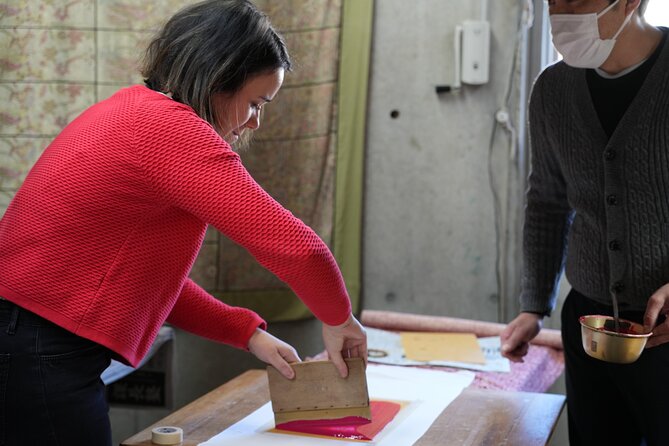
This is a great match if you like hands-on learning, and you want Japanese culture that isn’t only passive. The dyeing portion gives you a practical making skill, and the dojo portion gives you a structured introduction to defensive sword technique. You also get both arts in one location flow, which is helpful if you’re planning a busy Tokyo day.
It’s also ideal if you care about cultural context. The workshop explicitly connects stencil dyeing and samurai kamishimo through Edo Komon patterns. That’s more meaningful than craft-only experiences, because it ties technique to a social purpose.
One consideration: this is a short class, around two hours. If you’re looking for an advanced training program or a long, deep textile course, you may find the time limited. But if you want a solid first taste of both, with guidance and hands-on time, it’s a very workable format.
For attire, you’ll be taking off shoes in the dojo. Wear something you can remove easily and comfortably. For the dyeing workshop, you might find it reassuring to wear clothes that can handle a small risk of getting messy, since you’re doing hands-on dyeing.
Should you book Samurai Sword Training and Katazome Dyeing in Tokyo?
Book it if you want a compact Tokyo experience where you make something real and learn a skill you can picture yourself practicing. I’d especially recommend it to anyone who likes respectful cultural learning that explains both technique and cultural meaning. The small-group size helps, and the two-part format, cloth then sword, keeps the day interesting.
I’d skip or reconsider if you have a strong preference for either craft or sword training alone, and you want a longer session in one discipline. Also, if you’re extremely sensitive to mess, you should think carefully about what you wear during dyeing.
FAQ
How long is the Samurai Sword Training and Katazome Dyeing experience?
It runs for about 2 hours.
Where does the tour start and where does it end?
You start at 染の里おちあい 2-chōme-3-6 Kamiochiai, Shinjuku City, Tokyo 161-0034, Japan. The tour ends at 武蔵国無外会 2-chōme-4-6 Kamiochiai, Shinjuku City, Tokyo 161-0034, Japan.
What time does the experience begin?
The start time is 10:00 am.
How many people are in the group?
The experience has a maximum of 8 travelers.
Do I get a mobile ticket?
Yes, it includes a mobile ticket.
Is the headband included?
Yes. You wrap the dyed tenugui as a headband as part of the experience.
Do I need to take off my shoes?
Yes. After a short walk, you take off your shoes and enter the dojo.
What happens during the sword training portion?
You watch a real sword demonstration, receive explanations of defensive actions with toy swords, and then start sword training.
Is free cancellation available?
Yes. You can cancel up to 24 hours in advance for a full refund.
What if the tour is canceled because of low demand?
If it’s canceled because the minimum number of travelers isn’t met, you’ll be offered a different date or a full refund.
More Tour Reviews in Tokyo
Not for you? Here's more nearby things to do in Tokyo we have reviewed












Tokyo Samurai Experiences, side by side.
 ★ 4.6Samurai Ninja Museum Guided tour and ExperienceFrom $271,010 reviews
 ★ 5.0Samurai Sword & Archery Class from Samurai DescendantFrom $193603 reviews
 ★ 5.0Best Samurai Experience in TokyoFrom $65458 reviews
 ★ 5.0Ninja Experience (Family Friendly) at Samurai Ninja Museum TOKYOFrom $47441 reviews
 ★ 4.6Samurai Entertainment Night Show in Kanda ShrineFrom $41417 reviews
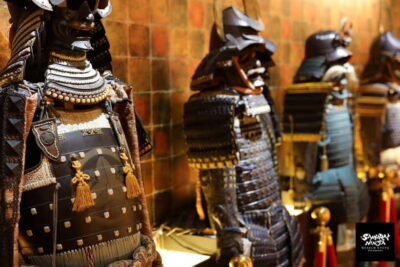 ★ 4.8Samurai Ninja Museum Asakusa: Samurai Sword Lesson & TourFrom $63306 reviews
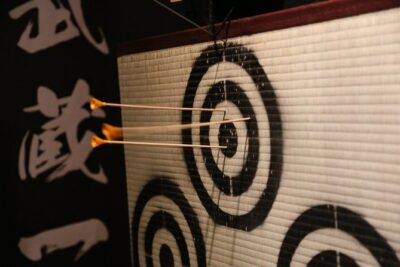 ★ 5.0Ninja Samurai 2-hour hands-on lesson by Japanese master in TokyoFrom $86194 reviews
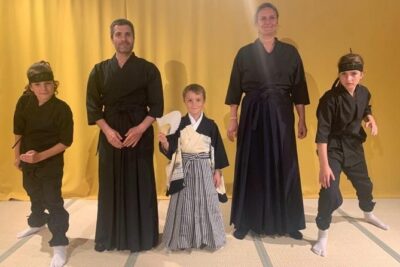 ★ 5.0Samurai Sword Experience (Family Friendly)at SAMURAI MUSEUM TOKYOFrom $65168 reviews
This tour also belongs to