
Review · SHIBUYA TOURS
Shibuya Crossing x Tokyo Tower and more! Go-Kart Tour
Tokyo looks different at go-kart speed. I love the wind-in-your-face thrill as you steer a street-legal kart, and I love the sights you rack up on one run, from Tokyo Tower to Shibuya Crossing.
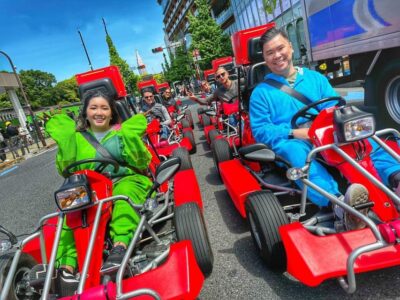
What really makes the experience work is the people running it. English guides handle the safety briefing and hand-signal system, and they keep the mood fun with costumes and complimentary photos.
One possible drawback is the driving paperwork. Your regular license and passport usually are not enough; you need the correct 1949 IDP (or the specific JAF translation route), or the team can refuse service, with no refunds on the spot.
Key things that make this go-kart tour special

- Street-legal driving on real roads with a guided formation so you get the fun without the chaos
- Landmarks packed into 90 minutes, including Tokyo Tower area, Roppongi, Harajuku, and Shibuya Crossing
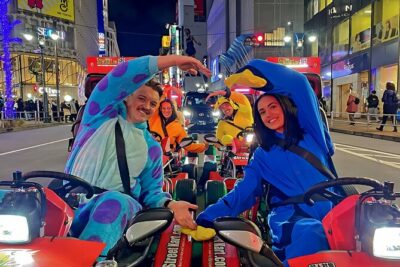
- Costumes plus photos included, which turns your ride into a real keepsake
- Small group size (up to 11) for smoother directions and more time riding
- Guides with high energy and strong attention to safety, with names like Izzy, Nao, Bingo, Blake, and Ken showing up in the experience
The thrill: why Tokyo feels different from a go-kart
There is something about Tokyo at go-kart speed that hits your senses immediately. You are not just watching famous places from the sidewalk. You are driving near them, feeling the turns, and seeing how the streets connect in a way a bus or train never quite shows.
This tour is built around that very idea. You get a street-legal go-kart experience, and you pass by big-name landmarks like Tokyo Tower, Roppongi, Harajuku, and the area around Shibuya Crossing. Even if you have seen photos before, you experience the scale differently when you are in the lane and the city is moving past you.
I also like how the tour is not only about driving fast. The route is guided, so you are not stuck guessing where to go or how to navigate. You follow the leader and focus on the ride, not on map math. That matters in Tokyo, where a wrong turn can steal time you could be using for driving and photos.
You can also read our reviews of more tours and experiences in Tokyo.



Tokyo Joy Kart start point: where the tour begins and how to show up prepared
The meeting point is TOKYO JOY KART, 〒105-0014 Tokyo, Minato City, Shiba, 1 Chome−4−10 トイヤビル 1F. The nearest station is Hamamatsuchō Station, about a 5-minute walk.
When you arrive, plan to take a little time for the basics. You will want to get squared away early so you can focus on driving instead of rushing through footwear checks and gear.
Here is what I’d have ready, based on what this company clearly expects:
- Wear shoes that are allowed. Open-toed shoes and bare feet are not allowed.
- Avoid anything that affects alertness. Intoxication, alcohol, and drugs are not allowed.
- Think about comfort. You are moving around and riding, so you want something you can pedal in confidently.
They also include free locker access, which is useful if you want to stash bags before your ride. Even if you travel light, Tokyo can make you carry more than you planned, and lockers keep that from turning into a hassle.
The first driving legs: Tokyo Tower and Roppongi without the stress
The ride starts with a guided segment that takes you toward Tokyo Tower first, then continues through the Roppongi area. This part of the tour is a warm-up in the best sense: you build comfort behind the wheel while still getting those postcard-level sights.
Why this early section is smart: you learn the rhythm before you hit the most famous, photo-heavy locations. The guides run safety instructions up front, including formation guidance and hand signals. Then, once everyone gets the hang of the controls and spacing, the tour can keep moving smoothly.
Roppongi is also a good contrast. Tokyo Tower gives you an iconic silhouette and a sense of orientation. Then the city feel shifts as you roll through the Roppongi area, which tends to look and feel more nightlife and city-street focused. You get the sense that Tokyo has different moods within a short distance, and you are driving through those transitions.
A small note on group flow: since this is limited to 11 participants, you typically get clearer guidance than in bigger group activities. That helps your confidence when traffic and crowds are factors nearby.
Harajuku: where your kart turns into a photo machine
After Roppongi, the tour moves into Harajuku. This is where the experience can feel extra fun because Harajuku is all about street style and visual energy.
Even if you are not trying to shop for fashion, the area is full of interesting street scenes. On a go-kart, those scenes become motion backdrops. You are close enough to see details, yet moving fast enough that your photos look lively.
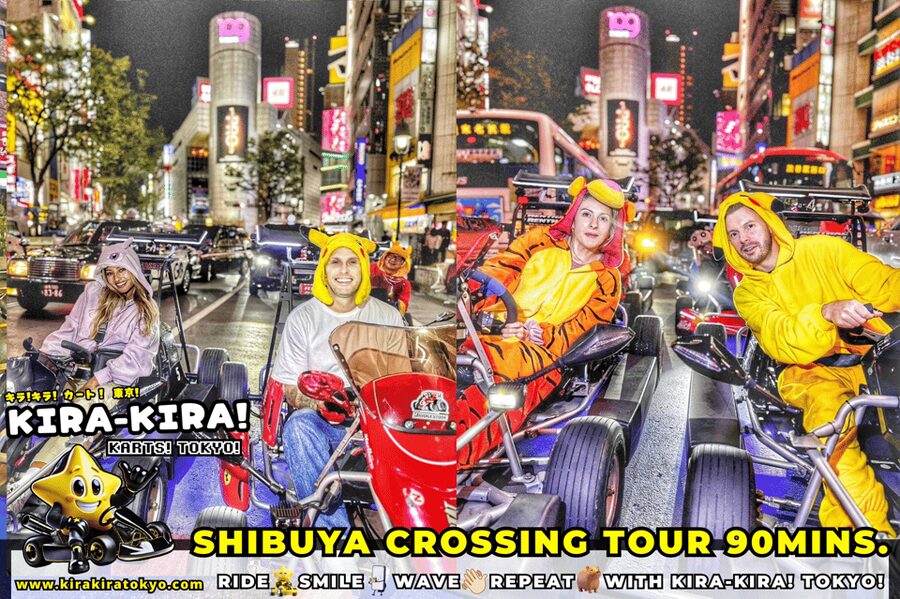
Another reason Harajuku is great on this tour is the photo component. The tour includes complimentary photos, and guides are known for taking lots of pictures and suggesting poses. Names that come up in the experiences include Bingo, Izzy, and Nao, and the pattern is consistent: they actively photograph you rather than treating it like an optional extra.
If you like souvenirs that are not just postcards, this matters. Tokyo is a place where you can easily end up with photos that are all you and no Tokyo, or all Tokyo and no you. This tour tries to get both.
Shibuya Crossing: the moment the city gets loud
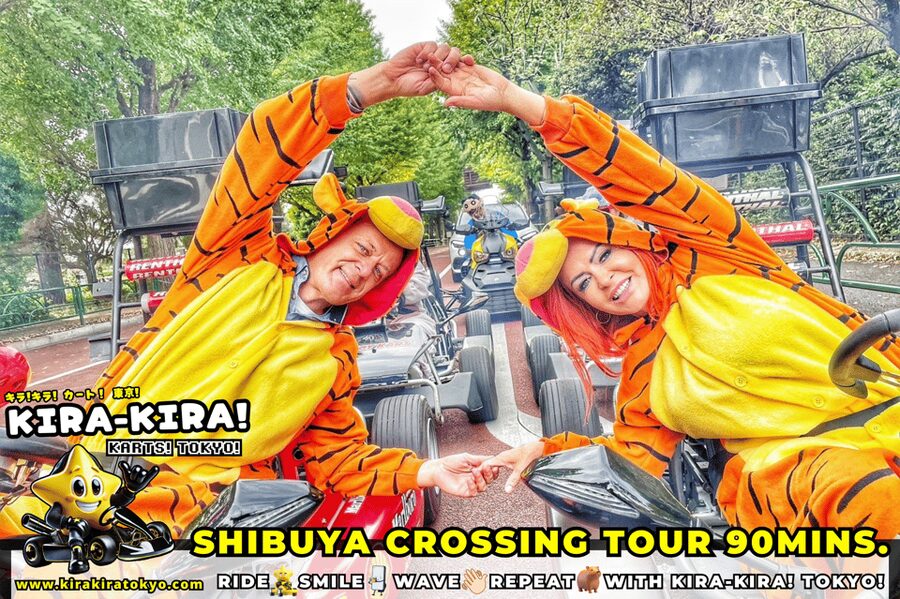
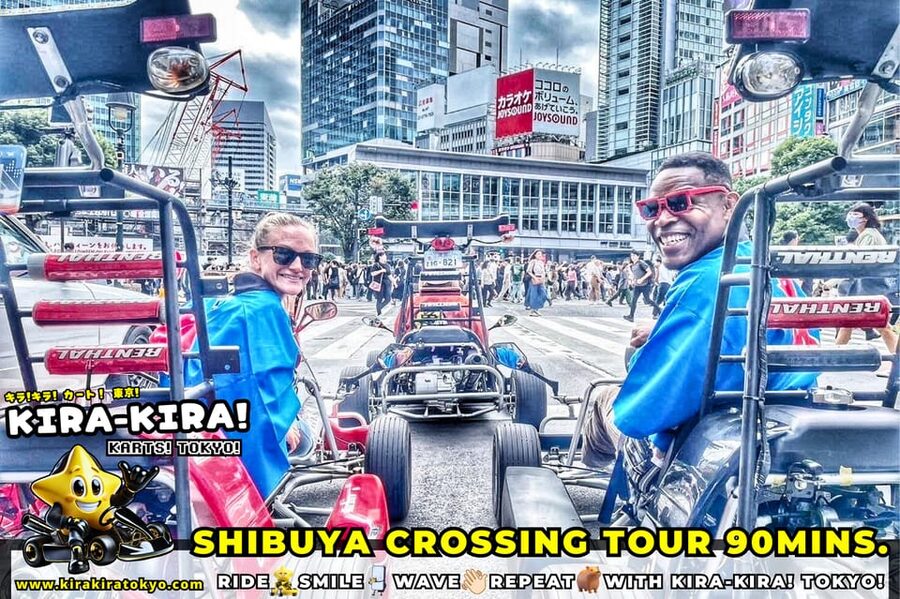
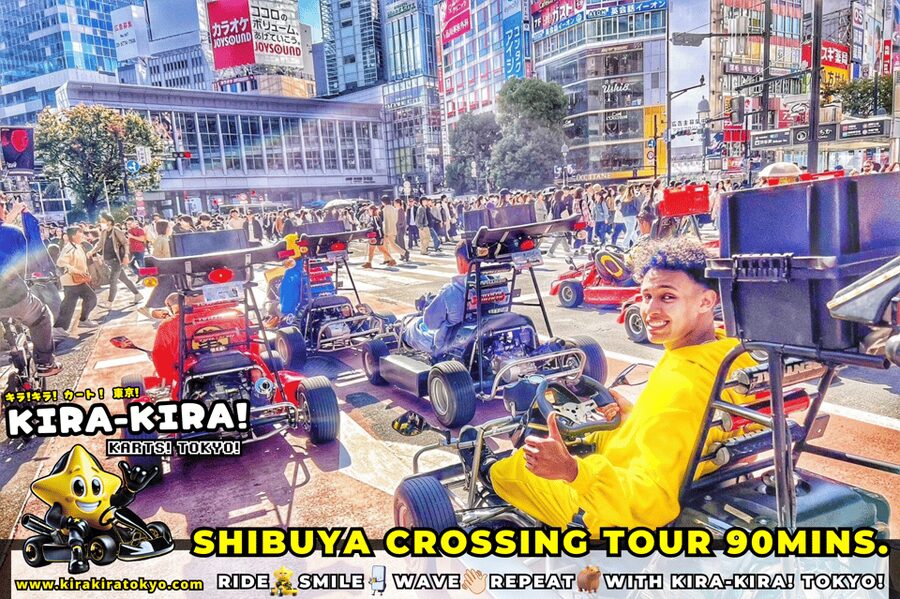
Then you hit the part everyone talks about: Shibuya Crossing. The tour guides you through this high-interest zone, and you get that rare experience of being in the scene, not just filming it from the curb.
I love that the guides keep it structured here. Shibuya can be a chaos magnet on foot. On a go-kart, with a leader guiding the pace and formation, you get the excitement without the stress of figuring out where you can and cannot go.
This stop is also where the “wow” factor shows up visually. You can feel how many people are out, how wide the area is, and how Tokyo’s street grid is designed to move crowds continuously. From a kart, you experience that as motion and sound, not only as a view.
Practical tip: if you are the kind of person who gets camera-ready quickly, you will have fun here. The guide approach tends to include photo moments and suggested angles. If you are slower to pose, no worries, just listen to the instructions and let the timing happen naturally.
Some of the most enthusiastic feedback also mentioned evening departures, including a 9pm slot that creates a different vibe because traffic can feel lighter and the city lights look more dramatic.



What the guides actually do: safety briefing, hand signals, and keeping it fun
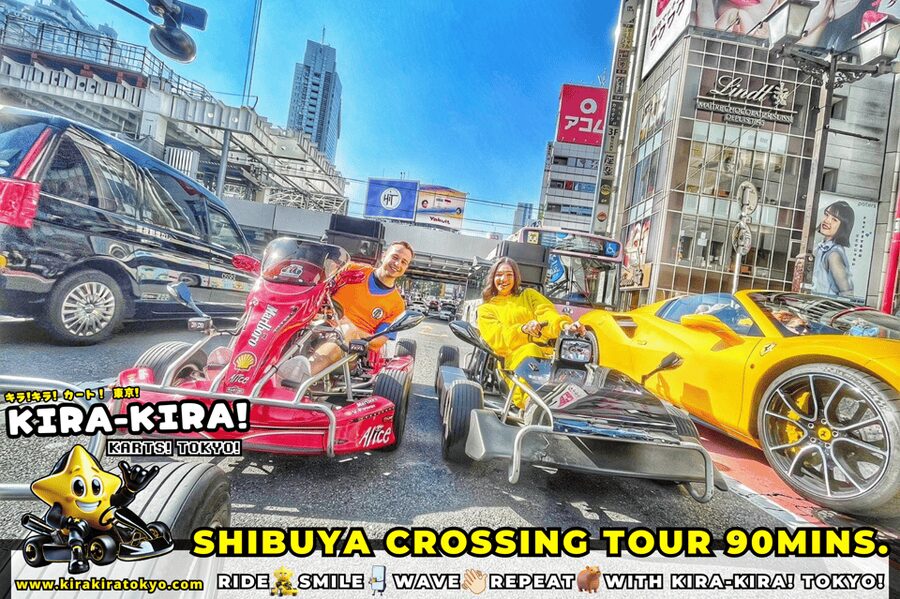
A go-kart tour should be fun first, but safe enough that you can relax and enjoy it. The format here is built around that balance.
Before you ride, you should expect a safety briefing and driving formation instructions. Reviews describe the guides covering hand signals and road positioning, and that they feel attentive without being stiff.
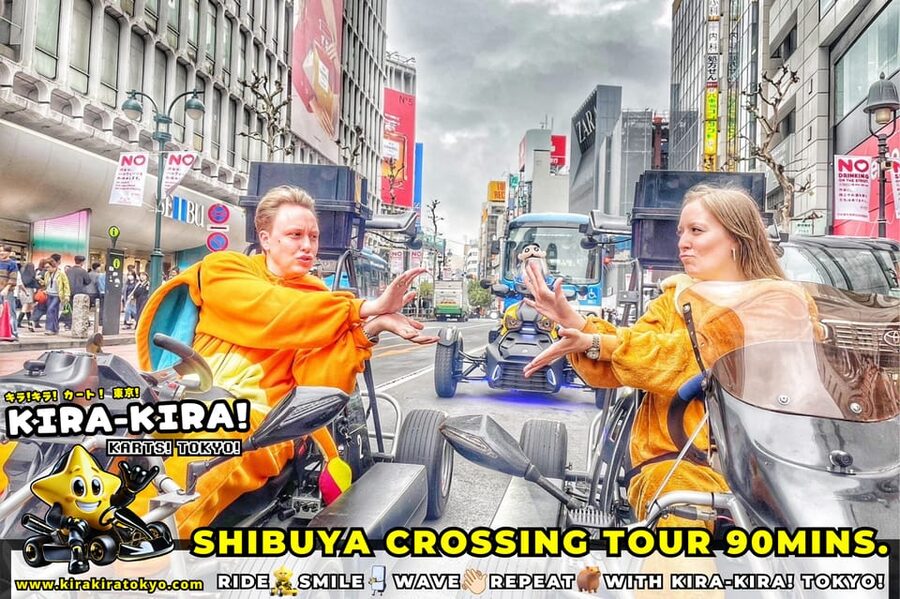
Also, costumes are included, so part of the “guided fun” is about turning the ride into a character moment. A few guides mentioned in feedback include Izzy, Nao, Bingo, Blake, Ken, Bongo, and Aloha San. Names vary, but the theme stays the same: the guides keep the energy up, keep the group moving, and help you get great photos.
Here’s what I think you should take away: this is not a self-guided kart rental where you are guessing. It is guided driving, so you should listen closely at the briefing. If you do that, you will get a smooth experience where your biggest job is simply paying attention and following the leader.
Cost and value: is $96 for 90 minutes actually fair?
At $96 per person for 90 minutes, the price sounds straightforward. But the value comes from what is included.
You are not only paying for the kart time. Your package includes:
- Tour guide
- Fuel
- Go-kart
- Free locker access
- Free use of costumes
- Pictures
International licenses are not included, and that is an important budgeting point. If you do not have the correct driving authorization for Japan, you might be stuck. (More on that below.)
So is it worth it? In my book, it is value when you look at the whole package: guided route through major districts, safety support, photo capture, and costumes. A standard sightseeing plan can cost similar money once you add transportation and multiple entries. Here, you get a one-of-a-kind driving experience that also leaves you with photos you can keep.
Also consider the small group size, capped at 11 participants. Smaller groups usually mean less waiting and fewer confusion points. That makes your 90 minutes feel more like riding time.
Driving legally in Japan: the part you must not treat casually
Japan driving rules can catch people off guard. The tour is clear that international licenses are not included in the price, and they also list the exact kinds of documentation they can accept.
This is the key point: your home license alone is typically not enough to legally drive here.
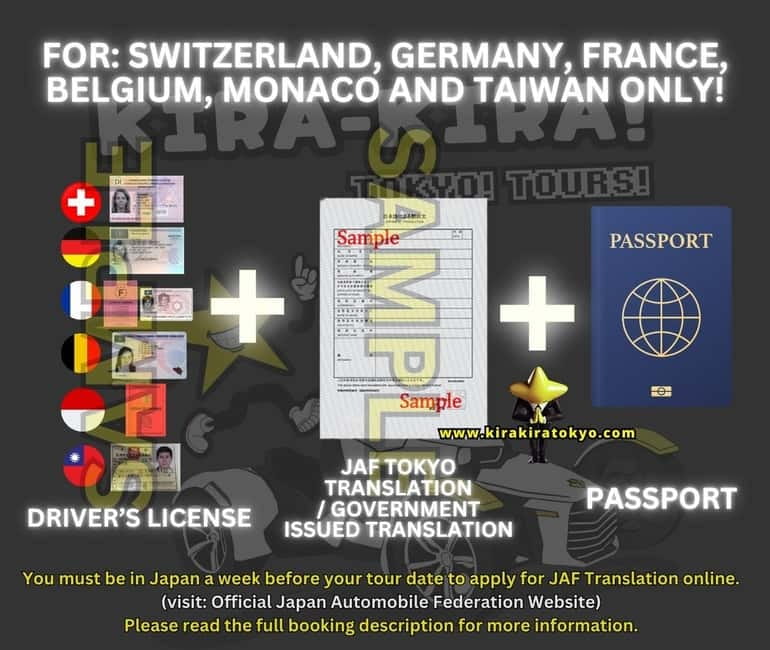
You must have at least one of the following, plus your passport:
- A valid 1949 International Driving Permit (IDP) issued by an authorized agency, based on the 1949 Geneva Convention. It must be valid for 1 year from the issue date.
- They warn about scam or fraudulent IDPs. Under Japanese law, they cannot accept unofficial or counterfeit permits. They also tell you to double-check eligibility for your country on the JAF site.
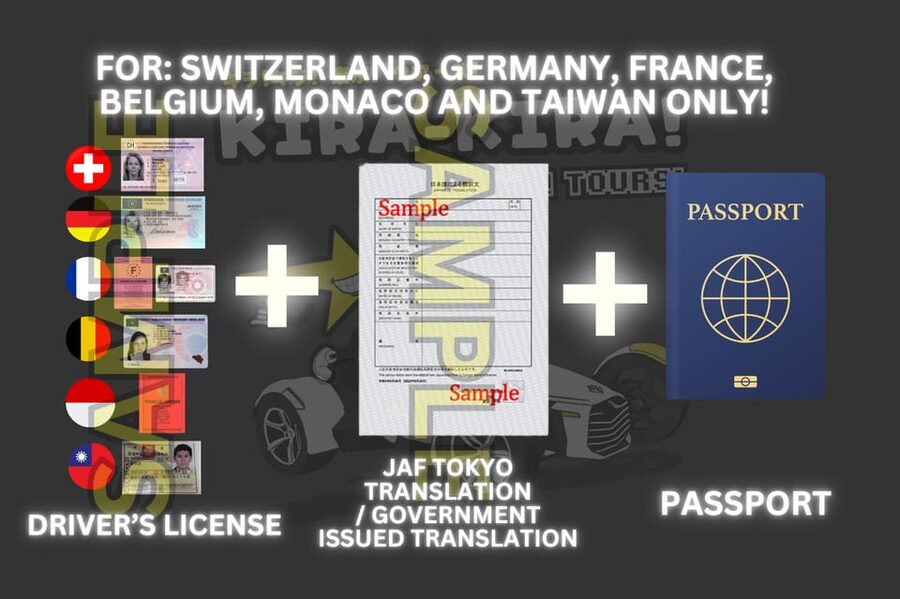
- Official JAF Japanese Translation plus passport. This route applies to driver’s licenses from Germany, France, Switzerland, Belgium, Monaco, and Taiwan only. The translation must be issued in a JAF office.
- U.S. Military in Japan: requires a valid SOFA License plus Military ID.
- Japanese driver’s license for Japan residents.
If you do not have the right documents, they state they can refuse service and there will be no refunds on the spot. So my advice is simple: check before you go, not the day of.
Also remember the physical rules:
- No intoxication, alcohol, or drugs
- No open-toed shoes
- No bare feet
These are not just “suggestions.” They are part of what keeps the ride safe and predictable.
Timing, group size, and the ride feel you should expect
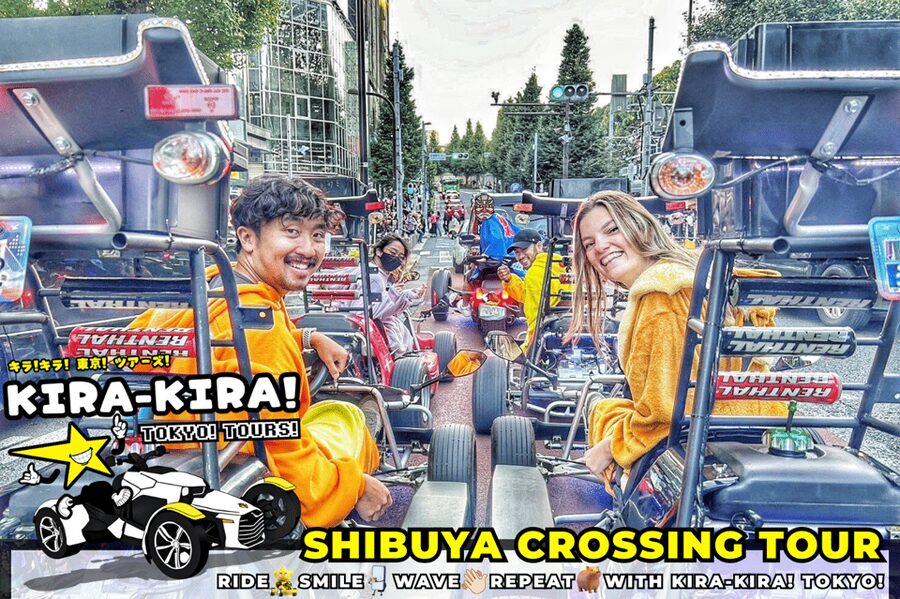
The tour is 90 minutes long. That is a sweet spot: long enough for a real city ride and multiple stops, but not so long that you feel fried by the end.
Group size is limited to 11 participants, which usually translates to better control and clearer direction. If you like to move quickly and you do not want to spend your day waiting around, this matters.
English support is available through a live tour guide. That helps if you want to understand hand signals and formation rules quickly instead of guessing.
Wheelchair access is listed as wheelchair accessible, which is another positive sign for more people. If you rely on a wheelchair, you will still want to check details directly with the provider, since the data only says wheelchair accessible.
Who should book this Kira Kira Tokyo go-kart tour
This is a great fit if you:
- Want a high-energy Tokyo activity that is not just walking and photos
- Like the idea of driving a street-legal kart through major areas like Tokyo Tower, Roppongi, Harajuku, and Shibuya Crossing
- Want costumes and photos handled for you, so you do not have to manage everything yourself
- Prefer small-group guidance over large group chaos
It may be a poor fit if you:
- Cannot meet Japan driving document requirements
- Are uncomfortable with riding constraints like footwear rules and no-alcohol policy
- Are pregnant. The tour lists pregnant women as not suitable.
- Are a diver without certification, since that is listed as not suitable as well.
Should you book it? My straight answer
Book this go-kart tour if you can meet the Japan driving requirements and you want a genuinely different way to see Tokyo. For $96 you are getting a guided, street-legal ride through the most famous neighborhoods, plus fuel, a kart, costumes, locker access, and photos. That package is why it keeps rating so high.
Skip it if driving paperwork could be a problem for you. The rules are strict, and they make it clear they can refuse service with no on-the-spot refund. If you are prepared, though, this is one of those Tokyo activities that turns the city into your playground for an hour and a half.
FAQ
How long is the go-kart tour?
The tour duration is 90 minutes.
Where do I meet for the tour?
You meet at TOKYO JOY KART, 〒105-0014 Tokyo, Minato City, Shiba, 1 Chome−4−10 トイヤビル 1F.
What is the nearest train station?
Hamamatsuchō Station is listed as about a 5-minute walk away.
Is the tour guided in English?
Yes. The tour includes an English live tour guide.
What group size is this?
It is limited to a small group, up to 11 participants.
What do I need to legally drive a kart in Japan?
You need the correct driving authorization for Japan. Your home license alone is not enough in general. The tour lists accepted options such as a valid 1949 IDP with passport, JAF translation plus passport for certain countries, a specific U.S. Military route, or a Japanese driver’s license.
What is included in the price?
Included items are pictures, tour guide, free use of costumes, fuel, the go-kart, and free locker access.
What should I wear?
Open-toed shoes and bare feet are not allowed.
Is the tour wheelchair accessible, and can I cancel?
Wheelchair accessibility is listed as yes, and the tour offers free cancellation up to 24 hours in advance for a full refund.
More Tours in Tokyo
More Tour Reviews in Tokyo
Not for you? Here's more nearby things to do in Tokyo we have reviewed












Shibuya Tours, side by side.
 ★ 5.0Official Street Go-Kart in ShibuyaFrom $763,435 reviews
 ★ 4.9Street Kart Experience in ShibuyaFrom $741,484 reviews
 ★ 5.0Shibuya Meltdown Nightlife Tour: All-You-Can-Drink Bar HoppingFrom $1061,058 reviews
 ★ 5.0Shibuya Official Street Go-Kart in Shibuya AnnexFrom $69972 reviews
 ★ 5.0Shibuya Food Tour (13 dishes and 4 Eateries)From $77770 reviews
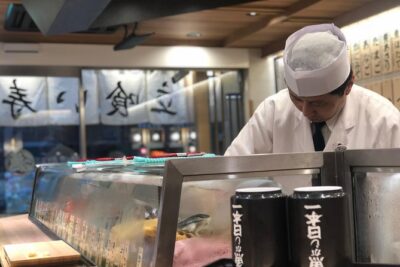 ★ 5.0Best of Shibuya Food TourFrom $217612 reviews
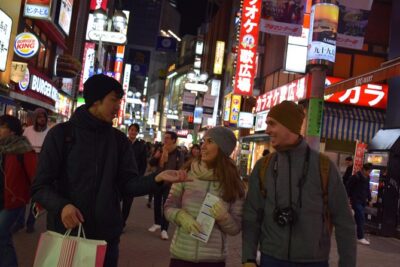 ★ 4.8Shibuya Highlights Walking TourFrom $19601 reviews
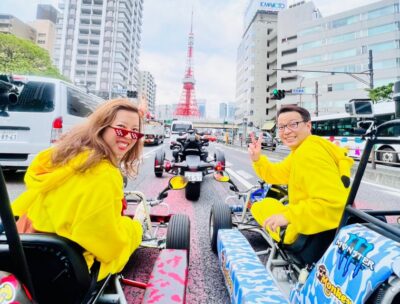 ★ 4.7Premium Go-Kart Tour with Tower & Shibuya CrossingFrom $116528 reviews
This tour also belongs to