
Review · ASAKUSA TOURS
This is Asakusa! A Tour Includes the All Must-Sees!
Crowds can be a deal breaker in Asakusa. This private 6.5-hour tour keeps you moving smartly through the sights, with a guide to explain what you are actually looking at. I especially love the chance to get history and culture context while the streets are full, and then unwind at places like Kappabashi kitchenware town without guessing your way around.
One watch-out: some of the biggest-ticket items are not included in the tour price. You will likely pay for transport, meals, and certain admissions like Tokyo Skytree, so budget extra if you want to go up and snack along the way.
Key highlights
- Private tour for your party so you can move at a pace that fits you, not a schedule for strangers
- Senso-ji and Asakusa Shrine paired with festival context, so it is more than a photo stop
- Hoppy Street and local food culture for a quick break where people actually hang out
- Kappabashi shopping focus with time set aside for kitchen tools and tableware browsing
- Gonpachi soba stop at Azumabashi Bridge with Sumida River and Skytree views mentioned
- Skytree finale by Oshiage making it easy to roll into shopping around Tokyo Solamachi
Asakusa Without the Crowd Chaos
Asakusa is one of Tokyo’s most famous old neighborhoods, and that fame shows up as crowds. The big win here is not that you see the icons, it is that you do not spend most of your time stuck behind slow walkers, unclear crossings, and “where do we go next” moments.
You get a private setup, so your guide can steer you toward the best flow for your group. You also get permission to ask questions. That sounds small, but in places like Asakusa, knowing what a lantern signifies or why a shrine is tied to a major festival makes the whole walk feel like a story instead of a checklist.
Also, it helps that guides have been singled out for making the day smooth. People have praised guides like Haruo for handling the crowd pressure and keeping the group on track, and that is exactly what you want in Asakusa.
You can also read our reviews of more tours and experiences in Tokyo.

Meeting at Asakusa Station, Ending Near Tokyo Skytree
This tour starts at Asakusa Sta. 1-chōme-1-3 in Taito City, and it ends at Oshiage Station (SKYTREE) 1-chōme-1-65. That matters because you are not doing a round trip back to where you began. Your end point is on the Skytree side, which is convenient if you want to keep exploring afterward.
If you are heading there by taxi, take note of real-world friction. One past guest described miscommunication because their taxi driver was sent to the wrong station based on the meeting point address. Your best move is to point clearly to the subway station name and not just an address.
Plan a little buffer for transit. The itinerary timing runs about 6 hours 30 minutes total, and you will likely be walking plus using public transit at least once during the day.
Asakusa Culture Tourist Information Center: The View That Gets You Oriented
You begin at the Asakusa Culture Tourist Information Center. The ticket for this stop is free, and the real payoff is up top: there is an observation terrace on the top floor overlooking Asakusa city.
I like this kind of start because it turns you from “I am here” into “I get it.” You get a sense of layout before you start moving toward Senso-ji and the surrounding streets. Even if you are not the type to stare at maps, looking down from the terrace helps you understand what you will see next.
This is also a practical reset. Before temple crowds kick into full gear, you are getting bearings and talking with your guide while everyone is still fresh.
Senso-ji Temple: Tokyo’s Oldest, Plus the Red Lantern Meaning
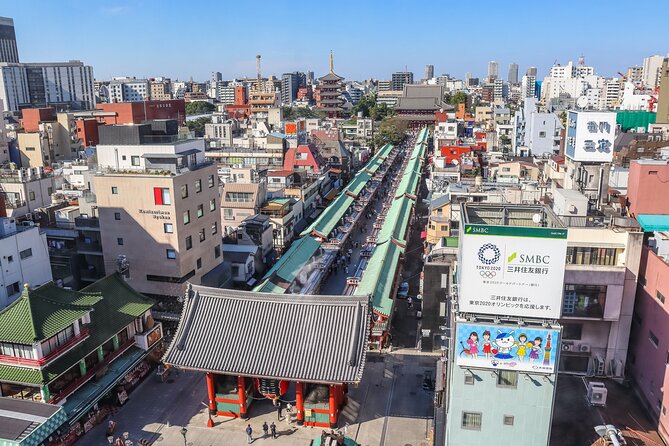
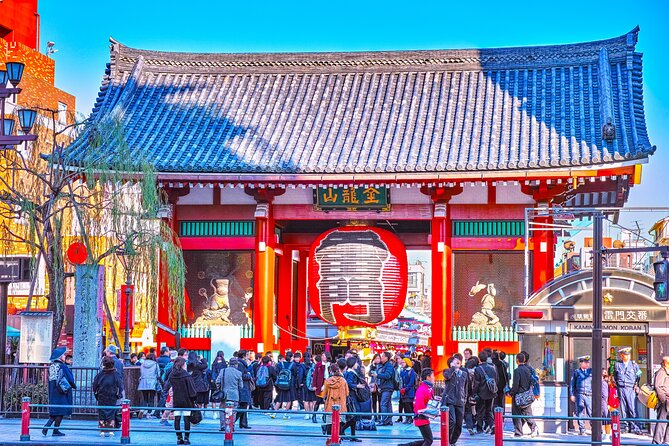
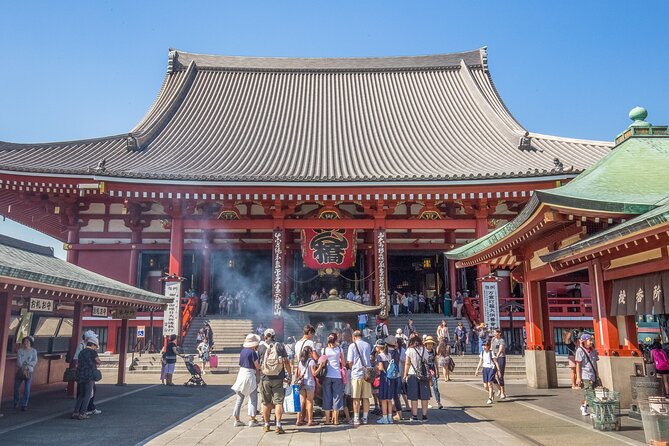
Senso-ji is Tokyo’s oldest temple, and it is famous for the large red lanterns that basically define Asakusa. The tour gives you about an hour here, which is a good amount of time to see the temple buildings and walk the approach without rushing.
What I love about going with a guide is that you are not just looking at impressive architecture. You are learning how this place fits into the neighborhood’s identity, and why the entrance details matter so much in Japanese religious spaces.
Drawback? Expect crowds. The tour does not erase the fact that this is a top destination. But you will generally spend your time inside the experience, not circling the same area trying to find the “best angle” again and again.
Asakusa Shrine: Sanja Matsuri Context That Makes It Click
Next up is Asakusa Shrine, where you get a short stop of about 15 minutes. The big detail here is the connection to Sanja Matsuri, one of Tokyo’s major Japanese festivals.
This is exactly where a guide helps. Shrines and temples are different religious institutions, and it is easy to treat them as the same photo destination unless someone explains the relationship clearly. When you know the festival link, the decorations and worship spaces feel less random and more intentional.
Time is short here, so if you are the kind of person who loves lingering, you will want to keep moving. The good news is that you are not losing your whole day to one spot.
Nishi-sandō Shopping Street and Hitting the Right Vibe
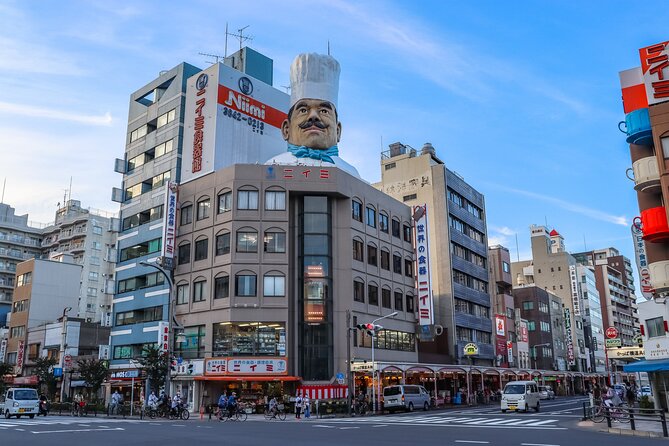
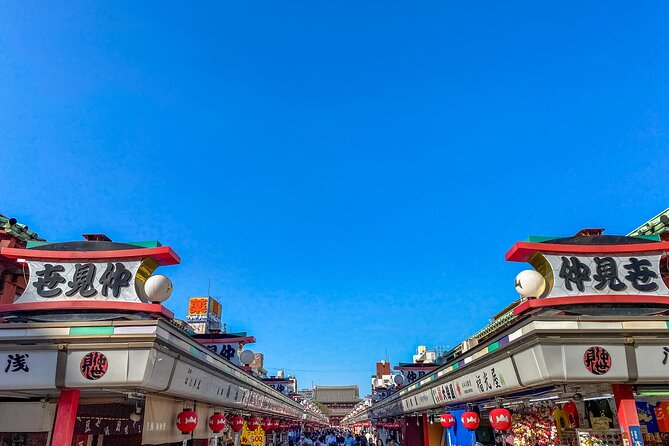
After the religious stops, the tour shifts into street life. You spend around 15 minutes at Asakusa Nishi-sandō Shopping Street, a corridor lined with festival-themed decorations and shops where tourism and Japanese tradition overlap.
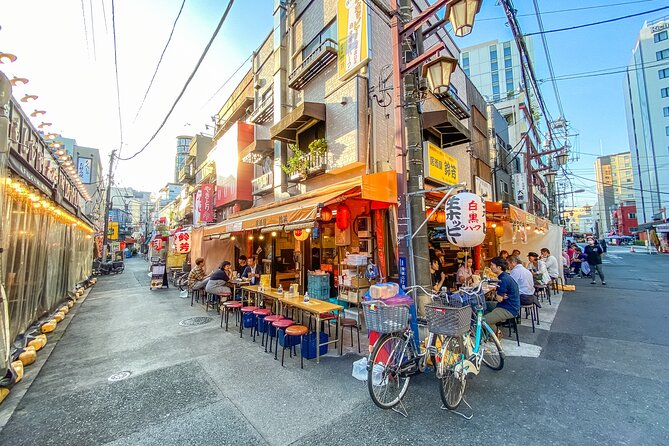
Then you get a quick 5-minute break at Hoppy Street. This is a small slice of nightlife culture, with lots of restaurants, outdoor seating, and reasonably priced drinks. The best part is the atmosphere. Even if you are not turning it into a long food crawl, this is a nice way to see that Asakusa is not just temples and souvenirs.
Practical tip: in areas like this, it is easy to get sidetracked by snacks. If you want to keep energy for Kappabashi and Skytree, treat these stops as tasting beats, not a full meal.
Kappabashi Kitchenware Town: Time to Shop Like You Mean It
Kappabashi Street (often called Kappabashi Dogugai) is where Asakusa becomes a tool-and-table obsession. You get about 30 minutes here, and the shops specialize in knives, tableware, and other kitchen tools.
I like this stop because it feels different from standard shopping streets. If you have ever tried to shop for a serious Japanese kitchen knife in your home country, you know how hard it can be without help. Here, you are surrounded by sellers who focus on the basics: blades, utensils, and serving tools.
Is 30 minutes enough? For browsing, yes. For serious shopping, it is tight. If you know you want to buy something larger, tell your guide early, so they can plan time for you and help you avoid the “we found the perfect one too late” problem.
Gonpachi Soba by Azumabashi Bridge: Views and a Real Break
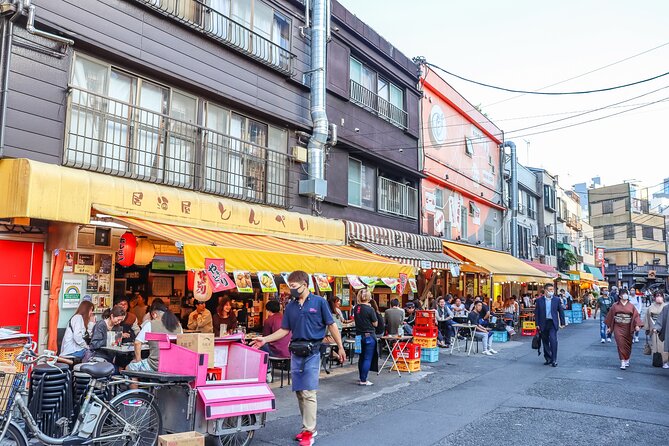
You then hit a restaurant stop: Gonpachi, a handmade soba restaurant at the foot of Azumabashi Bridge. The listed time is about 50 minutes.
The standout detail is the views. The description notes you can see the Sumida River and Sky Tree from the large windows inside. That turns lunch from just fuel into a moment you remember, because you are eating with the river and Tokyo’s skyline in view.
Meal costs are not included, so this is one of your main out-of-pocket items. Still, I think this stop is a smart use of time. It is a place where the setting and food both earn their spot, and it breaks up the walking so you do not burn out before Skytree.
Tokyo Skytree and Solamachi: A Practical Finale, Not an Afterthought
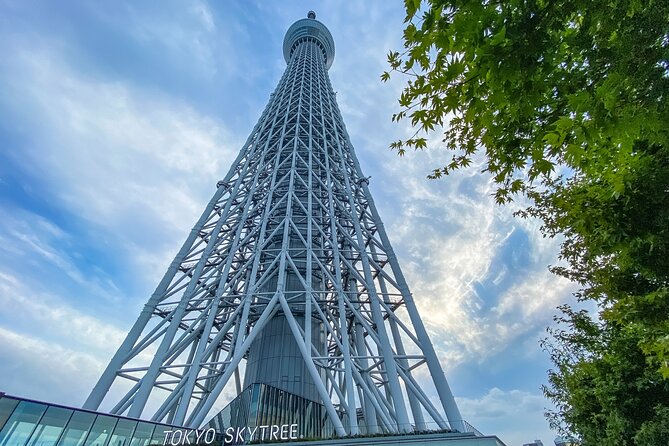
You wrap with Tokyo Skytree for about 1 hour 10 minutes. Admission is not included, and you will want to decide ahead of time whether you are going up based on your budget and energy.
Skytree is described as Japan’s tallest building at 634 meters, opened in 2012. Around it are a mall, an aquarium, and office buildings. That matters because even if you skip the observation part, you still have things to do nearby without hunting for a new plan.
Then you have about 30 minutes at Tokyo Solamachi, the commercial complex adjacent to Skytree. The focus here is shopping and entertainment, and it is built on the concept of a new downtown style.
If you like easy endings, this works. You finish at Oshiage Station, so you are not stuck far from transit after a long day.
Price and Your Out-of-Pocket Estimate
The tour price is $137.29 per person, and it includes a tour guide plus the necessary expenses for the guide during the tour. Transportation, entrance fees, food, and drink costs are borne by you.
The tour description gives a helpful estimated total of 4,880 JPY per person for additional costs, broken down into:
- Transportation: 180 JPY
- Admission fees: 3,400 JPY
- Meal costs: 1,200 JPY
There is also mention of optional experience costs of 100 JPY per person.
Here is how I think about value. You are paying for private guidance through a crowded, high-demand area, plus the day structure that helps you see major highlights without stalling out. If you are traveling with family or a small group, the private format can end up feeling cheaper than hiring separate help for multiple people, especially when you count the time you save.
If you are on a strict budget, the biggest variable is what you choose at Skytree and meals. The tour gives you the route and the stops, but it does not lock in your exact spending.
Who This Private Asakusa + Skytree Tour Fits Best
This tour is a strong match if you are:
- Visiting Asakusa for the first time and feel intimidated by the crowd flow
- Interested in culture details, not just quick temple photos
- Shopping for kitchen tools and tableware at Kappabashi
- Wanting a guide you can ask about local life, during the walk not after
- Prefer a private day for your party rather than joining a larger group
You might also like it if you plan to finish near Skytree and keep going. The ending location is a built-in handoff to shops and the area around Tokyo Solamachi.
Past guests have praised guides for different strengths. Macky for Asakusa was highlighted for planning around the group’s needs and taking people to a great lunch restaurant. Walt was praised for being very knowledgeable and making it easy to learn about Buddhism and Japan’s history. Sayaka was praised for polished English and politeness, and people noted she fulfilled requests.
Just remember, guide personalities can vary. The tour’s format and stop choices are consistent. The specific feel depends on who you are paired with.
Should You Book This Tour?
I would book this if you want Asakusa to feel guided from start to finish. The combination of Senso-ji, festival context, local street atmosphere, Kappabashi shopping, and a Skytree finale is a clean arc. It also makes sense that the tour ends at Oshiage, so your day naturally funnels toward one of Tokyo’s most iconic viewpoints.
I would think twice if you already know your way around Asakusa and you do not care about museum-style explanations. In that case, you might enjoy building your own route and skipping the paid guide. Also, if you are not planning to pay for Skytree or you want a very low-spend day, your total out-of-pocket could feel higher than expected.
FAQ
Is this a private tour?
Yes. It is a private tour/activity, and only your group participates.
How long is the tour?
The duration is about 6 hours 30 minutes.
What is included in the tour price?
Included are the tour guide, the private tour format, and the necessary expenses for the guide during the tour.
What costs are not included?
Transportation costs, entrance fees, meal costs, and any food and drink costs incurred at the visited spots are borne by the customer.
Where does the tour start?
The start is Asakusa Sta. 1-chōme-1-3, Asakusa, Taito City, Tokyo 111-0032, Japan.
Where does the tour end?
The tour ends at Oshiage Sta. (SKYTREE) 1-chōme-1-65, Oshiage, Sumida City, Tokyo 131-0045, Japan.
Are admission tickets included for all stops?
Not all of them. Some stops list admission as free, but Tokyo Skytree and the restaurant meal stop are listed as not included.
How much are estimated additional costs?
The estimated costs are 4,880 JPY per person, including transportation (180 JPY), admission fees (3,400 JPY), and meal costs (1,200 JPY). Optional experience costs are listed as 100 JPY per person.
What if the weather is bad?
If the weather is bad, there is a possibility that transportation, destinations, and routes may change.
When will I receive confirmation?
Confirmation is received at the time of booking.
Can I cancel for a full refund?
Yes, free cancellation is available up to 24 hours in advance of the experience start time.
More Tours in Tokyo
More Tour Reviews in Tokyo
Not for you? Here's more nearby things to do in Tokyo we have reviewed

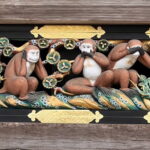

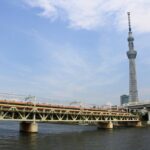
Asakusa Tours, side by side.
 ★ 4.8Japanese Dance Cabaret Theater Asakusa-Kaguwa TicketFrom $492,270 reviews
 ★ 4.7Meiji Shrine, Asakusa, Skytree Bus Tour and CruiseFrom $1221,986 reviews
 ★ 4.9Roll and Authentic Sushi Making Class in AsakusaFrom $581,957 reviews
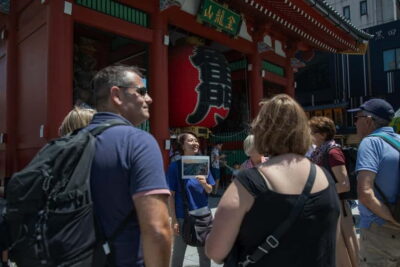 ★ 4.8Asakusa Walking Tour with Sensoji Temple VisitFrom $221,583 reviews
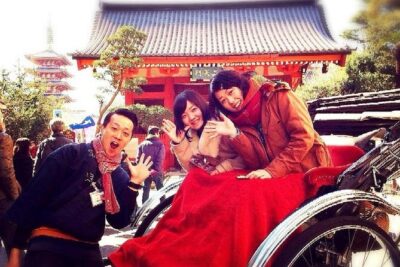 ★ 5.0Tokyo Asakusa Rickshaw TourFrom $421,375 reviews
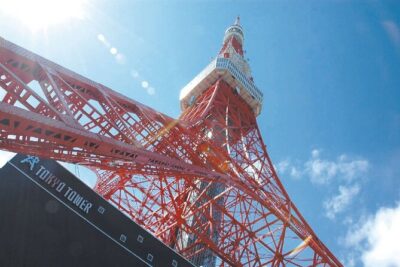 ★ 4.5Tokyo Panoramic 1 Day: Meiji Shrine, Asakusa, Odaiba and SKYTREE®From $851,222 reviews
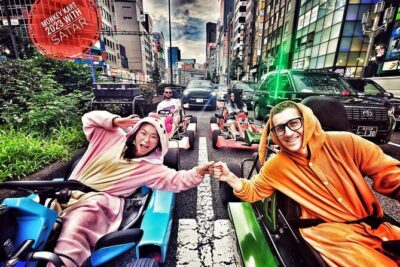 ★ 5.0Tokyo Go Kart: Asakusa, Skytree, and Akihabara **IDP MUST**From $99988 reviews
 ★ 4.7Asakusa, Skytree & Akhihabara Go-Kart City ExperienceFrom $96761 reviews
This tour also belongs to