
Review · HAKONE DAY TRIPS
Tokyo: Hakone Fuji Day Tour w/ Cruise, Cable Car, Volcano
Hakone turns a long Tokyo day into a scenic hit list, fast. You get classic Mount Fuji viewpoints plus a real volcanic stop, all with guide-led timing.
I especially like the pirate boat cruise on Lake Ashi and the way the day layers in Fuji views from the water and then from above. The Owakudani Great Boiling Valley stop is memorable too, because it mixes dramatic scenery with the famous black egg legend.
One thing to consider: Fuji visibility is weather dependent. Clouds, rain, and wind can hide the peak and may even change whether the ropeway or cruise runs.
Key points to clock before you go
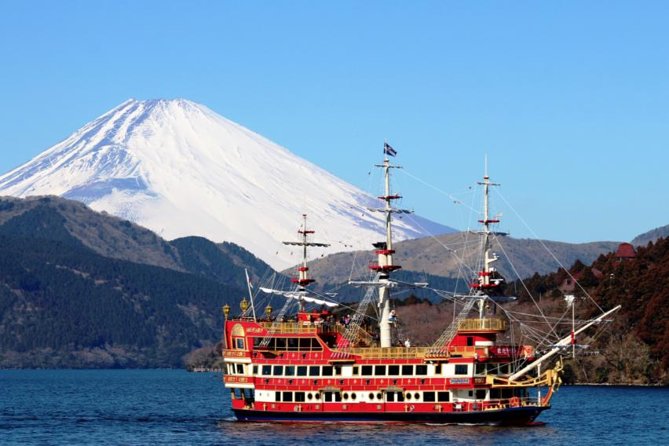
- Lake Ashi pirate boat: a fun way to do the Fuji-from-the-water moment.
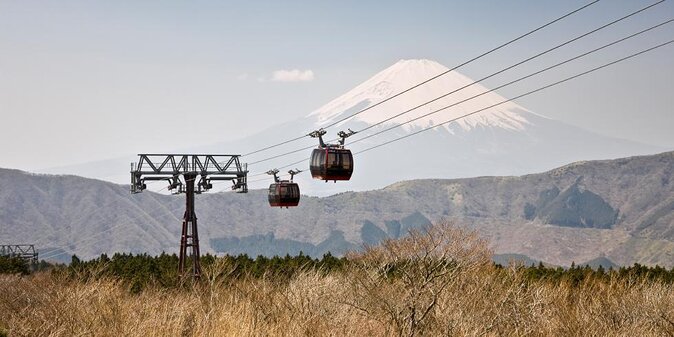
- Hakone Ropeway timing: you go up after cruising, which helps keep the day flowing.
- Owakudani black eggs: you get the volcanic setting plus the food legend in one stop.
- Onsen or outlets time: there is a dedicated block to unwind, shop, or both depending on your plan.
- Guide quality varies by person: many are great, but English can differ.
Why Hakone in One Day Works (and When It Doesn’t)
This is a classic Tokyo-to-Fuji-region day: you trade train transfers for an air-conditioned bus, then hit three signature Hakone experiences in one loop. It is long, but it is also efficient, which is the whole point of paying for a guided day.
Hakone is also one of those places where the best views depend on the sky. If Mount Fuji is fully visible, you feel like you planned everything perfectly. If it is hiding behind clouds, the trip can still be excellent, but it will feel more like a Hakone sights-and-onsen day than a pure Fuji photo mission.
You can also read our reviews of more boat tours in Tokyo


Shinjuku to Lake Ashi: the Pirate Boat and Fuji on the Water
You start in Tokyo, with options such as Matsuoka Central Building in the Yaesu area. Then the bus heads out toward Hakone, and you settle into the rhythm of a day trip: ride, stop, see, move on.
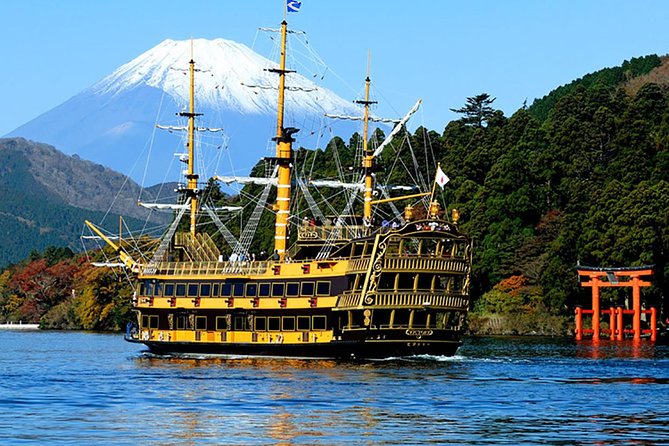
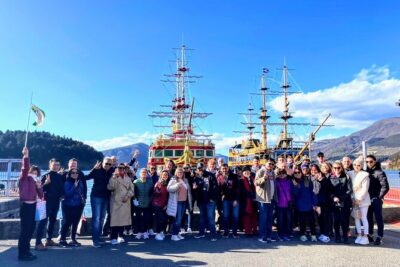
The first major payoff is the Lake Ashi cruise. You are on a decorated pirate-style boat, so even if you think you have seen enough boats in your life, this one still feels like a themed detour with real views. Many people love how the boat ride gives Fuji a chance to peek through the clouds, sometimes more clearly on the later part of the cruise when the weather shifts.
A practical note: wear comfortable shoes. Not because the deck is difficult, but because you may be walking around for boarding, photos, and getting back to the bus. Bring a warm layer too, because water views can feel cooler than you expect.
Up the Hakone Ropeway: Getting Fuji from Another Angle
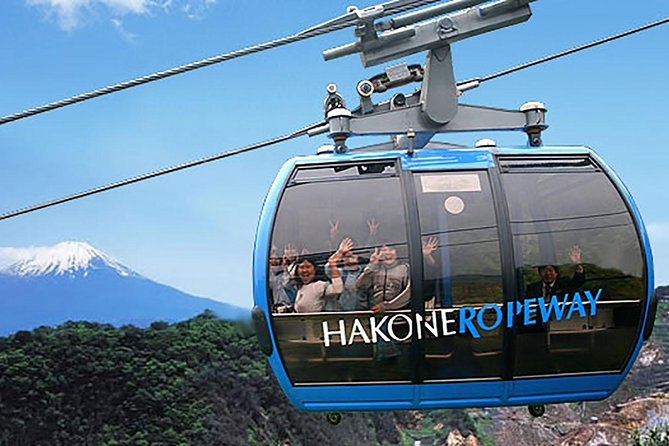
After the water portion, the tour switches gears and takes you up by Hakone Ropeway. The payoff here is altitude. You change the angle and the air, and that can be the difference between Fuji being hidden and Fuji being visible for a few minutes.
The ropeway stop is fairly short, around 20 minutes, so you do not get a long wander. You are meant to get on, get up, and make use of the viewpoint quickly. That is why timing matters. Your guide keeps things moving, and you avoid the common problem of spending half the trip waiting around.
If the wind is strong, the ropeway can close. That is not something you control, but you can control your expectations. This tour gives you a plan, then the weather decides how much of the plan you actually see.
Owakudani Great Boiling Valley: Volcano Views and Black Egg Ritual
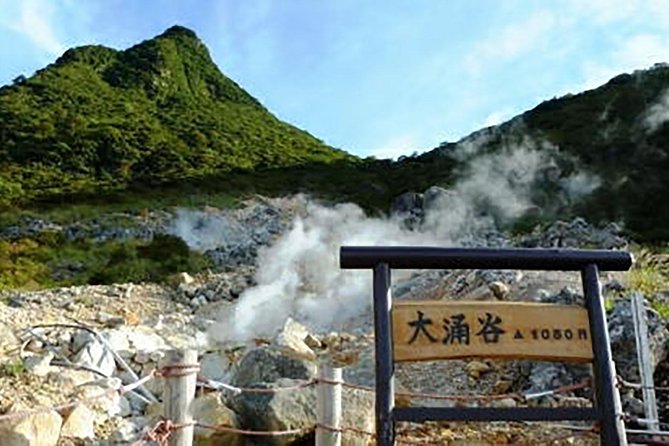
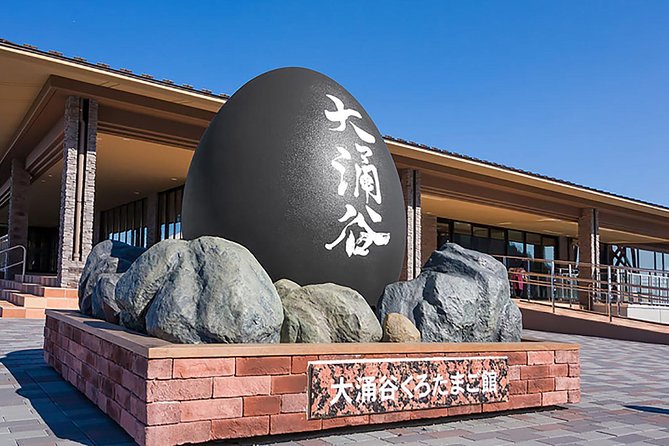
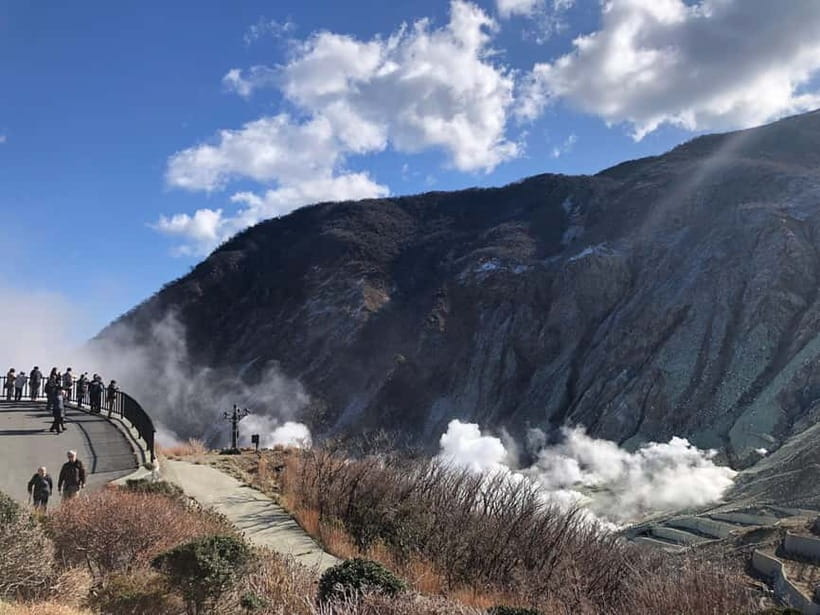
If Hakone is all about Fuji, Owakudani is about drama. This stop is the volcanic centerpiece, with the area known as the Great Boiling Valley. You get time for photos, a walk around the volcanic environment, and then lunch time and snack browsing.
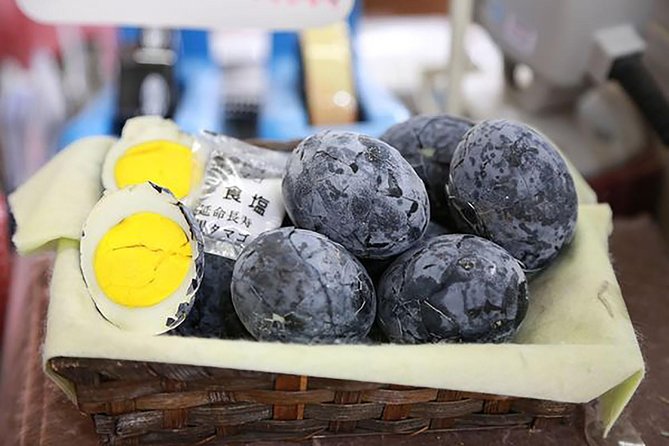
The famous food is the black boiled egg, often tied to the legend that eating it adds seven years to your life. Even if you treat the legend like a fun story, the egg is part of why this stop works. It is easy to understand on-site: volcanic sulfur, boiling valley scenery, then a food that looks like it belongs to the myth.
You might also see other black food items at stalls, like black ramen or even black ice cream, depending on what is available. Keep this flexible in your head. You are not going to be in a gourmet tasting menu. You are going to be in a volcanic food street with decent, snackable options.
The time here is about 75 minutes, which is a good balance. Long enough to take in the sights and eat if you want, not so long that it drags if visibility is poor.
Gotemba Premium Outlets: Shopping With a Fuji View
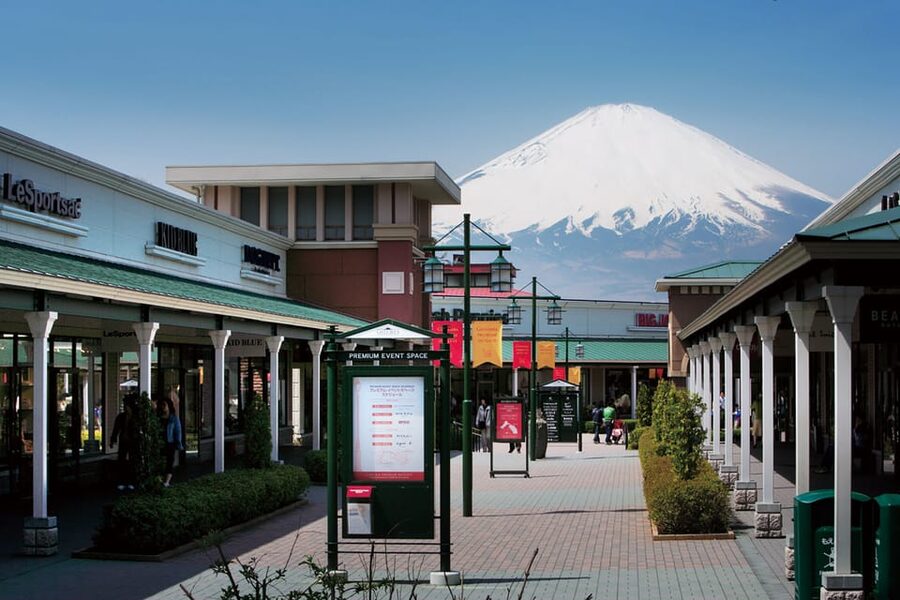
In the afternoon, the tour shifts to shopping at Gotemba Premium Outlets for about two hours. This is not the type of place you go to for small local finds. It is big-brand shopping, and the value is in the deals.
What makes it interesting is the Fuji angle. You can sometimes see Mount Fuji from inside the outlet complex, so it can feel like a weird but fun combination of mall and mountain. If Fuji is visible that day, this stop can give you extra chances for photos without needing to wait for a specific viewpoint.
Also, the timing works for most people. After a boat ride and volcano stop, shopping is a lighter activity. Your feet can recover, and you can buy gifts without burning time hunting for places on your own.
If shopping is not your priority, plan to treat the outlet time like flexible downtime. Some people end up doing less browsing and more resting, because the real goal was Hakone scenery.




Onsen at Gotemba, or Hot Springs Drop Options: the Reset Button
Japanese hot springs are one of the reasons Hakone exists in people’s travel plans. This tour builds in onsen time, about an hour, with Gotemba Onsen Kaikan listed as a stop. The onsen itself is not fully included, and ticket plus a towel are not included, so you do need a little cash for that.
The best part of an onsen hour is how it changes your energy for the trip back. After walking around Owakudani and spending time in colder air, soaking is pure logic. Many people specifically love it because it feels like the trip hands you a recovery break instead of only more sightseeing.
One more note: not all onsen experiences are the same. In some cases you might be able to go to hot springs in Hakone area depending on how the day is run. The key is that your schedule is designed so you have time for a soak, not just a quick dip.
If you want a quieter experience, you might end up less crowded than you expect because group schedules and weather shift demand. You should still expect to share space, just with a calmer pace during your specific hour.
Price and What You Are Really Paying For
At $98 per person for about 10 hours, you are paying for three things: transportation, admission tickets, and a guide who coordinates timing. The included items are the cruise ticket, the ropeway ticket, the air-conditioned bus, and the guide.
That is real value if you do not want to build your own route with trains and buses, especially from central Tokyo. A day like this can eat up time on public transit, then add the stress of figuring out where to be next and when.
Where it gets less straightforward is food. Meals and drinks are not included, so you should budget for snacks, lunch, or whatever you want to eat during the Owakudani block. Also, hot spring tickets and towels cost extra. If you skip the onsen, the tour becomes more of a scenery plus shopping day, which can still be worth it, but you should decide in advance.
In the real world, the tour feels best when you treat it like a guided sampler. You get the headline sights without having to plan every transfer and ticket.
Guide Styles: Why It Can Make or Break the Day
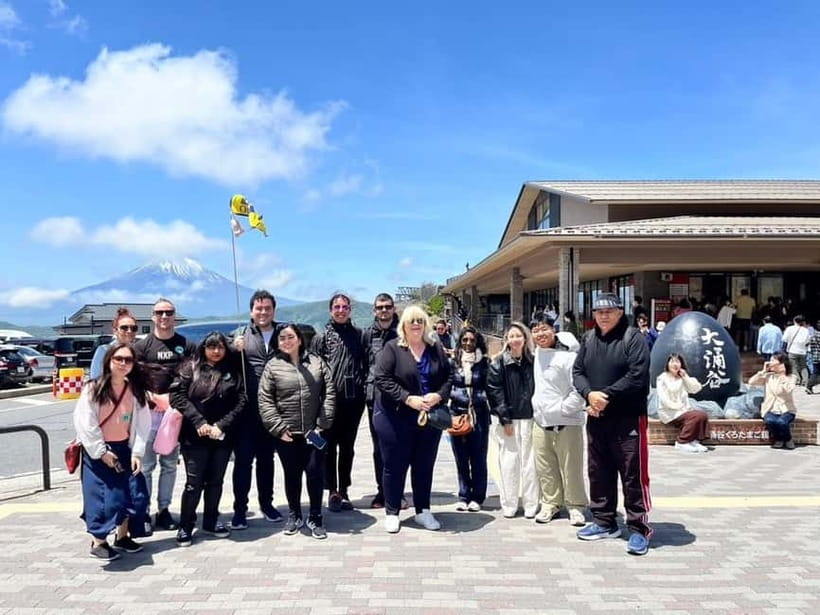
This is the one variable you cannot fully control, and it matters. Most guides are friendly and keep the day organized, but English clarity can vary.
In the better experiences, guides like Tina and Jeff were praised for explaining steps clearly and keeping people moving smoothly. Other names that have shown up include Jax, Vicky, Lisa, Ivan, and Sheilla. Even when Fuji is partially hidden, a good guide helps you understand what you are seeing, like the legend behind the black eggs or why certain viewpoints matter.
If you are sensitive to English comprehension, do not panic. You can still enjoy the scenery, and the itinerary is structured enough that you can follow along visually. Just go in knowing that language quality can affect how much you enjoy the explanations.
Timing, Weather, and the Fuji Reality Check
This day trip lives and dies by conditions. Visibility is dependent on weather, and wind can shut down the ropeway or the cruise. Weather cancellation happens too, but only if it is bad enough that the tour must be canceled, and you will be told by early afternoon the day before.
Even when nothing closes, the mountain can still be shy. In typhoon season, especially around September, you should expect more clouds and wind. One good strategy is mental. Decide that the trip is worth it even without perfect Fuji photos, then you will enjoy more moments instead of chasing one.
You can also hedge. If Fuji visibility is your number one goal, consider adding a separate day trip to another Fuji viewing area outside this tour’s schedule. That way, you are not putting all your hopes into one weather window.
What to Pack, What Not to Bring, and How to Stay Comfortable
Because this is a full day, you will feel better if you pack for cold air, walking, and fast transitions.
Bring:
- Comfortable shoes
- Warm clothing for higher elevation and wind
- Comfortable clothes for bus time
Plan on limited luggage. Luggage or large bags are not allowed, and only one hand carry bag is allowed. That is important because you will be moving between bus and viewpoints where space can get tight.
Also, there is a health consideration. The tour is not suitable for people with heart problems or respiratory issues. The day includes sitting in a bus for long stretches, plus walking in outdoors and at a volcanic site. If you have conditions like asthma or heart limitations, check with your doctor first.
Who This Tour Fits Best
This tour is a strong match if you want a structured day that hits major Hakone highlights without building a transportation plan yourself. It also works well for first-timers, because you see multiple iconic scenes, not just one viewpoint.
It is a good fit if you like a mix:
- one big viewpoint experience on water
- one up-in-the-air viewpoint by ropeway
- one volcanic environment with a famous food stop
- one decompression phase, onsen or shopping
It is less ideal if you want lots of free time in Hakone proper or if you strongly dislike shopping. The outlet block is real time on the schedule, and the tour moves on after that.
Should You Book This Hakone Fuji Day Tour?
Book it if you want a guided, efficient day that bundles Lake Ashi cruise, Hakone Ropeway, and the Owakudani black egg experience, with a planned onsen or shopping reset built in. At $98, the value is strongest when you do not want the hassle of routing and ticket hunting on your own.
Think twice if Fuji is your only reason for going and you are traveling in a season with unstable weather. Even with the best itinerary, clouds and wind can cut your Fuji time. If you go, go with the right mindset: enjoy Hakone even when the peak is hiding, then consider adding a separate Fuji viewing option if that is your top priority.
FAQ
How long is the Tokyo to Hakone tour, and when do you return?
The duration is 10 hours, and you return to Shinjuku by 6:00 PM.
What is included in the price?
Included are the sightseeing cruise ticket, the Hakone Ropeway ticket, transportation in an air-conditioned bus, and a live guide.
Is food included?
No. Food and drinks are not included.
Are hot spring tickets included?
No. Hot spring tickets and a towel are not included.
What should I bring for the day?
Bring comfortable shoes, warm clothing, and comfortable clothes. The day includes outdoor viewpoints and time at volcano sights.
Is the tour suitable if I have a heart or respiratory condition?
No. The tour is not suitable for people with heart problems or respiratory issues.
More Boat Tours & Cruises in Tokyo
More Tours in Tokyo
More Tour Reviews in Tokyo
Not for you? Here's more nearby things to do in Tokyo we have reviewed

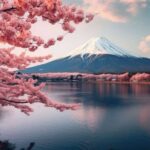
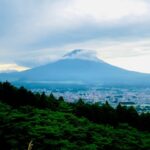
Hakone Day Trips, side by side.
 ★ 5.0Mt Fuji and Hakone 1-Day Bus Tour Return by Bullet TrainFrom $16326,383 reviews
 ★ 4.0Mt Fuji & Hakone Cruise, Drum Show Bullet Train 1 Day from TokyoFrom $1497,413 reviews
 ★ 4.4Tokyo Mt Fuji 5th St & Hakone Cruise Bus Tour w/Bullet TrainFrom $1545,024 reviews
 ★ 4.7Mt. Fuji Tour, Hakone Ropeway, Owakudani, Lake AshiFrom $544,002 reviews
 ★ 4.2Mt. Fuji 5th Station & Hakone Cruise 1-Day Bus TourFrom $1292,381 reviews
 ★ 5.0Private Tour to Mt. Fuji and Hakone (Fully Licenced Operator)From $4971,910 reviews
 ★ 4.0Mt Fuji & Hakone Cruise, Drum Show Bus 1 Day from TokyoFrom $1221,287 reviews
 ★ 4.2From Tokyo: Mt. Fuji & Hakone Tour w/ Return by Bullet TrainFrom $1171,278 reviews
This tour also belongs to