
Review · ASAKUSA TOURS
Tokyo’s Must-Sees: 5-hour Tsukiji, Akihabara & Asakusa Tour
Tokyo makes more sense with a guide. In just about 5 hours, you connect three of the most requested areas, Tsukiji, Akihabara, and Asakusa, with a certified guide who explains what you are seeing as you walk. I also like that the tour starts at Tsukiji Honganji Temple and builds from tradition to food, then to game and anime culture.
Two things I really enjoy: the chance to visit Tsukiji Fish Market and try 2 to 3 food samplings, plus the included lunch with vegetarian and vegan options available if you request in advance. One watch-out: this is a walking tour in crowded places, so it is not recommended for people with mobility issues, and you should plan for weather that can be extreme.
Key things to know before you go
- Small group size (max 7), which usually means less waiting and more time actually looking.
- Certified guide plus photo service, so you get context and you do not spend your hands on your camera.
- Tsukiji Fish Market tastings (2 to 3) plus a guided walk in a very active area.
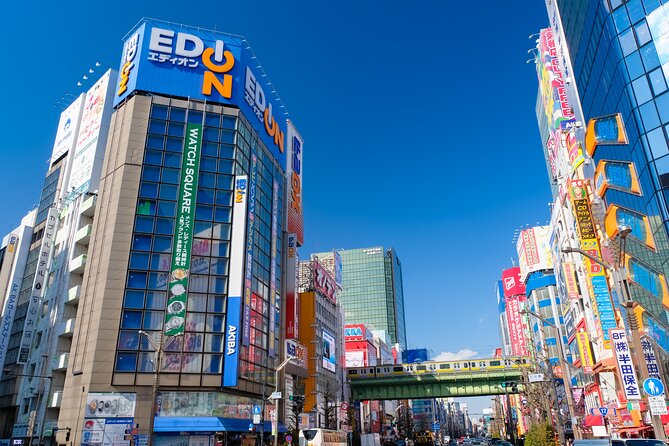
- Akihabara stops like Super Potato and Akiba Cultures Zone, centered on games and anime culture.
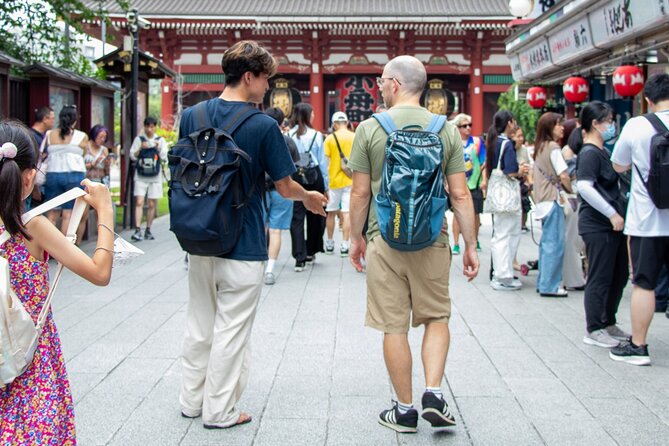
- Asakusa focus on Kaminarimon and Sensoji, including practical tips on temple etiquette and prayer.
A 5-hour sampler of Tsukiji, Akihabara, and Asakusa
This tour is built for a simple goal: see a lot of Tokyo without doing a lot of planning. You cover three heavy-hitters in one morning, with guided commentary so you are not just walking past signs and hoping you understood the vibe.
At about 5 hours total, it is also a good match if Tokyo feels overwhelming. You get a guided shape to the day, then you can decide what to revisit later on your own.
You can also read our reviews of more tours and experiences in Tokyo.


Starting at Tsukiji Honganji Temple, then turning toward food
You meet at 築地本願寺 正門 (Tsukiji Honganji Temple), 3-chōme-15-1, Chuo City. The first stop is the temple itself, and it is not just a photo moment. You get about 20 minutes in a calm starting point before the market frenzy kicks in, and the guide places the temple in context by noting it is under the jurisdiction of Nishi Honganji in Kyoto.
I like this kind of opening because it changes your brain state. Instead of rushing straight into shopping and seafood, you start with a sense of place and routine in Tokyo, then you step into the working-energy of Tsukiji.
Practical tip: wear something easy for walking. Even the “first stop” has you moving, and the day gets more crowded as you go.
Tsukiji Fish Market walk and tastings that keep you from guessing
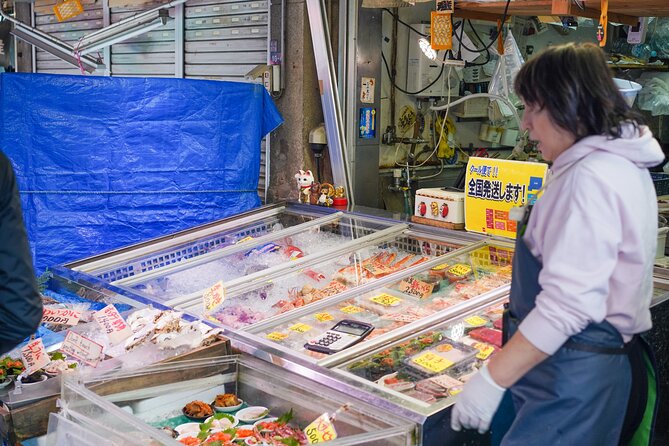
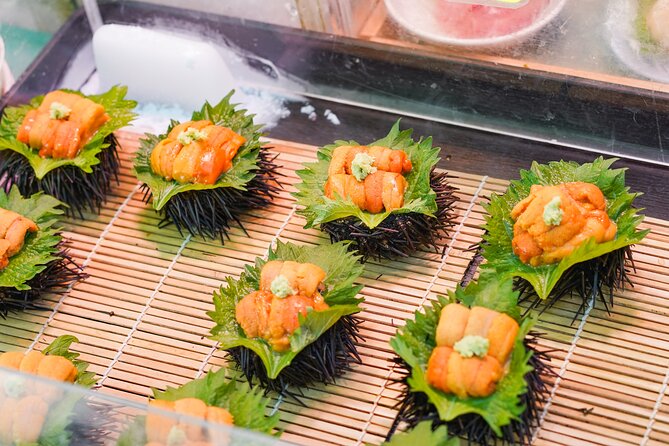
Tsukiji Fish Market is the main food reason to book this tour, and it is handled the right way here. You get about 1 hour to walk the market area with a guide, and you also get 2 to 3 food samplings included.
That matters because Tsukiji can be confusing if you are doing it solo. It is not just stalls, it is a fast-moving system. Having someone steer you toward what you can realistically try makes the experience less stressful and more fun.
One more thing I appreciate: you do not have to spend the whole time deciding what to eat or where to stand. The guided pace helps you actually taste things, then keep moving. You are getting the sensory overload, but with guardrails.
What to expect:
- You will be walking through a busy, high-energy market setting.
- Tastings are included, but additional food and drinks are not.
- Admission is free for the stops listed, so the cost stays focused on the tour itself.
Akihabara for game and anime culture, with real store time
After Tsukiji, you head to Akihabara, where the theme shifts from food to pop culture. This is your about 2 hours 10 minutes block, and the tour focuses on game and anime life rather than random storefront hopping.
You are taken to places such as:
- Super Potato
- Akiba Cultures Zone
- plus additional stops in the area
I like this approach because Akihabara can become a blur if you wander with no plan. With the guide, you get to the stores that match the vibe you came for, and you get explanations that turn what you see into something you understand.
Practical tip: bring a little patience for crowds. This is a major shopping district, and it will be full. Still, with a small group and a moving plan, you should not feel stuck.
A short transition toward Ueno, then the shift to old-town Asakusa

Between Akihabara and Asakusa, you do a city transition that the tour describes as traveling toward Ueno and starting a new journey there. You then move on to the old-town Tokyo feel of Asakusa.
That change of scenery is part of the value. Tokyo is not one mood. One minute you are in consumer culture, the next you are in a temple-and-streets atmosphere where you can feel the older rhythm.
Also, this segment is a reminder that you are using Tokyo transit during the tour, not just walking in a single neighborhood cluster.
Asakusa route: Kaminarimon gate, Sensoji, and how to act like you belong
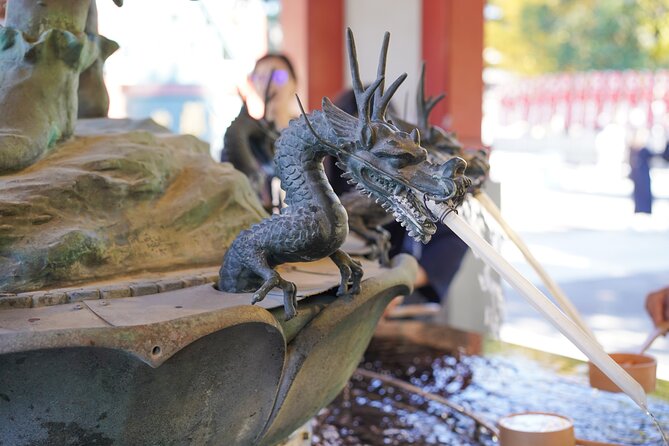
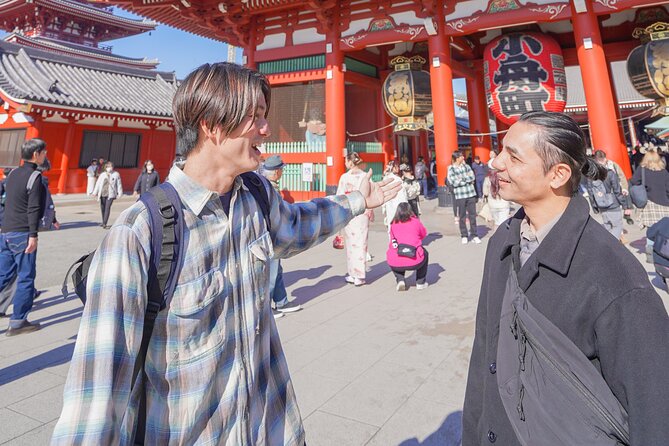
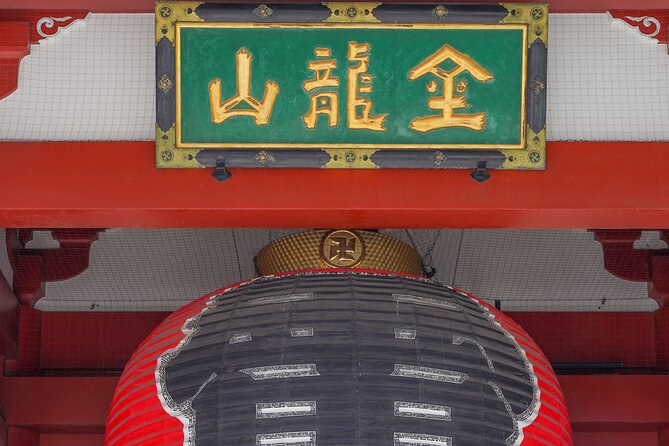
Your Asakusa time is where the tour slows down in a good way. You will get sights like the Kaminarimon Gate and Sensoji Temple, plus a guided stop for lunch.
The tour includes lunch at the Sensoji area, with vegetarian and vegan options available upon request in advance. So you are not stuck improvising meal plans while you are surrounded by tempting food you might not be able to eat.
Kaminarimon gate
You spend about 30 minutes focused on the Kaminarimon Gate and the surrounding older streets. This is the kind of landmark that instantly signals Asakusa, and the guide’s commentary helps you understand why it matters in the first place.
Sensoji Temple
You then spend additional time at Senso-ji Temple, including about 20 minutes that covers walking around and learning how to pray at Japanese temples. That small detail is more useful than it sounds. Temple etiquette can feel vague if you have never done it, and a guide can help you avoid awkward guesswork.
What I like here is that you are not just looking. You are learning how visitors participate, which makes your memories sharper.
Tip: Asakusa gets busy. If you are traveling in peak heat or winter chill, pack accordingly. The tour itself notes Japan’s climate has extremes, so dressing for the day is not optional.
Price and what you actually get for $101.74
At $101.74 per person for about 5 hours, you are paying mainly for three things:
- Guided navigation across three major districts
- Included food tastings (2 to 3)
- Included lunch with vegetarian and vegan availability by request
You also get tour photos taken by the guide, and the tour uses a mobile ticket. That photo detail is surprisingly practical. You can spend your hands and attention on being present, instead of stopping constantly to get shots.
What is not included
You will want a small cash plan for transit during the day. The tour lists train fees of 390 yen as not included. It also says you can use an IC card for trains, which is convenient if you have one already.
And while the lunch is included, the tour notes additional food and drinks are not. So think of tastings and lunch as the structured meals, not as an all-day eating plan.
Guides, pacing, and why the group size matters
This tour runs with a maximum of 7 travelers. I like that number because it usually means you get enough personal attention without turning the day into a slow, over-questioned experience.
The guide quality seems to be a standout. Names like Kenji and Hana come up with descriptions like friendly, generous, and very informative. Even if your guide is someone else, you can still expect the tour to be explanation-forward, not just a route check.
Pacing-wise, the itinerary includes short breaks, but it is still a walking experience. The guidance is clear that it is not recommended if your group members have health or mobility concerns.
Who should book this Tokyo half-day and who should skip it
This is the kind of tour I recommend if:
- you are short on time in Tokyo and want a tight hit of the must-sees
- you like the idea of food tastings with a guide handling the decision-making
- you want Akihabara game and anime culture without random wandering
- you prefer a small-group day with included photos
I would think twice if:
- you need minimal walking or have mobility limitations
- you want an unstructured, slow museum-style tour (this is more of a walking itinerary with stops)
- you are trying to build around a very strict schedule where delays would break your day
Also, pay attention to the time window. The tour stresses that it must start on time, and late arrivals can mean you miss the group with no refund or reschedule.
Should you book the Tsukiji, Akihabara & Asakusa Tour?
If your Tokyo plan looks like a sprint, this tour fits. You get Tsukiji Fish Market with tastings, Akihabara with specific culture stops like Super Potato and Akiba Cultures Zone, and Asakusa with the big landmarks plus temple etiquette coaching. The included lunch with vegetarian and vegan options is a real win if you do not want to hunt for a safe meal mid-day.
Book it if you want help making Tokyo feel logical, not just crowded. Skip it if walking distance or physical comfort is a big constraint, or if you dislike group pacing.
If the day is likely to be extreme weather, dress for it, and keep your expectations realistic. This is a lot of Tokyo for one morning, and the payoff is how well it helps you place the neighborhoods in your head.
FAQ
How long is the Tsukiji, Akihabara & Asakusa tour?
The tour runs for about 5 hours.
Where does the tour meet and where does it end?
You meet at 築地本願寺 正門3-chōme-15-1 Tsukiji, Chuo City, Tokyo 104-0045. The tour ends in Asakusa, Taito City, Tokyo 111-0032.
What is included for food and meal options?
The tour includes 2 to 3 food samplings in the market and lunch in Asakusa. Vegetarian and vegan options are available if you request in advance (at least 1 day before the tour for dietary requests or allergies to be mentioned).
Are train fees included in the price?
No. Train fees (390 yen) are not included. The tour notes you can use cash or an IC card for trains.
Is this tour suitable for people with mobility issues?
The tour is not recommended for people with mobility issues. If you have walking difficulty, the guidance is to book a private tour instead.
What happens if the tour is canceled due to weather?
The tour can be canceled if weather is unsuitable for safety reasons. If that happens, you will be offered a different date or a full refund. The tour also allows free cancellation up to 24 hours before the experience start time for a full refund.
More Tours in Tokyo
More Tour Reviews in Tokyo
Not for you? Here's more nearby things to do in Tokyo we have reviewed



Asakusa Tours, side by side.
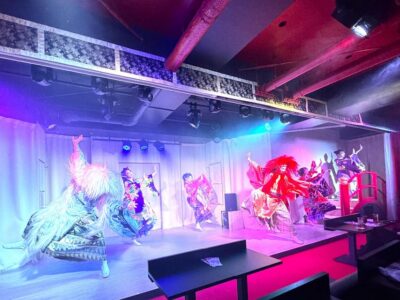 ★ 4.8Japanese Dance Cabaret Theater Asakusa-Kaguwa TicketFrom $492,270 reviews
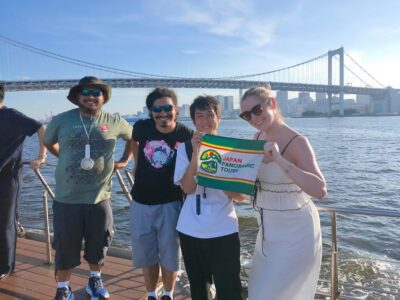 ★ 4.7Meiji Shrine, Asakusa, Skytree Bus Tour and CruiseFrom $1221,986 reviews
 ★ 4.9Roll and Authentic Sushi Making Class in AsakusaFrom $581,957 reviews
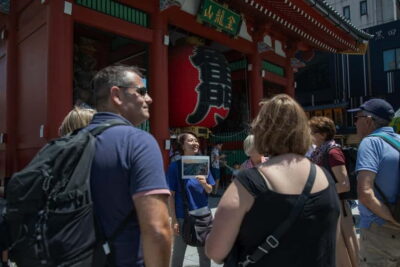 ★ 4.8Asakusa Walking Tour with Sensoji Temple VisitFrom $221,583 reviews
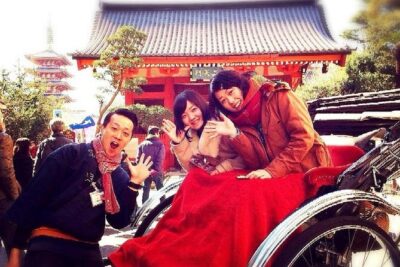 ★ 5.0Tokyo Asakusa Rickshaw TourFrom $421,375 reviews
 ★ 4.5Tokyo Panoramic 1 Day: Meiji Shrine, Asakusa, Odaiba and SKYTREE®From $851,222 reviews
 ★ 5.0Tokyo Go Kart: Asakusa, Skytree, and Akihabara **IDP MUST**From $99988 reviews
 ★ 4.7Asakusa, Skytree & Akhihabara Go-Kart City ExperienceFrom $96761 reviews
This tour also belongs to