
Review · YOKOHAMA DAY TRIPS
Wheelchair Accessible Taxi from HND to Yokohama Port
Getting to Yokohama without stress. This one-way wheelchair-accessible taxi from Haneda Airport to Yokohama Port is built for real mobility needs, with safety-focused driver training and a vehicle that can handle two wheelchairs without turning the trip into a puzzle. I also love the practical comfort setup (AC, clean space, low vibration) plus WiFi and onboard power, all aimed at making the airport-to-port leg feel calm, not chaotic. One drawback to plan around: there is no restroom on board, and it is one way only.
Pick-up happens at your reserved time by a wagon with the BridgeMAIT logo, and you get a mobile ticket for easy tracking. You will also have 724 customer service if something changes, which matters when flights run late or you need reassurance.
Key Highlights You Will Feel Immediately
- Certified safety and patient-transport credentials for added confidence during wheelchair transfer
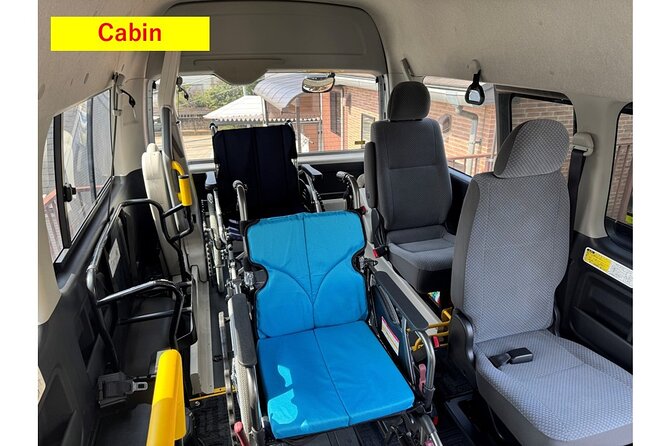
- Toyota Hiace Commuter accessibility capacity for two wheelchairs, four adults, and up to five oversized suitcases
- Onboard comfort tech: AC, clean low-vibration ride, WiFi, and AC100V power supply
- English-speaking driver with boarding and disembarking assistance for wheelchair users
- No extra road-cost surprises: parking fees and expressway tolls included
- One-way transfer only, so you will likely book separate rides if you need a return trip
Wheelchair-Friendly Taxi, Built for Real Airport Arrivals
This is the kind of transfer you book when you want your arrival day to behave like it has a script. You are going from Haneda Airport (HND) to Yokohama Port, and the service is designed around the big friction points: wheelchair users, luggage bulk, and the time pressure that comes with getting to a ship or connecting transport.
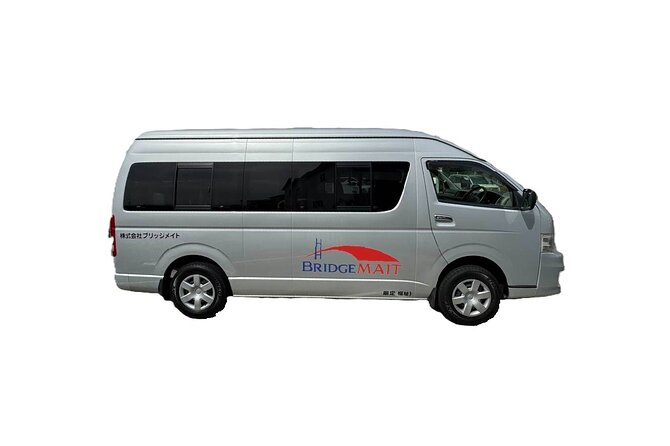
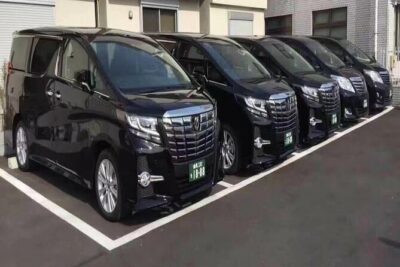
What I like most is how the service treats accessibility as more than a label. The operator is 横浜福祉タクシーBridgeMAIT, and the pick-up is clear and visual. A wagon with the BridgeMAIT logo shows up at the time you specified, so you are not wandering terminals hoping someone spotted your sign.
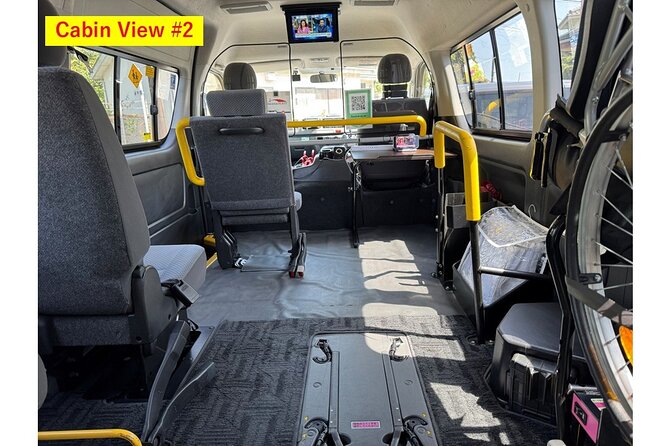
The other thing that keeps this feeling practical is the size and layout of the ride. The vehicle is a Toyota Hiace Commuter sized for mobility and baggage, with room for two wheelchairs, four adults, and up to five oversized suitcases. That matters if you are traveling with medical gear, mobility accessories, or simply the kind of luggage that appears when you have to pack for a full day out.
You can also read our reviews of more tours and experiences in Tokyo.



Certified Safety Credentials for When You Are Transferring a Wheelchair
When you are moving a wheelchair, the trip is only as safe as the hands doing the work and the process they follow. This service leans hard into that idea with driver credentials spelled out clearly.
The driver is certified in Home Helper 2nd class and Guide Helper (generalized and intellectual disabilities). That signals training tied to assisting people with different mobility and support needs. On top of that, the driver is Yokohama City Fire Department-certified as a Patient Transportation Driver, which is the kind of credential you want for careful handling and safety-focused routines.
Then there is a detail that feels almost unusual, but in a good way: Japan Automobile Federation Type 2 racing driver license. I do not read that as a promise that the ride will be exciting. I read it as competence. Someone with that kind of driving background is typically trained to control a vehicle well, anticipate conditions, and manage motion smoothly.
From the same pool of information, English communication is part of the package. That means you are not trying to mime your needs at the curb. And boarding and disembarking assistance for wheelchair users is included, not left to guesswork.
Inside the Toyota Hiace Commuter: Space, Comfort, and Less Motion
The vehicle details are where this transfer turns from helpful into genuinely useful. The Toyota Hiace Commuter setup is described with specific capacity and comfort choices, which matters because airport rides can feel rough even when roads are decent.
Here is what you can expect in plain terms:
- Space for two wheelchairs, plus up to four adults
- Enough luggage room for five oversized suitcases
- Clean, spacious passenger area
- Proper temperature and humidity control
- A low-vibration ride structure, which can help if you are sensitive to motion
There is also onboard convenience that many airport transfers skip. You get WiFi, and there is an AC100V power supply. That is handy if you need to top up a phone, keep a device running, or handle any time-sensitive communications as you move toward the port.
One practical note: there is no restroom on board. For many travelers that is not a deal-breaker on a 1 hour to 1 hour 30 minutes ride, but it is still worth planning. If you are going to board a ship or need to check in somewhere, time your stops so the taxi ride does not create a last-minute scramble.
From Haneda to Yokohama Port: Timing, Pick-Up, and the Ride Plan
This transfer is one way and runs on a fixed general schedule: the start time is listed as 7:00 am. The duration is approximately 1 hour to 1 hour 30 minutes, which gives you a workable window for planning your next step after you reach Yokohama Port.
The pick-up process is straightforward. You select the time when making the reservation, and the pickup wagon with the BridgeMAIT logo arrives at that reserved time. You also get a mobile ticket, which helps if you are trying to coordinate quickly in a busy airport area.
This is a private service. Only your group rides, so you are not dealing with surprise route delays caused by multiple stops for other passengers. That privacy can be a big quality-of-life upgrade when you are managing accessibility needs or traveling with family members who need predictable timing.
Comfort and stability are built into the ride design. Low-vibration structure plus climate control helps turn what could be an exhausting transit leg into a manageable one. If you have struggled with stiff posture or motion discomfort during travel days, this type of focus is the difference between tolerating the ride and feeling okay at the end.
The drop-off is also described carefully. The activity ends in a different location, with the exact end details provided with the booking. So you should treat the confirmation as your source of truth for the precise Yokohama Port area arrival point.
What You Actually Get Included, and What You Need to Bring
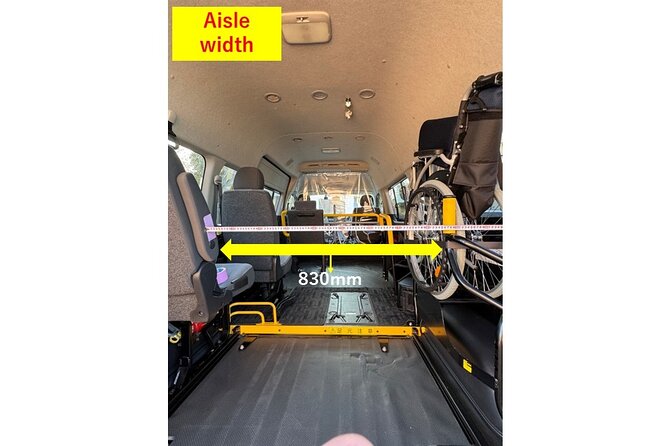
This service includes most of the costs and support that usually create headaches on airport transfers.
Included:
- Private transportation
- Boarding and disembarking assistance for wheelchair users
- English-speaking driver
- AC100V power supply
- WiFi on board
- Parking fees
- Expressway toll
Not included:
- Restroom on board
- Coffee and/or tea
That included list is what makes the value feel real. Parking fees and expressway tolls are often where a “cheap taxi” estimate can quietly jump. Here, those items are handled in the base cost, so you are not waiting for surprises.
What you should bring is simple: plan for no onboard restroom, and consider bringing your own water or something small to sip if you rely on refreshments. Also, if you need charging for a device, charge what you can before you arrive, then use the onboard power for the final stretch.



Price and Value: Is $170.19 Per Group Fair?
The price is $170.19 per group, up to 3 people. That is for one way from Haneda to Yokohama Port. On a pure dollars-per-minute basis, it might feel high compared to a regular taxi. But the service is not a regular taxi. It is wheelchair-accessible transport with trained assistance, an appropriately sized van, and support designed for safe transfer.
Here is how I think about the value:
- If you travel with one or two companions, the cost per person can drop quickly compared with paying separate accessible transport for each person.
- The van capacity matters. You are not paying for a standard ride where a wheelchair becomes an extra problem. You are paying for a vehicle built to carry two wheelchairs and multiple oversized suitcases.
- English-speaking support reduces friction. Communication delays at the curb can cost more time than you think, especially on a port arrival day.
If you are traveling as a group of three, you are effectively spreading that one-way cost across three people, and the “per group” pricing makes the arrangement more reasonable. If you are traveling solo, you still get the safety, assistance, WiFi, and power, but your per-person value will depend on how much you value not worrying about logistics.
A small planning tip: the service is often booked about 9 days in advance on average. I suggest you reserve sooner rather than later if you have a fixed departure time for a ship or any appointment at the port.
Who This Transfer Fits Best (and Who Might Not)
This is a strong match for:
- Wheelchair users who need boarding and disembarking assistance
- Families traveling with bulky luggage, including oversized suitcases
- Travelers who want an English-speaking driver and a predictable, private ride from an airport to a port
- Anyone who values a calm ride environment, especially with low vibration and climate control
It may be less ideal if:
- You need more than a one-way plan, since this reservation is one way only
- You strongly rely on onboard restroom access during short transfers
- You are traveling with a group larger than the price-per-group structure allows, since the pricing is listed up to 3 people even though the vehicle capacity is larger
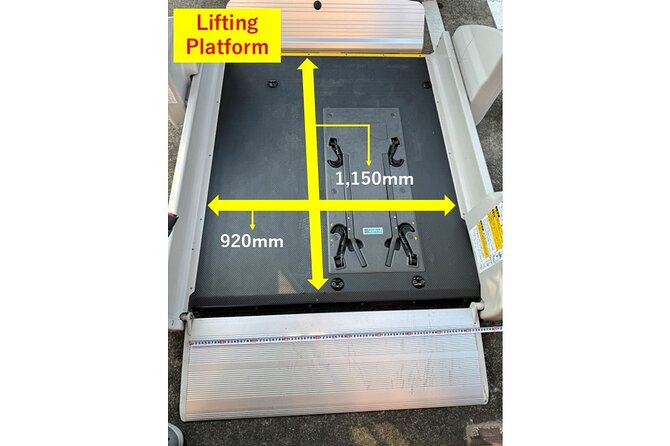
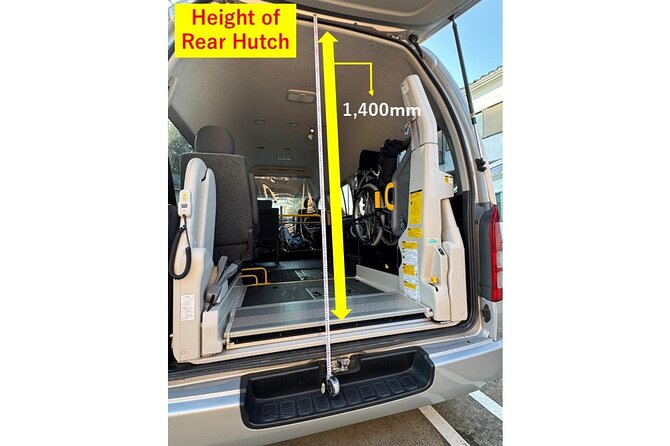
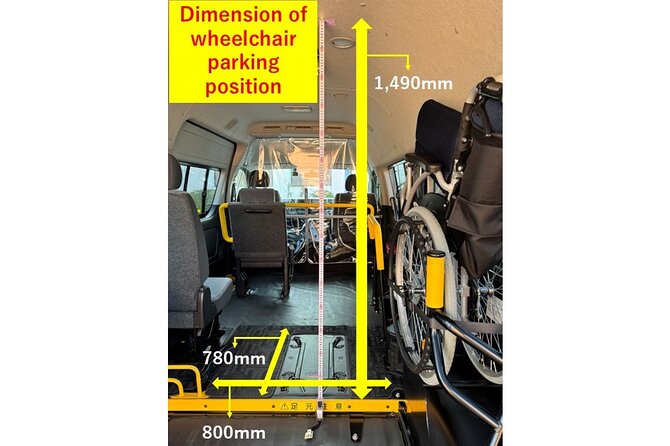
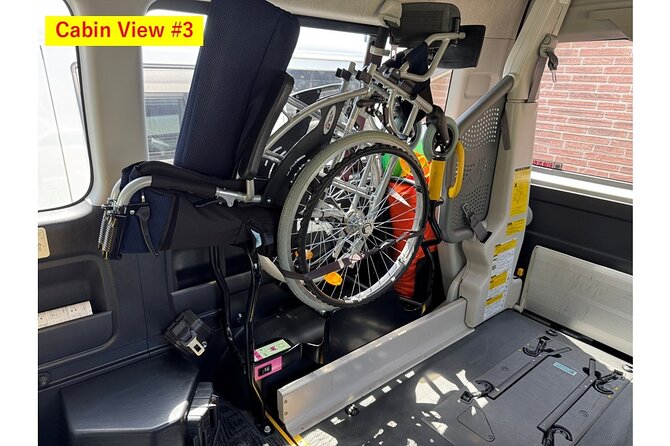
One thing that gives extra confidence is how the service is described in customer communication. Yoshio-san is highlighted for being kind, professional, courteous, and attentive to safe handling. There is also mention that he provided detailed photos and measurements of the vehicle during email correspondence, which is exactly what you want if you need confirmation that a large powered wheelchair will fit comfortably and safely.
The Main Takeaway for Your Port Arrival Day
If your trip to Yokohama includes a port check-in window, the hardest part is usually not the distance. It is the stress. This transfer is designed to remove that stress by handling accessibility, luggage bulk, and timing in one locked-in plan.
You get:
- Trained driver support with clear credentials
- An accessible van with real capacity for wheelchairs and oversized bags
- Comfort features like AC and low-vibration ride design
- Simple onboard perks, WiFi and power
- Included road costs, so budgeting stays steady
Just remember the trade-offs: one-way only, no restroom, and you need to carry your own coffee or tea if that is part of your routine.
Should You Book This Haneda to Yokohama Port Transfer?
Book it if you want a safer, calmer airport-to-port move built around wheelchair users and real luggage needs. The combination of trained assistance, an accessible vehicle sized for mobility, and included WiFi and power makes this one of those transfers that feels worth paying for on the days you cannot afford delays.
Pass or consider alternatives if you need a round trip in one booking, or you know you will need restroom access during the ride. Also, if your travel plan is extremely flexible and you enjoy building your own connections, a taxi may be tempting. But if you want fewer variables, this is the kind of straight shot that helps you get your bearings fast at the port.
FAQ
Is this wheelchair-accessible transportation from Haneda to Yokohama Port?
Yes. It is a one-way wheelchair accessible taxi service from Haneda Airport to Yokohama Port with boarding and disembarking assistance for wheelchair users.
What time does the service start?
The start time is listed as 7:00 am.
How long does the transfer take?
The duration is approximately 1 hour to 1 hour 30 minutes.
Is the transfer only one way?
Yes. This reservation is only for one way.
How many wheelchairs and people can the vehicle accommodate?
The vehicle (Toyota Hiace Commuter) is described as able to carry two wheelchairs and up to four adults, plus five oversized suitcases.
Do I get help with getting on and off the vehicle?
Yes. Boarding and disembarking assistance for wheelchair users is included.
Is the driver able to communicate in English?
Yes. An English-speaking driver is included.
What is included in the price?
Private transportation, boarding assistance, English-speaking driver, AC100V power supply, WiFi on board, parking fees, and expressway toll are included.
Is there a restroom or coffee on board?
No restroom on board is included, and coffee or tea is not included.
What if I need to cancel?
Free cancellation is available. You can cancel up to 24 hours in advance of the experience’s start time for a full refund, but changes made less than 24 hours before the start time will not be accepted.
Is there support if something goes wrong?
Yes. The service provides 724 customer service, and you can contact them by phone or email.
More Tour Reviews in Tokyo
Not for you? Here's more nearby things to do in Tokyo we have reviewed












Yokohama Day Trips, side by side.
 ★ 5.0Tokyo 8hr Private Tour with Licensed Guide from YokohamaFrom $20194 reviews
 ★ 4.5Narita Airport: One Way Private Transfer to Tokyo|Yokohama HotelsFrom $7769 reviews
 ★ 5.0Shuttle Van Transfer, Yokohama(Port)⇒Tokyo, Narita, Haneda, TDRFrom $12263 reviews
 ★ 5.0Yokohama Ramen Adventure From a Local Noodle Factory to HomeFrom $16560 reviews
 ★ 4.5Private One-Way Transfers to/from Yokohama PortFrom $6750 reviews
 ★ 5.0Private Car Tour to see Highlights of Kamakura, Enoshima, Yokohama from TokyoFrom $1,18348 reviews
 ★ 5.0Yokohama 4hr Private Tour with Government-Licensed GuideFrom $10834 reviews
 ★ 5.0Japanese Tea Ceremony at Private Home in Yokohama, suburban TokyoFrom $5232 reviews
This tour also belongs to