
Review · TOKYO TEA & SAKE EXPERIENCES
Japanese Tea Ceremony at Private Home in Yokohama, suburban Tokyo
Slow tea, real craft, in a Yokohama home. I love the way a professional tea master with 40+ years of practice teaches, and how the session includes a rare charcoal step that many people never see. One thing to plan for is simple but important: you need to bring socks to enter the tatami room.
This is also a strong value for the time you get. For about 1 hour 30 minutes, you’ll spend one-on-one with the flow of a traditional ceremony in a private home setting, with pickup offered and a mobile ticket on hand. And yes, the wagashi and matcha snacks are designed to work for vegan and gluten-free diets.
I especially like that you do more than watch. You’ll eat seasonal wagashi, learn the history, and then mix matcha yourself and drink two cups, which turns the whole experience from a performance into something you can actually repeat later.
Key Highlights You Should Know Before You Go
- Charcoal water procedure to boil the water, a detail that feels rare even in Japan
- 40+ years tea training from a professional tea master who has taught for 15+ years
- Seasonal wagashi choices, with examples like nerikiri, gyuhi (mochi), and manjyu
- Make and taste matcha yourself, including drinking two cups you prepare
- History + Q&A, so the lesson is more than hands-on steps
- Private group setup in a tatami room, with snacks included for vegan and gluten-free needs
Why the Charcoal-Boiled Water Step Changes the Whole Lesson
The ceremony begins with atmosphere, and the most memorable detail here is the water-boiling method. You’ll see the charcoal procedure, where charcoal is added to help boil the water. It’s not just a technical aside, it is part of how tea-making and pacing work, and it shows the ceremony as a living craft rather than a script.
Even if you’ve seen matcha ceremonies before, this charcoal element tends to land differently because it’s physical and visual. It slows you down. You stop thinking like a tourist trying to capture a moment and start noticing the order of actions, the temperature, and how the teacher manages timing.
This matters for your experience because it helps you understand the logic behind the ritual. In a lot of tea experiences, you get the final bowl and the smile. Here, you see the lead-up, which makes the matcha taste feel like it belongs to that exact moment.
You can also read our reviews of more private tours in Yokohama



Entering the Tatami Room: Socks, Seating, and Guest Etiquette
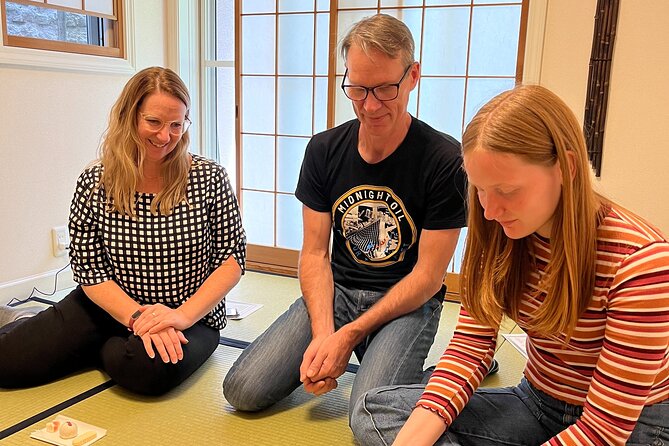
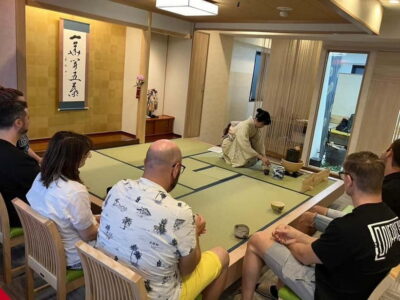
You’ll enter the tatami tea ceremony room wearing socks, so pack a clean pair. Tatami spaces change how you move and how you sit, and that shift is part of what makes the experience feel authentic and grounded. If you’re used to chair seating, you’ll likely need a few minutes to settle, but that’s normal.
Once you’re seated, the tea master guides you through what it means to be a guest. You’ll get a clear sense of where your attention should go, and when to look, when to eat, and when to simply watch. It’s not a test. The tone is meant to help you follow along comfortably, even if your Japanese tea knowledge is basically zero.
The session also happens in a private home setting in suburban Yokohama, which gives it a calm, local feeling. You’re not squeezed into a crowd. You can ask questions and slow down when you want to.
Seasonal Wagashi Tastings: Nerikiri, Gyuhi, Manjyu, and What to Expect
Before matcha takes center stage, you’ll eat wagashi made to fit the season. The tea master selects what you’ll have, and you may see options such as nerikiri, gyuhi (mochi), and manjyu. The point is that wagashi are not random sweets. They reflect time of year and the theme of the ceremony.
You’ll also get dried Japanese sweets and matcha snacks as part of the experience. The wagashi selection is included, and importantly, it’s available in options good for vegan and gluten-free diets. That’s a big deal because tea ceremonies often assume standard ingredients, so it’s refreshing when you can participate fully without feeling awkward about substitutions.
What I’d pay attention to while eating is the balance between taste and texture. Nerikiri in particular often feels like art you eat, while mochi-style sweets can be chewy and comforting. Manjyu tends to come as a more filled, familiar shape. You don’t need to identify every type, just let yourself experience the variety.
This wagashi moment also works as a warm-up. Your palate adjusts, your pace slows, and you’re ready for matcha after you’ve settled into the room.
Watching Matcha Being Made, Then Mixing Your Own
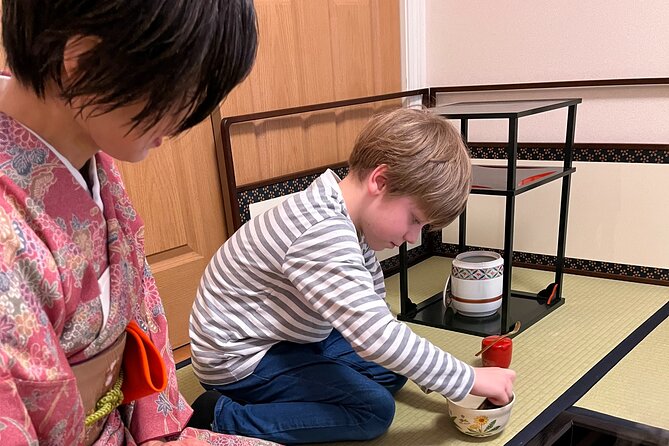
You’ll start with a demonstration: the tea master shows you how to prepare matcha step by step. During the process, the teacher will make matcha for you, and you’ll learn what’s happening beyond just mixing powder and water.
Then comes the hands-on part. After you see how it’s done, you get to try making matcha yourself by mixing it. The experience is designed so you can do it, not just watch. When you mix your own, you also get a better sense of why the ceremony cares about procedure, not speed.
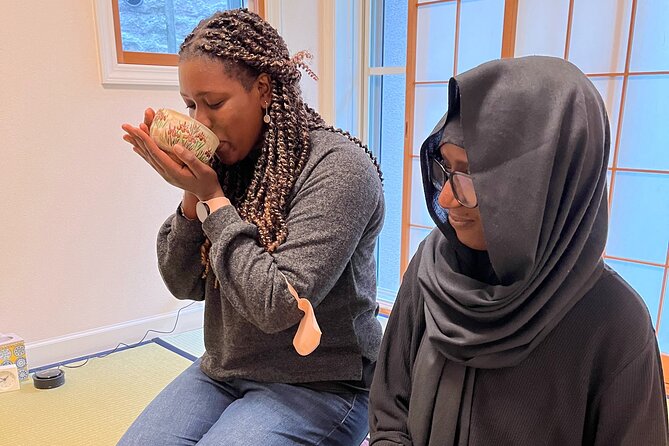
You’ll drink two cups of matcha during the workshop. That gives you a meaningful chance to compare how your bowl tastes compared with the teacher’s method, and it helps you notice differences in how matcha feels when it is whisked well. Matcha also becomes less intimidating after you’ve tasted it within the ceremony flow.
If you like foodie experiences that actually teach technique, this is where you get the most value. You’ll leave with a clearer mental picture of what each step is supposed to accomplish.
Tea Ceremony History and Q&A That Feels Practical, Not Lecture-Heavy
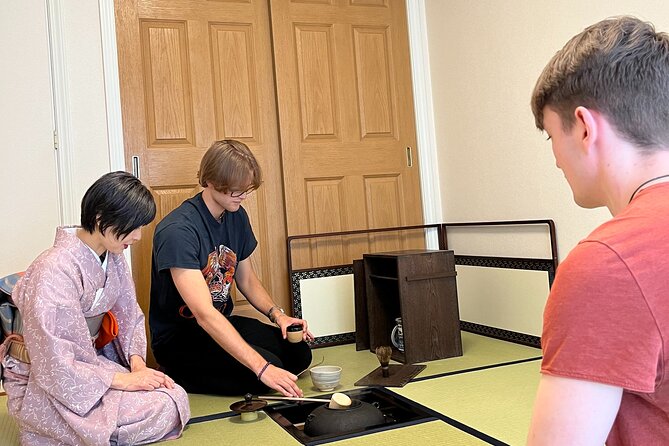
Along with the hands-on parts, the tea master explains the history of Japanese tea ceremony. This isn’t delivered like a dry museum talk. The way it’s integrated into the workshop helps you connect the ritual to culture and to the idea of hosting with care.
The best part for many people is the ability to ask questions. If you’re curious about tools, the meaning behind steps, or even why specific choices like wagashi are tied to seasons, this is your moment. A good teacher can turn questions into mini-lessons, and the structure here is clearly built for that.
This is also why private formats tend to beat big group shows. Even if you only understand part of the story, you can ask follow-ups and adjust in real time. You walk away with a better sense of what the ceremony is trying to do: create a calm, respectful space where attention matters.



Getting to the Workshop in Yokohama, Plus a Smart Before or After Plan
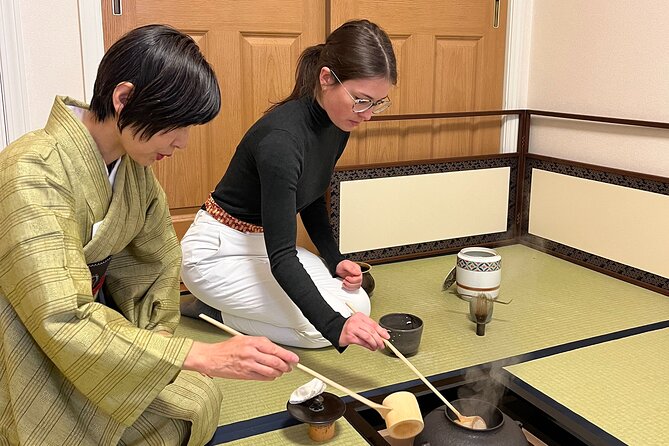
The meeting point is in Yokohama, Aoba Ward, at Ōbachō in Dorece Azamino Gardens. Pickup is offered, and the area is near public transportation, so you shouldn’t need a complicated plan to reach it.
Because the workshop lasts about 1 hour 30 minutes, it fits cleanly into an afternoon. I’d treat it like a key cultural appointment, then plan something simple around it.
If you want a nearby food mission afterward, the Yokohama Ramen Museum is around Azamino. From Azamino station, it’s about 15 minutes to the closest Shinyokohama station by Yokohama subway. You can pair calm tea with a more playful, casual meal plan, and that mix can make your day feel like you got both “polite culture” and “fun food.”
Price, Value, and Who This Private Tea Class Fits Best
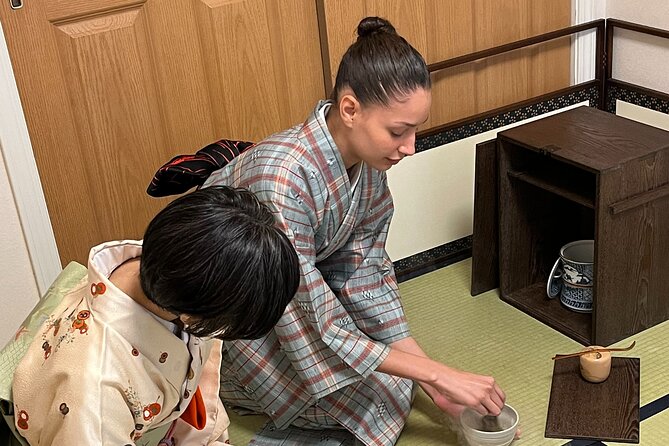
The price is $52.71 per person for roughly 1 hour 30 minutes, and you should judge it by what’s included, not by how short the time feels. You’re getting matcha and wagashi snacks, a guided ceremony in a tatami room, a demonstration, hands-on matcha mixing, and history with Q&A. On top of that, it’s a private tour/activity, so your group is the only group participating.
That private feel is often the difference between a “nice photo and off you go” experience and a real cultural lesson. If you want time to ask questions and to follow the flow without rushing, this format helps.
Dietary fit is another value driver. The wagashi and snacks are good even for vegan and gluten-free needs. If you’ve ever had to sit out of food-centered activities while everyone else eats, you’ll appreciate how this keeps participation open.
Who this suits best:
- You love culture that is hands-on, not just observed
- You want a calmer, smaller setting than a large-group class
- You’re curious about matcha beyond taste, including the steps and pacing
- You care about dietary options and want them respected
One more practical thought: the tatami room means socks. If that’s a deal-breaker for you, the experience won’t feel comfortable.
Should You Book This Yokohama Japanese Tea Ceremony?
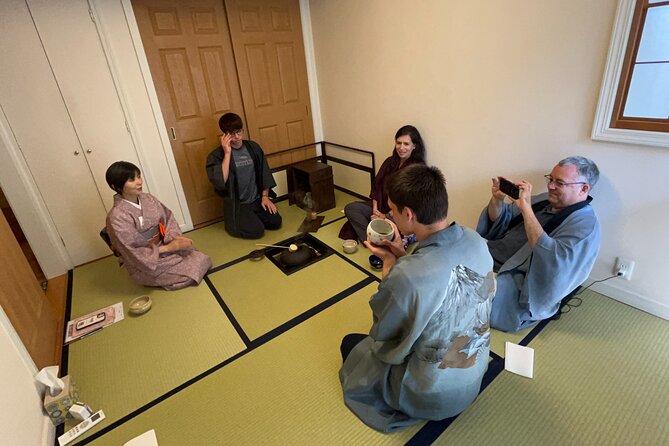
Book it if you want a traditional Japanese tea ceremony experience with real teaching behind it. The combination of the charcoal procedure, seasonal wagashi, and making your own matcha is what turns this into more than a show.
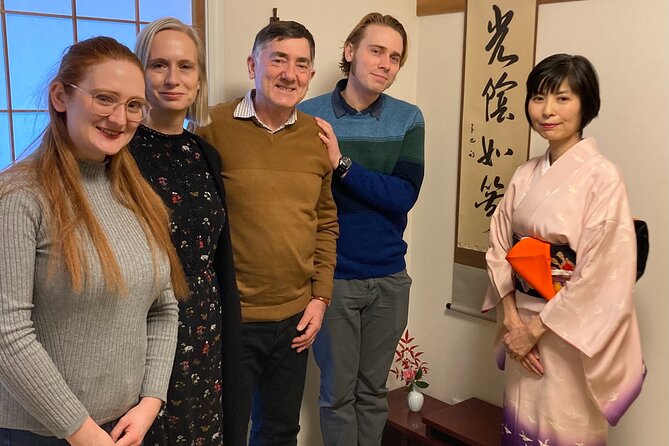
I’d also book if you like the idea of being a proper guest in a tatami room with time for questions. That conversational element, especially with a welcoming host family like the Kono family style described in past sessions, is part of the charm.
Skip it only if you strongly dislike tatami seating or if you’d rather do a faster, purely observational activity. Otherwise, this is a thoughtful, good-value way to experience Japanese tea culture in suburban Yokohama, with a meal-like snack experience built in.
FAQ
How long is the Japanese tea ceremony workshop?
It takes about 1 hour 30 minutes.
What is the meeting point location in Yokohama?
The start location is in Yokohama, Aoba Ward, Ōbachō, at ドレッセあざみ野ガーデンズ.
Is pickup offered?
Yes, pickup is offered.
What is included in the experience?
You get matcha (green tea) snacks and wagashi (handmade Japanese sweets).
Is wagashi available for vegan and gluten-free diets?
Yes. The wagashi and snacks are described as good even for vegan and gluten-free.
Do I need to bring anything?
Yes. You need to bring socks to enter the tatami room.
Will I be able to make matcha myself?
Yes. After watching the procedure, you can make matcha yourself, and you can drink two cups.
What wagashi might I eat?
The tea master chooses wagashi depending on the season. Examples mentioned include nerikiri, gyuhi (mochi), and manjyu.
What is the cancellation policy?
Free cancellation is available up to 24 hours in advance of the experience start time for a full refund. If you cancel less than 24 hours before, you will not receive a refund.
More Private Tours in Yokohama

More Tour Reviews in Yokohama


Not for you? Here's more nearby things to do in Yokohama we have reviewed






Tokyo Tea & Sake Experiences, side by side.
 ★ 5.0Traditional Tea Ceremony with a Tea MasterFrom $38528 reviews
 ★ 5.0Sake Tasting Masterclass in Shinjuku (8+ Varieties with a Pro)From $72271 reviews
 ★ 5.0Tea Ceremony Workshop in Tokyo by the Experienced InstrucorFrom $38189 reviews
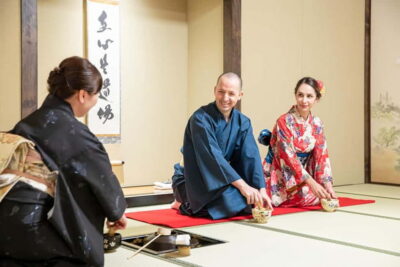 ★ 4.9Asakusa: Kimono Tea Ceremony with Matcha and SweetFrom $66153 reviews
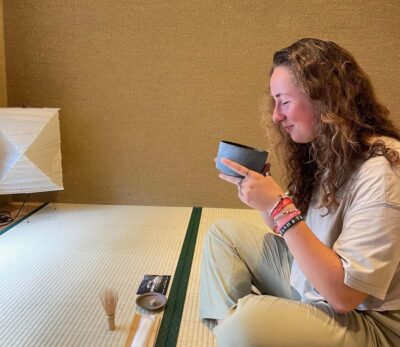 ★ 4.9Tea Ceremony Experience in a Private Tea Room in ShibuyaFrom $30125 reviews
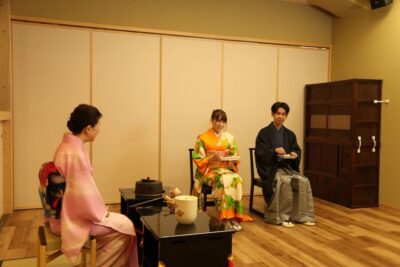 ★ 4.7Practicing Zen with a Japanese Tea CeremonyFrom $63105 reviews
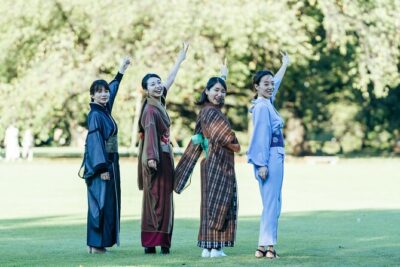 ★ 5.0Matcha Kimono Tea Ceremony in TokyoFrom $59104 reviews
 ★ 4.9Tea ceremony experience in Japanese-style room 60minFrom $4586 reviews
This tour also belongs to