
Review · MOUNT FUJI TOURS
Wonderful Peaks & Peace: Mt. Fuji, Fuji Stupa & Hakone Tour
Mt. Fuji in one unforgettable day. This private 10-hour tour from Tokyo strings together iconic viewpoints and real cultural stops around the mountain, so you get the classic photos plus places that feel grounded and calm. I like that it mixes nature with shrines and spring water sites, not just a drive-by checklist. If you’re paying attention to the details, the only potential hiccup is timing, since it packs a lot in during a single long day.
What I really like here is the private group setup and the fact that pickup and drop are included, so you are not hunting trains with tired legs. I also appreciate the guide-led flow, with help that can be especially useful if you have kids, want photo guidance, or need the itinerary adjusted.
One drawback to consider: some of the most popular experiences have extra costs. The Mt. Fuji 5th station admission is optional, and Narusawa Ice Cave also has an optional admission fee, plus tips are not included.
Key highlights you will actually use
- Private group (up to 5) means a more relaxed pace and less waiting around with strangers.
- Pickup and drop from Tokyo saves you time and stress on a full-day route.
- Chureito Pagoda at Arakurayama Sengen Park is free and timed well for photos.
- Oshino Hakkai springs let you see how Fuji water resurfaces as eight natural springs.
- Fuji Five Lakes variety covers different lake views in a single day.
- Aokigahara option via Narusawa Ice Cave adds a totally different feel from the lakes and shrines.
Why this Mt. Fuji and Hakone day tour is a smart use of Tokyo time
If you only have one day for Mt. Fuji, this kind of route is exactly what you want. You start high at the Mt. Fuji 5th station, then move through a mix of spiritual sites and famous photo spots. After that, you get into the Fuji Five Lakes area, with stops that are varied enough to keep the day from feeling repetitive.
The big practical win is that it is private, up to 5 people. That means you can travel as a unit. In the reviews, guides like Prem, Rana, and Puskal were praised for being attentive to the group, including adapting when people needed time for shopping or when families had kids who needed simpler logistics.
The comfort side is not flashy but it matters: an air-conditioned vehicle, WiFi on board, a guide, and highway fees are included, plus pickup and drop. Over 10 hours, those small conveniences add up.
You can also read our reviews of more tours and experiences in Tokyo.



The route, in plain English: how the day flows
This day is built like a loop around Mt. Fuji, hitting landmarks on both sides of the mountain. Expect a steady rhythm: drive to the next stop, brief time on site, then move on. The total time is about 10 hours, so it is best for people who like a full day and do not mind walking a bit between photo points.
A helpful mindset is to treat the stops as chapters. You are not trying to deeply study one place for hours. Instead, you are seeing different aspects of the region:
- volcanic Mt. Fuji in a high-altitude viewpoint,
- peace and shrine culture connected to the mountain,
- Fuji water and spring sources,
- lake views in different towns,
- and an icy, forest-adjacent experience at Aokigahara through Narusawa Ice Cave.
Mt. Fuji 5th station: the big altitude moment (and the optional ticket)
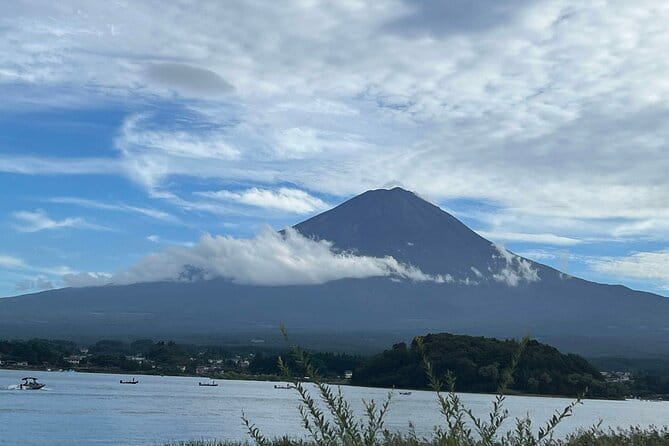
The day starts at Mt. Fuji 5th station. You are going to be at about 3,776 meters, which is the kind of height that makes everything feel different. The mountain itself is described as Japan’s tallest peak, shaped by volcanic activity that began roughly 100,000 years ago. That context helps you understand why the area is both a natural wonder and a sacred space for centuries of visitors.
This stop lasts about 1 hour, and the admission ticket is not included. So, you have a choice. If you care most about the high-mountain viewpoint and you want that official station experience, you budget for the ticket. If you are trying to keep the day strictly low-cost, you can treat this as the one part you may skip or adjust, depending on what your guide recommends for your day.
Practical tip: arrive mentally ready for a cold-to-cooler feel at altitude and for the fact that this stop can be weather and cloud sensitive in general. If visibility is limited, you can still treat it as a physical marker of scale, not just a perfect photo hunt.
Chureito Pagoda at Arakurayama Sengen Park: free, famous, and meaningful
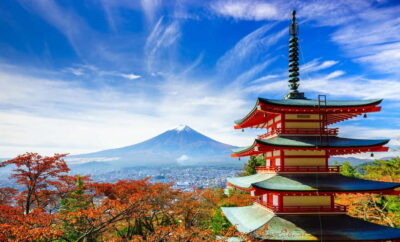
Next comes Chureito Pagoda, a five-story pagoda sitting on a hill in Arakurayama Sengen Park in Yamanashi Prefecture. It is part of the Arakura Fuji Sengen Shrine. The tour notes that it was added in 1963 as a peace memorial.
This is a great stop for two reasons. First, it is a free admission stop, so you get maximum value. Second, it hits the sweet spot between religious space and classic Mt. Fuji backdrop. Even when you are not a history person, the peace memorial angle gives the pagoda weight beyond the postcard look.
You will have about 1 hour here, which is usually enough time to photograph and walk the park paths at an unhurried pace.
Kitaguchi Hongu Fuji Sengen Jinja: the shrine that explains the mountain
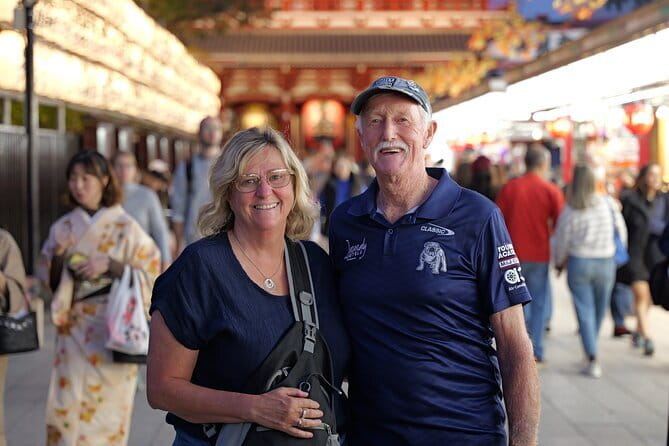
Then you shift into shrine culture with Kitaguchi Hongu Fuji Sengen Jinja. The key detail is what it is actually honoring: it enshrines the deity of volcanoes in general and Mt. Fuji in particular.
The site is one of approximately 1,300 Asama shrines in Japan. That number is useful because it tells you you are not looking at a one-off shrine. It connects Mt. Fuji to a wider network of faith focused on volcanic power and mountain worship.
This stop is about 45 minutes and admission is free. It is a shorter visit by design, but it works well because it grounds the day. After the pagoda photo moment, you get something more quiet and intentional, and you leave knowing why people come to this mountain year after year.



Oshino Hakkai: eight springs fed by Fuji water
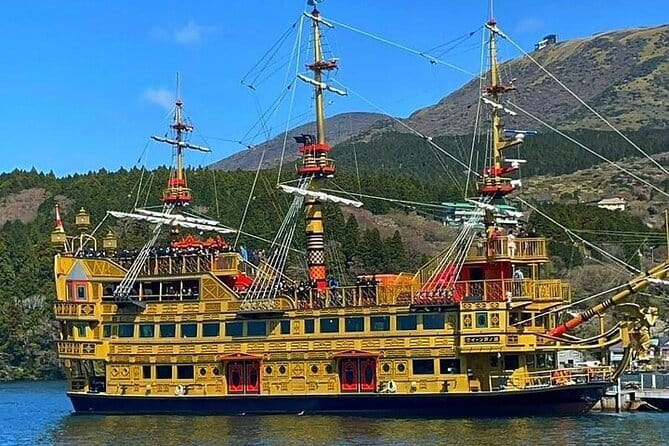
After shrines, the day turns practical in the best way. Oshino Hakkai is made up of eight springs in Oshino, Yamanashi. The tour info points out the origin story: aquifer water from Mt. Fuji surfaces here to form these springs.
This is described as a Natural monument of Japan, and it is part of the broader Mount Fuji area. Admission is free, and the stop runs about 1.5 hours, which gives you enough time to understand what you are looking at and to slow down.
Why I like this stop for first-timers: it takes the mountain from an image into a system. You start to see the region as something that functions. The springs are not just scenery, they are a reminder that Mt. Fuji shapes daily life through water.
Lake Kawaguchi and Oishi Park: classic lake views, good pacing
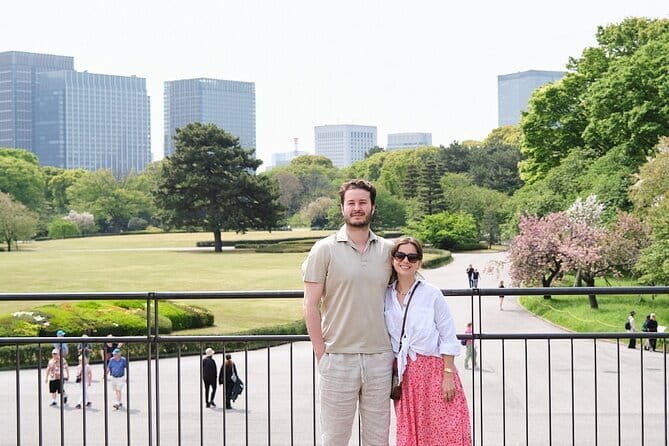
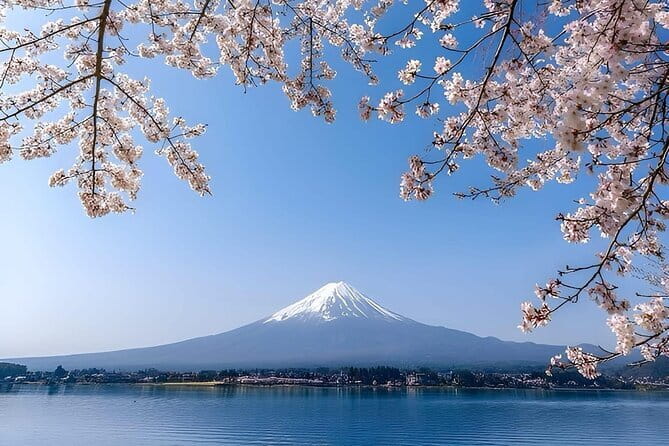
Now you enter the Fuji Five Lakes region with Lake Kawaguchi, which is the second largest lake in terms of surface area and sits at the lower elevation among the Fuji Five Lakes. This matters because it often makes the area feel more accessible and less like a hard-to-reach outpost.
Your Lake Kawaguchi stop is about 1 hour, and admission is free. Then you also have Oishi Park on the north shore. The tour notes you can see the lake and Mt. Fuji together, and that seasonal flowers bloom along the lakeside promenade.
This combination is a strong value move. Instead of one lake photo spot, you get a lake overview plus a park viewpoint that is designed for lingering.
Lake Yamanaka: the whale-shaped lake and the winter factor
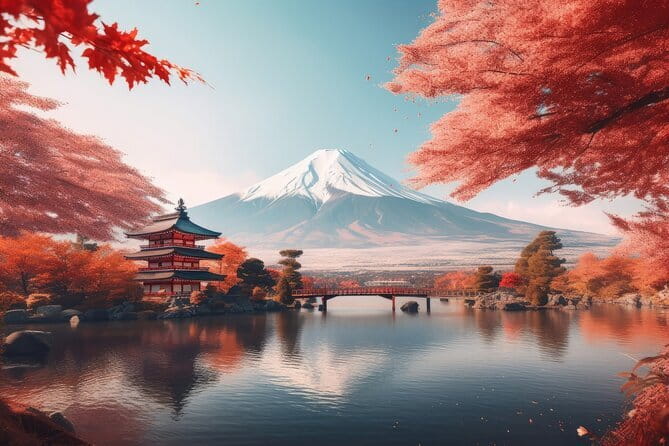
Next is Lake Yamanaka (Lake Yamanakako), the largest of the Fuji Five Lakes. The tour describes its shape as whale-like when viewed from the air, and it notes that due to its high altitude and relatively shallow water depth, it freezes completely in winter.
This stop is shorter, about 45 minutes, and admission is free. That is enough time to get a good look, enjoy the lake edges, and keep the day from dragging.
Even if you do not plan on winter travel, the information helps you understand why different lakes feel different. You are not just looking at water, you are seeing how altitude and conditions change the character of the Fuji region.
Narusawa Ice Cave in Aokigahara: the optional stop that changes the whole mood
Your final notable natural stop is Narusawa Ice Cave within the Aokigahara forest, also known as the Sea of Trees. The tour description says it features mesmerizing ice pillars and an ice wall that is visible throughout the year.
This is about 45 minutes, and admission is not included. So it is the kind of stop you decide based on your interests and budget. If you love strange natural formations and you want a break from open-air lake views, it is a strong add-on. If you prefer to stick to free sites only, you can skip or request an adjustment.
One more reason this stop works for a full day: it is a tonal shift. After shrines, pagoda, springs, and lakes, an ice cave gives your brain something different to focus on. It helps the day feel memorable instead of just photogenic.
How the guide and private format improve the experience
A tour can list great places and still feel stressful. The private format here helps, because you are not stuck following one-size-fits-all timing.
The reviews point to real guide behavior, not just friendly small talk. Prem is highlighted as patient and attentive, including checking with the group about the itinerary before proceeding and waiting while people finished shopping, then handling a jam on the return ride without panic. Rana gets credit for being helpful with directions and taking the needs of two young kids into account, making things easier rather than harder. Puskal is praised for being attentive and helpful with tailoring stops to what people wanted to see, plus being on time and planning around time limits.
That means you should ask for small adjustments while you are on the road. If you care about photos, tell the guide before you arrive at each stop. If you have kids or mobility needs, say it early so the timing can reflect reality, not wishful thinking.
Price and value: what $370 per group really buys
At $370 per group (up to 5), you are paying for more than rides. You are paying for a private day that includes:
- air-conditioned vehicle,
- WiFi on board,
- guide,
- highway fees,
- pickup and drop,
- and a route that hits multiple major Mt. Fuji area sites.
Most other major stops listed are free, which makes this pricing feel more reasonable than a typical tour where you are paying for repeated paid entrances. The main items you may add are:
- optional Mt. Fuji 5th station admission,
- optional Narusawa Ice Cave admission,
- and tips and gratuities.
So the best value scenario is a group of 3 to 5 people who want the convenience of a guided loop without coordinating public transport. If you are traveling solo or as a couple, you might still find it worth it, but you will want to budget for the optional entrances you personally care about most.
Who should book this Mt. Fuji and Hakone tour
This is a strong fit if you:
- want one focused day that covers major Mt. Fuji area hits,
- prefer private logistics over trains and transfers,
- like a balance of spiritual sites and natural sights,
- need a guide who can help simplify timing, especially for families.
From the reviews, it also works well for people traveling with children, because the guide approach can reduce friction. It is also a good choice if you value photo-friendly stops but still want at least a couple moments that feel culturally anchored.
Should you book this tour?
I would book it if you want a well-paced Mt. Fuji day that covers the big names: Mt. Fuji 5th station, Chureito Pagoda, Oshino Hakkai, and multiple stops around the Fuji Five Lakes, with the option to add Aokigahara through Narusawa Ice Cave.
I would hesitate only if you strongly prefer slow travel, hate long days, or plan to skip both optional paid attractions. In that case, you might find you are paying for convenience rather than admissions.
If you do book, set expectations like this: the day is built for variety, not deep museum-level time. Bring comfortable shoes, think about which optional stops you care about most, and use your guide. That is where the experience becomes more than just a checklist.
More Tours in Tokyo

More Tour Reviews in Tokyo
Not for you? Here's more nearby things to do in Tokyo we have reviewed












Mount Fuji Tours, side by side.
 ★ 5.0Mt Fuji and Hakone 1-Day Bus Tour Return by Bullet TrainFrom $16326,383 reviews
 ★ 4.0Mt Fuji & Hakone Cruise, Drum Show Bullet Train 1 Day from TokyoFrom $1497,413 reviews
 ★ 4.4Tokyo Mt Fuji 5th St & Hakone Cruise Bus Tour w/Bullet TrainFrom $1545,024 reviews
 ★ 4.5From Tokyo: Mount Fuji Full-Day Sightseeing TripFrom $684,970 reviews
 ★ 4.7Mt. Fuji Tour, Hakone Ropeway, Owakudani, Lake AshiFrom $544,002 reviews
 ★ 4.2Mt. Fuji 5th Station & Hakone Cruise 1-Day Bus TourFrom $1292,381 reviews
 ★ 4.7Mt Fuji Top 5 Spots Day Tour: Arakurayama Park,Oshino HakkaiFrom $532,066 reviews
 ★ 5.0Private Tour to Mt. Fuji and Hakone (Fully Licenced Operator)From $4971,910 reviews
This tour also belongs to