
Review · TOKYO CITY TOURS
Tokyo: Learn about Japanese Traditional art KABUKI in Ginza
Kabuki culture can fit into a short stop. In 90 minutes, I like how this Ginza tour turns the famous Kabukiza area into a simple, guided lesson, with shopping you cannot easily replicate elsewhere. I also like the built-in “look around” time, so you are not just standing in front of a building.
My favorite parts are the Kabukiza gallery experience and the chance to hunt for small items that you can pick up only in this area. The one thing to watch is expectations: this is not a Kabuki viewing tour, so if you want a performance ticket, you will need to arrange that separately.
You meet in a very easy spot, in front of NISSAN CROSSING, then your guide keeps things moving with a small group size (limited to 9). Guide Nori, for example, is called out as friendly, and when you want quick context, that helps a lot. If you prefer a deep, detailed history lecture, you might find the pace and explanation more basic than you hoped.
Key things I’d plan around
- Kabukiza focus without a show: you learn through exhibits, not a performance ticket
- Souvenirs you can only get at Kabukiza: bring an extra budget if shopping matters to you
- English guide in a small group (up to 9): easier questions and better attention
- Mitsukoshi Ginza stop after Kabukiza: a classic department store with over 350 years of history
- Short duration: you get a taste, not an all-day Kabuki immersion
Why Ginza for Kabuki starts at Nissan Crossing
If you have ever felt overwhelmed choosing what to do in Tokyo, this kind of plan can save you. Ginza is central, well signed, and packed with indoor spaces, which makes it a good place for a structured, 90-minute cultural stop.
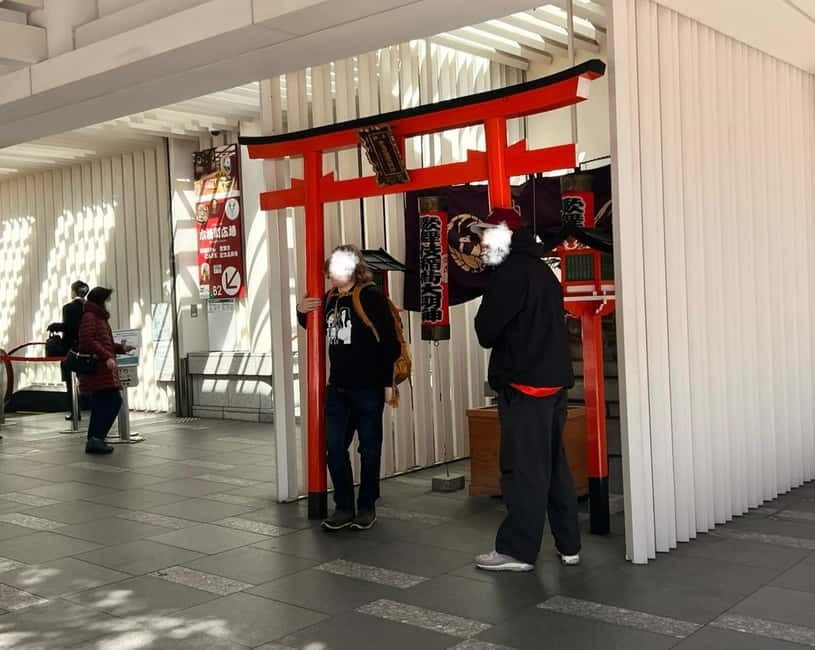
You begin at NISSAN CROSSING, which is convenient because you can orient yourself quickly and then meet your guide without stress. From there, you are walking in the orbit of Tokyo’s traditional-arts scene, where Kabukiza is the obvious anchor. It is not just a theater building. It is also where people go to learn, browse, and buy.
Practical tip: since the tour includes shopping opportunities at specific spots, wear comfortable shoes. Even in 90 minutes, Ginza sidewalks and indoor corridors can add up.
You can also read our reviews of more tours and experiences in Tokyo.



Kabukiza gallery time: learning the Kabuki world without seats
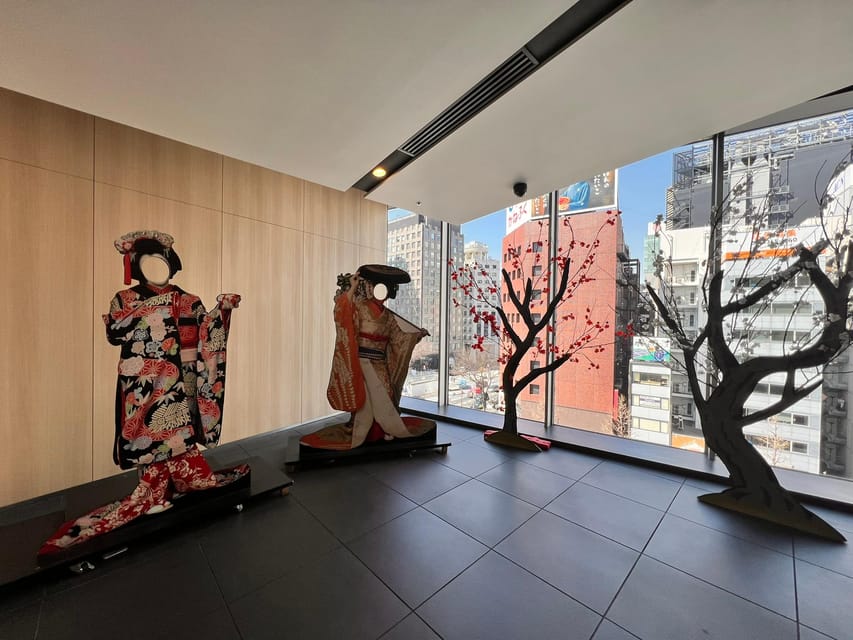
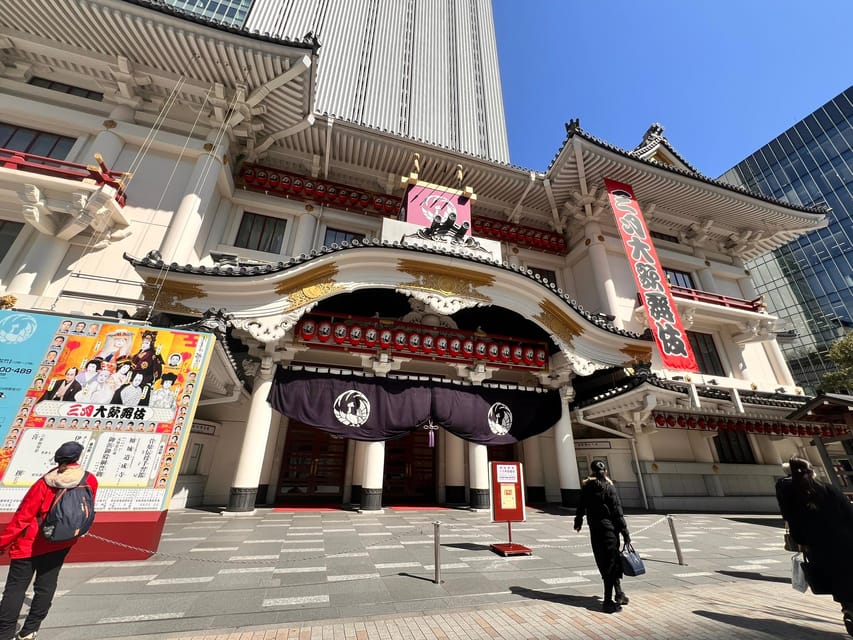
The heart of the experience is time at Kabukiza, including the theater building and a guided walk through Kabukiza exhibits in a gallery setting. This is a big advantage if you do not have time to organize a full performance day. You still get the Kabuki “language” you can recognize later, and you understand what you are looking at.
Here is what this type of stop is good for:
- You learn the basics of Japanese traditional performing arts through guided exhibits.
- You connect the look of costumes, stage styles, and theater culture to the bigger Kabuki tradition.
- You get a sense of the theater as a place with its own identity and visitor flow.
One important reality check: Kabuki viewing is not included. That is exactly why some people feel disappointed if they expect a short show to be part of the 90-minute package. So treat this as a Kabuki culture introduction, not a ticketed performance.
If you want the best experience here, arrive with at least one question you want answered. For example: what kind of stage elements are you seeing in the exhibits, and how do they connect to real Kabuki performances? With a small group and an English guide, you can usually make your time count.
The Kabukiza souvenir hunt that actually feels worth it
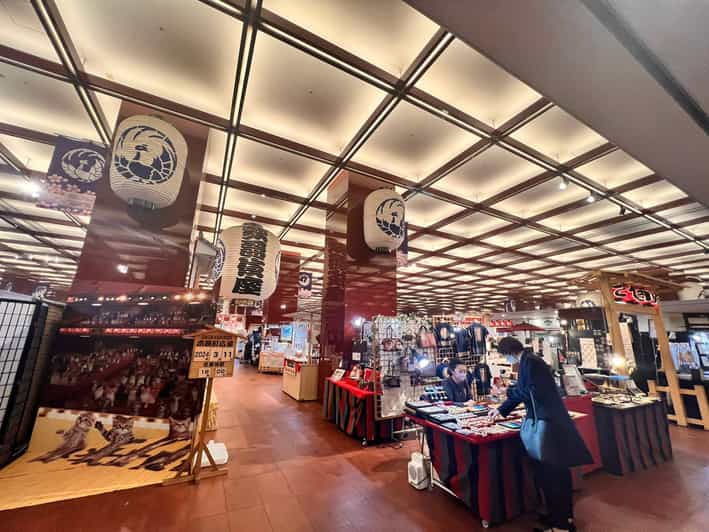
After the theater-side learning, you shift into browse mode, and this part is one reason the tour earns its value. The tour includes stops at souvenir shops in the area, including Kabukiza-only items.
This is what makes the shopping element different from generic street shopping. You are not just buying something cute because it is available. You are buying from places tied tightly to the Kabukiza theater ecosystem. That is how you end up with Kabuki-themed goods, Japanese accessories, Japanese sweets, and more that fit the moment you just learned about.
A practical note: shopping costs are not included. So the $51 price is for the guide and the guided experience, while your purchases depend on you. If you are serious about shopping, set aside an extra budget before you go in.
My advice for making the souvenir time painless:
- Decide your budget first, then browse.
- Look for small items you can carry easily, especially if you are also moving through other Tokyo neighborhoods later.
- Take a moment to compare the “gift” type souvenirs to the “personal” type items. You might find that the best value is not the biggest bag.
Also, because this is a short tour, you do not get unlimited time in shops. If you see something you love, grab it then, not later after the group has moved on.
Mitsukoshi Ginza: the classic department store detour
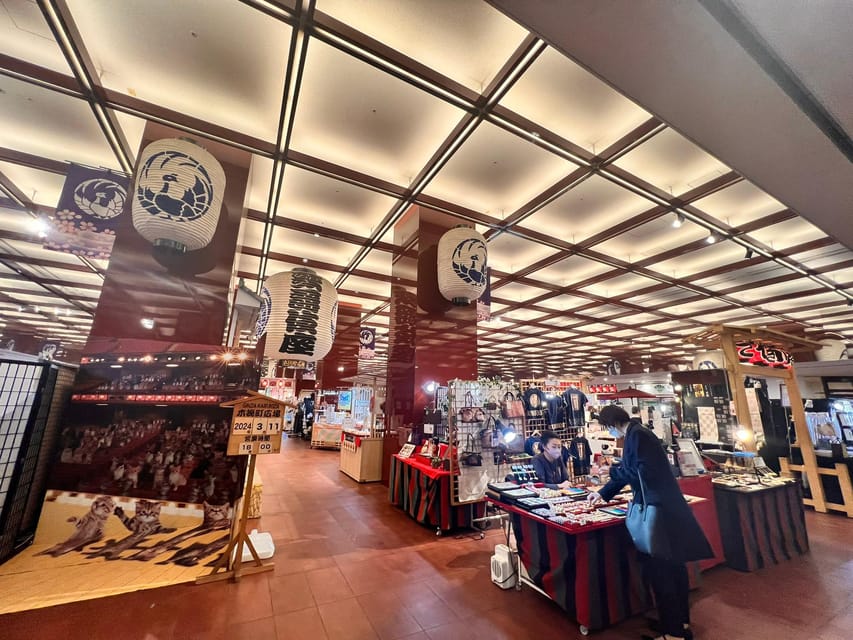
After Kabukiza, you stop by Mitsukoshi, Ginza branch. It is described as the Japanese oldest department store, and the Ginza branch has over 350 years of history. That makes this feel less like a random shopping add-on and more like a cultural pairing: traditional arts, then a traditional institution.
What you can expect inside is a chance to encounter higher-quality crafts and Japanese goods, with more of a polished department store feel. The key benefit is variety. Kabukiza souvenirs are one lane. Mitsukoshi tends to broaden the options and give you a more classic Tokyo shopping experience in a single stop.
If you care about value, Mitsukoshi can be a good place to buy gifts that feel “Tokyo, Japan,” without turning your trip into an endless scavenger hunt. If you care about convenience, it also helps that it is indoor-friendly.
The only drawback is that department store shopping can eat time. In 90 minutes, you are moving through the day like a sampler, so prioritize what you want from Mitsukoshi, then stick to it.
The 90-minute structure and how not to rush yourself
This tour runs for 90 minutes, and the group is small, limited to 9 participants. That matters because short tours can either feel chaotic or feel efficient. In this case, the small size usually makes it easier to keep up and ask quick questions.
But 90 minutes is still 90 minutes. So what you gain is momentum and a focused taste. What you do not gain is time for deep reading, long museum-style wandering, or ticketed performance moments.
This is also why pacing can decide whether you feel satisfied. If you show up mainly hoping for a show, you may feel shortchanged. If you show up wanting an intro to Kabuki culture plus a couple of smart, Tokyo-famous places, you will probably feel the experience matches the time you invested.
A small group also helps with practical navigation. Ginza can be confusing, especially if you are jet lagged. Starting at a clear meeting spot in front of Nissan Crossing helps you avoid the “I’m lost before it even starts” problem.




Price and value: what $51 covers, and what it does not
At $51 per person, the price is fairly direct. What is included is the tour guide. What is not included is the Kabuki viewing (so no performance ticket), and shopping costs depend on what you buy.
So is it worth it? I think it can be, if you fall into one of these categories:
- You have limited time and want at least a guided connection to Kabuki culture.
- You want access to Kabukiza-area shopping and the idea of Kabukiza-only souvenirs matters to you.
- You want a low-effort cultural stop that is easy to fit into a day in central Tokyo.
It might not feel worth it if:
- You specifically want to watch Kabuki during this 90-minute window.
- You do not plan to shop at the listed places at all.
- You want a highly detailed lecture level history lesson.
Also, think of it this way: you are paying for a guided route and interpretation, not for admission to a theater performance. If you align your expectations with that, the cost makes sense.
Getting more out of the English guide, including Nori’s style
The tour is described as having a live tour guide in English. That is crucial, because Kabuki is full of terms that can sound abstract if you are reading labels alone.
One review mentions guide Nori being especially friendly. Another mentions the level of information on the history of Kabuki theater felt basic, possibly related to language barriers. I treat that as a useful warning sign for how to plan your expectations and your questions.
How to get more value even if you only understand part of the history explanation:
- Ask one or two targeted questions while you are standing in front of exhibits.
- Use simple framing: What am I seeing here, and why does it matter?
- If you care most about visuals, focus your questions on the symbols, costumes, or stage concepts you notice.
When the group size is small, you are more likely to get a real answer, not just a quick general statement.
Who should book this Kabuki in Ginza experience
This tour is best for you if you:
- Want a short, structured introduction to Kabuki culture without committing to a performance night.
- Like the idea of learning first, then shopping while the themes are still fresh.
- Prefer a manageable group size rather than joining a large crowd.
It is less ideal if you:
- Are traveling on a tight schedule but refuse any shopping or walking time.
- Are coming specifically for Kabuki viewing, since that is not included.
- Want a long, detailed theater-history lesson in one sitting.
Should you book this Kabuki in Ginza tour?
I would book it if you want a practical, time-efficient taste of Kabuki culture plus the very specific benefit of Kabukiza-area souvenirs. The meeting point in front of Nissan Crossing, the small group size, and the fact that you get a guided walkthrough at Kabukiza make it feel easy to execute even if you are still figuring out Tokyo.
I would skip or modify your plan if Kabuki viewing is your main goal. Instead, use this as a learning and shopping stop before you handle a performance ticket on your own.
If you do book, go in with one clear goal: learn the basics at Kabukiza and then buy something that genuinely connects to that experience.
FAQ
Where is the meeting point for the tour?
Meet in front of NISSAN CROSSING.
How long is the tour?
The tour lasts 90 minutes.
Is Kabuki viewing included in this experience?
No. Kabuki viewing is not included.
What is included in the price?
The tour guide is included.
What group size should I expect?
This is a small group limited to 9 participants.
What language is the tour guide?
The live tour guide is in English.
Is free cancellation available?
Yes. You can cancel up to 24 hours in advance for a full refund.
More Tour Reviews in Tokyo
Not for you? Here's more nearby things to do in Tokyo we have reviewed








Tokyo City Tours, side by side.
 ★ 5.01-Day Tokyo Bus TourFrom $12914,250 reviews
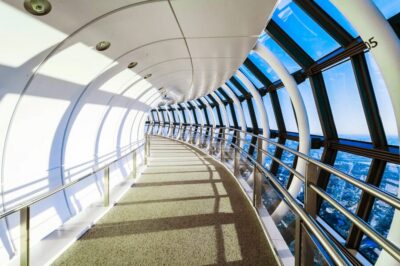 ★ 4.5TOKYO SKYTREE® Admission ticketFrom $1311,192 reviews
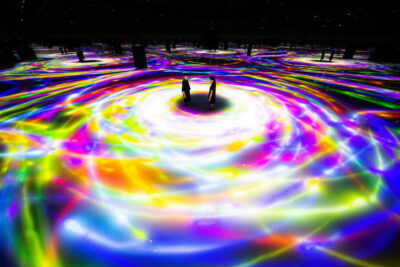 ★ 4.6teamLab Planets TOKYO Digital Art Museum Entry TicketFrom $259,779 reviews
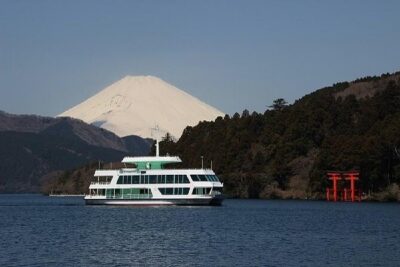 ★ 4.0Mt Fuji & Hakone Cruise, Drum Show Bullet Train 1 Day from TokyoFrom $1497,413 reviews
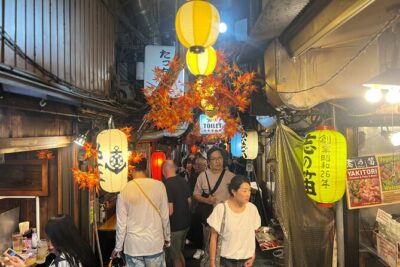 ★ 5.0Shinjuku Food Tour (13 Dishes at 4 Local Eateries)From $866,603 reviews
 ★ 4.4Tokyo Mt Fuji 5th St & Hakone Cruise Bus Tour w/Bullet TrainFrom $1545,024 reviews
 ★ 5.0Flagship 2-Hours Official Street Go-Kart Tour – Tokyo Bay ShopFrom $644,974 reviews
 ★ 4.5From Tokyo: Mount Fuji Full-Day Sightseeing TripFrom $684,970 reviews