
Review · MOUNT FUJI TOURS
Explore Mt. Fuji Ice Cave in Aokigahara Forest
An icy world hides under Mt. Fuji. You’ll walk into Aokigahara Forest and reach a lava-formed ice cave made by Mt. Fuji’s frozen history, with access handled for you.
I love that the tour includes the special entry permits, so you are not stuck hunting down requirements on your own. I also like the small-group feel, with a cap of up to 12, which keeps the whole experience more personal.
One possible drawback: this is a cold, rocky cave walk, and you may need to scramble a bit, so good footwear and steady mobility matter.
Key takeaways before you go
- Permits included so you get exclusive access without extra legwork
- Small-group size (up to 12) for a safer, calmer cave time
- Real cave gear provided: helmet, headlight, overall, and gloves
- Aokigahara Sea of Trees walk before and after the cave visit
- 0°C underground experience based on the way the lava caves formed
- Guides handle the experience with safety rules and clear English
Mt. Fuji Ice Caves start with lava tubes, then frozen time
Mt. Fuji has a habit of rewriting the ground. About 1,200 years ago, lava flowed and created a network of caves and lava tubes. Then Mt. Fuji’s melted snow found its way into those frozen spaces, turning the interiors into ice formations that can look like natural artwork.
What makes this tour special for me is that it frames the ice cave as a story, not a stunt. You are not just walking into something cold. You are walking into a place where geology and weather teamed up over a very long time.
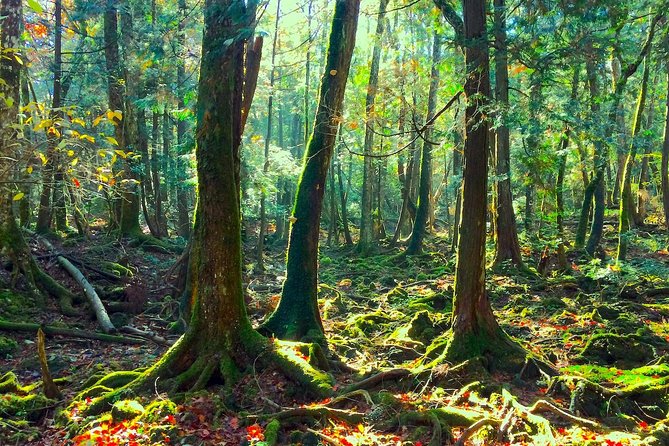
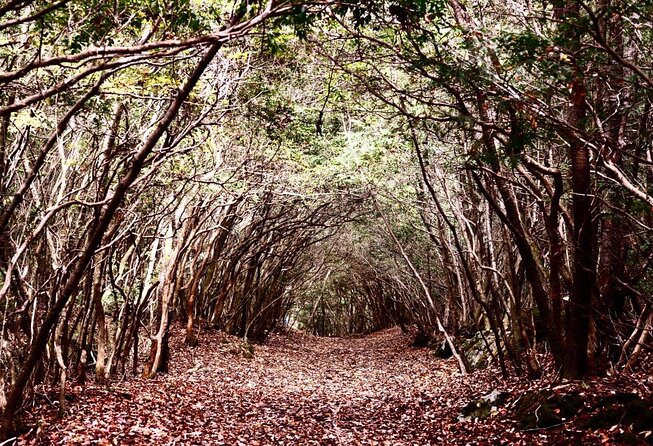
And because it is in Aokigahara Forest (often called the Sea of Trees), you also get the contrast. Warm-ish walking above ground, then the sudden drop as you head underground.
You can also read our reviews of more tours and experiences in Fujikawaguchiko machi.
Small-group access and permits that save real effort
The big value here is not only that it is guided. It is also the access part. Independent travelers generally have to obtain a special entry permit to visit the area. This tour says those permits are included, which removes the biggest unknown in planning.
Also, you are capped at a maximum of 12 people. In real life, that matters. Fewer people means your guide can control pace, manage safety around rocks, and actually explain what you are looking at instead of rushing through.
A few guide names show up again and again in the experience, including Takasi, Toshi, and Tada. The common thread is that they do more than point. They connect the forest, the cave, and the volcanic history so the walk feels meaningful.
Pickup, timing, and how the day actually flows
This is a 3-hour-style tour. You’ll typically start with hotel or station pickup around Kawaguchiko, including Kawaguchiko Station and hotels near Lake Kawaguchiko. The ride helps you avoid the hardest part of reaching the trail area, especially if you are basing yourself in the Fuji five-lakes region.
Once you meet up, there is a short prep step. You get helmet, headlight, and overalls, plus gloves. You are also told to bring clothing suitable for outdoors and to plan for a colder cave environment. The schedule includes movement to the start site, then walking through the forest, cave time, then more forest walking to finish.
A key point is that tour pacing can shift depending on progress. So yes, plan to stay flexible and not tie this to a hard connection right after it ends.
Gear checks: helmet, gloves, headlamp, and the single-headlight rule
The tour includes the exploration equipment, which is a huge convenience. You should still bring your own hiking shoes, but you do not need to hunt down cave-ready gear.
You’ll get:
- helmet
- headlight
- gloves
- overalls
- time to change into appropriate layers
One detail that stands out is the expectation that you navigate using a headlamp setup, described as working with a single headlight. That matters because caves are dark and surfaces are cold. You’ll move in a way that feels slow and deliberate, and your guide’s instructions will keep you from rushing into unstable footing.
Also, because caves are close and temperatures drop quickly, the tour is framed as a multi-sense experience. You’ll feel the cold, hear the quiet, and see how the ice shapes appear under the beam of your light.
Walking the Sea of Trees: Aokigahara Forest before the cave
Before you even reach the lava cave, you spend time in Aokigahara Forest. The walking time is about 40 minutes, with another 40 minutes of forest walking after the cave.
That structure is one of the best parts of the day. The forest gives you context before you go underground. You’ll notice the way the volcanic soil supports the area, and you’ll get guided explanations about local flora and how the forest environment works. Multiple guide comments emphasize how they point out details in both English and Japanese, which helps you feel oriented even if this is your first time visiting the region.
This part also helps manage the cave moment psychologically. By the time you descend, you’ve already shifted into the right mindset: slower steps, quiet attention, and listening for instructions.



Inside the lava cave: heading to a real 0°C world
The cave portion is about 60 minutes. That’s long enough to feel like an exploration, but not so long that you freeze through your core.
The basic sequence is:
- you enter a lava-formed cavern
- you follow your guide’s route through ice formations
- you move carefully across uneven, cold surfaces
- you come out and walk the forest again
The temperature highlight is that the cave experience is around 0°C. That might sound extreme, but it also explains why the ice structures remain so striking. In practical terms, you will feel it quickly. Even with provided overalls, you’ll want warm layers underneath and gloves that keep your hands steady.
Caves also create a different kind of movement challenge. Reviews and descriptions point to maneuvering around rocks. If you have shoes with weak grip, this can feel more daunting than you expected. If you’re a careful walker, you’ll likely do fine.
What you are really paying for: safety, access, and storytelling
Yes, the price is listed at $53.06 per person. For a 3-hour guided experience with pickup, private transport, and cave gear, that price can be a solid deal. Especially because the biggest logistical hurdle, the special permits, are included.
Here is what you are paying for, in plain terms:
- Access to a place that is difficult to reach and not easy to do independently
- Guided navigation in a cave environment where the route matters
- Gear that you might not want to rent or buy for one activity
- Time efficiency, since you get driven to the right meeting and trail areas
- Interpretation, since the guide ties Mt. Fuji geology to the ice formations
If you enjoy practical, hands-on learning, you’ll probably get extra value. If you only want scenic sightseeing from a distance, this might feel more physical than you’re expecting.
Pace, group size, and why the guides make or break it
The cave and forest are both about attention. Your guide is the difference between feeling safe and just feeling cold.
In many descriptions, guides are described as patient, humorous, and very knowledgeable about Mt. Fuji and the forest environment. Names that come up include Takasi and Tada, with comments that they handle families well and explain details clearly.
In a small group, your guide can also adjust pace. That helps if someone is slower, or if you just want a minute to look at an ice formation before moving on.
One more practical detail: the tour can be suspended if someone does not follow safety instructions or is disturbing others. That is not a small point. It means you should show up ready to follow directions and move as a group.
Weather matters more than you think
This experience depends on good weather. If conditions are poor, the tour can be canceled and you’ll be offered a different date or a full refund.
Why it matters: cold caves plus slippery surfaces. Rain or bad conditions can affect safety on the walk to and from the cave, and it can also make footing tougher even with the gear provided.
If you are already planning a Fuji-area itinerary, check conditions before you treat this as a must-do on a tight schedule.
What to wear and bring so you enjoy the cave instead of surviving it
You’ll get overalls and gloves, but you are still responsible for your body comfort.
Use this as your baseline:
- long sleeves and long pants under the overalls
- a winter jacket or warm layer if you run cold
- shoes with good grip for rocky, uneven cave areas
- dress for outdoors, not just for a quick photo
One more smart tip: the tour includes a preparation moment that mentions a toilet and a chance to calm down your feelings. Take that seriously. Caves can feel intense in a way that has nothing to do with danger and everything to do with tight space and cold air.
So if you get nervous underground, breathe, listen, and move slowly as instructed.
Who this tour is best for (and who should reconsider)
This tour fits best if you like:
- hands-on nature experiences
- geology and how landscapes change over time
- guided walks where someone explains what you are seeing
- a cold-weather adventure with real structure
It may be less comfortable if:
- you have mobility limitations and need flatter, easier footing
- you dislike cold environments
- you expect a purely leisurely stroll without maneuvering around rocks
Pregnancy is also flagged as a possible safety issue, so if that applies, confirm with the provider before booking.
Price and value compared to DIY planning
At $53.06 per person, the tour is not just a guided walk. The value comes from the package.
You get:
- pickup and drop-off around Kawaguchiko Station and nearby hotels
- air-conditioned vehicle transport
- special entry permits included
- helmet, headlight, gloves, and overalls
- a small-group guided route through forest and cave
Doing this independently could take more time and stress, especially if you have to figure out permits and access for a hard-to-reach site. Here, that work is handled for you.
The only cost you should expect is your own food and drinks. Plan for a snack if your schedule leaves you hungry, since nothing is listed as included.
Should you book the Mt. Fuji Ice Cave tour?
Book this tour if you want the best kind of off-the-beaten-path experience: one that is guided, structured, and honestly physical enough to feel like an adventure.
Skip it or think twice if you:
- have trouble with uneven or rocky footing
- want a warm, easy walking day
- are hoping for a purely passive sightseeing option
If you are the type who loves being told the story behind what you see, this is likely to land well. Mt. Fuji’s volcanic leftovers plus 1,200 years of frozen formation make for a visit you cannot replicate on your own with simple viewpoints.
In short, if you are in the Fuji five-lakes area and you want a rare, cold, guided walk that actually makes sense, this is a strong choice.
FAQ
How long is the Mt. Fuji Ice Cave tour?
The tour is listed as about 3 hours.
Where does the tour pickup and drop-off take place?
Pickup and drop-off are offered for Kawaguchiko Station and hotels around Lake Kawaguchiko.
Is an English-speaking guide provided?
Yes. The tour includes an English-speaking guide.
What gear is included for the ice cave?
You get a helmet, headlight, gloves, and overalls for the cave and forest walk.
Are special entry permits included?
Yes. The tour says special entry permits for exclusive access are included.
How big is the group?
The tour is described as a small-group experience capped at a maximum of 12 people.
What should I wear?
Wear clothes suitable for outdoor activity, including long sleeves and long pants, and bring a winter jacket. Good footwear is important for cave walking.
Is the tour safe for everyone, like pregnant customers?
The additional info says this may not be safe for customers who are pregnant or have been drinking.
Is food and drinks included?
No. Food and drinks are not included.
What happens if the weather is bad?
This experience requires good weather. If it is canceled due to poor weather, you will be offered a different date or a full refund.
Is there a refund if I cancel?
Free cancellation is available, and you can cancel up to 24 hours in advance for a full refund.
More Tour Reviews in Fujikawaguchiko machi
Not for you? Here's more nearby things to do in Fujikawaguchiko machi we have reviewed

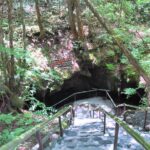
Mount Fuji Tours, side by side.
 ★ 5.0Mt Fuji and Hakone 1-Day Bus Tour Return by Bullet TrainFrom $16326,383 reviews
 ★ 4.0Mt Fuji & Hakone Cruise, Drum Show Bullet Train 1 Day from TokyoFrom $1497,413 reviews
 ★ 4.4Tokyo Mt Fuji 5th St & Hakone Cruise Bus Tour w/Bullet TrainFrom $1545,024 reviews
 ★ 4.5From Tokyo: Mount Fuji Full-Day Sightseeing TripFrom $684,970 reviews
 ★ 4.7Mt. Fuji Tour, Hakone Ropeway, Owakudani, Lake AshiFrom $544,002 reviews
 ★ 4.2Mt. Fuji 5th Station & Hakone Cruise 1-Day Bus TourFrom $1292,381 reviews
 ★ 4.7Mt Fuji Top 5 Spots Day Tour: Arakurayama Park,Oshino HakkaiFrom $532,066 reviews
 ★ 5.0Private Tour to Mt. Fuji and Hakone (Fully Licenced Operator)From $4971,910 reviews