
Review · GUIDED
Hidden Fuji drive tour with a Local English speaking guide
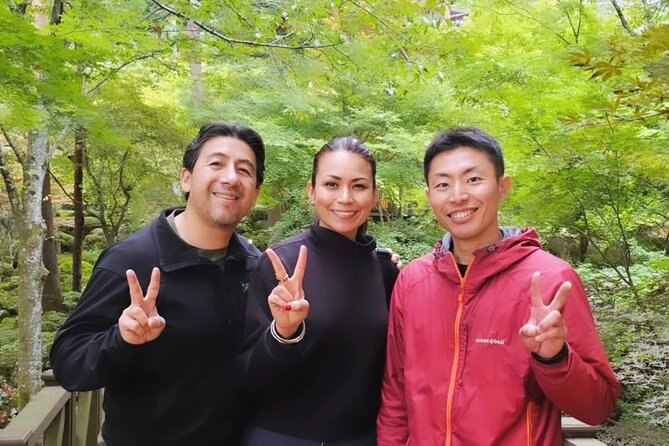
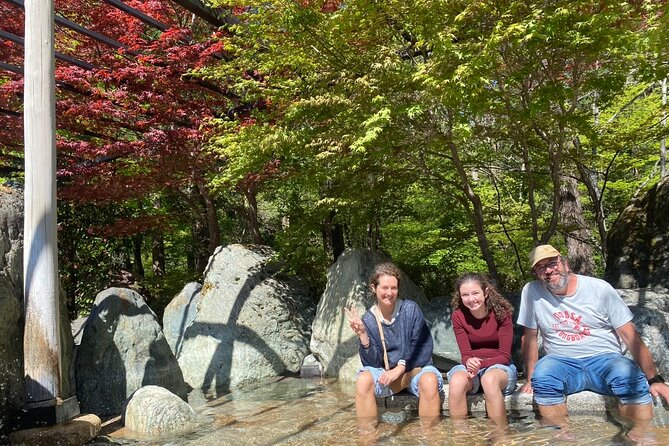
Fuji looks different when you escape the main roads. This private driving tour from the Lake Kawaguchiko area takes you to quieter corners around Mt. Fuji, with a local voice throughout the day and plenty of time to actually see things. I especially like the calm pacing and the chance to slow down at spots like Saiko Lake and Aokigahara Forest, where you are not just rushing from photo to photo.
The one thing to keep in mind is that the optional Mt. Fuji 5th station stop depends on the weather, so fog or low clouds can limit what you get at the top. Still, even without that ascent, the rest of the day is built for views, history, and local flavor.
Key highlights worth your attention
- Yuki, an English-speaking local guide who explains what you are seeing as you go
- Quiet Fuji Five Lakes time, including Saiko Lake and Lake Shoji
- Aokigahara (Jukai) on lava ground, plus Mt. Fuji worship sites like a lava cave
- Shrines and old trees linked to Mt. Fuji’s eruptions, including Kawaguchi Asama Shrine
- Parking and an air-conditioned vehicle included, with most stop entrances free
- Private group feel up to 5, so your timing stays flexible
How this Hidden Fuji Drive actually changes your day
Mt. Fuji can feel like a theme park if you hit the busiest viewpoints at the wrong time. This tour works because it is designed to be a car day, led by a local guide, and focused on the quieter side of the Fuji area. You start at 9:00 am and spend about 6 hours moving through lakeside viewpoints, shrines, forests, and a local food stop, rather than trying to cram everything into one rushed circuit.
The big payoff is not just where you go. It is how you get there. Having Yuki, an English-speaking local guide, means you are not guessing why a shrine sits where it does or what a forest is actually doing there on lava ground. You get context while the scenery is still in front of you, which makes the stops feel more grounded and less like a checklist.
You can also read our reviews of more guided tours in Fujikawaguchiko machi
Private driving with Yuki: the comfort and flexibility you pay for
You are traveling in a vehicle with air-conditioning and the tour includes parking fees. That sounds basic until you realize how much time and stress group travel can add when you are switching between transit, walking, and waiting. Here, you are in one ride for the whole day, and you can keep your momentum without feeling hurried.
It is also a private tour for your group, up to 5 people. For couples and small families, that is a sweet spot: you get privacy without needing a big group. Plus, pickup is offered, which matters in the Fuji Five Lakes area where starting locations can be spread out.
A practical note: this experience is available only if you are coming to the Kawaguchiko area yourself or already staying there. So if you plan to base yourself far away, double-check your route to get to the meeting start time smoothly.
Lake Kawaguchiko: start with Mt. Fuji and room to breathe
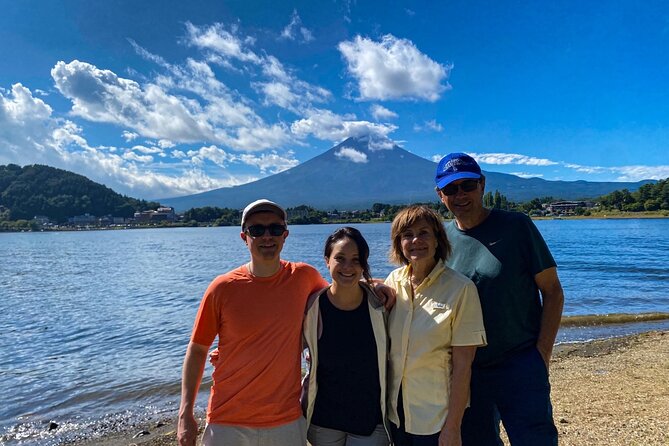
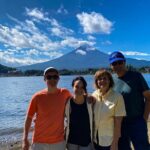
Your day begins at Lake Kawaguchiko, where you get a first look at Mt. Fuji and the lake. This is the part of the day that sets the tone. When the mountain is clear, you get that classic Fuji silhouette with water reflections. When clouds roll in, the lakeside viewpoints still give you a sense of the region’s shape and weather patterns.
The stop is short, about 10 minutes, and the good news is that the entrance is free. That makes it easy to enjoy without feeling stuck, especially if you are traveling with people who get tired of long viewpoint holds.
What I like about starting here is the timing logic. If your weather ends up changing later, you at least have your first chance when the day is fresh.
Kawaguchi Asama Shrine: why this shrine feels tied to Mt. Fuji’s power
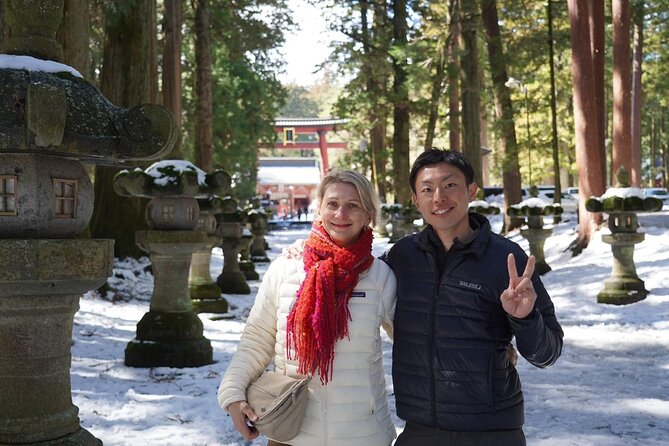
Next is Kawaguchi Asama Shrine, about 30 minutes, also with free admission. This is one of those locations that makes Mt. Fuji feel personal, because it is not just about the view.
The shrine was built to pray for the goddess of Mt. Fuji to settle down the eruption around 1200 years ago. The site also includes seven ancient trees. That combination, history plus living presence, gives you a different kind of connection than a roadside photo spot.
This stop is also described as being away from the more touristy area, which matters for your experience. At a quieter shrine, you can hear yourself think, and you can take your time reading small details without shoulder-to-shoulder pressure.
If you enjoy cultural stops more than gift-shop stops, this is one of the strongest parts of the day.
Saiko Lake: deep blue water and the quiet etiquette that comes with it
Then the tour heads to Saiko Lake for around 20 minutes. The lake is known for deep blue color, with pure water coming from Mt. Fuji. It is also framed as a place to enjoy the view quietly so you do not disturb local anglers.
I like this detail because it is real travel advice, not fluff. Lakeside behavior changes depending on whether there is active fishing nearby. You are not just looking; you are sharing space with people who live there and use the lake.
Saiko Lake works well if you want a calmer, slower moment where your biggest job is to look up at Mt. Fuji and then down at the water.



Aokigahara Forest (Jukai): lava ground, sacred ruins, and a real change of mood
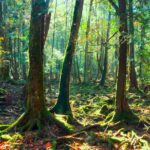
Aokigahara Forest, also called Jukai, is the emotional center of the tour for many people who like nature with a story. This stop runs about 1 hour and is free to enter.
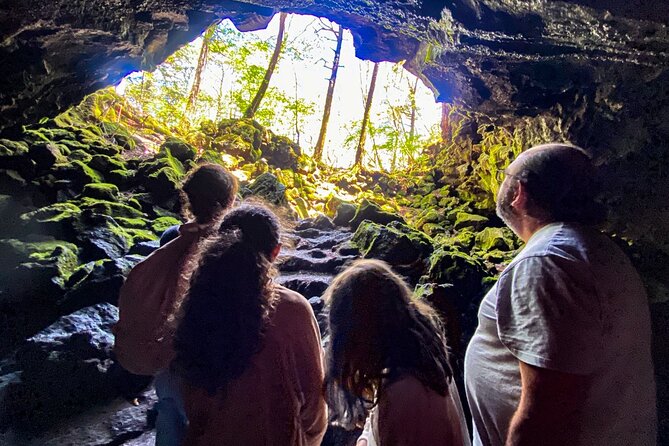
Here is the key context: Jukai is a forest built on lava fields from Mt. Fuji. That simple line changes how you read the whole place. You are not just walking through trees. You are walking on the aftermath of eruption, where nature has reclaimed harsh terrain.
The tour also includes a sacred ruins site related to Mt. Fuji worship, including a lava cave created by one of the biggest eruptions. The way this is presented matters. It is not framed as a scary detour. It is framed as cultural landscape, meaning you are learning how people connected faith and place to what Mt. Fuji does.
The practical drawback is that a forest stop can feel like the least scenic portion to people who want nonstop views. If you are traveling with someone who gets restless without big photo-worthy mountains every five minutes, plan on them needing a little patience here.
Lake Shoji: the smaller, calmer Fuji water moment
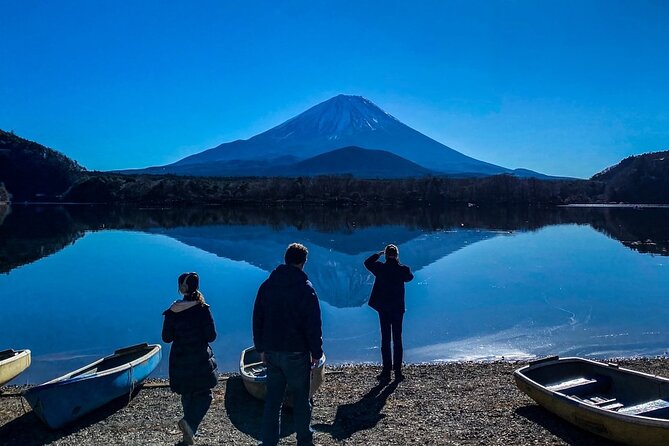
Lake Shoji is the next water stop, about 30 minutes, again with free admission. It is described as the smallest of the Fuji Five Lakes and one of the best places to see Mt. Fuji. The tone is peaceful and quiet.
This is a great pairing after Aokigahara because your eyes need a change. In a forest, your attention adjusts to texture and shade. At Shoji, it shifts back to open water, reflections, and sky.
Because the stop is focused and not long, it works for active travelers who want variety. If Mt. Fuji is visible, this is often one of those moments where the whole day feels worth it, even if the earlier mountain views were limited by cloud cover.
Menkyo-kaiden and Yoshida Udon: the local food stop that deserves your attention
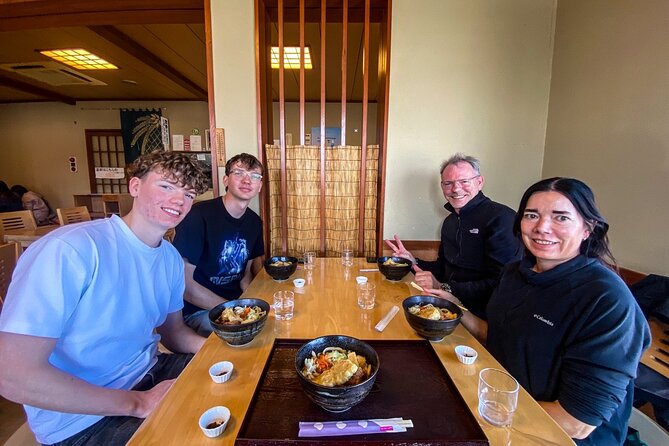
Food on a driving tour can be either a random afterthought or the best part of the day. Here, Menkyo-kaiden is the planned stop for Yoshida Udon, the signature food of Fujiyoshida city.
This is not included at a fixed price, because lunch is optional and typically costs 1000 to 2000 yen per person. So you should expect to pay your own meal cost, and the timing is designed so you can handle that without derailing the schedule.
Yoshida Udon stands out because the noodles are thicker than usual, with a firm and chewy texture. That matters because it is easy to eat a noodle dish that is basically forgettable. Thick, chewy noodles carry flavor better, and they hold up well if you want a satisfying lunch before your optional Mt. Fuji stop.
If you like simple, hearty regional food, this stop earns its place.
Optional 5th station on Mt. Fuji: the big payoff, the weather risk
You then have the optional Mt. Fuji stop, about 1 hour, where you can approach up to the 5th station if conditions allow. The entrance fee is not included, listed at 2800 yen.
This is the portion of the day that can swing from stunning to limited depending on visibility. If you see the mountain clearly, this stop can feel like the highlight. If clouds roll in, you may still get a sense of altitude and the mountain environment, but you should manage expectations.
My advice: think of this as a bonus, not the guarantee. The rest of the tour is built around lakes, shrines, and forest stops that still make sense even if Mt. Fuji hides behind fog.
Also, budget for the entrance fee only if you choose to go. The tour keeps it optional, which gives you control.
Fujisan Onsen Hotel Kaneyamaen garden: a calm finish that matches the season
To close, the tour stops at Fujisan Onsen Hotel Kaneyamaen, around 30 minutes. The hotel is described as historical and fancy, and it opens its Japanese-style garden for public viewing.
This last stop is about slowing down and letting the day land. The garden changes with the seasons, so what you see depends on when you go. In practice, that means the tour can feel different throughout the year even if the itinerary stays the same.
It also is a good fit if you want a final scenic moment without committing to extra stairs, long walks, or additional paid activities. And since the entrance here is listed as free, it is a nice “add-on” value point.
Price and what $396.31 per group really buys you
The tour price is listed as $396.31 per group, up to 5 people. That is for a private half-day style experience of about 6 hours, with parking fees included and an air-conditioned vehicle, plus an English-speaking local guide.
On paper, per-person cost depends on how many people you bring. With 4 or 5 people, it can feel like solid value, because you are paying for a dedicated car and guide instead of sharing transport and viewpoint time with strangers. For two people, it is still not outrageous for Japan private guiding, especially in a day where distance between stops can make self-driving stressful.
The main extra costs to plan for are straightforward:
- Lunch is optional, usually 1000 to 2000 yen per person
- Mt. Fuji 5th station entrance fee is 2800 yen if you choose that optional stop
Most other stops list free admission, and the parking is handled. That keeps the day from turning into a patchwork of ticket costs.
Who should book this Hidden Fuji drive, and who might not love it
This tour fits best if you want:
- A quieter Fuji experience, with stops away from the busiest tourist pockets
- A day guided by context, not just directions, thanks to Yuki’s English support
- Variety, mixing lakes, shrines, and a lava-ground forest stop
- A small private group (up to 5) so the schedule feels relaxed rather than rigid
It may be less ideal if you want:
- Only big mountain viewpoints with no cultural or forest stops
- A guaranteed Mt. Fuji ascent every time, since the 5th station is weather-dependent and carries an extra entrance fee
If you are the kind of traveler who likes understanding place names, shrine meanings, and why a forest is on lava ground, you will likely love the structure of the day.
Should you book this Hidden Fuji drive tour?
Book it if you want Mt. Fuji without turning your day into a crowded viewpoint sprint. The mix of Lake Kawaguchiko, Kawaguchi Asama Shrine, Saiko Lake, Aokigahara, Lake Shoji, Yoshida Udon, and the garden finish gives you a balanced slice of the region, and the private car time makes it practical.
I would skip it only if your top priority is a guaranteed, weather-proof Mt. Fuji climb. If the mountain is clear, you can add the optional 5th station. If it is not, the rest of the route still gives you plenty to see and a strong local feel through Yuki’s guidance.
FAQ
How long is the tour?
It runs about 6 hours.
What is the group size limit?
It is a private tour for your group, up to 5 people.
Does the tour include pickup and a mobile ticket?
Pickup is offered, and the tour uses a mobile ticket.
Are entrance fees included for every stop?
Parking fees are included, and most stops list free admission. The Mt. Fuji 5th station entrance fee (2800 yen) is not included, and lunch is also not included.
How much should I budget for lunch?
Lunch is optional and usually costs 1000 to 2000 yen per person.
What happens if the weather is bad for Mt. Fuji?
The experience requires good weather. If it is canceled due to poor weather, you will be offered a different date or a full refund. The optional 5th station stop also depends on weather conditions.
More Guided Tours in Fujikawaguchiko machi
More Tours in Fujikawaguchiko machi
More Tour Reviews in Fujikawaguchiko machi
Not for you? Here's more nearby things to do in Fujikawaguchiko machi we have reviewed

Guided, side by side.
 ★ 5.0Tokyo 6hr Private Tour with Government-Licensed GuideFrom $1553,902 reviews
 ★ 4.9Shinjuku Local Bar and Izakaya Guided Walking TourFrom $341,794 reviews
 ★ 4.8Private City Highlights Tour with Local GuideFrom $1061,433 reviews
 ★ 4.9Tsukiji Fish Market Guided Walking TourFrom $221,397 reviews
 ★ 5.0Tokyo 4hr Private Tour with Government-Licensed GuideFrom $1091,394 reviews
 ★ 5.0Tokyo Guided Small-Group Biking TourFrom $1061,250 reviews
 ★ 4.6Samurai Ninja Museum Guided tour and ExperienceFrom $271,010 reviews
 ★ 5.0Tsukiji Fish Market Guided Tour and Sushi Making with Pro ChefFrom $104775 reviews