
Review · ASAKUSA TOURS
Asakusa: 1400-year history exploration
Tokyo’s old story starts by the river. This small-group walk through Asakusa links a 1400-year religious landmark with everyday street life, so you see why the neighborhood still matters. I like how the tour keeps you moving from iconic gates to quieter lanes, while the guide ties it all together in plain, human terms.
Two things I especially like: the structure around Sensō-ji and the way the guide spots the details most people miss, like the gates, pagoda, and the Buddhist and Shinto mix. I also like that you get included Japanese snack time while you browse Nakamise-dori, then leave with practical pointers for eating, drinking, and shopping in Rokku.
One drawback to plan for: Asakusa can get loud and crowded, so you may struggle to hear if you drift far from the group. Also, the 3.5 hours includes moderate walking, so if you want a quick in-and-out temple stop, this one might feel like more than you need.
Quick highlights you should care about
- Max 8 people with an English-speaking guide, so you actually get time for questions
- Earphone system that keeps the guide’s voice clear even in busy areas
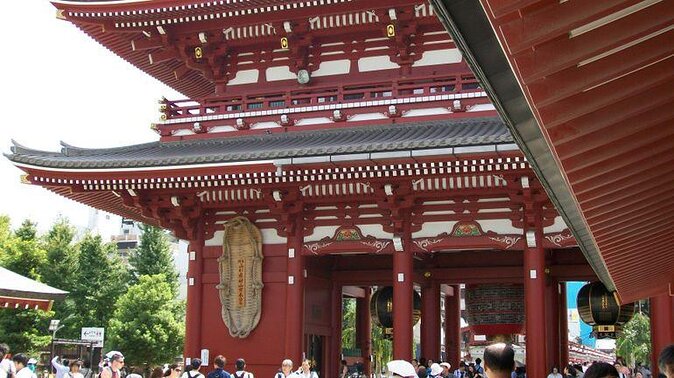
- Sensō-ji landmarks in sequence, from Kaminarimon to Hōzōmon, pagoda views, and Asakusa Shrine
- Nakamise-dori snack sampling, including melon pan and other classic sweet bites
- Rokku (Asakusa entertainment district) walking, with advice on where to eat, drink, and shop
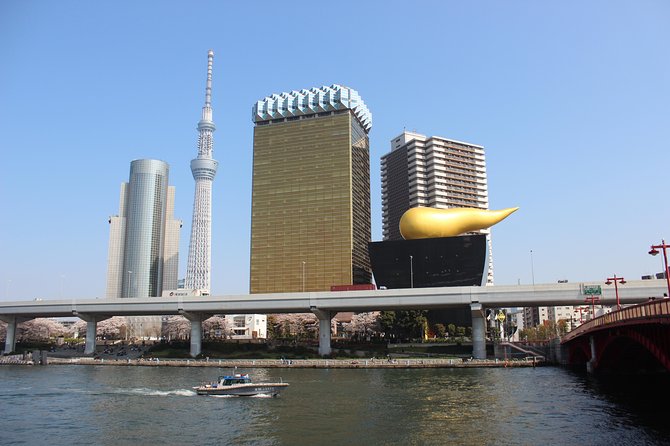
- Start along the Sumida River, with skyline views and the Asahi headquarters golden flame object
Why Asakusa still feels like Tokyo’s real backbone
Asakusa is one of those Tokyo areas where the timeline sits on your feet. You walk past gates, lanterns, temple halls, and snack stalls, then you realize this neighborhood has been reshaped over and over for centuries. The big anchor is Sensō-ji, tied to a 1400-year story that helps explain why Asakusa feels both old and stubbornly current.
What works well on this tour is that it does not treat Asakusa like a single monument you sprint through. You get a path through the district, so the place makes sense as a living neighborhood, not a photo set. Even the river start matters, because Asakusa’s early momentum is tied to the Sumida River and the connections it brought.
If you like your history with street-level context, you will probably enjoy this approach. You will come away with a clearer idea of how religion, commerce, and local culture blend here.
You can also read our reviews of more historical tours in Tokyo

Small-group size and the earphone setup (this matters more than you think)
Crowds in Asakusa can turn a nice walk into a wall of noise. This is why the small group size, capped at 8 travelers, is a big deal. It makes it easier for the guide to keep everyone together at key viewing spots.
Even better, you get an earphone guide system, so you do not have to play guess the words while people shuffle past. My practical advice: stay close to the front half of the group when you want the best sound. If you step away to pause, you might hear less clearly, even with the headset system.
The other side of small-group travel is that it tends to produce better questions. Based on what I see reflected in the guide experiences, the best part is often the back-and-forth, not just the sightseeing recital. People like Amy, Emiko, Sachi, Aki, Taka, Yasu, and Yoko show up repeatedly in the feedback, and the theme is consistent: the guides explain what you are looking at and answer follow-ups without rushing.
Stop 1: Sumida River and Azumabashi, with skyline and beer-fortune views
The tour kicks off near the Sumida River and the Azumabashi area. This is a smart opener because it frames Asakusa as part of Tokyo’s bigger geography. You get a breather right at the start, and then you pivot toward the temple district.
You also see Tokyo Skytree in the distance, which is a nice modern contrast while you are standing in an area with deep historical roots. Another quick visual payoff is the Asahi Breweries headquarters and its world-famous golden flame object. It is the kind of landmark you might walk past without noticing, unless someone points it out with context.
This part is typically light on logistics and heavy on orientation. If you like the moment when a city stops feeling random and starts feeling organized, this start helps.
Stop 2: Asakusa Culture Tourist Information Center, a quick reset before the crowds
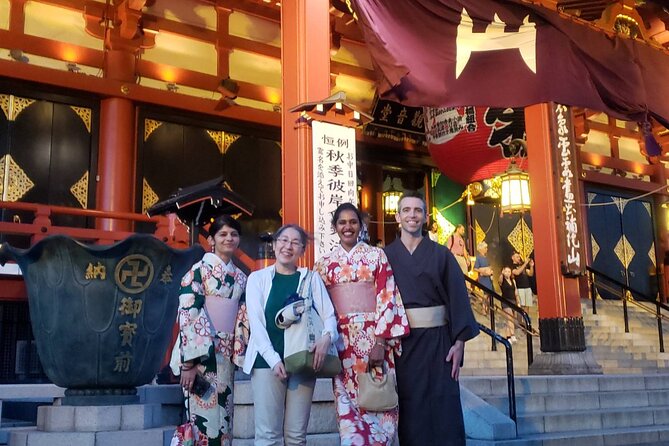
Next comes the Asakusa Culture Tourist Information Center. It is described as one of the newer sightseeing stops in the area, and the value here is simple: you get orientation.
This type of spot helps you connect the dots before you hit the densest lanes. It gives you a mental map for what comes next, so the walk feels less like wandering and more like following a story.
If you have ever been overwhelmed in Asakusa, this stop is the antidote. It sets expectations, and it can also help if you plan to keep exploring after the tour. You can walk out with a stronger sense of where you want to go next and what to skip.
Stop 3: Kaminarimon Thunder Gate and the red lantern moment
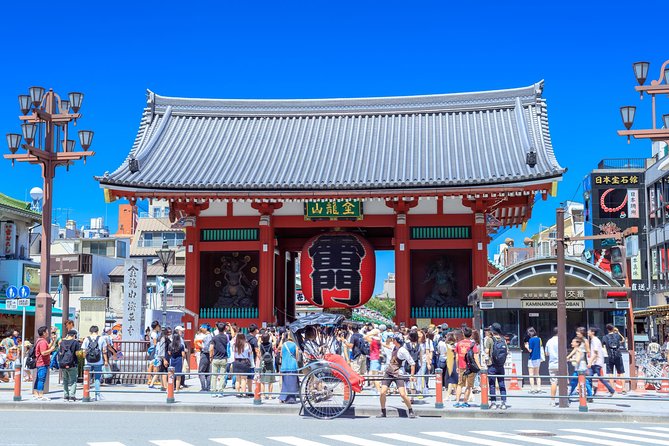
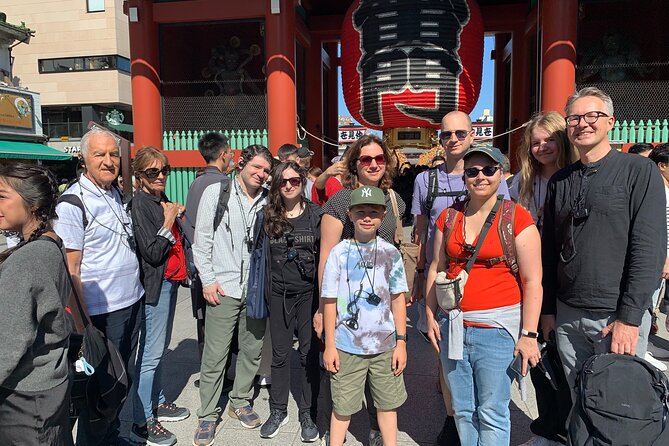
From there, you reach Kaminarimon Gate, also called the Thunder Gate. The name comes from the iconic vibe of this entrance, and visually it delivers. The huge red lantern and the surrounding statues turn Kaminarimon into an immediate landmark.
This stop is short, but it is important. The guide uses it as a transition point from the street world into the temple complex world. You learn what the gate is for, why it sits where it does, and how it connects to the main sacred area.
A quick reality check: on busy days, Kaminarimon can be packed tight. If you want a calmer look, the tour timing helps, but you still need patience. Keep moving when the guide nudges you along, and the whole experience becomes smoother.






Stop 4: Nakamise-dori, snack lines, and how to shop without getting lost
Then you step into Nakamise-dori, the market street that runs between Kaminarimon and the main temple approaches. This is one of Asakusa’s biggest shopping stretches, about 250 meters lined with souvenirs and food stalls.
This is where the tour becomes more than sightseeing. You get a chance to sample classic bites and learn what is worth your time. The included snack selection can include things like melon pan, rice dumpling, rice cracker, and sweet puffed rice. These are the kinds of snacks that taste like you are eating Tokyo street culture, not just buying a souvenir with a wrapper.
Practical tip: decide early what you want from the market. If you try to compare every stall, you will burn energy and still end up with random impulse buys. Let the guide steer you toward smart picks, then build from there.
If you like photos, this is also where you find great angles. But do not block the flow. On narrow shopping streets, good etiquette keeps the whole group moving and helps you hear the guide.
Stop 5: Hōzōmon Gate, where the temple experience deepens
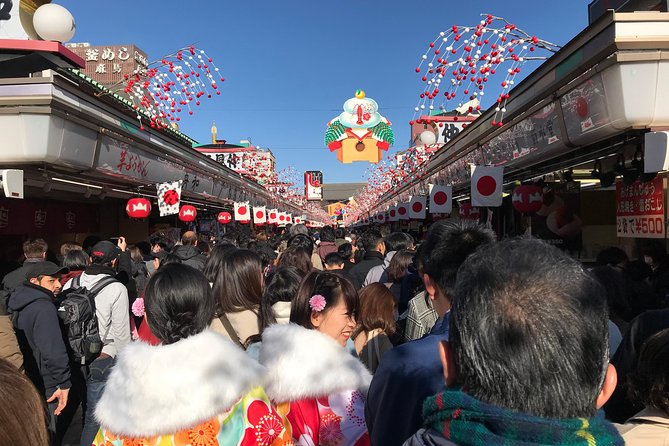
After Nakamise-dori, you reach Hōzōmon Gate, the inner gate that leads deeper into the Sensō-ji complex. Hōzōmon has a distinct presence, and it works as a threshold. The closer you get, the more the mood shifts from market noise to sacred space.
This is a short stop, but it sets up the main temple time. Think of it like the hallway before the theater starts.
If you are sensitive to crowding, keep your expectations realistic. This area can get packed, but having a guided path helps you spend your attention efficiently instead of circling around wondering where to go next.
Stop 6: Sensō-ji Temple, pagoda views, and the kind of history you can see
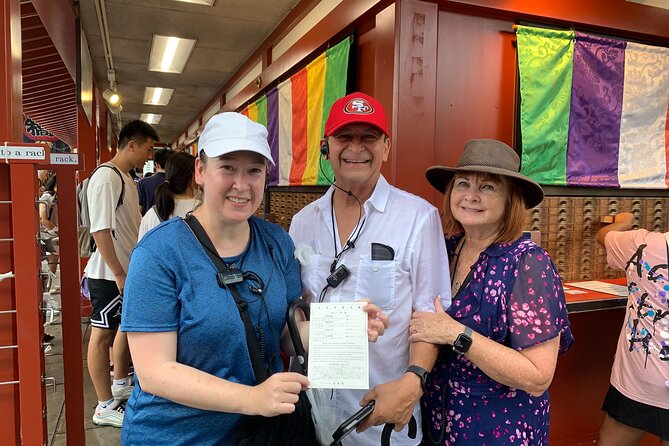
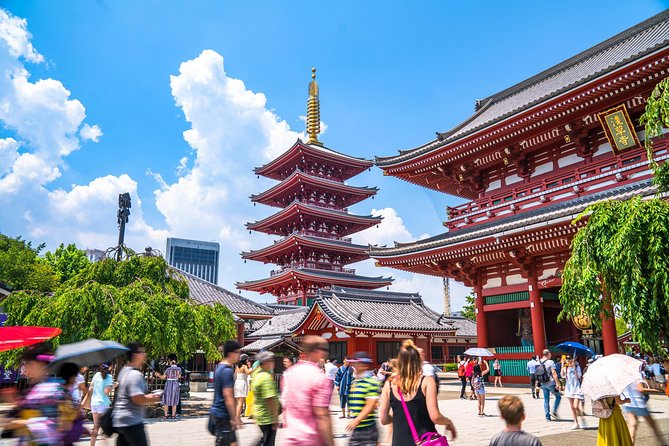
This is the core of the tour: time inside the Senso-ji Temple area. Between the gates and the main hall approach, there is plenty to notice.
One standout is the five-storied pagoda, described as the second highest pagoda in Japan at 53 meters, built in 942. It also holds Buddha ashes, which is the kind of detail that turns a statue into a story. You start to notice the architecture with purpose, not just as scenery.
The guide’s value here is in pointing out what to look for: how the grounds are organized, what major elements mean, and why the site matters beyond today’s crowds. This is where guides like Sachi and Aki tend to get praised most, because they connect the physical layout to the larger historical arc.
Here is a practical note: the most crowded areas can be hard to pause and read details. I recommend that you let the guide choose the vantage points, and if you want close-up views, time it for the few moments when the group shifts.
Stop 7: Asakusa Shrine, where Buddhist and Shinto traditions share space
Next comes Asakusa Shrine, and this is one of those stops that helps you understand Japan’s cultural layers. The tour explains the unusual pairing of a Buddhist temple and a Shinto shrine on the same premises, sharing origins and worshipers.
Even if you are not religious, this is a fascinating topic because it changes how you interpret what you are seeing. Instead of thinking of temples and shrines as competing categories, you start to see how they coexist in real life.
This stop is brief, but it often leaves people with a lasting question: how did this arrangement make sense historically, and why does it persist?
If you like culture that is practical, not abstract, you will probably appreciate this contrast after the temple complex.
Stop 8: Denboin Street in Rokku, traditional entertainment district vibes with real guidance
After Sensō-ji, the tour shifts gears into Denboin Street in the Rokku area. This is described as Asakusa’s traditional entertainment district. It is always busy in its own way, but the tour says it can feel lively without being chaotic.
What makes this stop valuable is the guide’s role in helping you understand where you are. Instead of treating Rokku as random streets and lanterns, you learn how the area relates to the Meiji period and how it carries forward into today.
You also get the kind of advice that saves time later: where to eat, where to drink, and where to shop in Rokku. This is one of the most practical parts of the tour, because it turns a tourist zone into a planned night out or a targeted snack-and-shop loop.
Snacks included, plus what to look for when you continue on your own
The included snacks are not meant to replace a meal. They are a sampler, and they help you taste the style of street sweets that line these approaches. Depending on the departure, the selection may include items such as melon pan, rice dumpling, rice cracker, and sweet puffed rice.
A few guide experiences also point to additional tasting moments like traditional Japanese sweets such as ningyo-yaki and drinks like yuzu, and in at least one described situation, time around Sumida Park was added during cherry blossom season. The main takeaway for you is that your guide may flex slightly when conditions are favorable, while still keeping the history path intact.
After the tour, you can use what you learned to shop smarter. You will know the difference between buying something you can only get here and buying something you could get anywhere in Tokyo. And if the tour has made you curious about local snacks, you can keep that curiosity going without wasting time guessing.
Practical tip: if you come hungry, start hydrating early. Bring water if you visit in summer, since Asakusa crowds can make a walk feel longer than planned. Vending machines exist, but planning ahead keeps you from breaking the tour rhythm.
Value check: is $91.17 worth it for 3.5 hours in Asakusa?
At $91.17 per person for about 3 hours 30 minutes, this tour has a specific value proposition. You are paying for a guided route through the temple gates and key streets, plus included sweet snacks and an earphone system that makes hearing easier in crowds.
If you do Asakusa on your own, you can absolutely walk to Sensō-ji and Nakamise-dori for free. You can even buy snacks on your own. The difference here is the guided flow: the guide helps you see the meaning of each stop, not just the photo.
I think the price makes sense if you care about context, want help with food and shop direction in Rokku, and appreciate the small-group pacing. If you prefer to wander with zero structure, you might find a self-guided approach cheaper and more flexible.
When this tour really fits your travel style
This tour tends to shine for people who:
- Want a guided introduction to Asakusa and Sensō-ji without planning a route
- Appreciate walking in sequence instead of hopping randomly between sights
- Like asking questions, especially about why places are arranged the way they are
- Enjoy small tastings that make shopping streets feel less overwhelming
It may be less ideal if:
- You want a very fast, minimal-walking temple visit
- You get frustrated when crowds make it hard to hear
- You prefer longer time in one shopping stretch over short gate-to-gate temple stops
The best move is to set expectations. This is not a sprint. It is a focused history walk with snack breaks and a practical finish in the Rokku area.
Should you book this Asakusa 1400-Year History Tour?
I would book it if you are planning your first Asakusa afternoon and you want the district to feel understandable, not just impressive. The small group size up to 8, the earphones, and the guide-led walkthrough of Kaminarimon, Hōzōmon, Sensō-ji, and Asakusa Shrine are exactly the ingredients that turn a popular neighborhood into a meaningful one.
I would skip it only if you want speed over story. If you can handle moderate walking and accept that the main temple area will be busy, this tour is a strong way to get your bearings fast, taste a few classic snacks, and leave with a plan for Rokku.
If you do book it, wear comfortable shoes and keep your headset close and on. That is how you get the most out of the time you pay for.
FAQ
Where does the tour start and end?
The tour meets at Burger King Asakusa Azumabashi, Japan, and it ends back at the meeting point.
How long is the tour?
The duration is about 3 hours 30 minutes.
What is included in the tour price?
You get an English-speaking guide, an earphone guide system, and a selection of Japanese sweet snacks such as melon pan, rice dumpling, rice cracker, and sweet puffed rice.
Are there any admission fees for the stops?
The listed stops are marked as free admission tickets in the schedule.
How big is the group?
The maximum group size is 8 people.
What time does the tour run?
The start time shown is 1:30 pm. The tour ends back at the meeting point.
More Historical Tours in Tokyo
More Tour Reviews in Tokyo
Not for you? Here's more nearby things to do in Tokyo we have reviewed












Asakusa Tours, side by side.
 ★ 4.8Japanese Dance Cabaret Theater Asakusa-Kaguwa TicketFrom $492,270 reviews
 ★ 4.7Meiji Shrine, Asakusa, Skytree Bus Tour and CruiseFrom $1221,986 reviews
 ★ 4.9Roll and Authentic Sushi Making Class in AsakusaFrom $581,957 reviews
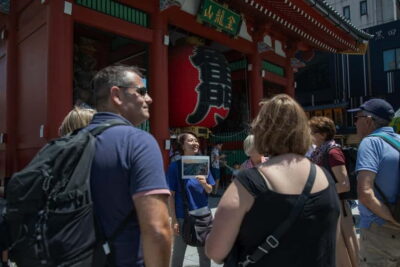 ★ 4.8Asakusa Walking Tour with Sensoji Temple VisitFrom $221,583 reviews
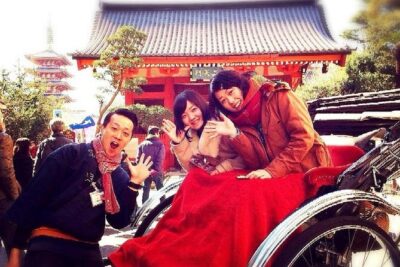 ★ 5.0Tokyo Asakusa Rickshaw TourFrom $421,375 reviews
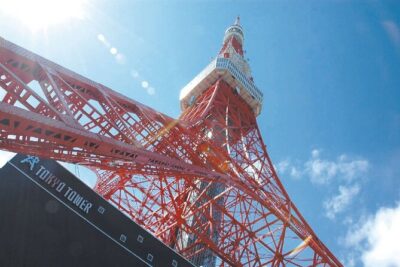 ★ 4.5Tokyo Panoramic 1 Day: Meiji Shrine, Asakusa, Odaiba and SKYTREE®From $851,222 reviews
 ★ 5.0Tokyo Go Kart: Asakusa, Skytree, and Akihabara **IDP MUST**From $99988 reviews
 ★ 4.7Asakusa, Skytree & Akhihabara Go-Kart City ExperienceFrom $96761 reviews
This tour also belongs to