
Review · ASAKUSA TOURS
Asakusa: 2-hour history exploration
Asakusa makes sense when someone guides your feet. This 2-hour walk turns the big sights into a clear story, from the Sumida River to Sensō-ji, with headsets so you can actually follow what your guide is saying. You’ll also get a guided stroll through Kaminarimon and Nakamise, plus chances to snack along the way.
I like two things a lot here. First, the tour is led by a local certified expert who explains the meaning behind what you see, including the rituals you’d otherwise breeze past. Second, it uses smart orientation stops, like the observation deck at the Asakusa Culture Tourist Information Center, so you can connect landmarks as you walk.
One thing to consider: this is a tight schedule. If you want long, slow photo breaks or extra shopping time on your own, the pace may feel a bit packed for two hours.
Key highlights that make this tour worth your time
- Headsets help you hear the guide clearly in busy temple streets (for groups of 3 or more)
- A Sumida River start that sets the historical scene fast, with Tokyo Skytree and the Asahi Flame in view
- The Asakusa Culture Tourist Information Center’s observation deck gives a “map in real life” of your route
- Kaminarimon explained, including what the giant lantern means and why you’ll see it everywhere
- Nakamise snack stroll plus guidance on where to shop and what to try
- Sensō-ji practical rituals you can follow step by step, like omikuji and incense-burner hand-washing
Why a guided Asakusa walk beats solo wandering
Asakusa is one of Tokyo’s most atmospheric neighborhoods, but it can also feel like visual overload if you go alone. Temple gates look dramatic, shop streets look like photo sets, and you may not know what matters most or why it matters.
A guide changes that. Instead of just seeing crowds moving toward lanterns, you understand the layers: the river connection, the gate system leading inward, and the everyday meaning of the worship spaces. It’s the difference between walking through famous places and knowing what you’re looking at as you walk.
You can also read our reviews of more historical tours in Tokyo

Getting oriented: meeting point, timing, and what 2 hours really means
This tour runs for about 2 hours, starting at 9:30 am. You meet near Burger King Asakusa Azumabashi, and the tour ends at Saryō Ichimatsu, where a geisha activity is held. The good news is that the timing is long enough to hit the core sights, but short enough to keep you from burning half a day just getting your bearings.
The group is capped at 20 travelers, which is a sweet spot for a walking tour. You’re not stuck in a giant pack, but you’re also not doing a private tour price-wise.
You’ll also appreciate the structure. The walk includes a sequence of gates and approach streets, which helps your brain make sense of the temple layout without you needing to study maps every ten minutes.
Stop by stop: from Sumida River views to Tokyo Skytree
You start by the Sumida River at Azumabashi Bridge, where the scenery clues you in on why Asakusa grew here in the first place. Across the water, you’ll get views of Tokyo Skytree and the Asahi Breweries headquarters, including the famous golden flame object. Even if you’re not a sports-betting fan for landmarks, it’s a great anchor point for orientation.
Next comes the Asakusa Culture Tourist Information Center. This isn’t just a place to grab brochures. The building itself is an attraction, designed to look like separate wooden buildings stacked at angles. From the open terrace observation deck, you get a preview of key landmarks along your walk, including major gates and the temple complex you’re heading toward.
I like this part because it reduces confusion later. Once you’ve seen where you’re going from above, the streets below feel less random, and your photos come out with a better sense of scale.
Kaminarimon and Nakamise, where history and snacks mix
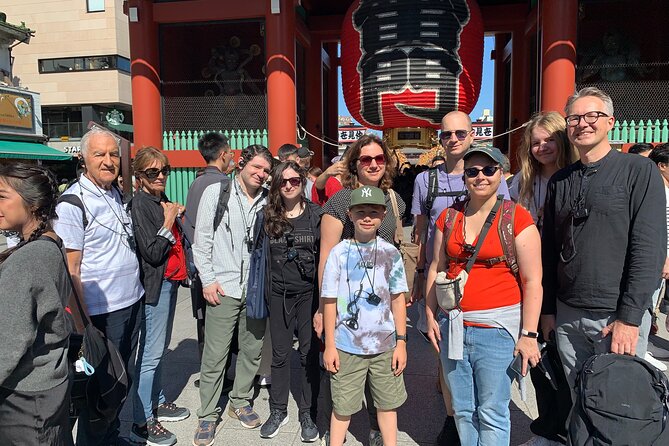
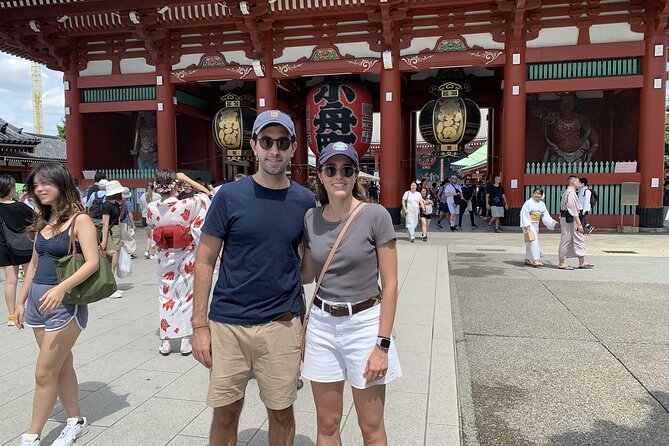
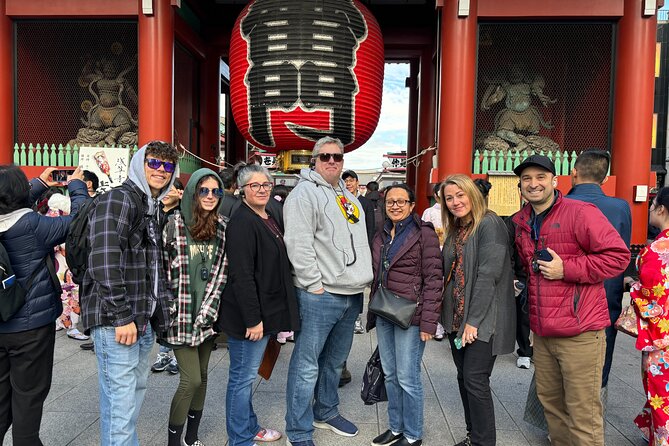
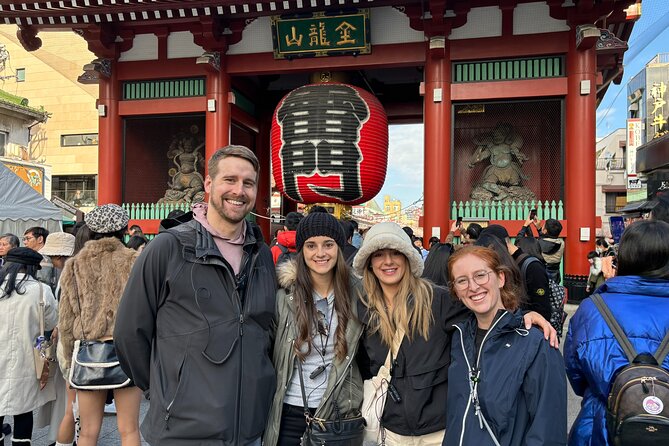
Your route leads you to Kaminarimon, the Thunder Gate. This is the outer gate that funnels people toward Sensō-ji, and it’s instantly recognizable thanks to the huge red lantern and statues. The guide helps demystify what you’re looking at, so it doesn’t stay as just a postcard object.
From there, you walk through Nakamise Shopping Street. It’s about 250 meters of souvenir shops and food stalls connecting the gate to Sensō-ji’s main area. This is where the tour earns its keep for first-time visitors: you don’t just follow the crowd, you get pointed toward good options for what to buy and what to taste.
A highlight here is the snack element. Your guide buys traditional snacks for you along the way, and it can vary based on preferences. That matters because Nakamise has plenty to tempt you, but without guidance you might end up spending time deciding instead of experiencing.
You’ll also notice history tablets along the sides that depict how Asakusa developed around the temple. It’s a subtle touch, but it turns the shopping street from noise into context.
Hozomon and Sensō-ji rituals you can follow step by step
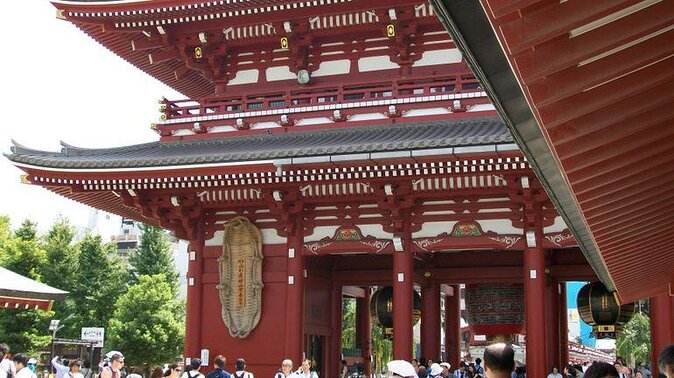
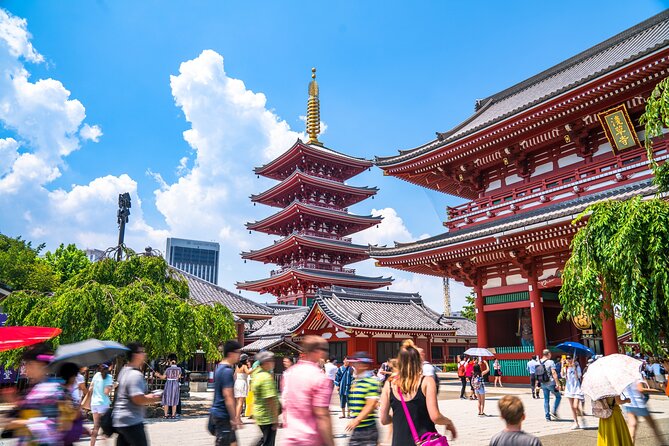
Then comes Hōzōmon, the inner gate leading further into Sensō-ji. It’s a two-story gate, and the second level is associated with treasures. Up close, you’ll also see specific statues, lanterns, and large sandals on the first story, which gives you something concrete to track instead of just being swept along.
Now for the big one: Sensō-ji Temple. Before you even reach the main hall, you have three major things you can do or observe. The tour keeps it practical, which is what I love most about guided temple walks in Japan.
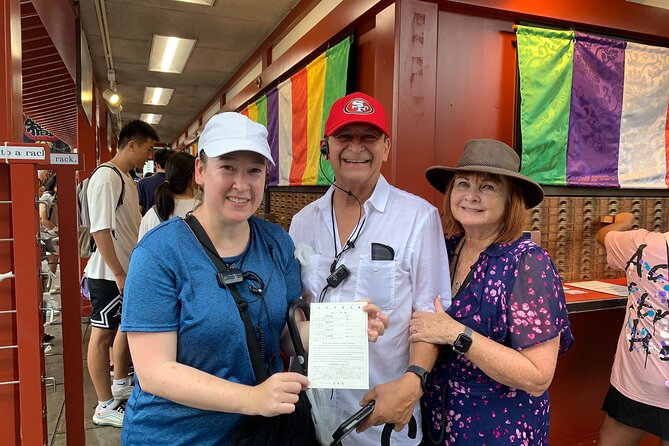
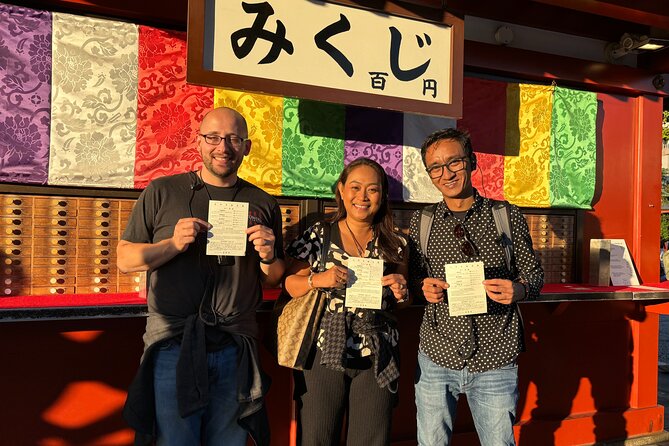
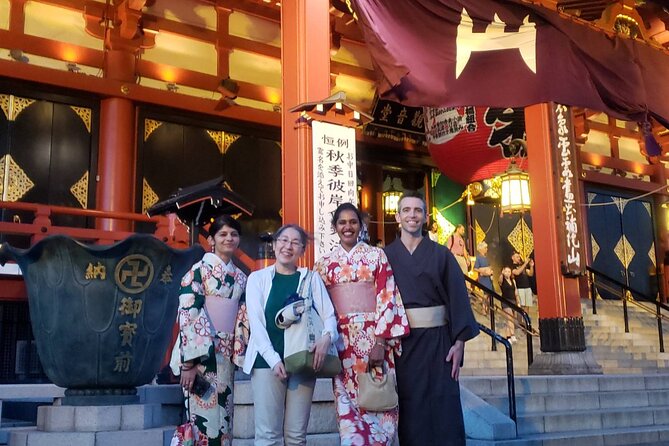
First, you can draw omikuji, paper fortunes, to predict your future. Second, there’s a ritual at the bronze incense burner, where many visitors wash their hands and faces in the smoke as a way to ward off illness before heading up the stairs to pray. Third, you’ll encounter a water purification fountain for cleansing.
And don’t miss the Five-storied Pagoda visible in the temple area. It’s listed as the second highest pagoda in Japan, standing about 53 meters, and it holds Buddha’s ashes on its top floor given by the Sri Lankan government. That kind of specific detail is exactly what a guide adds, because it changes how you look at the silhouette in the haze of crowds.
The only drawback with any temple experience is that crowds are part of the deal. Even with a group and headsets, you’ll still have to move with foot traffic. The tour helps you stay oriented so you’re not constantly stopping to figure out where you are.
More Tokyo tours and experiences for the shortlist


Asakusa Shrine: the unusual blend of Buddhism and Shinto
After Sensō-ji, you continue to Asakusa Shrine. The key idea your guide focuses on is how Buddhism and Shinto coexist here on the same premises, sharing origins and worshipers. That sounds abstract until you hear it explained in plain terms while you’re standing in front of the spaces where people actually pray.
This stop is a good contrast to the heavy temple focus. It reminds you that in Japan, religion isn’t always neatly separated into separate “tour zones.” Here, it’s intertwined with everyday life in a way that feels less like a museum exhibit and more like a living practice.
What’s included (and why the small extras matter)
This experience includes a live English guide who is a local certified expert, plus headsets that help you hear the guide clearly even from a distance when the group is at least three people. That headset detail sounds technical, but it’s huge. Asakusa streets can get loud, and it’s hard to enjoy the story if you’re constantly asking people to repeat themselves.
You also get snacks along the Nakamise stretch, and the stops listed are free from admission tickets. That’s a meaningful value point, since temple areas can sometimes have optional paid activities elsewhere in Tokyo.
What’s not included is hotel pickup, so you’ll want to plan to arrive at the meeting point under your own steam.
Also, you get a mobile ticket, and group discounts may be available. And since the tour is commonly booked about 30 days in advance, it’s smart to reserve sooner rather than later if your dates are fixed.
Price and value: is $64.55 fair for two hours?
At $64.55 per person, this isn’t the cheapest way to see Asakusa. But you’re paying for the parts that are hard to DIY well: an English explanation that connects each gate and street into a coherent story, plus headsets to keep the experience smooth.
For many first-time visitors, the value comes from two places. One is efficiency, because you hit the big sites without getting lost in the middle. The other is interpretation, because guided context is what turns Sensō-ji from an iconic place into a place you understand.
If you already know Japanese temple history, you might feel less wowed by the storytelling. But if you’re like most people coming to Asakusa for the first time, you’ll likely find that the guide makes the time feel well spent.
Small group vibes, guide styles, and how to get more out of it
The best part of the experience is how strongly the guides connect the dots. In past groups, guides like Choco, Yasu, and Amy have been praised for clear English and helpful, friendly explanations.
I also like that the tour is flexible with small details. For example, the snack stops can be adjusted based on your preferences. That’s one of those small things that makes a group tour feel less rigid.
There’s also a hint of optional fun in some departures. Some groups have mentioned a bonus origami lesson at the end, and others have referenced luck reading as part of the experience. The exact add-ons can vary, but it’s a nice reminder that the tour can feel like more than just gate-to-gate logistics.
If you want a more structured flow, you can ask your guide early for a focus, like temple rituals versus shopping street history. One candid note that’s worth taking seriously is that a few people felt the amount of information was heavy and the storytelling could have been more clearly organized. You can avoid that by steering the guide toward what you care about most.
Should you book this Asakusa history tour?
Book it if you want a guided, first-time-friendly Asakusa that explains what you’re seeing while still moving at a relaxed walking pace. You’ll get the best value if you’re curious about how Sensō-ji works as a place of worship, why the gates are arranged the way they are, and what the rituals mean beyond the photos.
Skip it, or at least think twice, if your top priority is spending most of your time shopping or taking unstructured photos. Two hours flies by in that area, and a guide-led route will gently nudge you away from random wandering.
If you do book, arrive a little early at the meeting point so you can relax before the headset briefing. Then go in with one simple goal: don’t just look at Asakusa, understand it.
FAQ
How long is the Asakusa history exploration?
It runs for about 2 hours.
What is the price per person?
The price is $64.55 per person.
Where do we meet, and where does the tour end?
You meet at Burger King Asakusa Azumabashi (Cross Bil Royal Palace, 2-chōme-20-6 Kaminarimon, Taito City). The tour ends at Saryō Ichimatsu (1-chōme-15-1 Kaminarimon, Taito City).
What time does the tour start?
The start time is 9:30 am.
Is hotel pickup included?
No, hotel pickup is not included.
Are headsets provided?
Yes, headsets are provided for groups of 3 or more so you can hear the guide clearly.
Is free cancellation available?
Yes. You can cancel up to 24 hours in advance for a full refund.
More 2-Hour Experiences in Tokyo
More Historical Tours in Tokyo
More Tour Reviews in Tokyo






Not for you? Here's more nearby things to do in Tokyo we have reviewed












Asakusa Tours, side by side.
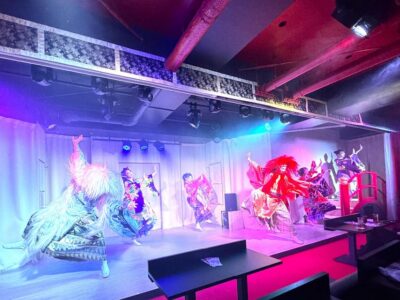 ★ 4.8Japanese Dance Cabaret Theater Asakusa-Kaguwa TicketFrom $492,270 reviews
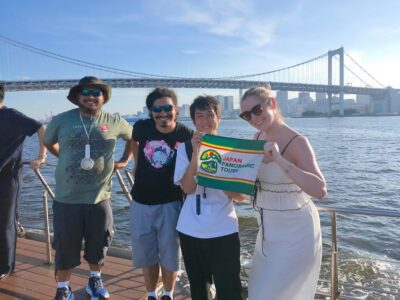 ★ 4.7Meiji Shrine, Asakusa, Skytree Bus Tour and CruiseFrom $1221,986 reviews
 ★ 4.9Roll and Authentic Sushi Making Class in AsakusaFrom $581,957 reviews
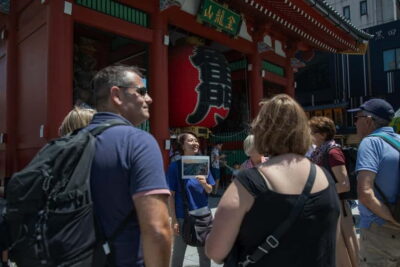 ★ 4.8Asakusa Walking Tour with Sensoji Temple VisitFrom $221,583 reviews
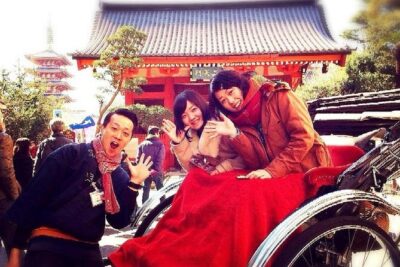 ★ 5.0Tokyo Asakusa Rickshaw TourFrom $421,375 reviews
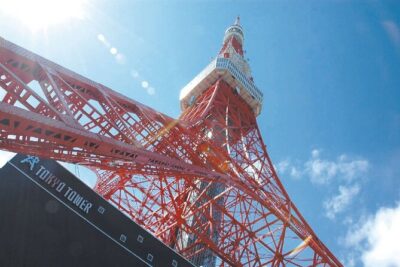 ★ 4.5Tokyo Panoramic 1 Day: Meiji Shrine, Asakusa, Odaiba and SKYTREE®From $851,222 reviews
 ★ 5.0Tokyo Go Kart: Asakusa, Skytree, and Akihabara **IDP MUST**From $99988 reviews
 ★ 4.7Asakusa, Skytree & Akhihabara Go-Kart City ExperienceFrom $96761 reviews
This tour also belongs to