
Review · MOUNT FUJI TOURS
From Tokyo: Mount Fuji Sightseeing Full Day Trip
Fuji days live or die by the weather. This full-day trip from Tokyo strings together the best-known Mount Fuji viewpoints and a classic lakeside break at Lake Kawaguchi.
I especially like how the schedule mixes photo stops with places that feel grounded in Japanese culture, from Saiko Iyashi-no-Sato Nenba (traditional thatched-roof homes) to Oshino Hakkai (eight clear spring ponds). The main thing to consider is timing: it is a fast 10 hours with short visits, so you will spend more time moving and photographing than lingering, and if the sky is cloudy you may miss the sharp Fuji views.
Key Highlights Worth Your Time
- A 10-hour Fuji greatest-hits loop that covers Lake Kawaguchi, Arakurayama area, and Oshino Hakkai in one day
- Saiko Iyashi-no-Sato Nenba with admission included, giving you a real sense of older rural Japan
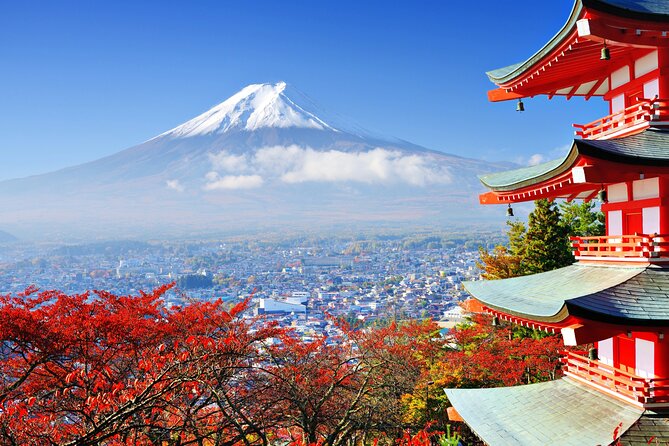
- Chureito Pagoda in Arakurayama Sengen Park plus the nearby Fuji Sengen Shrine for variety
- Oshino Hakkai springs and the eight pond setting that people come specifically to see
- Multiple “Fuji from here” photo chances, including Oishi Park and the red torii viewpoint at the Natural Living Center
- Smallish group for a day trip (maximum 48) which helps the bus feel less chaotic
From Tokyo to Fuji Five-Lakes Country in One Long, Air-Conditioned Day
This is a true day trip, roughly 10 hours round-trip, run in an air-conditioned vehicle with a friendly, professional English-speaking guide. You are basically trading Tokyo’s neighborhoods for Fuji-region highlights, then returning the same day. If you want a lot of variety without committing to an overnight stay, this format works.
The mobile ticket is convenient. You show it on your phone and move on. The max group size is 48, which is not tiny, but it also means you are not disappearing into a mega bus with hundreds of strangers.
One practical tip: you will feel the pace. Even though some stops are only 15 to 30 minutes, the drive times plus photo breaks are what fill the day. Come ready to hop on and off the bus without planning a long meal or long stroll at every location.
More Tokyo tours and experiences for the shortlist

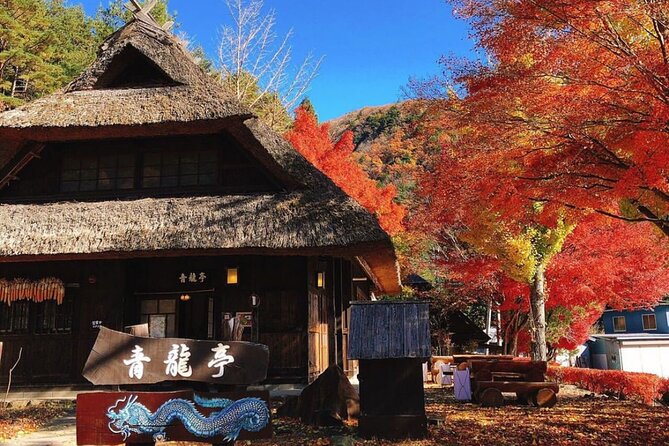
Saiko Iyashi-no-Sato Nenba: Thatched Roofs and Slow Atmosphere
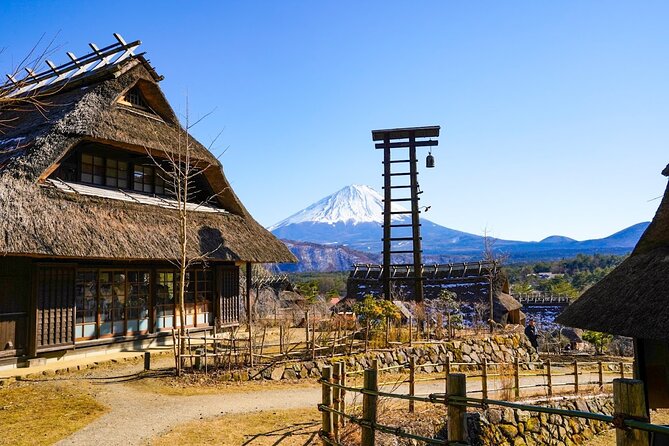
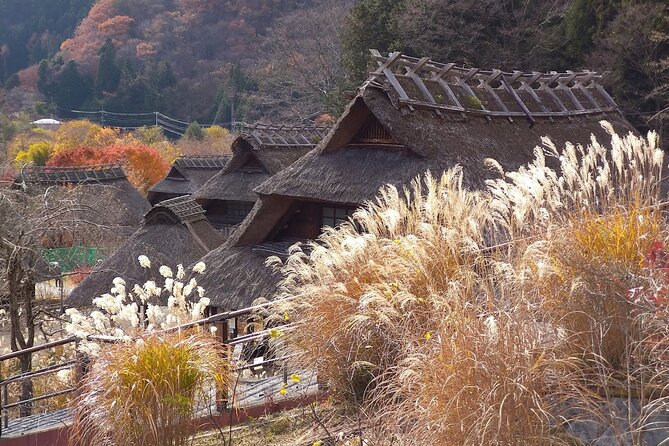
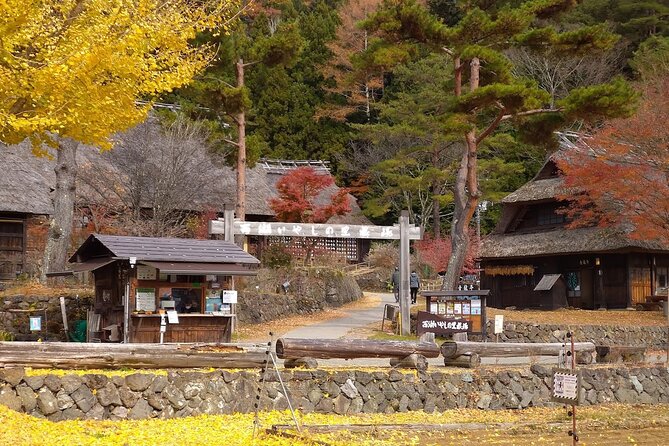
Your first major cultural stop is Saiko Iyashi-no-Sato Nenba, a traditional village on the western shores of Lake Saiko. It is described as the most beautiful village in Japan, and even if you take that as marketing, the setting is the point: you get about an hour here, with admission included.
What you can expect is a step into older rural architecture. The village is made up of thatched-roof houses in a style related to samurai helmets, and the place is designed for you to look, take photos, and understand what this kind of community life looked like. It is not just a backdrop. The whole village layout gives you a calmer mood before the day shifts into the busiest Fuji sightseeing area.
Timing note: because it is the first stop, you get a better shot at enjoying it without the end-of-day fatigue. If your Fuji day starts with fog or rain, this is still a pleasant, indoor-outdoor kind of stop, so the trip does not completely depend on Mt. Fuji being crystal clear.
Chureito Pagoda in Arakurayama Sengen Park: The Iconic View Stop
Then comes the star photo location for a lot of people: Chureito Pagoda in Arakurayama Sengen Park. You have about an hour here, and admission is free.
This is one of those places where the whole area is built around sightlines. You will likely be looking for the classic angle of the pagoda with Mt. Fuji and Fujiyoshida City in the background. When the weather cooperates, it is genuinely worth it.
But here is the honest practical reality. If Fuji is obscured, the pagoda still matters, but you will feel like you arrived at the world-famous photo spot and only got half the picture. The good move is to use the time wisely: walk around for composition, take your Fuji photos quickly, then enjoy the park view even if the mountain looks washed out.
Arakura Fuji Sengen Shrine: A Short Pause With Serious Age
Right after Chureito Pagoda, you make a quick stop at Arakura Fuji Sengen Shrine. It is only about 15 minutes and admission is free, but it adds real meaning beyond the postcard.
The shrine was built in 705 and has served as the guardian god of Arakura Village for over 1,300 years. That age matters because it changes how you see the area. This is not just a viewpoint, it is a long-standing place of worship connected to protection, harmony, and local beliefs.
In 15 minutes you will not do a deep reading, but you can still slow down for a moment. Look at the approach, notice the ritual vibe, and treat it as a reset before you head to the water-based stops.
Oshino Hakkai: Eight Ponds, One Clear-Enough Reason to Go
Next is Oshino Hakkai, a village known for eight clear spring water ponds. Admission is free, and you get about an hour. These ponds are recognized as one of the Top 100 Famous Waters of Japan, and they are classed as a Natural Monument, tied to the Mount Fuji World Heritage area.
Oshino Hakkai is the opposite of the pagoda stop. It is calmer, water-focused, and you can actually slow your eyes down. The visual rhythm is easy: pond, reflections, stone edges, then another pond. If you are the type who likes details, this is where your brain has time to work.
A practical expectation: the springs are the highlight, but the village also means foot traffic and shops. So if you feel sensitive to tourist-y energy, just keep your attention on the ponds themselves and on the flow of water around them. That is what you came for.
More Tokyo tours and experiences for the shortlist





Lake Kawaguchiko, Oishi Park, and the Natural Living Center Torii Shot
After Oshino Hakkai, the itinerary shifts back toward lakes and Fuji vistas.
Lake Kawaguchiko
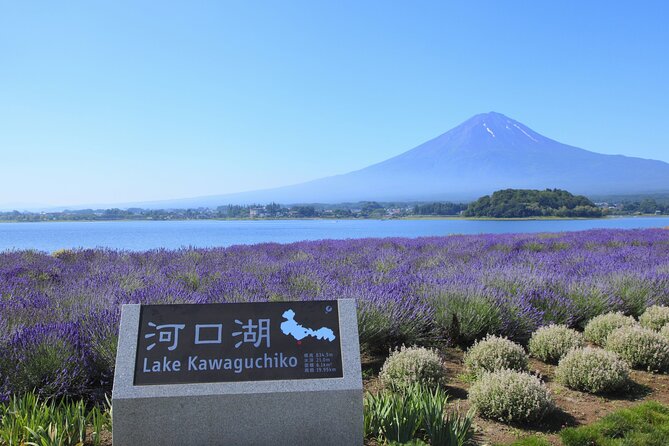
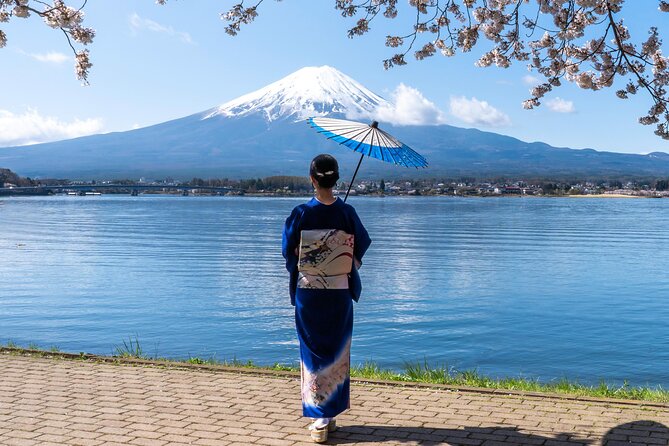
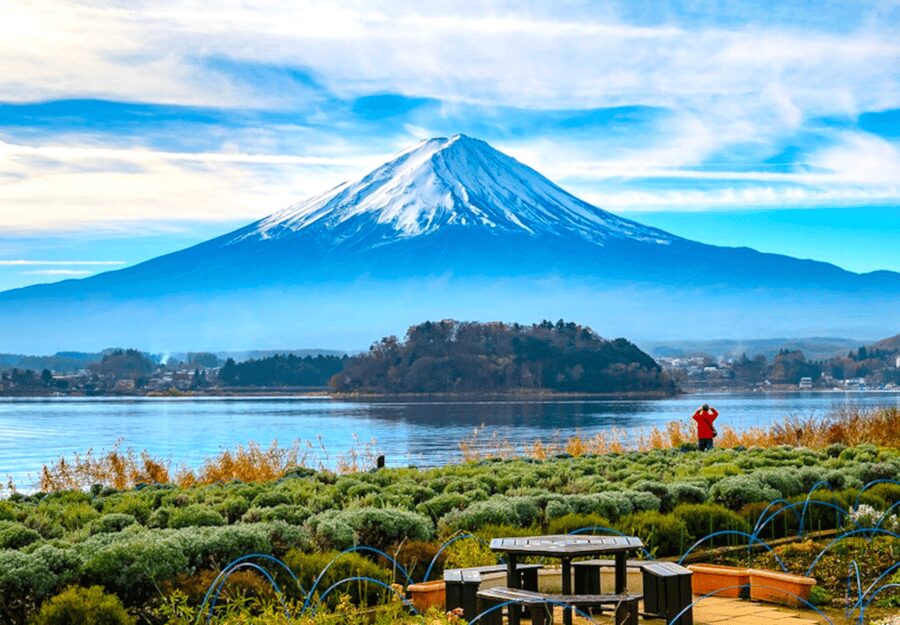
You get about 20 minutes at Lake Kawaguchiko. It is the most popular of the Fuji Five Lakes, known for panoramic Mt. Fuji views from the shore. It also has the longest shoreline among the Fuji Five Lakes, which helps explain why there are lots of places to frame the mountain.
In 20 minutes, you are not doing a lakeside marathon. You are choosing a viewpoint, snapping photos, and moving on. If the air is clear, this is when you might get one of your best wide views of Mt. Fuji, because the lake gives you that horizontal foreground.
Oishi Park
Then you head to Oishi Park for about 30 minutes. This is another “Mt. Fuji and flowers in one frame” stop, with a lakeside promenade and seasonal blooms.
The idea here is simple: you get a variety of visual elements without needing to hike. You can spend a little time comparing angles so you do not end up with the same kind of Fuji photo every time.
Kawaguchiko Natural Living Center
Finally, you finish with a quick stop at the Kawaguchiko Natural Living Center. You get about 15 minutes. The standout photo setup is a red torii with Mt. Fuji in the background, seen from an upper perspective.
This is a classic ending. Short, efficient, and focused. It is also a good moment to check your photos from earlier stops and see if you can improve your favorite composition.
Guide Quality, Pacing, and How to Make It Feel Less Rushed
You will hear a difference between good guides and average ones fast. In this kind of day trip, the guide is not just telling facts, they are helping you understand what you are seeing in real time and keeping the group moving.
Some guides you might encounter in this style of tour include Tim, Betty (with driver Yoshi), Joey, Kishida Wennie, and Kevin. The strongest pattern across those positive experiences is that the guide stayed upbeat, was punctual, and shared practical context so the stops felt more than just scenery. One highlight was how some guides used meeting point map pins and showed what to look for in photos, which is useful when you are standing in a crowded park.
On the flip side, this is also a situation where information can feel thin if the guide’s focus is mostly logistics. If you care about history and meaning, do not wait for the tour to do the work for you. Ask questions. Even a simple question like what to notice at Oshino Hakkai, or why the shrine sits where it does, can turn a rushed stop into something memorable.
Also, keep your expectations aligned with the format. Some people feel the time at each site is not enough to soak in everything. The best strategy is to decide your priority before you arrive: iconic photo first, then slower strolling once you know you got the shot you wanted.
Value Check: Is $59 Good for a Mount Fuji Day Trip?
At $59 per person, this is priced like a budget-to-midrange day trip, and the value depends on what you care about.
Here is what you do get: transportation in an air-conditioned vehicle, all fees and taxes, and that key admission included at Saiko Iyashi-no-Sato Nenba. You also get a full list of major stops tied to Mt. Fuji and Lake Kawaguchi without needing to plan trains and buses yourself.
What you do not get: lunch and personal expenses. That matters because if you buy food on the go, your real total cost can creep upward fast. If you are traveling on a tight budget, plan to either buy lunch near a stop or accept a quick meal purchase as part of the trade-off for the one-day convenience.
Is it worth it? For first-timers who want a one-day Fuji highlights tour from Tokyo, I think the price is fair. For people who hate crowds, hate rushing, or have a strong desire to stay and photograph one place for a long time, you may feel the value is lower because you are buying variety, not depth.
Weather Rules for Seeing Mount Fuji From Multiple Angles
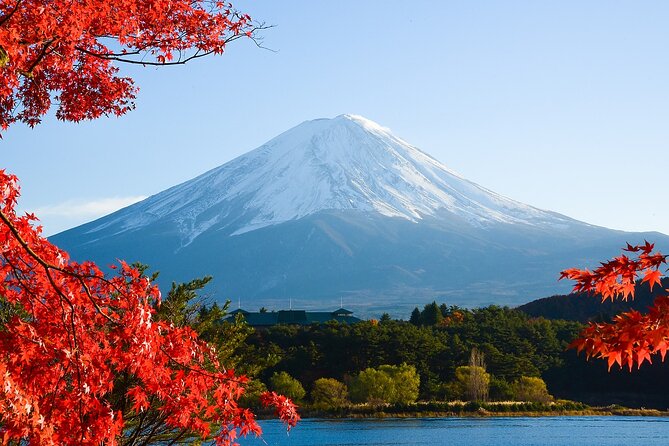
Mt. Fuji is famous for two things, beauty and mood swings. If the day is cloudy, the mountain can turn into a blurred silhouette or disappear completely. That impacts every viewpoint, especially the iconic framing at Chureito Pagoda and the torii shot at the Natural Living Center.
You can handle this in two ways.
First, prepare like you might not get a perfect view. Bring a light rain layer, and dress for cold if the air feels wet. One downside people describe is that bad weather can make the day feel uncomfortable, especially when you are walking around parks and moving between photo spots.
Second, treat each stop as a distinct experience, not just a Fuji photo machine. Oshino Hakkai still has its clear spring ponds even when Fuji is hidden. Saiko Iyashi-no-Sato Nenba still gives you that old village atmosphere even if the skyline is dull. That mindset keeps the day satisfying when Fuji is not fully visible.
Who This Day Trip Fits Best (and Who Should Skip It)
This tour fits best if you:
- Want a single-day Mount Fuji plan from Tokyo with a ready-made route
- Like iconic sights and straightforward sightseeing, with a guide keeping things organized
- Enjoy quick photo stops and scenic viewpoints around Lake Kawaguchi
- Are okay with not having long time at every place
It may not be the best match if you:
- Want deep, slow travel with lots of unstructured time at one location
- Get frustrated by crowded viewpoint areas and quick stop transitions
- Are extremely weather dependent and would rather build your trip around a multi-day Fuji plan
If you are traveling with stroller or large luggage, you should indicate that when booking. The same goes for any special requests so you are not surprised by how the group handles boarding and stop transitions.
Should You Book This Mount Fuji and Lake Kawaguchi Day Trip?
If you want the Fuji highlights version of a day trip, this is a solid choice. The included transport, included fees, and the way the route hits Chureito Pagoda, Arakura Fuji Sengen Shrine, Oshino Hakkai, Lake Kawaguchiko, Oishi Park, and the torii viewpoint makes the day efficient. It is also a good hedge against disappointment because even when Fuji is not perfect, you still get cultural village time and the spring ponds.
I would book it if you can accept a paced schedule and you are flexible with weather. I would skip or consider a longer stay if you want to linger at the water, photograph slowly, or you know you will be unhappy without a clear Mt. Fuji panorama all day.
FAQ
How long is the Mount Fuji and Lake Kawaguchi day trip?
The trip runs about 10 hours.
What is the price, and what’s included?
It costs $59.00 per person and includes an air-conditioned vehicle and all fees and taxes.
Is lunch included?
No. Lunch is not included, so you will need to plan for your own meal.
What are the main stops on the tour?
You visit Saiko Iyashi-no-Sato Nenba, Chureito Pagoda, Arakura Fuji Sengen Shrine, Oshino Hakkai, Lake Kawaguchiko, Oishi Park, and the Kawaguchiko Natural Living Center.
Do I need to print tickets?
You use a mobile ticket.
Is the guide in English?
Yes, the tour includes an English-speaking guide.
Can I cancel for a full refund?
Yes. Free cancellation is available up to 24 hours in advance for a full refund.
More 1-Day Tours in Tokyo
More Full-Day in Tokyo
More Tour Reviews in Tokyo



Not for you? Here's more nearby things to do in Tokyo we have reviewed












Mount Fuji Tours, side by side.
 ★ 5.0Mt Fuji and Hakone 1-Day Bus Tour Return by Bullet TrainFrom $16326,383 reviews
 ★ 4.0Mt Fuji & Hakone Cruise, Drum Show Bullet Train 1 Day from TokyoFrom $1497,413 reviews
 ★ 4.4Tokyo Mt Fuji 5th St & Hakone Cruise Bus Tour w/Bullet TrainFrom $1545,024 reviews
 ★ 4.5From Tokyo: Mount Fuji Full-Day Sightseeing TripFrom $684,970 reviews
 ★ 4.7Mt. Fuji Tour, Hakone Ropeway, Owakudani, Lake AshiFrom $544,002 reviews
 ★ 4.2Mt. Fuji 5th Station & Hakone Cruise 1-Day Bus TourFrom $1292,381 reviews
 ★ 4.7Mt Fuji Top 5 Spots Day Tour: Arakurayama Park,Oshino HakkaiFrom $532,066 reviews
 ★ 5.0Private Tour to Mt. Fuji and Hakone (Fully Licenced Operator)From $4971,910 reviews
This tour also belongs to