Review · TOKYO
Learn to Make Home Style Tempura Udon and Gyoza
Tokyo cooking gets real fast.
In just 2 hours 30 minutes near Nerima Station, you learn to make tempura udon and gyoza from scratch, not just watch. What makes it interesting is the hands-on flow, plus the fact that Emi explains the why behind the steps, so the food you serve later at home is closer to the real thing.
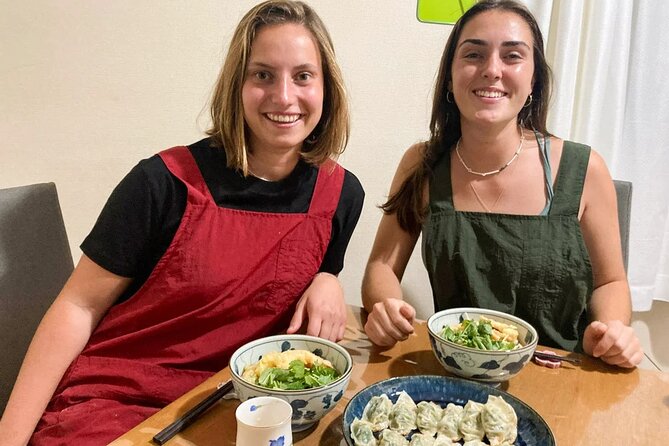
I especially like two things: the clear, step-by-step teaching during the messier parts like kneading dough and frying tempura, and the way you get to sit down and eat what you made together. My one caution is that solo participation has a limitation, so if you are a single male traveling alone, you may not be able to join by yourself.
Key takeaways before you go
- Private class with Emi means the pace stays focused on your group and your questions
- From-scratch cooking covers udon dough, dashi, tempura frying, and gyoza folding
- English recipe booklet to take home gives you a practical souvenir you can actually use
- Barley tea during the class keeps you hydrated while you cook
- Choose your gyoza filling at booking: pork, pork and shrimp, or vegetables only
- Book early for spring and autumn since the studio fills up, especially for groups of 3+
Why Tempura Udon and Gyoza in Nerima Works So Well
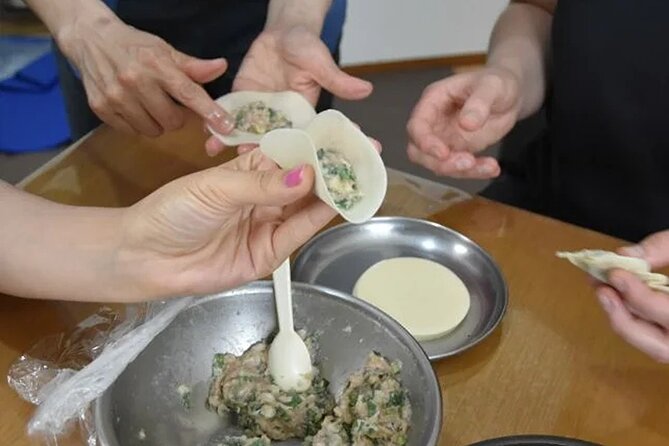
This class hits a sweet spot: it teaches Japanese comfort food that most people can recognize, but it still covers the real technique behind it. Tempura udon and gyoza are popular for a reason, and the training here focuses on the parts that make or break the texture.
I like that you are not only learning “how to cook,” you are learning what to look for. For example, tempura is easy to overdo. Too hot, and the batter burns. Not hot enough, and it turns soggy. With Emi’s instruction style, you get concrete checkpoints so you can trust your results next time.
Also, gyoza folding is more than a cute skill. When your pleats and sealing are consistent, you get a better cook and a nicer bite. This is the kind of lesson that pays off after you leave, because you can keep practicing on your own schedule.
You can also read our reviews of more tours and experiences in Tokyo.



Meeting Nerima Station, Then Rolling Up Your Sleeves in Emi’s Studio
You start at Nerima Station, and the class ends back at the same meeting point. The studio is near public transportation, which matters in Tokyo, where travel time can quietly eat your day.
Once you meet your host, you jump into prep right away. That matters more than you might think. Cooking classes can feel slow if you spend the whole time waiting for ingredients. Here, the flow is built around getting hands-on quickly.
This is a private activity, so only your group participates. That usually means fewer distractions and more attention during the step where you most want help, like kneading udon dough or getting your folding technique started.
One more practical note: for smooth communication with the host, you are asked to provide a WhatsApp registered number when booking. It is a small thing, but it helps the experience stay easy.
Hand-Kneading Udon, Making Dashi, and Getting the Texture Right
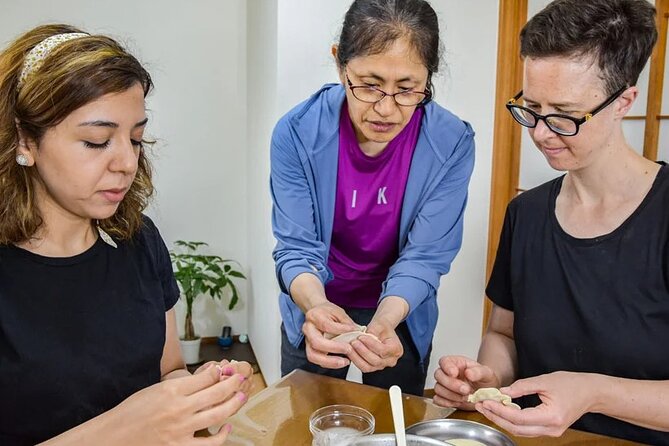
The udon part is the foundation. You will hand-knead the dough, then learn how to work it into noodles. If you have only eaten udon, it is a real eye-opener to understand how the texture forms during kneading and handling.
You also prepare dashi. Dashi is the core flavor backbone in many Japanese dishes, and it is not just a “stock.” When you learn how it fits into tempura udon, you understand why the broth tastes the way it does. Even if you already know the term, making it yourself helps you remember the flavor logic.
What I like about Emi’s teaching style, based on how the class is described, is that she does not treat steps like magic. She explains what you are looking for at each stage, the same way a good recipe guides you by outcomes, not just actions. That approach is exactly what you want if you plan to recreate the dishes later.
The class is also structured around timing, so you are not just learning one piece. You are building momentum, and by the time you reach frying tempura and folding gyoza, you already have a feel for the rhythm.
Crispy Tempura Lessons You Can Actually Repeat at Home
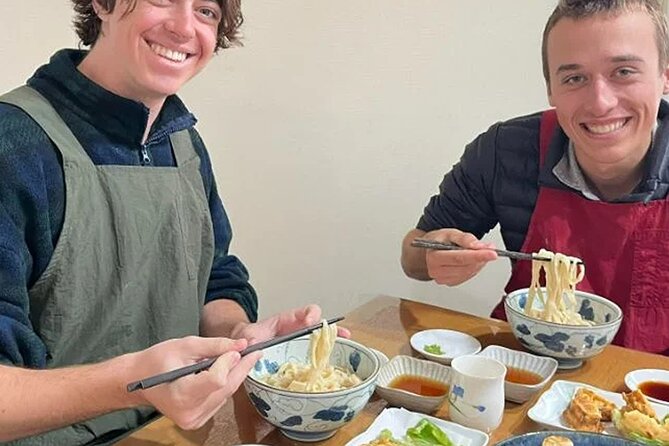
Tempura is where many people lose confidence. It looks simple, but the batter, oil temperature, and timing all matter.
In this class, you learn the right way to fry crispy tempura. You will handle the batter and frying steps during the session, so it is not just theoretical. That hands-on practice is key, because tempura is one of those foods where your senses are part of the method. You learn what crisp should feel like and how the process should look as it happens.
I also like that you do not just fry and move on. The class teaches you through the step itself. One of the best compliments about the instruction is that Emi talks through why you do things, not only what to do. That is helpful when you try again later and wonder what went wrong.
Another practical win: because tempura udon is served after you cook everything, you see how tempura works inside a meal. The goal is crispness, and you get a direct connection between technique and the final plate.
Gyoza Folding with Your Chosen Filling
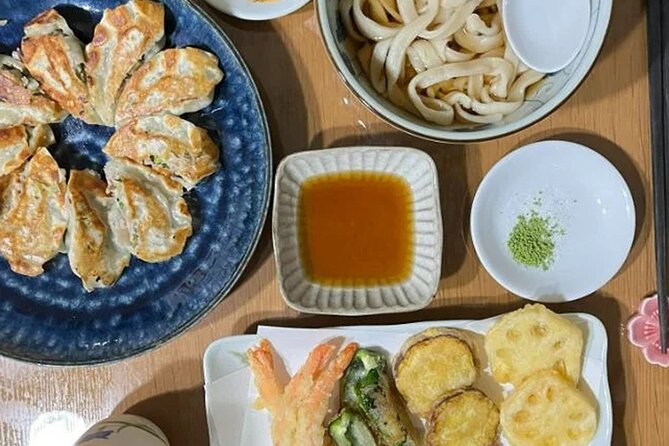
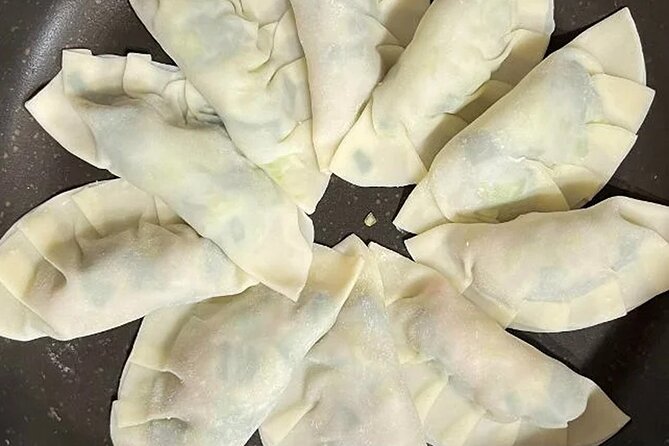
Gyoza is the hands-on skill that feels the most like a craft. You fill the dumplings, then fold them. In a private setting, you can take your time learning the motion without feeling rushed.
You also get to choose your gyoza filling preference at booking:
- A) Minced pork
- B) Minced pork and shrimp
- C) Vegetables only
That choice matters because it changes flavor, texture, and how you think about seasoning balance. If you care about dietary fit, the vegetable option is a clear pathway, and the class also states it can accommodate vegetarian and pescetarian dietary requirements if you inform them in advance.
When you fold gyoza, the goal is to seal the dumpling well enough for cooking and to form pleats that make it recognizable. If you have ever had gyoza where the filling leaked or the shape looked uneven, you already know why this step deserves attention.
This class gives you a repeatable method. You are not just collecting recipes, you are building the technique. That is why gyoza is such a good souvenir: you can make it at home for friends, and you can keep improving every time.






Meal Time: Eating What You Cook, with Barley Tea
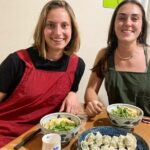
After all the cooking, you sit down and dine on your creations. That is a big deal for two reasons.
First, it reduces the risk of “I learned steps but I did not understand the result.” You see the full plate, and you can connect flavor and texture to what you did earlier. Second, it is just enjoyable. Cooking classes can turn into homework, but this one is designed to end with the payoff.
Barley tea is also provided during the class. It is a small comfort, but it helps you stay focused while you are working with heat and busy tools.
And since this is a private class, the meal feels more like you are sharing a dinner experience than attending a production line. That matters when you want Tokyo food memories that feel personal.
Price and Value: What You Pay for, What You Keep
At $95.23 per person for about 2 hours 30 minutes, this is not a “quick snack” activity. But it is also not overpriced for what is included.
You get:
- All ingredients and tools
- Udon with tempura and gyoza meal
- Barley tea
- An English recipe booklet to take home
That recipe booklet is one of the most valuable parts for me. It turns the class from a nice evening into a skill you can recreate. In fact, one of the strongest comments about the experience is that it felt like the perfect souvenir because people were excited to cook for family back home.
You also get private instruction from Emi, plus a structured focus on key technique areas: kneading, dashi, tempura frying, and gyoza folding. Private time with a local instructor is where the money goes, and that part is what makes the class feel worth it.
Two cost-related notes to keep in mind:
- Transportation to and from the location is not included, so factor in getting to Nerima Station
- The booking request for gyoza filling is part of planning, so decide which filling you want before you show up
Who This Class Fits Best (and Who Might Want a Backup Plan)
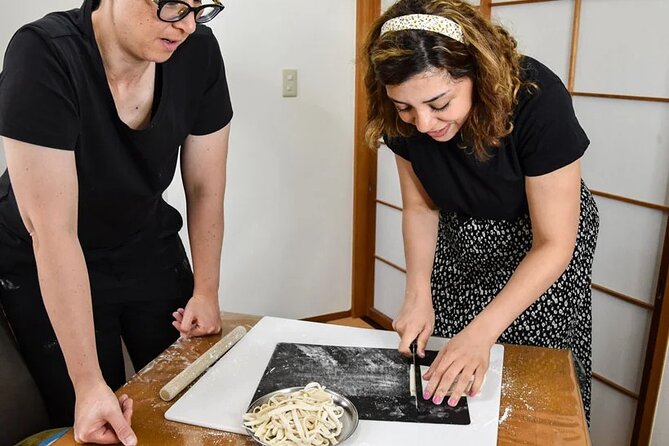
I think this is a great choice if you want practical Japanese cooking, not just food tasting. If you enjoy hands-on activities and you like the idea of learning texture-focused techniques, you will probably have a lot of fun.
It is also a strong fit for people who travel with someone else and want a shared project. Private classes work especially well when you want the instructor to guide both of you without teaching over a crowd.
It can also work for dietary needs. The class states it can accommodate vegetarian and pescetarian requirements if you inform them in advance. And it gives you clear gyoza filling options, including vegetables only.
A key caution is the note about solo participation: regrettably, a single male participant cannot take part on their own. If you are traveling solo, check your situation against this rule before you commit.
Should You Book This Cooking Class?
Book this if you want a real cooking skill in Tokyo, not just a meal. The combination of hands-on udon, tempura frying, and gyoza folding, plus Emi’s instruction style and an English recipe booklet, is what turns this into a lasting souvenir.
Skip it if you are looking for a purely sightseeing-oriented day, because this experience is focused on cooking in one place. Also, if you are a solo male traveler, you should treat the participation limitation as a deciding factor.
If your goal is to bring Japanese comfort food home and make it with confidence, this is the kind of class that gives you both technique and a result you can taste right away.
FAQ
Where does the class start and end?
The class starts at Nerima Station (1-chōme-3-5 Nerima, Nerima City, Tokyo 176-0001, Japan) and ends back at the same meeting point.
How long is the cooking class?
It runs for about 2 hours 30 minutes.
Is this a private class?
Yes. It is a private tour or activity, and only your group participates.
What is included in the price?
All ingredients and tools are included, along with the meal (udon with tempura and gyoza), barley tea, and an English recipe booklet you can take home.
Do I need to choose a gyoza filling?
Yes. At booking, you choose one option: A) minced pork, B) minced pork and shrimp, or C) vegetables only.
Can the class handle dietary restrictions?
The activity states it can accommodate vegetarian and pescetarian dietary requirements if you inform them in advance.
Is transportation included?
No. Transportation to and from the location is not included.