
Review · TOKYO CITY TOURS
Full Day Private Tokyo Tour for Wheelchair Users
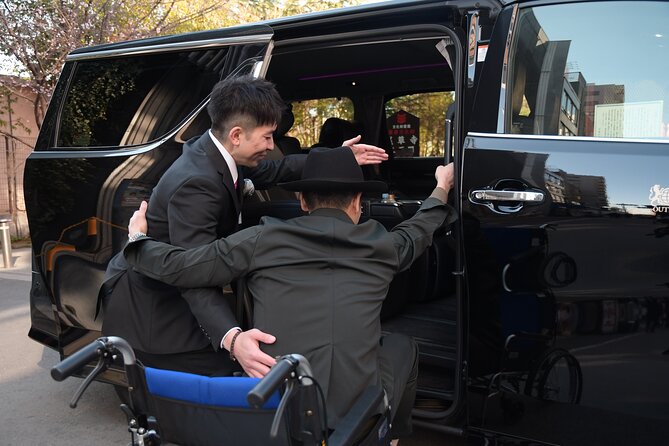
Tokyo is easier with the right vehicle. This private full day tour is built for wheelchair users, with a private transportation setup that helps you avoid the stress of trains and buses. I love that guides like Umi and Roberto can also handle your mobility scooter, so you spend less effort wrestling logistics. I love that the route can be tailored to your interests and preferred schedule. One possible drawback: several stops are quick car-window views, so you will get less time on foot than a full walking tour.
The day runs about 8 hours, and it is priced at $731.60 per group (up to 9). You start at Tokyo Station in Marunouchi, and the vehicle provides bottled water, snacks, and on-board Wi-Fi so you can stay connected while you ride. Planning tip: with a day this full, you will want to decide early what matters most to you.
By the time you roll through the city, you will get a mix of classic Tokyo flavors and modern neighborhoods, from Tsukiji’s outer market to Senso-ji and then onward to Meiji Jingu, Shibuya, and more. Just keep in mind that Hama Rikyu Gardens has admission that is not included, and lunch and dinner are also not included.
Key things you will appreciate
- Private vehicle that removes most transit stress by avoiding train and bus navigation
- Guide support for mobility scooter users, shown by the way Umi and Roberto helped during a hot day
- A flexible route, so the day fits your pace and interests instead of forcing a fixed script
- On-board Wi-Fi plus bottled water and snacks, useful when you are planning ahead between stops
- A well-balanced mix of big sights and quick neighborhood looks, with several stops done from the car
How the tour feels on a wheelchair-first day
Tokyo can be a great city, but it can also be a test if your day depends on multiple train transfers, long station walks, or figuring out which entrances work best. This tour is designed for wheelchair users, with private transportation and a guide who travels with you. That changes the whole rhythm of the day. Instead of managing route friction, you focus on looking, deciding, and enjoying.
I particularly like how the guides think about heat and comfort. In one standout moment, Umi and Roberto helped keep things calmer on a hot day, and they checked what experiences mattered most to the group. That kind of attention matters, because an 8-hour day can feel long when you are worn out, not when you are well cared for.
The private setup also helps with mental load. You are not constantly searching for the next accessible route while trying to stay oriented. With on-board Wi-Fi, you can refresh maps or plan your next stop timing without breaking the flow.
One more small but important point: you will get both on-foot time at some places and car-window sightseeing at others. That gives you options. If you are tired, you still see the city. If you have energy, you will get your moments on foot.
You can also read our reviews of more private tours in Tokyo
Price and value when it is $731.60 per group
This tour is $731.60 per group, up to 9 people. That pricing can sound high if you are traveling solo, and it will feel that way. But the value changes quickly based on how many of you share the group cost.
Here is how to think about it:
- If you fill most of the group, you effectively buy a full-day private guide and private vehicle, plus the convenience of refreshments and Wi-Fi.
- If you travel as a small party, you are paying for comfort and access over public-transit logistics.
What helps justify the price is not just the guide. It is the combination of private transportation, snacks and water, and the fact that the day is built around accessibility. You are buying time and stress reduction, not just sightseeing.
Also, the tour is often booked about 39 days in advance on average. That suggests people plan this as a main part of their Tokyo schedule, not a last-minute add-on. If you know your dates, you will have better odds booking earlier.
Where you start, how the day is timed, and what that means
Your meeting point is Tokyo Station (1 Chome-9 Marunouchi, Chiyoda City, Tokyo). The activity ends back at the meeting point. That round-trip structure is great when you want an easy close to your day. It reduces the risk of getting stranded far from your starting point.
The total duration is about 8 hours. You also have a defined daily operating window based on the dates listed, with tour hours shown from 7:00 AM to 2:00 PM. In practice, this matters because a full day in Tokyo can be broken by traffic, lines, and weather. Starting earlier generally gives you a smoother day, especially during hot months.
Because the itinerary includes both walking time and car-window time, you can pace yourself. Still, it is smart to go in with a plan. If you strongly care about one theme, tell your guide early so the route can be tailored to match your priorities.
The day’s stops, with what to expect and what to watch for
Tsukiji Jogai Market (outer market) for 1 hour
Your first stop is Tsukiji Jogai Market. Even though the main Tsukiji Market moved in 2018 to Toyosu, the outer market still functions as a busy zone with restaurants and shops. This stop is a great way to start because it gives you a sensory Tokyo snapshot right away, without needing to be locked into any single category.
What I like here for accessibility days: an outer market setting often means short browsing moments. You can pause, look at food and shopfronts, then decide how long to linger. It is also a logical opening, since you will likely have energy at the beginning of the day.
Possible consideration: markets can be crowded and warm, so plan for comfort. If you use a mobility device, you will appreciate the private-transport approach that gets you there without transit hunting.
More Tokyo tours and experiences for the shortlist

Hama Rikyu Gardens for 1 hour (admission not included)
Next up is Hama Rikyu Gardens. This is not just a pretty pause. Historically, the site served as a feudal lord’s Tokyo residence and duck hunting grounds between the 17th and 19th centuries, before it became a garden.
This stop works well in the middle of the day because gardens provide a different sensory pace. You can reset. Even if you do not do a long loop, you are likely to enjoy the change from market bustle to calm surroundings.
Here is the key practical point: admission is not included. So you should budget extra for this specific stop. Also, because it is a garden, you will want to choose a route within the grounds that matches your stamina and comfort.
Ginza drive-by for 1 hour
Then you roll through Ginza by car window. Ginza is known for eclectic boutiques and galleries, and it is also a place for Japanese traditional crafts and cutting-edge architecture. This is a “see it from the comfort of your seat” kind of stop.
For wheelchair-first travel, car-window time can be a win. You avoid curb navigation and keep your day energy stable. You still get big-city Tokyo style, and your guide can point out what is worth focusing on.
If you want more than scenery, this is one place where you might ask the guide whether you can add extra time at a specific spot. The tour is described as route-tailorable, so customization can be your friend here.
Imperial Palace (Tokugawa to Meiji connection) for 30 minutes
You view the Imperial Palace area through the car window for about 30 minutes. The palace used to be the castle of the Tokugawa shogun family from 1603 to 1868, then became the Imperial Palace when political power returned to Emperor Meiji.
This is the kind of stop that feels more meaningful when you know the timeline. Even a quick look can help you place Japan’s political shifts in your mind. It is a classic Tokyo moment, done efficiently.
Practical note: car-window stops are brief by design. If your goal is a deep dive, you might do this tour as your base day and then add any extra time you want on another visit.
National Diet Building drive-by for 30 minutes
You also do a car-window look at the National Diet Building. It is one of only a few buildings that survived the air raids of 1945, and it was built in 1936.
If you like architecture and civic landmarks, this is a strong “quick stop with context” kind of moment. Even from the car, it gives you a sense of scale and significance.
Again, this is not an entry visit. It is sightseeing from your route, so think of it as a chapter bookmark rather than the full book.
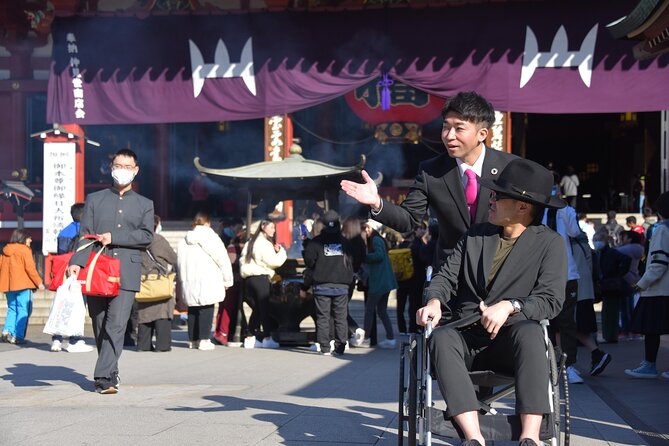
Senso-ji Temple for 1 hour
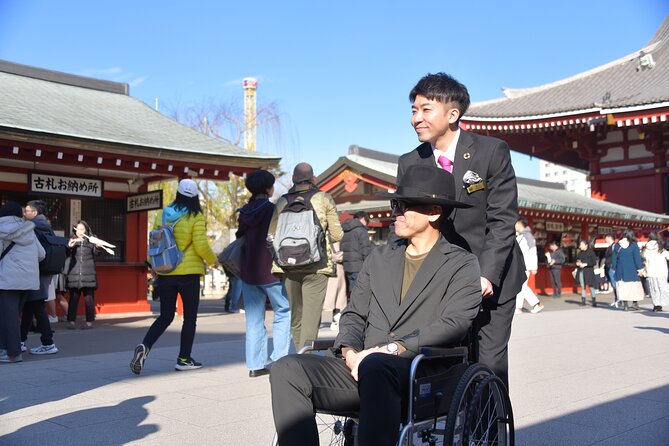
Then comes Senso-ji Temple, the oldest temple in Tokyo, with about an hour on site. There is a name origin tied to Asakusa appearing in history in 628, when a small Kannon statue was caught by two fishermen in Asakusa.
This is where you get a more personal, walking-oriented cultural experience. For many visitors, Senso-ji is a must. For a wheelchair-first day, it is especially valuable because the tour gives you concentrated time here instead of spreading walking moments thin across the day.
Possible consideration: temple approach areas can be busy. Your best move is to talk with your guide about your comfort level, your turning radius or device width, and the pace you want.
Omotesando drive-by for 30 minutes
Next, you pass through Omotesando by car window for about 30 minutes. It is known for buildings designed by leading architects, and it is also a place where major fashion brands are visible.
This works as a “Tokyo style scan.” You get a feel for modern design without needing to force a long stop in a fashion district. Omotesando is a great example of why quick car looks can still be satisfying on an accessibility-focused tour.
Harajuku drive-by for 30 minutes
You then head through Harajuku for about 30 minutes, also from the car. Harajuku gives insight into youth culture, with unique fashion trends and outrageous design in both clothing and buildings.
If you have ever wondered what Tokyo looks like when it is having fun, Harajuku is part of the answer. As a quick drive-by, it is ideal. You see a slice of the energy, and you can ask the guide to highlight what you care about most.
Meiji Jingu Shrine for 1 hour
After the fashion energy, you get a breather at Meiji Jingu Shrine for about an hour. The shrine has a pleasant atmosphere and feels like a calmer pocket compared with the surrounding streets.
There is also a seasonal note for weekends: you might be able to see a traditional Japanese wedding ceremony on Saturdays and Sundays. That detail can turn this stop from routine to memorable if your dates match.
Practical tip: a shrine visit is often about atmosphere, not speed. Use your hour to relax, pause, and take in the quiet.
Shibuya Crossing drive-by for 30 minutes
Next is Shibuya Crossing, again from the car window for about 30 minutes. It is described as the busiest intersection in the world, making Times Square seem quiet by comparison.
This is one of those places where Tokyo feels unmistakable. Even from a vehicle, you get the scale and the choreography of people crossing. It is a great “high contrast” moment after quieter shrine time.
If you are sensitive to sensory overload, keep your expectations realistic. This stop is designed to be seen, not to be survived.
Daikanyama drive-by for 30 minutes
Finally, you reach Daikanyama by car window for about 30 minutes. Daikanyama and Nakameguro are known for boutiques and cafes, and they are described as having a different, less hectic pace than more famous nearby areas.
This stop is a nice way to end. It feels like Tokyo with breathing room. Instead of ending on pure intensity, you end on a neighborhood vibe you could easily imagine returning to.
The best part: guides who adjust to real needs
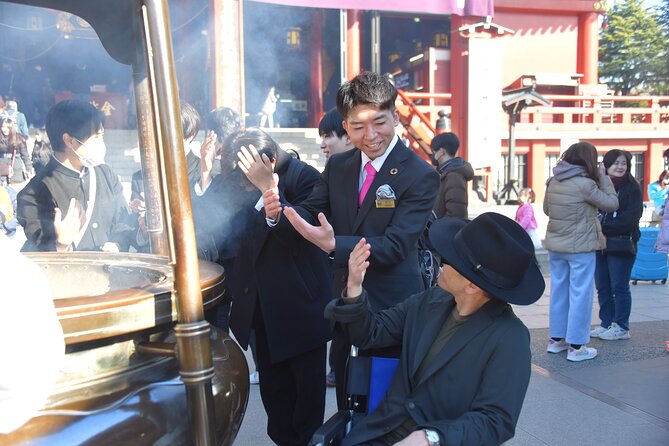
The tour’s accessibility-first design works on paper, but it shows up in how the day is handled. That is where guides matter.
Umi and Roberto, for example, handled a mobility scooter during a hot day, and they made sure the group stayed cool while asking what experiences they actually wanted. That is not fluff. It is the difference between a day that drains you and a day that feels manageable.
Gen is another guide name connected with this service, and he was praised for kindness and letting the tour be customized to your liking. That reinforces the key point: you are not trapped in a rigid checklist.
You will get the most out of the day if you communicate early:
- Tell the guide what your top 2 or 3 must-sees are.
- Mention your device needs and your walking comfort limit.
- Ask how the day can be adjusted to match your energy levels.
With that input, the route becomes a plan that serves you.
What’s included, what’s not, and how to plan meals smartly
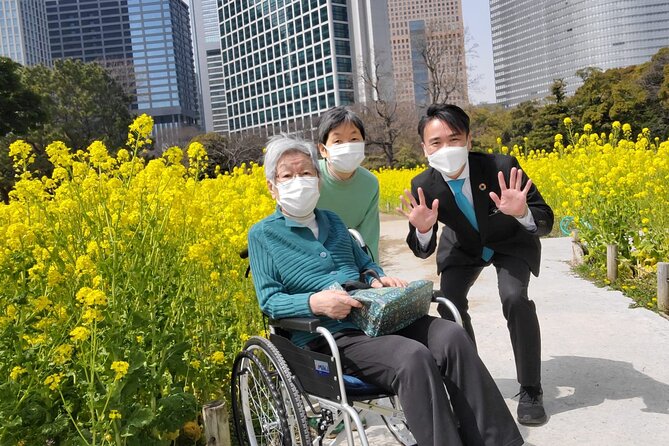
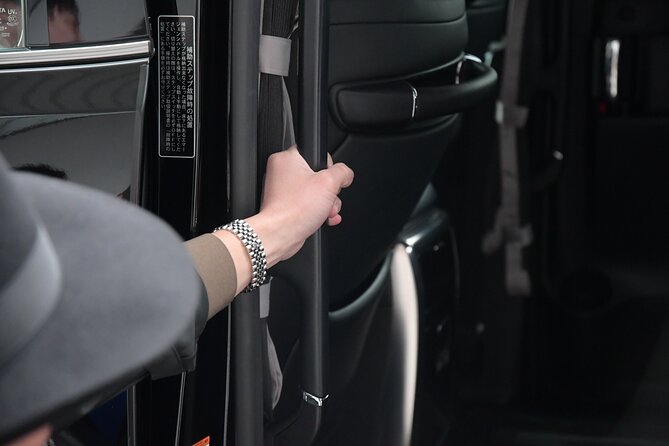
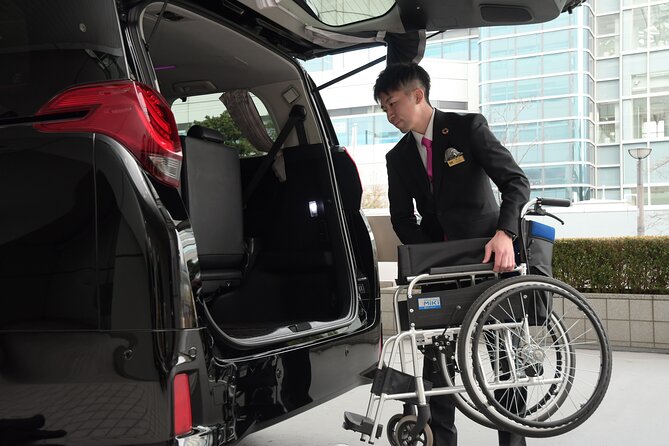
Included in the price are an air-conditioned vehicle, bottled water, snacks, private transportation, and Wi-Fi on board. That matters more than it sounds. On an 8-hour day, cooling down and having small snacks can prevent you from hitting a wall.
Not included: lunch and dinner. So you will want to plan either your own meal stops or snacks that you pick up during the day. The tour does include snacks already, which helps, but it does not replace a full meal.
Also note: Hama Rikyu Gardens admission is not included. Most other listed stops show admission ticket free, so this is the main extra cost to expect besides meals.
Should you book this private wheelchair-friendly Tokyo tour?
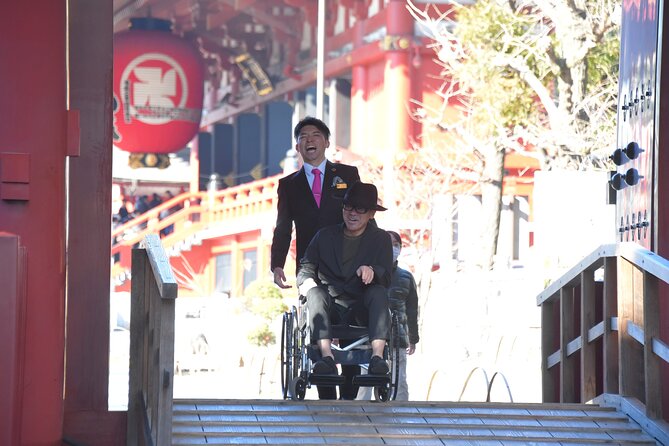
Book it if you want a day that is simpler to manage. This is a smart choice when you do not want to navigate trains or buses, you want a guide who can adjust the day to you, and you appreciate the calm support of having your transport handled from place to place. If you use a mobility scooter, the way Umi and Roberto helped with handling it is a strong signal that the experience is built for real-world needs.
Skip it or pair it with other plans if you crave long time inside major attractions. Several key sights are car-window looks, and Hama Rikyu Gardens and meal planning may require extra budgeting or timing you control.
If you are deciding between this and a standard group tour, I would pick this for one reason: the day is designed around accessibility, not treated as an afterthought. You’ll spend more time seeing Tokyo and less time managing the logistics of getting there.
FAQ
How long is the private Tokyo tour?
It lasts about 8 hours.
What is the group size and price?
The price is $731.60 per group, up to 9 people.
Where is the meeting point?
The start point is Tokyo Station, 1 Chome-9 Marunouchi, Chiyoda City, Tokyo 100-0005, Japan.
Is lunch or dinner included?
No. Lunch and dinner are not included.
Are admission tickets included for all stops?
Many stops list admission ticket free, but Hama Rikyu Gardens admission is not included.
Is there free cancellation?
Yes. You can cancel up to 24 hours in advance for a full refund.
More Private Tours in Tokyo
More Tours in Tokyo






More Tour Reviews in Tokyo


Not for you? Here's more nearby things to do in Tokyo we have reviewed












Tokyo City Tours, side by side.
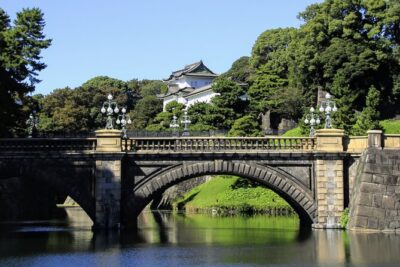 ★ 5.01-Day Tokyo Bus TourFrom $12914,250 reviews
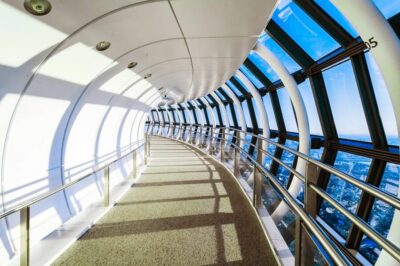 ★ 4.5TOKYO SKYTREE® Admission ticketFrom $1311,192 reviews
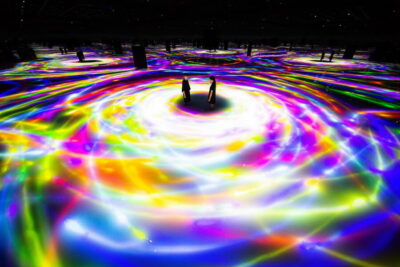 ★ 4.6teamLab Planets TOKYO Digital Art Museum Entry TicketFrom $259,779 reviews
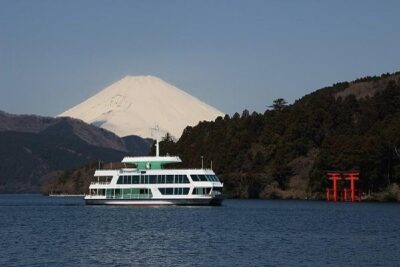 ★ 4.0Mt Fuji & Hakone Cruise, Drum Show Bullet Train 1 Day from TokyoFrom $1497,413 reviews
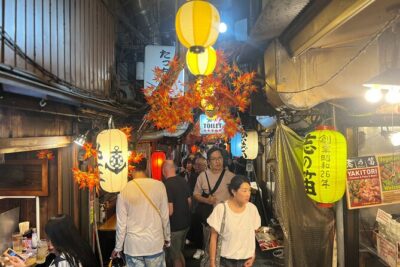 ★ 5.0Shinjuku Food Tour (13 Dishes at 4 Local Eateries)From $866,603 reviews
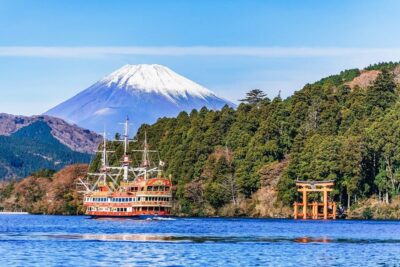 ★ 4.4Tokyo Mt Fuji 5th St & Hakone Cruise Bus Tour w/Bullet TrainFrom $1545,024 reviews
 ★ 5.0Flagship 2-Hours Official Street Go-Kart Tour – Tokyo Bay ShopFrom $644,974 reviews
 ★ 4.5From Tokyo: Mount Fuji Full-Day Sightseeing TripFrom $684,970 reviews