
Review · SHIBUYA TOURS
4 Hours Shibuya – Shinjuku Night Tour
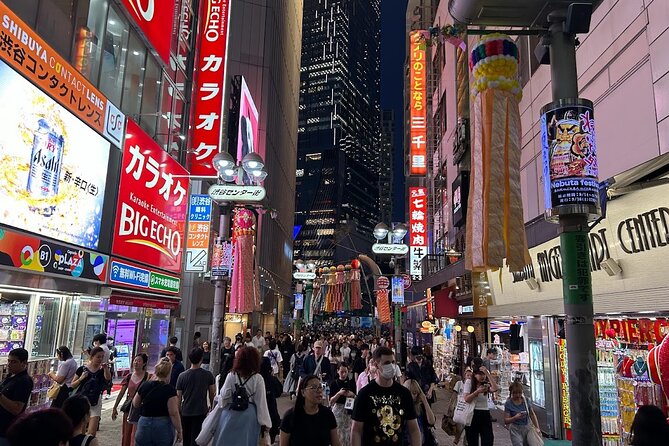
Shibuya and Shinjuku at night can feel like chaos. This private, 4-hour Shibuya-to-Shinjuku night tour turns the crowd into an easy route, from Hachiko and Shibuya Crossing to the lane-by-lane vibe of Golden Gai and Omoide Yokocho.
I like how clearly the evening is organized, with an easy meeting point and a guide who helps you orient fast. I also love that you can go at your own pace on a private tour, so you can slow down for photos or move quickly when the alleyways get tight.
One thing to consider: this is a walking-focused night plan, and the food experience is built around restaurant stops rather than an all-in dinner package. If you hate crowds, Shibuya Crossing and Kabukicho can feel intense even with a guide steering you.
Key things to know before you go
- Hachiko to Shinjuku in 4 hours: you hit the big landmarks and the smaller lanes without getting lost
- Nonbei Yokocho at night: lantern-lit izakaya alleys where the atmosphere is the main event
- A full stop at Toritake: about an hour to try chicken skewers in a classic setting
- Love Hotel Hill and Dogenzaka: a quick, memorable Shibuya oddity that photos well
- Golden Gai and Omoide Yokocho: narrow streets and “memory lane” bars that are hard to find alone
- Guides help you keep moving: many guests highlight photo help, plus practical support when it is your first night
Why this Shibuya to Shinjuku night route works
Tokyo at night is gorgeous, but it can also be mentally exhausting. Shibuya and Shinjuku are packed with neon, signs, and side streets. On your own, you can end up zig-zagging randomly, then realizing you walked the long way back to the station.
This tour is built like a guided route, not a long list of checkboxes. Starting at 6:00 pm gives you the best mix of daylight fading and night energy. In 4 hours, you get a rounded sample of the two neighborhoods, from landmark stops (Hachiko, Shibuya Crossing) to the parts people actually talk about later (izakaya alleyways, Golden Gai lanes, Omoide Yokocho).
And because it is private, you are not stuck matching someone else’s pace. That matters in the narrow streets, where you either want time to look closely or you want to keep moving so you do not get stuck in a crowd.
You can also read our reviews of more evening experiences in Tokyo

Meeting at Hachiko, then getting oriented fast
The tour starts at the Hachiko Statue area, which is a huge advantage. It is easy to find, and you are positioned right in the Shibuya zone where everything else connects. The meeting point is listed at 2 Chome-1 Dogenzaka, Shibuya (near Hachiko), so you are not hunting for a random side street at night.
From there, the guide’s job is simple and valuable: help you see the area in the right order. You get quick context on why Hachiko matters in Japan, and you also get your bearings before the walking turns more maze-like.
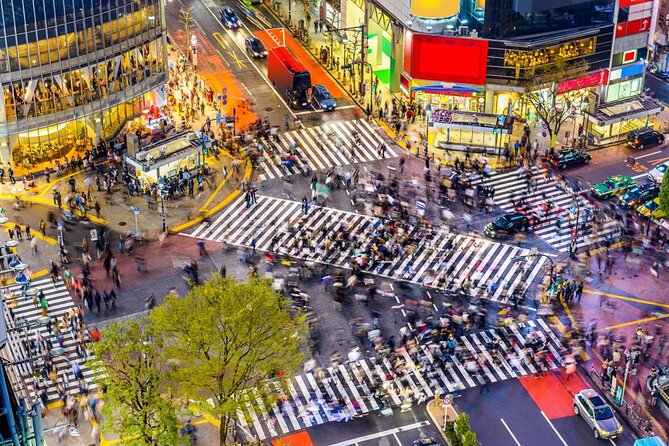
One highlight built into the early part of the walk is Shibuya Crossing. It is described as one of the busiest intersections in the world, and that is exactly the point. Seeing it with a guide means you can focus on the moment, not on figuring out where to stand and how to move safely with the crowd.
Shibuya Crossing and Nonbei Yokocho: the alley part is the payoff
After the big-photo moment, the tour shifts into the kind of Tokyo you remember: small streets, warm light, and lots of doors.
Shibuya Nonbei Yokocho
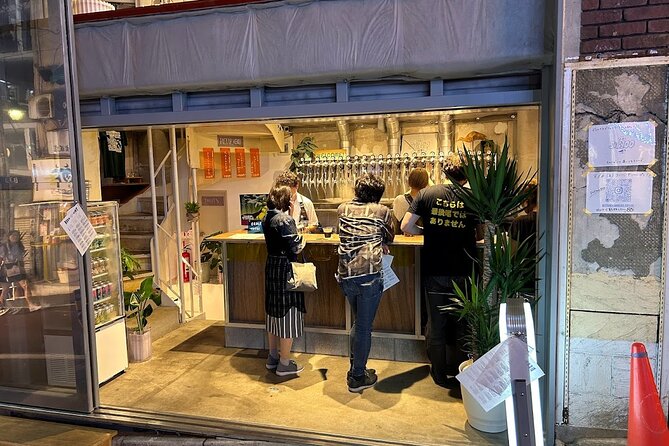
You spend time in Shibuya Nonbei Yokocho, a narrow, lantern-lit drinking district lined with small izakaya pubs. This is the part where a guide earns their fee. The alleyways are easy to miss if you are scanning for famous landmarks. With a guide, you get pointed toward the lanes that actually feel old-school and atmospheric, and you get to walk through them rather than just photograph the entrance.
It is also a good place to practice the basics of moving around Japan’s nightlife areas. These streets tend to be tight and busy, so going slowly helps. The private pace option is great here: you can pause for a photo or keep walking when you want to avoid shoulder-to-shoulder congestion.
Practical photo tip for night lanes
A lot of people take photos at night and get disappointed by blur. One review you provided mentions a guide helping guests capture scenic parts of Tokyo on an action camera. Even if you are not filming, the practical takeaway is the same: ask your guide where the good angles are before you step into the densest crowd.






Toritake chicken skewers, and how the meal stop really feels
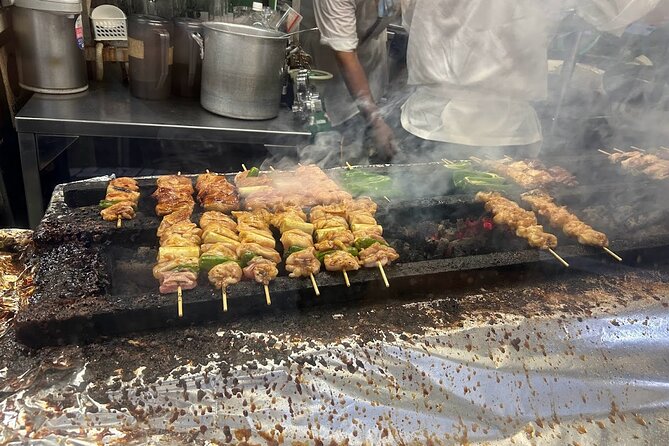
Next comes Toritake, an authentic restaurant known for chicken skewers and other dishes. The stop is listed for about 1 hour, and it is positioned as a real pause in the walking, not a quick glance.
Here is the useful part for planning: dinner is not listed as included. So think of this as a guided restaurant stop where you can choose what you want to order. If you budget like a normal dinner meal, you will not get surprised.
Also, restaurant stops at night can mean waiting. One of the highlights in the material you shared notes that dinner at Toritake was worth lining up for. If the place is busy, the guide’s presence helps because you will not be standing there wondering what is happening or where to go next.
Dietary needs
You also shared an example of a guide accommodating dietary requirements for a dinner element at a ramen place during a similar experience. Even though this tour’s meal stop is Toritake, the bigger lesson is clear: if you have dietary needs, mention them when booking. A good guide will try to steer you toward options that work without turning the evening into a stressful negotiation.
Dogenzaka and Love Hotel Hill: quick, weird, and memorable
A short shift in mood brings you to Dogenzaka, where Love Hotel Hill is known for its concentration of love hotels. This is not “must-see” in the same way as Hachiko, but it is one of those Tokyo details that feels like a snapshot from a different world.
The tour allocates about 20 minutes here, which is about right. You get to walk, look, and take photos, then you move on before the novelty wears off.
For me, this stop is a good reminder of what makes Tokyo fun with a guide: you do not just see what everyone lists in big letters. You also see the small zoning quirks and street-level culture that never makes it into postcards.
Shinjuku Kabukicho, Golden Gai, and Omoide Yokocho by night
The Shinjuku portion is where the tour earns its “night” label.
Kabukicho and the big neon hits
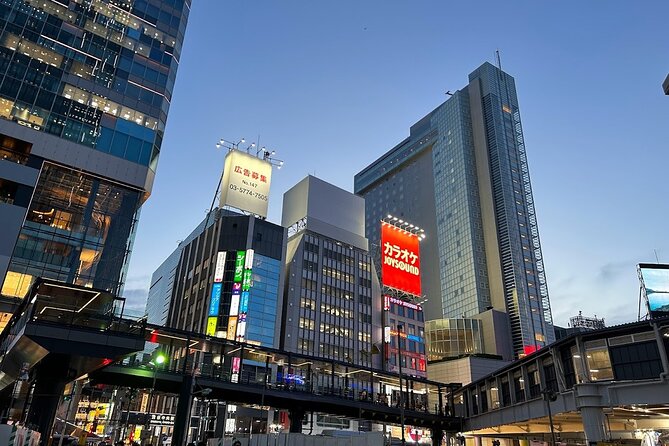
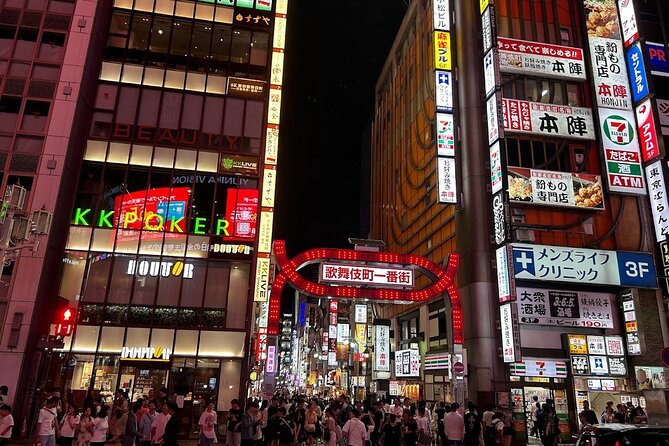
You move into Shinjuku, including Kabukicho. Even if you have seen photos, standing near the area at night is different. It is louder, brighter, and more intense in real life. Having a guide means you can focus on the sights while they handle the route through a complicated, sign-heavy part of town.
Golden Gai, the alley bars that are hard to find alone
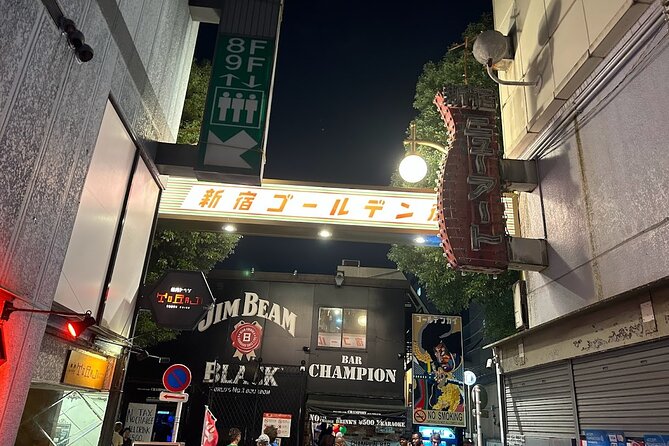
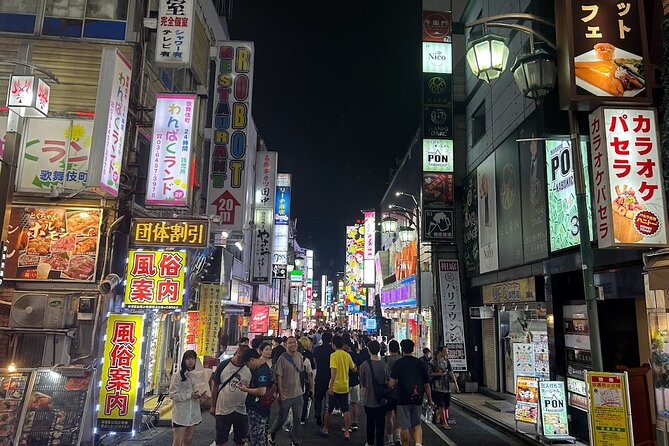
The tour is specifically built to include Golden Gai, with its narrow streets and alleyways full of bars and izakayas. This is one of those neighborhoods where you can easily walk past entrances or get turned around.
With a guide, you get the layout: where the lanes run, where the best walking-through spots are, and how to avoid wasting your time backtracking. And because it is private, you can spend longer in the lanes if you want the full atmosphere, or shorten it if you want to keep the night moving.
Photo stops near Shinjuku Station
You also get several quick, high-recognition landmarks in the Shinjuku area:
- A 3D cat billboard near the Shinjuku station east exit
- Godzilla Square
These are excellent for two reasons. First, they give you memorable “proof photos” of being in the right place. Second, they help anchor the route so the walking feels like progress instead of wandering.
Omoide Yokocho, memory lane
The last big Shinjuku segment is Omoide Yokocho, listed for about 2 hours. It is often called memory lane, and the name fits. You are surrounded by narrow lanes and old-school bar settings where the details matter: vintage-style signage, the feel of a place that did not update itself for decades, and a nightlife vibe you will not get from a modern mall district.
This is where the pacing matters most. If you move too fast, you miss the charm. If you move too slow, you can feel drained by the noise and crowding. The private guide format helps you land in the sweet spot.
One more practical plus: the tour ends with the guide helping you catch the train back toward your hotel, which is great if your night plan depends on getting home without guesswork.
Price and Logistics: is $98.83 worth it?
The price is $98.83 per person, and the tour runs about 4 hours. That puts it roughly at about $25 per hour for a private guide, plus the value of an efficient night route through neighborhoods that are easy to misread on your own.
Here is what you are paying for that feels real:
- You get someone to help you plan the walking route through the trickiest parts
- You spend time in the right places, not just outside the entrances
- You get a private pace, which is a big deal in Golden Gai and Omoide Yokocho
- All fees and taxes and the guide’s fee are included
What is not included matters too. Dinner is not included and private transportation is not included. This tour is built around walking, so you should plan your budget like a normal night out, with meals and drinks handled by you.
Also, demand is strong. It is noted that this is typically booked about 46 days in advance. If you are traveling in peak season or on a tight schedule, booking sooner reduces the stress.
Tips to get better photos, smoother walking, and less stress
If you want the night to feel fun instead of chaotic, a few small choices help a lot.
Wear shoes you trust
You are walking between Shibuya and Shinjuku at night. Even if you are not covering a marathon distance, your feet will still notice the hours.
Keep your phone ready, then ask where to stand
Night photography is all about angles and crowd flow. If your guide helps with photos, take that seriously. In the material you shared, guides like Aissam El Hani were specifically mentioned for helping guests capture scenic moments, and another review mentioned help with an action camera setup.
First-night in Tokyo? Use the guide for transit support
One review mentions a guide helping install a digital Suica for a first day in Tokyo. Even if you already have transit set up, it can help to ask early in the tour what will make your travel easier afterward. At the end, you will be oriented toward Shinjuku Station, and the guide says they help you catch the train to your hotel.
If you have dietary limits, mention them up front
The best time to handle food needs is before you are hungry and deciding in the moment. You have an example in your provided details of dietary requirements being accommodated during a meal stop in a related food-based tour. Use that as a signal to communicate your needs before the tour starts.
Should you book this Shibuya-Shinjuku night tour?
Book it if you want:
- A private night plan that helps you avoid getting lost in Shinjuku alley areas
- Time in Golden Gai and Omoide Yokocho, not just a quick look from the street
- A route that starts strong (Hachiko, Shibuya Crossing) and then shifts into the lanes where Tokyo nightlife actually lives
- A guide who can help with practical stuff like photos and first-night transit support
Skip it or consider an alternative if:
- You hate crowds and tight sidewalks
- You expect the tour to handle dinner for you end-to-end, since dinner is not listed as included
- You want a “sit and relax” experience, because this is built around walking and checking out nightlife streets
If your goal is to understand Shibuya and Shinjuku at night in a way that actually sticks, this is a solid use of time. You get the landmarks, the alley culture, and the handoff back toward Shinjuku Station without turning your evening into navigation homework.
FAQ
How long is the 4 Hours Shibuya – Shinjuku Night Tour?
The tour lasts about 4 hours.
What time does the tour start, and where is the meeting point?
The tour starts at 6:00 pm. The meeting point is the Hachiko Statue area at 2 Chome-1 Dogenzaka, Shibuya, Tokyo 150-0043.
Is this tour private?
Yes. It is a private tour/activity, meaning only your group participates.
What are the included items in the price?
The price includes all fees and taxes and the guide’s fee.
Is dinner included?
No. Dinner is not included.
Where does the tour end?
The tour ends at Shinjuku Station. The guide helps you catch the train that will take you to your hotel.
Can I get a full refund if I cancel?
Yes. You can cancel for a full refund if you cancel up to 24 hours in advance of the experience start time.
More Evening Experiences in Tokyo
More Tours in Tokyo

More Tour Reviews in Tokyo
Not for you? Here's more nearby things to do in Tokyo we have reviewed












Shibuya Tours, side by side.
 ★ 5.0Official Street Go-Kart in ShibuyaFrom $763,435 reviews
 ★ 4.9Street Kart Experience in ShibuyaFrom $741,484 reviews
 ★ 5.0Shibuya Meltdown Nightlife Tour: All-You-Can-Drink Bar HoppingFrom $1061,058 reviews
 ★ 5.0Shibuya Official Street Go-Kart in Shibuya AnnexFrom $69972 reviews
 ★ 5.0Shibuya Food Tour (13 dishes and 4 Eateries)From $77770 reviews
 ★ 5.0Best of Shibuya Food TourFrom $217612 reviews
 ★ 4.8Shibuya Highlights Walking TourFrom $19601 reviews
 ★ 4.7Premium Go-Kart Tour with Tower & Shibuya CrossingFrom $116528 reviews
This tour also belongs to