
Review · TOKYO SUMO EXPERIENCES
Tokyo Sumo Practice Watching & Visit Town from Samurai era
Sumo practice feels different up close. This tour pairs ringside sumo training at Shikoroyama-beya with a calm walk through Kiyosumi Teien and a hands-on look at Edo-period Tokyo at the Fukagawa Edo Museum. The main trade-off: if you want very detailed breakdowns of sumo, especially more recent tournament context, you may want to ask Ken directly rather than expecting a thick handout.
What I like most is the pacing. It is 3 hours 30 minutes, small group sized (up to 15), and it starts early from Kiyosumi-shirakawa, so you get something real before the city fully wakes up.
If you are after the Tokyo that most people skip, this is a strong fit. You get a rare window into sumo culture, then you slow down with Japanese garden silence, and finish in an Edo town setting that uses sound and lighting to make the past feel present.
Key highlights you should care about
- Ringside access at Shikoroyama-beya (entry involves special permission)
- A real photo opportunity with sumo wrestlers, when the moment allows
- Kiyosumi Teien’s “walking forest garden” style layout for easy strolling and quiet
- Fukagawa Edo Museum’s life-size Edo streetscape with sound, lighting, and everyday tools
- Ken as a fluent, well-organized guide who answers questions patiently
From Kiyosumi-shirakawa Station to a sumo stable morning
This starts where Tokyo becomes more local, not more postcard. You meet at Kiyosumi-shirakawa Station at the ground level of the B1 exit, and the guide leads you on foot from there. That short walk matters because it helps you shift modes from “tourist city” to “neighborhood rhythms,” and it also gets you oriented quickly.
The start time is 8:30 am, and you feel the benefit of that early slot. The group stays small, so you are not wrestling for visibility, and the schedule gives you time to focus at each stop instead of sprinting between them.
You also get an easy logistics setup. The tour uses a mobile ticket, and it runs from the same meeting point back to the meeting point. That is one less moving piece when you have other plans later in the day.
The best practical note here is mindset. Even if you know the basics of sumo rules, this experience is built to show you the routine, the discipline, and the culture around the sport. That means you should come with curiosity, plus a couple of questions you actually want answered.
You can also read our reviews of more tours and experiences in Tokyo.

Shikoroyama-beya ringside practice: intensity you can see and hear
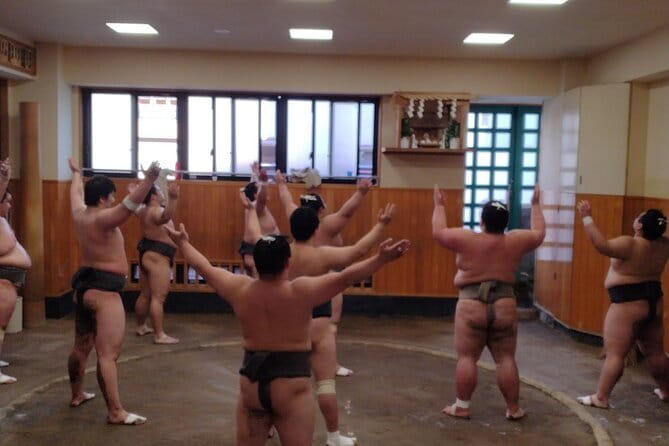
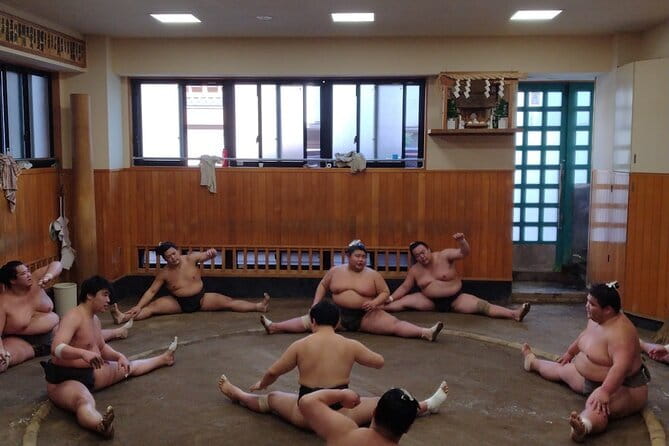
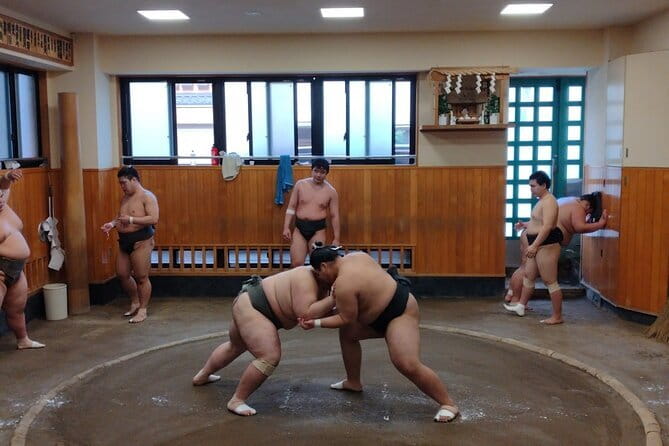
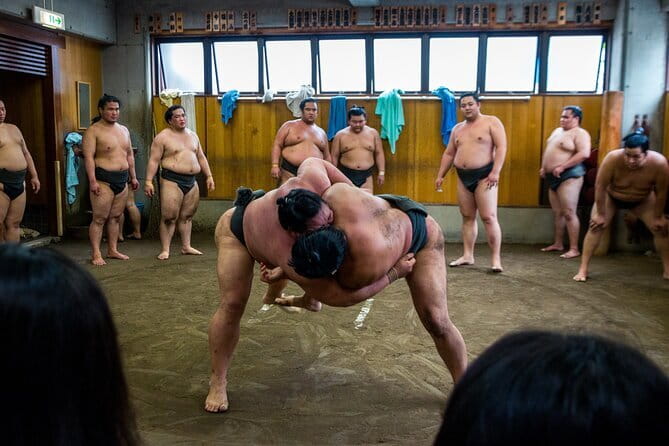
The heart of the tour is time at Shikoroyama-beya Sumo Stable. You watch real wrestlers practicing from the ringside area. That “ringside” part is not just about better photos. It changes how you understand sumo. You notice the focus in athletes’ movement, the physical intensity, and the way the stable environment feels more structured than most sports training spaces you might expect.
There is also an access angle. The tour includes special permission to enter the stable, which is exactly why this feels different from random curbside viewing. You are inside the world for a short window, with a guide to explain what you are seeing.
You should plan for a mix of moments: watching warm-ups, observing training routines, and listening as your guide connects the practical actions to the traditions behind them. Even if you only catch part of the routine at a given time, the overall flow gives you a clearer picture than a quick “show up for the photo” outing.
Photo time can be a highlight here, and the tour is set up to offer the chance to photograph you with sumo wrestlers when the timing works. Still, the stable setting has its own pace, so keep your camera ready but also be respectful of the training atmosphere.
If you are the type who likes details, you will enjoy asking follow-ups. One common improvement point from people who loved it: they wanted a bit more explanation about sumo beyond fundamentals, including how the sport fits into newer competition context. You can fix that easily by asking Ken what you should look for later, if you go to a tournament.
Kiyosumi Teien: the garden break that makes sumo make sense
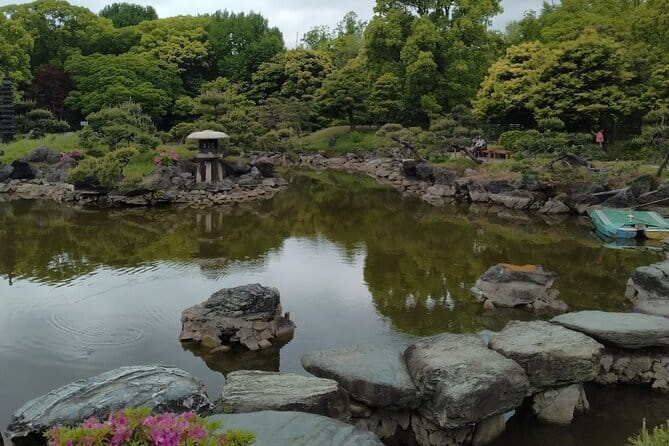
Right after the stable, you shift gears to Kiyosumi Teien. This is a garden designed for strolling, described as a walking forest garden. That matters because you are not just standing in one viewing spot. You move through the space, and the garden layout encourages you to slow down and read the scenery.
The vibe here is quiet and deliberate. After the intensity of sumo training, you feel the contrast fast. You get breathing room, plus a sense of how Japanese tradition often layers big energy with calm, controlled spaces.
In practical terms, this stop lasts about 50 minutes with admission included. That is enough time to enjoy the garden without turning it into a long sit-down activity. You can take your time, stop when something catches your eye, and still stay on schedule for the final Edo-period museum.
This is also a smart pairing. Sumo culture is ritual-heavy, and gardens in Japan are often read as a form of ritual attention. So when you leave the stable and step into Kiyosumi Teien, you are not switching themes at random. You are letting your brain reset, then you come back clearer for the Edo town reconstruction at the next stop.
A tip I recommend: take a few minutes to pause at your first good viewpoint, then start walking again. It helps you notice how the garden changes as you move, instead of rushing through it like a checklist.
Fukagawa Edo Museum: Edo streetscape, sound, lighting, and tools
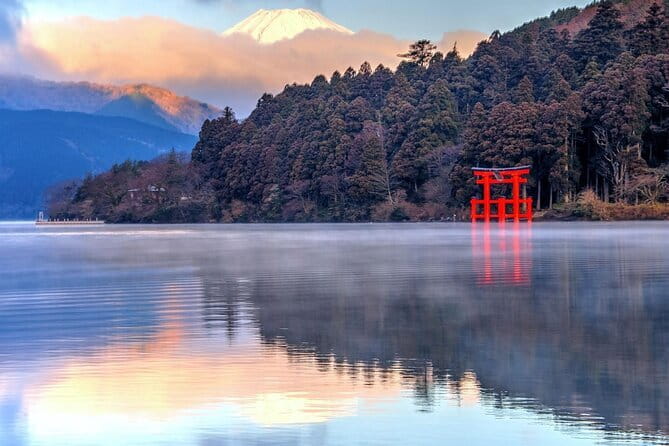
The tour ends at the Fukagawa Edo Museum, built around a life-size reproduction of a Tokyo streetscape from the end of the Edo period. This is not a small display tucked behind glass. It is designed like a walkable town scene, with everyday tools placed inside each house.
The museum uses sound and lighting to create the sense of daily life. That is the key idea: it is not only historical visuals. It is built to trigger your senses so the period feels less like a textbook chapter and more like a lived place.
This stop runs about 1 hour, and admission is included. That timing gives you enough runway to explore multiple houses and rooms without losing energy. You can also ask your guide to point out what you should pay attention to in the setup, since the museum is full of small details that you might otherwise miss.
One practical caution: museums like this can be busy depending on the time of year. If there are school groups, plan to slow down and let the crowd flow through first. You will get more out of it that way, and you keep your pace comfortable.
What I like about this final stop is that it reframes the whole morning. Sumo did not develop in a vacuum. It grew alongside Tokyo’s neighborhoods, entertainment culture, and changing city life. When you walk through the Edo town reconstruction after watching training in a stable, the links become clearer even if you know nothing about Edo Tokyo going in.
Why Ken’s guiding style matters for this tour
This is the kind of tour where the guide is not optional. You are visiting places that have their own pace and rules, and if you do not have context, you can end up watching without absorbing.
The guide you meet is Ken. Based on repeated feedback, Ken is described as punctual, polite, well organized, and able to explain clearly in fluent English. That combination is practical. You get answers on the spot, and the explanations do not feel like a script that ignores what you are looking at.
Ken’s approach also seems to work well for people who are newer to sumo. One of the strongest reactions people had: they left with a new appreciation for sumo and a desire to seek out tournaments later. That tells you the explanation is not just facts, it is a way of seeing.
If you are the sort who likes learning on the move, you will appreciate how the tour keeps you walking and observing while Ken ties it back to culture and history. There was also a request for a short handout summarizing sumo. That is not “needed,” but it is a good cue for how you might prepare.
My advice: bring a small notebook or notes app. Write down any terms Ken uses that you want to understand later. Then, after the tour, you can search those terms or match them to what you saw that morning.
Price and timing: is $123.79 good value?
The price is $123.79 per person, and the tour lasts about 3 hours 30 minutes. On paper, that sounds like a splurge, but value is not only about the time length.
What you get here that you would have to pay for separately includes admission to all locations, plus the guide service from the meeting point to the end. You also get access to a sumo stable that requires special permission, which is usually the hardest part to arrange on your own.
The tour is small, with a maximum of 15 travelers, and it includes a photo opportunity component. It is also positioned right around a real neighborhood starting point, so you are not wasting half your morning on complicated city transfers.
The only downside to budget planning is that private transportation is not included. Still, the meeting point is near public transportation, so this is easy to slot into a normal Tokyo day.
If you are traveling first-time to Tokyo and want an experience that feels specific, not generic, the price starts making sense. You are paying for access, context, and time saved.
If you are already a hardcore sumo fan who knows everything about tournament structure and the latest ranks, you might feel the tour is more about cultural introduction than deep technical analysis. That is not a flaw, but it changes who gets the most out of it. For most people, the “practice plus culture plus Edo town” mix is exactly what they want.
Who should book this sumo practice and Edo town tour?

This fits you best if you want three things at once: a close look at sumo, a calm garden break, and a guided historical setting that goes beyond reading signs.
Book it if:
- You want real sumo practice viewing rather than just watching wrestling on TV
- You like guided storytelling, especially cultural context you can connect to what you see
- You prefer smaller group experiences (this runs with a max of 15)
- You want to see parts of Tokyo with a more local feel, starting around Kiyosumi-shirakawa
Consider other options if:
- You want only a sumo focus, with heavy detail on modern tournament changes and ranked system nuance. This tour will give you understanding, but the strongest route to extra detail is asking Ken questions.
- You dislike early starts. 8:30 am is early enough to matter.
If you are traveling with anyone who enjoys Japan’s quieter side, the pairing of Shikoroyama-beya, Kiyosumi Teien, and Fukagawa Edo Museum is a very natural rhythm. Fast intensity, quiet walking, then a sensory walk through Edo life.
Should you book this Tokyo sumo practice and town tour?
Yes, I think you should book it if your goal is an authentic Tokyo morning that mixes access, culture, and pace. The stable time is the anchor, and the rest of the tour supports it: Kiyosumi Teien helps you slow down, and the Fukagawa Edo Museum gives you a stronger sense of where these traditions sit inside Tokyo’s longer story.
I would book it sooner rather than later because it tends to be in demand (often booked around 17 days in advance), and availability can be limited. Also, keep your expectations aligned: this is a guided experience that teaches you how to see sumo and Edo life, not a standalone encyclopedic course.
If you want to get the most value from your money, come with a couple of questions about what you are watching at the stable and what to look for if you attend a tournament later. With Ken’s fluent English and patient explanations, that is where this tour really pays off.
FAQ
How long is the tour?
The tour runs for about 3 hours 30 minutes.
What time does the tour start?
The start time is 8:30 am.
Where is the meeting point?
You meet at Kiyosumi-shirakawa Station, at ground level of the B1 exit (1-chōme-6-13 Shirakawa, Koto City, Tokyo).
Is the ticket mobile?
Yes, the tour uses a mobile ticket.
What does the tour include?
It includes a professional guide for the full experience and admission fees to all locations on the route, plus all fees and taxes.
Is private transportation included?
No, private transportation is not included.
What is the maximum group size?
The tour has a maximum of 15 travelers.
Can I enter the sumo stable?
The tour includes special permission to enter the sumo stable, so you can watch from ringside as part of the experience.
Are there age or physical restrictions?
No restrictions are listed for age, height, or weight for the activities included.
What is the cancellation policy?
Free cancellation is available up to 24 hours in advance for a full refund.
When will I receive confirmation after booking?
Confirmation is received within 48 hours of booking, subject to availability.
More Tour Reviews in Tokyo
Not for you? Here's more nearby things to do in Tokyo we have reviewed
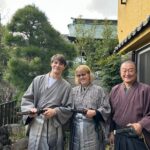


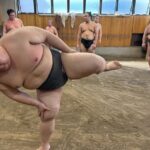
Tokyo Sumo Experiences, side by side.
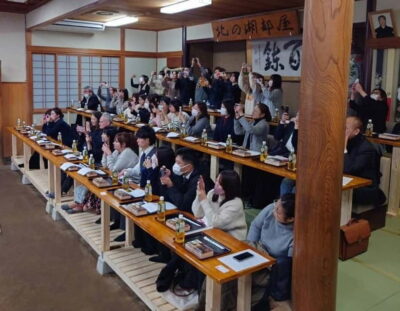 ★ 4.8Sumo Show and Dining ExperienceFrom $792,742 reviews
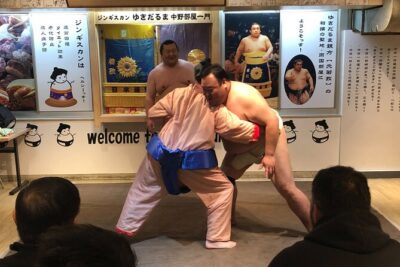 ★ 5.0the SUMO showFrom $891,960 reviews
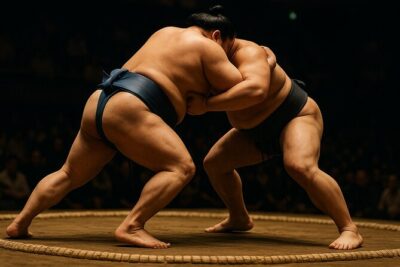 ★ 5.0Tokyo Shinjuku Sumo Show & Experience with PhotoFrom $791,750 reviews
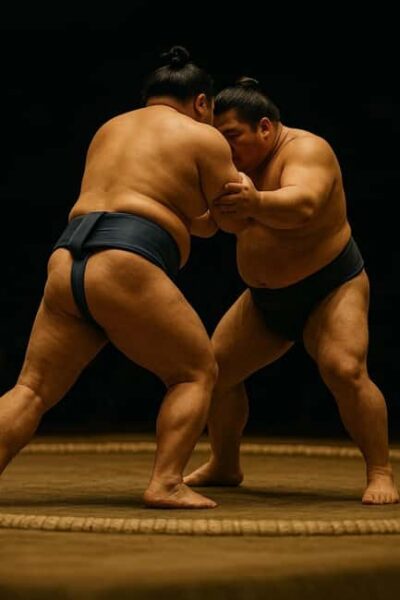 ★ 4.8Sumo Show and Experience in ShinjukuFrom $691,001 reviews
 ★ 4.7Luxury Sumo Show Experience & Japanese cuisine & DrinkFrom $103577 reviews
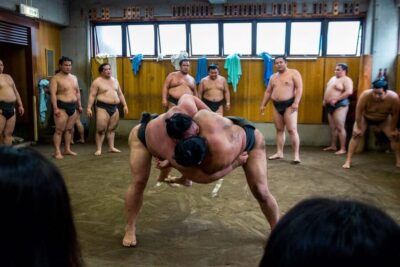 ★ 4.8Sumo Morning Practice Viewing TourFrom $81570 reviews
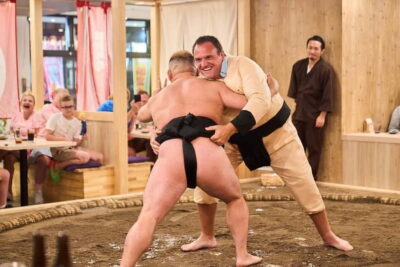 ★ 4.8Tokyo Sumo Experience: Chanko & Mochi with a Former ProFrom $103567 reviews
 ★ 5.0Ultimate Sumo Tournament: Tokyo, Osaka, Nagoya, FukuokaFrom $184468 reviews
This tour also belongs to