
Review · ASAKUSA TOURS
Explore Asakusa’s historic landmarks
If Asakusa feels like a lot, this helps. You get a guided, photo-friendly route through Tokyo’s most famous temple area and the side streets that feel more local. I like how the stops are paced so you learn the meaning behind what you’re seeing, not just how to spell the names, with Senso-ji and Kaminarimon as the anchors.
Two things I really enjoy: the guides who explain worship etiquette clearly, including how to pray and even get fortunes, and the extra context they add as you move from landmark spots to snack streets. A small group, up to 8 travelers, also makes it easier to ask questions and get help with photos. One drawback to keep in mind: it’s a walking tour in areas that can get crowded fast, so if you move slowly, plan extra time for photos and take breaks when you need them.
Key highlights to look for
- Up to 8 people keeps questions and photo requests from getting lost
- Senso-ji worship etiquette explained so you know what to do and why
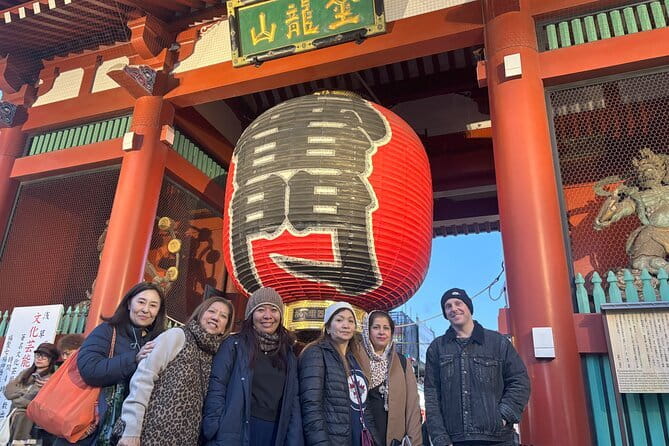
- Kaminarimon lantern photo moment early, when it’s easiest to get a clean shot
- Nakamise-dori snacks and souvenir browsing without feeling rushed
- Hoppy Street izakaya energy for a more casual Asakusa evening feel
- Optional 1-hour sushi making if you want an edible take-home memory
Start at Asakusa Culture Tourist Information Center, small-group pace
This tour starts at the Asakusa Culture Tourist Information Center near Kaminarimon, in Taito City. It is a convenient meeting point, and the whole plan runs back to the same location, so you are not hunting for an end stop later.
Because the group max is 8 travelers, you can actually interact. In the best moments, the guide turns your questions into mini-lessons about shrines, temple practices, and everyday life around Asakusa. I also like that the tour is designed for first-timers. You do not need deep prep, just curiosity and comfortable shoes.
The duration runs roughly from 1 hour 30 minutes to 3 hours 30 minutes depending on how you pair it with options and pacing. The physical requirement is listed as moderate fitness, which is fair. You are walking and stopping often, and you will spend time on crowded streets.
You can also read our reviews of more historical tours in Tokyo

Thunder Gate Photos First: Kaminarimon and Nakamise Street stops
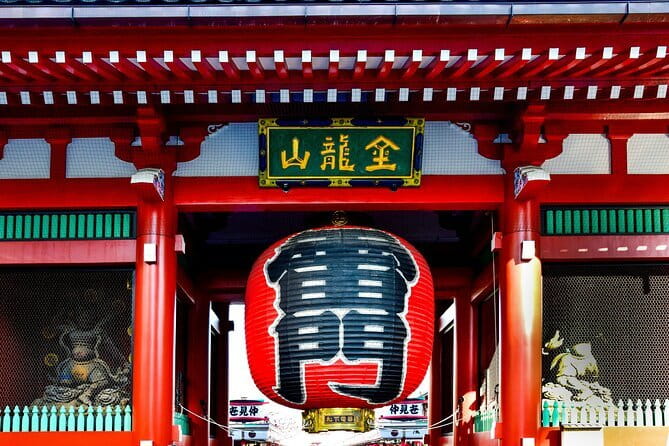
The first big hit is Kaminarimon Gate, the Thunder Gate, famous for the big red lantern and the statues of wind and thunder. This is one of those Tokyo scenes that looks dramatic even without trying. The trick is timing and positioning, and getting there early in the tour helps.
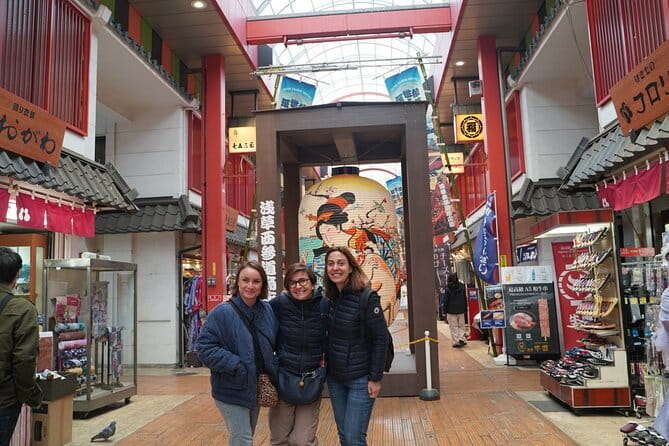
From Kaminarimon you walk into Nakamise-dori, the classic shopping street right by Senso-ji. This is where you can quickly sample the vibe: traditional snacks, souvenirs, and small craft shops. It is short enough that you will not get tired, but long enough to give you a sense of what to buy and what to skip.
What I like about this part is that it is practical. You are not just shopping, you are learning how the area is set up to support pilgrims and visitors. You also get guidance on what is worth your time if you want to bring home something that makes sense for a gift, not just a random trinket.
A quick consideration: Nakamise-dori can feel busy, especially around peak temple hours. If you care most about photography, keep your phone ready and move with the group for the best angles.
Senso-ji etiquette lesson and why Kannon matters
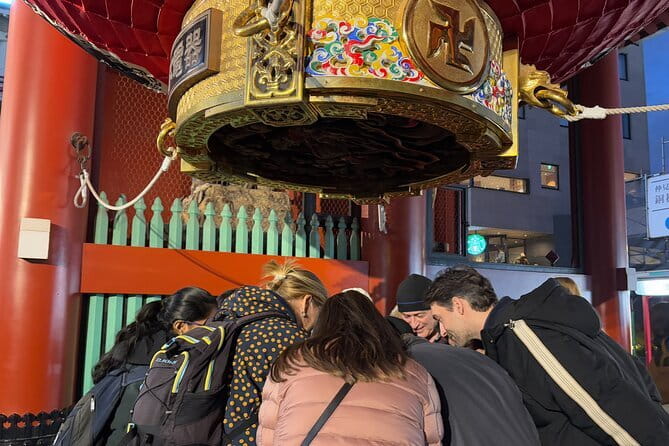
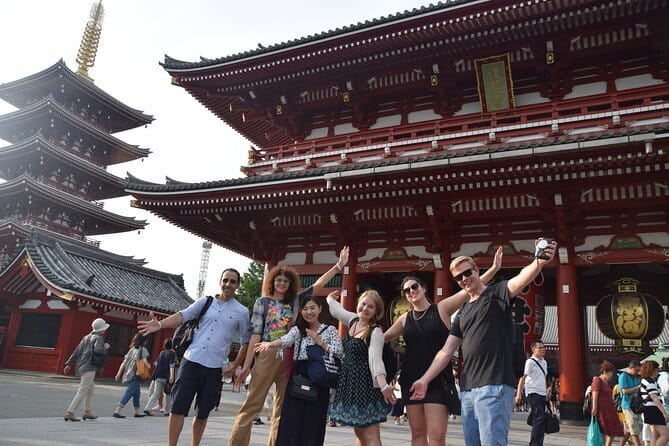
At Senso-ji Temple, Tokyo’s oldest temple, the guide explains history and worship etiquette. This is the part that turns photos into understanding.
Instead of treating the temple like a museum stop, you get a quick education on the temple’s purpose and the goddess of mercy, Kannon. Then the guide shows you how to properly pray and how fortunes work. That might sound small, but it makes a big difference. You are less likely to do the wrong thing, and you feel more confident moving through the space.
This is also where the guides earn their keep. In past tours, guides such as Sachi, Kayoko, and Yoshiko have been praised for answering questions directly and for being kind and attentive. If you want to know why people act a certain way at shrines, this is one of the best places to ask.
You get about 30 minutes at Senso-ji, so you can look around without feeling like you missed the important bits. Still, 30 minutes is not long if you stop to read every sign and stare up at the details. If that is your style, start by focusing on the main temple area first, then circle back once you feel oriented.
Hanayashikidori and Hoppy Street for nostalgic snacks and local night energy
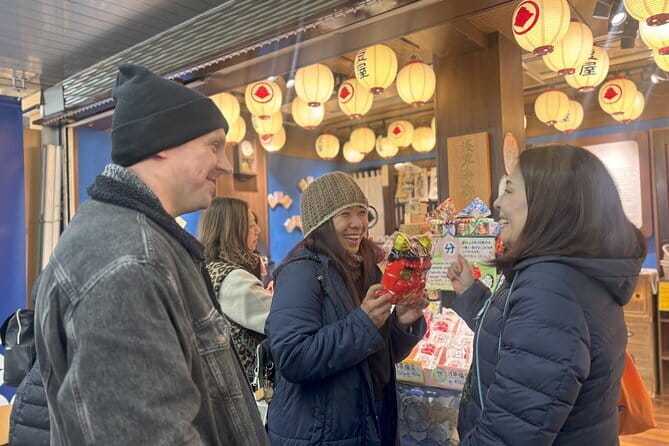
After the temple core, the tour moves into Asakusa’s side streets where the area feels less like a postcard and more like an actual neighborhood.
First is Hanayashikidori, a lively street near Hanayashiki, Japan’s oldest amusement park. It is lined with shops, restaurants, cafes, and lots of traditional snack and souvenir options. This is a good stop if you want a slightly different vibe from the temple approach roads, plus a natural place to snack while you keep walking.
Then comes Hoppy Street, known for izakayas that serve Hoppy, a local drink. This is where the mood shifts. Instead of shrine bells and incense energy, you get something more casual and social. You can eat Japanese comfort foods like yakitori and oden alongside the drinks. For your first visit to Asakusa, this helps you see how the neighborhood works after daytime.
I like both of these stops because they add balance. Kaminarimon and Senso-ji are the headline sites, but Hanayashikidori and Hoppy Street show you what locals do with the same streets. You end up with the kind of memories that are more than images on your camera roll.
One caution: if you are not into nightlife atmosphere, Hoppy Street is still worth visiting for the food and street scene. Just keep your expectations flexible, since it can feel like a social area rather than a quiet sightseeing lane.
Optional 1-hour sushi making add-on at set times
If you want a hands-on souvenir, you can add a 1-hour sushi making class after the walking portion. The class runs at two set times: 12:30 to 13:30 or 15:30 to 16:30.
This is a smart add-on if you like activities where you get something tangible at the end. Walking tours give you photos. Sushi making gives you taste, technique, and a story you can tell later. It also changes your day plan. Instead of just finishing in the afternoon, you now anchor your schedule around a cooking session.
The practical side: make sure your lunch plans fit the time slot. If you pick the earlier class window, you will want to keep your eating light before class. If you pick the later window, you can take your time exploring and snack your way through the afternoon.






How long it takes, what to wear, and photo timing that actually works
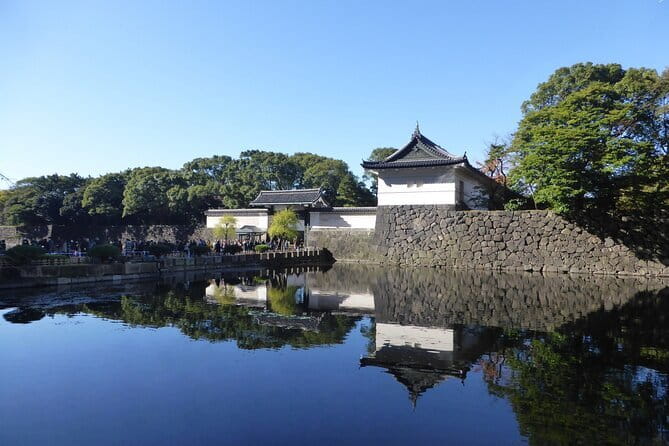
The stated duration range is about 1 hour 30 minutes to 3 hours 30 minutes. That range matters because you might move quickly between stops, or you might spend extra minutes on photos, gift browsing, or temple moments.
I recommend dressing for walking in real street conditions: comfortable shoes and breathable layers. Even in good weather, Asakusa’s streets can involve lots of stop-and-go movement. The tour is listed for moderate physical fitness, which usually means you should expect uneven pacing and some crowd flow.
For photos, keep one simple rule in mind. Your best results often come from going with the group at each landmark moment, not trying to lag behind. Kaminarimon’s lantern view is a high-demand photo stop, and the early timing helps you avoid the worst congestion.
If you like pictures of people praying or shopping lanes with depth, tell your guide what you’re after. In past tours, guides like Andy and Sunny have been noted for helping with questions and even taking photos for guests.
The $35 price tag: what you actually get for the money
At $35 per person, this tour is priced like a genuine local orientation. The key detail is that you are paying for a guided walk and interpretation, not for expensive museum entry. Many of the highlighted stops list admission tickets as free, including Kaminarimon, Nakamise-dori shopping, Senso-ji, Hanayashikidori, and Hoppy Street.
So where does the value come from? From the guide time and the practical context. Knowing worship etiquette, understanding why Kannon is central, and getting help picking what to eat and where to look for gifts saves you time. Time in Tokyo is expensive, and a good guide helps you spend it in the right places.
This is also a small-group tour, and that matters at places like Senso-ji where questions and crowd navigation slow down large groups. You are paying for smoother movement and more attention.
If you choose the sushi option, the experience becomes a two-part day activity. That is a different kind of value, less about seeing more streets, more about taking home a skill and meal.
Who should book this Asakusa introduction tour
This tour fits best if you are:
- Visiting Asakusa for the first time and want fast orientation
- Curious about shrine and temple practices, including how to pray respectfully
- Interested in a mix of famous sights plus real street food lanes
- Traveling with a small group or as a solo visitor who still wants personal attention
- Hoping for guide-led photo help and gift suggestions
It may be less ideal if you want a long, slow wandering experience with no structure. This is designed to cover multiple key areas efficiently. You get time to look, but it is still a guided walk with set stop durations.
If you are short on time but want your day to make sense, this tour does a good job turning confusion into a simple route you can repeat later on your own.
Should you book this Asakusa tour?
I think you should book it if you want the best first visit to Asakusa without guessing. The biggest strengths are the human ones: guides who explain worship etiquette clearly, answer questions kindly, and help you connect the dots between Kaminarimon, Senso-ji, and the surrounding streets. Add the small group size and you get real interaction, not just hearing information from the back of a crowd.
Book it with extra care if you hate walking through busy streets or if you want lots of unscheduled time. In that case, you might prefer a slower self-guided plan. Otherwise, this is a strong, practical way to see Asakusa in half a day, and to come away feeling like you understood what you saw.
FAQ
How long is the Asakusa walking experience?
It lasts about 1 hour 30 minutes to 3 hours 30 minutes, approximately, depending on the flow of the walk and whether you add options.
How much does the tour cost?
The price is $35.00 per person.
What is included in the tour besides the guide?
The tour includes a guided walk through key Asakusa stops. A mobile ticket is used for the experience. Admission tickets are listed as free for the featured stops.
Where does the tour start?
The meeting point is Asakusa Culture Tourist Information Center at 2-chōme-18-9 Kaminarimon, Taito City, Tokyo 111-0034, Japan.
Where does the tour end?
The activity ends back at the meeting point.
How large is the group?
The tour has a maximum of 8 travelers.
Is there an option for sushi making, and when is it?
Yes. You can add a 1-hour sushi making class after the 1.5-hour Asakusa walking tour. Class times are 12:30-13:30 or 15:30-16:30.
Is the tour suitable for people with only moderate mobility?
It is listed for travelers with a moderate physical fitness level.
What transportation situation should I expect?
The meeting point is near public transportation.
Can I cancel and get a full refund?
Yes. Free cancellation is available up to 24 hours in advance for a full refund. If you cancel less than 24 hours before the experience starts, the amount paid is not refunded.
More Historical Tours in Tokyo
More Tour Reviews in Tokyo
Not for you? Here's more nearby things to do in Tokyo we have reviewed












Asakusa Tours, side by side.
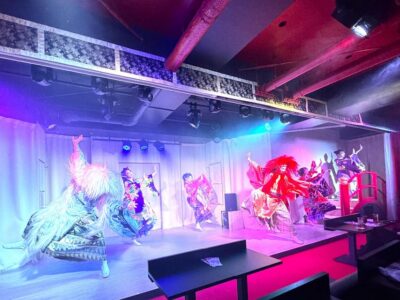 ★ 4.8Japanese Dance Cabaret Theater Asakusa-Kaguwa TicketFrom $492,270 reviews
 ★ 4.7Meiji Shrine, Asakusa, Skytree Bus Tour and CruiseFrom $1221,986 reviews
 ★ 4.9Roll and Authentic Sushi Making Class in AsakusaFrom $581,957 reviews
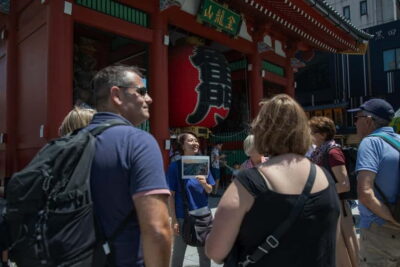 ★ 4.8Asakusa Walking Tour with Sensoji Temple VisitFrom $221,583 reviews
 ★ 5.0Tokyo Asakusa Rickshaw TourFrom $421,375 reviews
 ★ 4.5Tokyo Panoramic 1 Day: Meiji Shrine, Asakusa, Odaiba and SKYTREE®From $851,222 reviews
 ★ 5.0Tokyo Go Kart: Asakusa, Skytree, and Akihabara **IDP MUST**From $99988 reviews
 ★ 4.7Asakusa, Skytree & Akhihabara Go-Kart City ExperienceFrom $96761 reviews
This tour also belongs to