
Review · TOKYO CITY TOURS
Private Half-Day Grand Bike Tour in Tokyo
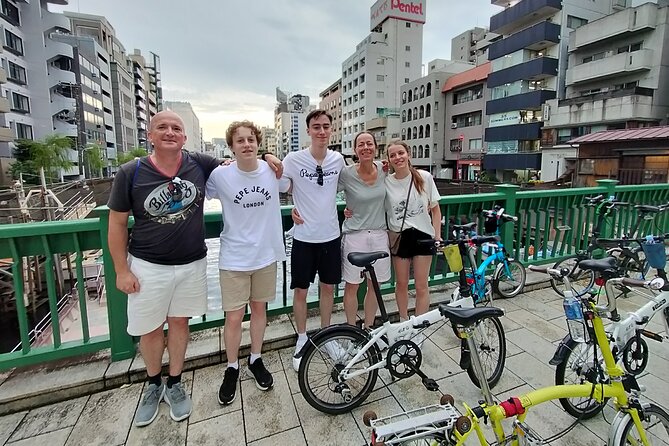
Tokyo is a lot easier on two wheels. This private bike tour threads together major sights and quieter lanes, with a guide keeping you moving safely through neighborhoods you might never find alone. I like the local-guide safety and the time-saving route that hits big-ticket places without feeling like you’re sprinting through crowds.
One thing to plan around: you’ll ride a folding bike sized for heights 140 to 180 cm, so if you’re over 180 cm you need to let the operator know in advance. You’ll also want moderate fitness, since it’s a long half-day on roads and busy crossings.
Key things that make this Tokyo bike tour work
Private group attention, with a guide watching spacing and street safety so you can focus on the sights
Helmets and bottled water included, which sounds small until you’re actually riding in Tokyo heat
A route that connects East Tokyo to Shibuya, saving you train hopping for the hardest-to-reach bits
Classic photo stops plus practical city views, from Skytree angles to canal bridges
A mix of shrine time and shopping time, so you get Tokyo culture and Tokyo impulse-buy energy
Why Tokyo Feels Easier (and More Fun) on a Private Bike
If you’ve ever tried to “see it all” in Tokyo, you know the problem. The city is efficient, but hopping between areas costs time, and walking only gets you so far. A bike tour is the cheat code for getting your bearings, because you can cover ground while still seeing the street-level details that trains miss.
What makes this tour especially appealing is that it’s private, so you’re not stuck following someone else’s pace. The guide drives the plan and keeps you oriented, which matters when you’re cycling through places like Asakusa’s temple approach roads, or when the route carries you into commercial districts where it’s easy to lose your group.
Safety is built into the format: helmets are included, and the tour is led by someone who keeps an eye on your line and timing. In the feedback I saw, the guide named Take came up as a standout for staying attentive and making the ride feel calm even when the city is not.
You can also read our reviews of more cycling tours in Tokyo
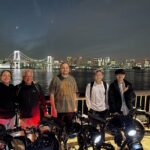
From Sakura Bridge to Senso-ji: Skytree Photos and Real Neighborhood Energy
The ride starts with a photo-friendly stop at Sakura Bridge, with great views toward Tokyo Skytree. It’s a simple start, but I love this kind of opening because it gives you a visual anchor right away. You’re already in the part of Tokyo where river views and old-street textures show up quickly.
Next up is the Edo Taito Traditional Crafts Center. This is the tour’s “slow down and look” moment. You get to see traditional handicrafts and watch the craftsmanship side of Japanese culture, not just the famous landmarks. The trade-off is that the stop is short, so you’ll want to focus on a few displays rather than trying to take in everything.
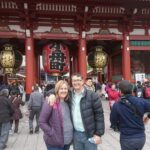
Then comes Senso-ji, one of Tokyo’s biggest temples. You’re in the right place to feel how the site functions as a living area, not just a postcard. Expect the temple grounds with the gate and pagoda views, plus shops and snack stalls along the approach. This stop works best if you use the time for two things: quick orientation photos outside, and a taste of what you can actually do there, like walking the temple area and noticing how people behave and pray.
A practical consideration: Senso-ji is busy. Your time is built in (a short, focused stop), so don’t plan on a long wander or you’ll feel rushed.
Ryogoku, Canal Views, and Nihonbashi: Where Tokyo Shows Its Practical Side
After the temple, the route moves toward Ryogoku Kokugikan, the sumo stadium area. Cycling in front of the stadium is a nice way to connect Tokyo’s sports culture with the city’s layout. Even if you don’t catch an event, the area still offers a strong visual identity, and the tour may include a photo moment if timing works.
From there, you pass through Yanagi Bridge, a canal-side view that shows Tokyo in an older mode. You can see waterside scenes and the yakatabune party-boat jetties. This is one of those stops where you get a “quiet wow” without having to pay for anything or walk far.
Then comes Nihonbashi Bridge, another key waterway area. The appeal here is context. The bridge area helps you understand how Tokyo historically oriented itself around waterways and commerce. You also get time to look at the town around it, which makes the bridge stop feel more like a neighborhood walk than a tourist photo trap.
If you like cities that have layers, these canal bridges are the payoff. They’re not as famous as the temple or Shibuya crossing, but they make the whole route feel more like Tokyo and less like a checklist.
Ginza to the Imperial Palace Area: Big-City Icons at Bike Speed
When the tour heads into Ginza, you’re moving through one of Tokyo’s most famous high streets, known for major brand storefronts. You likely won’t have time to shop deeply at every stop, but the cycling route gives you a useful “view from the street” perspective. It’s a good reminder that Tokyo’s luxury districts are not only inside malls and storefronts, they also live on the sidewalks and crosswalks.
Next, you ride near the Imperial Palace. This stop is more about the exterior and surroundings than an inside experience. The palace grounds are tied to Tokyo’s older political roots, built on the former Edo castle area and linked to the Tokugawa government center. The bike format helps here because you can approach the area with context instead of arriving with jet-lag confusion.
You also cycle near the National Diet Building. It’s known for its modern 1936-era architecture, and passing by on the bike gives you a better sense of scale than a quick viewpoint stop.
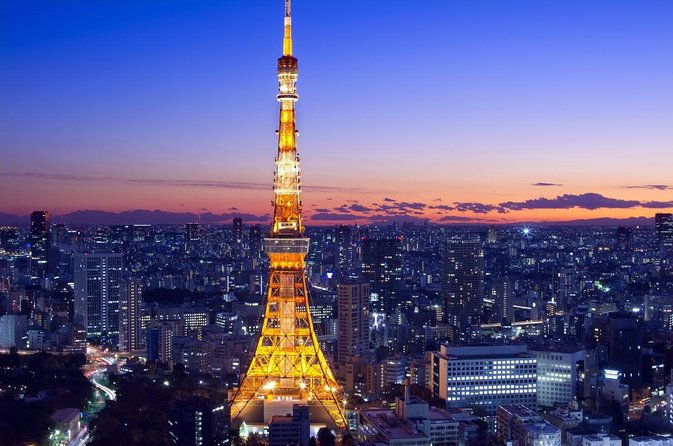
Then it’s Tokyo Tower. The tower is widely photographed, but riding under it as part of the route has a different feel. You’re moving, the city is around you, and the tower becomes a landmark you experience rather than just a photo background.
Meiji Jingu, Ginkgo Streets, and the Fashion Stretch: Culture Then Shopping
The tour hits Jingu Gaien, famous for its ginkgo-lined road. In autumn, those trees turn yellow, but even in other seasons the double-sided greenery and straight road feel are special. Cycling through this kind of street creates a “breathing moment” after denser city blocks.
Then you cycle through Roppongi, often described as a night-life district. You may not get a long hang time here, but it’s still worth experiencing from the bike because it’s a fast way to sense what kind of Tokyo you’re in without committing to a late-night plan.
From there, you roll through Aoyama Street, a fashionable stretch with its own design language. This section tends to appeal if you like seeing the city’s style evolve from neighborhood to neighborhood.
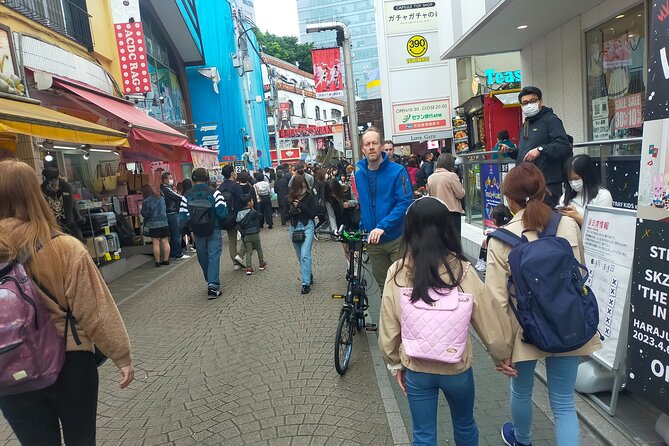
Then you get to Takeshita Street. This is where the tour shifts into crowd-and-shopping mode. You may even push bikes inside a shopping area connected to Takeshita Street, and you get time for browsing and buying. The practical advice is simple: decide what you’re looking for before you arrive, because this area can eat up your patience fast if you wander aimlessly.
After that, there’s Omotesando, another high-end shopping corridor. It’s more visually polished and structured than Takeshita, which creates a nice contrast in the same day.
You can also read our reviews of more private tours in Tokyo
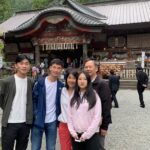
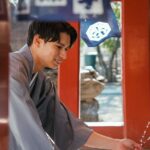
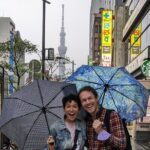
At Meiji Jingu Shrine, You Actually Walk
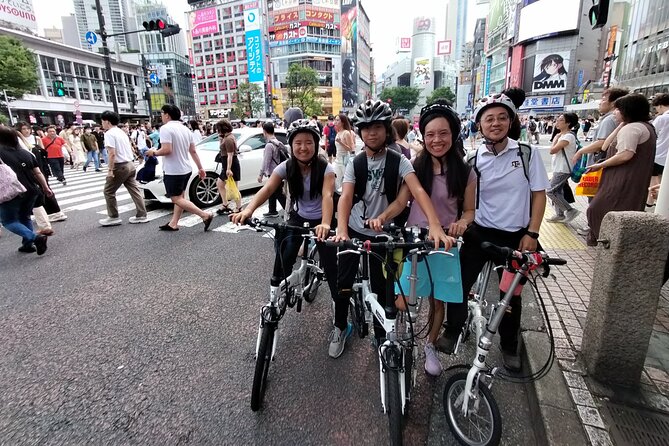
One of the best moments on this route is Meiji Jingu Shrine. The bike plan matters here. You park bikes and then you get walking time inside the shrine area, which is where the atmosphere shifts from street-level shopping energy to quiet forest paths.
Meiji Jingu is dedicated to the former Emperor, and the shrine complex is known for its scale. You’ll also see sake barrels dedicated to the shrine, which is a small detail but memorable because it shows how everyday offerings and traditions fit into the site.
A heads-up: you’re leaving bike mode for a walk, so wear shoes you trust. If you’re hoping for the exact amount of walking that suits you, this is the part to watch. The shrine time is longer than several other stops, and that’s the trade you make for getting more than a quick photo.
Finishing in Shibuya: Zebra Crossings and a Clean Exit
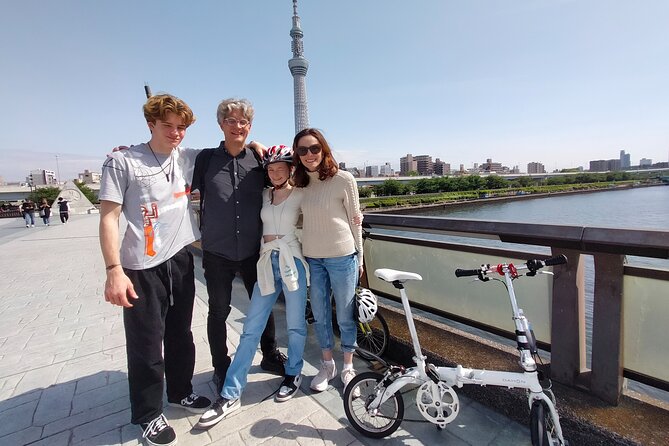
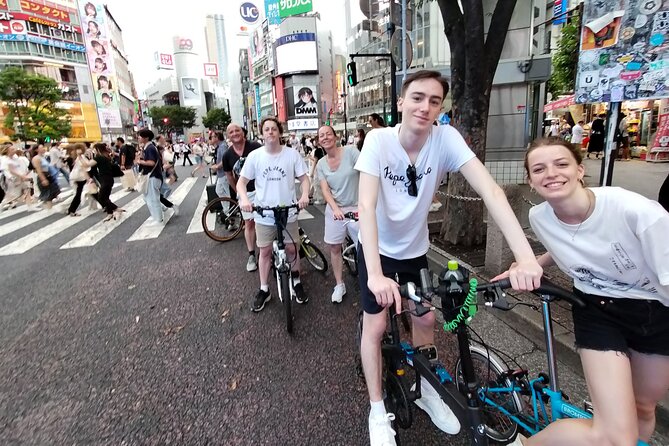
The tour ends at Shibuya Station, near the famous Shibuya Crossing. Ending here makes sense because it’s one of Tokyo’s major transport hubs. Once you’re done, it’s easy to choose your next plan by train, subway, or just continue exploring on foot.
Shibuya Crossing itself is a spectacle, but it’s also a practical skill lesson. Seeing it in person helps you understand how Tokyo coordinates mass movement, even when the sidewalks feel chaotic. Your time is short, but it’s enough to get the iconic moment and then move on.
Price, Value, and When This Half-Day Tour Makes Sense
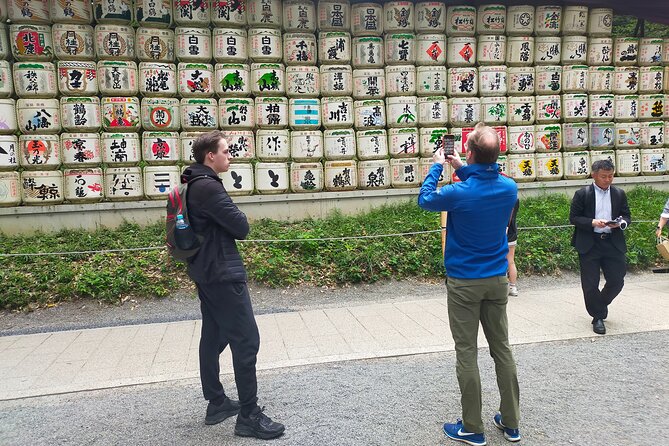
At $130.07 per person for about 5 to 6 hours, this bike tour is not the cheapest way to “do Tokyo highlights.” But it does trade cash for something that’s hard to buy with tickets and maps: smooth movement between distant neighborhoods without wasting your day on transfers.
Here’s how I’d judge the value:
- You get a private guide, plus helmet, bicycle, and bottled water included.
- The route connects multiple top areas: Asakusa and Senso-ji, waterway bridges, the Imperial Palace area, Tokyo Tower, Meiji Jingu, and Shibuya.
- You avoid the “I spent my whole day getting from A to B” problem that happens when you plan too aggressively.
The drawback is that the itinerary is packed enough that you won’t be doing long, slow museum-style visits. If you’re the type who wants two or three places max and lots of free time, you might feel rushed by how many stops you cycle past.
One timing note pulled from real-world feedback: someone who did a longer version of the tour felt the sweet spot was closer to 3 hours. If you’re sensitive to fatigue, that’s worth considering when you’re deciding how much time you want to be on the bike.
Who this suits best:
- You want a high-coverage Tokyo day without feeling like you’re speedwalking
- You like street-level city views and canal scenes as much as famous landmarks
- You’d rather ride with a guide than navigate bike routes on your own
- Your group wants a shared experience, not a solo museum grind
Should You Book This Tokyo Bike Tour?
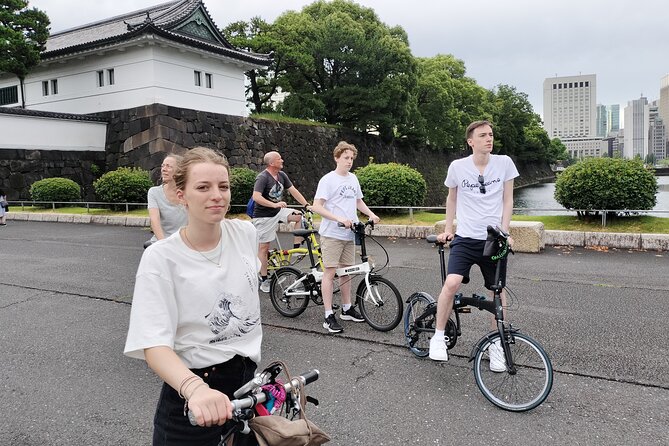
I’d book it if your goal is to see a lot of Tokyo highlights while still getting real neighborhood texture. The combination of a private guided ride, included gear, and a route that blends temples, canals, government-area architecture, shrine time, and shopping streets is a strong value play for a half day.
Skip it or consider another option if you want long stays at fewer places, or if your height is outside the stated 140 to 180 cm fit range and you can’t coordinate bike sizing in advance. Also be honest with yourself about stamina, because the tour assumes you can comfortably handle a full half-day cycling plus a walking chunk at Meiji Jingu.
If you want a Tokyo day that feels like Tokyo, not just a list of names, this is a solid choice.
FAQ
How long is the private half-day Grand Bike Tour in Tokyo?
The tour runs about 5 to 6 hours.
How much does the Tokyo bike tour cost?
The price is $130.07 per person.
Is this tour private or shared?
It is a private tour, meaning only your group participates.
What time does the tour start, and where does it end?
It starts at 11:30 am. It ends at Shibuya Station, near the Shibuya zebra crossing.
What is included in the tour price?
Included items are bicycle use, bottled water, and helmets.
What kind of bike do you ride, and is there a height range?
The rental bikes are folding bikes with 14 to 20 inch suitability for people between 140 and 180 cm tall. If you’re over 180 cm, you should inform the operator prior to the tour.
What fitness level do I need?
You should have a moderate physical fitness level.
Are the attractions on the route free to enter?
The stops listed on the route are marked as admission ticket free.
What happens if the tour is canceled due to weather?
The experience requires good weather. If it’s canceled due to poor weather, you’ll be offered a different date or a full refund.
More Cycling Tours in Tokyo
More Tours in Tokyo




More Tour Reviews in Tokyo


Not for you? Here's more nearby things to do in Tokyo we have reviewed












Tokyo City Tours, side by side.
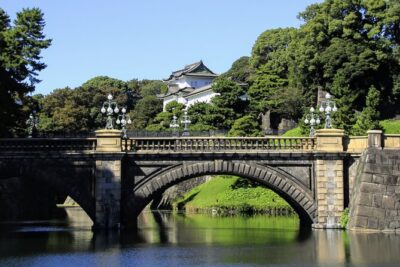 ★ 5.01-Day Tokyo Bus TourFrom $12914,250 reviews
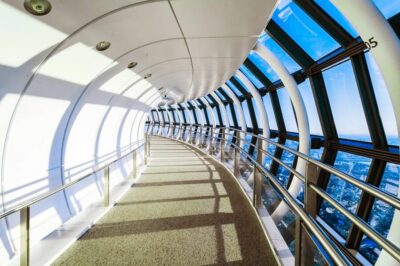 ★ 4.5TOKYO SKYTREE® Admission ticketFrom $1311,192 reviews
 ★ 4.6teamLab Planets TOKYO Digital Art Museum Entry TicketFrom $259,779 reviews
 ★ 4.0Mt Fuji & Hakone Cruise, Drum Show Bullet Train 1 Day from TokyoFrom $1497,413 reviews
 ★ 5.0Shinjuku Food Tour (13 Dishes at 4 Local Eateries)From $866,603 reviews
 ★ 4.4Tokyo Mt Fuji 5th St & Hakone Cruise Bus Tour w/Bullet TrainFrom $1545,024 reviews
 ★ 5.0Flagship 2-Hours Official Street Go-Kart Tour – Tokyo Bay ShopFrom $644,974 reviews
 ★ 4.5From Tokyo: Mount Fuji Full-Day Sightseeing TripFrom $684,970 reviews
This tour also belongs to