
Review · TOKYO CITY TOURS
Tokyo Like a Local: Private & Personalised Experience (2-3 hours)
Tokyo feels less chaotic with a local guide. This private, personalized walking tour helps you build confidence fast with Tokyo transport tips and a route shaped around your interests, including big sights like Shibuya and Asakusa. One consideration: it is a short 2-3 hour experience, and it is mostly on foot, so you may still want to plan extra time for slower neighborhoods or longer stops.
I like that you are not stuck on a rigid script. After you book, you answer a questionnaire and message your host directly, which means you can steer the pace toward food, temples, shopping, or nightlife guidance.
The route has clear anchor points, but it stays flexible. You can expect a guided walk with practical help, plus a guided orientation to Tokyo’s systems so the rest of your trip feels easier.
Key things to know before you go
- You get a true private experience, only your group, not a mixed tour crowd
- Transport confidence is a core goal, including help with navigating the subway and buying tickets
- Shibuya is handled in layers, from the Hachiko story to the crossing, then shopping streets
- Asakusa ties together landmarks and everyday street life, especially around Senso-ji and snack stops
- Your host uses your preferences, so history, food, or hidden streets can shift the route
- Extra transit costs may apply, if you need public transport transfers beyond walking
A private Tokyo orientation built around your day
Tokyo can overwhelm you, even if you plan well. This tour is designed to shrink that feeling. Instead of “see everything,” it aims for “leave knowing how to move and what to do next.”
The biggest value is that it is private and personalized. You start with your interests via a pre-tour questionnaire, then your host adjusts the day. I especially like this approach for first-timers. Your first day in Tokyo is when a good guide can change the whole trip, because you learn how to travel, what to expect in popular areas, and how to spot places that match your taste.
The other big win is that the itinerary balances famous stops with smaller street experiences. You get the headlines, but you also get the local rhythm of how people actually move through these neighborhoods, where to slow down, and what to notice as you walk.
You can also read our reviews of more private tours in Tokyo
Where the tour starts, and how the meeting point works
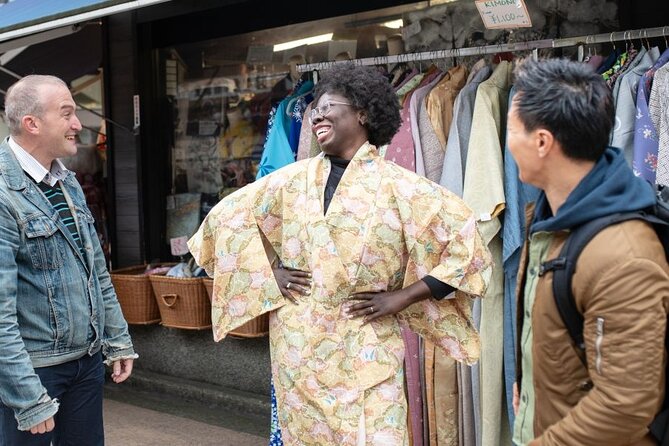
This experience starts near Omotesando, at NewDays Harajuku (Jingūmae, Shibuya), right by the Omotesando Exit. The tour ends back at the same meeting point.
That matters because it reduces stress. You are not trying to connect from one far-away area to another. It is also a sign the tour is built for a walking route plus optional short transfers, rather than long bus or train rides.
If you arrive early, you can use that buffer to get oriented in the area around the meeting point. But don’t overpack your schedule. The whole point is to have your host pace the walk to your stamina and curiosity.
The core route: Shibuya to Asakusa in a walkable, meaningful sequence
This tour often works like a “guided day map” that starts in Shibuya and finishes in Asakusa. Even if your host tweaks the exact stops, these are the anchor neighborhoods.
Why this pairing works: Shibuya teaches you how to handle Tokyo’s most famous modern crowds, including the rail and street flow. Asakusa then gives you a traditional counterpoint, so you experience Tokyo as more than one mood.
You can also pick other neighborhoods based on your questionnaire, but if you want the classic first-time Tokyo combo, this sequence makes sense.
Shibuya stop by stop: Hachiko, the crossing, then shopping streets
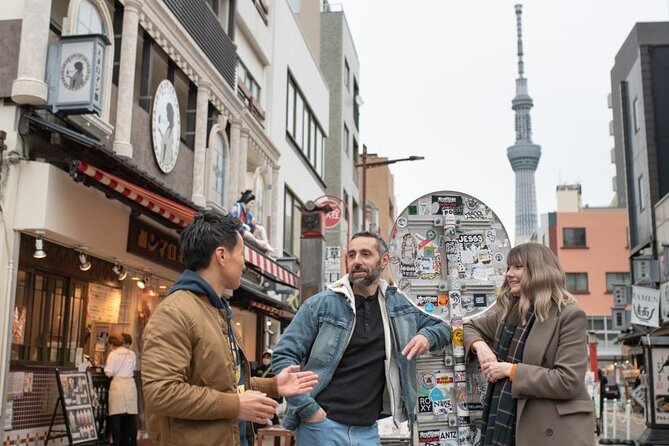
Shibuya is the warm-up, and it is also the test. Can you navigate crowds, signage, and station connections without feeling lost? Your host’s job is to make that feel manageable.
1) An authentic introduction in the Shibuya area
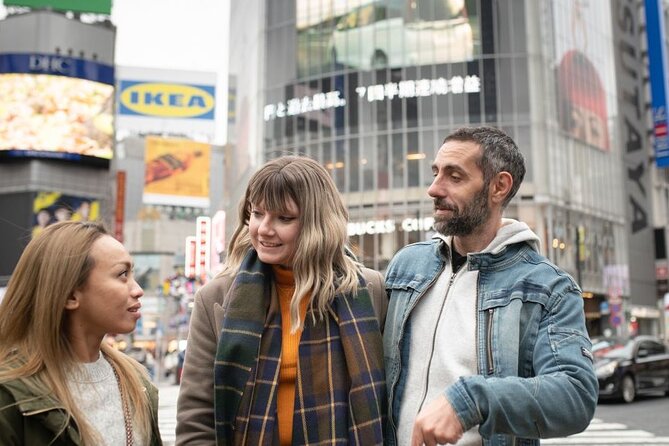
You start with an introduction to Tokyo with your local host. This is where the tour becomes personal. You’ll talk through what you care about, then your host chooses streets and sights that match.
You should expect a mix of big landmarks and smaller side streets. That is important because Tokyo’s “main streets” can be intimidating. Side streets help you see how locals actually live between the obvious points.
More Tokyo tours and experiences for the shortlist




2) The Hachiko landmark and its cultural story
Next comes a Shibuya landmark connected to loyalty and friendship: the Hachiko area. Your host shares the story and why it matters culturally.
This stop is more than a photo moment. It gives you a reference point for understanding how Tokyo treats memory and devotion in public spaces, where symbols are part of everyday life.
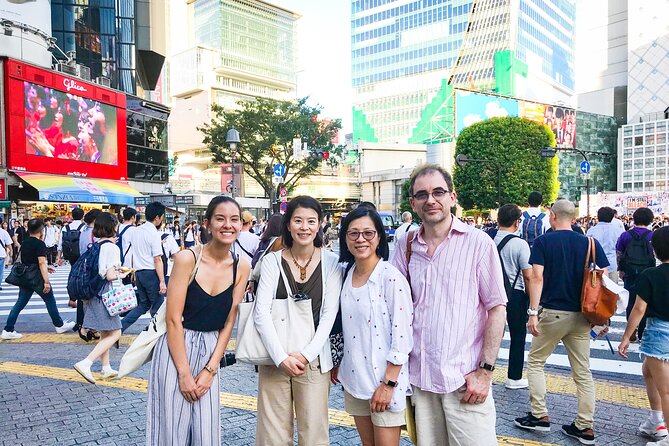
3) The world-famous scramble crossing, with practical guidance
Then you move to the crossing. Your host helps you experience it in a way that feels safe and simple, not chaotic.
Here is the practical payoff: you learn how to cross with the flow of people, how to time your movement, and where to stand for views without blocking others. It sounds basic, but in Tokyo, basic can become surprisingly useful.
4) Shibuya’s shopping street time, with local food and style direction
From the crossing, the tour shifts into Shibuya’s shopping energy. You explore a bustling shopping street for fashion, food, and local culture.
This part is where your questionnaire really shows up. If you tell your host you like snacks, you’ll likely spend more time discussing what to eat and where people go. If you want shopping, you’ll get route choices that reduce backtracking.
A drawback to watch for in Shibuya
Shibuya can be busy. If you are sensitive to crowds or your group has mobility limits, the pace may feel fast. The tour is private, so your host can adjust, but it helps to set expectations. Wear comfortable shoes, and don’t try to cram extra stops before or after the tour if you can avoid it.
Asakusa and Senso-ji: the temple experience plus street-level Tokyo
After Shibuya, the vibe shifts. Asakusa is older, more traditional, and slower in feel, even when it is crowded.
5) Senso-ji, Tokyo’s best-known Buddhist temple
You visit Tokyo’s oldest and most famous Buddhist temple area, guided by your host. You learn about its history and cultural traditions.
What makes this valuable is the human-scale explanations. A guide helps you understand what you are seeing, and also what behavior is expected around shrines and temple spaces, so you feel comfortable instead of unsure.
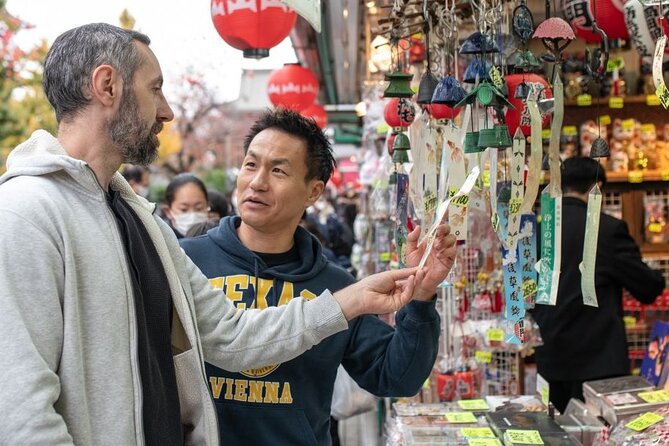
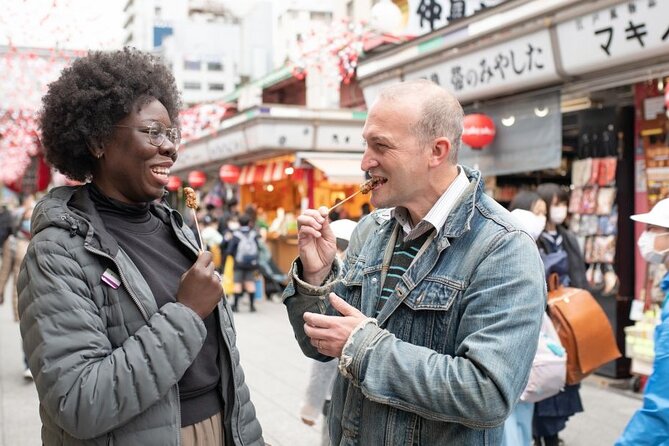
6) A lively traditional street for snacks and crafts
Then you walk a traditional street lined with local snacks and crafts. Your host helps you discover unique finds and hidden favorites.
This is where you get the everyday Tokyo feel. You can graze, ask questions, and pick up small souvenirs that feel tied to the neighborhood rather than generic tourist stalls.
The potential downside in Asakusa
If you expect a quiet, museum-like atmosphere, you may feel surprised. Asakusa is a major destination. The tradeoff is that you get to see how crowds behave in a traditional setting, which is part of the real Tokyo experience.
How the guide helps you master Tokyo’s subway and daily navigation
A big promise here is familiarizing you with Tokyo’s transport system. That does not mean you become an expert in 2-3 hours. It means you leave with a workable plan for getting from A to B.
In real terms, guides often help with things like:
- Understanding which lines to use and how to get your bearings in station areas
- Helping you buy tickets for the subway, and explaining the logic behind station flow
- Sharing local etiquette so you feel less awkward in busy spaces
- Helping with practical tasks like ordering food during the day
For example, guides such as Saito are specifically praised for subway help and ticket-buying support. Others, like Gabriel, are noted for helping with ordering food while you are out on the route. Those details matter because they turn your first day from stressful to doable.
If your Japanese is limited, this is the heart of the value. Even basic navigation support can save you from wasting time and second-guessing.
Customization: how your preferences can reshape the route
The tour is built around your interests. You share your must-sees, preferences, and what you enjoy, and your host creates a customized itinerary.
I like this because Tokyo is too big to “guess.” If you love food, your host can steer you toward snack stops and the right kind of places to eat. If you care more about temples and traditions, your host can focus the day around shrine and temple areas and explain the customs you’re seeing.
The tour can also work well for families. One account highlights a guide who tailored the pace so a child could play instead of spending hours stuck in a pram. Another guide, Susumu, is described as an excellent fit for a parent and a teenager, mixing tourist highlights with a local experience of Tokyo.
That flexibility is the difference between a guided walk and a standard sightseeing route.
What is included, and what you should budget separately
This is a private walking experience with insider tips from a local host. Included items focus on guidance, tailoring, and communication:
- Private personalized walking time
- Flexible duration and start times you pick when booking
- A pre-tour questionnaire
- Direct communication with your host to plan the itinerary and recommendations
Not included are the parts that add surprise costs if you are not ready:
- Food, drinks, and attraction tickets
- Transportation, since it is primarily walking
- Gratuities
Public transport transfers can happen if your host needs to reposition you between sites. Exact costs can be discussed after your reservation is finalized.
So think of the price as paying for time, local expertise, and a smart route. If you want to keep your total spending predictable, decide early whether you plan to buy snacks, enter paid attractions, or use extra transit during the day.
Price and value: is $107.20 per person fair?
At $107.20 per person for about 2-3 hours, the value depends on what you would otherwise spend your energy doing.
Here is the honest way to judge it:
- If you are new to Tokyo and feel overwhelmed by transit, the transport coaching alone can be worth a lot. It can save time and reduce stress.
- If you want to hit major sights without feeling like you are just following a crowd, the private pacing helps.
- If you already know Tokyo well and you love wandering without structure, you may feel like you could spend less.
The review data supports that guides often make the difference through practical help. People talk about learning the subway fast, getting help buying tickets, and getting food guidance. Those are not abstract perks. They are time savers.
Timing advice: when to book your first day
This type of orientation works best early in your trip. If you can, do it on your first day in Tokyo, or at least within the first couple of days.
Why: it sets you up for your next moves. Once you understand how to navigate key areas like Shibuya and Asakusa, the rest of your sightseeing becomes less guesswork.
If you have a short schedule, like a layover or a first afternoon arrival, this format can also work well because it gives you big-picture Tokyo in a compact window. Mark is one guide who is praised for being flexible during short timing, meeting people close to key landmarks and adjusting for real-world timing.
Tips for getting the best version of this tour
A guide can only use what you bring to the conversation. Here is what helps you get the most out of the 2-3 hour window:
- Be specific about what you want more of: temples, shopping streets, food stops, or nightlife pointers
- Tell your host how comfortable you are with crowds and walking pace
- Ask for help with transit planning before you get moving, especially if you are nervous about buying subway tickets
- Wear shoes that work for a walking route and crowd conditions
- If you have any must-see locations outside the standard route, say so in your questionnaire so your host can plan around it
Also, confirm your expectations when you meet. One review points out that you should be very specific and double-check plans once you are face-to-face. That advice is simple, and it prevents confusion.
Should you book this Tokyo Like a Local private walking tour?
Book it if:
- You are in Tokyo for the first time and want transport help plus confidence
- You want a private tour that can be shaped around your interests, not a fixed script
- You want a good first-day pairing of Shibuya landmarks and Asakusa temple culture
- You like the idea of walking with someone who can suggest where to eat and what to notice while you are there
Consider skipping or switching tours if:
- You dislike walking or large crowds and cannot flex your pace
- You only want information-free sightseeing, since this tour is built around interaction and practical guidance
- You expect all food, tickets, and transit costs to be included, because they are not
The bottom line: if your goal is to make Tokyo feel navigable and to get a smarter start, this is a solid buy. You are paying for a short, focused orientation through the neighborhoods that most visitors hit anyway, but with enough guidance to make it feel personal and useful.
FAQ
How long is the Tokyo Like a Local private experience?
The tour runs about 2 to 3 hours, with flexible durations and start times you choose when booking.
Is this tour mostly walking?
Yes. It is primarily a walking experience, and it does not include a private vehicle.
What areas does the tour cover?
The experience centers on neighborhoods including Shibuya and Asakusa, with stops such as a Shibuya Hachiko landmark area, the scramble crossing, and Senso-ji in Asakusa.
Are food and attraction tickets included?
No. Food, drinks, and any attraction tickets are not included.
Will I need to pay for transportation during the tour?
Transportation is not included. Since the tour is mostly walking, public transport may be used only as transfers between sites, and any additional costs can be discussed with your host.
What happens if weather is poor?
This experience requires good weather. If it is canceled due to poor weather, you will be offered a different date or a full refund.
More 3-Hour Experiences in Tokyo
More Private Tours in Tokyo

More Tour Reviews in Tokyo






Not for you? Here's more nearby things to do in Tokyo we have reviewed












Tokyo City Tours, side by side.
 ★ 5.01-Day Tokyo Bus TourFrom $12914,250 reviews
 ★ 4.5TOKYO SKYTREE® Admission ticketFrom $1311,192 reviews
 ★ 4.6teamLab Planets TOKYO Digital Art Museum Entry TicketFrom $259,779 reviews
 ★ 4.0Mt Fuji & Hakone Cruise, Drum Show Bullet Train 1 Day from TokyoFrom $1497,413 reviews
 ★ 5.0Shinjuku Food Tour (13 Dishes at 4 Local Eateries)From $866,603 reviews
 ★ 4.4Tokyo Mt Fuji 5th St & Hakone Cruise Bus Tour w/Bullet TrainFrom $1545,024 reviews
 ★ 5.0Flagship 2-Hours Official Street Go-Kart Tour – Tokyo Bay ShopFrom $644,974 reviews
 ★ 4.5From Tokyo: Mount Fuji Full-Day Sightseeing TripFrom $684,970 reviews
This tour also belongs to