
Review · TOKYO CITY TOURS
Private Tokyo Night Tour
Neon Tokyo looks better after dark. This private night drive strings together the city’s best-lit districts and photo stops, from Tokyo Bay to the Shibuya scramble. I like that it is built for an easy 3 to 4 hour rhythm, so you spend more time looking up and less time figuring out where to park or walk at night.
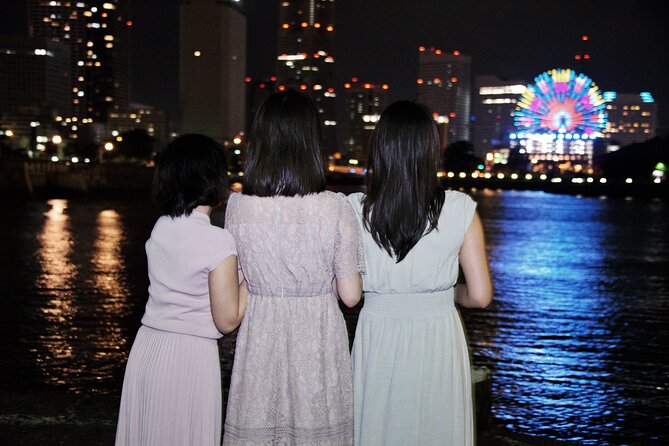
My favorite part is the photo-friendly timing. You get planned chances to stop for pictures near Rainbow Bridge, Tokyo Tower, Tokyo Station, Odaiba’s illuminated ferris wheel, and the big intersections that most first-timers only see from afar. A possible drawback is that some stops are brief and Tokyo Tower has a paid admission option, so you will want to decide in advance if you are going in or just taking photos from outside.
Quick highlights for your Tokyo night loop
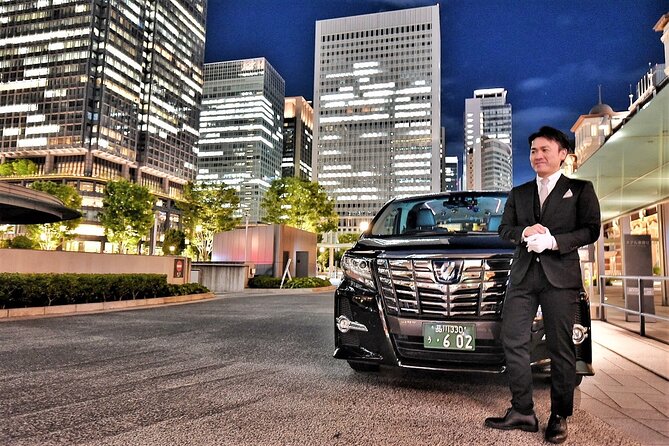
- Private van for up to 9 people: your group stays together with only your itinerary choices
- Pickup offered and a mobile ticket for smoother night logistics
- Tokyo Tower photo stop with admission not included (so plan your budget if you go up)
- A realistic “lights route” across Ginza, Odaiba, Roppongi, Omotesando, Shibuya, and Shinjuku
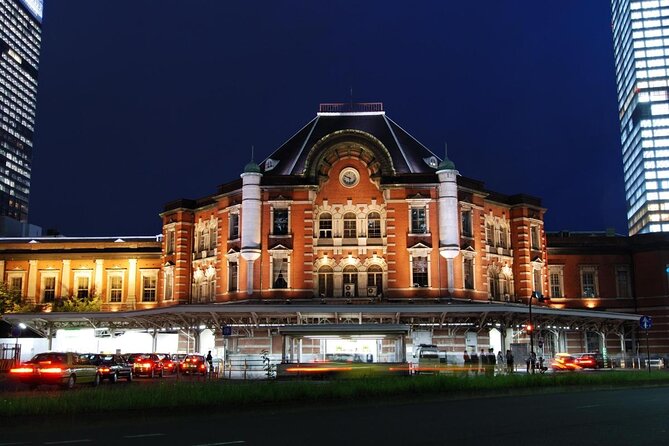
- Time for classic Tokyo photos at Tokyo Central Railway Station, including a popular wedding-shot viewpoint
- Guides who adapt: flexibility is a recurring theme, including added stops and helpful photo coaching
Why this tour feels different from a bus ride
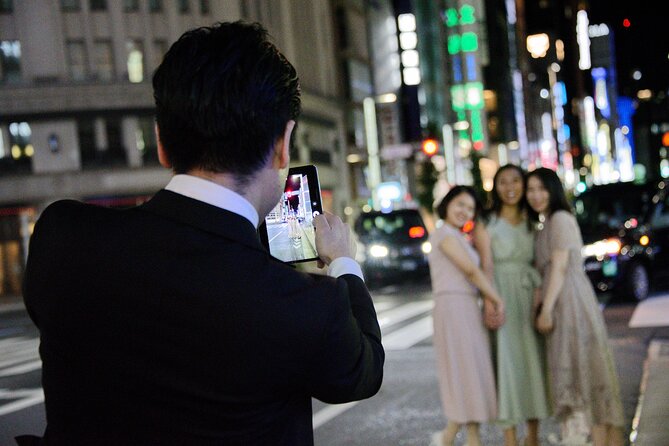
Tokyo at night has a different personality. The streets get louder, the signs get brighter, and the whole city turns into a moving postcard. This tour is designed for that feeling, but without the big-group hassle.
You ride in a comfortable van, which matters more than you might think. Tokyo traffic and pedestrian density can drain energy fast, especially when you are trying to hop between attractions after sunset. Here, the driving does the hard part, while you focus on seeing, photographing, and enjoying the ride.
Also, it’s truly private. If your group wants a romantic pace, a photo-heavy pace, or a mix, you are not negotiating with strangers. That private element is a big reason the value can feel strong, especially for small families, couples, or a group of friends who want one shared plan.
You can also read our reviews of more private tours in Tokyo
Pickup, timing, and what 3 to 4 hours really covers
The tour runs in the evening window, with different hours depending on the date range. In many periods it starts around 6:00 PM, with some seasonal adjustments later in the year where the start time can be earlier or the evening window shorter.
Duration is listed as 3 to 4 hours (approx.), and the stops are short by design. That is not a flaw. It’s the trade-off you make to cover a lot of Tokyo highlights in one night. Think of it as a guided “route sampler,” the kind of outing that helps you decide what you will return to during the rest of your trip.
One practical note: the tour requires good weather. If the forecast looks poor, you should be prepared for the tour to shift or be refunded, depending on the operator’s decision. And near water, like around Rainbow Bridge and Tokyo Bay, it can feel cold with a breeze, even when the city is lit up warm.
Rainbow Bridge and Ginza: Tokyo Bay glow plus refined streets
You start with the nighttime mood set by Rainbow Bridge. The bridge lighting and the Tokyo Bay backdrop create a scene that is hard to recreate on your own, especially if you arrive late or you do not know the best vantage points. Expect a quick stop and photo time, not a long sightseeing hike.
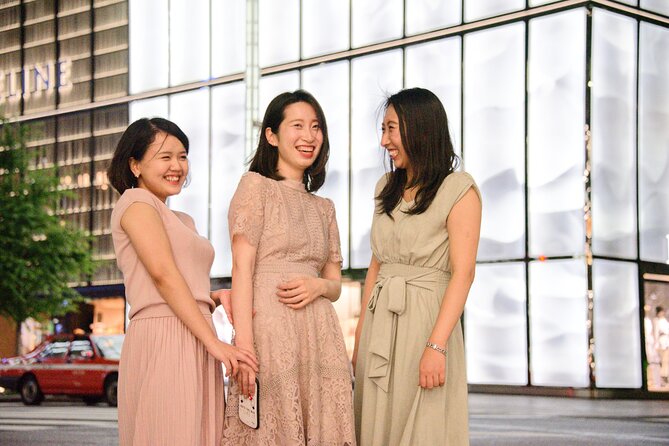
Next comes Ginza, Tokyo’s famous shopping and dining district. This is where Tokyo looks polished and planned, with plenty of well-known architecture and landmark-worthy streetscapes. The stop is about letting you glance at the atmosphere, not exhausting you with walking. If you like window shopping, people-watching, or just taking photos of elegant street energy, Ginza is a great night contrast to the more chaotic crossings later.
Two small tips that make these first stops work:
- Wear something for cool air. Reviews commonly point out chill near the bay and open bridge areas.
- Set your expectations for photo time. You will have a chance to step out and shoot, but you will not have the freedom of a full, independent evening stroll.
Tokyo Tower and Tokyo Station: skyline magic and a classic photo spot
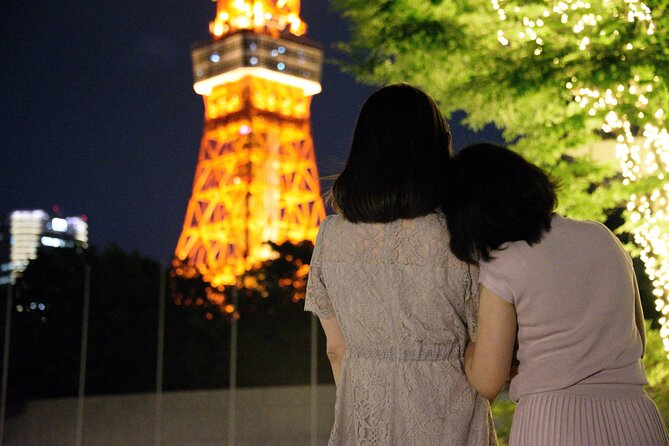
Then you hit Tokyo Tower, one of the city’s most iconic silhouettes. The nighttime glow is the point here, and the stop gives you close-up photo chances with the tower lit against the dark sky. Tokyo Tower admission is listed as not included, so you will have to decide if you want to pay separately to go up. For most people, great photos from the outside area are the main goal on this kind of timed night tour.
A few minutes later, you reach Tokyo Central Railway Station, also known as Tokyo Station. It was built in 1914, and it still feels nostalgic and photogenic. The tour plans a photo at what is described as a popular wedding photography spot. Even if you are not attending a wedding, it is a useful orientation moment. You see a landmark with enough structure that it helps you “map” the city in your head for future days.
If you are wondering what makes this portion worth paying for, it’s simple: you are getting access to photo moments that are time-consuming to coordinate on your own. In Tokyo, finding the right spot at the right time can take effort. This tour compresses that into the evening drive.
Daiba and Roppongi: neon ferris wheel energy, then nightlife in motion
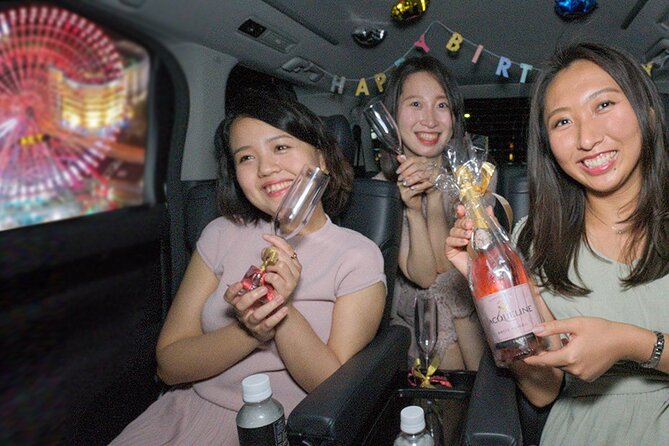
After Tokyo Station, the route heads toward Daiba, Odaiba’s seaside entertainment zone on a man-made island. Daiba is a night favorite because it mixes waterfront views with bright, modern lighting. The itinerary includes a stop near a ferris wheel that is lit with 120,000 neon tubes programmed to display multiple patterns. That is the kind of spectacle that reads instantly on camera.
Daiba can be a little more futuristic and amusement-park feeling than some of the older districts. That makes it a good “middle course correction” after Tokyo Tower and Tokyo Station. You get a different texture of Tokyo, not just the same skyline over and over.
Then comes Roppongi, one of Tokyo’s best-known nightlife areas. The tour stop here is more about seeing the night scene through the lens of the district. You’ll get drive-by views that show how busy the area stays after dark, including the bright energy that draws both Japanese and international crowds.
What I like about this pair of stops is contrast. Daiba is lights and waterfront glow. Roppongi is lights and night energy. If you have only one night where you can cover different vibes, this rotation makes sense.
You can also read our reviews of more evening experiences in Tokyo
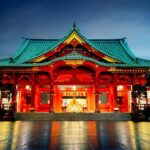
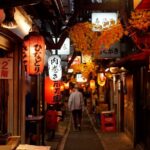
Omotesando to Shibuya: tree-lined lights, then the world-famous crossing
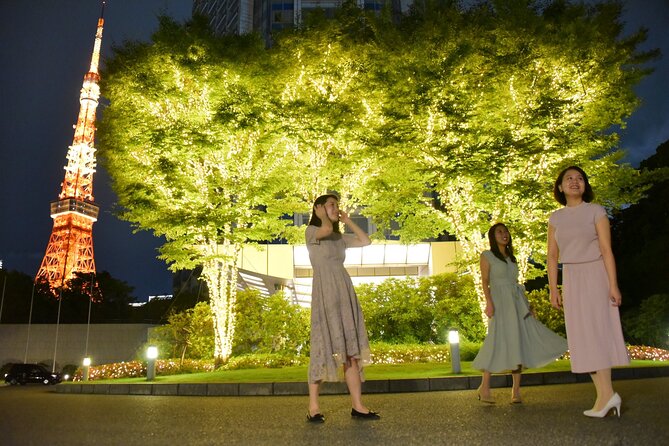
Next is Omotesando, a tree-lined avenue that changes the mood of your whole route. The listing notes that in winter, Omotesando has illuminations every year. Even if you are not going in winter, the idea of a calmer, greener-looking night street works well between the big downtown hubs.
Then you roll into Shibuya, Tokyo’s famous busy district and home to the legendary Shibuya Scramble. This is where neon advertisements and giant screens take over the visual field. The stop is designed for getting the crossing experience without needing you to solve transit routes or hunt for the best camera angle alone.
Here is a practical mindset shift: Shibuya is less about slow wandering and more about catching the moment. The sidewalks are filled, the screens change, and the traffic light rhythm matters. With a short stop, you focus on timing your shots and letting the energy do the work.
If you are going for photos, your best move is to decide quickly what you want:
- Wide shot showing the crossing and screens
- Closer shot that emphasizes people flow
- A calm photo with a clean line through the signage
Your guide can usually help you find a convenient parking point and a spot to stand, which saves you the stress of chasing the perfect angle.
Shinjuku: Golden Gai style alleys and big 3D signs
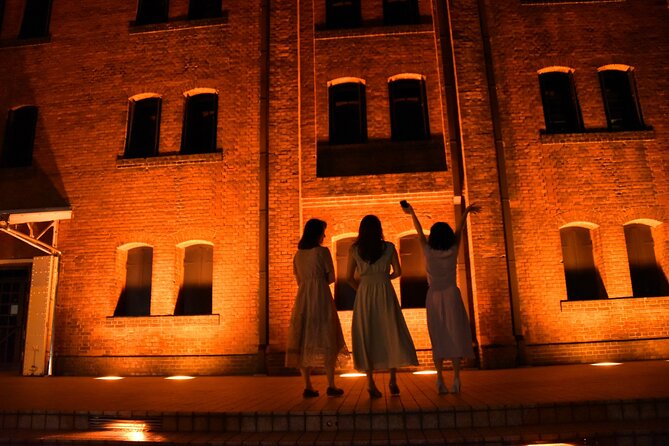
Finally, you end in Shinjuku, one of the busiest districts in Tokyo. The itinerary highlights the lights around Kabukicho and Golden Gai, plus the chance to take photos in Golden Gai’s tight lanes packed with tiny bars. Even if you do not step inside, looking at these streets at night gives you a feel for a side of Tokyo that is more intimate than the huge intersections.
Shinjuku is also where you will notice the larger-than-life visuals, including giant 3D signs called out in the itinerary. That matters if you are traveling with a camera or phone. The district is designed for night photography, and your short stop time is long enough to grab a few strong images.
If you want the most from the last stop, plan one thing before you arrive: pick one must-have photo subject. You can always take more, but you do not want to spend the final minutes still debating locations.
Guide and driver style: where the night can win or flop
This tour lives or dies by your guide and driver. And the strong rating trend makes sense based on the specific details that repeat.
Across guide examples like Zu, Kana, Babu, Douglas, Roberto, Richie, Shogo, Soya, Ellie, and Takumi, the same themes show up:
- Prompt, clear communication ahead of time
- Comfortable, clean vehicles
- Flexible routing when you want to adjust stops
- Extra attention to photo timing and viewpoints
- A friendly, safe driving approach
A few examples are especially useful for your expectations. Some guides have been described as helping organize dinner plans or even making dinner reservations. Others have sent an itinerary in advance so you can tailor the route to the season. Some drivers focus hard on photo perspectives that most people would not find alone, including what one guide called secret photo angles.
If you want this to feel personal, send a message with your priorities before you meet. For example:
- Are you more into skyline photos or street-level neon?
- Do you want Tokyo Tower just for the view, or are you considering going in?
- Is your group more comfortable with short photo stops or fewer stops with longer time?
The private format makes these questions matter.
Price and value: when $496 per group can feel fair
The price is listed as $496.17 per group, up to 9 people. For a private night tour, that is a reasonable range, especially because you are paying for more than sightseeing. You are paying for transportation, someone to drive and manage the photo-stop timing, and a route that covers multiple Tokyo highlights in one outing.
Here is how to judge the value for your group:
- If you are 2 people, you are paying for a private van that you would otherwise need multiple taxi rides or a lot of walking to replicate.
- If you are 4 to 9 people, the cost spreads out and often feels more like a group activity than a premium add-on.
- If you are short on time and want a first-night orientation, the tour can save you time later. You get a sense of where each district fits into your Tokyo map.
That said, this is not a slow, in-depth museum day. It is a night drive with stops. If you crave long walks and long visits, you might want to plan additional standalone time in the neighborhoods you like most.
Practical tips that make the lights tour easier
A few practical things help your night go smoother.
Dress for temperature swings. Even in Tokyo, the bay area can cool down fast. A warm layer helps, especially if you will be outside for photos.
Keep your phone camera ready. Many stops are short. If you wait until you are already out of the van to adjust settings, you will lose prime moments.
Think about Tokyo Tower admissions in advance. Tokyo Tower’s admission is not included. That means you should decide early if you want to budget for it, or if you are going to stick to the outside photo stop.
Be ready for traffic realities. Tokyo roadways and pedestrian crossings are busy at night. The tour still feels efficient, but it is smart to treat the evening as a photo plan, not a precise minute-by-minute guarantee.
Ask for your photo focus. Guides who are strong at viewpoints tend to make the whole tour feel worth it. Tell them what your group wants to capture.
Should you book this private Tokyo night tour?
I would book it if you want a single, well-paced way to see a lot of Tokyo highlights after dark. It’s especially good for couples who want an atmospheric photo loop, for first-timers who want orientation fast, and for families or small groups who prefer a private van over public transit juggling at night.
Skip it or rethink it if:
- You hate short stops and would rather spend longer in fewer places
- You are only interested in one attraction and can cover it independently
- Your group is sensitive to cold night breezes around waterfront areas
If you do book, message your guide with your top 2 priorities and one realistic budget decision, like whether Tokyo Tower is photo-only or admission included. With that, this tour is the kind of night that gives you great photos and a clearer sense of where to explore next.
FAQ
How long is the Private Tokyo Night Tour?
It runs for about 3 to 4 hours.
What does it cost, and how big is the group?
The price is $496.17 per group, up to 9 people.
Does the tour offer pickup, and do I get a ticket on my phone?
Pickup is offered, and you receive a mobile ticket.
Is this tour private for just my group?
Yes. It is a private tour/activity, and only your group participates.
Are admission tickets included for all stops?
Rainbow Bridge, Ginza, Tokyo Central Railway Station, Daiba, Roppongi, Omotesando, Shibuya, and Shinjuku are listed as admission ticket free. Tokyo Tower is listed as admission ticket not included.
When does the tour run?
The schedule varies by date range. In many periods it runs from about 6:00 PM to 10:00 PM, and in other periods it runs from about 6:00 PM to 7:00 PM or from about 4:00 PM to 7:00 PM.
Is there free cancellation, and does weather affect it?
Yes, there is free cancellation. You can cancel up to 24 hours in advance for a full refund, and the experience requires good weather, with a different date or full refund offered if canceled due to poor weather.
More Private Tours in Tokyo
More Tours in Tokyo




More Tour Reviews in Tokyo


Not for you? Here's more nearby things to do in Tokyo we have reviewed












Tokyo City Tours, side by side.
 ★ 5.01-Day Tokyo Bus TourFrom $12914,250 reviews
 ★ 4.5TOKYO SKYTREE® Admission ticketFrom $1311,192 reviews
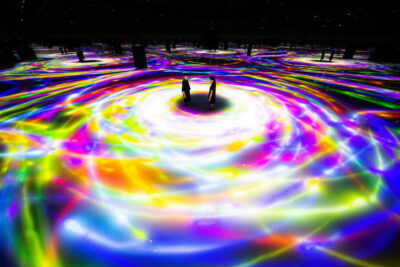 ★ 4.6teamLab Planets TOKYO Digital Art Museum Entry TicketFrom $259,779 reviews
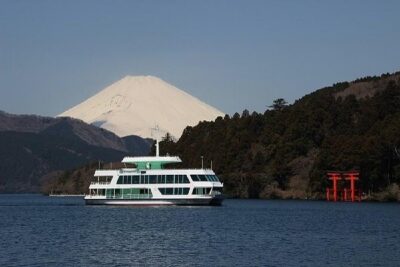 ★ 4.0Mt Fuji & Hakone Cruise, Drum Show Bullet Train 1 Day from TokyoFrom $1497,413 reviews
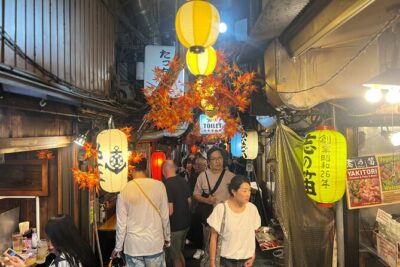 ★ 5.0Shinjuku Food Tour (13 Dishes at 4 Local Eateries)From $866,603 reviews
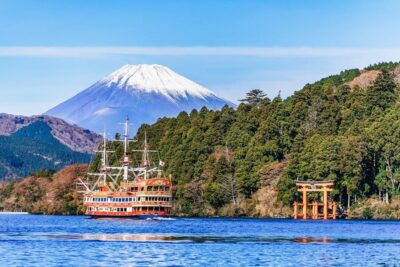 ★ 4.4Tokyo Mt Fuji 5th St & Hakone Cruise Bus Tour w/Bullet TrainFrom $1545,024 reviews
 ★ 5.0Flagship 2-Hours Official Street Go-Kart Tour – Tokyo Bay ShopFrom $644,974 reviews
 ★ 4.5From Tokyo: Mount Fuji Full-Day Sightseeing TripFrom $684,970 reviews
This tour also belongs to