
Review · TOKYO SUMO EXPERIENCES
Sumo Training Watching Experience in Tokyo
Sumo training is the opposite of a spectator show. It is real, serious practice by active wrestlers, and you see it from unusually near ground level. I love how close you feel the heat and sound, and I like that the guide uses live commentary with simple visuals to help you follow what you are watching. One thing to consider: you sit on the floor on cushions, and the stable follows strict etiquette, so you will need to plan for quiet, no eating, and careful phone use.
This is a sacred national sport, not a comedy stunt. You will meet, walk to the stable, watch stretching and training for about an hour and a half to two hours, and then (if timing allows) you may take photos with wrestlers afterward. The group stays small, so the atmosphere feels focused rather than rushed.
Key Points Before You Go
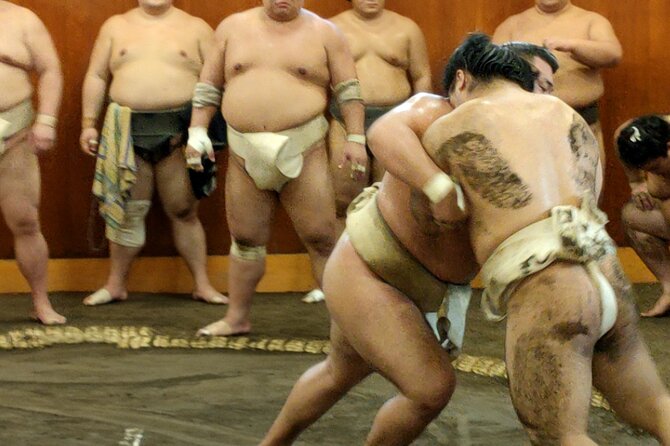
- Real wrestlers in real training: You are watching active sumo practice, not a staged performance.
- Close viewing distance: The stable setup brings you much nearer to the action than match day.
- Live guidance with visuals: You get commentary using prepared materials that make the steps easier to understand.
- Four training phases: Stretching and strength, basics, match-style practice, then photo time.
- Small group size: Maximum 8 travelers helps keep the experience calm and orderly.
Why Sumo Training Feels Different Than Match Day
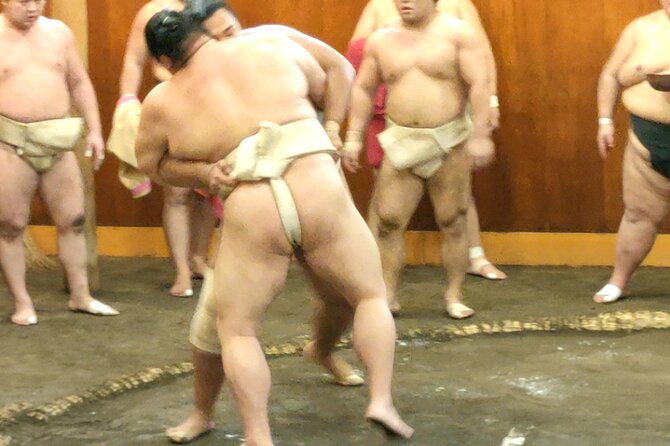
Sumo matches are fast, loud, and full of big spectacle. Training is slower, more technical, and frankly more human. You notice details you never catch from a distance, like how athletes warm up, how they build strength, and how they repeat movements until form is second nature.
What makes this experience special is the access. You are not waiting behind a wall in a huge arena. You sit on the floor in the stable and watch with your senses turned on. That means you can hear the effort, feel the intensity, and understand why people treat sumo like something deeper than sport.
Also, sumo is sacred here. The stable has rules because the space is meant to be respected. If you follow them, you get a much more authentic experience than you would from a casual, walk-in event.
You can also read our reviews of more tours and experiences in Tokyo.



Timing, Walk, and the Ryogoku Meeting Point
Your day starts at Ryogoku Station 1-chōme, 4-29 Yokoami in Sumida City. The good news is it is near public transportation. The practical catch is that the meeting point is not the main JR station area you might expect, and you still need a short walk to the stable.
Plan on about a 10 to 15 minute walk from the meeting point to the stable. It is not hard, but you should leave extra time so you are not rushing in Japanese winter clothing, summer heat, or both.
The tour is about 2 hours 20 minutes on paper, but the actual practice time depends on your arrival. The program is structured so everyone experiences training even if they start at a later point.
What Happens During Practice: Stretch, Basics, and Match-Style Work
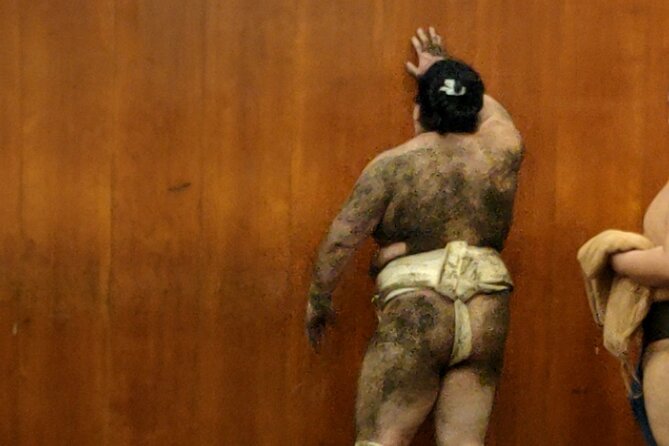
The training session is broken into clear phases, so you are not just watching random drills. You will move through:
1) Stretching and strength training
This is where wrestlers get their bodies ready. You will see warm-up movements that look simple but are clearly part of getting limber and strong enough for what comes next.
2) Basic training
This is the core skill work. You will notice repeated techniques that build the fundamentals of balance, timing, and hand and foot positioning.
3) Match-style training
This is the part most people are waiting for. Practice here starts to look more like a contest, so you hear more friction, impact, and intensity. You will feel the difference between skill drills and this more combative practice.
4) Photo time with the wrestlers
After training, there is a chance to take photos. The exact timing can depend on how smoothly the session runs, but photo time is part of the program.
Arrival timing changes your order. If you arrive at 7:45, you should experience the full flow. If you arrive at 8:20, you generally start with the basic training phase and the total time is shorter. Either way, you are seeing real progression, not just a quick highlight clip.
Rules Inside the Stable: Floor Seating, Silence, and No Food
Stable etiquette is not optional. It is part of why the experience works at all. You cannot expect a casual hangout.
Here are the big rules you should plan around:
- No eating or drinking inside the stable
This keeps the space clean and focused. Bring water plans for before or after, not during.
- Quiet mode on your phone
Cell phones should be silent. The tour also asks you to use a silent camera setting on your smartphone so your photos do not disturb the room.
- You will sit on the floor
This is Japanese-style seating on cushions rather than chairs. If you have bad knees, back issues, or mobility limits, you should treat this as a serious consideration. Pregnant travelers should also be cautious.
- The guide keeps talking minimal during practice
You basically watch and listen. The guide provides commentary using prepared materials, but the session itself is not built around nonstop chatting.
- Arrive on time
They leave on schedule and cannot wait for late guests. That is especially important because entry can be time-sensitive in a stable.
- Be careful with clothing
Avoid revealing clothing. If the group rules are not followed, you may be asked to go outside temporarily.
- Health matters
If you have a cold or an infectious disease on the day, you are expected to cancel. That is respectful to everyone sharing the same enclosed space.
There is also a child age rule. Children must be 6 years old or older. Even if someone is older, if they cannot sit still, participation is not allowed. That one matters a lot for families deciding whether this is a good fit.
Small Group Energy and the Photo Moment
A maximum of 8 travelers means you are not being swept through like a conveyor belt tour. You are closer to the training area and you feel the session as a contained ritual.
This is where you get one of the most practical benefits of a small group: less crowd noise and fewer interruptions. You can actually pay attention to what is happening, and the guide can manage the room calmly.
Photo time is a bonus, not the main event. The core value is the training itself. Still, it helps to know that the stable allows photos with the wrestlers after the event at times, based on how things go.
Also, expect that the stable has an orderly feel. The room is likely to reward people who are respectful and ready to follow instructions quickly.



Price and Value: Is $84.70 Worth It?
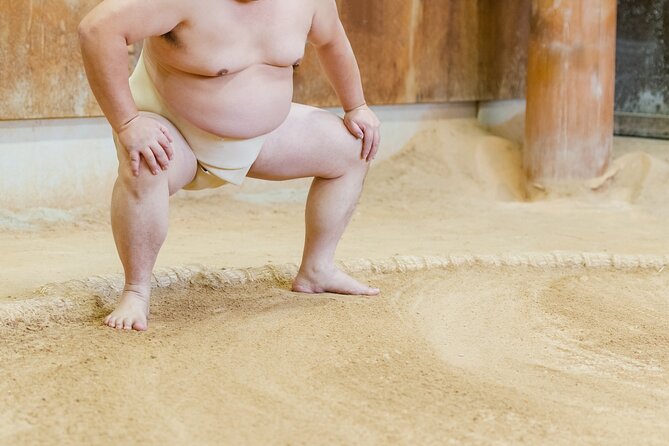
At $84.70 per person, this is not a bargain-basement activity. But the value comes from access and proximity.
You are paying for:
- Real active wrestlers training close by
- A guided session with live commentary and visuals
- Small group size and a smooth, structured program
- An experience you cannot easily DIY because stable access is limited and difficult even for locals
The other value angle is time. Even though the session can run about 2 hours 20 minutes at the longest, you are not spending most of your day in transit or waiting around. It is a concentrated experience.
One more planning tip: it is commonly booked about 77 days in advance on average. If you care about a specific morning slot, book early so you have choices.
Who Should Book This Sumo Training Session
This works best if you want the real thing. If your goal is to watch sumo as a serious sport with technique and effort behind it, you are in the right place.
I think it fits particularly well for:
- People who already like sumo and want to understand training routines, not just match results
- Japan first-timers who want one authentic, local-style access moment
- Photo-takers who want a chance at photos, but still value the training more than the snapshot
It might be a tough fit if:
- You need chairs or cannot comfortably sit on the floor for the session length
- You are going with small kids who cannot handle quiet instructions and stillness
- You are hoping for a loud comedy-show vibe, because this is solemn training
Should You Book Sumo Training Watching in Tokyo?
Book it if you want one of Tokyo’s most respectful, hands-on sports experiences and you are willing to follow stable rules. The best part is that you see sumo as training, not only as competition, and the close proximity makes it feel real in a way that a big arena rarely does.
Skip or reconsider if floor seating is a deal-breaker for you, if your group cannot handle quiet phone policies and etiquette, or if you want a casual experience with lots of breaks and snacks. This tour is straightforward and disciplined. That is the point.
If you do book, show up early for the meeting point walk, set your phone up before you arrive, and plan your comfort for sitting on cushions. Do that, and you will get a memorable view of how serious sumo really is.
FAQ
Where is the meeting point for the Sumo training watch?
You meet at Ryogoku Sta. 1-chōme-4-29 Yokoami, Sumida City, Tokyo 130-0015, Japan, and the activity ends back at the meeting point.
How long is the walk from the meeting point to the stable?
From the meeting station area, it is about a 10 minute walk to the sumo stable.
How long does the experience last?
The duration is approximately 2 hours 20 minutes. The program length can vary depending on your arrival time, including shorter sessions if you arrive later.
What is the training schedule like during the visit?
The program includes stretching and strength training, basic training, match-style training, and take photos after practice.
Are there rules about food, phones, or behavior in the stable?
Yes. You cannot eat or drink in the stable. Your cell phone should be set to silent mode, and you should use a silent camera setting for photos. You should also follow stable etiquette, including avoiding revealing clothing.
Can kids participate?
Children must be 6 years old or older. Also, children over 8 who cannot sit still are not allowed.
Can I get a refund if I cancel?
Yes. You can cancel for a full refund if you cancel at least 24 hours before the experience start time. If you cancel less than 24 hours before, the amount paid is not refunded.
More Tour Reviews in Tokyo
Not for you? Here's more nearby things to do in Tokyo we have reviewed












Tokyo Sumo Experiences, side by side.
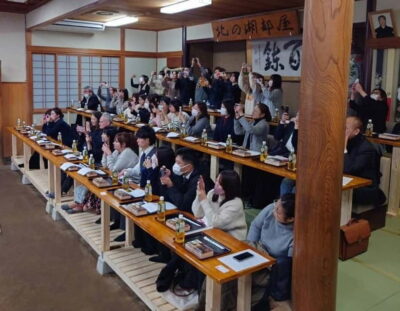 ★ 4.8Sumo Show and Dining ExperienceFrom $792,742 reviews
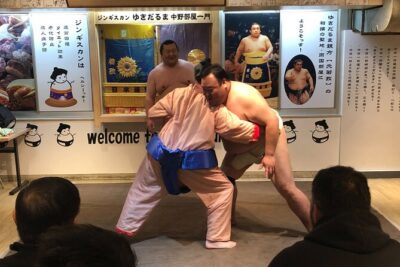 ★ 5.0the SUMO showFrom $891,960 reviews
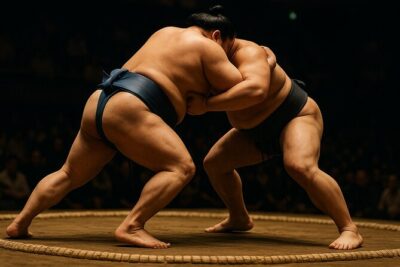 ★ 5.0Tokyo Shinjuku Sumo Show & Experience with PhotoFrom $791,750 reviews
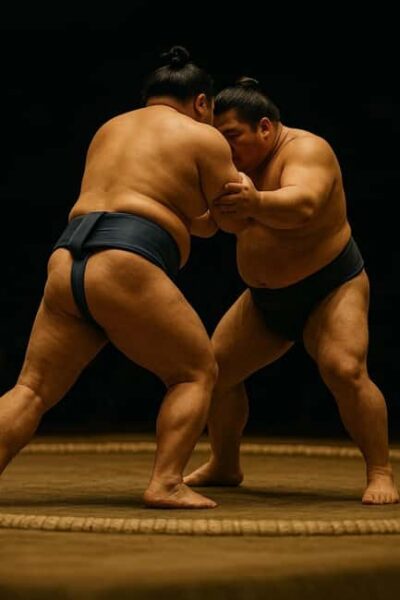 ★ 4.8Sumo Show and Experience in ShinjukuFrom $691,001 reviews
 ★ 4.7Luxury Sumo Show Experience & Japanese cuisine & DrinkFrom $103577 reviews
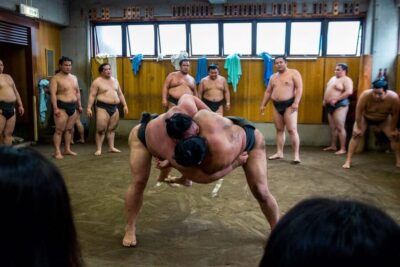 ★ 4.8Sumo Morning Practice Viewing TourFrom $81570 reviews
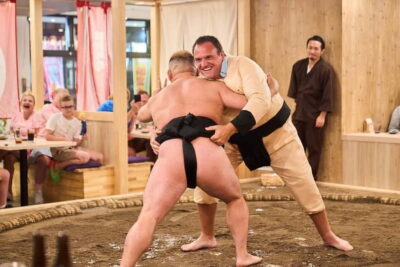 ★ 4.8Tokyo Sumo Experience: Chanko & Mochi with a Former ProFrom $103567 reviews
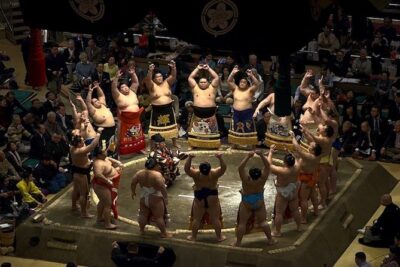 ★ 5.0Ultimate Sumo Tournament: Tokyo, Osaka, Nagoya, FukuokaFrom $184468 reviews
This tour also belongs to