
Review · TOKYO SUMO EXPERIENCES
Complete Sumo Experience in Tokyo
Sumo gets personal, fast. This two-hour experience lets you see a traditional sumo stable and follow training and matches up close, with a crash course before the action.
I love that you get both education and interaction, not just sitting and watching. The expert-led sumo crash course and the chance to ask questions and even challenge wrestlers make the whole thing feel like you are getting an insider view of the sport.
One possible drawback to consider is timing. The interactive parts, including audience participation, can run a bit long, so if you prefer a straight, quiet viewing experience, you might want to mentally plan for that.
Key Highlights You Should Care About
- A traditional heya setting, not an arena, so you get a close view of how sumo life works
- Training, matches, Q&A, and photo time all included with the wrestlers
- Challenge the wrestlers (part of the fun, even if it is brief)
- Two meal options: chanko-nabe included at 11AM or 7PM, training-only at 3PM
- Small group size, with a maximum of 30 people and a mobile ticket
A Two-Hour Window Into Real Sumo at Kita no Umi He ya
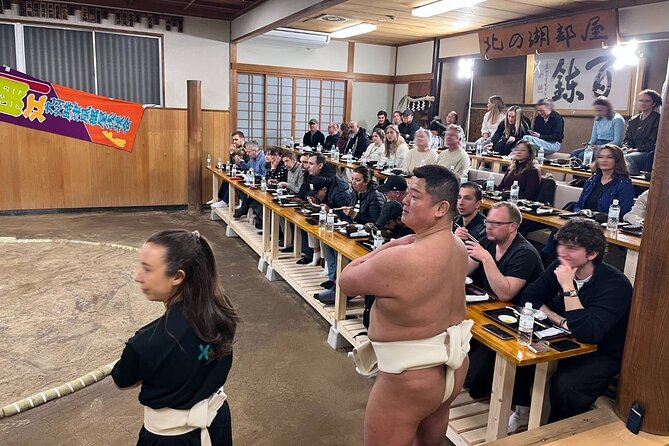
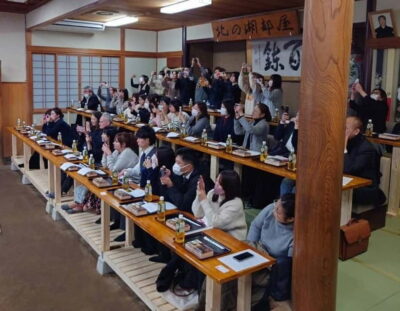
This isn’t sumo as a distant spectacle. It is sumo in a working stable, where you can see the space itself, watch wrestlers train, and understand the culture behind all those rituals. The meeting point is listed at 2-chōme 10-11 Kiyosumi in Koto City, at 北の湖部屋, which is Kita no Umi heya. End point is back at the same meeting spot.
The tone here feels grounded and practical. You start with a crash course in sumo, then you move into watching training and matches, with built-in time for Q&A and photos. Since the group is capped at 30, you are not trying to squeeze your way through a packed stadium atmosphere. You can actually focus on what is happening.
If your goal is to get beyond the basics and learn how sumo works day to day, this format fits well. You get context before the action, and then you can follow up with questions while you are still in the moment.
You can also read our reviews of more tours and experiences in Tokyo.



Your Session Choice: Chanko-nabe at 11AM or 7PM, Training-Only at 3PM
One of the simplest decisions you will make is food versus no food. There are two options, and they line up with different start times:
- With a chanko-nabe meal: the show runs with chanko-nabe at 11AM and 7PM
- Without a chanko-nabe meal: the training and matches option starts at 3PM
Chanko-nabe is the stable meal sumo wrestlers traditionally eat for building muscle, so it is not a random extra. It is part of the sumo story. If you want the full cultural picture, choosing a meal time is an easy win.
If you prefer to travel light or you just want a clean, focused session with no meal involved, the 3PM option is your path. It is also a good fit if you are pairing this with other plans later that day.
What You Actually Do During the Tour, From Crash Course to Photos
The tour runs about 2 hours, and the flow is clear. Here is how to think about it, so you know where your attention should go.
First comes the crash course. This is where you learn the origin, history, and culture of sumo, and where you get the fundamentals of what you are about to see. This step matters more than you might think. If you show up only knowing the surface, it is easy to miss the small details of technique, structure, and strategy.
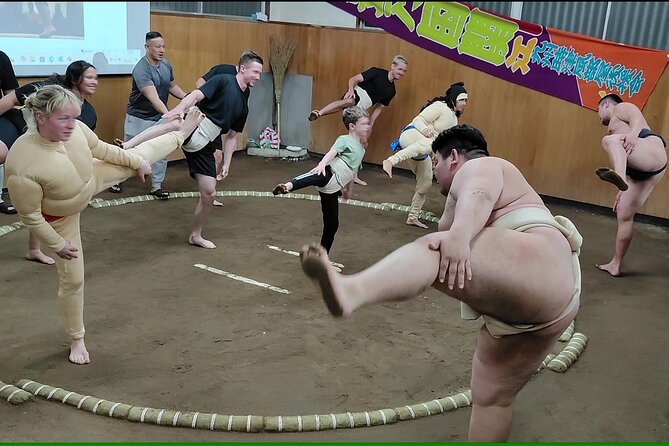
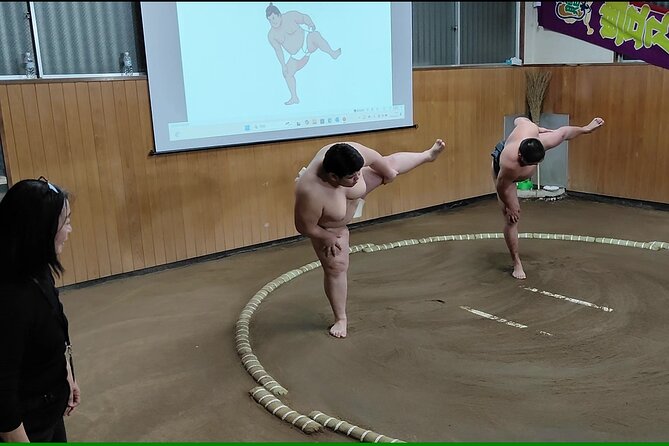
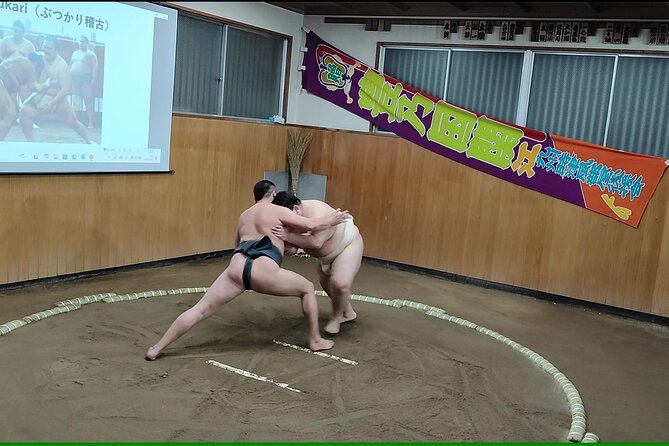
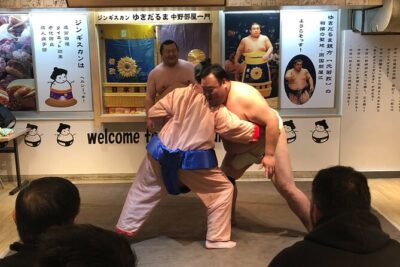
Next, you move into the core viewing portion: training and matches by sumo wrestlers. This is the closest version of sumo most visitors can manage in Tokyo. Instead of watching from far away, you can observe body positioning and the physical rhythm of practice. You are also learning as you watch, because the explanations are happening alongside what you see.
Then comes the interaction. You get a Q&A session with sumo wrestlers. This is your chance to ask questions and get answers straight from the people living the sport every day. It also helps the earlier crash course click into place, because your questions tend to reveal what you still did not understand.
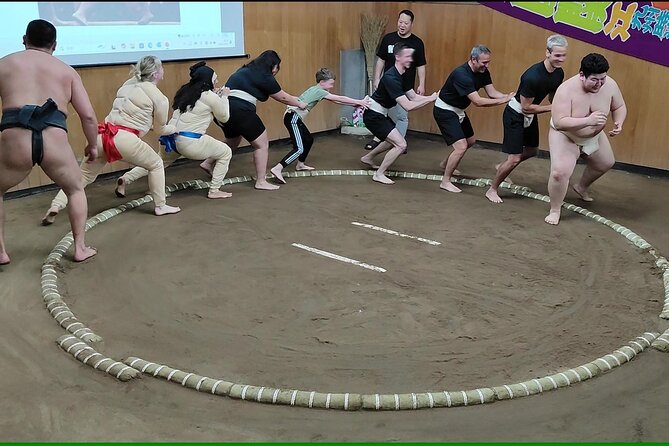
Finally, there is photo time, and the tour also includes the unusual highlight: you can challenge wrestlers. That does not turn the experience into a full sparring match. It is more like a structured participation moment that helps you understand how the sport feels, even if you are just stepping into the ring area for a brief attempt.
If you care about getting the most out of the photos and challenges, aim to stay engaged during the earlier segments. When you are mentally ready, you get more from the moment, not just the picture.
The Best Part: Challenging Wrestlers and Asking Real Questions
The thing I like most about this experience is that it is not passive. You do not just watch. You participate.
Challenging a wrestler gives you an immediate reality check about strength, balance, and how quickly things can shift. Even if your challenge is short, it is a huge difference from reading about sumo technique online. You can also think about what you saw during training, because now you are trying to connect it to your own body position and reactions.
The Q&A part is equally valuable. A lot of visitors go to sumo with only broad questions. Here, you can ask specific ones tied to what you are watching in the stable setting, like what certain techniques mean or how training is structured. Since the tour includes a guided crash course, you will likely be able to ask sharper questions than you could on your own.
One practical tip: if the group is moving quickly, jot down questions while the crash course is happening. When Q&A starts, you can ask without scrambling.
Food, Seating, and How to Make the Most of Your Time
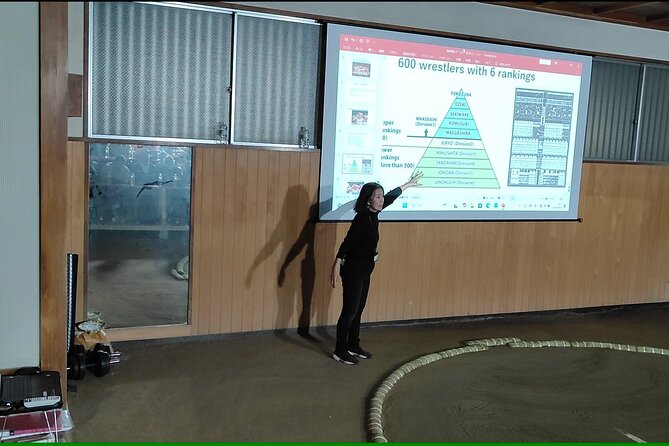
If you book the chanko-nabe option, the meal is built into the experience. You watch the show over chanko-nabe, which means the meal is not a separate add-on you rush through. It is part of the pace and the stable atmosphere.
From a comfort standpoint, the biggest advantage of going with the meal time is psychological. You settle in. You are not thinking about when to eat. Instead, you treat it like part of the cultural schedule.
If you want the best viewing angle, show up early. A strong tip from the experience is to arrive early for the best seat. With a maximum group size of 30, earlier arrival can matter for where you stand or sit during the viewing and participation segments.
Also, keep in mind that some audience participation can stretch out. This is not necessarily a bad thing, but it does affect how the time feels. If you are the type who wants a calm, uninterrupted view the whole way, pick your expectation accordingly.



Price in Context: Is $138.52 Worth It?
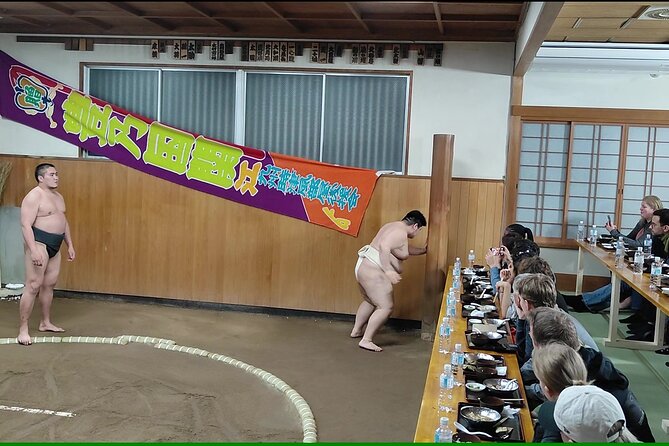
At $138.52 per person, this is not the cheapest sumo experience in Tokyo. But the value is in what is included.
You are paying for more than watching matches. The ticket covers:
- a crash course from an expert
- training and matches with sumo wrestlers
- a Q&A session
- photo sessions
- the chance to challenge wrestlers
- a mobile ticket for easier entry
Compare that to typical options where you mainly watch from a distance. Here, your time with the wrestlers is structured, and your role is more active. That is why it can feel like money well spent for the right person.
It is also helpful that the average booking timing is about 57 days in advance. That suggests demand is steady. If you know you want this, do not wait until the last minute, especially around busy travel seasons.
Logistics That Matter: Getting There and Staying Comfortable
This tour does not include hotel pickup or drop-off. You meet at the stable address in Kiyosumi, Tokyo, and you end back at the meeting point.
The good news: it is listed as near public transportation. So you do not need a car or complicated routing. Still, plan for a little buffer time, because you want to be early for the best seat.
The experience uses a mobile ticket, which is usually easier than printed vouchers. Just make sure your phone battery is charged.
Because it is about two hours, it is also manageable as a half-day anchor. You can fit it into your Tokyo plan without feeling like you are stuck all day.
Who Should Book This Sumo Experience?
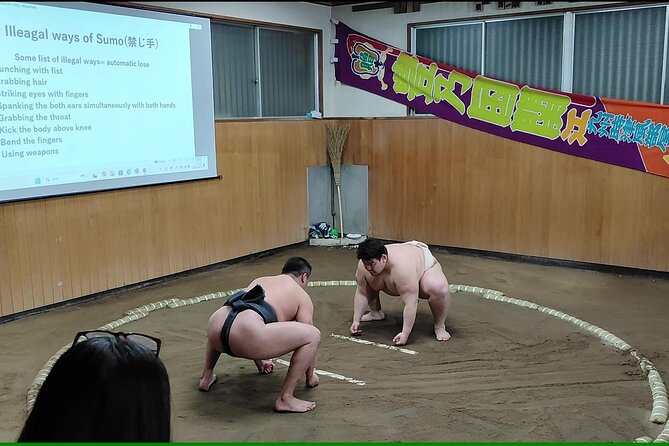
I think this tour is a strong match for you if you want:
- a close-up view of sumo life in a real stable setting
- education before the matches, so you can actually understand what you are seeing
- time for Q&A and photos with wrestlers
- a participation moment, including the chance to challenge wrestlers
It is also great for people who do not want to choose between watching sumo and learning about sumo. Traditionally, those are two different activities. This tour combines both, and adds direct interaction.
If you are traveling with a group that wants something memorable and different, the small group size helps the atmosphere feel more human, not like a factory line.
If you strongly prefer quiet observation and minimal crowd involvement, consider that audience participation can run longer than you expect. In that case, you might still enjoy it, but you will want the right expectation going in.
Should You Book It in Tokyo?
Here is my honest take: book it if you want sumo with people, not just sumo from seats. The value comes from the full package, crash course plus training and matches, then Q&A, photo time, and the unique challenge moment. The chanko-nabe option also adds a real cultural element, not just a snack.
Skip it or think twice if your ideal activity is a calm, strictly observational show with no participation. The interactive part is part of the design, and it can stretch.
If you can manage that, this is one of those experiences where you leave with both better understanding and better stories, because you actually interacted with the sport up close.
FAQ
How long is the Complete Sumo Experience in Tokyo?
The experience runs for approximately 2 hours.
What is included in the tour?
It includes a crash course in sumo by an expert, training and matches by sumo wrestlers, a Q&A session with sumo wrestlers, and photo sessions with sumo wrestlers.
Can I challenge the wrestlers?
Yes. The experience includes challenging sumo wrestlers.
Are photos with the wrestlers included?
Yes. Photo sessions with sumo wrestlers are included.
Is there a chanko-nabe meal?
There are two options: with a chanko-nabe meal, or without a chanko-nabe meal. The meal option is available for 11AM and 7PM starts.
What time is the option without chanko-nabe?
The without meal option is available at a 3PM start time.
Where does the tour start?
It starts at Japan, 135-0024 Tokyo, Koto City, Kiyosumi, 2-chōme 10-11 北の湖部屋.
Is hotel pickup or drop-off included?
No. Hotel pickup and drop-off are not included.
How big is the group?
The tour has a maximum of 30 travelers.
What is the cancellation policy?
Free cancellation is available up to 24 hours in advance for a full refund. Cancel at least 24 hours before the start time based on local time for a refund.
More Tour Reviews in Tokyo
Not for you? Here's more nearby things to do in Tokyo we have reviewed












Tokyo Sumo Experiences, side by side.
 ★ 4.8Sumo Show and Dining ExperienceFrom $792,742 reviews
 ★ 5.0the SUMO showFrom $891,960 reviews
 ★ 5.0Tokyo Shinjuku Sumo Show & Experience with PhotoFrom $791,750 reviews
 ★ 4.8Sumo Show and Experience in ShinjukuFrom $691,001 reviews
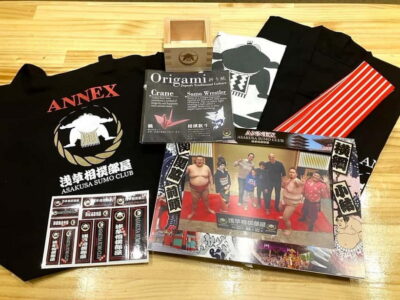 ★ 4.7Luxury Sumo Show Experience & Japanese cuisine & DrinkFrom $103577 reviews
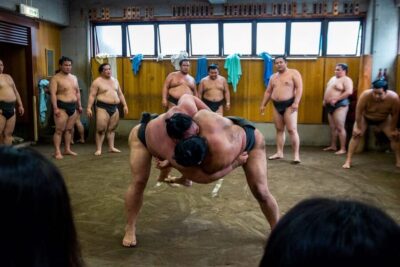 ★ 4.8Sumo Morning Practice Viewing TourFrom $81570 reviews
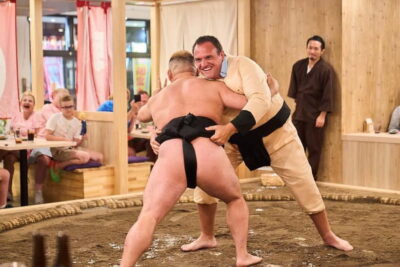 ★ 4.8Tokyo Sumo Experience: Chanko & Mochi with a Former ProFrom $103567 reviews
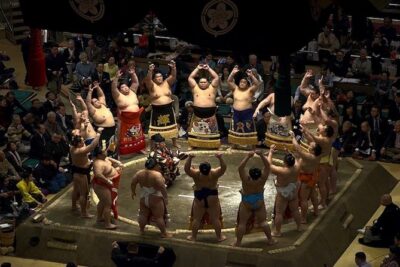 ★ 5.0Ultimate Sumo Tournament: Tokyo, Osaka, Nagoya, FukuokaFrom $184468 reviews
This tour also belongs to