
Review · TOKYO CITY TOURS
Discover the Art of Ikebana in Tokyo’s Historic Yanaka District
Flowers plus old Tokyo streets, that’s the magic. In the historic Yanaka district, you pick seasonal flowers in a neighborhood shop, then learn Ikebana step-by-step with an Ikebana master and an English-speaking assistant. It is part art class, part local walk, with a calm pace that fits the side of Tokyo most people miss.
What I like most is the mix of doing and seeing. You are not only studying arrangements, you are also in the flow of Yanaka, from Yanaka Ginza Shopping Street to Nezu Shrine and Yuyake Dandan. And I also love that the workshop feels close-up and hands-on, with instruction tailored to what your group wants to make.
One consideration: you need cash for the flowers. Plan on bringing about ¥1,000 in cash (and often a bit more is helpful), and the experience requires good weather since it includes neighborhood walking.
Key highlights to know before you go
- Pick your own flowers in Yanaka at a nearby shop, supporting local businesses as you choose.
- Hands-on guidance from an Ikebana master with an English-speaking assistant to keep it clear.
- Private group feel where you can focus, ask questions, and work at a comfortable pace.
- Yanaka photo opportunities while you move through classic street scenes and landmarks.
- Mindful, seasonal thinking in Ikebana, not just a step-by-step craft routine.
Why Yanaka makes this Ikebana class feel different
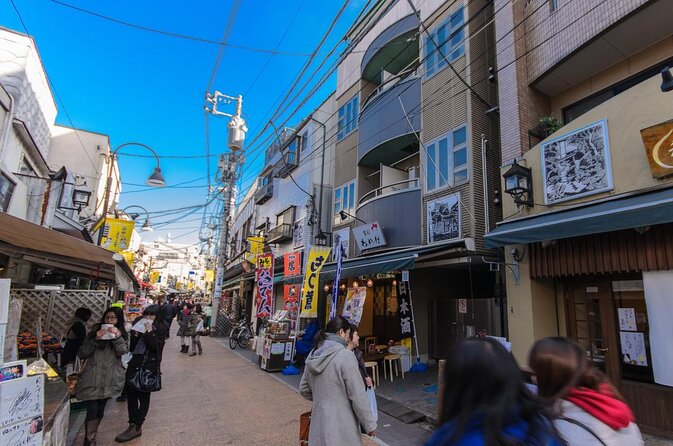
Yanaka is one of those Tokyo areas that feels human sized, where you notice details instead of just rushing to the next station. For this experience, the neighborhood is not background noise. It becomes part of the lesson, because your flowers are chosen locally and your walk threads together daily life with cultural stops.
Ikebana, Japanese flower arrangement, is often described as art, but in practice it feels more like quiet attention. You are learning how to shape a simple arrangement so it looks balanced in space, not just pretty on a table. The Yanaka setting helps that sink in. Even the pace of the class supports it, with time built in for both walking and making.
This tour also leans into a simple idea I really appreciate: culture is easier to grasp when you meet the people who keep it going. You may cross paths with locals around the flower selection and during your neighborhood stops. That kind of everyday interaction does not replace the teaching, it makes the teaching feel real.
You can also read our reviews of more historical tours in Tokyo

Your Yanaka route: Ginza street, cemetery, Nezu Shrine, Yuyake Dandan
You start at YANESEN Tourist Information & Culture Center in Yanaka (3-chōme-13-7, Taito City). From there, the day moves like a gentle tour of old Tokyo textures, with short segments that help you stay oriented. Then you return back to the meeting point to wrap up.
One thing to plan for: it is not a bus-and-museum day. The experience includes walking, and you also spend meaningful time making the arrangement. On hot days, you will likely feel the benefit of having the workshop indoors, but the route means you should bring what you normally need for sun, water, and comfort.
Stop 1: Yanaka Ginza Shopping Street
Yanaka Ginza Shopping Street is the classic “local main street” vibe. You get a chance to see what the neighborhood looks like in everyday terms, not just from a postcard angle. It is also a good warm-up before the workshop, because it helps you settle into Yanaka’s slower tempo.
The practical benefit is that you are building familiarity before your flower-picking moment. You are already seeing the kinds of shops and street life that make Yanaka feel lived-in. That makes the flower selection feel less like a random errand and more like part of the neighborhood rhythm.
Stop 2: Yanaka Cemetery
This is not everyone’s first pick on a Tokyo itinerary, but in Yanaka it makes sense. You will get a chance to experience a quiet, reflective stop that many visitors skip. The important part is the mood. Ikebana is about mindfulness and seasonal awareness, and a calm setting helps match the lesson.
The consideration here is physical comfort. Cemeteries often involve walking over uneven or sloped areas. If you are sensitive to that, wear shoes you trust and keep an easy pace.
Stop 3: Nezu Shrine
Nezu Shrine brings you into a more clearly marked cultural landmark moment. You are not only ticking a box, you are getting a sense of how Yanaka’s everyday life connects to places of worship and community gathering. This stop helps you understand the context in which people might find meanings in seasonal changes and rituals.
If you like photos, this is usually the kind of spot where lighting and details work well, because the area has texture in the streets and shrine grounds. Just keep your time realistic, since you still have a workshop where your hands will be doing most of the work later.






Stop 4: Yuyake Dandan
Yuyake Dandan is all about a specific Yanaka feel: viewpoints and street charm with a light sense of discovery. It is a good “walking crescendo” before the class wraps or after you have built up your neighborhood curiosity.
The practical side is simple, it is still part of the walking route. If it is humid or warm, plan to take it slow and hydrate. The upside is that a place like Yuyake Dandan helps break up the day so the Ikebana lesson does not feel disconnected from the outside world.
Picking seasonal flowers in a local shop (the moment that sets the tone)
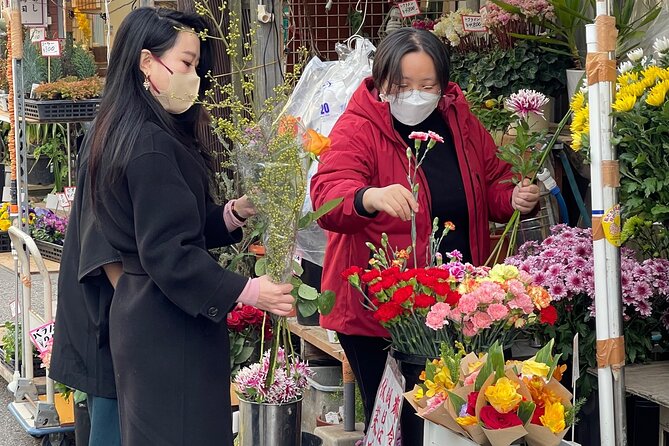
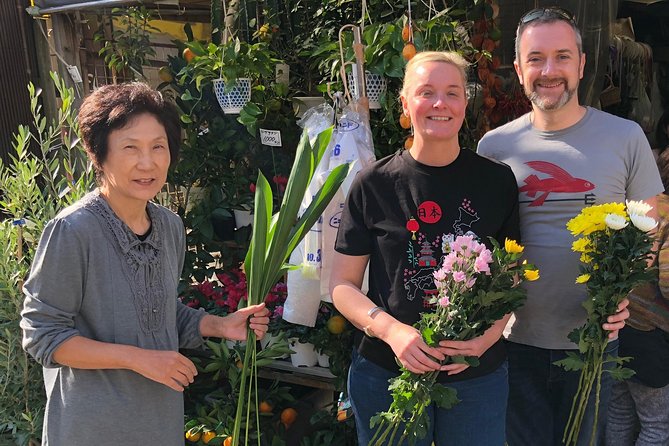
The flower shop stop is the heart of what makes this class feel authentic. You choose seasonal flowers locally, which means you are not learning with generic props. It is also a direct way to support small businesses in the neighborhood.
What you choose influences the arrangement. Even if you are new to Ikebana, selecting your materials helps you show personal preference within the structure the master teaches. That matters, because Ikebana is not only about following rules. It is about making choices that respect those rules.
Bring cash, then relax. The experience asks you to bring about ¥1,000 in cash to purchase flowers at the local shop. Some materials planning can go over that amount, and the class guidance suggests around ¥1,000 to ¥2,000 in total for fresh flowers. I recommend bringing a bit more than the minimum you feel comfortable with, so you do not feel rushed when you are staring at beautiful stems.
If you worry about not knowing what you like, do not. You can point with curiosity, ask which flowers are seasonal, and lean into whatever looks fresh. The key is that your selection becomes the story you are arranging.
Learning Ikebana with an Ikebana master and an English-speaking assistant
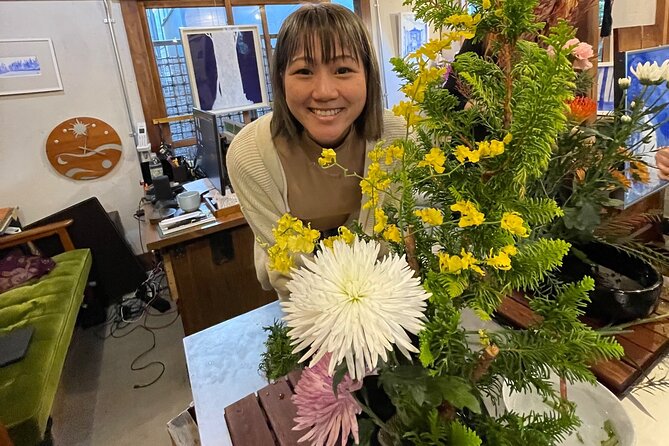
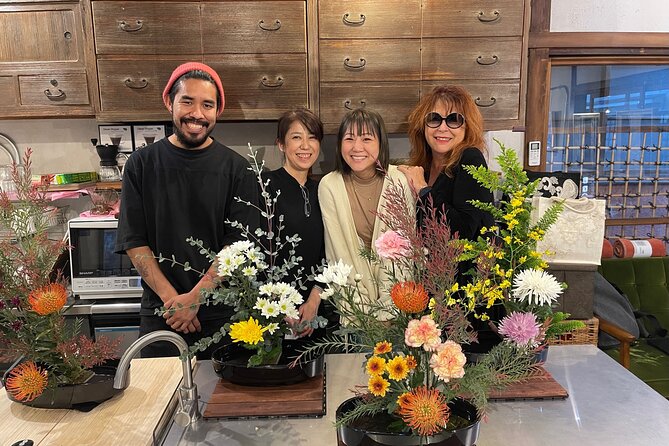
This is where the experience shines. You work under guidance of an Ikebana master, and there is an English-speaking assistant to make sure you understand the process. That combination is huge, especially if you are starting from zero.
The most praised part in the feedback is the teaching style: clear instruction without stepping on your creativity. You should expect to learn the fundamentals of how to think like Ikebana, not just how to copy a single example. And because you have support in English, you can ask questions and get direct answers instead of guessing.
You will also get time to focus. The workshop is designed as an intimate session, with just your group participating. That private feel shows up in the pacing. You are not getting shoved through steps while a crowd watches, which is exactly what you want when you are learning a careful art.
Where the class happens
The teaching space is described as being above a cafe in the neighborhood. That detail matters more than you might think. It feels like a local workshop, not a polished studio made for tourists. You will likely appreciate that atmosphere after walking around Yanaka.
What you are really learning
Ikebana has three big themes that you will feel as you work:
- Mindfulness: you slow down enough to notice line, angle, and spacing.
- Seasonal awareness: your choice of flowers and materials shapes the feel of the arrangement.
- Artistic simplicity: you create meaning with less, not more.
It is easy to think you are only learning flower arranging. You are also learning how to see. That is why people finish excited, not just impressed.
Value check: is ¥1,000 cash and $108.99 worth it?
Let’s talk money like an adult. The price is listed at $108.99 per person, for about 1 hour 30 minutes. The workshop includes the Ikebana master session and an English-speaking assistant, plus the Yanaka neighborhood experience around the class.
You also get a few value boosters:
- Private group format (only your group participates).
- Group discounts are available.
- A mobile ticket is included.
The cost you should factor in is the flower purchase at the local shop, about ¥1,000 in cash, with guidance suggesting roughly ¥1,000 to ¥2,000 depending on what you choose. That part is not optional if you want a complete arrangement, so it is best to treat it like the core material cost.
Is it still good value? For me, yes, because you are paying for instruction quality and the local connection. A basic craft class might teach you steps. This one teaches you a traditional approach with real materials you picked yourself in the neighborhood, plus support for English speakers.
If you are the type who enjoys hands-on learning, this is the sort of class that can change how you shop for flowers at home. That practical after-effect is hard to price, but it is part of the value.
Photo moments, souvenirs, and the “I can do this again” feeling
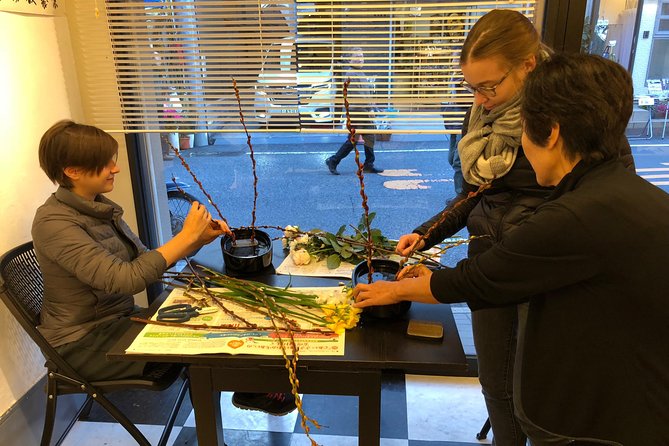
The experience explicitly encourages you to take photos of your arrangement and your Yanaka encounter. That is a nice extra, because you will likely want to remember the exact look of your finished work.
More importantly, the goal is not just a photo. Many people leave feeling equipped to try Ikebana again at home. Even if your first attempts are imperfect, you are getting a method for thinking, not just a one-time trick.
One nice touch from the feedback: the instructors are described as engaging and supportive, sometimes with special touches like formal wear in the teaching session. That kind of care usually translates into better instruction. When the teacher takes the art seriously, you tend to learn faster.
Who this suits best, and who should choose something else
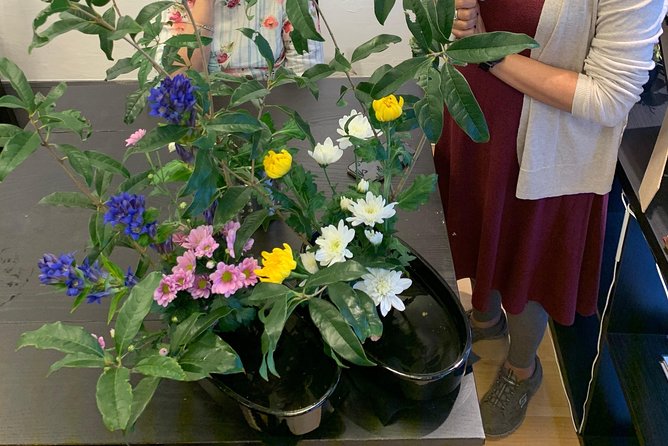
This is a great fit for you if:
- You want a calm, hands-on cultural activity rather than a fast checklist day.
- You like small-group learning and asking questions.
- You want to connect with a real neighborhood, not just a staging area.
- You are open to seasonal flowers and you enjoy choosing materials yourself.
It may be less ideal if:
- You hate walking or you have limited mobility and want a strictly indoor activity.
- You are not comfortable with cash purchases. You do need yen for the flowers.
- You are short on time. With a walking route plus a workshop, it can take more of your day than a typical one-stop class.
Also, since the experience requires good weather, keep an eye on conditions. On a hot and humid day, the workshop interior can feel like relief, but the walking segments still matter.
Quick practical tips before you book
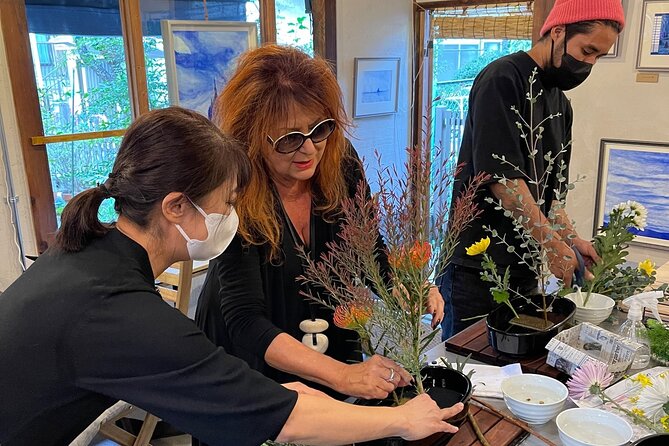
- Bring cash in yen for flowers, plan for about ¥1,000 and possibly up to ¥2,000.
- Wear comfortable shoes for the neighborhood walking.
- If your schedule is tight, build in a little breathing room. You will want time to enjoy Yanaka after the class, not sprint to your next plan.
- Take water. You may not think you need it until you are on the streets.
Should you book this Ikebana workshop in Yanaka?
I think you should book it if you want a Tokyo experience that feels personal and grounded. The combination of choosing seasonal flowers locally, learning with an Ikebana master, and walking Yanaka’s key cultural stops makes it more than a craft demo. It is a gentle way to learn a traditional art while seeing how neighborhoods actually feel.
If you only want the simplest, no-walking, no-shopping option, then you might prefer a studio class in a fixed location. But if you like the idea of matching art-making with real streets, then this is a strong choice.
And here’s my final nudge: treat the flower selection as part of the fun. When you pick the stems, you are not just buying materials. You are starting your arrangement story right then.
FAQ
What is the duration of the Ikebana experience in Yanaka?
The experience lasts about 1 hour 30 minutes.
How much should I bring in cash for the flowers?
You should bring about ¥1,000 in cash to purchase flowers at the local shop. The guidance also suggests bringing roughly ¥1,000 to ¥2,000 for fresh flowers for your final presentation.
What is included in the price?
The price includes the workshop with an Ikebana master and an English-speaking assistant.
Is this a private tour or group class?
It is a private tour or activity, so only your group participates.
Where do we meet and where does it end?
You meet at YANESEN Tourist Information & Culture Center (3-chōme-13-7 Yanaka, Taito City, Tokyo 110-0001, Japan). The activity ends back at the meeting point.
Does the experience run in any weather?
The experience requires good weather. If it is canceled due to poor weather, you will be offered a different date or a full refund.
More Historical Tours in Tokyo

More Tour Reviews in Tokyo
Not for you? Here's more nearby things to do in Tokyo we have reviewed












Tokyo City Tours, side by side.
 ★ 5.01-Day Tokyo Bus TourFrom $12914,250 reviews
 ★ 4.5TOKYO SKYTREE® Admission ticketFrom $1311,192 reviews
 ★ 4.6teamLab Planets TOKYO Digital Art Museum Entry TicketFrom $259,779 reviews
 ★ 4.0Mt Fuji & Hakone Cruise, Drum Show Bullet Train 1 Day from TokyoFrom $1497,413 reviews
 ★ 5.0Shinjuku Food Tour (13 Dishes at 4 Local Eateries)From $866,603 reviews
 ★ 4.4Tokyo Mt Fuji 5th St & Hakone Cruise Bus Tour w/Bullet TrainFrom $1545,024 reviews
 ★ 5.0Flagship 2-Hours Official Street Go-Kart Tour – Tokyo Bay ShopFrom $644,974 reviews
 ★ 4.5From Tokyo: Mount Fuji Full-Day Sightseeing TripFrom $684,970 reviews
This tour also belongs to