
Review · TOKYO SUMO EXPERIENCES
Experience the Sumo World in Tokyo
Sumo training is louder than you expect. This Tokyo sumo stable tour gives you a front-row view of practice that most people never see, plus time to interact and take photos at the end. I especially like the practical structure, you meet at Ueno Station and then the day flows with guides handling the tricky parts. And the lunch is not an afterthought, you get a proper chanko nabe-style meal, with vegetarian options if you request them ahead.
The main drawback to plan around is timing. The tour starts early at 7:45 AM, and it can involve trains to the stable area, so you’ll want to be on time and ready. Also, communication can matter more than you expect, because this operator has used mobile chat updates, so if you miss those, you could end up stressed (or late).
Key highlights you’ll care about
- Exclusive training-stable access in Asahiyama beya (朝日山部屋) with comfortable chair seating right by the action
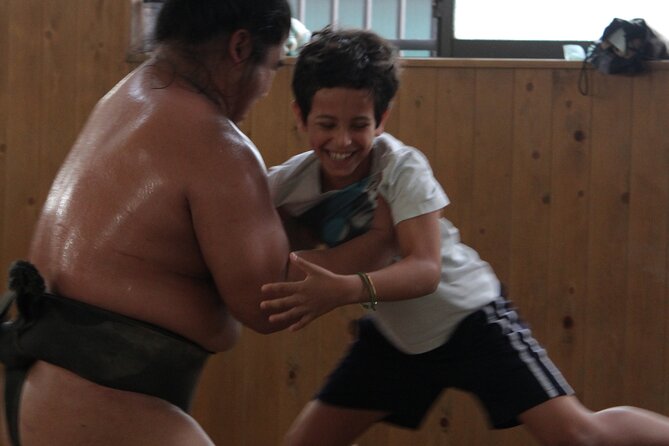
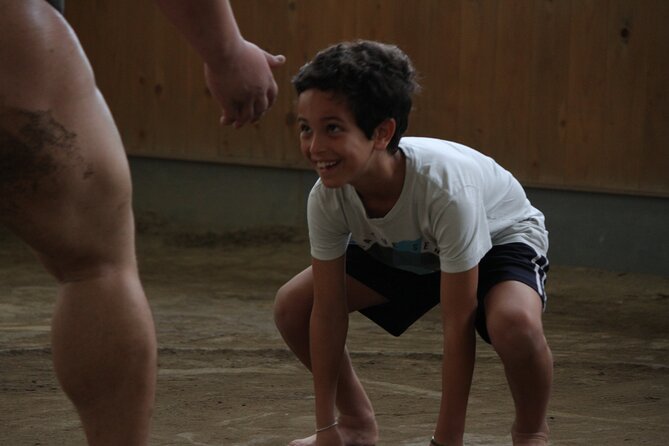
- Hands-on sumo tryout where you get to face wrestlers in a fun, controlled way
- Lunch included with vegetarian service available if you notify at least 3 days ahead
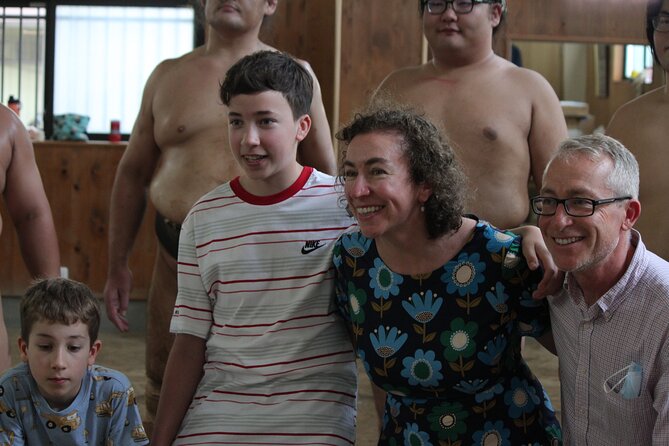
- Photos at the end after practice, when the stable is done training and ready for visitors
- Small-group feel with a maximum of 26 people, plus multiple guides named in past tours
A morning you’ll remember: Why sumo training feels different than watching
Most people think sumo means tournaments, big arenas, and crisp TV angles. This tour flips that. You’re watching practice at a real training stable, during the part of the day when wrestlers are building strength, rhythm, and timing.
That difference matters. In a tournament, you see a final moment. In training, you see how much work goes into that moment. You notice how practice includes pushing, testing balance, repeating basic movements until they look effortless, and keeping the body ready for the next attempt.
One thing I really like from the feedback is how human it feels. Guides like Ryoko and Haru (names that come up again and again) set the context, then the stable itself is portrayed as welcoming. People repeatedly mention friendly conversations and respectful interaction after watching. In other words, you’re not just a spectator standing behind a rope.
You can also read our reviews of more tours and experiences in Tokyo.



Ueno Station at 7:45 AM: The meeting point that sets the tone
You meet at Ueno Station, specifically at 7 Chome-1 Ueno, Taito City, Tokyo 110-0005, at 7:45 AM. That early start is not random. It lines up with when stable practice happens, and it keeps the day focused, no long idle time.
Arriving early helps more than you’d think. The tour is built around moving quickly by train, with guide-led navigation at each step. If you’re even a few minutes behind, you can feel it, since the schedule includes short train hops and brief station stops.
Also, the tour uses a mobile ticket. That’s convenient, but do yourself a favor, double-check that your phone battery is healthy before you leave. Japan runs on trains, and missing a ticket at the wrong moment is an easy way to create stress.
What I’d do the night before
- Confirm where you’re meeting inside Ueno Station.
- Screenshot your booking details offline.
- Plan to arrive a little earlier than you think.
The train route: Matsudo and Kunugiyama make sense of the day
After Ueno Station, the itinerary includes two station hops:
- Stop at Matsudo Station (about 19 minutes by train)
- Stop at Kunugiyama Station (about 15 minutes by train)
Each station stop is listed as a short segment, about 5 minutes. Translation: you’re not touring these neighborhoods for sightseeing. You’re using the train ride to reach the stable on schedule, while the guide likely gives context about sumo during the travel time.
One review mentions that the guide gave history and terms even while riding the train. That’s a smart use of time. If sumo is new to you, you don’t want to wait until you’re already watching practice to figure out what you’re seeing. A little background before you arrive makes the training far more readable.
If you’re the type who worries about logistics, this is where the tour earns its value. The guide setup is built for you to follow along, not to figure out train transfers yourself.
Asahiyama beya training (朝日山部屋): Where the real action happens
This is the heart of the experience. You spend about 2 hours at the stable, with Asahiyama beya (朝日山部屋) listed as the training location.



What you’ll see
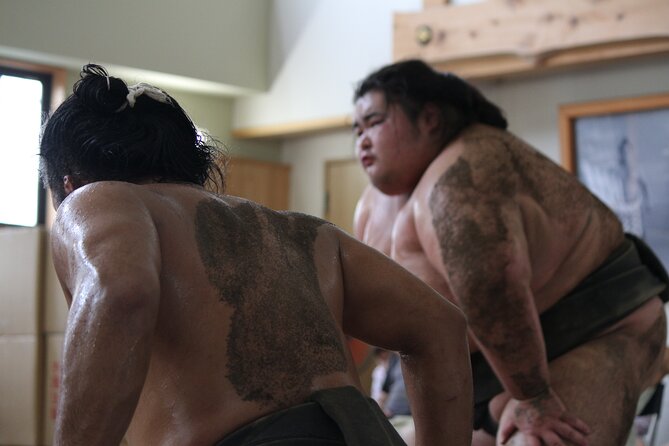
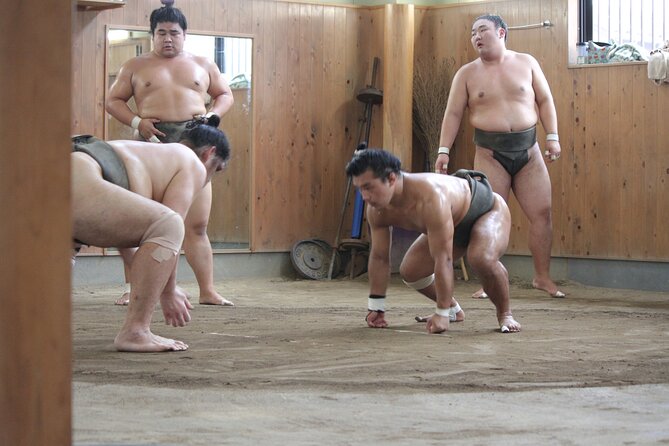
You watch an intense practice session from front-row-style seating on chairs. That detail matters. Sumo training is not a quiet museum moment. It’s physical work, loud impact, fast shifts in stance, and repeated attempts to find leverage.
From the feedback, the practice also includes clear moments where wrestlers demonstrate skills and training effort. People call it intense and fascinating, not just impressive due to size, but because technique and agility show up even in casual-looking drills.
What makes it more than a show
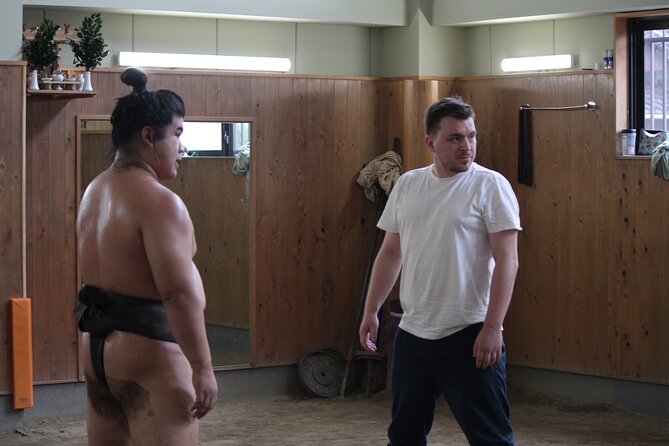
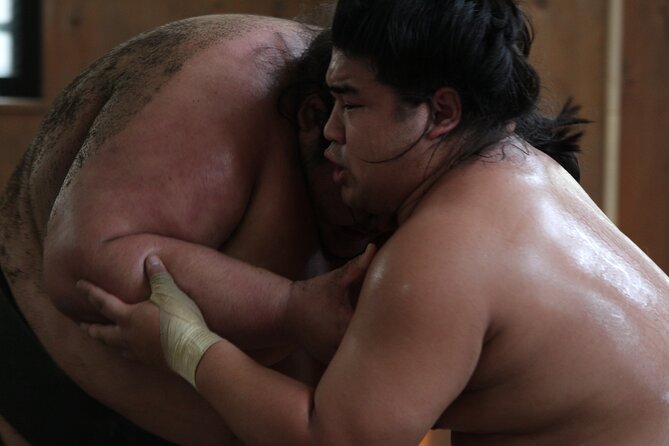
This isn’t framed as a passive viewing experience. You get interactive participation, including a chance to try sumo wrestling firsthand against the wrestlers. In plain terms, this is where the tour becomes memorable. You get to feel why moving a sumo wrestler is not like wrestling your cousin at a party.
And yes, photos are part of it. Photography is allowed at the end of the session, so you can capture the moment when the stable is ready for visitor photos.
The guide factor: names you might meet
Past tours mention guides such as Ryoko, Haruko, Haru, Tomer, Tammy, and Yassmine. Different guides, same outcome people liked: clear explanations and good energy. Many comments say the guides handled the explanation of sumo history and rules, then helped you understand what you were seeing in the ring and during drills.
That matters for first-timers. Sumo has rules, rituals, and terminology. Without someone translating, it can feel like you’re only seeing big bodies and quick grapples. With the guide’s framing, you start noticing patterns.
The chanko nabe lunch: Fuel for athletes, and a real food stop
After training, you share a meal with the wrestlers. The tour includes lunch, and the dish you’ll likely recognize is chanko nabe, a traditional hearty stew associated with sumo life. This is described as a meal designed to provide energy for the athletes.
People also mention the soup being very tasty and authentically presented, which is exactly what you want after a morning that starts early. You’re hungry for something warm, and chanko nabe fits the bill.
Vegetarian diners get an important perk. Vegetarian service is available, as long as you notify the provider at least 3 days in advance. So if you eat vegetarian most of the time, plan early and don’t wait until the last moment.
Practical note: because lunch is included, you’re not hunting for food during the middle of the day. That’s a real value point in Tokyo, where train time and meal timing can get messy.
Photos, interaction, and how to get comfortable in a stable
This is a “hands-on” tour, which can be intimidating if you don’t know what to expect. The good news is that the structure is clear:
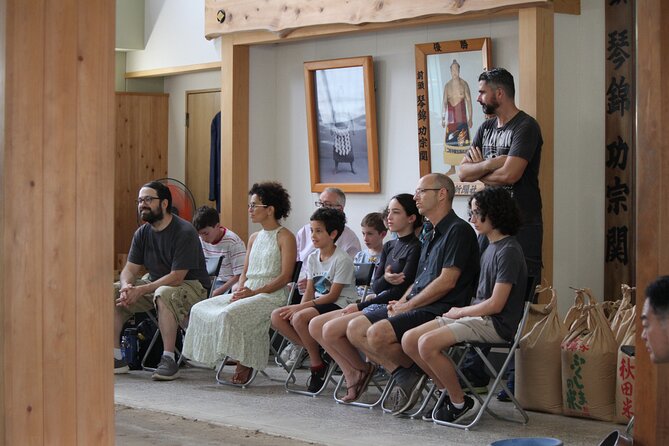
- Watch training from seats.
- Participate in a fun tryout against wrestlers.
- Take photos at the end.
A lot of the best feedback focuses on how welcoming the wrestlers and stable owner are. People describe wrestlers as friendly, and even more importantly, they come across as respectful while still letting visitors join in. If you’ve ever worried that these tours are staged and awkward, the repeated comments about warmth suggest it’s not just lip service.
Still, I’d go in with the right mindset. You’re stepping into a working environment. Expect to follow guide instructions closely, listen for cues, and treat the interaction like a cultural moment, not a performance for your camera.
Bring the right energy
- Keep your phone ready for end-of-session photos.
- Be ready to move a little during the tryout.
- Ask questions if your guide invites it, since conversation is part of what people enjoyed most.
Price and value: What $105.71 really covers
The price listed is $105.71 per person, and the tour lasts about 4 hours. That total matters, because it’s not just a seat-and-watch activity.
What’s included:
- Lunch (with vegetarian options if requested 3 days ahead)
- Sumo training experience
- Viewing practice while seated on chairs
- Photography allowed at the end
- Sumo wrestling experience/tryout
What’s not included:
- Round trip by JR train total cost of ¥1060 (about $7)
So you’re effectively paying for access and guidance: the stable visit, the training observation, the structured interaction, and the meal. In Tokyo, getting anything “authentic” usually costs money, and it often costs time too. Here, you trade a few hours early in the morning for a rare behind-the-scenes look at day-to-day sumo life.
Also, the group limit is 26 travelers. A small group tends to make interaction and translation more manageable, which lines up with the many five-star comments about guides taking care of their group.
One more value note. The tour is often booked about 23 days in advance on average. That tells me demand is steady, especially for a unique morning slot. If you want it, don’t treat it like an optional day-after-thought.
Logistics that can make or break your morning
Most of the time, this kind of tour is smooth. But you’re in Japan on trains, and early mornings amplify any hiccup.
Here are the two logistics points I’d treat as serious:
Train and timing
The tour starts at 7:45 AM and includes short station segments before the stable. That means the schedule is tight. You do not want to roll in late and hope it all stretches.
Communication method
One review complained about stressful communication because the traveler did not use WhatsApp, and the operator apparently used a WhatsApp chat for updates. The response said communication was sent through that channel, plus other info earlier. The takeaway for you: if the operator asks you to join a chat, make sure you can receive messages. If you don’t use WhatsApp, you should proactively tell them and confirm you’ll get address details in a way you can access.
This is not meant to scare you. It’s meant to help you avoid the one failure mode that shows up in the feedback.
Who should book this sumo training tour (and who might not)
This tour is ideal if you:
- Love Japanese sport and culture and want something that feels real, not generic
- Want to see sumo training, not just the final match
- Prefer a guided experience that handles trains and explanations
- Travel with kids, since multiple comments mention family-friendly enjoyment and hands-on participation
It might be less ideal if you:
- Hate early mornings and tight schedules
- Don’t want any phone-based logistics, because there’s a mobile ticket and chat-style updates may be involved
- Are very nervous about participating in a fun “try wrestling” moment
Overall, it’s best for people who like learning while doing. You’ll leave with both images and context, plus a clearer sense of what sumo training actually looks like.
Tips to maximize what you’ll get out of the experience
You’ll enjoy this more if you come prepared to pay attention. Here’s what helps:
- Come ready to learn the basics. Sumo terms and rules can be confusing at first, so lean on your guide.
- Ask questions during the stable interaction. Several reviews highlight conversations with wrestlers and stable staff.
- Plan your day around the morning. Since the tour ends back at the meeting point, you’ll want the rest of the day available for your own Tokyo time.
- If you’re vegetarian, request your meal at least 3 days ahead. Don’t wait.
And one small mindset tip. In sumo, the goal is not “winning.” In the tryout, the fun is in the attempt, and in realizing just how much technique and strength are involved.
Should you book the World of Sumo in Tokyo?
If you want an experience that feels genuinely different from the usual Tokyo checklist, I’d book it. The combination is hard to beat: exclusive training stable access, a structured guided explanation, hands-on participation, and lunch included in a short morning window.
I would skip it only if early starts or tight logistics make you cranky. If you can handle that and you communicate clearly with the operator (especially if they use mobile chat updates), you’re set for one of the most memorable sports-culture mornings Tokyo can offer.
FAQ
What time does the tour start?
The meeting time is 7:45 AM at Ueno Station. The activity ends back at the meeting point.
Where do we meet for the tour?
You meet at Ueno Station (7 Chome-1, Ueno, Taito City, Tokyo 110-0005, Japan).
How long is the tour?
The duration is about 4 hours.
What is included in the price?
Lunch is included, and the tour also includes the sumo training stable experience, seated viewing on chairs, a sumo wrestling tryout, and photos allowed at the end.
Is there vegetarian lunch available?
Yes. Vegetarian service is available if you notify the provider at least 3 days in advance.
Are train fares included?
No. Round-trip JR train cost totals ¥1060 (about $7) is not included.
Do I need a printout for tickets?
No. The tour uses a mobile ticket.
Can I take photos?
Yes. Photography is allowed at the end of the training session.
How big is the group?
The tour has a maximum of 26 travelers.
Is there a cancellation option?
Yes. There is free cancellation, and you can cancel up to 24 hours in advance for a full refund. If canceled less than 24 hours before the start time, the amount paid is not refunded.
More Tour Reviews in Tokyo
Not for you? Here's more nearby things to do in Tokyo we have reviewed












Tokyo Sumo Experiences, side by side.
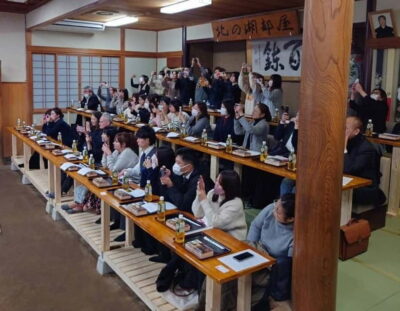 ★ 4.8Sumo Show and Dining ExperienceFrom $792,742 reviews
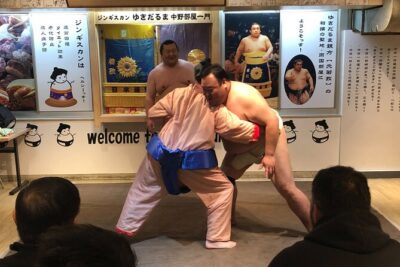 ★ 5.0the SUMO showFrom $891,960 reviews
 ★ 5.0Tokyo Shinjuku Sumo Show & Experience with PhotoFrom $791,750 reviews
 ★ 4.8Sumo Show and Experience in ShinjukuFrom $691,001 reviews
 ★ 4.7Luxury Sumo Show Experience & Japanese cuisine & DrinkFrom $103577 reviews
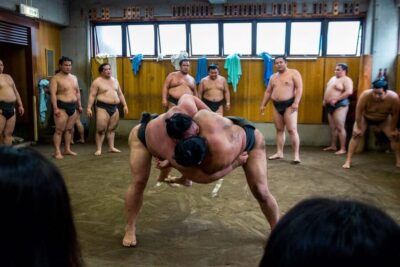 ★ 4.8Sumo Morning Practice Viewing TourFrom $81570 reviews
 ★ 4.8Tokyo Sumo Experience: Chanko & Mochi with a Former ProFrom $103567 reviews
 ★ 5.0Ultimate Sumo Tournament: Tokyo, Osaka, Nagoya, FukuokaFrom $184468 reviews
This tour also belongs to