
Review · TOKYO CITY TOURS
Full-Day Accessible Tour of Tokyo for Wheelchair Users
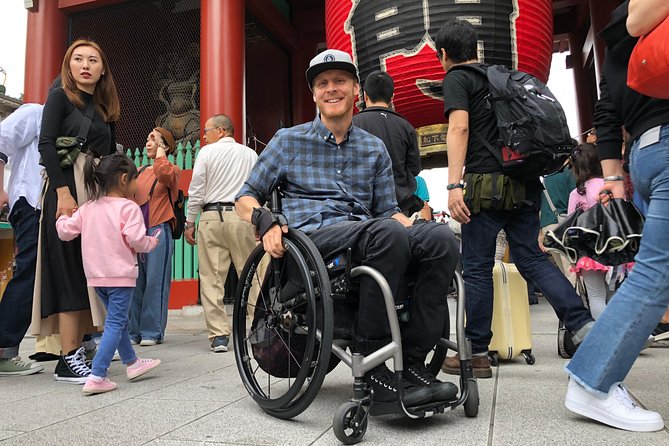
Tokyo can feel tough in a wheelchair. This private full-day route is built for wheelchair users, with hotel pickup within Tokyo’s 23 wards and train tickets included. You get a guide who keeps things moving and still lets you pause when you need a breather.
I especially like the stop-by-stop pacing. In real tours, guides such as Fumiko, Yumi, Machiko, and Kaori are praised for staying patient in crowded areas like Asakusa, tracking the group carefully, and adjusting the route when mobility needs change. One possible drawback: food and drinks are not included, so you’ll want to plan snacks and a lunch plan that works for you and your caregiver.
Key things I’d watch for before you go
- Hotel pickup inside Tokyo’s 23 wards means you do less coordinating on arrival day
- Train tickets are included, and the guide helps with transfers and navigating stations
- Short, flexible sightseeing stops help you keep energy for the day’s highlights
- Route choices that reduce step-stress, including guidance around busy pedestrian zones
- Guides who actively check on your pace, with several guests noting extra care for mobility needs
How this wheelchair-friendly Tokyo day stays realistic for 7 hours
The big promise here is not just accessibility in theory. It is a practical loop through some of Tokyo’s most famous areas, planned so you are not stuck “touring” at the mercy of stairs, crowd timing, or unclear subway transfers.
At roughly 7 hours, you should expect a day that feels guided rather than sprint-like. The itinerary is built from multiple short stops, so you can do the key sights, ask questions, and reset without feeling like you are trapped in a long museum-style line.
This is also a private tour, so it is “your group first.” That matters in Tokyo. Crowds are part of the scenery, but a private format gives the guide room to reposition you and manage movement when sidewalks get packed.
More Tokyo tours and experiences for the shortlist

Price and value: what you really get for $191.08
$191.08 per person can look like a lot until you break down what is included. You are getting a professional guide, a private tour, and hotel pickup and drop-off within the 23 wards. You also get train tickets as part of the package, so you are not doing extra ticket purchases and figuring out which line to take while you are already managing mobility needs.
The best value angle is that accessibility is not treated as an afterthought. You are paying for logistics that can be complicated: coordinating your route, handling station navigation, and keeping you on an efficient line of sightseeing. Several reviews highlight how the guide made train systems easier, including help getting train tickets and getting through busy stations.
One more value note: because this is priced as a full-day guided circuit, it can be easier to compare than piecing together multiple half-day activities. You are paying for continuity, not just entry-level sightseeing.
Start at Asakusa’s Kengo Kuma Tourist Info Center
Your day begins at the Asakusa Culture Tourist Information Center in Kaminarimon, near Senso-ji. It is a modern, landmark-style building designed by Kengo Kuma, and it is also useful in the plain, practical way you want on day one: it is a place where you can get structured info and orient yourself.
The center is free and quick, about 15 minutes. For wheelchair users, that matters because it lets you settle into the plan without rushing from place to place right away. If you like having a clear mental map of where you are headed next, this start sets the tone.
Also, Asakusa’s Kaminarimon area is visually intense in a good way. Even before you reach the temple, you get a sense of old Tokyo energy, which helps the rest of the day feel connected rather than random stops.
Kaminarimon and Nakamise: the Asakusa entrance ritual
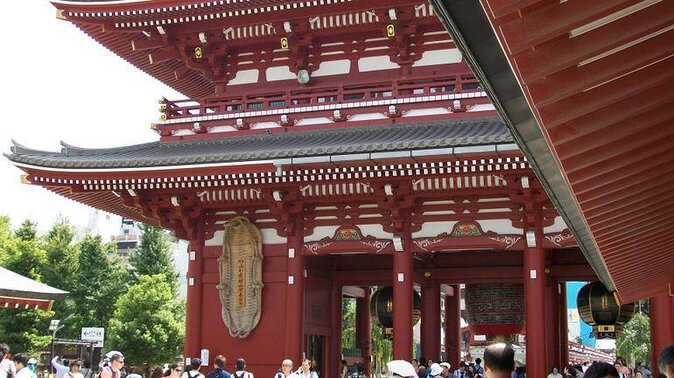
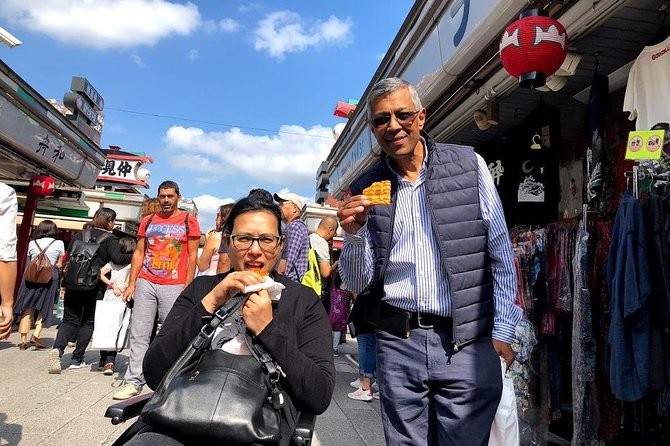
After the tourist center, the route moves into the Kaminarimon area, the Thunder Gate that symbolizes both Senso-ji and Tokyo’s Asakusa district. This is one of those sights that works even if you do not love shopping, because it is a cultural entry point, not just a photo stop.
You also pass through Nakamise shopping street. The key point here is that you are doing it as part of a guided, structured route. In crowded old-street areas, that guidance can be the difference between feeling stressed and feeling in control of your pace.
Time is short, about 20 minutes. That is a good approach if you want the atmosphere without turning it into a long walk you regret later.
Senso-ji Temple: classic Tokyo, with time to take it in
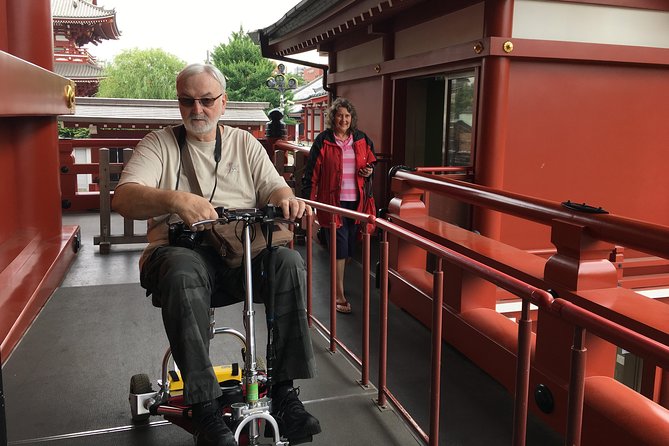
Then comes Senso-ji itself, also known as Asakusa Kannon Temple. It is one of Tokyo’s most colorful and popular temples, which tells you what kind of experience to expect: lots of people, lots of sensory detail, and a high chance you will want to slow down for a closer look.
The stop is about 20 minutes, admission free. That length is long enough to appreciate the site and short enough to avoid the fatigue that can happen when temple areas turn into crowded bottlenecks.
In the reviews, this part of the route is where guides earn their keep. Guests mention help navigating crowded Asakusa and staying attentive even when the group is in heavy pedestrian flow. If you ever worry about being lost in a crowd, this is the kind of moment where you want a guide who actively manages the group, not someone who walks a step ahead and hopes for the best.





Sumida Park and the river views near Tokyo Skytree
Next is Sumida Park, near Asakusa station along the Sumida River. This stop gives you a break from street crowds and a different kind of Tokyo scenery: open space, river air, and views like Tokyo Skytree in the background.
It is about 15 minutes and admission free. If you are planning accessibility-friendly sightseeing, short scenery stops are a smart strategy. They help you recharge without pulling you into a long detour.
The tour description also notes cherry blossoms as a particularly beautiful season for this spot. Even if you are not traveling during that window, riverside parks are still a good “pause button” in a packed day.
Shibuya Crossing: people power in one green light
Shibuya Crossing is the headline for modern Tokyo. The guide brings you to a place where up to 500,000 people per day cross, and at peak times as many as 3,000 people move at one green light. You do not need to be a traffic-nerd to find this impressive, but it helps you understand why Tokyo can feel like a controlled chaos machine.
The stop is about 20 minutes and free. For wheelchair users, this is a good example of why guided timing matters. Crossing points and nearby sidewalks can be tight and busy. A guide can help you choose when and how to position for views.
If you want a practical photo plan, it usually works better to think in terms of “where will you sit and wait,” not “walk through the center.” Ask the guide what viewing area makes sense for your mobility and your comfort.
Shibuya Cat Street: trend street between Harajuku and Shibuya
Right after the crossing, the route continues to Shibuya Cat Street. This is a runway-like shopping street between Harajuku and Shibuya, about a half-mile long, lined with stores suited to the 20-something style crowd.
You get about 25 minutes here. That is enough time to see the street’s vibe and browse lightly if you want, without turning it into an all-day shopping obligation.
This also provides a nice contrast. You go from one of Tokyo’s most famous crowd theaters into a more street-level, fashion-oriented experience. That contrast is useful when you are managing energy.
Meiji Jingu: quiet shrine time right by a major station
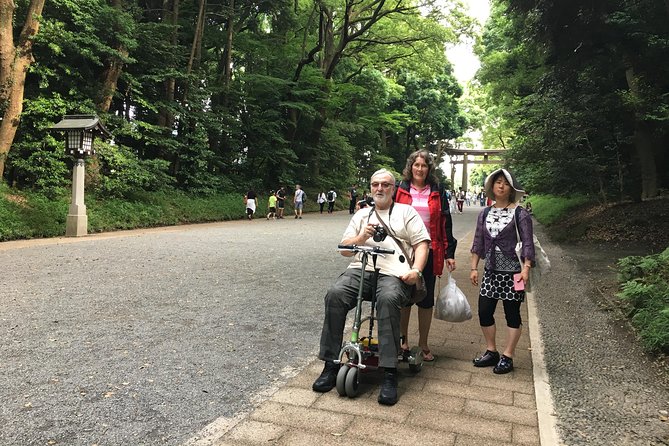
Then you shift gears to Meiji Jingu, dedicated to the deified spirits of Emperor Meiji and Empress Shoken. It sits right beside the JR Yamanote Line’s busy Harajuku Station, which is a fascinating Tokyo paradox: a major transit hub beside a calm, reverent sanctuary feel.
This stop is the longest in the list at about 50 minutes, and admission is free. That extra time is well placed because shrine areas often reward a slower pace. You want room to look around, read what you can, and settle into the mood.
In the reviews, guides are praised for adapting itineraries quickly when mobility needs change. That flexibility matters here. You may want more time to enjoy the grounds or less time depending on your energy that day.
Omotesando: tree-lined Aoyama boulevard and sloping boulevard views
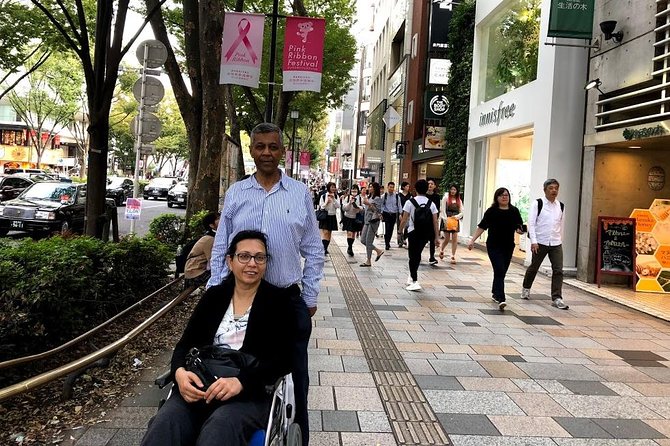
After the shrine, the route heads to Omotesando, a sloping, tree-lined boulevard in the Aoyama district, stretching across parts of Shibuya and Minato wards. It is often associated with upscale fashion and architecture, which means you get a “modern Tokyo” flavor without needing to spend hours in a single shopping mall.
This stop is about 20 minutes and free. Omotesando is an ideal place for a short, satisfying walk because the street itself provides the scenery. Even if your goal is mostly photos and a gentle stroll, this is a good use of time late in the day.
Train system help and in-station support that matters
The transport part is a major selling point. You travel like a local because train tickets are included, and the guide helps you handle transfers and station navigation. One review calls out how the guide made everything easy, including meeting at the hotel, getting train tickets, and navigating the train system.
Another practical detail: station staff can assist. One guest mentioned that station attendants were helpful with providing slope ramps at stations used during the tour. That is not something you can assume everywhere, but it is a good sign that accessibility support exists and that the guide knows how to work with it.
For you, the takeaway is simple: you should still plan for crowds and tight platform areas. But having someone who can keep the route on track, manage the group in transit, and reduce guesswork can be a huge relief.
Where lunch fits (and why you should plan it)
Food and drinks are not included. For a day like this, that is normal, but it does change how you plan your energy.
I recommend you treat lunch as part of your accessibility planning, not an afterthought. Bring snacks if you use them, plan for any dietary needs, and ask the guide when they think the best break time is based on your pace. Some reviews mention guides making lunch recommendations, but recommendations are not the same as included meals, so do not rely on a guaranteed lunch stop.
Also, since you are moving across multiple neighborhoods, having a simple plan for hydration and small breaks will keep the day comfortable. Short stops are built in, but you still control how often you pause.
Who this tour is best for
This tour is designed for wheelchair users and supports service animals. It is private, so it is a strong choice for couples, family groups, and visitors traveling with caregivers.
There is also a practical requirement: a minimum of 2 people per booking, including caregivers. That means if you are a solo traveler, you may need to pair up with a caregiver or a companion to fit the format.
The tour also lists a moderate physical fitness level. That does not mean “no walking,” but it suggests you should be comfortable with some movement between stops and time spent in public spaces.
If your top priority is seeing big Tokyo highlights in one day with less logistics stress, this tour fits. If your top priority is wandering freely without a schedule, you might find a guided route feels a bit structured.
Should you book this wheelchair-friendly Tokyo day tour?
I’d book it if you want a guided, wheelchair-aware route that covers major Tokyo areas without leaving you to figure out trains, transfers, and crowd navigation alone. The value improves a lot because the price includes hotel pickup and drop-off within the 23 wards and train tickets, two things that quickly add up when you plan independently.
I would hesitate if you already have your Tokyo rail system figured out and you prefer total flexibility. Since this is private but still a fixed route through set stops, it is built for “a day plan,” not for open-ended roaming.
If you do book, your best move is to communicate your pace needs upfront. Reviews repeatedly praise guides like Fumiko and Yumi for adjusting routes quickly and choosing ways to walk with fewer steps when legs were tired. With that kind of support, you get to enjoy Tokyo’s best sights without forcing your body to do the work.
FAQ
How long is the full-day accessible Tokyo tour?
It runs for about 7 hours.
What does the tour cost?
The price is $191.08 per person.
Is hotel pickup and drop-off included?
Yes. Pickup and drop-off are included within Tokyo’s 23 wards.
Are train tickets included?
Yes. Train tickets are included as part of the tour.
Where does the tour start?
It starts at Asakusa Culture Tourist Information Center in Kaminarimon (Taito City). The tour ends back at the meeting point.
What time does the tour begin?
The start time is 9:30 am.
Are food and drinks included?
No. Food and drinks are not included.
More Full-Day in Tokyo
More Tours in Tokyo

More Tour Reviews in Tokyo

Not for you? Here's more nearby things to do in Tokyo we have reviewed












Tokyo City Tours, side by side.
 ★ 5.01-Day Tokyo Bus TourFrom $12914,250 reviews
 ★ 4.5TOKYO SKYTREE® Admission ticketFrom $1311,192 reviews
 ★ 4.6teamLab Planets TOKYO Digital Art Museum Entry TicketFrom $259,779 reviews
 ★ 4.0Mt Fuji & Hakone Cruise, Drum Show Bullet Train 1 Day from TokyoFrom $1497,413 reviews
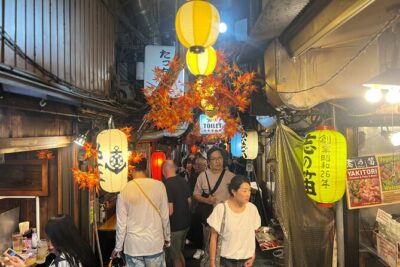 ★ 5.0Shinjuku Food Tour (13 Dishes at 4 Local Eateries)From $866,603 reviews
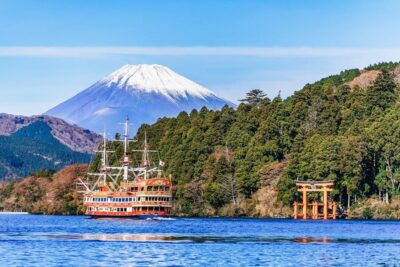 ★ 4.4Tokyo Mt Fuji 5th St & Hakone Cruise Bus Tour w/Bullet TrainFrom $1545,024 reviews
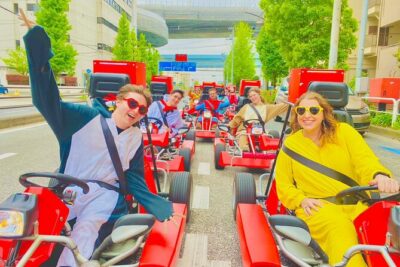 ★ 5.0Flagship 2-Hours Official Street Go-Kart Tour – Tokyo Bay ShopFrom $644,974 reviews
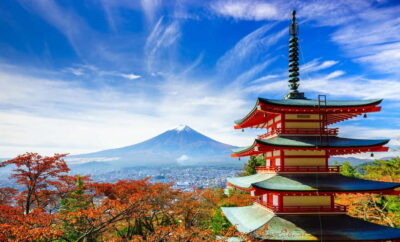 ★ 4.5From Tokyo: Mount Fuji Full-Day Sightseeing TripFrom $684,970 reviews