
Review · MOUNT FUJI TOURS
Full-Day Tour to the Picturesque Spots of Mount Fuji
Fuji views in one day are hard to beat. This full-day guided route from Tokyo strings together classic Mount Fuji scenery with Oshino Hakkai spring-water stops and the postcard view of the Chureito Pagoda. You also get a traditional thatched-roof village feel, plus lake stroll time around Lake Kawaguchiko.
The main thing to plan for is walking. You’ll cover multiple stops, and Arakurayama Sengen Park involves climbing 400 steps, so wear good shoes and be honest about your stamina.
Key reasons this Mount Fuji tour hits
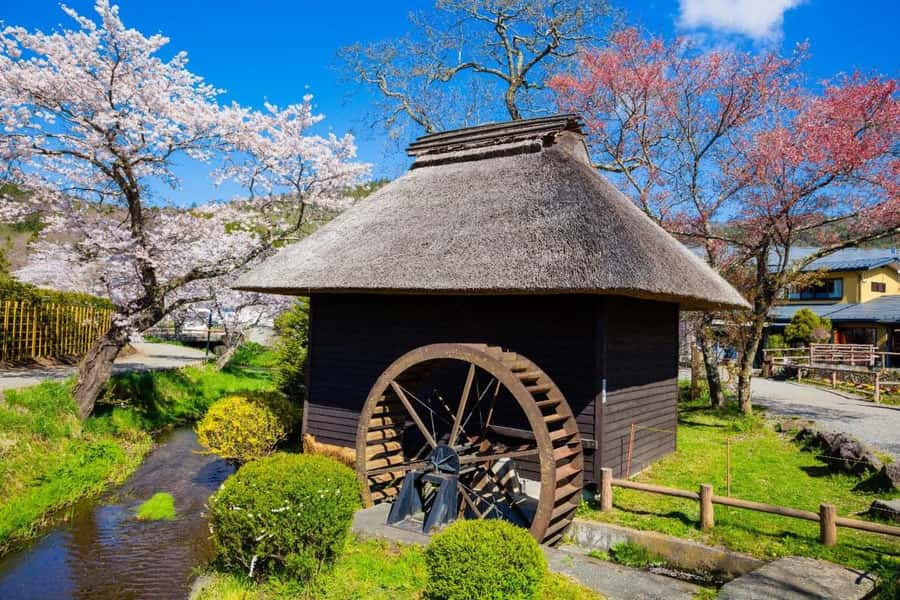
- Saiko Iyashi-no-Sato Nenba photos: thatched roofs with Mount Fuji framed in the distance.
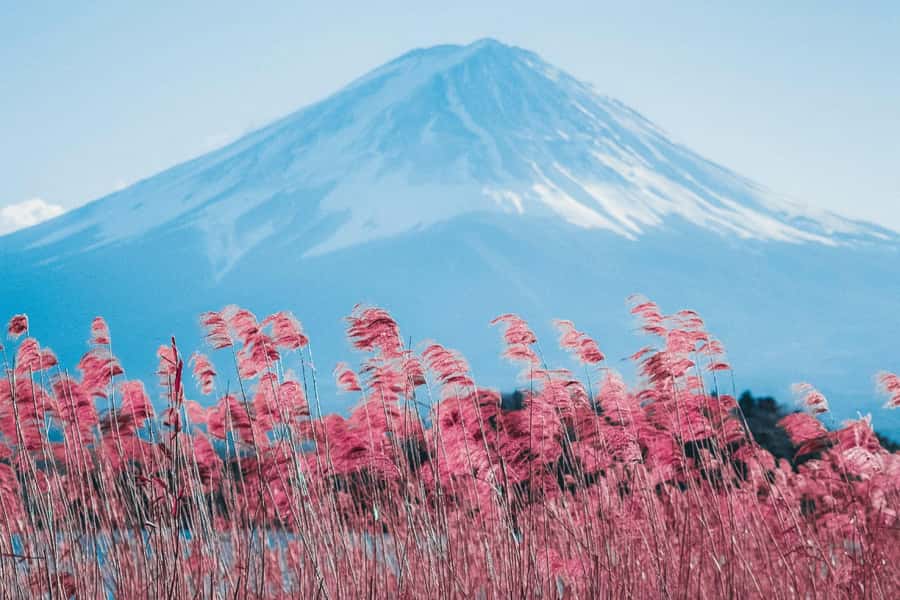
- Oishi Park viewpoint time: a short stroll where kochia bushes meet the lake for an easy, dramatic photo.
- Oshino Hakkai spring water: eight crystal-clear springs tied to Mount Fuji snowmelt, plus a chance to taste.
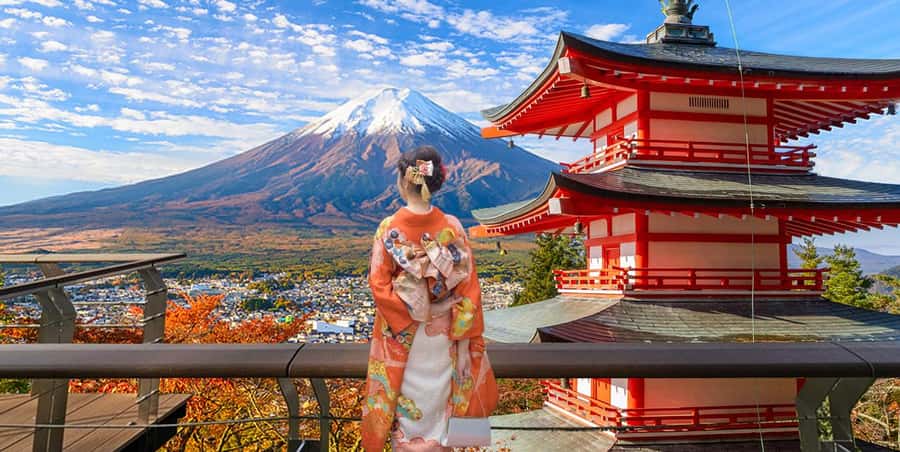
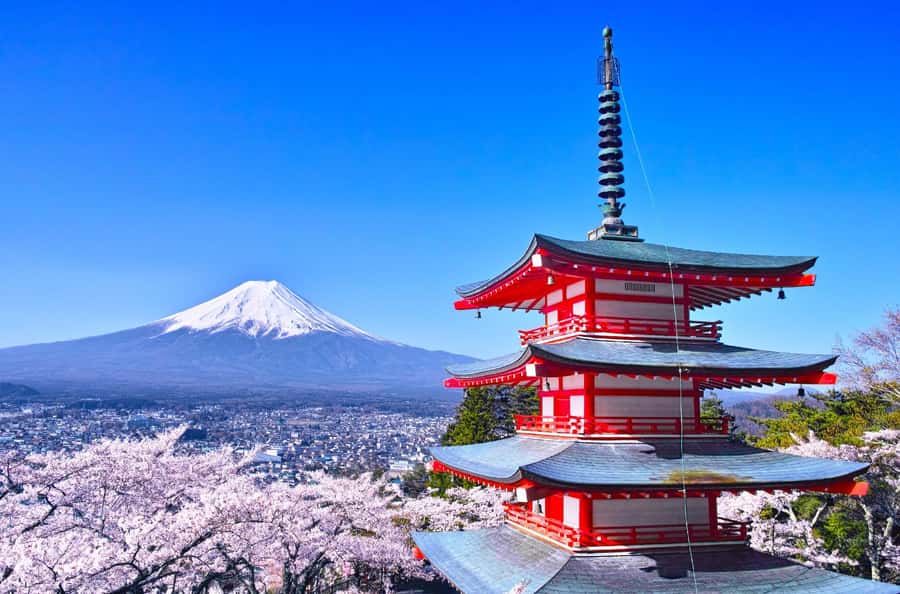
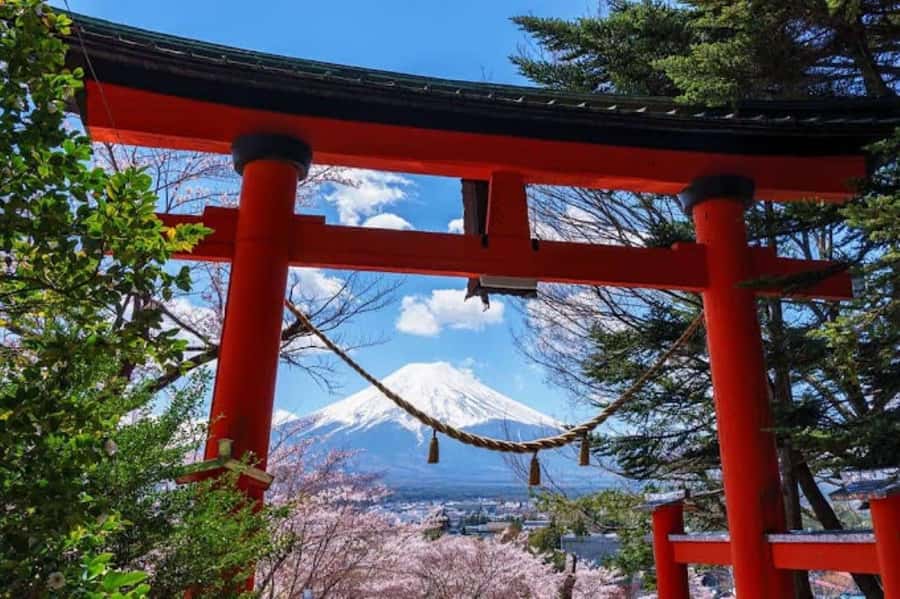
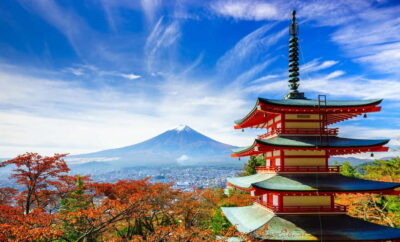
- Arakurayama Sengen Park pagoda view: the five-story Chureito Pagoda aligned with Mount Fuji from the observation deck.
- Practical guidance: a professional English and Chinese multilingual guide to keep the day moving smoothly.
- Flex around seasons: the Oishi Park segment can swap to Maple Corridor or cherry blossom groves depending on the time of year.
From Tokyo to Fuji, the full-day rhythm you should expect
This is a true day trip. You leave Tokyo early, then spend most of the day in the Mount Fuji area hitting several top sights that are spread around the lake region. Departure is typically 8:00 AM from Tokyo Station or 8:30 AM from Shinjuku Station, with an estimated 2 hours each way by transfer, traffic-dependent.
That timing matters. If you’re the type who likes to wander without a schedule, this route may feel like a focused “greatest hits” sweep. If you want iconic views without the hassle of buses, tickets, and timing, it’s a strong fit.
You ride in a comfortable A/C vehicle, and the tour includes round-trip transfers, attraction entry tickets, parking, tolls, gas, and environmental fees. That’s part of why the price lands around $49 per person, and it usually keeps you from getting hit with extra costs at each stop.
Group reality check: it’s a shared tour, so you’ll move with the pace of the group. During peak seasons, things can get crowded at photo points and popular parks. Add in traffic, and you may feel like the day has a little urgency. The good news is the stops are structured so you get specific photo time and a clear sense of where to go.
More Tokyo tours and experiences for the shortlist
Saiko Iyashi-no-Sato Nenba, thatched roofs and Fuji framed perfectly
Saiko Iyashi-no-Sato Nenba is the warm-up stop that sets the tone. This area is a carefully reconstructed Heian-era thatched-roof village, meant to preserve the feel of traditional countryside Japan. Instead of just seeing a roof or two, you get a whole village atmosphere with buildings designed to look like the old style of architecture.
The best reason to come here is the layout. On a clear day, Mount Fuji can appear in the distance as a natural frame for the village scene. Even if clouds soften the peak, the village look still works for photos because the thatched roofs and pathways give you texture and depth.
Practical tip: this stop is listed at about 1 hour. That’s enough time to walk slowly, take photos from a few angles, and not feel rushed. Still, if visibility is great, people tend to linger at the main viewpoints. If you want your best shot, get your bearings early and plan to move before crowds lock in.
Oishi Park and Lake Kawaguchiko, where kochia turns the shore into a photo set
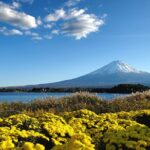
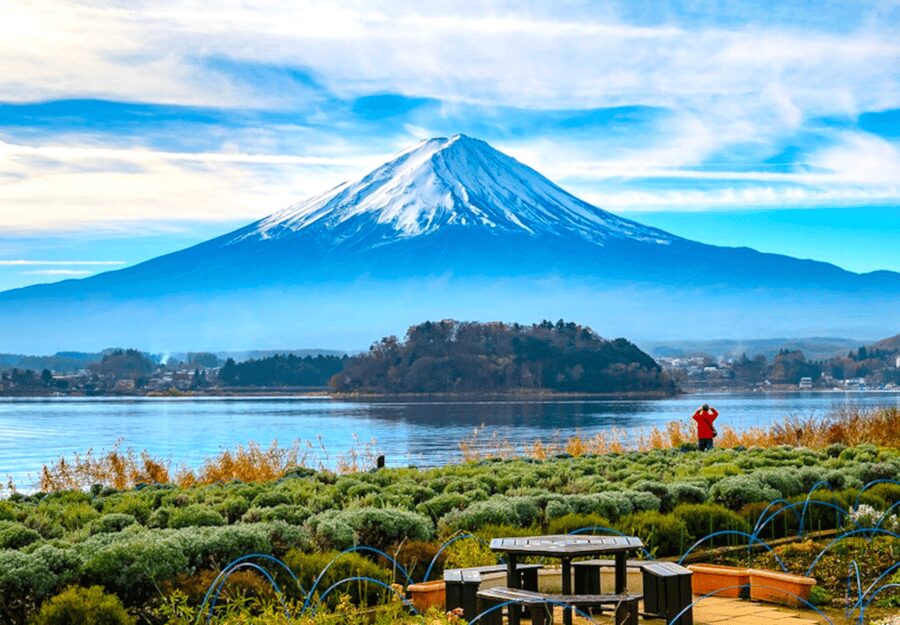
Next comes the lake time, and this is the “stand and stare a bit” segment. At Lake Kawaguchiko you’ll stroll through Oishi Park, a viewpoint area designed for exactly this kind of scenic pause.
The signature look here is the kochia beds. You’ll see rows of green kochia bushes that ripple across the park like a soft carpet. Beyond them, thin reeds and shoreline details create a layered foreground, and then the lake spreads out. If Mount Fuji is visible, it sits across the water, giving you that iconic symmetry people come for.
This stop is listed at about 40 minutes, which is short, but it’s the right amount for an easy loop and a few photo stops. It also means you’re not stuck in a long line somewhere with no flexibility. On a clear day, you’ll feel like you’re in a postcard. On a hazy day, the kochia and shoreline details still photograph well, just with less emphasis on the peak.
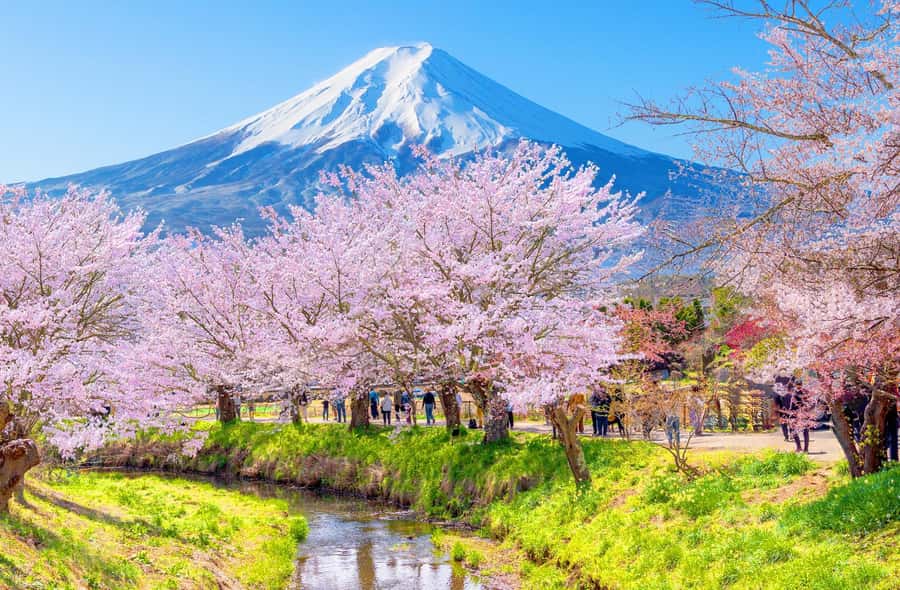
Seasonal swap warning: there’s an important note that in autumn and spring the tour may go to Maple Corridor or cherry blossom groves instead of Oishi Park. That’s not a downgrade. It’s the tour adjusting to seasonal highlights, which matters because Fuji-area visibility changes with weather, and flower seasons often bring stronger demand and better color.
If you’re traveling in peak seasons, remember crowd pressure is real. Move quickly to the viewpoint you want, take your photos, then enjoy the rest of the walk at an unhurried pace before the group pulls out.
Oshino Hakkai, tasting Mount Fuji spring water (UNESCO included)
Oshino Hakkai is where the day shifts from scenic views to something more interactive. This UNESCO-listed area is named after its eight crystal-clear springs, all fed by Mount Fuji’s snowmelt.
The practical payoff here is simple. You can taste the spring water, and that makes the stop feel more than just scenery. The legend says it can bring good health and long life, but even if you treat that as folklore, the water itself is the experience. It’s refreshing, cool, and a nice break from standing around for photos.
This stop is listed at about 1 hour, which gives you enough time to walk between the spring pools, read the signage, and grab a snack or drink later if you need it. It also keeps the pacing balanced, because after Oishi Park, your eyes might be slightly tired from the strong visuals of lake panoramas.
Photo reality: Oshino Hakkai can be busy. If you’re trying for a clean shot, go early in the allocated time, and be ready to reposition. The pools and surrounding paths offer multiple angles, so you’re not trapped with only one viewpoint.
Arakurayama Sengen Park, 400 steps, shrine history, and the Chureito alignment
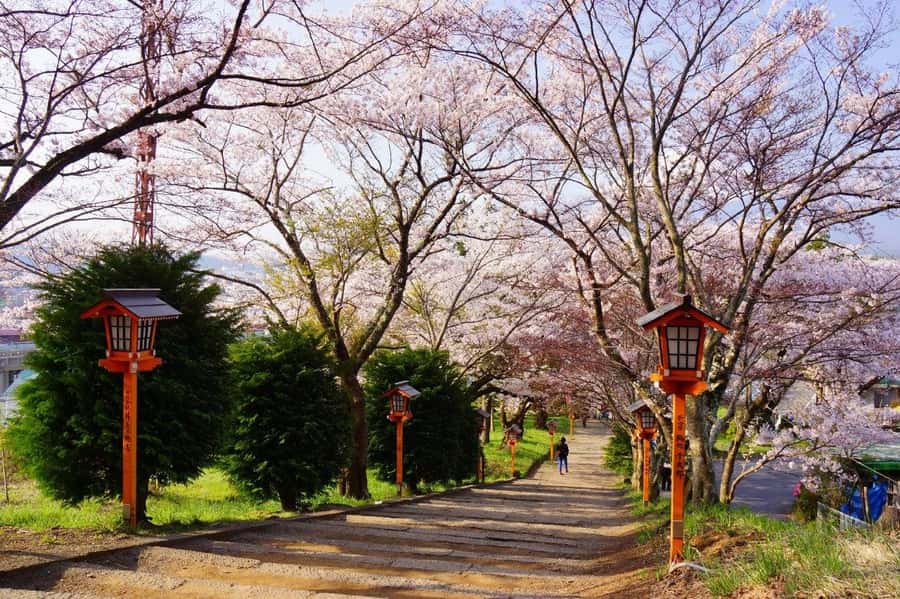
The final big classic stop is Arakurayama Sengen Park, famous for the view of the Chureito Pagoda with Mount Fuji in the same frame. This is the segment most people save their camera energy for.
To reach the best viewpoint, you climb 400 steps to the observation deck. That’s not a “casual stroll” number. It’s enough that you should pace yourself, take short breaks if needed, and avoid sprinting just because others are moving fast.
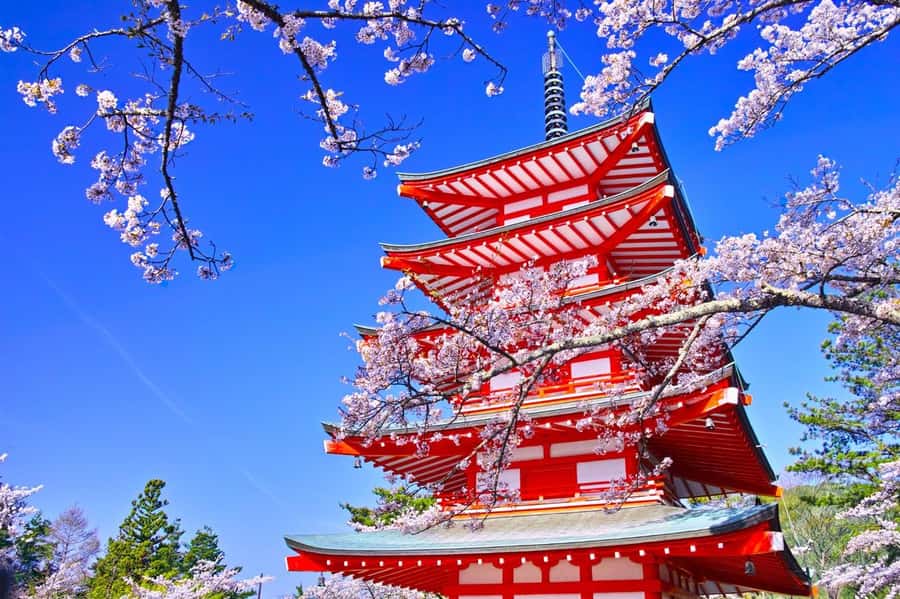
Once you’re at the top, you’ll see the five-story pagoda in a vermilion tone, positioned so it looks like it’s harmonizing with Mount Fuji. Even if Mount Fuji is partly obscured, the pagoda view still feels like a major payoff because you’re high above the area with wide sightlines.
There’s also shrine context. The route includes Arakura Fuji Sengen Shrine, established in 705, described as a revered sanctuary dedicated to the deity of Mount Fuji. The shrine also connects to older rituals meant to calm the mountain’s fiery eruptions. It’s a nice reminder that this is not just a photo set, it’s part of a living spiritual landscape.
Timing: this stop is listed at about 1 hour. That’s enough for the climb, photos, and a descent with buffer time, assuming your group doesn’t get stuck waiting behind slower walkers.
From the reviews, one practical note comes up: wear walking shoes. You feel the steps in your legs, and comfort makes the whole experience better.

Lunch, shopping breaks, and the real-world pacing
Meals are not included. You’ll need to plan your own lunch during the day. That said, the tour typically includes a stop where you can grab food, and in at least one observed version of the day, lunch time was tied to an amusement park area.
Here’s the key thing to know: it’s possible that you may have entry covered for the area, while ride prices are extra. That means you can end up paying for the privilege of being there even if you skip the rides, which can feel annoying if your goal is just food and a breather.
My advice is to treat lunch as a choose-your-own-adventure moment. If the scheduled option looks like it’s geared toward attractions rather than dining variety, you might prefer to bring a simple plan, like a packed snack you can rely on, then do a full meal at a place that offers more choices when you have a moment.
Also, bring some cash. The day includes shopping time or nearby merchant areas, and many local places may not accept credit cards. Having a little yen on hand saves stress.
Photo strategy and weather: how to maximize your odds of seeing Mount Fuji
This tour is built around Mount Fuji views, which means weather is everything. Visibility can change fast, even when the forecast looks decent earlier in the day. So you should check the forecast right before you go, especially for clouds and haze.
If you get a clear day, you’ll see Mount Fuji from multiple angles:
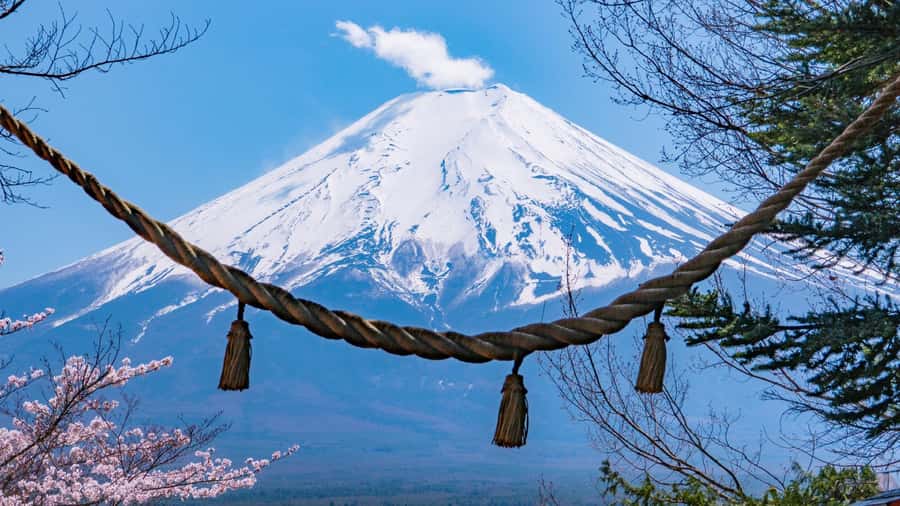
- framed through the village atmosphere at Saiko Iyashi-no-Sato Nenba
- across the lake from Oishi Park at Lake Kawaguchiko
- aligned with the pagoda view at Arakurayama Sengen Park
If you get a cloudy day, don’t panic. You still get value from:
- traditional village textures and pathways
- the kochia and shoreline patterning around the lake
- the cool, walkable feeling of Oshino Hakkai’s spring pools
One small tactic that helps: decide which two “must get” shots you care about most. Then let the rest be bonus. That reduces disappointment if visibility isn’t perfect, and it keeps you from burning time on the wrong spot.
Crowds also affect photos. Peak periods can compress your time window at the pagoda viewpoint and the lake areas. In practice, moving steadily and preparing your camera settings before you reach the final viewpoint can save you from scrambling.
Price and value: what $49 really buys you
Let’s talk value without pretending self-planning is impossible. At about $49 per person, you’re buying a structure: early pickup, a guided route, a comfortable vehicle, and entry tickets to multiple attractions. You’re also paying for all the practical costs like parking, tolls, gas, and environmental fees, which can add up quickly if you do everything on your own.
You also get a professional multilingual guide (English and Chinese). That matters because the day involves several locations and a couple of complex photo spots. A good guide helps with timing and keeps you from wandering around trying to interpret signs or figure out the best walking route.
From real-world experience with this kind of tour, the guide quality often makes or breaks the day. One named guide you may run into is Kevin, and feedback around his English and attentiveness has been strong. The practical takeaway for you is simple: show up on time, listen to the guide’s cues at each stop, and you’ll get more out of your time.
Main tradeoff: the tour moves as a group. If you’re hoping for long stays, deep wandering, or lots of free time at each village or park, this might feel fast.
Who this Mount Fuji day trip suits best
This experience is a great match if you want:
- classic Mount Fuji viewpoints in one day without planning a route
- a mix of traditional village culture and lake scenery
- a taste of Mount Fuji water at Oshino Hakkai
- clear photo targets like the Chureito Pagoda alignment
It’s less of a match if you:
- dislike walking long distances or climbing stairs (400 steps is a big marker)
- have mobility limitations or use a wheelchair (the tour is not suitable)
- are pregnant (the tour is not suitable)
- travel with very limited flexibility due to the day’s pacing
If you’re traveling in a group, this also helps. Shared transportation reduces stress when you’re coming from Tokyo and want to get out to the Fuji area efficiently.
Age note: there’s mention of a travel waiver request for guests aged 70 and above, so be ready for that paperwork at arrival.
Should you book this Mount Fuji day tour?
Book it if you want a structured, efficient Mount Fuji highlights day, with real-world photo stops and one hands-on moment at Oshino Hakkai. The price is usually fair for what’s included, especially when you count transfers and entry tickets.
Skip or rethink if your ideal day is slow and unstructured, or if you know you won’t manage the 400-step climb. Also, if you’re sensitive to crowding during peak seasons, plan your expectations for tighter photo windows.
If you do book, bring comfortable shoes, water, and cash. Check the Mount Fuji visibility forecast the morning of your trip, and pick your two must-have photos so the day stays fun even if the peak is shy behind clouds.
FAQ
What time does the tour leave Tokyo?
The tour departs around 8:00 AM from Tokyo Station or 8:30 AM from Shinjuku Station.
How long is the transfer from Tokyo to the Mount Fuji area?
The estimated transfer time is about 2 hours each way, subject to extension due to traffic.
What are the main stops on this full-day tour?
You’ll visit Saiko Iyashi-no-Sato Nenba, Lake Kawaguchiko and Oishi Park, Oshino Hakkai (UNESCO World Heritage), and Arakurayama Sengen Park, including the shrine area.
Is lunch included?
No. Meals and beverages are not included.
Can I eat or drink in the vehicle?
No. Food and drinks are not allowed in the vehicle, and smoking is also not allowed.
What should I bring for the day?
Bring comfortable shoes, water, and comfortable clothes.
Is the tour suitable for people with mobility impairments or wheelchair users?
No. The tour is not suitable for people with mobility impairments or wheelchair users.
Is the tour suitable for pregnant women?
No. The tour is not suitable for pregnant women.
Is Mount Fuji visibility guaranteed?
No. Visibility depends on weather, so it’s important to check the forecast before you go.
What is the cancellation policy?
You can cancel up to 24 hours in advance for a full refund.
More Full-Day in Tokyo
More Tours in Tokyo

More Tour Reviews in Tokyo
Not for you? Here's more nearby things to do in Tokyo we have reviewed




Mount Fuji Tours, side by side.
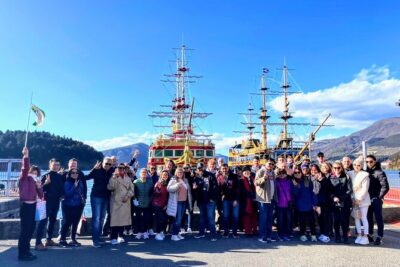 ★ 5.0Mt Fuji and Hakone 1-Day Bus Tour Return by Bullet TrainFrom $16326,383 reviews
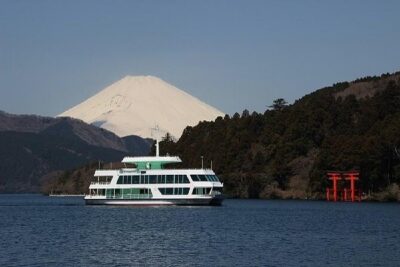 ★ 4.0Mt Fuji & Hakone Cruise, Drum Show Bullet Train 1 Day from TokyoFrom $1497,413 reviews
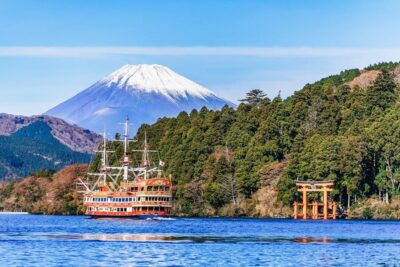 ★ 4.4Tokyo Mt Fuji 5th St & Hakone Cruise Bus Tour w/Bullet TrainFrom $1545,024 reviews
 ★ 4.5From Tokyo: Mount Fuji Full-Day Sightseeing TripFrom $684,970 reviews
 ★ 4.7Mt. Fuji Tour, Hakone Ropeway, Owakudani, Lake AshiFrom $544,002 reviews
 ★ 4.2Mt. Fuji 5th Station & Hakone Cruise 1-Day Bus TourFrom $1292,381 reviews
 ★ 4.7Mt Fuji Top 5 Spots Day Tour: Arakurayama Park,Oshino HakkaiFrom $532,066 reviews
 ★ 5.0Private Tour to Mt. Fuji and Hakone (Fully Licenced Operator)From $4971,910 reviews