
Review · MOUNT FUJI TOURS
Mount Fuji 1-Day Trip: the Hottest Photography Tour
Fuji photos in one packed day. This Mount Fuji 1-Day Trip is built for easy logistics and multiple classic viewpoints without you stressing over trains, transfers, or Japanese directions. I also love how it strings together big photo moments, from the Chureito Pagoda angle to Lake Kawaguchi’s flower stops, so you’re not stuck with just one view. One thing to consider, though, is that it’s a long day and includes a climb to the pagoda, plus you’ll want solid shoes for the stairs.
What makes it especially appealing is the photography-first structure. You get a live English or Japanese guide, round-trip transfers from Tokyo, and frequent photo breaks, including a stop at a Lawson where you can choose a complimentary ice cream, tea, or coffee. I’ve even seen feedback singling out a guide named Louis as friendly and approachable, which matters when you’re trying to get the shot without feeling rushed.
Key Stops That Make This Mount Fuji Photo Day Work
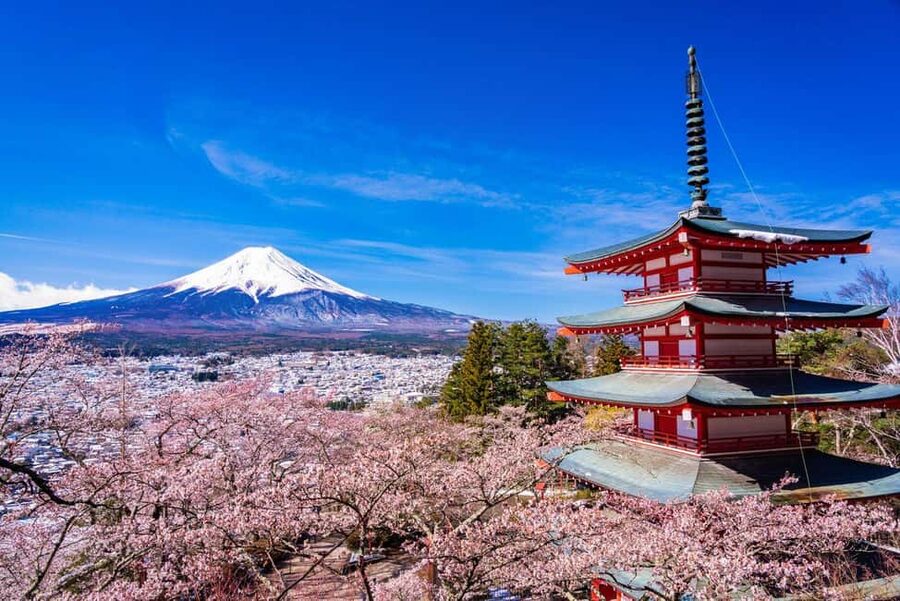
- Arakurayama Sengen Park and Chureito Pagoda: the famous pagoda shot with Mount Fuji in frame, reached by 397 steps.
- Hikawa Clock Shop and Stairway to Heaven: quick, high-impact landmarks for Fuji compositions.
- Oshino Hakkai springs: eight clear springs tied to Fuji, great for reflections and calm scenic pauses.
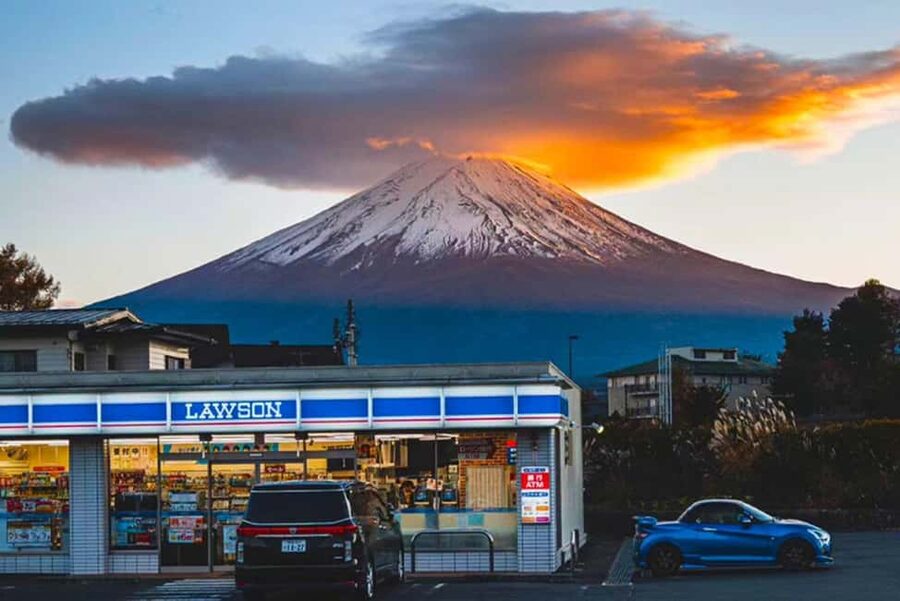
- Lake Kawaguchi photo break at Lawson: plus a complimentary ice cream, tea, or coffee.
- Oishi Park and seasonal color: lavender in summer, kochia in October, and maple corridor dates in fall.
Why This Mount Fuji Photo Tour Works When You Have One Day
If you only have a single day and you care about photos, this tour hits the sweet spot. You’re spending about 10 hours total, including travel time by bus between Tokyo and the Fuji area, so the day is really about maximizing sightings rather than tinkering with schedules.
I like that the tour is designed to remove the usual headaches. You don’t have to plan routes, figure out train changes, or hunt down meeting points in Japanese. Instead, you follow a guide from stop to stop with built-in time for sightseeing and camera breaks. That matters because Mount Fuji photography is half timing, half position. The more you can focus on where you stand and when the light shifts, the better.
You’ll also appreciate how the viewpoints are varied. This isn’t only one “postcard spot.” You move from a hilltop pagoda scene, to a clock shop and a staircase-style Fuji angle, to the quieter spring pools at Oshino Hakkai, and then to Lake Kawaguchi’s flower-focused settings. That variety is what makes a one-day trip feel full, not forced.
The other big plus is pacing for photos. You get multiple photo stops, not just one long stop where you scramble for shots and then move on. Even the breaks are built around visual moments.
You can also read our reviews of more photography tours in Tokyo


Tokyo Pickup and Bus Transfer Details You Should Double-Check
The day starts with one of two Tokyo meeting options: JR Tokyo Station Marunouchi South Exit or Tokyo Mode Gakuen. The drop-off returns you to one of those same locations. That symmetry helps, because you’re not trying to get back across the city later.
One practical step you should take: the day before the trip, you’ll receive an email with the pick-up location details, your guide’s contact information, and the bus license plate number. Check that email, because it’s the kind of thing that prevents last-minute confusion.
You’ll be on a bus for about 2.5 hours each way, so treat it like part of the trip, not a chore. Bring something to keep you comfortable and ready to move when you arrive. If you’re serious about photography, it’s also smart to set your camera settings before you get out, so you’re not fumbling with gear right when you reach your best angles.
Luggage is simple: one piece per person is included for free. If you bring extra luggage larger than 20 inches, there’s an additional charge listed as $17 USD per extra piece. If you’re traveling light with a day bag, you’ll be fine.
Arakurayama Sengen Park, 397 Steps, and the Chureito Pagoda Angle
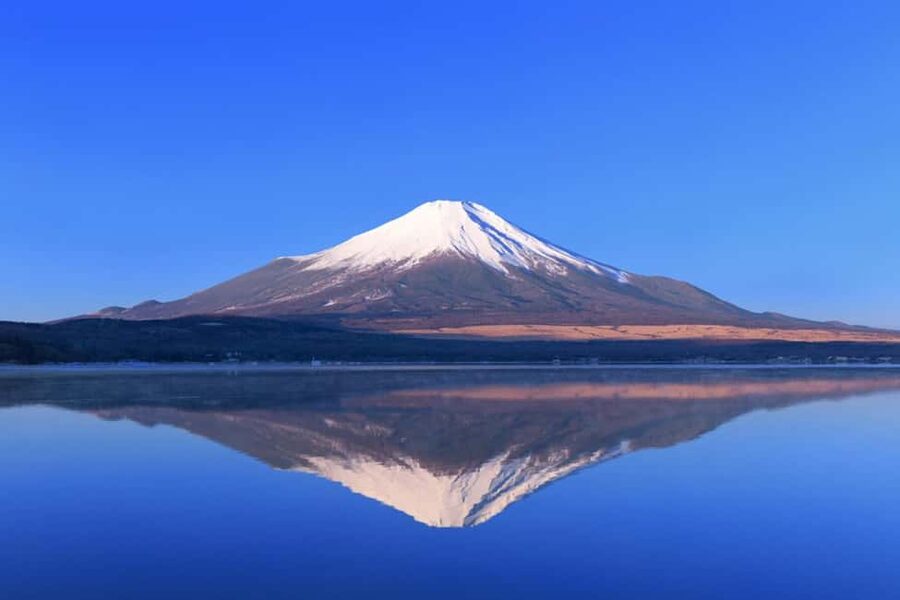
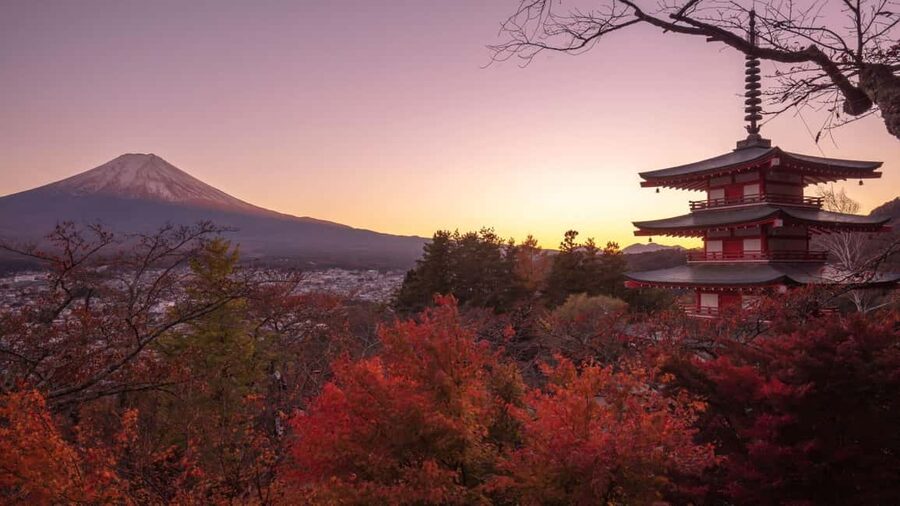
This is one of the strongest early photo stops of the day. You’ll start at Arakurayama Sengen Park, and the main moment is the view of Chureito Pagoda with Mount Fuji in the background.
Getting there means climbing 397 steps. That doesn’t sound like much until you do it, especially in warm weather or if you’re not used to stairs. Comfortable shoes are not optional here. If you’re traveling with anyone who tires easily, this is the part you’ll want to pace carefully.
The reward is the classic composition that people come for: pagoda, surrounding street views, and Fuji aligned in the frame. What I like about this setup is that it’s photogenic from different angles. Even if the mountain isn’t perfectly centered, the pagoda structure gives your photos a strong shape and depth, which helps your shots look intentional.
Expect this stop to feel busy in the best way, because it’s a must-see viewpoint. Try to watch how the crowd positions itself, then pick your own starting angle early rather than waiting until the last minute.
Hikawa Clock Shop, the Stairway to Heaven, and Fast Fuji Compositions
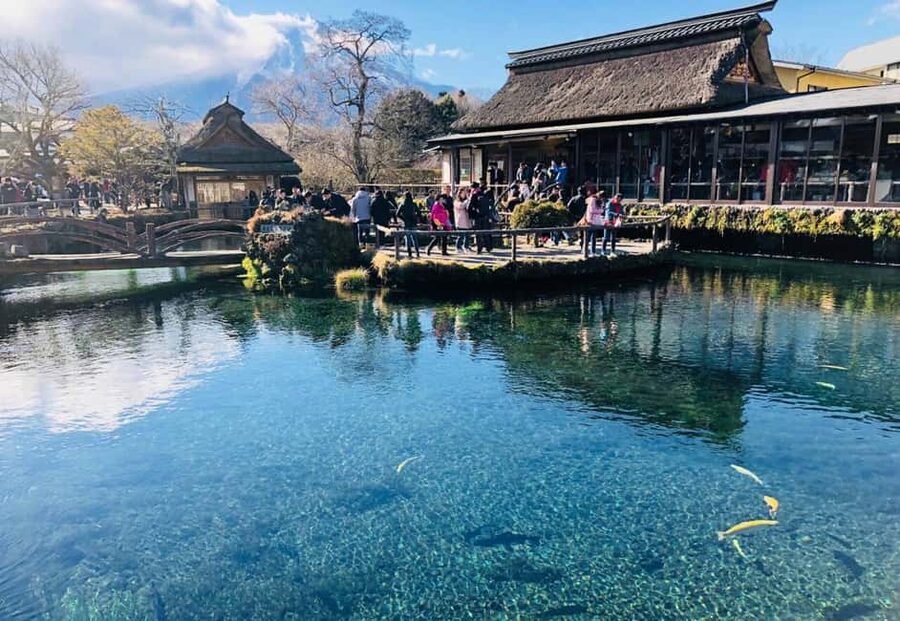
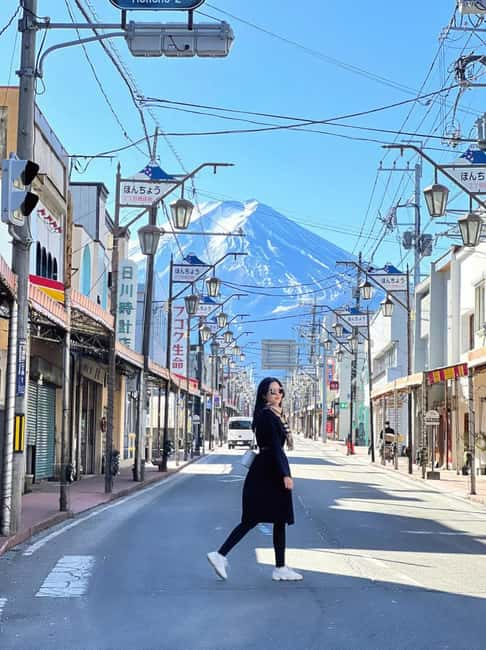
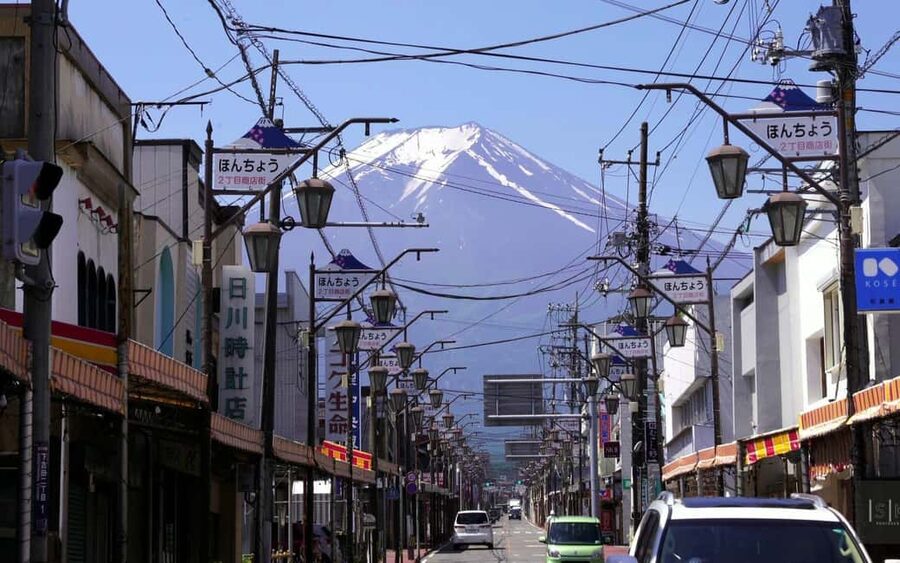
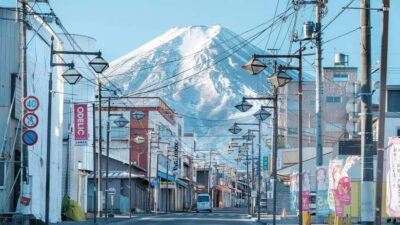
After Arakurayama, the tour moves to Hikawa Clock Shop for a break and photo stop. This is one of those Fuji-meets-quirky-local-landmark moments that photographers love. The clock shop setting gives you a fun subject in the foreground, which helps when you want your Fuji images to feel more than just a distant mountain.
Then comes a stop tied to the Stairway to Heaven view of Mount Fuji. Even though it’s not described as a long hike, it’s still another place where your goal is framing and positioning. You’ll want to plan your shots without blocking others, and you’ll likely be working around the flow of the group.
This portion of the day is a reminder of why guided tours can help even photographers. You get a structured route, so you’re not guessing what’s worth your time and what’s a distraction. The photo stops are short enough to keep the energy up, but frequent enough to give you new angles.
Oshino Hakkai Springs and How to Photograph Clear Water Near Fuji
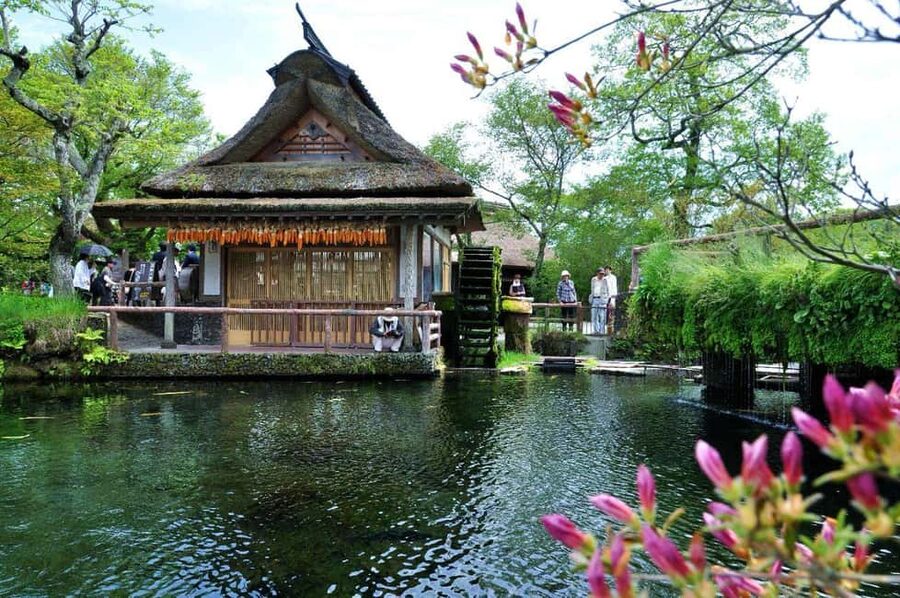
Next up is Oshino Hakkai, a well-known spot with eight pristine springs connected to Mount Fuji. It’s not just pretty, it’s photogenic in a different way than the pagoda or flower parks.
You’ll get about 1.5 hours here, including time to explore and scenic views on the way. The springs are a great subject for photographers because they invite reflection and detail shots. If the weather is clear, you’re set up for that classic “Fuji-meets-water” vibe. If the light is softer, you can still shoot texture and color.
Oshino Hakkai also slows the day down in a good way. You can take a breath from the stairs, shift from wide “big view” compositions to closer framing, and use your camera time to capture something more calm and natural.
One practical tip: stay flexible with your composition. With water areas, your best perspective can change with where you can stand, where water lines sit, and how the light hits. Give yourself a few minutes to test angles rather than taking one quick shot and moving on.
More Tokyo tours and experiences for the shortlist





Lawson Kawaguchiko Station Break, Plus Your Complimentary Treat
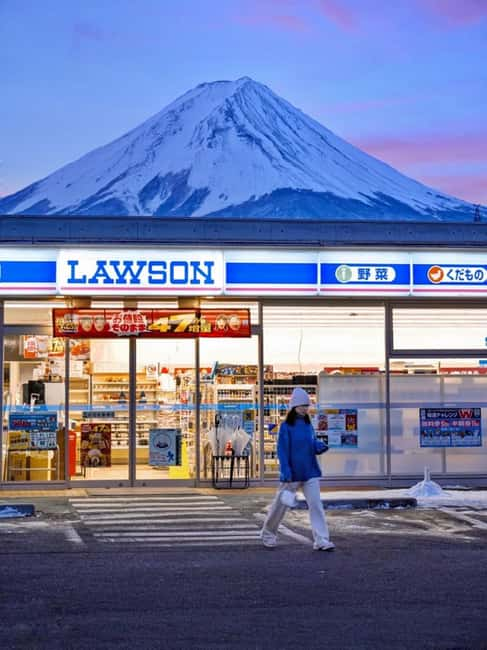
At Lawson Kawaguchiko Station, the tour adds a break plus another photo stop. This isn’t just a convenience stop. Lake Kawaguchi is one of the best regions for Fuji photography, so being positioned near the water area gives you another chance at a different perspective.
What I really like here is the included, simple perk: you can choose ice cream, tea, or coffee as a complimentary option. When you’re spending most of the day moving and photographing, that small refresh helps. It also reduces the temptation to spend time searching for a drink or snack while the light is changing.
Since food and drinks are listed as not included elsewhere, this free choice is a meaningful value add. It also means you can allocate your budget to paid snacks later, or just keep it light and focus on photos.
Oishi Park, Lavender Days, and Seasonal Flower Color at Lake Kawaguchi
The final major visual payoff is Oishi Park and the flower season vibe around Lake Kawaguchi. This part is seasonal, so the exact look of your day depends on when you go.
Here’s what’s specifically mentioned:
- Lavender: enjoy it in June and July
- Begonias and cosmos: July to September
- Kochia: October
- Maple Corridor: available October 20th to November 23rd only
I like that this structure gives you something to aim for beyond just Mount Fuji. Fuji can steal the show, but the foreground color is what turns your images into “this was my trip” photos. Flower fields also create stronger depth, because you can frame the mountain over flowers and get a layered composition.
If you’re going in fall, the Maple Corridor timing matters. If your dates fall outside October 20 to November 23, you won’t be seeing that corridor even if it’s close on a map. Check the month you’re traveling and match it to the flower plan, so you don’t walk in expecting a specific seasonal look.
Also, wear shoes you can stand in. Flower parks often mean walking on paths that are uneven or can get crowded around the best viewpoints. Comfort matters more than you think when you’re planning to spend your day shooting.
What the 10-Hour Day Feels Like, and How to Plan for Weather and Crowds
This trip is designed as a full day, roughly 10 hours, which is long but manageable if you go in prepared. Most of your time is split between sightseeing stops and the bus ride segments. That means you’ll be on your feet at multiple points and working around crowd movement at popular landmarks.
Two practical points to keep you stress-free:
- Bring comfortable shoes and comfortable clothes. You’ll climb stairs at Arakurayama and move between multiple photo stops.
- Watch the weather expectations. Mount Fuji visibility can change, and schedule changes are possible due to daily traffic, weather, holidays, or crowd levels.
The tour also notes that if delays or cancellations happen due to uncontrollable factors, refunds can’t be requested. That doesn’t mean the day will be chaotic, but it does mean you should keep expectations flexible. Think of it as a photography plan, not a guaranteed Fuji guarantee.
Also, during holidays, traffic can extend the duration. So if you’re the type who hates uncertainty, give yourself some buffer when planning your other Tokyo activities around this day.
Price and Value: What $83 Includes, and What You’ll Still Pay For
At $83 per person, this is priced like a structured, guided day. What you’re getting is:
- A tour guide
- Round-trip transfers from your Tokyo meeting point
- Toll fees, parking fees, and fuel fees
That matters because transportation costs add up fast in the Fuji area. If you tried to DIY it, you’d be paying for getting out of Tokyo, figuring out the return, and spending time solving logistics. You also risk losing photo timing when travel runs late.
What’s not included:
- Food and drinks
- Attraction admissions
So you’ll want to budget for your meals and any entry fees at stops. The good news is that there’s at least one included comfort moment at the Lawson stop with a complimentary ice cream, tea, or coffee. That reduces your spending pressure.
For photography lovers, I’d frame the value like this: you’re paying for the route, the timing, and someone to keep you moving efficiently between the places that matter. If you want a calm, guided day focused on shots, the price makes sense. If you want maximum freedom to linger, you may find the pacing a bit structured.
Who This Tour Suits Best
This Mount Fuji 1-Day Photography Tour is a strong fit if:
- You want classic Mount Fuji viewpoints in one day without navigating Tokyo logistics
- You care about foreground subjects, not just a distant mountain
- You like structured photo stops with breaks built in
- You’re traveling with someone who would rather follow a plan than constantly ask for directions
It’s less ideal if you:
- Hate long days and stair climbing, since you’ll face steps at Arakurayama
- Need total flexibility to stay late at one location
- Prefer to handle all transport and scheduling yourself
Should You Book This Mount Fuji 1-Day Photography Tour?
If you want a stress-light day that strings together Fuji views, spring water scenes, and flower-color foregrounds, I think this one earns its keep. The strongest reasons to book are the guided route, the photo-focused stops, and the included transfers that keep you from wasting daylight on logistics.
My recommendation hinges on two things. First, your comfort level with a long day and stairs. Second, your travel month, because the flower payoff depends on what’s in season, including the exact Maple Corridor dates from October 20 to November 23 and the lavender timing in June and July.
If that fits your style, you’ll come away with a fuller set of Fuji images than you’d likely get from a half-planned DIY day.
FAQ
How long is the Mount Fuji 1-Day Trip?
The tour lasts 10 hours.
Where do I meet the guide in Tokyo?
You can meet at JR Tokyo Station Marunouchi South Exit or Tokyo Mode Gakuen. The exact meeting point may vary based on the option booked.
Are the transfers included from Tokyo?
Yes. Round-trip transfers to and from your meeting point are included.
What languages is the live guide?
The live tour guide is available in English and Japanese.
What is included in the tour price?
Included items are the tour guide, round-trip transfers, toll fees, parking fees, and fuel fees.
What is not included?
Food and drinks are not included, and attraction admissions are also not included.
What should I bring?
Bring comfortable shoes and comfortable clothes.
Can I cancel for a refund?
Yes. Free cancellation is available up to 4 days in advance for a full refund.
Does the schedule ever change?
Yes. Travel schedules may change due to daily traffic, weather, holidays, or crowd levels. If delays or cancellations occur due to these factors, refunds cannot be requested.
More Photography Tours in Tokyo


More Tours in Tokyo



More Tour Reviews in Tokyo

Not for you? Here's more nearby things to do in Tokyo we have reviewed












Mount Fuji Tours, side by side.
 ★ 5.0Mt Fuji and Hakone 1-Day Bus Tour Return by Bullet TrainFrom $16326,383 reviews
 ★ 4.0Mt Fuji & Hakone Cruise, Drum Show Bullet Train 1 Day from TokyoFrom $1497,413 reviews
 ★ 4.4Tokyo Mt Fuji 5th St & Hakone Cruise Bus Tour w/Bullet TrainFrom $1545,024 reviews
 ★ 4.5From Tokyo: Mount Fuji Full-Day Sightseeing TripFrom $684,970 reviews
 ★ 4.7Mt. Fuji Tour, Hakone Ropeway, Owakudani, Lake AshiFrom $544,002 reviews
 ★ 4.2Mt. Fuji 5th Station & Hakone Cruise 1-Day Bus TourFrom $1292,381 reviews
 ★ 4.7Mt Fuji Top 5 Spots Day Tour: Arakurayama Park,Oshino HakkaiFrom $532,066 reviews
 ★ 5.0Private Tour to Mt. Fuji and Hakone (Fully Licenced Operator)From $4971,910 reviews
This tour also belongs to