
Review · TOKYO FOOD TOURS
Professional Ramen & Gyoza with Ramen Chef in a restaurant!
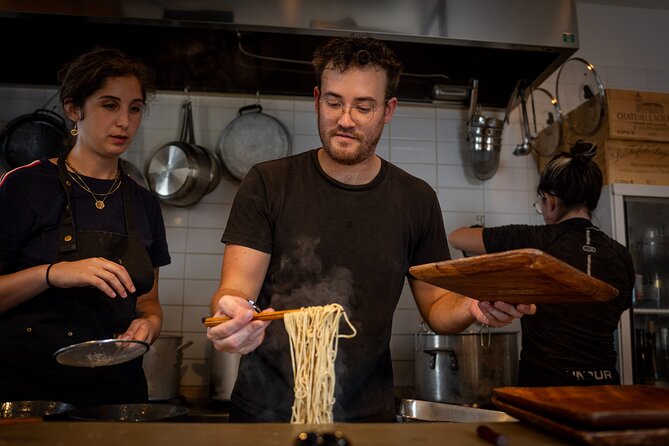
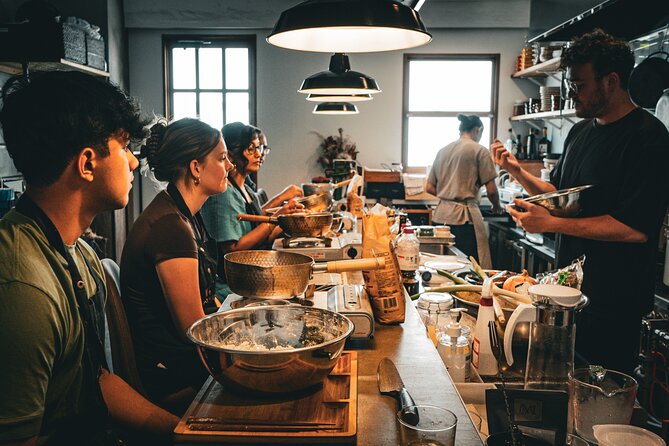
Real Tokyo ramen kitchen beats the hype, because you’ll learn ramen noodles from scratch and hands-on gyoza. I also love that it’s run in a professional restaurant setting, not a casual demo. The one drawback is you should come ready to work hard, with hot pans and lots of hands-on steps for about four hours.
This is a small-group class, max 6 people, so questions do not get lost. The vibe is professional and friendly, with English support from the bilingual crew, including Andrew and his team like Eric, Jae, and Leo. If you like learning how food is built, step by step, this format makes it easier to actually get it right.
You’ll choose between two broth options, and you’ll get a take-home cooking e-book to help you recreate your bowl later. Options for vegetarian or vegan, gluten free, and pork free are listed, but they depend on advance notice and availability, so plan that early.
Key highlights you’ll feel on the day
- Restaurant-grade kitchen time instead of a “watch the chef” class.
- Max 6 travelers for hands-on help and more direct feedback.
- Noodles from scratch plus gyoza rolling so you do the real work.
- Two broth options to match your taste and learn how broth style changes flavor.
- Take-home e-book so the class doesn’t vanish when you board your next train.
- Dietary requests supported with advance communication (subject to availability).
Why This Ramen Class Feels Different in Tokyo
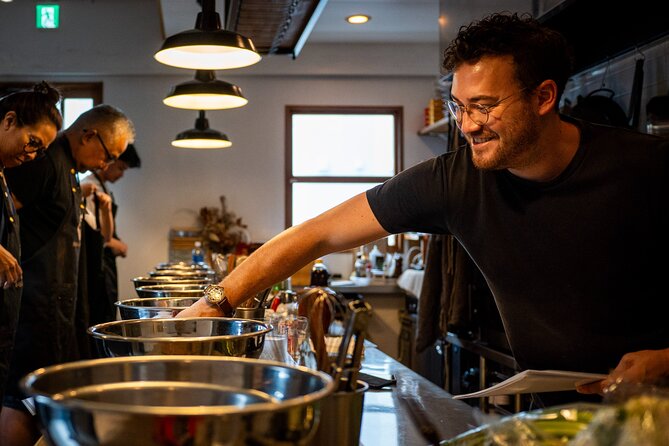
Tokyo is full of ramen. The tricky part is finding a class that teaches you the real mechanics, not just the final bowl. This one happens in a proper restaurant kitchen, which changes everything.
When you use professional equipment, you get cleaner results and faster practice. You’re working with proper tools and a kitchen workflow designed for speed and heat control. That matters for ramen, because ramen quality comes from timing, texture, and technique, not just good ingredients.
The other thing I like is the balance between structure and freedom. You get clear steps and guidance, and you still do enough of the process yourself to feel ownership of the final bowl. That is why so many people leave with that, I want to try this again at home, feeling.
More Tokyo tours and experiences for the shortlist
Getting to Baba Ramen Cooking Meguro and What to Expect at 9:00
The meeting point is Baba Ramen Cooking Meguro101, 3-chōme-7-32 Shimomeguro, Meguro City, Tokyo 153-0064. It starts at 9:00 am and ends back at the same spot.
Because it begins in the morning, you get a calmer Tokyo pace. You’re not trying to fit ramen into the middle of shopping crowds. It also helps that the experience is about four hours, so you are not stuck all day without downtime.
You’ll use a mobile ticket, and you should plan to arrive a bit early so you can settle in and start cooking without stress. The location is noted as near public transportation, which is the smart move for Tokyo, especially if you want to keep the rest of your day open.
The Small Group Setup That Makes the Difference
This is capped at 6 travelers, and it shows in how the class runs. In a larger group, instructors spend more time correcting the line and less time watching how your hands move. Here, you’re more likely to get quick, practical feedback while you’re actively doing the step.
I also like that the chefs are bilingual, with English support alongside Japanese. That means you can understand not only what to do, but why the step matters. Some of the best learning in cooking classes comes from getting the reason behind the technique, because that transfers when you’re improvising at home.
On top of that, the kitchen setup and the team style are described as organized and welcoming. If you’re the type who worries about slowing down a class, this format is built to keep you involved without making you feel lost.
Make Ramen Noodles From Scratch, Not From a Shortcut
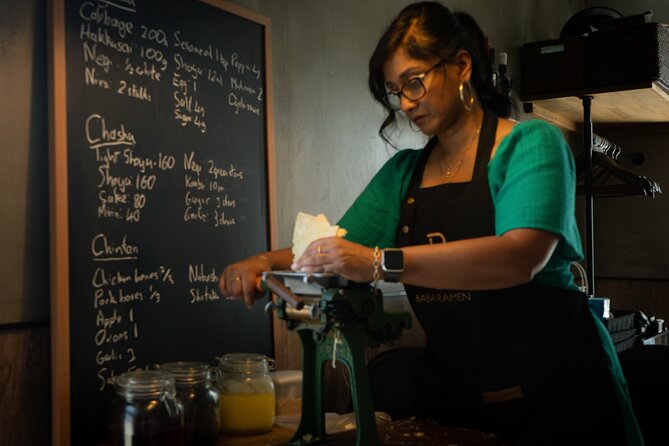
This is the big event: making authentic ramen noodles from scratch.
In most ramen experiences, you might mix sauce, assemble toppings, or at most roll something thin. Here, you’re in the workflow of noodle-making, where texture is everything. The process teaches you what the dough feels like, how the working stage changes the end result, and why noodles are not just a neutral base.
The class also emphasizes etiquette and technique. That is not fluff. Ramen is eaten with specific expectations, and those expectations connect to how it is prepared. Learning the etiquette side helps you understand portioning, serving style, and how ramen culture shapes the dish you end up eating.
A practical takeaway: when you learn noodle-making in a professional kitchen, you pick up small timing cues you would not guess at home. Those cues show up later when you try to recreate the recipe, especially for thickness and consistency.
Broth Options and Flavor Decisions You Can Taste
One of the smartest features is that you can choose from two broth options. Broth is where ramen personalities show up. Different broth styles change aroma, richness, and how well toppings and noodles carry the final flavor.
I like that you’re not just eating ramen and moving on. You’re learning how broth fits into the whole system. Even if you cannot taste every “theory” in the moment, your brain learns faster when it has a cause-and-effect relationship: broth choices impact what the bowl tastes like, and technique affects how well your noodles match the broth.
You’ll also get guidance that helps you think like a cook, not just a diner. When people say they gained real understanding, it usually comes down to learning how seasoning components like tare (the flavor concentrate) and broth interact. You can plan to use those lessons later.






Gyoza Hands-On, From Rolling to Pan Work
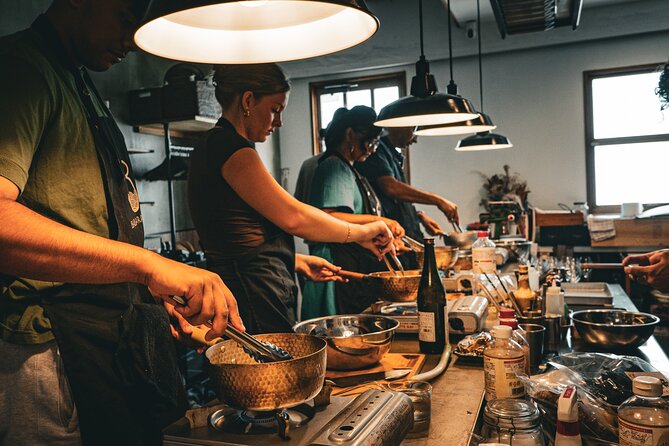
After ramen noodles, the class shifts to gyoza. This is a great addition for two reasons.
First, gyoza is tactile. You can see what good dough handling looks like, and you can feel when a fold or seal is off. Second, gyoza is a direct lesson in heat management. Pan work teaches you why a dumpling can be juicy inside and crisp outside, if you time it right.
The best part is that you’re not just assembling one gyoza. You’re learning the technique so you can repeat it. That makes it more than a single meal. It becomes a skill you can carry home.
If you care about Japanese home cooking, this section is also a confidence boost. Gyoza is one of the dishes many people try to recreate first, and rolling and pan timing are the two hurdles that most people struggle with. This class attacks those hurdles.
What You Eat During the Class
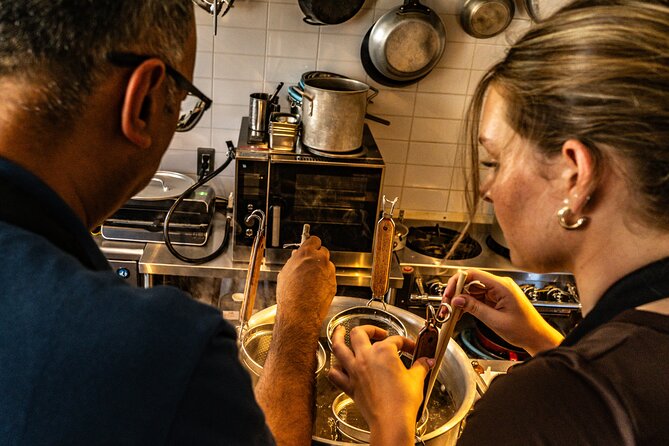
You’ll eat what you make, and the portions are described as satisfying. Because you’re working constantly, it builds up a real appetite. The end result is that you stop viewing ramen as a mysterious restaurant dish and start seeing it as a build you can repeat.
One thing I’d suggest is pacing. You will be hungry, and it is tempting to rush. Try to slow down enough to notice the difference between your noodle texture and how the broth clings to it. That is where the learning sticks.
Also, if you’re sensitive to the rhythm of cooking classes, plan for a busy morning. The time goes fast partly because you’re always doing something, not waiting for a demonstration.
Dietary Options and How to Plan Them Early
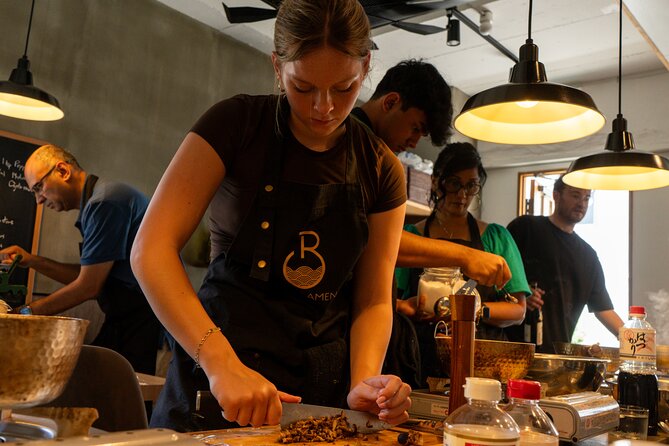
This experience notes support for vegetarian and vegan, gluten free, and pork free options if you comment in your request, subject to availability. That is helpful, but it also means you should treat dietary requests as part of your planning, not something to hope for at the last minute.
If you’re vegetarian or vegan, ask what substitutions are available in broth and fillings. The class includes broth choices, so your best results will likely depend on how they can adapt those broth options for your needs.
If you’re gluten free, the noodles and wrappers are usually the hardest parts in any cooking class. Since gluten free is listed as an option, it means the provider expects they can manage it, but you still should request early and confirm details at booking.
If you’re pork free, it’s usually simpler than full gluten free. Still, request it clearly so nobody has to guess.
Price and Value: Is $159.18 Worth It?
It is not the cheapest cooking class in Tokyo, so you should judge value by what’s included and how much you actually do. Here’s the value case.
You get:
- Restaurant kitchen access with professional equipment
- Noodle-making from scratch
- Gyoza making
- Broth option choice
- A take-home cooking e-book
- Small group size for feedback
- A full meal made from your work
Cooking classes that feel like demos cost less, but you learn less. This class costs more because you’re paying for real hands-on technique time. In plain terms, you’re paying for noodle skill and broth understanding, not just the final bowl.
When people say it was the best class they did in Japan, the reason is usually this combination: you did almost everything yourself, the kitchen conditions were legit, and the food tasted like restaurant quality because you used proper technique.
Practical Tips So You Don’t Feel Rushed
A few things make the experience smoother.
First, wear comfortable clothes you can cook in. Even if you’re not the one holding the heaviest tools, ramen and gyoza are messy food by nature, flour and hot oil included. You do not want to worry about your outfit while you’re learning.
Second, bring your patience for teamwork. This class works best when you’re willing to do the step in front of you, even if it is hot or fast-moving. The good news is the staff and kitchen flow are described as organized, so you’re not left scrambling.
Third, if you have dietary restrictions, communicate early. Options exist, but subject to availability. Early messages give the team time to plan.
Fourth, plan around the weather. The experience states it requires good weather. If it gets canceled due to weather, you’ll be offered a different date or a full refund. That matters because Tokyo weather can change quickly.
Who This Class Is Best For
This is a strong match if:
- You want a real ramen skill, not just a meal
- You like hands-on cooking and learning technique
- You want personalized feedback in a small group
- You want both ramen and gyoza in one morning
- You care about recreating results at home using the take-home e-book
If you hate messy food or you want a low-effort, sit-and-watch experience, this may feel like too much work. The upside is that people who want to learn end up feeling proud when they taste the bowl they made.
Should You Book Baba Ramen’s Ramen and Gyoza Class?
Book it if you want to leave Tokyo with more than photos. You’ll leave with noodle-making confidence, gyoza skills, and a better sense of what makes ramen taste the way it does. The restaurant kitchen setup and small group size are the difference makers.
Think twice if you want a relaxed class, because this is hands-on cooking with heat, timing, and flour on the agenda. Also, if you have a complex diet, request it early so you get the best chance of matching substitutions.
If your goal is to understand ramen like a cook, not like a diner, this is one of the most direct ways to get there.
FAQ
How long is the ramen and gyoza cooking experience in Tokyo?
It runs for approximately 4 hours, starting at 9:00 am.
Where is the meeting point for the class?
The start point is Baba Ramen Cooking Meguro101, 3-chōme-7-32 Shimomeguro, Meguro City, Tokyo 153-0064, Japan. The activity ends back at the meeting point.
How large is the group?
The class has a maximum of 6 travelers, which helps with more hands-on time and guidance.
Can I request vegetarian, vegan, gluten-free, or pork-free options?
Yes. Vegetarian and vegan options are available if you comment in your request, subject to availability. Gluten free and pork free options are also listed as available with the same request approach, subject to availability.
What do I take home after the class?
You can take home a cooking e-book so you can recreate the ramen recipe at home.
What is the cancellation and weather policy?
You can cancel for a full refund up to 24 hours in advance of the start time. If the experience is canceled due to poor weather, you will be offered a different date or a full refund.
More Dining Experiences in Tokyo


More Tour Reviews in Tokyo
Not for you? Here's more nearby things to do in Tokyo we have reviewed












Tokyo Food Tours, side by side.
 ★ 5.0Shinjuku Food Tour (13 Dishes at 4 Local Eateries)From $866,603 reviews
 ★ 5.0Tokyo Bar Hopping Tour in Shinjuku (All-You-Can-Drink + Dinner)From $1063,587 reviews
 ★ 4.9Shinjuku Food Tour (15 Dishes and 4 Eateries)From $852,033 reviews
 ★ 5.0Best of Shinjuku: Izakaya Food Tour (4 Stops, 14+ Tastings)From $921,863 reviews
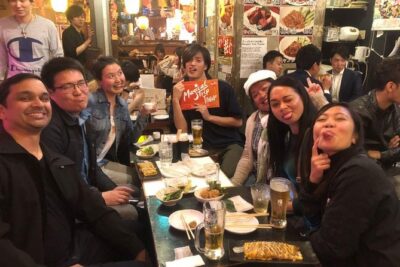 ★ 5.0Shibuya Meltdown Nightlife Tour: All-You-Can-Drink Bar HoppingFrom $1061,058 reviews
 ★ 5.0Eat and Drink Like a Local: Tokyo Ueno Food Tour-Taverns&RamenFrom $95957 reviews
 ★ 5.0Ramen & Gyoza Cooking Class in Tokyo with Local Supermarket VisitFrom $122823 reviews
 ★ 5.0Shibuya Food Tour (13 dishes and 4 Eateries)From $77770 reviews
This tour also belongs to