
Review · TOKYO CITY TOURS
Tokyo Bay Yakatabune Dinner/Day Cruise with Japan Show and Drinks
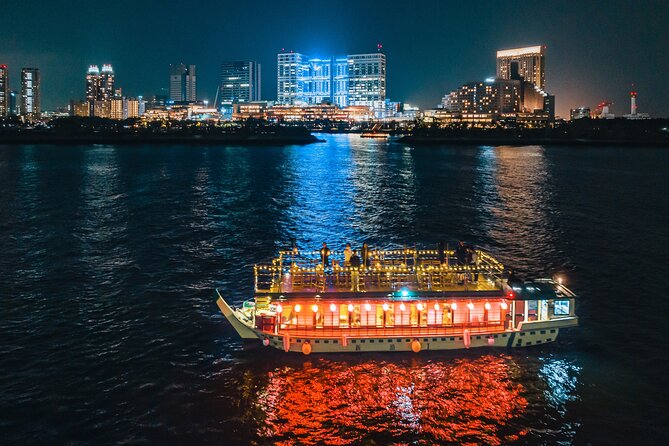
Tokyo at night feels different from water. This yakatabune dinner cruise stacks sightseeing, live music, and an on-board hot pot dinner into one easy 1 hour 40 minute outing.
I love the way the sukiyaki dinner is served right on the boat, warm and simple, without you needing to hunt down a restaurant. I also love the entertainment factor, with live performers creating an easygoing, hands-on atmosphere while the bay lights up.
One thing to plan around: it is shoes off seating, with assigned spots that can be tatami style or Western chairs, plus the occasional shared table.
Quick hits before you board
- Open-air viewing deck for photos with less obstruction than you get on land
- Unlimited soft drinks included, so you can focus on the meal and the views
- Live Japanese performance as you cruise, with musicians and hosts who bring energy
- Night photo stops like Rainbow Bridge, plus key bay landmarks as you pass them
- Limited, cozy boat size (maximum 58 travelers), meaning you will feel the “together” vibe
- Sukiyaki hot pot served on board if you select the meal option
Where the yakatabune starts: Etchūjima meeting point and boarding reality
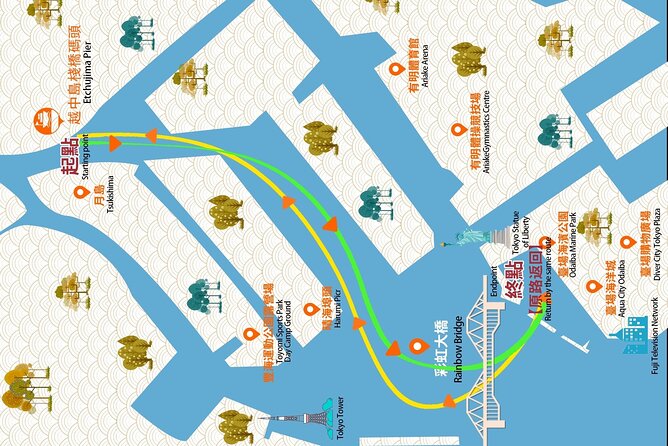
Your cruise begins at 1-chōme-3-23 Etchūjima, Koto City, Tokyo 135-0044, Japan, and the activity ends back at the same place. You will have a mobile ticket, which speeds things up when you arrive.
Important practical heads up: transportation to the pier is not included. I’d plan to get yourself there with train or a short taxi ride, then give yourself time to find the exact meeting spot and line up.
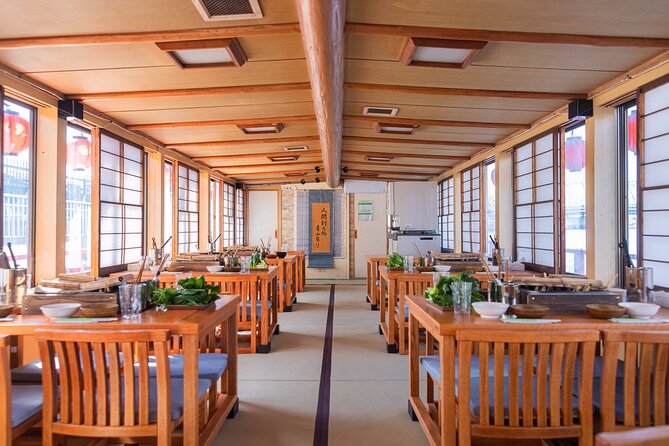
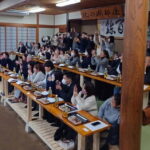
Boarding also means the rules are clear. You will need to remove your shoes, and seating is assigned randomly between traditional tatami-style and Western-style chairs. On a boat with limited space, shared tables may apply, so go in with a “friendly and flexible” mindset.
You can also read our reviews of more boat tours in Tokyo


The 1 hour 40 minute plan: what happens as Tokyo Bay lights up
This is a night cruise format built around a short slice of Tokyo Bay, with photo opportunities and landmark passes. The full experience runs about 1 hour 40 minutes, and it is paced enough that you can eat without missing the best lights.
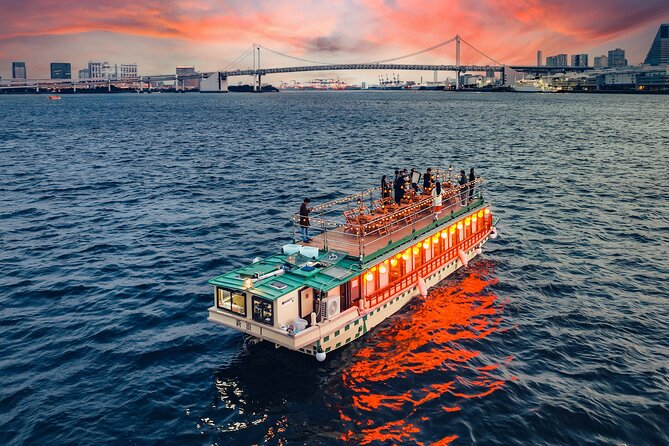
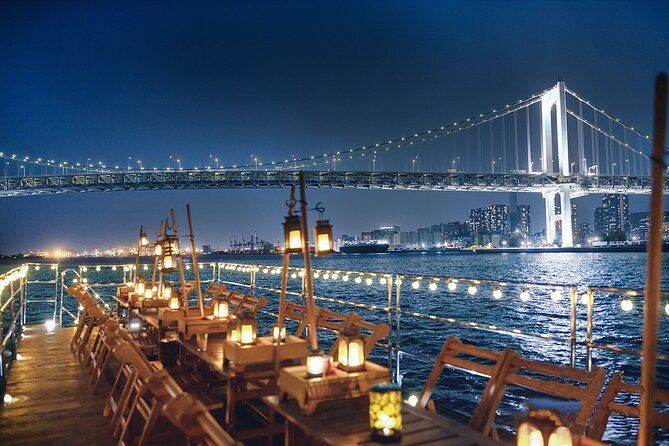
You will have a photography moment at Rainbow Bridge. It is a long suspension bridge completed in 1993, spanning about 3,750 meters, with two tall white towers. At night, the bridge lighting turns into pink and white tones, which is exactly the kind of contrast that looks great on a camera.
From there, the route includes a longer sightseeing stop at the Tokyo Statue of Liberty replica in Odaiba. You get about 30 minutes there, which is more than a quick peek and gives you time to frame photos and take in the bayfront atmosphere.
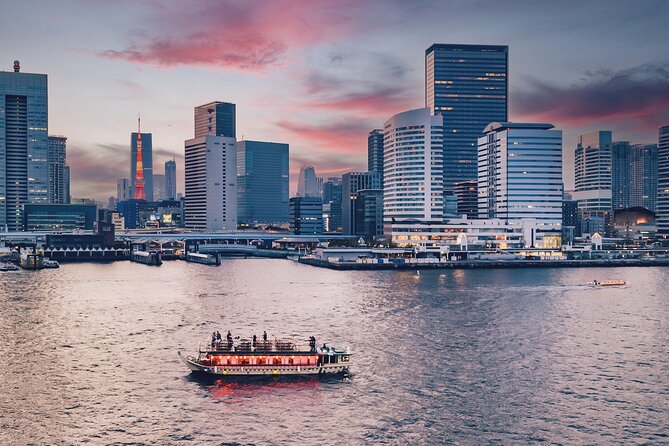
As you continue, you pass major bay landmarks, including Fuji TV on the waterfront. You also get Tokyo Tower in the mix, one of the city’s most recognizable silhouettes, completed in 1958 and standing at 333 meters tall.
Sukiyaki on the boat: why this dinner format works
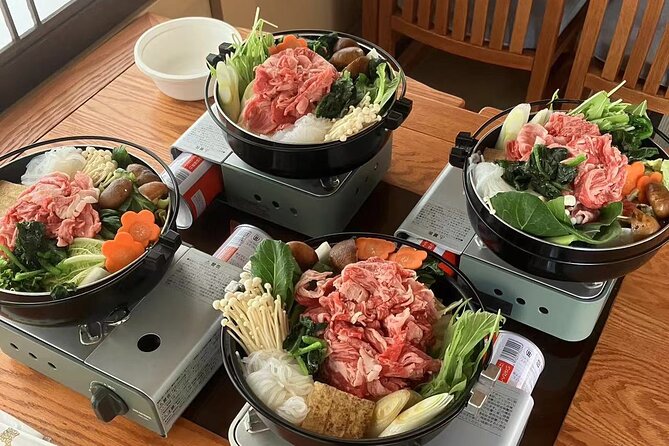
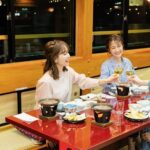
The big value move here is that the meal is part of the experience, not an add-on. If you choose the sukiyaki option, you get a sukiyaki beef hot pot served on board.
I like this setup because it keeps the evening simple. You are already on the water with a built-in schedule, so dinner timing and the show timing stay together, and you do not lose time bouncing between stops.
You also get unlimited soft drinks included. That matters more than it sounds, because it keeps the meal comfortable. You can eat, sip, and then step out to the deck for photos without worrying about ordering each time.
One more detail to keep in mind: on-board seating can be low and cozy. A few people specifically noted that tatami setups can mean low chairs on the mats rather than cushioned seating, so if you prefer higher seats, aim for the Western-chair allocation when possible (but know it is random).
Live music and traditional performance: what to expect on board
The boat entertainment is not just background audio. It is a live Japanese traditional performance included with your ticket, timed into the cruise.
From the performer names I saw repeatedly in guest feedback, you might run into artists like Hibiki, Yuzu, Yuki, or Midori, and you may be hosted by someone like Karen or Sheila. Other cruises also mention hosts such as Yoyo, with a guide style that helps you know where to look as the landmarks slide past.
This is a good fit for people who enjoy music more than people who want a strictly scripted “tour guide talk” every minute. The pacing feels like an evening with cultural performance and storytelling moments, rather than a constant narration track.
If you are a music fan, do not miss the moments when the performance is closest to you in the cabin. Some guests described the shamisen-style music as interactive and memorable, and it tends to land best when you lean in instead of treating it as optional.
Tokyo Bay night sights: Rainbow Bridge, Odaiba, Fuji TV, Tokyo Tower
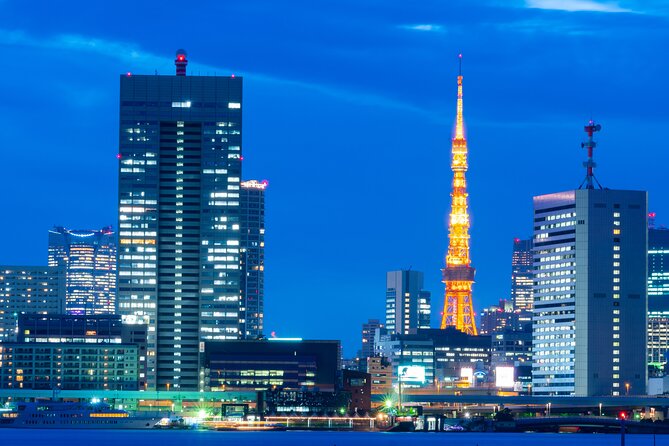
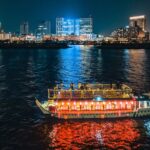
This cruise is built around the kind of night views that look better after dark. You are in Tokyo Bay with the city lights reflecting on the water, and the main landmarks arrive as you glide past.
Rainbow Bridge is the first major photo target. Because the bridge is lit in distinct colors at night, you get that “big Tokyo” feeling without having to fight for a high-rise view.
Next is the Tokyo Statue of Liberty replica in Odaiba, with about 30 minutes of sightseeing time. The value of that time is simple: you can actually move and reframe shots instead of snapping from one spot and calling it done.
Then Fuji TV appears as part of the waterfront skyline. The building is one of those instantly recognizable silhouettes in the bay area, so even if you do not know every angle, it helps you orient yourself to where you are in Tokyo.
Finally, Tokyo Tower rounds out the night. It is a classic landmark, and seeing it from the bay adds a different sense of scale than you get on land streets.
More Tokyo tours and experiences for the shortlist
Open-air viewing deck: photo time and comfort tips
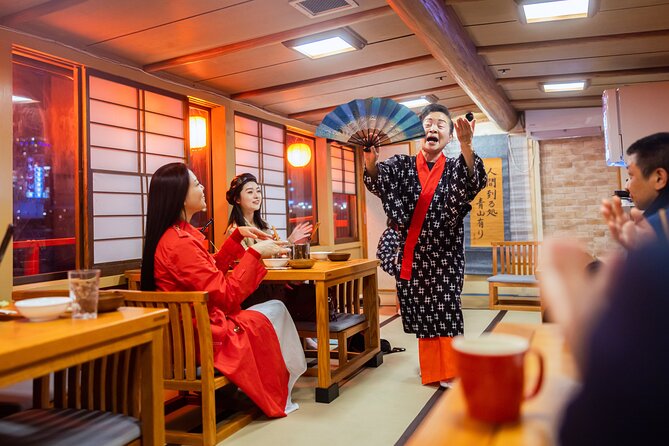
The open-air viewing platform is one of the reasons to choose this kind of cruise. You get chances to step out and shoot photos with fewer obstructions than you’d have from a fully enclosed boat cabin.
Do not ignore how weather changes the experience. In colder months, the deck can feel chilly, and if you plan to spend time outside, I’d bring a warm layer and something wind-resistant.
I also think this is one of those experiences where you should move with the schedule. When the boat slows near key areas, step out, take a breath, and grab your photos quickly before you feel rushed back to the meal or the performance.
Price and value: is $65 a smart deal?
At $65 per person for an evening cruise, the value hinges on what you care about most.
If you want one ticket that combines: boat time on Tokyo Bay, a traditional performance, and a hot pot dinner plus unlimited soft drinks, this is a straightforward package deal. You are not just paying for views, you are paying for a whole evening rhythm.
The meal component is the pricing anchor. With sukiyaki included when you select that option, it turns the cruise into dinner entertainment instead of a sightseeing-only activity.
And the photo value is real. The open-air deck plus night landmark passes add up, especially if you are trying to avoid paying separately for a fancy view deck later.
What might reduce the value for some people is that this is not a nonstop, all-day tour. It is a scenic trip with highlights and cultural performance built in, so if you expect a constant step-by-step guided itinerary for every minute, you might want to pair it with land sightseeing.
The small-but-important considerations: seating, shoes, and expectations
This cruise has a few practical constraints that you should treat as part of the deal, not surprises.
Shoes off is mandatory, and that can be uncomfortable if you are used to wearing socks you want to keep pristine. Also, seating is randomly assigned. You could land in tatami style or Western-style chairs, and you should be ready for the shared-table reality if the boat is full.
The boat is also limited in capacity, with a maximum of 58 travelers. That sounds like a “small group,” but it also means you will likely be in close quarters with strangers, especially during meal and performance time.
Finally, timing matters. If you go out during colder weather, deck time may be brief unless you dress warmly. If you go in mild weather, you will likely linger more outside.
Should you book this Tokyo Bay yakatabune dinner cruise?
I’d book it if you want a low-effort evening with a clear payoff: Tokyo Bay night views, a proper on-board dinner experience, and live Japanese performance that feels part of the ride. It is especially worth it if you are pairing this with other Odaiba or Tokyo highlights and want your night plans to feel different from a typical restaurant meal.
I might skip it if you hate shoes-off spaces, you strongly prefer assigned seating, or you want a highly structured, commentary-heavy tour from start to finish. It is more like a friendly cultural dinner cruise than a strict walking tour with constant narration.
If you’re flexible and you dress for the deck weather, this is the kind of activity that gives you an easy Tokyo memory without turning your evening into a logistics puzzle.
FAQ
What is the duration of the Tokyo Bay yakatabune dinner cruise?
The cruise runs about 1 hour 40 minutes.
How much does it cost?
It is $65.00 per person.
What is included with the ticket?
Your ticket includes the yakatabune cruise plus unlimited soft drinks on board, a Japanese traditional performance, and a sukiyaki beef meal if you select the option for it.
Is transportation to the pier included?
No. Transportation to the pier is not provided, and you will need to make your own way to the meeting point.
Do I need to remove my shoes?
Yes. You will need to remove your shoes for this experience.
What kind of seating should I expect?
Seats are assigned randomly and may be either Japanese tatami style or Western-style chairs. Shared tables may be required due to limited seating.
Is there an open-air area for photos?
Yes. There is an open-air viewing platform where you can enjoy unobstructed views and take photos.
What stops or sights are included during the cruise?
You will have photography time at Rainbow Bridge, you’ll stop for about 30 minutes for sightseeing at the Tokyo Statue of Liberty replica in Odaiba, and you will also see Fuji TV and Tokyo Tower as part of the route.
What is the meeting point and where does it end?
The meeting point is 1-chōme-3-23 Etchūjima, Koto City, Tokyo 135-0044, Japan, and the activity ends back at the same meeting point.
What happens if weather is bad?
The experience requires good weather. If it is canceled due to poor weather, you will be offered a different date or a full refund.
Can I cancel for a refund?
Yes, free cancellation is available. You can cancel up to 24 hours in advance for a full refund.
More Dining Experiences in Tokyo
More Boat Tours & Cruises in Tokyo
More Tour Reviews in Tokyo




Not for you? Here's more nearby things to do in Tokyo we have reviewed












Tokyo City Tours, side by side.
 ★ 5.01-Day Tokyo Bus TourFrom $12914,250 reviews
 ★ 4.5TOKYO SKYTREE® Admission ticketFrom $1311,192 reviews
 ★ 4.6teamLab Planets TOKYO Digital Art Museum Entry TicketFrom $259,779 reviews
 ★ 4.0Mt Fuji & Hakone Cruise, Drum Show Bullet Train 1 Day from TokyoFrom $1497,413 reviews
 ★ 5.0Shinjuku Food Tour (13 Dishes at 4 Local Eateries)From $866,603 reviews
 ★ 4.4Tokyo Mt Fuji 5th St & Hakone Cruise Bus Tour w/Bullet TrainFrom $1545,024 reviews
 ★ 5.0Flagship 2-Hours Official Street Go-Kart Tour – Tokyo Bay ShopFrom $644,974 reviews
 ★ 4.5From Tokyo: Mount Fuji Full-Day Sightseeing TripFrom $684,970 reviews
This tour also belongs to