
Review · SHIBUYA TOURS
Tokyo Bike Tour: Shibuya & Hidden Tokyo
Shibuya on two wheels feels oddly doable. This small-group bike tour lets you roll through Shibuya, Harajuku, Aoyama, and Gaien with a guide taking care of the route, the safety, and the talking.
I love how you get iconic sights plus the quieter streets that usually stay off a first-timer plan, with stops like Shibuya Crossing, Hachiko, Cat Street, and Yoyogi Park. You also get real neighborhood guidance, including cafe and restaurant ideas from a Shibuya-based cyclist guide named Taichi.
The main consideration is cycling comfort. You need to be confident riding on pavements, handling cross traffic lights, and moving through crowded, tight areas at about 15 km/h, and you must follow Japanese traffic rules.
Key Things I’d Plan Around
- Max 6 travelers for a calmer ride and more time for Q&A
- Near Yoyogi and Shinjuku (about a 1-minute walk from Yoyogi Station area, about 10 minutes from Shinjuku Station)
- A clear pace target at roughly 15 km/h, so you are riding, not just coasting
- A mix of famous and local streets including Shibuya Crossing, Hachiko, Cat Street, and quieter back roads
- Real contrast stops from Yoyogi Park to Aoyama Cemetery, then on to Japan National Stadium area
- A guide who rides and explains with local food and drink recommendations
Why Shibuya Feels Easier by Bike Than by Subway
Tokyo’s reputation can make you picture constant stress: packed platforms, stairs, long walks, and trains that never stop being crowded. Getting on a bike changes the whole rhythm. You move with traffic, at your own steady effort, and you can see more of the street-level life that you miss when you’re underground.
What I like most is that this tour is built for flow. You cover a focused slice of the city in about 3 hours, and you do it with a guide who leads the route. That means you can spend your brainpower looking around instead of plotting turns.
The other thing that works is the mix of stops. You do the big-photo moments, like Shibuya Crossing and Hachiko, but you also get to pedal through the surrounding neighborhoods where the vibe shifts block by block. That combination is exactly what you want in a first week in Tokyo.
You can also read our reviews of more cycling tours in Tokyo
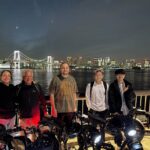
Meeting at Umayamichi Park, Then Rolling Into Shibuya at a Human Pace
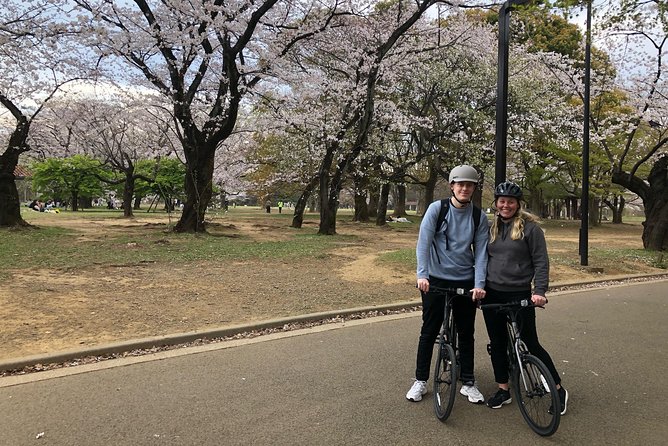
The meeting point is Umayamichi Park 5-chōme-24-11, Sendagaya, Shibuya, Tokyo. The tour ends back at the same place, which keeps logistics simple.
Location matters here. The start is near public transportation, with about a 10-minute walk from Shinjuku Station and only about a 1-minute walk from Yoyogi Station. So even if you’re staying around Shinjuku, Harajuku, or somewhere between, you’re not fighting transit plans before the ride starts.
Group size is capped at 6 travelers, and the ride pace is about 15 km/h. In real terms, this is not a slow stroll, but it also isn’t a speed challenge. It’s more like steady city cycling where you stay with the group without getting dropped.
Also, there are two daily departures, so you have a better chance of fitting this into your day without forcing your whole schedule to bend.
The Route in Plain English: What You’ll Actually See
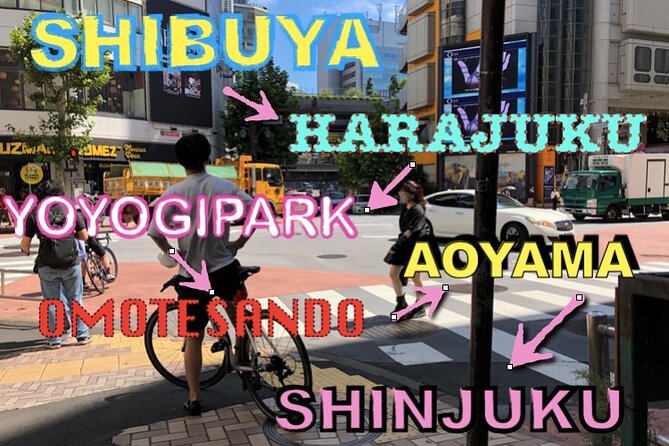
This is a Shibuya-focused loop that also reaches into Harajuku, Aoyama, and the Gaien area. You’ll pass both famous landmarks and lesser-used streets, and the guide handles the turn-by-turn so you don’t have to.
Here’s how the itinerary typically flows, and what each stop is doing for your understanding of the area.
Yoyogi Park: Start With Space, Then Swap Into City Mode
You begin at Yoyogi Park. It’s a good warm-up moment because you get a breath of green before you hit the most famous, most crowded intersections.
Even if you’ve seen Yoyogi Park in photos, biking changes how you experience it. You’ll feel how close it is to neighborhood streets and how quickly scenery shifts from wide open space into dense urban blocks. That contrast helps everything after it make sense.
Shibuya Crossing: The Icon, Up Close and Moving
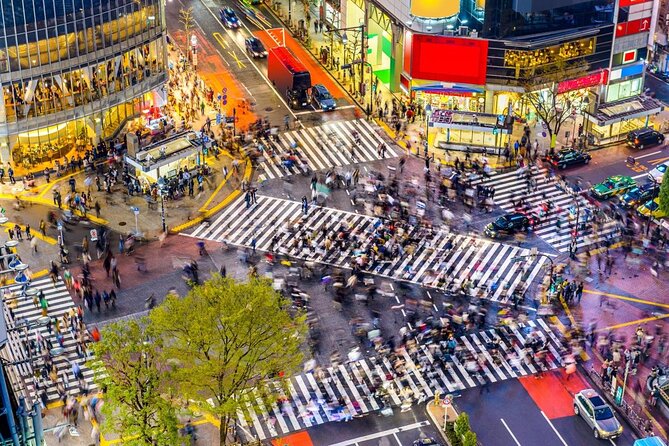
Next up is Shibuya Crossing. From a bike, it’s less about standing and staring and more about watching how people actually move through the space while traffic signals do their work.
The big benefit is timing and perspective. The guide can time you so you’re not just stuck in one corner. You also get a better sense of which roads feed into the scramble and how that shapes daily life around Shibuya.
If you’re the type who likes to understand systems, this is your stop. You learn the layout, not just the photo angle.


Hachiko: Where Tradition Meets the Tokyo Meeting Point Habit
Then you’ll stop at Hachiko. It’s more than a statue moment. It’s a reminder that Shibuya is also about routines: meeting points, quick errands, and people moving with purpose even in chaos.
A bike tour gives you a sense of the surrounding streets too. You see how Hachiko sits inside a web of side streets rather than as a standalone landmark. That makes it easier to build your own future route on foot.
Shibuya Cat Street: Fashion Street, But With Local Street Energy
You’ll ride through Shibuya Cat Street. This is one of those places where the name alone won’t prepare you for the reality. The energy is different from the major intersections, and you feel it more when you’re moving slowly enough to look.
Cat Street is also a good stop for people who want “Tokyo style” beyond the landmark list. It’s a practical way to understand what the neighborhood is known for, without spending hours in the crowds waiting for the exact perfect moment.
Aoyama Street: A Change of Tone, Still Very Central
Next is Aoyama Street. The vibe tends to shift here, and biking helps you notice the change right away. You go from one kind of street scene to another without needing to take transport or walk long distances.
This stop also helps the tour deliver variety. Shibuya can feel intense, so Aoyama’s different feel gives your brain a reset.
Aoyama Cemetery: The Calm Detour That Makes the Ride Memorable
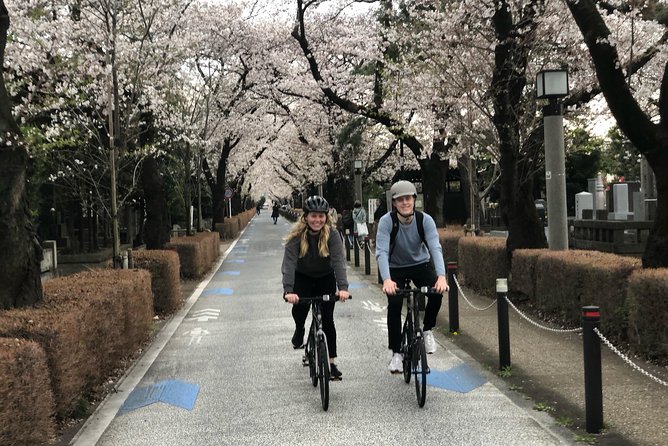
You’ll also stop at Aoyama Cemetery. This is a striking contrast stop, and it’s exactly the kind of detour that a “walk-only” first-timer plan often misses.
On a bike, you experience it as a quiet pocket inside a very busy city. It adds emotional texture to the day, not just photo texture. And since you’re already cycling nearby neighborhoods, it doesn’t feel like an extra chore.
Japan National Stadium Area: Big Urban Scale, Sports-City Thinking
Finally, you reach Japan National Stadium area. This helps you understand Tokyo not only as shopping and intersections, but also as a city that organizes huge events and crowds.
From a bike, you can connect the stadium space to the surrounding streets and how you might navigate there later. Even if you never catch an event, it’s useful context for where you are in the city.
Why Taichi’s Guide Style Matters More Than the List of Sights
A tour like this can easily become a “see these, take photos, move on” machine. What makes it worthwhile is the guide and the way the ride is structured.
The guide is based in Shibuya and is an avid cyclist. That may sound like a throwaway detail, but it shows in how the route feels. You’re not being led along random quiet roads for scenery. You’re being led along roads that work for bikes and for staying with the group.
Taichi is also calm and clear. In multiple write-ups, people highlight how safe they felt and how well he gave directions in busy areas. That matters in Tokyo because the most intimidating moment is usually not a hill. It’s the mix of crossing signals, tight lanes, and unpredictable pedestrian movement.
You also get a built-in Q&A rhythm. The guide will answer questions as you ride. It’s also where you pick up practical local ideas, including cafe and restaurant recommendations that go beyond the obvious guidebook list.
One more smart touch: when the group is small, the route can be adjusted to fit your situation, including tailoring stops based on where you’re staying. That’s how a “standard tour” starts to feel personal.
How Hard Is the Cycling, Really? (And Who Should Skip If It Sounds Stressful)
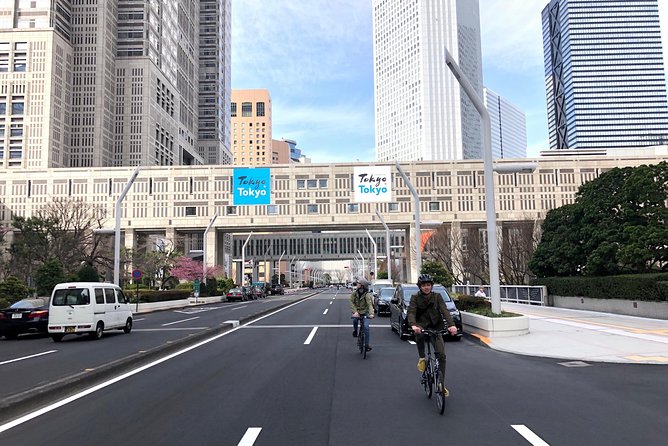
Let’s be honest. This is not a casual sightseeing ride where you can half-sit and half-watch. The tour asks you to ride confidently.
Here are the requirements you should treat seriously:
- You must follow Japanese traffic rules and the guide’s instructions.
- You should be proficient cycling on pavements and cross traffic lights confidently.
- You need comfort riding through crowded and tight spaces.
- Typical ride speed is about 15 km/h.
- The bicycle fits riders roughly 155 cm to 195 cm in height.
- You must be 13 years or older.
- Weight limit is 120 kg.
Most people who book this fall into one of two groups. Either you’re already a comfortable cyclist and want to see Tokyo efficiently, or you’re a nervous first-timer who wants expert guidance and realizes you have to keep up.
If you’re only confident on wide, low-traffic paths, you might find this stressful. But if you can handle city riding and you’re willing to stay alert, this tour is one of the most efficient ways to get your bearings fast.
Also, the bikes are described as road bikes suitable for maneuvering through city conditions. In plain terms, you’re not cruising on a bulky rental that fights every turn.
Weather Reality: Light Rain Ride, Sudden Changes May Cancel
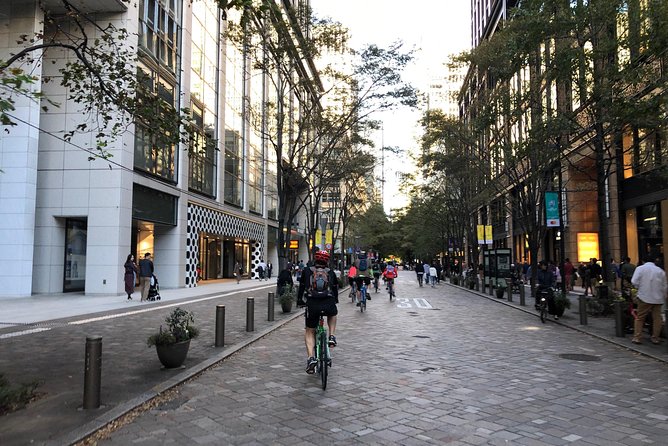
The tour proceeds in light rain, but it can be canceled if the weather changes suddenly. So plan with flexibility.
This matters in Tokyo because weather shifts can be quick. If your trip dates are fixed and you hate rescheduling, consider booking the day with the most stable forecast.
When it’s dry, you’ll likely enjoy the ride more because the route includes busy streets and signals where concentration is the real safety tool.
Value Check: Is $64.73 Fair for 3 Hours of Tokyo?
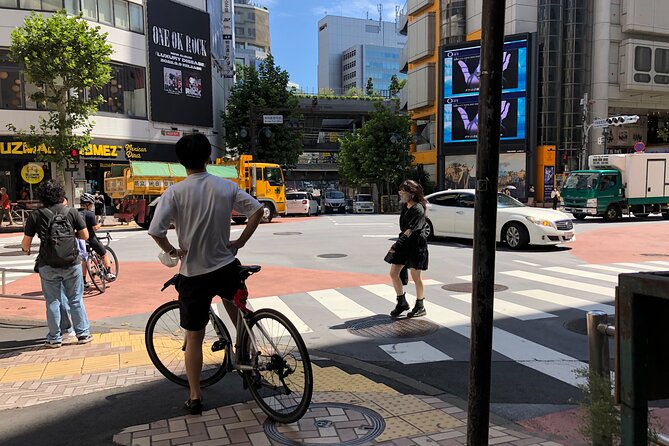
At $64.73 per person, this is priced in a way that makes sense for a guide-led cycling experience with a small group cap. You’re not paying for a long multi-day program. You’re paying for a concentrated, route-managed tour where you get to:
- Cover a large area of Shibuya and surrounding neighborhoods in about 3 hours
- Visit a mix of major landmarks and less-frequented streets
- Ride at a consistent pace with safety guidance
- Walk away with practical recommendations for what to do next
A key value point is that bike touring lets you see more surface area than walking, without the “stuck in a train window” feel. You also avoid the mental load of navigation while moving through one of the city’s most complex districts.
If you’re short on time, this is a smart “setup” activity. It helps you understand where neighborhoods sit relative to each other, so later you can explore on foot with a clearer map in your head.
Who Should Book This Tour, and Who Might Not
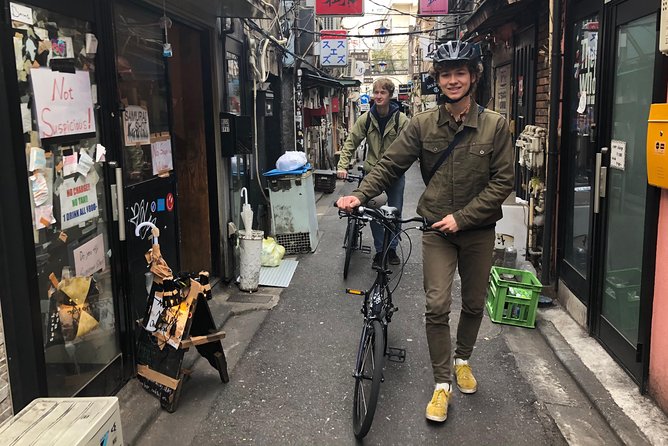
This tour fits best if you:
- Want a first-time Shibuya orientation that feels like local street level, not only landmarks
- Like the idea of getting around quickly without hauling luggage or waiting for trains
- Are comfortable cycling at about 15 km/h and handling busy intersections
It might not be the best choice if you:
- Are uncomfortable cycling in tight spaces or with cross traffic light patterns
- Get stressed riding in dense pedestrian areas
- Are only comfortable on very low-traffic paths
Should You Book the Tokyo Bike Tour: Shibuya and Hidden Tokyo?
I think you should book it if you want Shibuya in context, not just as a photo stop. The combination of Shibuya Crossing, Hachiko, Cat Street, and the calmer contrast stops is the kind of route that helps you understand Tokyo faster.
Book it early in your trip if you want the practical payoff. After this ride, you’re usually better at choosing where to wander next because you’ve already “decoded” how the neighborhoods connect.
And if you’re on the fence about cycling comfort, be realistic. The tour is safe when you follow instructions, but it still asks you to ride actively, not passively. If that part sounds stressful, pick a walking-focused option instead.
FAQ
How long is the Tokyo Bike Tour: Shibuya and Hidden Tokyo?
The tour runs for about 3 hours.
What is the group size limit?
The experience has a maximum of 6 travelers.
Where do we meet for the tour?
You meet at Umayamichi Park, 5-chōme-24-11 Sendagaya, Shibuya, Tokyo 151-0051, Japan. The tour ends back at the meeting point.
Is the meeting point easy to reach by public transport?
Yes. The start is near public transportation, including about a 10-minute walk from Shinjuku Station and about 1 minute from Yoyogi Station.
What stops are included on the route?
The itinerary includes Yoyogi Park, Shibuya Crossing, Hachiko, Shibuya Cat Street, Aoyama Street, Aoyama Cemetery, and Japan National Stadium.
How fast do you cycle during the tour?
You’ll travel at approximately 15 kilometers per hour, and you’re expected to ride confidently at that speed.
Do I need to be a confident cyclist?
Yes. You should be proficient cycling on pavements, cross traffic lights confidently, and ride through crowded or tight spaces. You must also follow Japanese traffic rules and the guide’s instructions.
Does the tour run in rain?
It proceeds in light rain, but it may be canceled due to sudden weather changes.
What are the age and size requirements?
Participants must be 13 years or older. The bicycle is suitable for heights between 155 cm and 195 cm, and participants must weigh no more than 120 kilograms.
Is free cancellation available?
Yes. You can cancel up to 24 hours in advance for a full refund. If you cancel less than 24 hours before the start time, the amount you paid is not refunded.
More Cycling Tours in Tokyo


More Tours in Tokyo


More Tour Reviews in Tokyo
Not for you? Here's more nearby things to do in Tokyo we have reviewed







Shibuya Tours, side by side.
 ★ 5.0Official Street Go-Kart in ShibuyaFrom $763,435 reviews
 ★ 4.9Street Kart Experience in ShibuyaFrom $741,484 reviews
 ★ 5.0Shibuya Meltdown Nightlife Tour: All-You-Can-Drink Bar HoppingFrom $1061,058 reviews
 ★ 5.0Shibuya Official Street Go-Kart in Shibuya AnnexFrom $69972 reviews
 ★ 5.0Shibuya Food Tour (13 dishes and 4 Eateries)From $77770 reviews
 ★ 5.0Best of Shibuya Food TourFrom $217612 reviews
 ★ 4.8Shibuya Highlights Walking TourFrom $19601 reviews
 ★ 4.7Premium Go-Kart Tour with Tower & Shibuya CrossingFrom $116528 reviews
This tour also belongs to