
Review · TOKYO CITY TOURS
Tokyo City Attractive One Day Tour
Tokyo in one day can feel like a sprint, but this route keeps it smart. I love how the tour hits classic Tokyo icons without making the day feel random, and I also like the private, air-conditioned comfort that makes moving between neighborhoods actually manageable. One thing to plan for: Skytree and Tokyo Tower entry tickets cost extra, and lines can change your timing.
For first-time visitors, this is a clean way to get your bearings fast: temples and old streets in Asakusa, viewpoints in two tower cities, food culture at Tsukiji, then parks, shrines, and the neon contrast of Shibuya and Harajuku. You’re also not stuck on your own transportation puzzle, since you get round-trip hotel transfers and you’re traveling as a group in a vehicle that keeps you cool.
My main caution is simple: because you’re seeing a lot, you’ll want to keep expectations flexible. A private tour can be customized, but you still have travel time plus fixed stop durations, so plan to enjoy each place for what it is, not to expect long, slow wandering everywhere.
Key things that make this tour click
- Hotel pickup and drop-off keep your day efficient, starting and ending at Tokyo Station Hotel
- AC vehicle plus on-board hotspot helps a lot when you are bouncing across Tokyo
- A private guide experience means you can ask questions and adjust as you go
- Two tower stops give you both skyline styles, Skytree views and Tokyo Tower nostalgia
- Big contrast in one day: temples and gardens, then Shibuya crossing energy, then Harajuku youth culture
- Flexible route planning helps you handle crowd intensity and seasonal timing
Price and value: what $500 per group actually buys you
The price is $500 per group, up to 5 people, for about 9 hours. That sounds like a lot until you do the math the way Tokyo makes you: taxis add up fast, and train transfers can turn into a time tax when you are juggling multiple areas.
Here, you’re paying for three practical upgrades:
- A private vehicle with air conditioning
- Round-trip hotel transfers so you are not doing station-to-station logistics all day
- An expert guide experience built around your stops, not just transportation
Also, you are not paying separately for every single attraction. Many of the planned stops are free, including Asakusa Sensoji, Tsukiji Outer Market, Shinjuku Gyoen National Garden, Meiji Jingu Shrine, Shibuya Scramble, Hachiko, and Harajuku.
What you do pay extra for is predictable and clearly listed: Skytree and Tokyo Tower tickets are not included. If you care about going up in the towers, you should budget those costs ahead of time and try to time your visit well to avoid the worst lines.
You can also read our reviews of more city tours in Tokyo

How the day is paced, and why it matters in Tokyo
This tour is built like a greatest-hits sampler, but not in a lazy way. The order is designed to move you through Tokyo’s “layers”:
- Old Tokyo flavor in Asakusa
- Big skyline icons with Skytree and Tokyo Tower
- Food culture in Tsukiji
- Calm reset with Shinjuku Gyoen and Meiji Jingu
- Urban intensity with Shibuya Scramble and Hachiko
- Youth style chaos at Harajuku
Each stop has a set visit length, so you’re not standing around wondering what to do next. Still, the real-world timing is affected by crowds, traffic, and seasonal peaks. That’s where a private guide matters, because they can nudge pacing and help you decide how long to linger versus keep momentum.
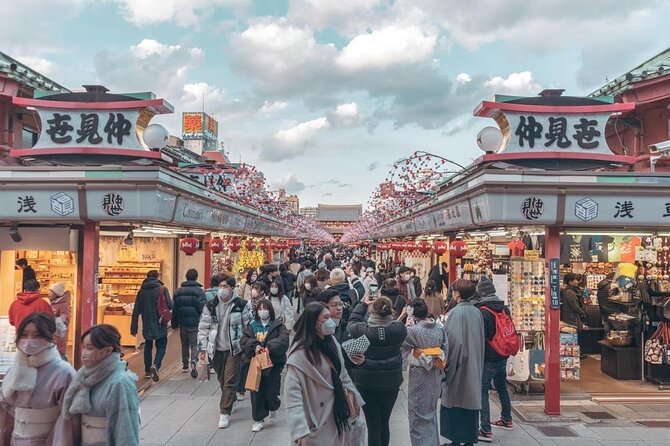
Stop 1: Asakusa Sensoji and Nakamise Street (1 hour, free)
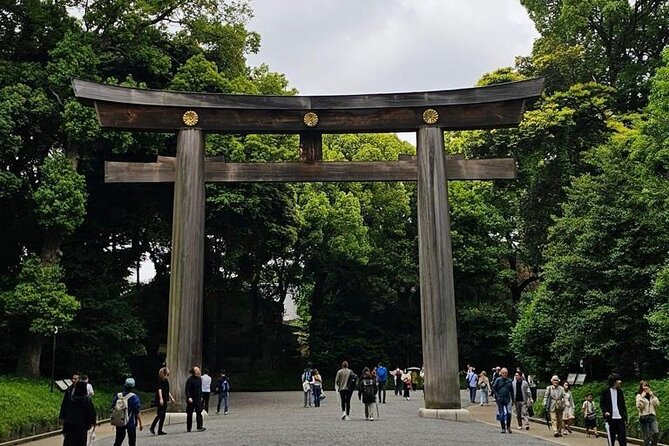
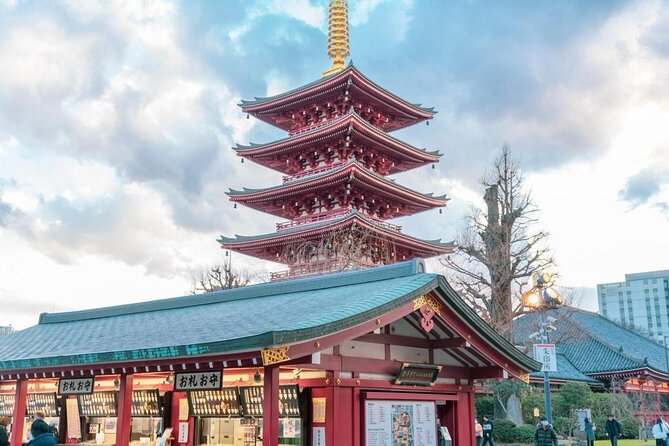
Asakusa is where Tokyo reminds you it is not just glass towers. Sensoji (Asakusa Kannon Temple) is Tokyo’s oldest temple, completed in 645, and the place feels like it is made for first-time photos and slow curiosity.
What makes it special is the layout. You enter through gates, then you work your way toward the main temple area. Along the way, Nakamise stretches for over 200 meters, packed with snack stands and typical Japanese souvenirs.
Practical tip: go with the mindset of grazing. You don’t need a single big meal here. The street food and small bites fit the one-hour window well.
Possible drawback: Nakamise can get crowded fast, especially around popular seasons. If you like empty-space photos, you’ll have to be flexible with timing.
Stop 2: Tokyo Skytree and Skytree Town (1 hour, ticket extra)
Next you get the tall, modern Tokyo moment: Tokyo Skytree at 634 meters, with observation decks at 350 and 450 meters. It’s part of Skytree Town, with the Solamachi complex, food options, shops, and extra attractions like a robot technology exhibition space and an aquarium.
A key detail for planning: Skytree entry is not included, and the tour lists a ticket price of about $12 USD. Even if you don’t go up, Skytree Town itself is a good place to walk around for photos and window-shopping.
Why this stop is worth it for many people: Skytree gives you a clean sense of Tokyo’s scale and direction. On a one-day itinerary, that “wow, this is how big the city is” effect is useful, especially before you hit Shibuya later.
One consideration: lines can be long on busy days. If you want a smoother experience, plan your tower visit with the idea that ticket timing can matter.
Stop 3: Tokyo Tower (1 hour, ticket extra)
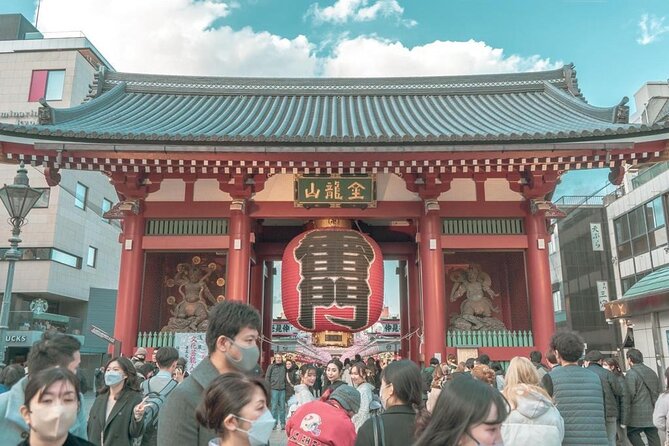
Then it’s Tokyo Tower, the central-city icon at 333 meters. The tour notes it was the world’s tallest self-supported steel tower at one point, and it also points out Tokyo Tower’s role as a broadcast antenna.
This is a great contrast stop after Skytree. Skytree feels sleek and huge. Tokyo Tower feels more nostalgic, post-war, and very “classic Tokyo skyline.”
Again, you’re not included for entry, and it lists a ticket cost around $7 USD. If you only care about one “going up” experience, this is the kind of decision you can make on the fly with your guide based on line length and how much time you want to spend indoors.
More Tokyo tours and experiences for the shortlist




Stop 4: Tsukiji Outer Market, food culture in real time (1 hour, free)
Tsukiji Outer Market is where the day turns into something you can taste. It’s often called Japan’s “Food Town,” and it mixes wholesale heritage with retail browsing and ready-to-eat snacks.
The important context here is size and origin. Tsukiji originally served mostly professionals, meaning many items were historically big and not designed for small household purchases. Now, a lot of the stalls sell in smaller, visitor-friendly portions, including sushi meals in smaller sizes and small bites like egg rolls.
What I like about this stop is the low-pressure structure. You have an hour, so you’re not stuck eating one massive sit-down meal you may or may not want. You can sample, compare, and move on.
Possible drawback: the area can be crowded and hot, depending on the season. If you are sensitive to crowds, keep your expectations flexible and accept that it is a hands-on food market, not a quiet museum stroll.
Stop 5: Shinjuku Gyoen National Garden, a calm reset (1 hour, free)
After market energy, Shinjuku Gyoen National Garden feels like you just stepped out of the city’s volume knob. It’s one of Tokyo’s largest parks near Shinjuku Station, with spacious lawns, walking paths, and tranquil scenery.
This is where you get a breather. Tokyo is intense, and this one-hour park window gives you breathing room. If you travel with someone who gets overstimulated, this is the stop that often makes the whole day feel balanced.
The tour data also highlights spring cherry blossom season as a top time. In that period, the garden can be especially popular, and your guide may have to balance where you spend your time based on crowd conditions.
Stop 6: Meiji Jingu Shrine, forest calm in the city (1 hour, free)
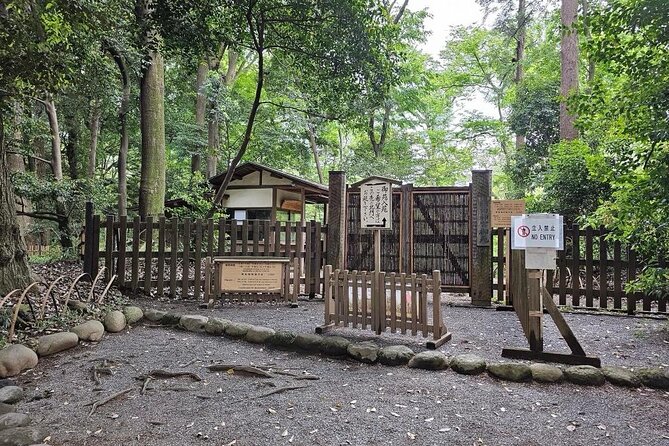
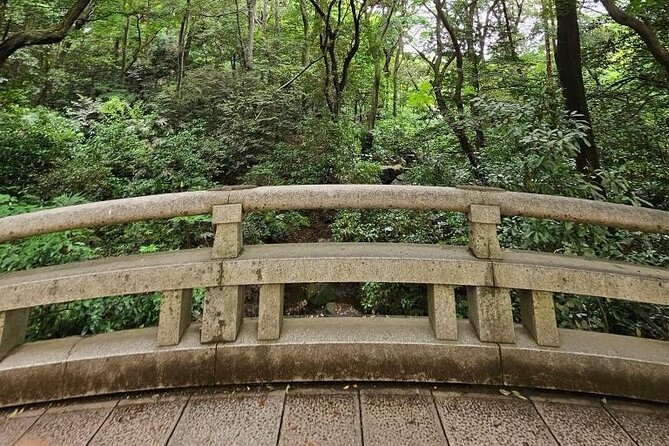
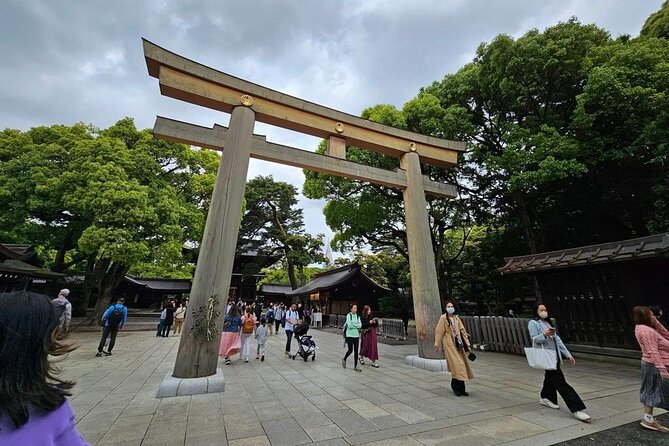
Meiji Jingu Shrine is one of Tokyo’s most peaceful contrasts to the traffic you’ve been seeing. Dedicated in 1920 to Emperor Meiji and Empress Shoken, it has a history of destruction during the war and rebuilding shortly after. The shrine connects to the Meiji Restoration era, when Japan modernized after the feudal era ended.
What you should expect in the experience itself: a sense of stepping into a calmer world. The shrine’s setting is famous for its atmosphere, and even with only an hour, you can slow your pace and get back some mental space.
This is also a good spot for photos that don’t look like they were taken under neon. The shrine has a different mood, and that matters when you’re trying to remember a city after a long day.
Stop 7: Shibuya Scramble, the controlled chaos moment (30 minutes, free)
Then you hit the part of Tokyo that people describe because it feels like it should be illegal. Shibuya Scramble is where multiple lanes of traffic and major crosswalks converge into one big crossing.
The tour calls it a modern canyon of neon-colored buildings. That’s exactly the feel: fast movement, thick crowds, and a sense that Tokyo runs on momentum.
The Shibuya crossing is also described as a center-stage location for New Year’s Eve countdowns and Halloween celebrations. Even if you are visiting on a normal day, it helps explain why the area is always filmed and photographed.
Since your time here is about 30 minutes, treat it like a photo and people-watching stop. Don’t plan to “do everything.” Stand with your group, take a few rounds through the crossing views, and let the moment be short and memorable.
Stop 8: Hachiko, the story behind the statue (30 minutes, free)
Hachiko is one of the most emotionally loaded landmarks in Tokyo, and it is also simple. The statue near Shibuya Station marks the legendary dog who returned daily to wait for his master after his professor, Hidesaburo Ueno, died in 1925.
The tour data also notes Hachiko’s birthplace is believed to be in Odate, Akita Prefecture, and he died in 1935. The story became a global film, Hachi: A Dog’s Tale.
This stop is worth more than its time because it adds meaning to the place you are already in. Shibuya can be loud and temporary. Hachiko is a reminder that Tokyo also has deep, human-scale stories baked into its daily life.
Practical tip: if you want photos without peak crowd pressure, you’ll need patience. This is a quick stop, but it can still feel like a mini line.
Stop 9: Harajuku Station and Takeshita Street style sprint (1 hour, free)
If Shibuya is Tokyo’s mainstream energy, Harajuku is Tokyo’s youth-culture fun. The area is known for fashion trends and the tour points you to the gateway declaring Welcome to Takeshita Street.
Takeshita Street is lined with clothing shops, cafes, dessert shops, and souvenir-style oddities. It is also where you can see how quickly style changes. Expect high foot traffic, especially on weekends and holidays, with school students and big tourist clusters.
If your party likes browsing and snack-hunting, this one hour works well. If you prefer quieter streets, you may feel like the place is moving too fast. You can still enjoy it, just keep your plan simple: walk a loop, pick one or two things you actually want, and then head back.
What you gain from a private guide, and a note from the field
A private tour changes how you experience the day. You are not stuck listening to a script that was written for a different group. You can ask questions when something catches your eye, and your guide can handle flow when you hit friction points like crowds or delays.
There’s also an important practical detail: the information provided indicates the driver is also the guide for this tour. That often means you get a more unified experience, because the person moving you around is the same person explaining what you are seeing.
In one case, timing around seasonal cherry blossoms did not match the ideal order for that particular group. The takeaway for you is that seasonal crowds are real, and the best plan is to stay flexible. If you care about a specific seasonal view, ask your guide how they think the day will flow and whether adjustments make sense.
Tickets, food, and what’s on you to plan
Here’s what’s covered versus what’s not, in plain terms.
Included:
- Air-conditioned vehicle
- Private transportation
- A hotspot on board
- Hotel transfers
Not included:
- Lunch and dinner
- Entry tickets for Tokyo Skytree and Tokyo Tower (listed as about $12 and $7 USD respectively)
Everything else is listed as free entry in the itinerary. That means your food spending is mostly up to you. In practice, you’ll probably want to budget for:
- Snacks in Asakusa and Tsukiji
- A lunch stop somewhere convenient
- Drinks and possibly a sit-down meal, depending on your pace
A smart strategy is to treat lunch as your flexible meal. You can use your guide’s judgment based on where the day’s energy is highest, and how much walking you want.
Best fit: who should book this one-day Tokyo highlights tour
This tour fits best if you:
- Are short on time and want a high-impact Tokyo sampler
- Want comfort with transport handled, especially in summer heat
- Like a mix of temples, food, gardens, and modern city life
- Travel with up to 5 people and can split the group price meaningfully
It also makes sense if you are the type who enjoys checking iconic places off the list, then getting value from the context your guide provides.
If you are a slow traveler who wants long time in one neighborhood, this may feel like too much moving. But if you know what you want from a day in Tokyo, it is built for exactly that.
Should you book Tokyo City Attractive One Day Tour?
I think you should book it if your goal is a smart, comfortable, high-coverage Tokyo day with minimal logistics stress. The combination of free major stops, round-trip hotel transfers, and an AC vehicle means you spend less of your day commuting and more of it actually looking.
Skip or rethink if:
- You hate crowds and want totally quiet sightseeing windows
- You only care about one tower experience, because Skytree and Tokyo Tower tickets are extra
- You plan to do a lot of sitting-down meals, since lunch and dinner are not included and your schedule is tight by design
If you want a well-paced hits-and-context Tokyo day, this one checks a lot of boxes. Just budget for the optional tower tickets and keep your schedule mood light, because Tokyo rewards flexibility.
FAQ
How long is the Tokyo City Attractive One Day Tour?
It is about 9 hours.
How much does the tour cost?
It costs $500.00 per group, up to 5 people.
Is hotel pickup and drop-off included?
Yes. Round-trip hotel transfers are included, with the tour starting and ending at Tokyo Station Hotel.
Are Skytree and Tokyo Tower admission tickets included?
No. Entry tickets for Tokyo Skytree and Tokyo Tower are not included.
Which stops are free in the itinerary?
Sensoji, Tsukiji Fish Market (Outer Market), Shinjuku Gyoen National Garden, Meiji Jingu Shrine, Shibuya Scramble Square, Hachiko, and Harajuku Station are listed with free admission.
Where does the tour start and end?
It starts at Tokyo Station Hotel in Marunouchi and ends back at the same meeting point.
Can I cancel for a full refund?
Yes. You can cancel up to 24 hours in advance for a full refund.
More City Tours in Tokyo


More Tours in Tokyo


More Tour Reviews in Tokyo

Not for you? Here's more nearby things to do in Tokyo we have reviewed












Tokyo City Tours, side by side.
 ★ 5.01-Day Tokyo Bus TourFrom $12914,250 reviews
 ★ 4.5TOKYO SKYTREE® Admission ticketFrom $1311,192 reviews
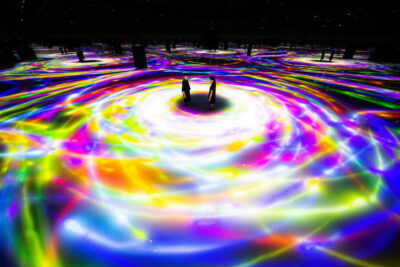 ★ 4.6teamLab Planets TOKYO Digital Art Museum Entry TicketFrom $259,779 reviews
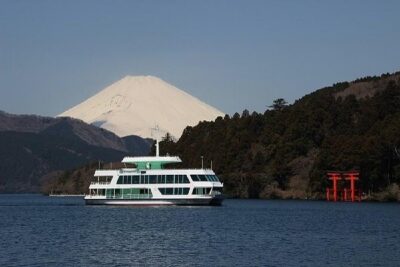 ★ 4.0Mt Fuji & Hakone Cruise, Drum Show Bullet Train 1 Day from TokyoFrom $1497,413 reviews
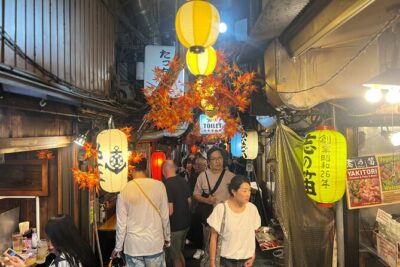 ★ 5.0Shinjuku Food Tour (13 Dishes at 4 Local Eateries)From $866,603 reviews
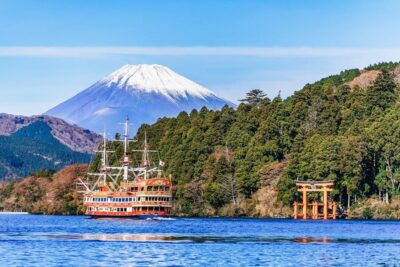 ★ 4.4Tokyo Mt Fuji 5th St & Hakone Cruise Bus Tour w/Bullet TrainFrom $1545,024 reviews
 ★ 5.0Flagship 2-Hours Official Street Go-Kart Tour – Tokyo Bay ShopFrom $644,974 reviews
 ★ 4.5From Tokyo: Mount Fuji Full-Day Sightseeing TripFrom $684,970 reviews
This tour also belongs to