
Review · TOKYO CITY TOURS
Tokyo: Matcha Tasting and Making Experience
Green tea gets serious in this small class. In 90 minutes in Asakusa, you taste matcha side by side, then make your own Ousucha with a bamboo whisk under the guidance of Chisei, a former tea farmer who grew tea for six years in Kyoto. It is not just sipping, it is learning how matcha is made, why different regions taste different, and how to recreate a good cup at home.
I especially like that you sample across five production areas and compare aroma, color, and flavor in a structured way. I also like the practical part: you get to pick a matcha you enjoy and then whisk it yourself, not just watch someone else do it.
One possible drawback is that this is a general tea class for learning and making tea, not a long, full meal style experience. You might leave wanting something more food-heavy or more time to slow down, but the tradeoff is a tight, focused session that respects your attention span.
Key Highlights I Would Put on Your Radar
- Small group size (up to 5) makes it easier to ask questions and get hands-on help.
- Tasting from 5 production areas helps you understand what changes flavor in real matcha.
- Color matters here, because you observe the tea, fragrance, and taste before moving on.
- Bamboo whisk making means you leave with the muscle memory of proper whisking.
- Matcha latte plus hojicha latte gives you a smooth, milk-friendly and roasted contrast.
- Sweets are included, so you can test how matcha works with dessert flavors.
Why This Matcha Class Feels Different Than a Usual Tasting
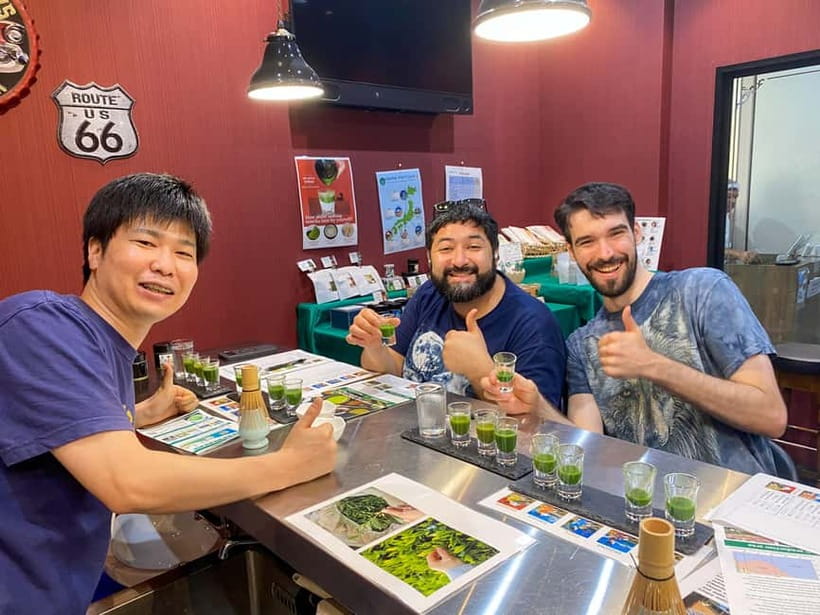
Tokyo has plenty of matcha experiences, but most turn into a quick sip-and-smile. This one is built around comparison, technique, and learning what you are actually tasting.
The structure is simple: you start with a welcome drink, then you compare samples from multiple regions, and finally you make your own matcha. That flow matters because matcha is subtle, and the differences only really click when you smell and taste each step in order.
Also, the fact that Chisei spent years growing tea in Kyoto is a big deal. You get farming realism, not just textbook tea talk. People often think matcha is one flavor. In reality, it is a whole spectrum.
You can also read our reviews of more food & drink experiences in Tokyo

Finding the Meeting Point at Henn na Hotel Asakusa Tawaramachi
You will meet at a cafe inside the Henn na Hotel Asakusa Tawaramachi. There is a FamilyMart on the first floor, and you enter the hotel, then go up to the second floor.
This is one of those locations that is easy once you know the trick, but annoying if you are arriving while hungry and slightly jet-lagged. Give yourself a few extra minutes so you can orient, especially if you are not used to navigating hotel entrances.
Also note that transportation is not included. You are responsible for getting there, so plan your route and arrival time like you would for any class location in the city.
Welcome Drink and the Matcha Basics Chisei Actually Uses
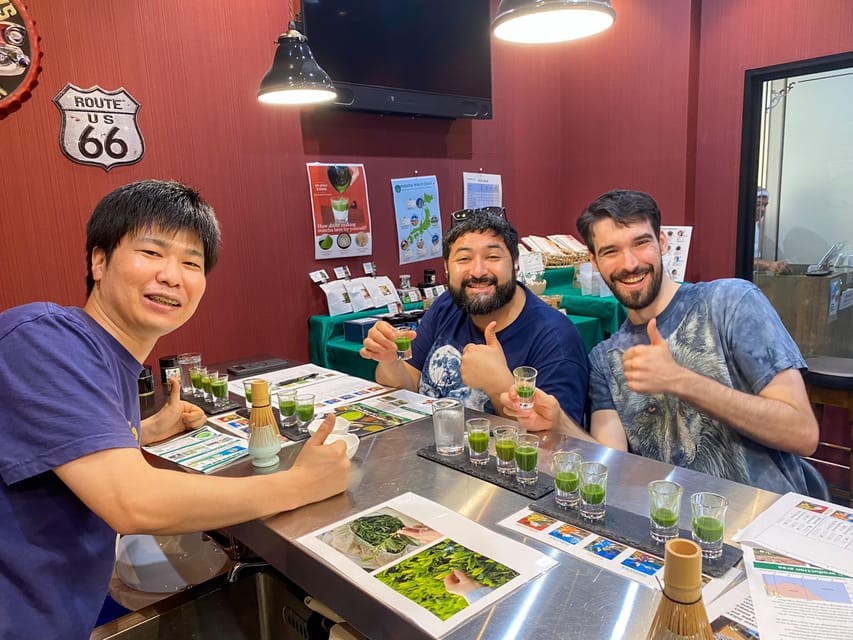
Before the tasting kicks off, you start with a welcome drink. While you sip, Chisei explains what matcha is, how it is produced, and how cultivation methods shape the final cup.
The key value here is clarity. Matcha has a reputation for being fancy or mysterious, but it comes down to real cultivation choices and processing steps. Once you hear the logic, the tasting stops being random.
Chisei also sets expectations for what you will do next. You are not just going to drink. You will look at the color, check the fragrance, then taste and compare.
Side-by-Side Matcha Tasting from 5 Production Areas
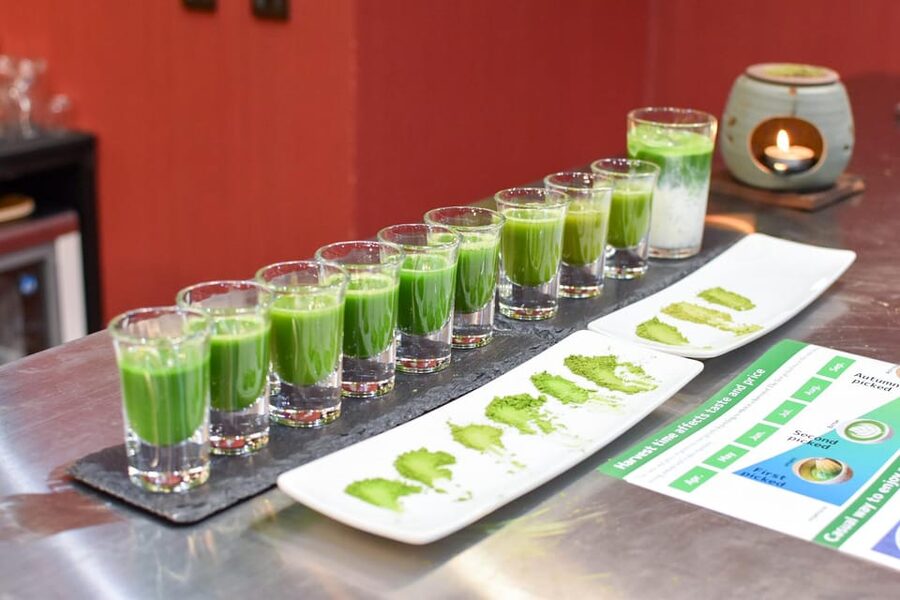
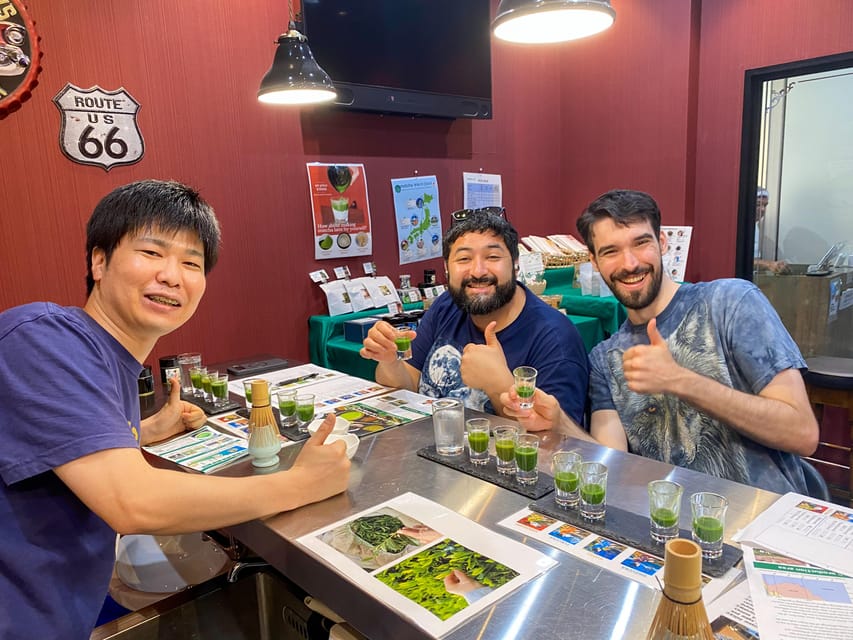
This is the heart of the experience. You taste matcha from five production areas, and you get a comparison built around small portions at once.
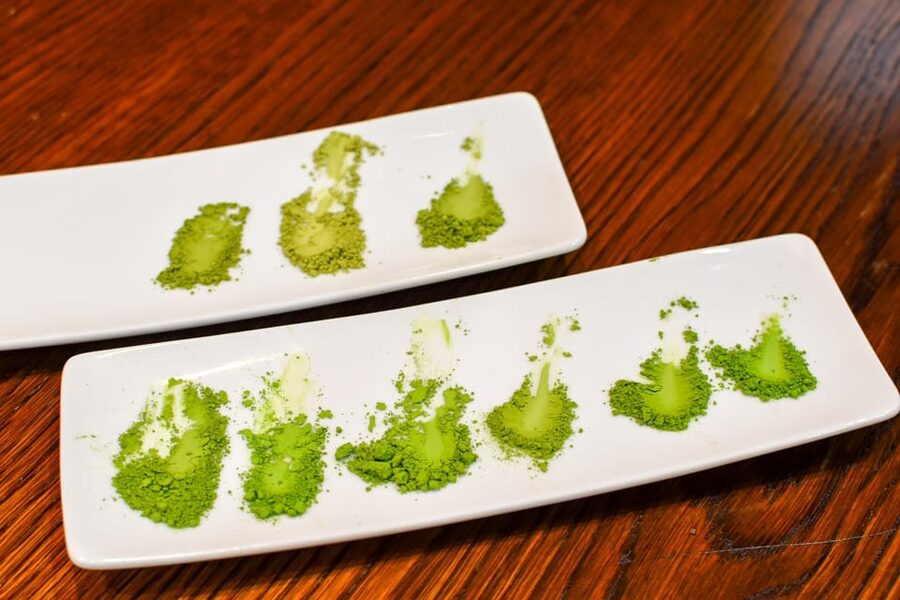
One thing I appreciate is how the tasting is designed around your senses. You first look at the color, then you prepare the tea and evaluate fragrance and taste. That order is practical, because matcha can look similar at first glance, but the aroma often gives away what is going on.
You will also taste multiple matcha types. The experience highlights say you taste 10 different types from 5 production areas. The class flow also describes a comparison where you try 8 kinds of matcha at once. Translation: you will be tasting plenty of samples, with a structured comparison at the center of it.
You will see a split too. Some of the samples are ceremonial grade, and some are not labeled as matcha in the traditional sense but are sold as matcha internationally. That distinction is useful. It helps you understand why some matcha tastes grassy or mellow while other versions feel more refined or structured.
Picking Your Favorite, Then Whisking Ousucha Like a Pro
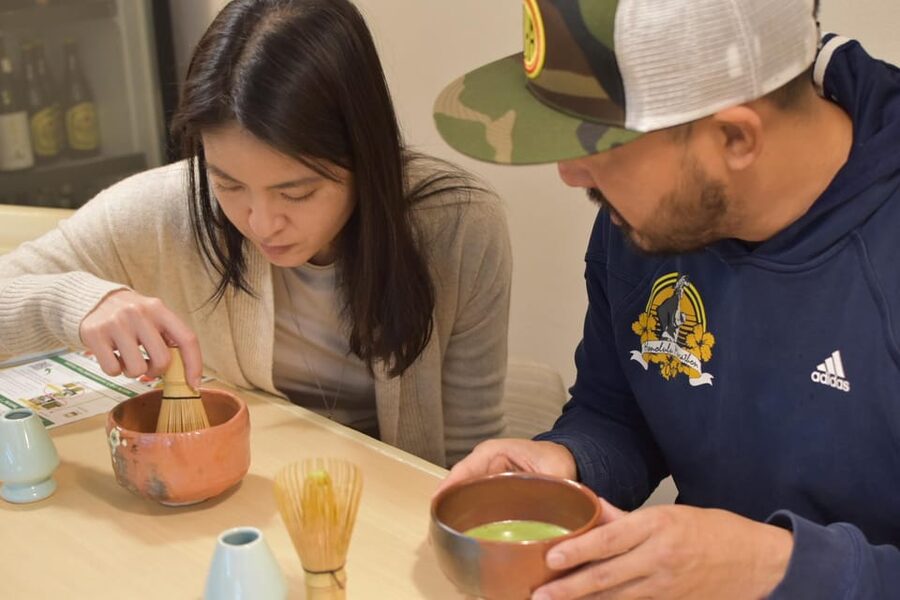
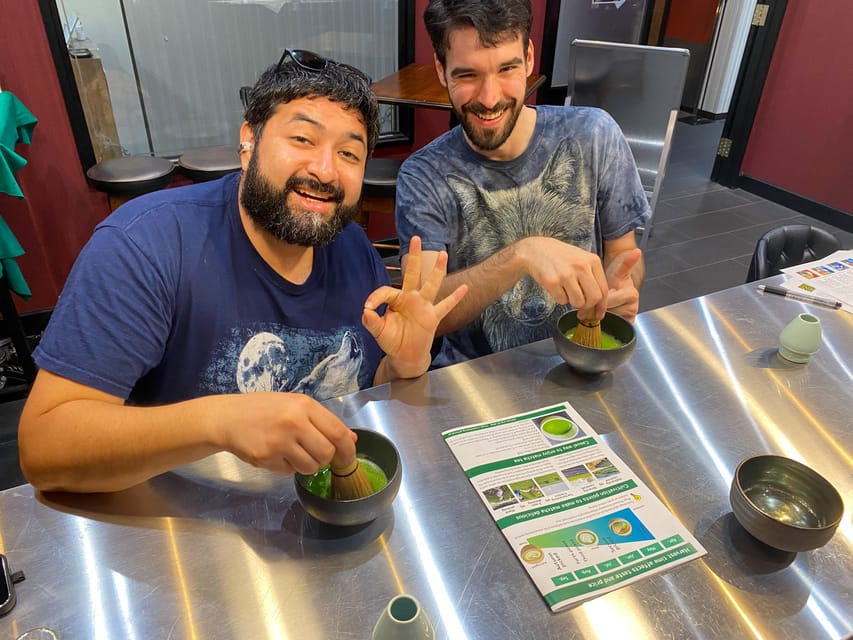
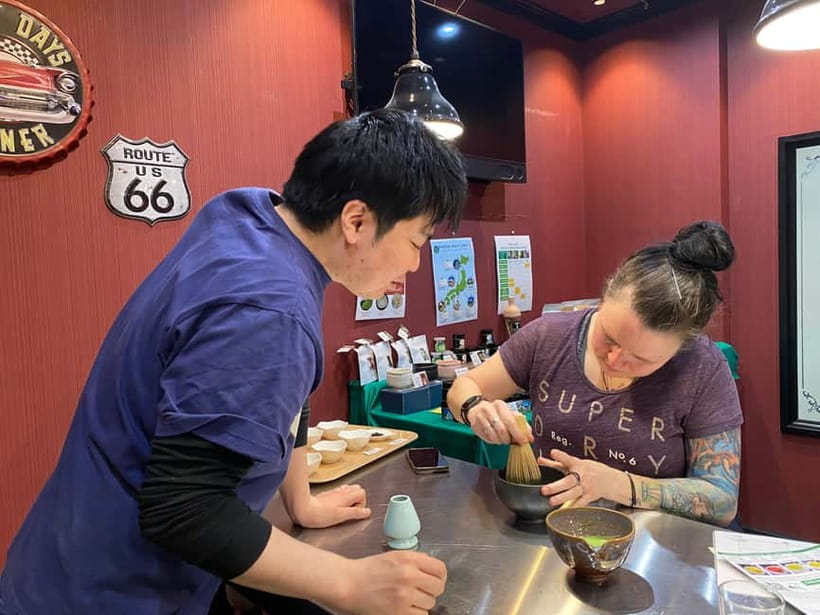
After the tasting comparison, you choose the matcha you like best. Then you make it yourself using a bamboo tea whisk.
This part is more than a souvenir. It is where you learn technique. You go from comparing flavors in tiny cups to creating something consistent with your own hands. That makes the class worth it even if you only remember one thing later.
You will make Ousucha, which is matcha whisked in the traditional style. The class provides what you need, and you get guidance on how to do it properly. The goal is that once you are back home, you can make matcha again, not just relive the lesson.
If you are the type who loves repeating small rituals, you will enjoy this. If you are in a hurry and hate slow, careful steps, this is still doable, but you may prefer to see it as a skill-building break rather than an activity you can rush.





Matcha Latte, Hojicha Latte, and Sweets After Your Work
Once your matcha-making is done, the session shifts into enjoyment mode. You get matcha latte and also hojicha latte, plus matcha sweets.
This is a smart pairing, because it tests matcha in two different settings. Matcha in milk is smoother and less sharp, and it can highlight different notes than plain whisked matcha. Hojicha brings roasted, toasty flavor, so you are not trapped in one flavor mood for the entire 90 minutes.
The sweets add another layer. You get to judge how matcha handles sweetness, and how the bitterness or brightness holds up when dessert enters the conversation. This helps you build real-world expectations for what to order later in Japan.
One practical tip: sip the latte and sweets slowly enough that you can compare what you made in the earlier step. If you jump straight to the milk drinks, you might lose the contrast that makes this section fun.
Who This Fits Best (And Who Might Skip It)
This class is a strong match if you want:
- A Tokyo matcha experience that is more than tasting one cup
- Hands-on tea skills you can use at home
- A small-group setting where the guide can answer questions
It is also great if you like food education with a practical outcome. You taste across regions, then you apply what you liked by making your own cup.
You might consider skipping if you only want a casual snack stop. This is a class built for learning and making tea, and the structure moves through tasting and technique on purpose. Also, it is designed for general guests learning about Japanese tea, so if you are looking for a commercial or business-style service, you should contact the provider first.
Price and Value: Is $63 Worth 90 Minutes?
At $63 per person for 90 minutes, you are paying for three things: the tasting lineup, the guided instruction, and the hands-on matcha making. Most “tasting” experiences charge a similar amount but do not include instruction or the ability to recreate the drink yourself.
Here, you do more than sample. You get to:
- Taste multiple matcha types linked to production areas
- Hear explanations from Chisei, including farming context from Kyoto
- Whisk your own matcha using a bamboo whisk
- Enjoy matcha latte, hojicha latte, and sweets
That combination is where the value shows up. If you plan to buy matcha later anyway, the ability to choose a style you truly like can save you money over time. And if you are a home coffee or tea tinkerer, you will likely get more value from the technique than from the cost alone.
Practical Tips So You Get the Most Out of It
Plan to arrive with a calm mind. Matcha rewards attention, especially during the color and aroma stages. If you show up rushed, you will still participate, but you may miss the comparisons that make the class click.
Ask questions when Chisei pauses for explanation. With a small group limited to 5 participants, you are not stuck waiting your turn. Also, do not be shy about saying what you liked. The class is built around choosing your favorite before you whisk.
Finally, pace yourself with the drinks. It is easy to treat everything like dessert, then realize you forgot what your earlier matcha tasted like. Keep small sips and let your palate reset between steps.
Should You Book This Matcha Tasting and Making Experience?
I would book it if you want a focused, high-value matcha lesson in Asakusa that includes tasting, technique, and real food pairings. The small group size, the structured tasting process, and the chance to make Ousucha yourself are the big reasons it works.
I would pass if you want a long, flexible hangout or if you only want to drink one matcha cup quickly. This class is short on purpose, and the payoff is in the skill you leave with, not in lingering.
If you are curious about why matcha tastes the way it does and you want to recreate it at home, this is an easy yes.
FAQ
How long is the Tokyo matcha tasting and making experience?
It lasts 90 minutes.
How much does it cost?
The price is $63 per person.
Where is the meeting point?
You meet at the cafe inside Henn na hotel Asakusa Tawaramachi. Enter the hotel and go to the second floor, and note there is a FamilyMart on the first floor.
What languages is the instructor?
The class is taught in English.
How big is the group?
It is a small group limited to 5 participants.
What matcha and drinks are included?
You get a welcome drink, matcha tasting from different production areas, a matcha making experience, and then matcha latte plus hojicha latte. Matcha sweets are included as well.
Do I make my own matcha?
Yes. After tasting and choosing the matcha you like best, you make matcha yourself using a bamboo tea whisk.
Is transportation to the experience included?
No, transportation to the location is not included.
More Food & Drink Experiences in Tokyo


More Tour Reviews in Tokyo
Not for you? Here's more nearby things to do in Tokyo we have reviewed












Tokyo City Tours, side by side.
 ★ 5.01-Day Tokyo Bus TourFrom $12914,250 reviews
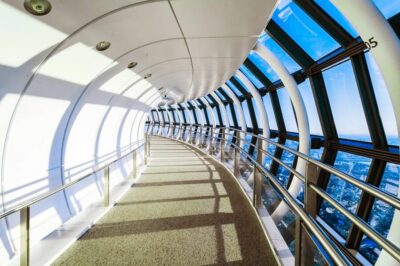 ★ 4.5TOKYO SKYTREE® Admission ticketFrom $1311,192 reviews
 ★ 4.6teamLab Planets TOKYO Digital Art Museum Entry TicketFrom $259,779 reviews
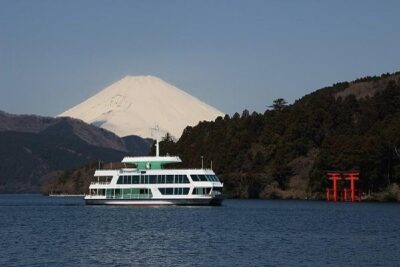 ★ 4.0Mt Fuji & Hakone Cruise, Drum Show Bullet Train 1 Day from TokyoFrom $1497,413 reviews
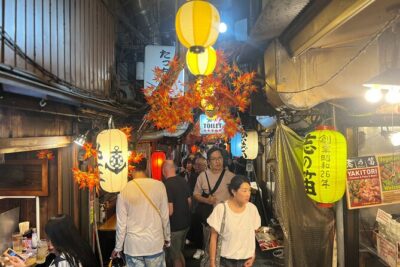 ★ 5.0Shinjuku Food Tour (13 Dishes at 4 Local Eateries)From $866,603 reviews
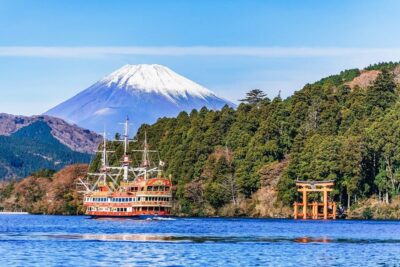 ★ 4.4Tokyo Mt Fuji 5th St & Hakone Cruise Bus Tour w/Bullet TrainFrom $1545,024 reviews
 ★ 5.0Flagship 2-Hours Official Street Go-Kart Tour – Tokyo Bay ShopFrom $644,974 reviews
 ★ 4.5From Tokyo: Mount Fuji Full-Day Sightseeing TripFrom $684,970 reviews
This tour also belongs to