
Review · TOKYO FOOD TOURS
Tokyo: Real Ramen & Dumpling Cooking with Master Chef
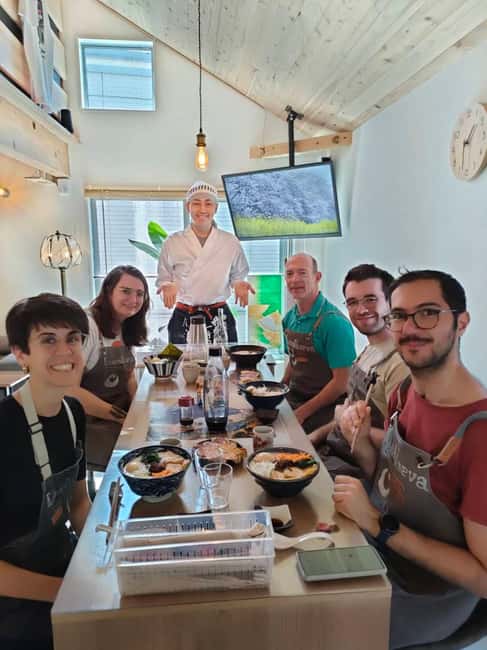
Ramen gets real fast in Tokyo. This hands-on class in Ekoda turns you from ramen fan into ramen maker, with Yoshi and Amo coaching you through ramen and dumplings. You also get the bonus factor of a chef background tied to running a restaurant in Sydney, Australia.
I love how the flow is taught step by step, starting with semi-soft eggs and ending with the noodle texture trick. I also love that the class stays small, so questions in English actually get answered while you’re cooking, not after.
One thing to watch: if you want the vegetarian ramen option, you need to tell them in advance. Same-day vegetarian swaps are not something they can promise.
Key points to know
- Small-group feel with a maximum group size of about four participants when available
- English instruction from Yoshi and Amo, with clear guidance while you cook
- Real ramen technique including soup building, noodle boiling, and a draining method for texture
- You make the key components: nitamago eggs, gyoza, chashu, and toppings
- Vegetarian ramen needs notice ahead of time, or it may not be available
Ramen and Dumpling Cooking in Ekoda: The Real Reason This Class Works
Tokyo has ramen everywhere. What’s rare is someone teaching you how ramen comes together, in a way you can repeat at home.
This class focuses on hands-on cooking for ramen and gyoza, not a sit-and-watch experience. From the start, you’re building flavor in multiple stages, and you’ll understand how each piece supports the final bowl.
You get to learn from Yoshi and Amo, and the background matters. The chef instructor has experience running restaurants abroad and training in well known Japanese ramen kitchens, and he teaches in English. That combination makes a big difference when you want technique, not just a recipe card.
You can also read our reviews of more cooking classes in Tokyo



Finding Ekoda Station and Starting on Time (So the Session Doesn’t Get Cut)
Your meeting point is Ekoda Station, 1 Chome-78 Asahigaoka, Nerima City, Tokyo 176-0005, Japan. Plan to arrive at least 15 minutes early to get settled, because the class can run tight.
There’s also a practical pickup note: the instructor waits 15 minutes before at the out of ticket gate in Ekoda (Egoda) Station, on the Seibu Ikebukuro Line, which is not the JR line. If you take the wrong train, it’s easy to lose time fast.
One more transit detail that can save you stress: do not take the Rapid train. The local train is the one that stops at Ekoda (Egoda) Station.
If you’re dealing with limited cell coverage, you’ll want the contact info handy. The phone number listed is +818072621175, and they recommend you add it to WhatsApp so you can call when you only have WiFi.
Meet Yoshi and Amo, Then Get Set Up in a Kitchen That Moves
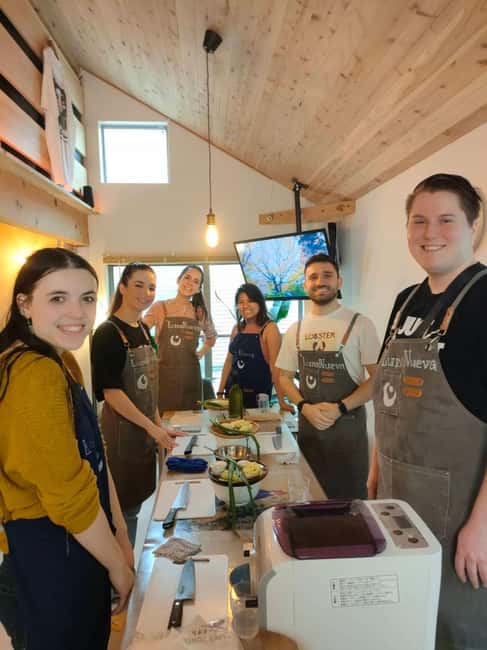
The setup is already in place before you start. That matters because you’re there to learn technique and cooking rhythm, not to hunt down ingredients or wait while someone redoes prep.
You’ll work through a structured cooking sequence:
- semi-soft boiled eggs first
- ramen toppings prep
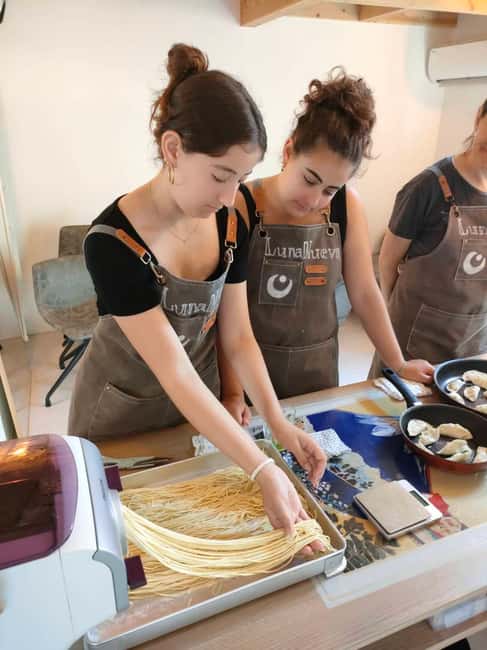
- gyoza ingredient slicing, combining, then folding
- chashu flavor infusion and gyoza cooking
- soup building, then noodles
- draining noodles using a specific method
- assembling toppings on the ramen
This order is smart. It mirrors how ramen shops think: eggs and toppings can be prepared ahead or in parallel, while the soup and noodles need timing discipline. You’re basically practicing the same kind of flow, just in a friendly, teachable way.
And yes, the team is used to teaching. People consistently highlight that Yoshi and Amo are patient and answer questions carefully in English, which is exactly what you want when you’re working with foods that look simple but have texture rules.
Nitamago Eggs and Toppings: The Texture Foundation of Great Ramen
Early on, you’ll craft semi-soft boiled eggs, specifically nitamago. In this class, nitamago is listed as a seasoned runny york egg. That word runny matters. Semi-soft timing is what gives you the jammy yolk that turns a bowl from good to memorable.
Then you move into ramen toppings. The lesson includes ingredients like:
- seaweed
- sliced spring onion
- wood ear fungus
Even if you’re not sure what wood ear fungus does in ramen, you’ll learn. It’s the kind of topping that adds a different chew and absorbs broth flavor. Small changes like that are why ramen feels layered instead of one-note.
Toppings prep also helps you understand balance. In ramen, toppings are not just decoration. They’re texture and flavor punctuation. When you assemble them at the end, you’ll see why timing is part of taste.
Gyoza Work: Folding Dumplings Without Fear
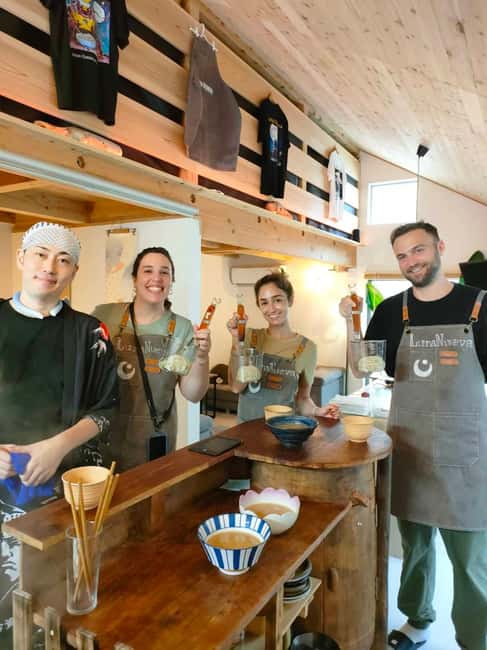
Next comes gyoza. You’ll slice and combine ingredients, then fold the dumplings. The fold is a skill, and you’re taught how to do it during the session, not after.
You’ll also cook the gyoza to perfection. The included meal lists gyoza as part of what you enjoy, with 5 pieces included. That’s a nice way to keep it focused: you practice the technique, then you eat what you made.
What I like about this part is that it’s hands-on in a way that feels doable. Gyoza folding can look fussy from a distance, but with clear instruction you’ll get the hang quickly. It also gives you something to do with your attention while the soup later comes together.
The result is more than a snack. Gyoza becomes part of the overall ramen meal, so you experience how Japanese comfort food works as a system, not as random bites.






Chashu and Soup Building: Flavor Infusion With a Chef’s Logic
Then you get into chashu and soup. Chashu in the class is listed as slow cooked chicken, and you’ll infuse it with flavor and cook it as part of the lesson.
This is one of the most valuable segments for home cooks. If you’ve ever tried to make ramen broth and found it flat, the fix often isn’t one big trick. It’s supporting flavors, properly cooked meat, and toppings that bring texture in the right places.
While you’re cooking, the instructors share insight and stories from ramen culture. The vibe is friendly, and people highlight that there’s humor and insider context mixed into the teaching. That might sound minor, but it changes how well you remember technique, because you associate steps with real reasons.
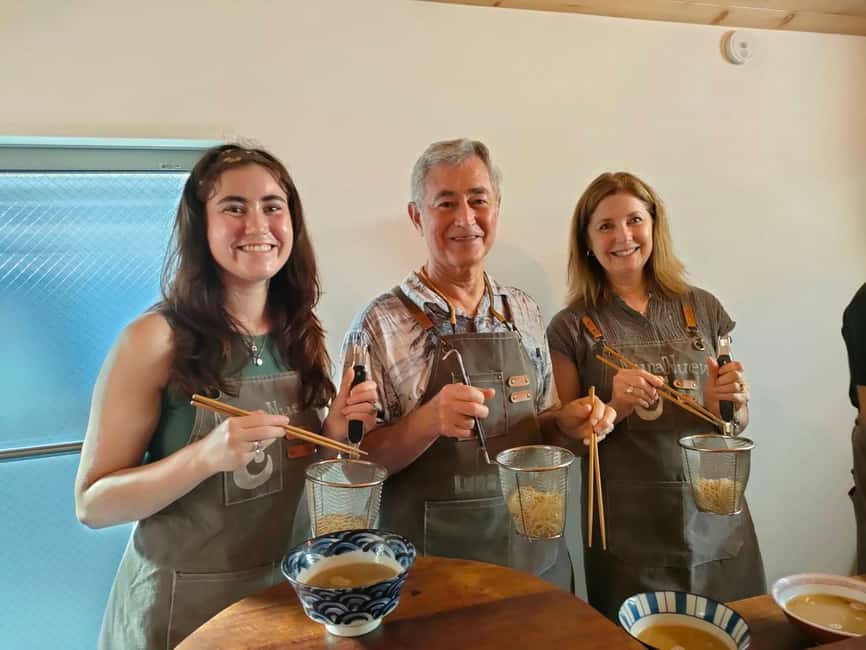
When it’s time for the soup, you’ll craft it in the lesson. After that, you boil noodles, drain them with the class’s method, and then assemble toppings onto the ramen.
That noodle portion is key. A lot of people can boil noodles. The hard part is getting texture right for ramen, not pasta. The class includes a cool noodle draining technique that helps with that.
Noodles, Draining, and Assembly: Where Timing Becomes Flavor
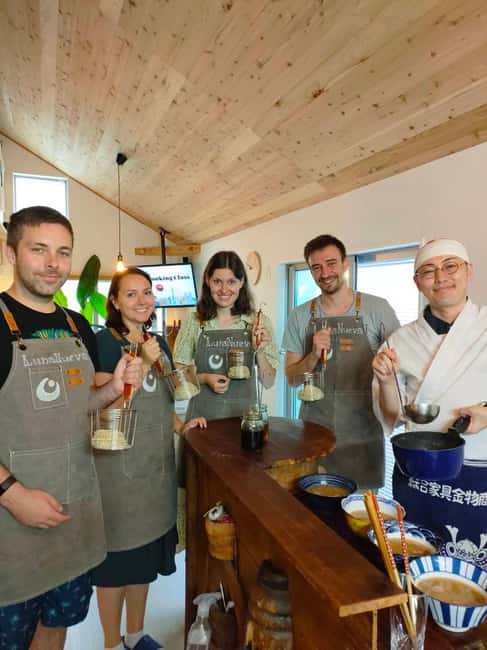
The lesson ends with the noodles and assembly, and this is where technique pays off fast.
You’ll boil the noodles, then learn a draining method designed to preserve the chew. It’s basically a texture workflow. If you over-drain, noodles can get too dry. If you under-drain, they can clump or change how broth coats them.
Then you assemble the toppings onto the ramen artfully. That step teaches you how to balance the bowl. Eggs and seaweed help structure the flavor. Green onion adds freshness. Wood ear adds chew. Chashu carries richness.
And once the bowl is done, you eat your ramen with the gyoza you made. That makes the lesson feel complete. You’re not just learning steps for the sake of steps.
Vegetarian Ramen Option: How to Make It Work Without Last-Minute Stress
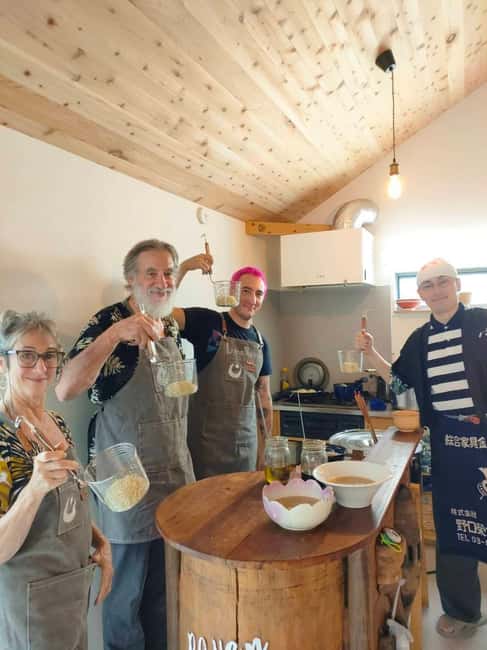
Vegetarian ramen is available, but it comes with one strict rule. You must inform the team in advance. They cannot accommodate vegetarian ramen requests on the same day without prior notice.
So if you’re traveling with someone who needs vegetarian food, treat this as part of planning, not a casual add-on. Message ahead, confirm what vegetarian means for this specific class menu, and then show up ready to cook.
This matters because the class structure is timing-heavy. Eggs, toppings, soup, noodles, and assembly all happen in a set order. Changing ingredients late can throw off the whole workflow.
If you do plan ahead, the vegetarian option still fits the class format. You’ll be cooking the same steps, just with a different ramen direction.
What You Eat and What You Take Home (Recipes Included)
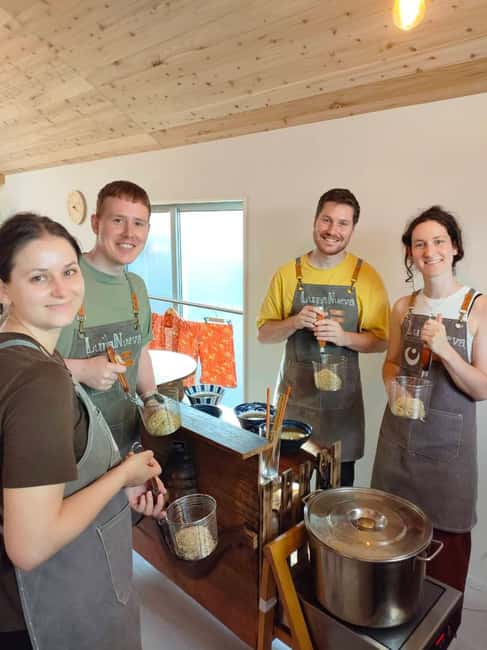
Your included meal list is practical and specific:
- ramen and gyoza (5 pieces of gyoza included)
- ramen topping
- nitamago (seasoned runny york egg)
- chashu (slow cooked chicken)
- seaweed
- sliced spring onion
- wood ear fungus
Also, you don’t just leave with a full stomach. The MENU includes that after the lesson they will send all recipes. That’s a big deal for value, because it turns your two hours into something you can use later.
Past participants also appreciated getting written recipes after the course and described the teaching as clear and patient. When recipes come after, you can re-check any step while the memory is fresh.
And if you like souvenirs that fit the theme, the experience includes an option for fun ramen and cooking-related items. People have mentioned merchandise and the chance to buy custom cooking gear. Even if you skip that, you still leave with the knowledge you actually came for.
Price and Value: Why $99 Can Make Sense in Tokyo
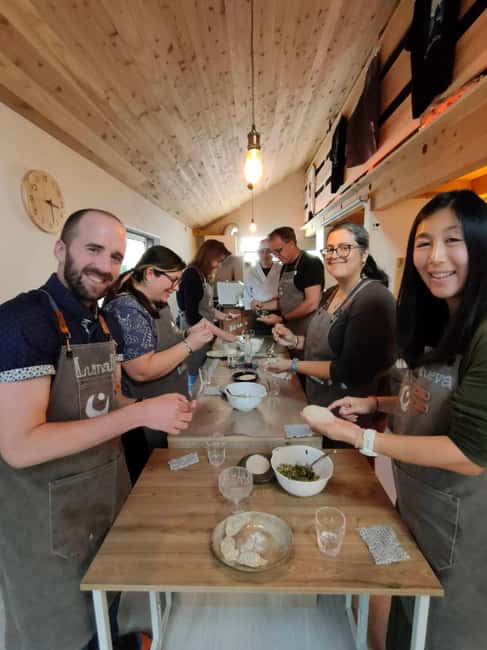
At $99 per person for a 2-hour class, the pricing can feel steep at first glance. But in Tokyo, hands-on instruction plus multiple meal components adds up quickly.
Here’s why the value holds:
- You’re paying for an English-speaking instructor who guides you through multiple cooking techniques, not just one.
- The lesson includes core ramen elements: nitamago eggs, chashu, seaweed, spring onion, wood ear fungus, and the ramen and gyoza you eat.
- Small-group teaching, with a possible group size of up to four participants, generally means more attention while you cook.
- You receive recipes after the class, which helps you turn the experience into a real skill.
If your goal is to do more than eat ramen once, this type of class is a strong use of time. You get technique you can repeat, plus a meal you helped create.
If your goal is only to eat ramen quickly and leave, you might decide this isn’t the best use of money. But if you want to bring ramen skills home, this is priced like a workshop, and that’s what it is.
Who Should Book This Cooking Class (And Who Might Not)
This experience is a great fit if you:
- want hands-on instruction for ramen and gyoza
- like small-group learning with English support
- enjoy cooking and want a structured technique refresher
- travel with family or someone who likes doing interactive activities
It’s also a good choice for people who love ramen but feel stuck at the home-cooking step. This class doesn’t just tell you what to do. It teaches the timing and texture rules, especially for eggs and noodles.
I’d be more cautious if:
- you have a tight schedule and cannot reliably arrive 15 minutes early
- you’re deciding vegetarian last-minute without planning ahead
- you prefer watching over doing, because the class is hands-on and you’ll be working through the steps
Should You Book This Ramen and Dumpling Experience?
If you want more than a meal, I think you should book it. The best part is that you’re not guessing how to make ramen at home. You practice the steps, learn the texture thinking behind noodles, and build a bowl you can recreate later using the recipes they send.
Book it especially if you’re excited by technique. Semi-soft nitamago, chashu flavor infusion, and the noodle draining method are the kinds of details that separate good ramen from great ramen.
Just plan for two things in advance: arrive on time for the full session, and if you want vegetarian ramen, tell them before the day of class. Do that, and you’ll get a Tokyo food experience that actually sticks.
FAQ
How long is the cooking class?
The duration is 2 hours.
How much does it cost?
The price is $99 per person.
Where do we meet?
You meet at Ekoda Station, 1 Chome-78 Asahigaoka, Nerima City, Tokyo 176-0005, Japan.
Is there pickup?
Yes. The instructor waits 15 minutes before at the out of ticket gate in Ekoda (Egota) Station.
Which train line should I use?
Ekoda (Egota) Station is on the Seibu Ikebukuro Line, which is not JR. You should use the local train, since the rapid train does not stop there.
Is the class taught in English?
Yes, the instruction is in English.
What will I cook and eat?
You will make ramen and gyoza, including semi-soft boiled eggs (nitamago), ramen toppings, and chashu. You also craft the soup and boil the noodles, then assemble your ramen with the included toppings.
What does the vegetarian option require?
Vegetarian ramen is available, but you must inform the team in advance. Same-day vegetarian requests cannot be accommodated without prior notice.
What ingredients are included?
The included items are ramen topping, nitamago (seasoned runny york egg), chashu (slow cooked chicken), seaweed, sliced spring onion, wood ear fungus, plus ramen and gyoza (5 pieces of gyoza).
Will I get recipes after the class?
Yes. The MENU notes that all recipes will be sent after the lesson.
Is cancellation free?
Yes, you can cancel up to 24 hours in advance for a full refund.
More Cooking Classes in Tokyo
More Tour Reviews in Tokyo
Not for you? Here's more nearby things to do in Tokyo we have reviewed












Tokyo Food Tours, side by side.
 ★ 5.0Shinjuku Food Tour (13 Dishes at 4 Local Eateries)From $866,603 reviews
 ★ 5.0Tokyo Bar Hopping Tour in Shinjuku (All-You-Can-Drink + Dinner)From $1063,587 reviews
 ★ 4.9Shinjuku Food Tour (15 Dishes and 4 Eateries)From $852,033 reviews
 ★ 5.0Best of Shinjuku: Izakaya Food Tour (4 Stops, 14+ Tastings)From $921,863 reviews
 ★ 5.0Shibuya Meltdown Nightlife Tour: All-You-Can-Drink Bar HoppingFrom $1061,058 reviews
 ★ 5.0Eat and Drink Like a Local: Tokyo Ueno Food Tour-Taverns&RamenFrom $95957 reviews
 ★ 5.0Ramen & Gyoza Cooking Class in Tokyo with Local Supermarket VisitFrom $122823 reviews
 ★ 5.0Shibuya Food Tour (13 dishes and 4 Eateries)From $77770 reviews
This tour also belongs to