
Review · TOKYO CITY TOURS
Tokyo Washoku 4-hour Cooking Class: From Market to Table
Fresh knife work, warm miso, and a market run.
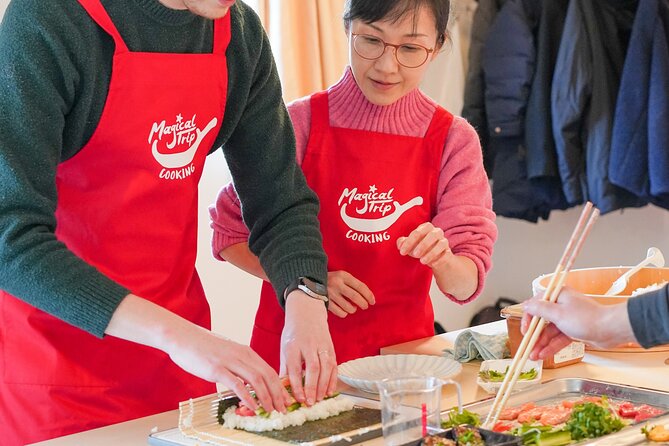
This 4-hour Tokyo washoku class is built the logical way, shop first, then cook, then eat what you made, with hands-on guidance throughout. I like that it is structured like a real Japanese meal flow, supermarket ingredients, practical cutting technique, and a sit-down finish with drink pairings.
Two things I’d put at the top of your list are the supermarket skills and the hands-on cooking practice. Guides named April, Yuri, Masai, Alice, Minnie, Mihori, Taka, and Suzy pop up in the class feedback for encouraging, step-by-step teaching, plus clear instruction that helps you get unstuck fast. You also end up with recipes to take home, so you are not just tasting today’s success.
One consideration before you book: you can’t expect a guaranteed allergy-free setup. The class can handle vegan and vegetarian needs, but allergy requests need to be shared at least one day ahead, and substitutes are not always possible at every stop.
Key Points That Make This Class Worth Your Time
- Supermarket shopping with a pro near Iriya Station, where you learn what to look for and why
- Real knife and cooking technique practice while you make multiple dishes from scratch
- A take-home recipe set, so you can repeat what you cook after Tokyo
- Sake and drink pairings (including beer and sake tasting) during the meal
- Small group size, up to 7 people, for a calmer pace and more questions
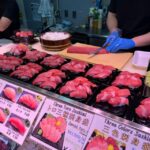
Market-First Cooking With a Tokyo Supermarket Stop
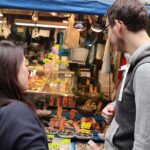
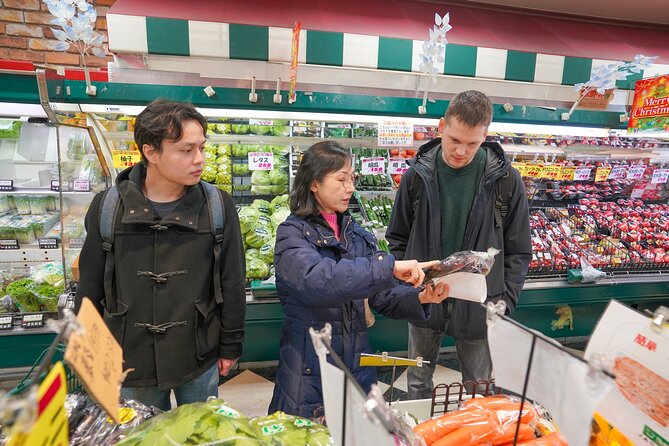
The best part of this class starts before you touch a stove. You meet at FamilyMart 2-chōme-1-10 Shitaya, Taito City, Tokyo, and then head to a local supermarket near Iriya Station with your guide. If you’ve ever bought ingredients in Japan and wondered how locals decide what is actually good, this portion is the shortcut.
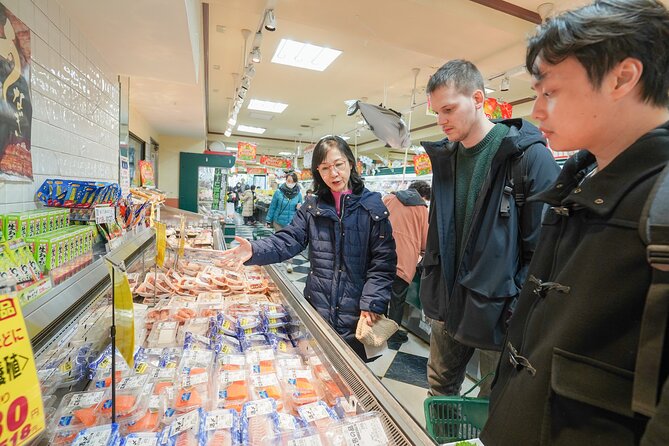
Here is what you are really buying with that supermarket stop: confidence. You learn how to choose ingredients like a cook, not like a tourist with a shopping list. Based on the class style and the consistent feedback from different instructors, your guide doesn’t just point and translate. They explain what to look for, what makes one option better than another, and how those choices affect flavor later in the meal. That is how a cooking class turns into a skill you can use again.
Logistically, starting with shopping also makes time feel efficient. By the time you reach the studio, you already understand what each ingredient is meant to do. And if you want to continue sightseeing after, you finish near the cooking area and the activity ends back at the meeting point, with an easy add-on to Kappabashi Dougu Street on your own.
You can also read our reviews of more shopping tours in Tokyo

What You’ll Cook in 4 Hours, From Sushi Rolls to Miso Soup
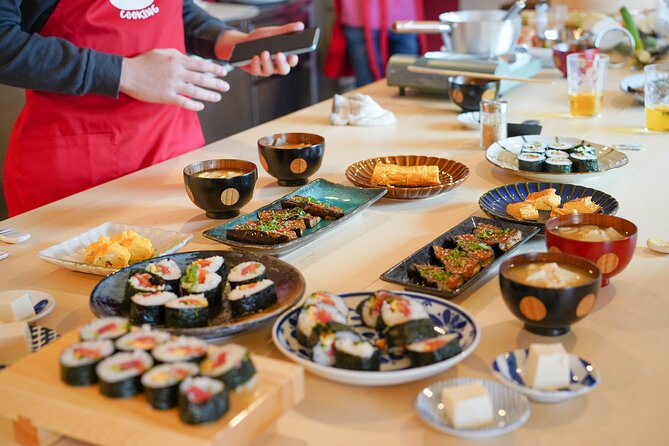
This class is built around a full, satisfying washoku-style meal, not a single demo dish. You’ll cook multiple items, and the most consistently mentioned dishes include:
- Makisushi (rolled sushi)
- Miso soup
- Dashimaki tamago (rolled omelet)
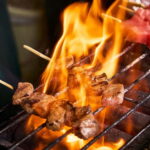
- Nasu dengaku (grilled eggplant skewers)
- Plus additional home-style items such as egg rolls depending on the class flow
The time pressure is real in a good way. A 4-hour class forces you to learn technique, not perfection. You’ll practice cutting and cooking steps that matter, like how to handle ingredients so they cook evenly, and how to keep flavors balanced. The guide walks you through the method, then you execute. That hands-on loop is why people tend to come away saying the class felt fun and doable, not intimidating.
For example, sushi rolls are not only about rolling. You learn the rhythm of prepping fillings, handling components carefully, and assembling without turning the roll into a mess. Miso soup teaches you a different kind of control, timing and temperature awareness, so it tastes like food you would actually want to eat, not just something you made because you had to.
Dashimaki tamago adds a classic Japanese texture lesson. Rolled omelet techniques reward patience, but the guide’s instruction helps you get the pattern right without getting lost. And nasu dengaku is great because eggplant can be tricky if you treat it like just another vegetable. You learn how to prepare it so the final taste and texture land where they should.
Knife Skills and Cooking Techniques That Actually Transfer Home
If you only watch someone cook, you might remember flavors. If you cut and cook yourself, you learn how to get those flavors. This class is designed for the second option.
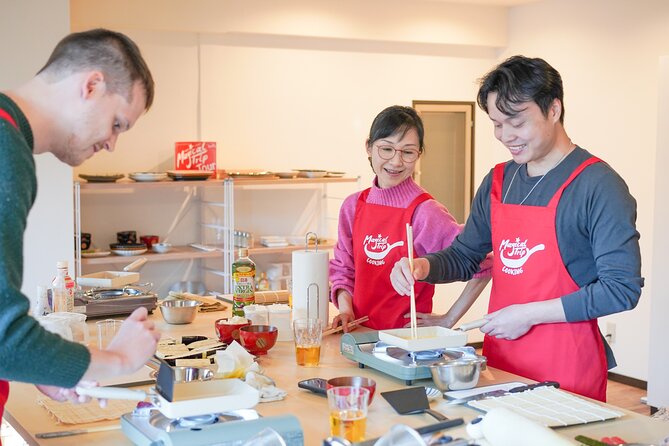
You’ll practice traditional Japanese knife and cooking techniques with your guide guiding your hands and watching your work. Multiple instructors are highlighted for patience and clarity, including people like Yuri and Suzy, and that matters because knife work is where beginners can get anxious. You want someone to correct your grip and timing without making you feel rushed.
What makes knife work valuable here is how it links to outcomes. When you learn why a cut size changes cooking time, you stop guessing later. And when you learn the method for preparing something like eggplant or omelet components, you can replicate the dish with your own ingredients at home.
Also, you receive recipes you can take home. That turns your learning into a repeatable routine. If you plan to cook washoku after your trip, those printed recipes are your safety net, especially for seasoning measurements and order of operations.
Eating Together With Sake Pairings in a Real Studio Setup
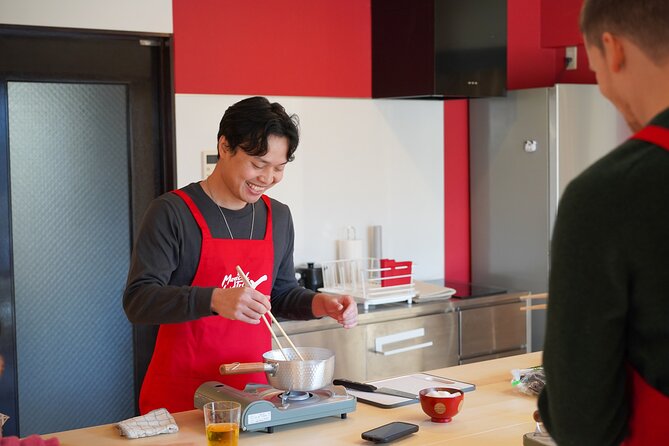
After cooking, you eat what you made. The class ends with a shared meal in a dedicated cooking studio, and the room setup shows up in the feedback as spacious and well organized. A calm workspace matters in cooking classes. It reduces chaos, keeps you focused, and makes it easier to ask questions.
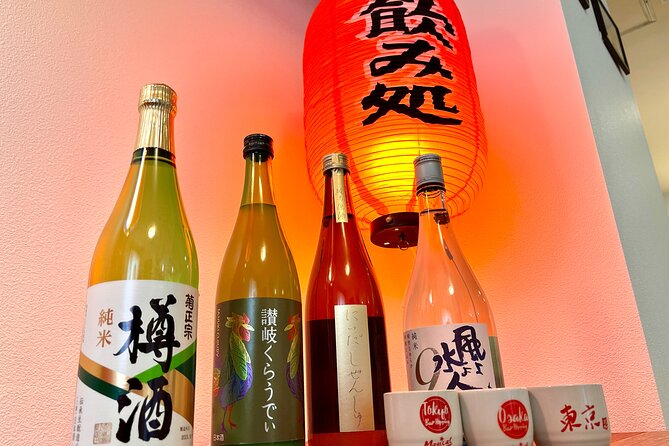
One of the most consistently liked parts of the experience is that the meal is paired with drinks. Many class reports mention beer and sake tasting, and the format includes opportunities to experiment with different pairings during the tasting moment. That is a fun bonus if you enjoy Japanese drinks, but it also helps you understand how flavor profiles work together. Miso and omelet, for instance, pair well with different sake styles. You learn by tasting, not by reading.
The group stays small, up to 7 travelers, which keeps the mood friendly. In a group this size, you get more conversation time with your guide, and you’re less likely to feel like you are following along silently.
Dietary Options: Vegan and Vegetarian Welcome, Egg Rules Matter
This class is one of the better options if you eat plant-based. Vegan and vegetarian are welcome, and the provider arranges ingredients and the cooking process accordingly. If you’re traveling with someone who needs flexible options, this is a meaningful advantage.
The key detail to remember is timing and communication. The class asks you to inform them at least one day before the tour if you have dietary requests or allergies. If you wait until the day of, you may not be able to get what you need.
There is also an important note about eggs. If you cannot eat eggs, your selection is reduced from four types to three. That means you might cook slightly fewer dishes or swap one out, depending on what can be arranged.
For allergies, be cautious. The class states it cannot guarantee allergy-free preparation because the kitchens used do not belong to MagicalTrip, and substitutions might not be possible at every stop. In practical terms, if your allergy is severe, you should treat this as a guided cooking experience rather than a medically controlled environment.
More Tokyo tours and experiences for the shortlist
Timing, Meeting Point, and How to Show Up Without Stress
This is a 10:00 am start. You meet at FamilyMart in Shitaya (Taito City), and the tour runs about 4 hours. It’s also described as near public transportation, which helps if you want to build this into a day that includes other Tokyo stops.
The biggest practical rule is simple: start on time. The class states they must start promptly, and if you are more than 5 minutes late without contacting them, it can be treated as a cancellation with no refund. So plan for Japan transit realities, plus the fact that you’ll be meeting at a specific shop address.
Also, Japan’s weather can be extreme. The class notes summer highs reaching 40°C (110°F) and winter lows dropping to -5°C (20°F). Wear layers you can manage, and bring whatever makes you comfortable for standing and walking between the supermarket and the studio.
Finally, bring your appetite. The goal here is not just learning. You cook, then you eat the meal you made, plus tasting drinks.
Value Check: Is $79.59 a Smart Spend?
At $79.59 per person, this sits in the mid-range of cooking classes in Tokyo. What makes it feel worth it is that you are not paying only for food or only for instruction.
You’re paying for three things that add up:
- A guided shopping experience so you learn how to select ingredients like a cook
- Hands-on teaching with knife and cooking technique while making multiple dishes
- A full meal you participate in, plus sake and drink pairings
If you tried to do it DIY, you could buy ingredients and follow recipes. But DIY usually fails at the same places: knowing what to buy, cutting correctly, and figuring out seasoning and timing without a guide watching your technique. This class helps you avoid the most common trouble spots, and you leave with recipes to repeat the results.
The small group size, up to 7, also improves the value. In large groups, you often get less feedback. Here, you can ask questions and adjust as you go, and that is how you actually learn.
Who This Cooking Class Is Best For
This class makes the most sense if you want more than a food show. You should book it if you like practical skills and you want to walk away able to cook Japanese dishes with less trial and error.
It’s especially good for:
- First-time Japan visitors who want a grounded intro to washoku beyond restaurants
- Food lovers who enjoy learning ingredients, not just eating
- Couples and small groups who want a shared activity that ends with a meal
- Teen-friendly travelers, since the format is hands-on and engaging, and cooking is a great family-style task
If you already have strong Japanese cooking experience, you might still enjoy it for the supermarket ingredient selection and structured technique. But if your goal is advanced culinary theory, this is likely more practical than academic.
Should You Book It? My Practical Take
Book it if you want a market-to-table experience that teaches you how ingredients turn into real dishes. The strong recurring praise is consistent: starting at the supermarket, cooking with clear instruction, and finishing with a meal that includes drink tasting. In particular, guides such as April, Yuri, Masai, Alice, Minnie, Mihori, Taka, and Suzy are highlighted for being encouraging and step-by-step, which is exactly what you want when you’re learning knife work and Japanese cooking methods for the first time.
Skip it, or book with extra caution, if you have complex allergies that require strict allergy-free handling. Vegan and vegetarian needs are supported, but allergy guarantees are not.
If you want a worthwhile Tokyo morning that gives you skills, recipes, and dinner all at once, this is a strong choice.
FAQ
What time does the cooking class start?
The class starts at 10:00 am.
How long is the class?
It runs for about 4 hours.
What dishes will I be cooking?
You’ll make traditional Japanese foods such as makisushi (rolled sushi), miso soup, dashimaki tamago (rolled omelet), and nasu dengaku (grilled eggplant skewers), plus additional home-style items like egg rolls depending on the class flow.
Are vegan and vegetarian options available?
Yes. Vegan and vegetarian are welcome, and the provider arranges ingredients and the cooking process.
Can I request dietary changes or allergies?
You should inform the provider at least one day before the tour if you have dietary requests or allergies. Requests made on the day of the tour cannot be accommodated.
Is the class group size small?
Yes. The class has a maximum of 7 travelers.
Will I get recipes to take home?
Yes. You receive recipes for the dishes so you can perfect your skills at home.
More Markets in Tokyo
More Shopping Tours in Tokyo
More Tour Reviews in Tokyo






Not for you? Here's more nearby things to do in Tokyo we have reviewed












Tokyo City Tours, side by side.
 ★ 5.01-Day Tokyo Bus TourFrom $12914,250 reviews
 ★ 4.5TOKYO SKYTREE® Admission ticketFrom $1311,192 reviews
 ★ 4.6teamLab Planets TOKYO Digital Art Museum Entry TicketFrom $259,779 reviews
 ★ 4.0Mt Fuji & Hakone Cruise, Drum Show Bullet Train 1 Day from TokyoFrom $1497,413 reviews
 ★ 5.0Shinjuku Food Tour (13 Dishes at 4 Local Eateries)From $866,603 reviews
 ★ 4.4Tokyo Mt Fuji 5th St & Hakone Cruise Bus Tour w/Bullet TrainFrom $1545,024 reviews
 ★ 5.0Flagship 2-Hours Official Street Go-Kart Tour – Tokyo Bay ShopFrom $644,974 reviews
 ★ 4.5From Tokyo: Mount Fuji Full-Day Sightseeing TripFrom $684,970 reviews
This tour also belongs to