
Review · TOKYO SUMO EXPERIENCES
Tokyo Sumo Experience: Chanko & Mochi with a Former Pro
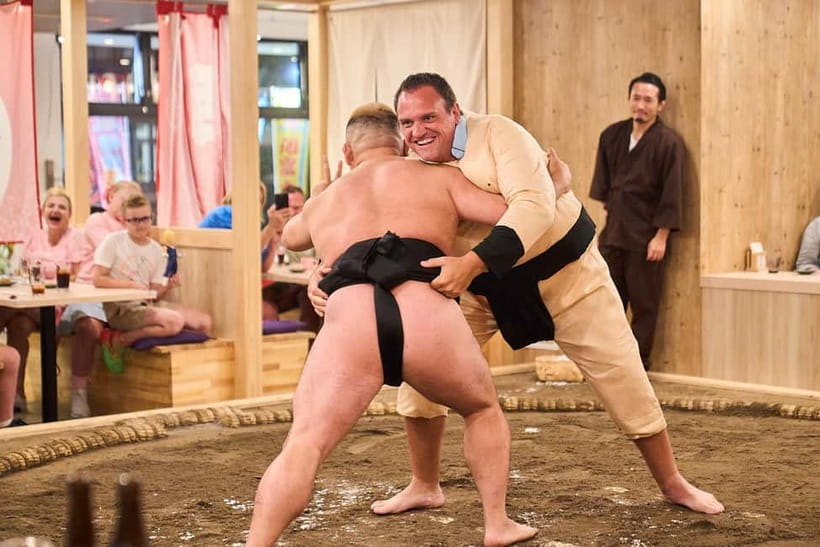
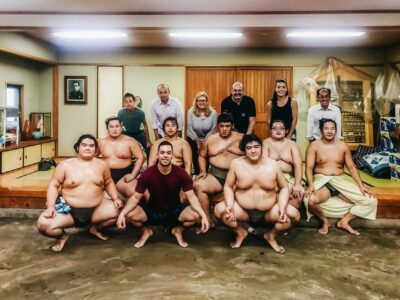
Sumo feels like theater in Ryogoku, but this one is hands-on. I love the up-close dohyo action plus the chance to test your strength directly with the wrestlers. I also love that the meal is chanko nabe, supervised as if you are sitting in on stable life, not just watching from the sidelines.
One thing to factor in: your seat is assigned, so you cannot pick where you sit. That matters if you’re traveling with a small child, since the venue notes the safest setup depends on whether you get standard seating or box seating.
Key things that make this experience work
- Ryogoku Station area, set up for easy access and quick immersion in Tokyo’s sumo world
- Chanko nabe hot pot with wrestlers involved, so it feels like a stable meal, not a generic dinner
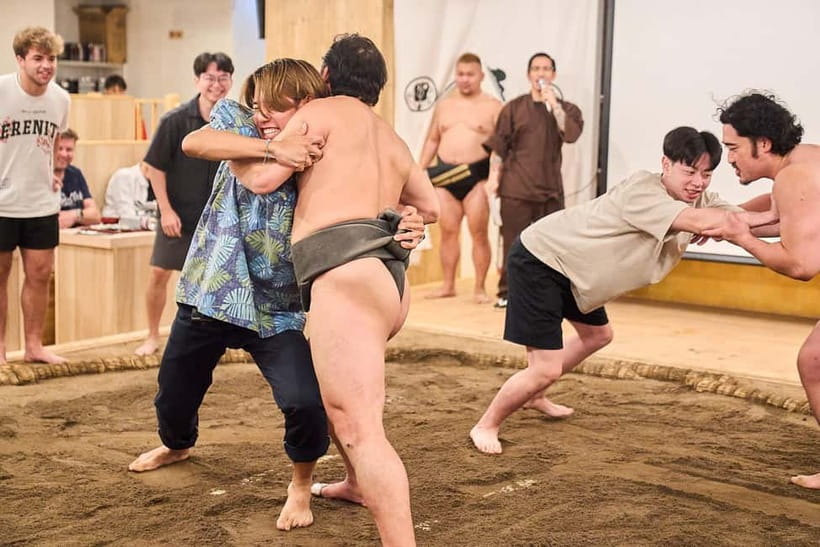
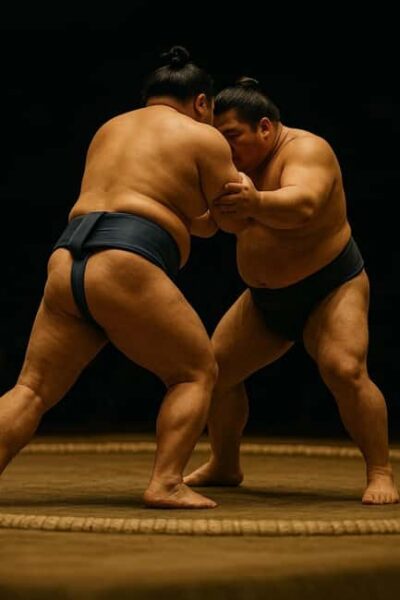
- Dohyo participation, including sumo technique practice and wrestling moments on the ring
- Mochi pounding and mochi making, with a traditional process you can actually feel with your hands
- Fun, family-friendly tone, explicitly not the serious morning training style
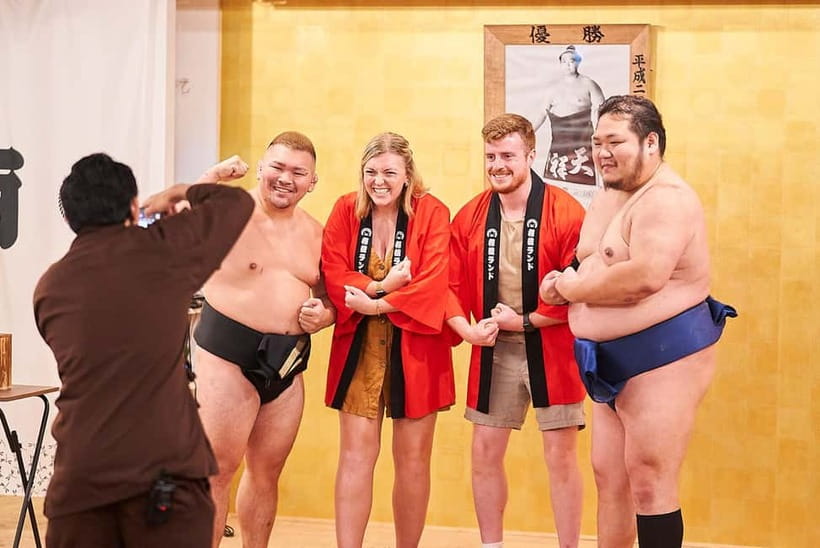
- Tons of photo moments, since the action stays close to the ring
Ryogoku, Sumo’s Home Base, in a Practical 2 Hours
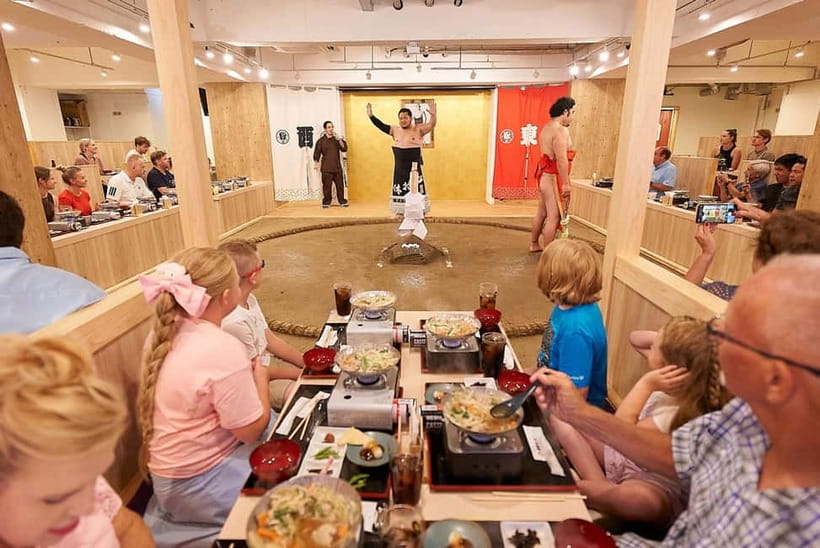
This experience is set in Ryogoku, the part of Tokyo most linked to sumo culture. You’ll likely start near Ryogoku Station, then walk over to a store space marked with a big sumo wrestler sign and flags. The setup matters here, because you’re not commuting between activities. Everything happens in one focused block, and the rhythm stays tight for a true two-hour experience.
When you arrive, plan to look for the first-floor entrance. You’ll check in, get settled, and then the show begins around the dohyo, the sumo ring. This is where the experience earns its value. Instead of stretching sumo into a full-day plan, it concentrates the best parts into an easy evening window.
Also, bring comfortable clothes and a camera. You’ll be moving a bit during the participation segments, and you’ll want photos that actually include you, not just the ring from far away.
You can also read our reviews of more tours and experiences in Tokyo.



How the Program Stays Centered on the Dohyo Ring
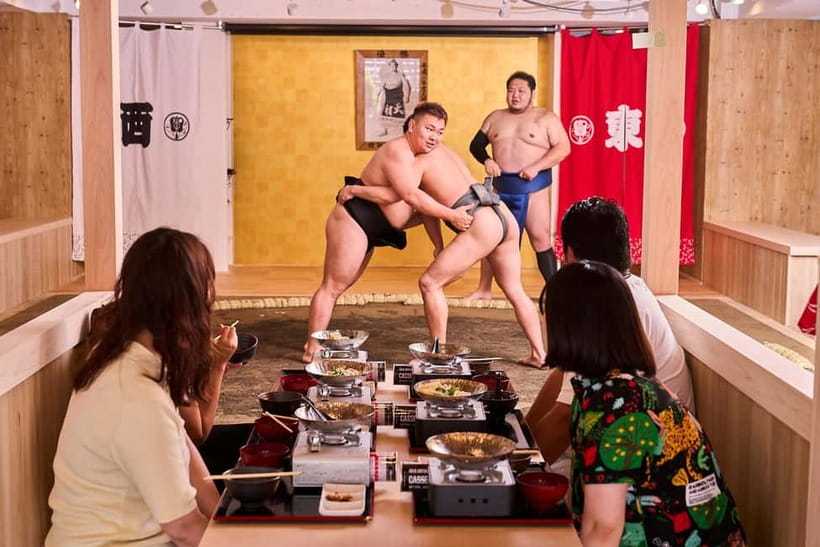
The event is built around one main stage, and that keeps it lively. You’ll take your seat around the dohyo, then watch power, rhythm, and technique right in front of you. Since seats are assigned, you should treat your arrival timing seriously, so you aren’t rushing while trying to get comfortable.
A key detail: this is described as an entertaining sumo experience, not the serious morning-training tours you might hear about. That distinction is important. The goal is to help you enjoy sumo culture without needing any prior knowledge, and to keep the experience comfortable for both adults and kids.
From there, the flow turns from watching into joining. You’ll get chances to do sumo moves, test strength, and even participate in the ring segments. The pace is designed so you aren’t waiting forever to be involved, which is why you’ll see so many families finishing this feeling like they actually did something, not just watched.
Chanko Nabe Hot Pot With Wrestlers in the Room
If you only care about one part, make it the meal. Chanko nabe is sumo’s classic staple, and here it’s served as a real sit-down hot pot meal. The big difference is that the flavor and overall meal is supervised by the wrestlers from an actual stable. That’s what makes it feel authentic. It’s not just “Japanese food nearby,” it’s the diet side of sumo explained through what you eat.
What to expect from the meal format is simple: warm, hearty, and made to keep you fueled. Hot pots are also practical for a group experience. Everyone can eat at the same time while the show continues around the ring.
Diet notes you should know:
- Vegetarian and vegan meals and gluten-free can be provided if you request at least two days ahead.
- Halal meals cannot be provided, but you’re allowed to bring your own food.
I’d plan around that early. If you have dietary needs, request them in advance so you don’t end up improvising right before a show.
One more practical point from guest comments: there can be a complimentary sour plum drink. If you have an alcohol allergy, it’s worth asking what’s inside before you sip.
Getting on the Dohyo: Sumo Basics, Then Actual Practice
The fun part is that the experience doesn’t stop at watching. You’ll try your hand at sumo on the dohyo with instruction designed for participation. The venue also emphasizes that it’s for both kids and adults, and that tone shows up in the structure: you’ll learn enough to try moves safely, then you’ll do it.
What makes this valuable for non-experts is that you’re not memorizing rules. You’re learning the feel of sumo basics: stance, balance, pushing, and grip concepts that make wrestling in a ring make sense. And because the wrestlers are involved, you’re seeing technique from people who live it every day.
The experience also includes demonstrations of wrestling rounds. That matters because you get a reference point. After you’ve tried a few moves, watching a real style match segment becomes easier to understand.
Safety and comfort are part of the plan too. You’ll be seated close to the ring, and the event keeps things controlled. Still, you should wear clothes you can move in, and be ready for the floor and ring space to feel different from normal seating areas.
Mochi Pounding and Mochi Making, Plus the Dessert Payoff
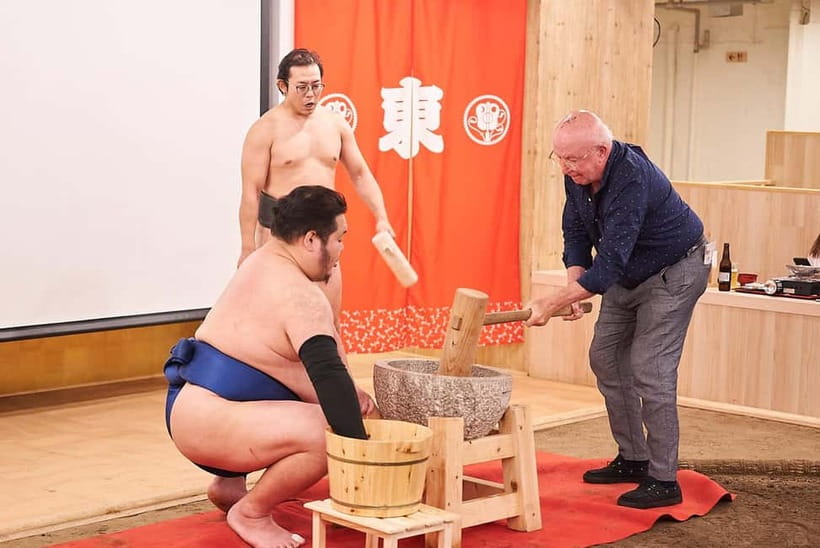
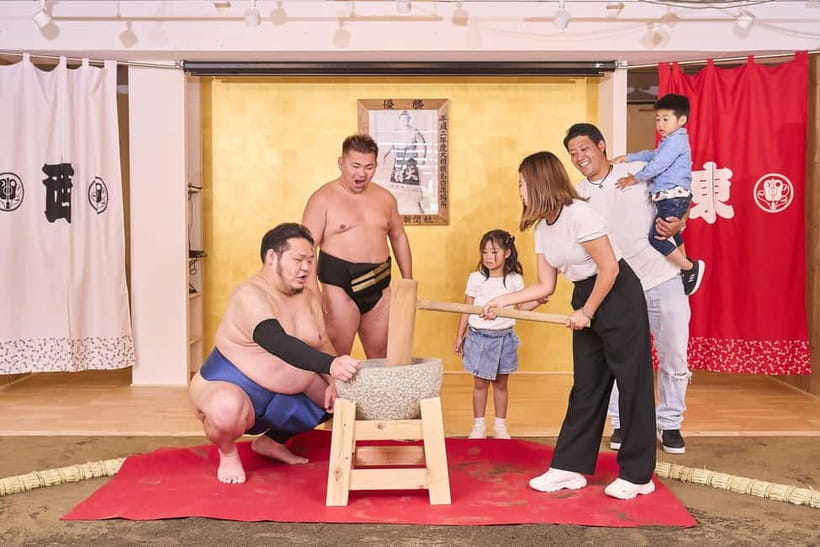
Mochi is another reason this experience works. First, you’ll watch a mochi pounding demonstration that walks you through the traditional process. Then you get hands-on with mochi making, with the wrestlers helping you pound and shape the sweet.
This is the kind of activity that’s hard to fake. You can learn about Japanese food culture from a book, but pounding mochi teaches you texture and timing. It’s messy enough to be memorable, but structured enough that most people can participate without stress.
Then comes the best part: you eat the sweet mochi. It turns the “craft” into a real payoff. For kids, it’s often the most memorable part. For adults, it’s the cultural detail that makes the whole evening feel more grounded than a typical show.
If you’re sensitive to texture or sweets, it’s still worth considering. The mochi is described as a dessert at the end of the mochi segment, so you’ll know when it lands in the experience timeline.



Former Pros Teach a Different Kind of Sumo Than Morning Training
This is sumo taught as entertainment, not as an all-business training session. That’s not a downgrade. It’s a smart choice for a two-hour ticket. The serious morning training tours focus on how wrestlers train day to day. Here, you’re getting a mix of culture, technique, and interaction designed to make the sport readable fast.
You can feel that in how the hosts and wrestlers engage. Guests highlight the MC and wrestlers for being attentive and encouraging. The result is that you’re not stuck performing with zero guidance. You get cues, you get laughs, and you get a chance to do things rather than wait your turn.
It’s also a solid way to learn sumo culture without needing a deep background. By the time you finish, you understand why wrestlers eat chanko, what makes practice different, and how the ring experience is supposed to feel.
Photo Opportunities and Comfort Tips That Actually Matter
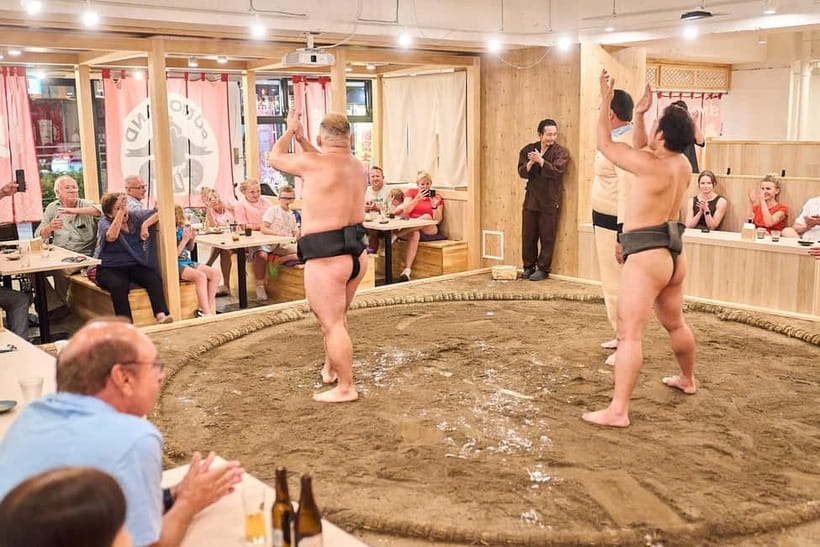
Because the action stays close, photo opportunities are a real part of the deal. You’ll be near the ring, and the participation segments create natural moments to capture. If you’re trying to get shots that include you, bring your camera and set your expectations for active photos.
For clothes, think comfortable and simple. You might be in a traditional-style environment around the ring, and you’ll be joining activities, including mochi pounding. Avoid anything too stiff or restrictive.
A practical note on children: the venue explains that it can be dangerous to sit while holding a child on standard seats. If you’re traveling with a small child, reserve for the exact number of people you have, and ask the venue about the seating situation if you’re considering standard seating versus box seating. Box seats are said to be safer for up to six people and can allow a child on your lap.
Also, no smoking is allowed. Easy rule, but it’s good to plan around it if you’re coming straight from outside in the evening.
Price and Value: Why This Costs $103 and Still Feels Fair
At about $103 per person for a two-hour experience, you might ask if it’s worth it versus other Tokyo activities. Here’s how I’d think about the value.
You’re paying for three high-cost pieces at once:
- A supervised meal featuring chanko nabe with the wrestlers involved
- Participation time on the dohyo, not just a one-time look
- Mochi pounding and mochi making with a demo plus dessert
Most short experiences in Tokyo offer either food or entertainment, sometimes one or the other. This one stacks food, hands-on culture, and direct involvement with wrestlers in a single session. The result is less “tourist observation” and more “you participated.”
The other value factor is staffing. English and Japanese instruction means you’re not guessing what to do. Plus, the hosts are described as interactive, which turns the ticket into a smoother, more enjoyable evening.
Who This Is Best For, and Who Might Prefer Something Else
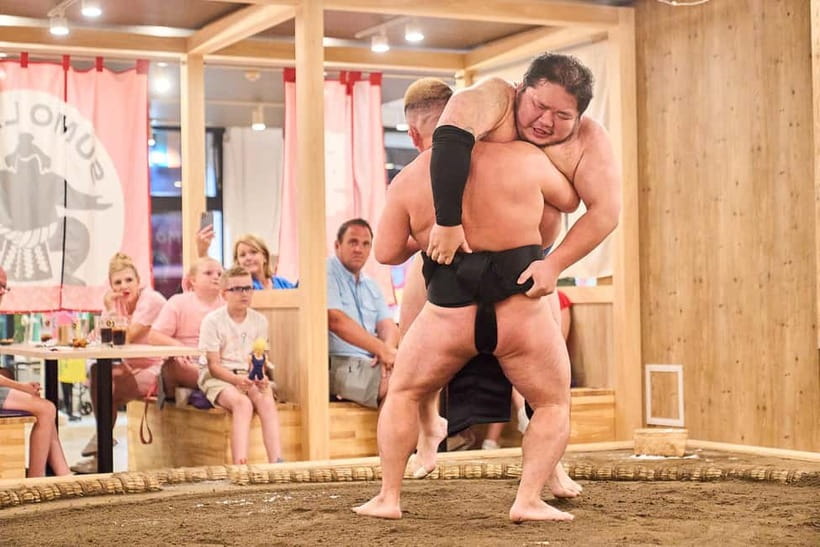
This works especially well for families and mixed groups. The event is designed for adults and children, and multiple guests mention kids enjoying both the food and participation. If your travel group includes beginners who want a fun first taste of sumo, this is a strong match.
It also suits people who want the sumo “wow” without the complexity of training schedules. You get real ring energy, technique demonstrations, and hands-on practice without needing tickets for formal tournaments.
You might want to skip it if:
- You need wheelchair accessibility, since it’s listed as not suitable for wheelchair users.
- You want the serious morning training vibe. This is intentionally an entertaining version.
- You have dietary restrictions that require special accommodations beyond what’s listed. Vegetarian, vegan, and gluten-free are possible with advance request, halal is not.
If you’re coming during off-season or just don’t want to plan around tournament timing, this is also the kind of activity that fills the “Tokyo must-do” gap with something unique.
Should You Book This Former-Pro Sumo and Mochi Experience?
Yes, if you want a short, high-impact Tokyo evening that blends culture, food, and participation. I’d book it when your schedule can handle a focused two hours and you’re okay with assigned seating.
I’d especially book if you’re excited by the idea of chanko nabe with wrestlers involved and you want mochi-making that ends with dessert. It’s the combination that makes it feel like a complete experience, not just a show.
If you hate surprises about seating or you’re traveling with accessibility needs, consider your constraints before committing. But for most people looking for an authentic-feeling sumo night with hands-on fun, this is one of the clearer “worth it” picks in central Tokyo.
FAQ
How long is the Tokyo sumo experience?
The duration is 2 hours.
Where do I meet for the experience?
The store is on the first floor, a short walk from Ryogoku Station. It’s marked by a large sumo wrestler sign and flags.
Can you accommodate vegetarian, vegan, or gluten-free diets?
Yes. Vegetarian and vegan meals and gluten-free can be provided if you notify the venue at least two days before your reservation.
Is a halal meal available?
Halal meals cannot be provided, but you can bring your own food.
Can I choose my seats?
No. Seat locations are assigned by the venue, and guests cannot request specific seats. Box seats are described as safer for sitting with a child on your lap.
Is this activity wheelchair accessible?
No, it is listed as not suitable for wheelchair users.
What should I bring, and what rules should I expect?
Bring a camera and wear comfortable clothes. Smoking is not allowed.
Are there any language options during the activity?
The instructor is available in English and Japanese.
What is the cancellation policy?
Free cancellation is available up to 24 hours in advance for a full refund.
More Tour Reviews in Tokyo
Not for you? Here's more nearby things to do in Tokyo we have reviewed












Tokyo Sumo Experiences, side by side.
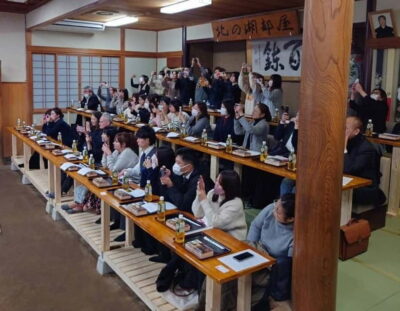 ★ 4.8Sumo Show and Dining ExperienceFrom $792,742 reviews
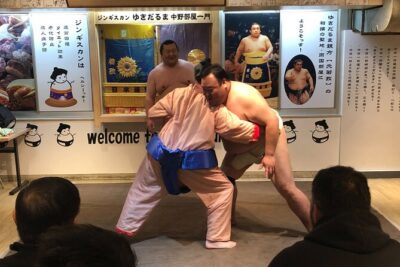 ★ 5.0the SUMO showFrom $891,960 reviews
 ★ 5.0Tokyo Shinjuku Sumo Show & Experience with PhotoFrom $791,750 reviews
 ★ 4.8Sumo Show and Experience in ShinjukuFrom $691,001 reviews
 ★ 4.7Luxury Sumo Show Experience & Japanese cuisine & DrinkFrom $103577 reviews
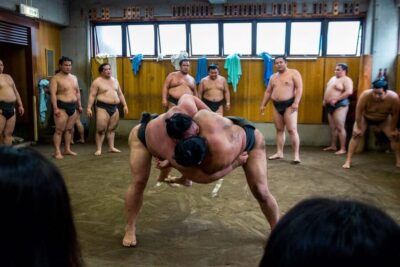 ★ 4.8Sumo Morning Practice Viewing TourFrom $81570 reviews
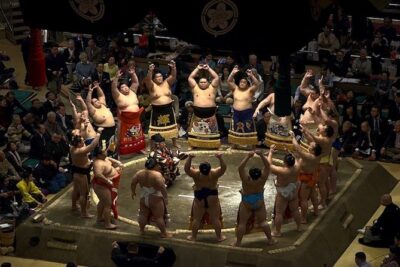 ★ 5.0Ultimate Sumo Tournament: Tokyo, Osaka, Nagoya, FukuokaFrom $184468 reviews
 ★ 4.4Sumo Morning Training VisitFrom $77370 reviews
This tour also belongs to