
Review · TOKYO SUMO EXPERIENCES
Unique Afternoon Live Sumo training tour in Tokyo
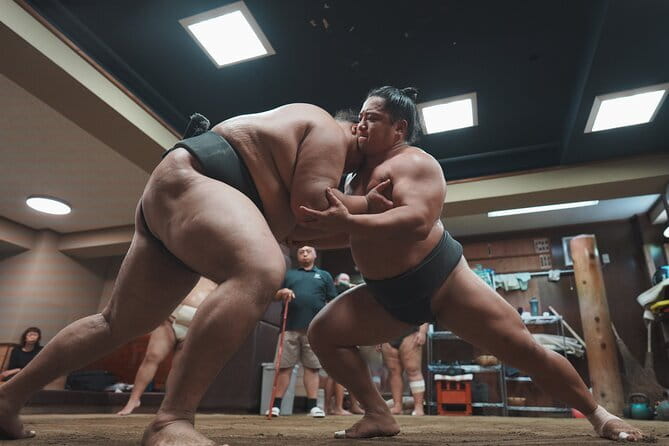
Real sumo training, up close. In Ryogoku at Nakamura-beya, you get to watch sumo keiko right where it happens, not in a stagey setting, and you’ll come away with a photo keepsake with the wrestlers. I love that it’s small and focused, and I especially love the fact that you’re learning while you watch, not just taking photos. One heads-up: the first 20 to 30 minutes can feel like warm-up and may be slow if you came only for the action.
Plan on a practical, comfortable visit too. You’ll have an audio guide in multiple languages, plus free Wi-Fi and phone charging points so you can keep your day moving without hunting for outlets.
Key takeaways before you go
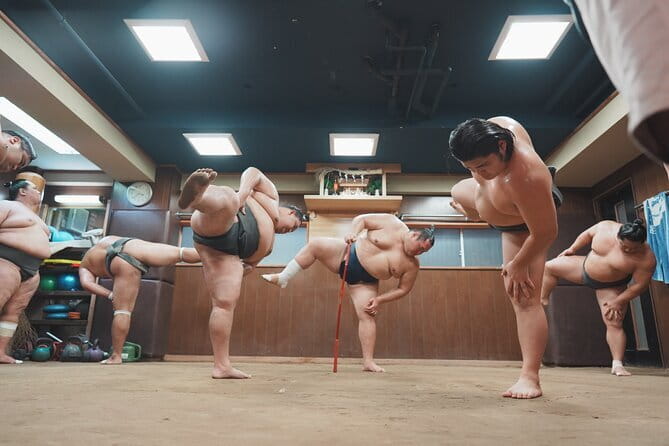
- Nakamura-beya in Ryogoku: This is a real sumo stable setting where you can see training up close.
- Small-group experience (max 10): Easier to follow along and get personal attention from the guide.
- Photo with the wrestlers: You leave with a souvenir that feels like it belongs to your Tokyo trip.
- Audio guide in multiple languages: You can pick your language for smoother understanding during keiko.
- Comfort support on site: Free Wi-Fi and phone charging points help you stay connected.
- Seats are mixed: Chair seating is limited, with the rest on the floor, so plan for either.
Sumo Keiko at Nakamura-beya: what you’re really watching
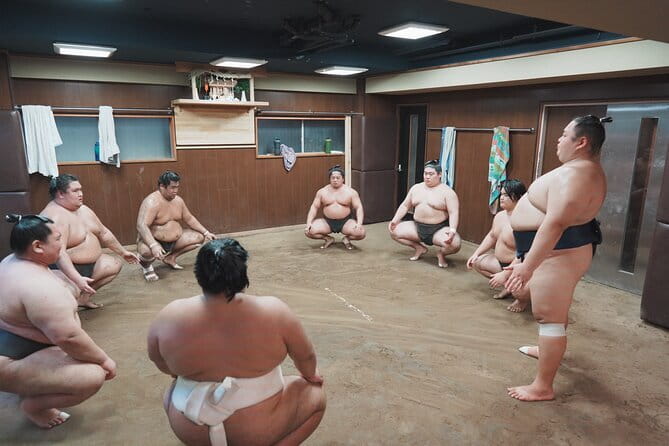
If you only know sumo from big arena matches, this tour shows you the other half of the sport: the hard work that comes before. Sumo keiko is training, where wrestlers repeat technique, practice timing, and build strength through disciplined routine. At Nakamura-beya, you’re close enough to see the intensity in their movements, not just hear about it.
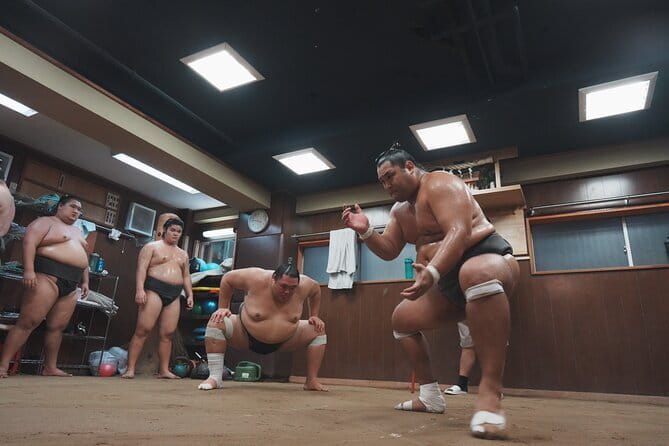
What I like about this setup is that it doesn’t try to turn sumo into a themed performance. You watch warm-ups, then the training begins in earnest, with sparring that gets visibly more intense once they start wrestling. In one family-style highlight, the first 20 to 30 minutes felt uneventful to some eyes, but the energy changes fast, and the match-style practice that follows is exciting.
You also get a guided explanation so you can connect what you’re seeing with what it means in sumo training. That matters, because keiko can look like a blur if you do not know what to watch for. With the explanation pamphlet in hand and the audio guide running, you’ll stand there more informed and less guessing.
You can also read our reviews of more tours and experiences in Tokyo.



Price and what you actually get for $137.71
At $137.71 per person, you’re paying for access, guidance, and a small-group experience in a real stable environment. This is not just a “walk by the building” cultural stop. You receive an admission ticket, an audio guide, a sumo keiko explanation pamphlet, and a photo with the wrestlers.
Here’s how I think about value for this kind of experience:
- You get time plus context. A 1.5-hour session is long enough to watch warm-up, then see the wrestlers training properly, and still learn what’s going on.
- You get a real souvenir. The photo with the sumo wrestlers is included, so it’s not an optional add-on you have to decide on mid-visit.
- You get convenience tools. Free Wi-Fi and charging points help when you’re juggling maps, messages, and photo storage in Tokyo.
The biggest thing to confirm for yourself is whether you’re okay with a training rhythm. If you come expecting nonstop action from minute one, you may feel the early phase is more measured. If you enjoy watching athletes at work, then the slow start is part of the story.
Getting to the meeting point in Ryogoku (Nakamura-beya)
The tour starts at Nakamura-beya Sumo Stable in Ryogoku. The meeting address is 1-chōme-18-7 Ryōgoku, Sumida City, Tokyo 130-0026, Japan. The good news is that it’s near public transportation, which keeps your day flexible.
There’s no pickup or drop-off. You’ll want to plan your own route and arrive a few minutes early so you can settle in before the session starts. Since the tour ends back at the meeting point, you can easily plug the stop into your afternoon sightseeing plan around the Ryogoku area.
One timing detail to pay attention to: the training is usually in the afternoon, but sometimes it can happen in the morning. So when you book, check the exact time for your date rather than assuming it’s always afternoon.
The 1.5-hour itinerary: from warm-up to three-wrestler action
This experience runs about 1 hour 30 minutes, and it’s focused on one place and one purpose: watching and understanding sumo keiko at Nakamura-beya.
Here’s the flow you can expect once you arrive:
1) Arrive, get oriented, and settle into the viewing area
You’ll be guided during the session, and you’ll have both an audio guide and an explanation pamphlet. Use this time to start your audio track and quickly scan what you’re about to see. This is when you can get your bearings fast, and it reduces that moment later when you realize you’re not sure what any of the movements are for.



2) Warm-up phase (often the least exciting part at first)
Some people find the first 20 to 30 minutes feel uneventful, because warm-ups are about getting the body ready and the mind focused. That warm-up is also real training work, not padding, and it sets the stage for the more intense segment.
If you’re traveling with kids, this is a good moment for a quick game plan: have them watch for stomps, clustering, and the shift from preparation to sparring. When the intensity ramps up, you’ll all feel it.
3) Practice becomes intense once the wrestling starts
As the training moves into more direct wrestling practice, the action gets faster and more forceful. In the experiences shared by others, the energy spikes once the wrestlers get started with sparring, including three wrestling moments. That’s when the sport becomes easy to “read,” even if you’re new to sumo.
4) Wrap-up and photo souvenir time
Your included photo with the sumo wrestlers is part of the experience outcome. It’s the kind of memory that works because it connects you to the place, not just to the idea of sumo. Afterward, you head back where you started.
Seats, comfort, and how to plan your body for stable viewing
Inside the stable, seating is practical but not uniform. There are chair-type seats for 8 to 10 people, and the rest sit on the floor. That means your comfort depends on where you end up sitting.
If you’d like the safest bet for comfort, go in expecting you might sit on the floor. Wear clothing that you can sit in for a while, and bring a thin layer if you run cold. Also, keep your bag situation simple so you can manage your space without turning it into a chore.
Noise and movement are also real in a stable environment. You’ll see physical training up close, so keep your expectations aligned with “watch the athletes work” rather than “watch a quiet museum display.”
Audio guidance in 10 languages (plus the guide’s English, Japanese, and Korean)
Language is a big deal for this kind of visit, and this tour makes it easier than most. You get an audio guide, with language options that can be selected at booking, and audio coverage in 10 languages. On top of that, the guide can speak English, Japanese, and Korean.
This combination matters because it helps at two levels:
1) You can follow the basics through audio as you watch.
2) If you have a question or need clarification, you’re not stuck.
It also helps that the session is only about 1.5 hours. You’re not spending your whole trip listening to vague explanations. Instead, you’re getting the right context at the same time the training is happening.
Free Wi-Fi, charging points, and why it helps in Tokyo
Free Wi-Fi and phone charging points are included. That might sound like a minor detail, but it can actually make the experience smoother, especially in Tokyo where you might rely on your phone for:
- maps while you’re on your way to Ryogoku
- quick translation while you navigate the area
- storing and managing photos from the stable
Since you’re there for a photo souvenir too, having your phone charged and ready reduces the stress. You can focus on watching instead of doing last-minute tech rescue.
The photo souvenir: how it turns into a real memory
Most “culture tours” end with photos in front of a sign. This one includes a photo with the sumo wrestlers, which makes the souvenir feel personal. And because it’s tied to the stable and the training you watched, it doesn’t feel generic.
If you’re traveling with kids, this is one of those inclusions that tends to land well. In one shared experience, the family loved how authentic it felt, and the teenagers were especially engaged. A photo helps turn that engagement into a keepsake you can look back on later.
A small practical note: make sure your phone or camera setup follows any on-site guidance. This kind of setting has rules, even if they are not spelled out in your booking message. Keep your behavior respectful and wait for cues.
Is this a good fit for first-timers and repeat Tokyo visitors?
I think this tour works for two groups best.
First-time Tokyo visitors who want more than landmarks
If you’ve already seen temples and neighborhoods, this is a smart way to add a Tokyo angle that many people miss. Ryogoku is the sumo-adjacent part of the city, and watching keiko gives you a stronger connection to local culture than a typical sightseeing loop.
Repeat Tokyo visitors who want a focused, different day
For frequent visitors, stable tours are appealing because they are specific. You’re not trying to cram in everything. You’re choosing one meaningful slice of Tokyo and spending a short block of time doing it well.
Families
The session length is short enough for kids, and it’s organized in a small-group format with seating options. If your family can handle the idea of warm-up time, you’ll likely be happy once the wrestling practice kicks in.
A few realistic considerations before you book
This is the part where I keep it honest.
Warm-up time can be slow at first. If you only want the loud, fast moments, you may feel restless during the early phase. But if you treat warm-up as part of how athletes prepare, it makes the later practice more satisfying.
Seating is mixed. Chair seating exists, but it is limited. If you want to guarantee the most comfortable setup, plan around the possibility that you might be on the floor.
Finally, the tour is afternoon most of the time, but sometimes it shifts. Double-check your exact time so you don’t build your day around the wrong assumption.
Should you book this afternoon sumo training tour?
If you want Tokyo that feels real, not packaged, this is an easy yes to consider. You get a focused 1.5-hour look at sumo keiko at Nakamura-beya, plus an included audio guide, explanation pamphlet, and the photo souvenir. The small-group size and guide support help you understand what you’re seeing, even if you’re new to sumo.
Book it if:
- you like watching athletes practice, not just watching performances
- you want a culturally specific Tokyo experience in a short time
- you appreciate having language help and on-site convenience like Wi-Fi and charging
Skip it if:
- you expect nonstop action from the start of the session
- you strongly prefer guaranteed chair seating
Overall, for the combination of real training access, guided context, and included keepsakes, it’s strong value for a short, memorable Tokyo afternoon.
FAQ
How long is the Nakamura-beya sumo training tour?
It runs for about 1 hour 30 minutes.
Where does the tour start and end?
It starts at Nakamura-beya Sumo Stable in Ryogoku, and it ends back at the meeting point.
Is pickup or drop-off included?
No. Pick up and drop-off are not included.
What languages are available during the tour?
You can choose from multiple language options, and the audio guide offers 10 languages. The guide can also speak English, Japanese, and Korean.
Do I get a photo with the sumo wrestlers?
Yes. A photo with the sumo wrestlers is included.
Can I cancel and get a full refund?
Yes. You can cancel up to 24 hours in advance of the experience for a full refund.
More Tours in Tokyo


More Tour Reviews in Tokyo
Not for you? Here's more nearby things to do in Tokyo we have reviewed












Tokyo Sumo Experiences, side by side.
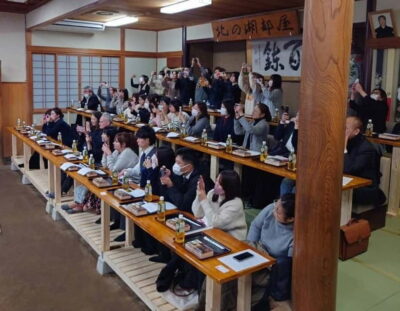 ★ 4.8Sumo Show and Dining ExperienceFrom $792,742 reviews
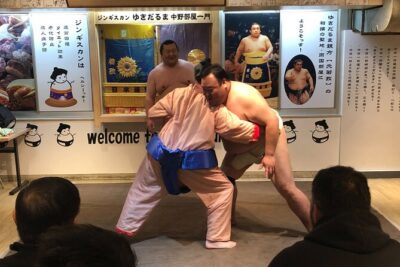 ★ 5.0the SUMO showFrom $891,960 reviews
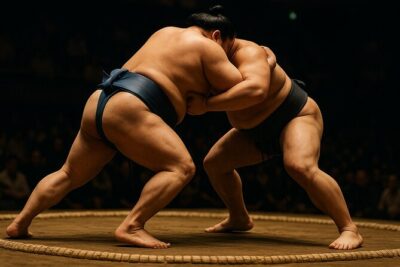 ★ 5.0Tokyo Shinjuku Sumo Show & Experience with PhotoFrom $791,750 reviews
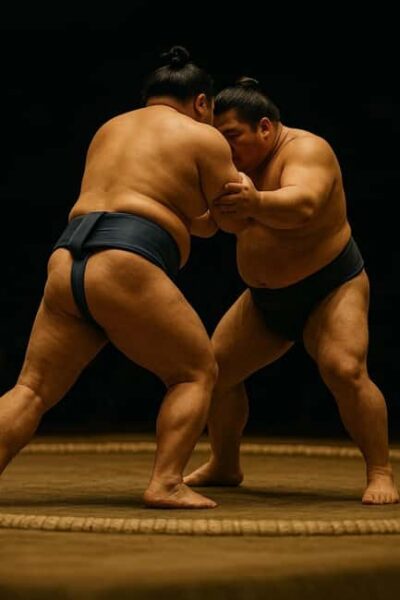 ★ 4.8Sumo Show and Experience in ShinjukuFrom $691,001 reviews
 ★ 4.7Luxury Sumo Show Experience & Japanese cuisine & DrinkFrom $103577 reviews
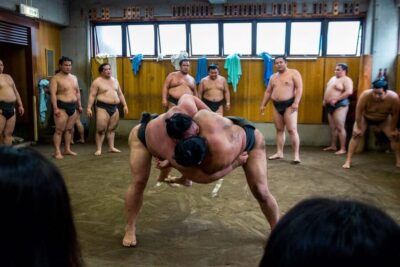 ★ 4.8Sumo Morning Practice Viewing TourFrom $81570 reviews
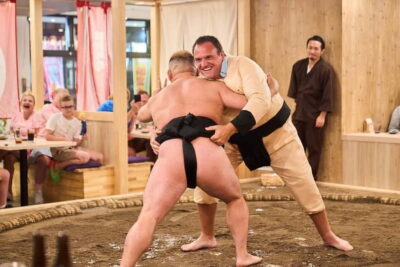 ★ 4.8Tokyo Sumo Experience: Chanko & Mochi with a Former ProFrom $103567 reviews
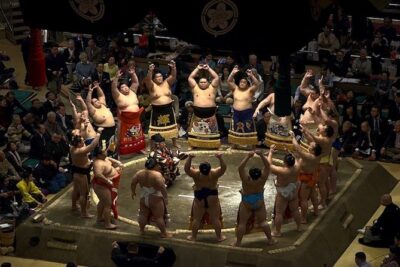 ★ 5.0Ultimate Sumo Tournament: Tokyo, Osaka, Nagoya, FukuokaFrom $184468 reviews
This tour also belongs to