
Review · TOKYO CITY TOURS
Tokyo Small Group Tour with Guide
Tokyo feels big until a guide corrals you. This Tokyo small-group walking tour puts you on a smart route through the city’s top hits, from the Imperial Palace area to Shibuya Crossing, with enough narration to make it feel like more than a checklist. I like that someone else does the navigating, so you spend your energy looking at Tokyo instead of studying maps. I also like that it is guided by people such as Mary, Suzana, Daniel, Coral, and Tomas, who are praised for connecting sites to culture and customs, not just pointing at buildings.
The one real catch is the walking. This tour is listed as moderate fitness with a considerable amount of it, and one participant specifically mentioned over 20,000 steps, so bring comfortable shoes and plan on being on your feet.
Quick take
- Max 15 people means you are not swallowed by a mega-tour group
- A morning start (9:00 am) helps you hit key spots with less stress
- Free admission for major stops is listed for the Imperial Palace East Gardens, Senso-ji area, and Meiji Jingu
- A natural Tokyo sampler: Edo-era landmarks, old-school Asakusa, then Harajuku, then Shibuya and Meiji Jingu
- Ends at Shibuya Station after you watch Shibuya Crossing in action, so you can keep moving afterward
Why this Tokyo small-group route is a smart first day
Tokyo has a talent for overwhelming you. Even if you know the names of the sights, figuring out the order, the walking connections, and what to pay attention to is a job. This tour is designed to handle that for you, with a walking day that strings together iconic neighborhoods in a way that actually makes sense.
One of the best parts is the mix of old and new. You start in the Imperial Palace East Gardens area, where the setting feels tied to older Tokyo and the Edo Castle story. Then you swing into Asakusa, where the vibe turns historical and street-level, with Nakamise-dori leading you toward Senso-ji. After that, you move into the youth and fashion energy of Harajuku, then cap the day with the loud, photo-worthy chaos of Shibuya Crossing. Finally, you end at Meiji Jingu Shrine, which gives you a breather back in a more spiritual space.
Another value point is the guide role. The tour is not just about where you go, it is also about what you notice while you are there. That is why people keep praising guides like Mary and Coral for explaining customs, beliefs, and cultural context. If you have ever felt like Tokyo looks amazing but you cannot quite interpret it, this is the type of day that helps you connect the dots.
The final practical benefit is that the group size stays small. With a maximum of 15 travelers, you can usually keep up, ask questions, and get attention when you need it, instead of disappearing into the crowd.
You can also read our reviews of more guided tours in Tokyo
Meeting at Starbucks in Kokyo Gaien: the start that prevents chaos
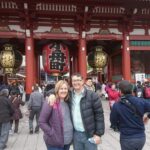
The tour starts at Starbucks Coffee at Kokyo Gaien Wadakura Fountain Park (3-1 Kōkyogaien, Chiyoda City). Meeting at a well-known spot like this matters more than it sounds. In Tokyo, it is easy to get turned around by confusing streets and entrances, especially when you are arriving for the first time. Starting at a recognizable landmark near public transportation is the kind of small detail that saves time and nerves.
You start at 9:00 am, and the day is built as a walking loop. That timing helps because you get through the major sights before your feet fully protest. It also gives you a better shot at enjoying places without feeling like you are sprinting.
You should also know this tour is listed as service animals allowed and near public transportation. That helps if you plan to connect to other parts of your day before or after. When a tour ends in a transit powerhouse like Shibuya Station, your post-tour plans get easier.
Imperial Palace East Gardens and Nijubashi Bridge views
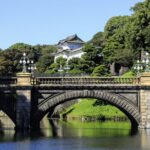
Your first major stop is the East Gardens of the Imperial Palace, tied to the old Edo Castle ruin story. You get about 1 hour here, and the admission is listed as free. Even if you only remember one thing from this part, it should be the setting and the views around Nijubashi Bridge.
Nijubashi Bridge is a classic Tokyo photo moment for a reason. Standing there, you can see how Tokyo layers history into modern city life. It also gives you a mental reset after you meet your group and start walking. It is not a shopping street. It is open space, paths, and views, which is nice early in the day.
A small drawback to consider: the Imperial Palace area is not made for long loitering. You will want to keep moving with the group. If you are someone who likes to linger for 30 photos per angle, you may feel slightly rushed during the guided portion. The good news is the time is set at about an hour, so you should still get what you came for.
Asakusa on Nakamise-dori: Senso-ji and Tokyo’s oldest Buddhist site
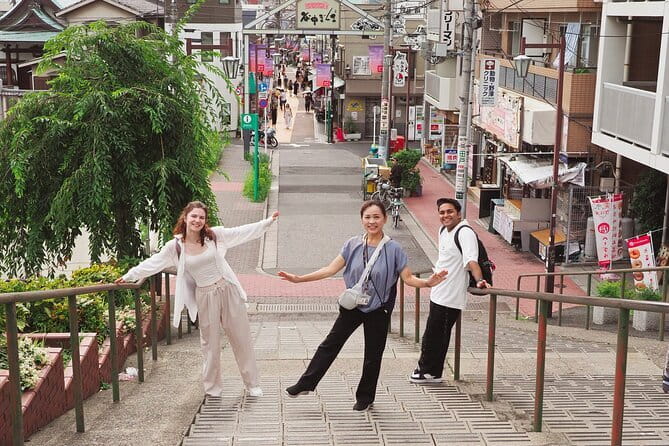
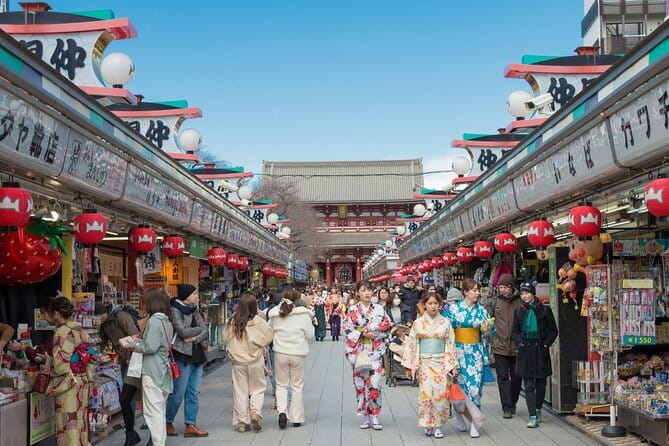
Asakusa is where the day starts to feel more like Tokyo you can walk through. You spend about 3 hours here, and admission is listed as free. The tour includes a stroll down Nakamise-dori Street, which is one of those “look up, look down, keep walking” corridors. It is busy, sensory, and packed with small details.
Then you get to Senso-ji, described as Tokyo’s oldest Buddhist site. That phrasing is useful because it tells you what kind of place you are stepping into. This is not a trendy new temple experience. It is a long-standing spiritual center that has shaped the neighborhood’s identity.
What I like about this stop is that it is timed to give you space. Three hours sounds long compared to the short photo stops later, and you need it here. Asakusa is the kind of area where you want time to absorb small street scenes while your guide can explain what you are seeing and why it matters.
The main practical consideration is crowd flow. Asakusa can get packed, and you will be moving with a group. If you hate tight spaces, you will still be fine, but you will want to keep an eye on where you are in relation to the guide and the group instead of drifting off to chase side streets.
Harajuku station to the lively shopping streets
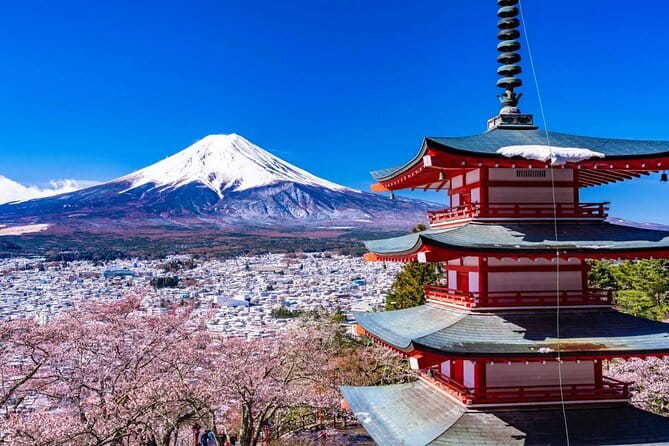
Next up is Harajuku Station, with about 1 hour and 30 minutes allocated. Admission is listed as free for this stop. This is where Tokyo shifts from classic landmarks to pop culture and fashion energy.
This part is intentionally flexible in your mind. Harajuku is a district, not a single building, so your guide’s narration can help you understand what you are walking past. In practice, this is where you start connecting Tokyo’s modern identity to the people and everyday street scenes around you.
There is a straightforward drawback to consider. Harajuku areas can be intense. If you are sensitive to crowds or noise, you may find the shopping streets a little overwhelming. Plan to use the time in a smart way: pick a couple streets or viewpoints you really care about, then let the guide bring you back to the main flow.
If you want photos, this is also one of the best times to get them. Just remember you are still on foot for the full day, so avoid turning the district into a marathon detour.


Shibuya Crossing watch time: the iconic moment and the real crowds

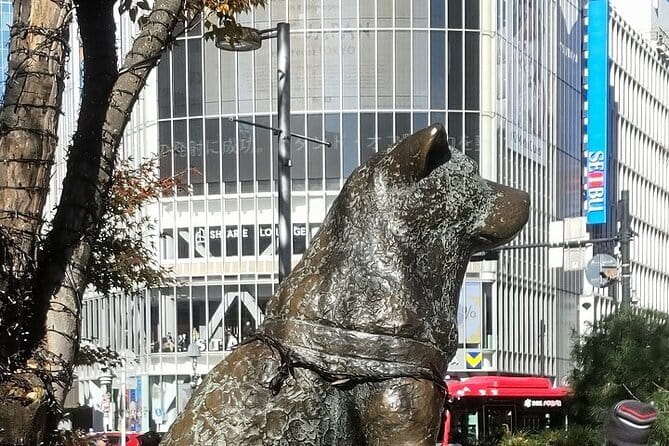
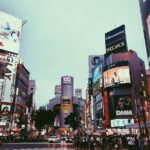
After Harajuku, you hit Shibuya Crossing, with about 30 minutes here. This is one of the most famous street scenes in the world, and you are getting the right kind of time: long enough to watch it cycle and short enough that you do not lose the whole afternoon standing around.
The tour also includes photo stops, and Shibuya is the one you will probably shoot most. I like that the plan includes watching the crossing in action, not just taking your one obligatory picture and moving on.
A practical reality: Shibuya Crossing is busy. Even with a short window, you should expect crowds and quick changes in where people are standing. Stay close to your guide and your group if you want a smooth experience. If you drift too far, it can get hard to regroup quickly in the middle of so many moving bodies.
Also, this is a good stop to use as your “reset” before the final temple section. Your eyes and ears have likely been on overload from earlier stops. Shibuya gives you that iconic Tokyo rush, then you can transition to something calmer at Meiji Jingu.
Meiji Jingu Shrine for a quieter ending
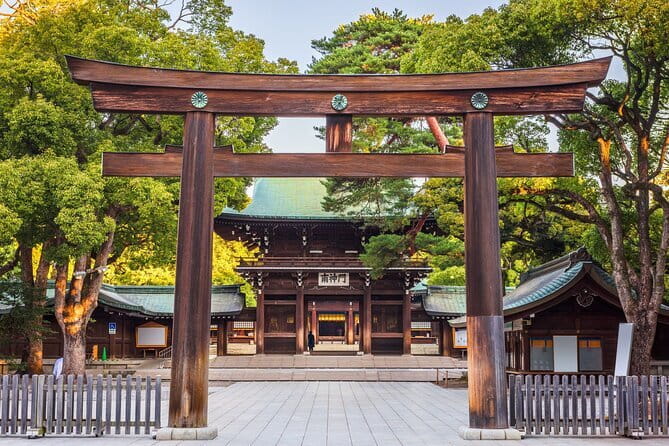
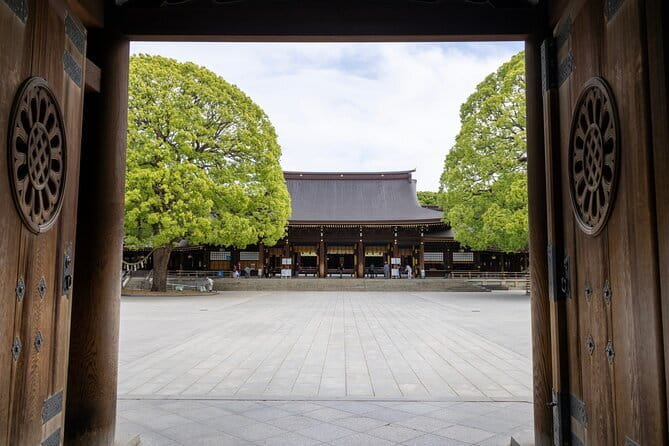
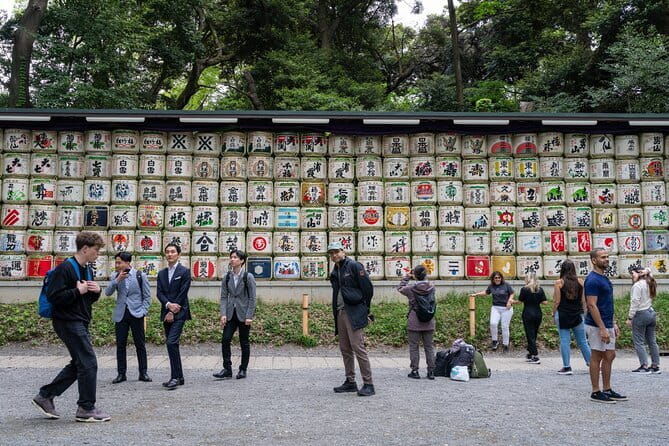
You finish with Meiji Jingu Shrine, spending about 1 hour and 30 minutes there. Admission is listed as free, and it is described as the most famous Shinto shrine.
This ending is not accidental. Meiji Jingu works as a palate cleanser after the city noise and shopping streets. You go from high-energy street scenes to a more ceremonial, nature-and-ritual atmosphere, which helps your day feel balanced. It also gives you a chance to slow down your pace when you finally need it.
What makes this stop valuable is the context your guide can bring. A shrine is not just a photo backdrop. If you pay attention to the symbols and the rituals, and if your guide points out what to notice, the whole experience becomes easier to understand. People have praised guides for explaining customs and beliefs, and this is the kind of stop where that style matters most.
Possible drawback: if you have limited stamina, you may feel your legs by the final hour. Still, it is structured for a full 1.5 hours, so you can take breaks and absorb the space. Just keep your schedule realistic, and do not plan to “power through” without water or rest.
Price and value: is $99 fair for this much Tokyo?
The price is $99 per person for a tour that runs about 7 to 8 hours. That is not cheap, but it is not random either. You are paying for three big value drivers that matter in Tokyo.
First, you are paying for navigation. Tokyo is not hard once you know it, but getting there on Day 1 can waste time. A guided route saves you from guessing which entrances to use, where walking links are easiest, and how to avoid unnecessary backtracking.
Second, you are paying for context. The guide is included, and the tour is built so commentary adds meaning as you go. That is why multiple guides were praised for being friendly and for connecting sites to culture, customs, and history. If you enjoy learning while sightseeing, this is where your money goes.
Third, several stops have admission listed as free. Specifically, the East Gardens of the Imperial Palace, the Asakusa/Senso-ji stop, and Meiji Jingu all show admission tickets as free in the tour details. That offsets some of the cost, especially compared with tours that pack in several paid attractions.
If you want a solo day where you pick your own pace, you can do it. But if you want a structured Tokyo orientation with minimal planning and a guide who explains what you are looking at, this is solid value.
Logistics that actually matter for comfort and timing
This is a walking tour with a considerable amount of it. The tour notes moderate physical fitness and specifically tells you to bring comfortable walking shoes. One participant mentioned over 20,000 steps, so think “all-day walking,” not “short sightseeing stroll.”
The good news is the pace is built around multiple stops with natural breaks: about an hour at the Imperial Palace gardens, a longer 3-hour Asakusa block, then shorter segments at Harajuku, Shibuya, and Meiji Jingu. That rhythm helps you recover your legs between big photo moments.
You also get mobile ticket support. In a city like Tokyo, that matters because you can avoid scrambling for paper on a busy morning.
Finally, the tour ends at Shibuya Station after watching Shibuya Crossing in action. That is a practical win. You are dropped at a place with tons of transit options, so you do not have to rebuild your day from scratch.
Who this Tokyo tour suits best, and who should reconsider
This tour is a great fit if:
- You want an efficient first-time orientation to Tokyo with key sights grouped in one day
- You like walking but you do not want to plan every turn and transit connection
- You want cultural explanations, not just photos
It may not be your best choice if:
- You hate crowds and tight areas. Harajuku and Shibuya can get intense.
- You have limited stamina for a long walking day. The tour is not positioned as a light stroll.
- You prefer deep time in just one neighborhood. This is a “great hits” day, not a single-area slow day.
If you are the kind of traveler who values structure and a clear route on Day 1, this tour does exactly that.
Should you book this Tokyo Small Group Tour with Guide?
I would book it if you want a well-run Tokyo starter day and you are okay with lots of walking. The small-group size, the guide-led explanations, and the way the day balances major landmarks with neighborhood street scenes make it a strong choice for first-time visitors.
I would hold off if you want a relaxed day with minimal walking or you know you will struggle with crowd-heavy stops like Shibuya Crossing and busy parts of Harajuku. In that case, you might be happier with a shorter or lighter option.
FAQ
Where is the meeting point for the Tokyo Small Group Tour with Guide?
You meet your guide at Starbucks Coffee – Kokyo Gaien Wadakura Fountain Park (3-1 Kōkyogaien, Chiyoda City, Tokyo 100-0002, Japan).
What time does the tour start?
The tour starts at 9:00 am.
How long is the tour?
It runs for about 7 to 8 hours.
What is the maximum group size?
The tour has a maximum of 15 travelers.
Is the tour mostly walking, and what should I bring?
Yes, there is a considerable amount of walking. Wear comfortable walking shoes and aim for a moderate physical fitness level.
Which major sights are included in the tour?
The tour includes the East Gardens of the Imperial Palace, Asakusa (including Senso-ji), Harajuku Station, Shibuya Crossing, and Meiji Jingu Shrine.
Is admission included for the Imperial Palace East Gardens, Senso-ji, and Meiji Jingu?
Admission ticket costs are listed as free for the East Gardens of the Imperial Palace, the Asakusa/Senso-ji stop, and Meiji Jingu Shrine.
What is the cancellation policy if weather is bad?
You can cancel for a full refund up to 24 hours in advance. The experience requires good weather, and if it is canceled due to poor weather, you will be offered a different date or a full refund.
More Guided Tours in Tokyo

More Tours in Tokyo

More Tour Reviews in Tokyo
Not for you? Here's more nearby things to do in Tokyo we have reviewed




Tokyo City Tours, side by side.
 ★ 5.01-Day Tokyo Bus TourFrom $12914,250 reviews
 ★ 4.5TOKYO SKYTREE® Admission ticketFrom $1311,192 reviews
 ★ 4.6teamLab Planets TOKYO Digital Art Museum Entry TicketFrom $259,779 reviews
 ★ 4.0Mt Fuji & Hakone Cruise, Drum Show Bullet Train 1 Day from TokyoFrom $1497,413 reviews
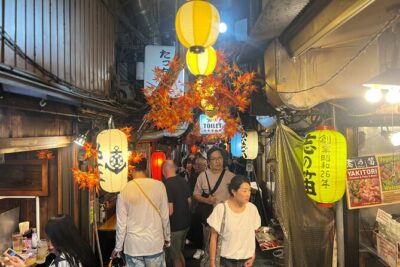 ★ 5.0Shinjuku Food Tour (13 Dishes at 4 Local Eateries)From $866,603 reviews
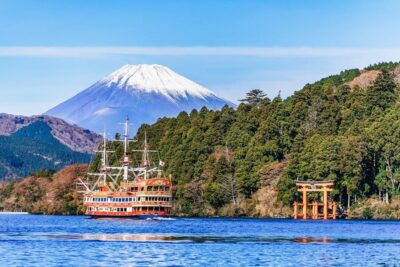 ★ 4.4Tokyo Mt Fuji 5th St & Hakone Cruise Bus Tour w/Bullet TrainFrom $1545,024 reviews
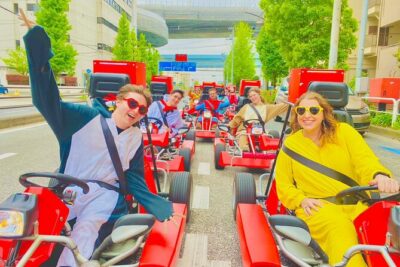 ★ 5.0Flagship 2-Hours Official Street Go-Kart Tour – Tokyo Bay ShopFrom $644,974 reviews
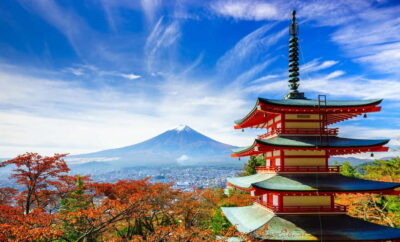 ★ 4.5From Tokyo: Mount Fuji Full-Day Sightseeing TripFrom $684,970 reviews