
Review · COOKING CLASSES
Zen Buddhist Vegetarian(Shojin Ryori): Cooking Experience
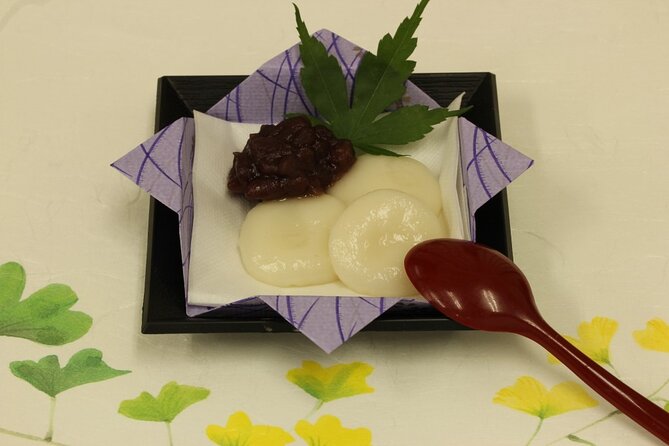
Shojin ryori turns vegetarian cooking into a calm practice. This small-group workshop (max 8 people) teaches the Zen Buddhist philosophy behind cruelty-free food, then puts it in your hands with recipes like sesame tofu and vegetable tempura you can recreate later.
I especially like the focus on learning how the dishes are made, not just watching. I also like the slow, seated meal at the end, where the food and teaching feel connected, not rushed. One consideration: it is explicitly Buddhist vegetarian, so if you are chasing meat and seafood flavors, this is not your class.
What you are really paying for
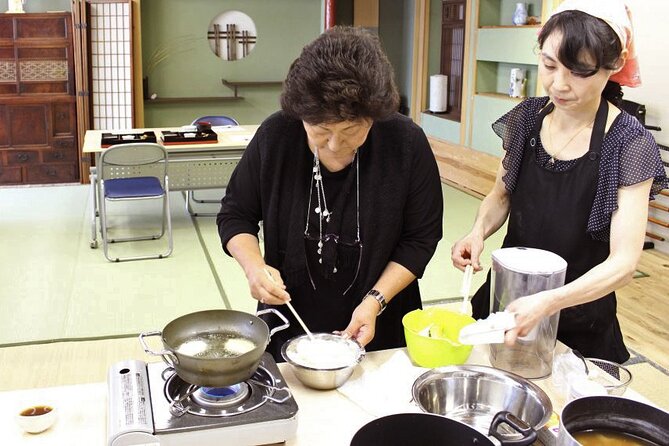
For about 2.5 hours, you get a structured cooking lesson plus ingredients, guided by a nationally accredited guide-interpreter, and you eat what you cook. The price ($114.67 per person) can feel steep until you remember that it includes the full activity, your meal, and instructor support in a group that stays small.
Key things to know before you go
- Max 8 people means more hands-on time and easier questions
- Shojin ryori roots in Zen Buddhism, with a cruelty-free focus built into the food
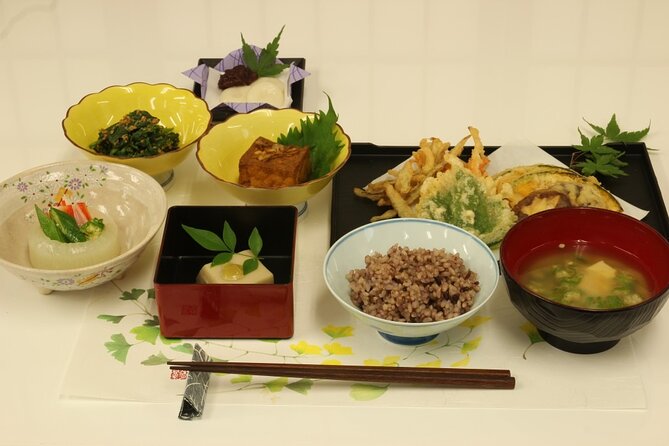
- You cook classics like sesame tofu, dashi broth soup, and vegetable tempura
- Tea pairing upgrade is available if you want a more complete meal experience
- Ingredients are included, so you do not shop or measure your own way
- Mobile ticket and near-public-transport access make it fairly easy to plan
You can also read our reviews of more cooking classes in Tokyo


What Shojin Ryori teaches you, beyond a vegetarian meal
Shojin ryori is more than the label vegetarian. It comes from Zen Buddhist monks and has been shaped over centuries, with rules that emphasize compassion and non-harm. In practical terms, that means the cooking methods and flavor choices are built to work without meat and seafood, while still delivering that satisfying, savory depth Japanese food is known for.
What I find helpful is that the class frames the why, not only the how. When you understand the philosophy, the techniques make more sense. Instead of treating vegetables like a substitute, you start thinking about umami, texture, and balance as the main goal. That mindset is useful even after your Tokyo trip ends.
The 2.5-hour class flow at Kikai Shinkō Kaikan
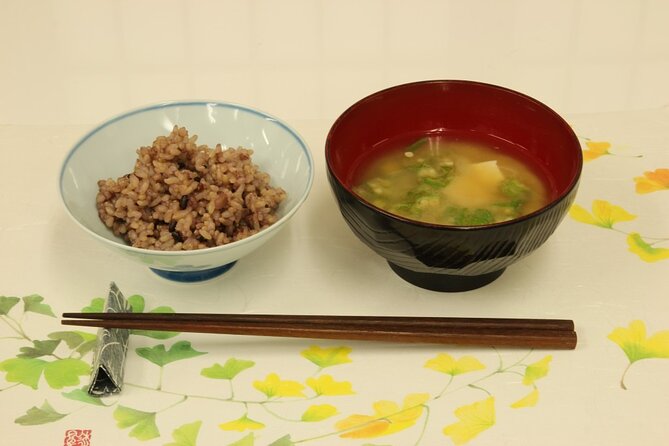
The session starts at 11:00 am at Kikai Shinkō Kaikan, 3-chōme-5-8 Shibakōen, Minato City. It ends back at the meeting point, so you are not hopping across town after cooking and eating. The duration is about 2 hours 30 minutes, which is long enough to actually make food, but short enough to still enjoy the rest of your day.
You should plan on the experience being centered on a quiet, guided rhythm. The group stays small, so the teaching can slow down when someone needs a hand. Also, because ingredients are included and the class is set up as a lesson, you are not stuck trying to follow complicated steps on your own.
Recipes you will cook: sesame tofu, vegetarian dashi soup, vegetable tempura
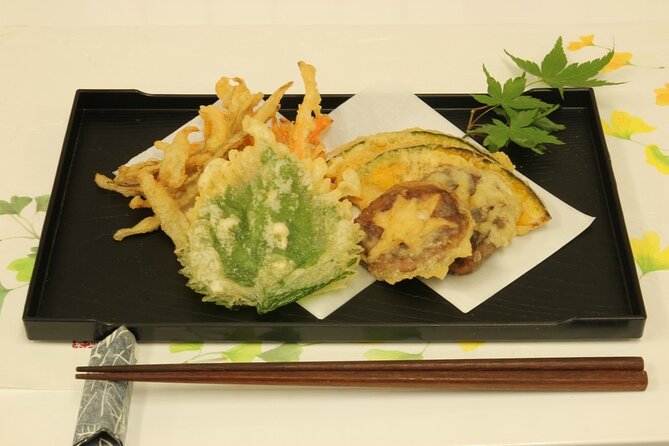
The most important part is that you do not just sample dishes. You learn to make shojin ryori staples, with instructor help throughout. The class highlights familiar Japanese items, but in a vegetarian and shojin style approach.
Here are the core dishes mentioned for this experience:
- Sesame tofu: You will learn how sesame becomes the flavor anchor and how tofu fits into the overall balance of the plate.
- Dashi broth soup: Dashi is the kind of base that can make or break a Japanese soup. In a shojin context, the lesson is about building that comforting savory quality without relying on meat or seafood.
- Vegetable tempura: Tempura is often associated with seafood, but this version focuses on vegetables. You learn the batter approach and the practical way to treat vegetables so they come out crisp and not soggy.
Even if you do not cook Japanese often, these are smart picks. They are recognizable, they teach repeatable techniques, and they help you understand how flavor is constructed in vegetarian Japanese cuisine.
Eating etiquette and why the meal feels different
After cooking comes the part that makes the whole experience feel complete: you sit down to eat your freshly prepared meal. This is not just a snack after class. The program is built around a quiet moment where the food, the philosophy, and the time you spent learning all connect.
If you like experiences that slow you down, this meal likely hits the spot. A small-group setting also matters here, since the table feels more like a shared workshop dinner than a chaotic tasting line.
And if you are choosing between this and another cooking class option, the dining element is a big deal. You get to eat while the flavors are still fresh, then you can compare your results with what you learned about the underlying technique.






Japanese tea pairing upgrade, and when it is worth it
There is an optional upgrade that adds Japanese tea pairings while you eat. If you tend to enjoy tea culture or you want to make the meal feel more like a full experience, it is an easy add-on to consider.
Tea pairing is also a practical way to understand flavor. Tea can highlight subtle tastes and reset your palate between bites. That is especially helpful with dishes like tofu and soup, where the goal is balance rather than loud, spicy punch.
If you are trying to keep costs down, you can still enjoy the class without the upgrade. Just know that the tea option is designed to make your seated meal more intentional, not merely decorative.
Price and value for your Tokyo time
At $114.67 per person, this is not a bargain class. But the value is more reasonable when you look at what you are actually getting.
You receive:
- a vegetarian cooking lesson
- ingredients
- a nationally accredited guide-interpreter
- the meal you prepare
- a small group size with enough time for questions
Also, it is timed well for a traveler schedule. Starting at 11:00 am means you can still do other Tokyo plans in the afternoon without feeling like you are committing to an all-day event. Since the end point is the same as the start point, you do not lose time walking or transferring after eating.
One more angle on value: the class is limited to 8 travelers. When classes are crowded, you often spend more time waiting than learning. Here, the small ceiling is part of why it feels personalized.
Who this cooking experience suits best (and who should skip it)
This works best if you:
- want a cooking class that goes beyond sushi and ramen
- are vegetarian or simply curious about Buddhist vegetarian food
- enjoy calm, structured activities where you can ask questions
- want recipes you can realistically try at home later
It might be less satisfying if you:
- are hunting for meat-forward flavors
- prefer a faster, nightlife-style experience
- only want a quick tasting without cooking
Most travelers can participate, which is encouraging if you are not a confident home cook. The key is that the class is set up for learning, not for testing skill.
Quick practical tips for a smooth session
Because transportation is not included, it helps to plan your route to the meeting point in advance. The location is near public transportation, which should make that part straightforward.
Other practical notes that matter:
- Confirmation is provided within 48 hours of booking, subject to availability.
- You will receive a mobile ticket.
- If you have dietary requirements or requests, tell the program in advance so they can prepare appropriately.
Should you book Zen Buddhist Vegetarian (Shojin Ryori) in Tokyo?
If you want a Tokyo experience that feels thoughtful and hands-on, I think this is a strong choice. It is not trying to impress you with spectacle. It teaches you a vegetarian Japanese cuisine tradition with Zen Buddhist roots, and it gives you dishes that are both recognizable and genuinely useful in your own kitchen.
I would book it when you want something different from the usual food hits. If you are the kind of traveler who likes learning a technique you can repeat later, the small-group size and included ingredients make the price feel fair. If you prefer bold meat-heavy meals, you may feel underwhelmed, since the entire point is cruelty-free vegetarian cooking.
FAQ
Where is the meeting point for the Shojin Ryori cooking experience?
The experience starts at Kikai Shinkō Kaikan, 3-chōme-5-8 Shibakōen, Minato City, Tokyo 105-0011, Japan.
What time does the class start?
The start time is 11:00 am.
How long does the cooking experience last?
The duration is about 2 hours 30 minutes.
How many people are in the group?
The activity has a maximum of 8 travelers.
What is included in the price?
The included items are a nationally accredited tour guide-interpreter, the vegetarian cooking lesson, and ingredients.
Is transportation included?
No, transportation to the venue is not included.
Is there an option to add Japanese tea to the meal?
Yes. You can upgrade to include pairings of Japanese tea while you eat.
How do I get my ticket?
A mobile ticket is provided.
Can I cancel for a full refund?
Yes, free cancellation is offered. You must cancel at least 24 hours before the experience start time for a full refund.
More Cooking Classes in Tokyo
More Tour Reviews in Tokyo
Not for you? Here's more nearby things to do in Tokyo we have reviewed












Cooking Classes, side by side.
 ★ 5.0Ramen & Gyoza Cooking Class in Tokyo with Local Supermarket VisitFrom $122823 reviews
 ★ 4.6Easy Ramen Cooking Experience in Kabukicho, ShinjukuFrom $29321 reviews
 ★ 5.0Ramen and Sushi Cooking Class with Sake Pairing Set in TokyoFrom $79291 reviews
 ★ 4.9Wagyu and 7 Japanese Dishes Cooking ClassFrom $67273 reviews
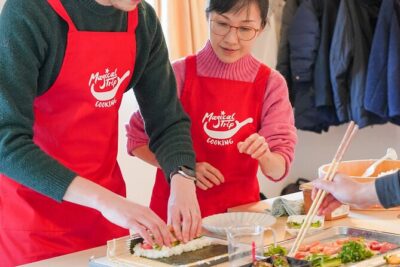 ★ 5.0Tokyo Washoku 4-hour Cooking Class: From Market to TableFrom $79253 reviews
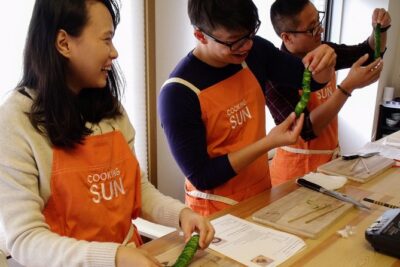 ★ 5.0Small-Group Wagyu Beef and 7 Japanese Dishes Tokyo Cooking ClassFrom $72190 reviews
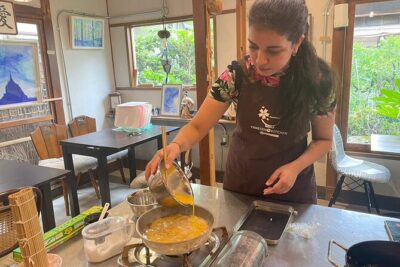 ★ 5.0Private Home Cooking in Yanaka – Local Flavors in a Warm SettingFrom $122173 reviews
 ★ 5.0Tokyo Sushi Making Experience & Japanese Cooking ClassFrom $59150 reviews
This tour also belongs to