
Review · TOKYO CITY TOURS
Tokyo: 3-Hour Bike/E-Bike Tour of the City’s Hidden Gems
Tokyo on a bike feels like cheating, in a good way. In just three hours, you cover 18 kilometers and hit both big-name landmarks and quieter local streets, all with an in-person guide. You get the history, but you also get the speed.
What I like most is the choice between a bike or e-bike, which makes this doable even if you are not a training-rides-every-day person. The guides, including Show and Naoki, tend to answer questions and add context at each stop, so it is more than just moving from photo spot to photo spot.
One thing to consider: you need to feel comfortable riding around traffic and pedestrians, and even on an e-bike the ride can feel like real activity, especially in heat.
Quick take: what you get in three hours
- Small group (max 7), which keeps the pace manageable and questions easier to answer.
- 18 km covered fast, so you see far more than walking and still get breaks for photos.
- Guides that explain what you are looking at, with strong English support and frequent Q&A.
- E-bike option helps on hills and in warm weather, and some regular-bike riders do lag on climbs.
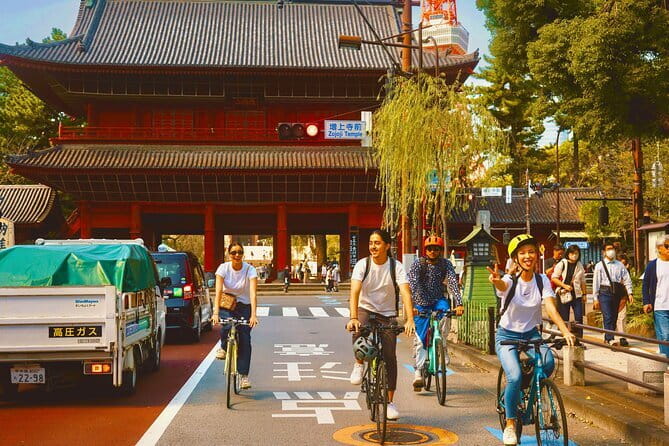
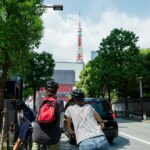
- Built-in stops for photography, like Zojo-ji with Tokyo Tower in the frame.
- Helmet is not included, so budget time to rent one if you want it (¥1000, cash).
Why three hours by bike changes Tokyo
Tokyo is packed. If you rely only on trains and walking, you spend a lot of time crossing streets, waiting for lights, and backtracking when crowds slow you down. This tour flips the script. You ride directly through neighborhoods, then stop in smart spots to look closer.
You also get a different kind of perspective. On a bike, you notice the small stuff: how streets funnel people, how storefronts transition from office buildings to residential blocks, and how the city shifts vibe block by block. It is a good way to get your bearings fast, especially if this is your first day or two.
You can also read our reviews of more cycling tours in Tokyo
Start point, ride setup, and what to expect before you roll
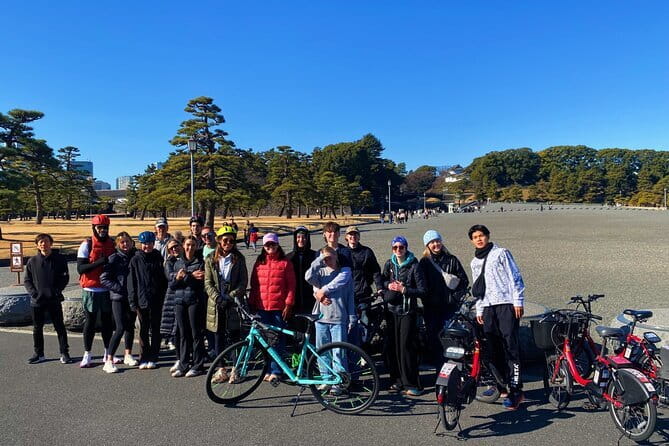
The meeting spot is in Shiba Park (Minato City), near public transportation, at Shibakoen 2-chome, inside the Shiba Park building area. The ride ends near Harajuku, at Jinnan, between Yoyogi Park and Shibuya. From there, you are well positioned to keep exploring, grab dinner, or hop on trains.
The ride is designed for moderate physical fitness, not for hardcore athletes. You are on a bike for several stretches, so you should be ready to pedal or steer your way through real city rhythm. The included mini pouch is genuinely useful, since it gives you a safe place for a phone, wallet, and keys without juggling everything.
Rain is handled with a raincoat provided on rainy days, which is a nice touch when Tokyo weather decides to switch moods. Bike insurance is included too, so you can ride with less stress.
The Zojo-ji to Otemon Gate run: where the photos and history connect
This tour starts with a temple stop that is basically built for a camera. At Zojo-ji, you get a short visit and a classic shot with Tokyo Tower in the background. The time is brief, but it is the right kind of stop for what you want in three hours: one major landmark, a strong visual moment, and enough time to step inside if it is open.
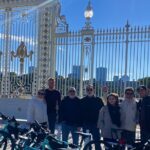
Next comes the Imperial Palace area. You first see the entrance area and guards, then later you ride to Kokyo Otemon Gate, the main gate. These stops are short, but they work well on a bike because you get the layout and scale without spending your whole morning trapped in slow-moving crowds.
What makes this part feel worthwhile is the way the guide frames it. You are not only looking at stone and gates. You are hearing what those spaces mean in Japanese history and how the palace grounds function in modern Tokyo. Even if you have seen pictures, it lands differently when you are riding past the perimeter roads and then stopping for a close look.
Practical note: the time at each stop is limited, so if you want long interior time or deep museum-style wandering, treat this as a highlights and context tour, not an all-day palace session.
Tokyo Station and the red-brick contrast you can feel from the saddle
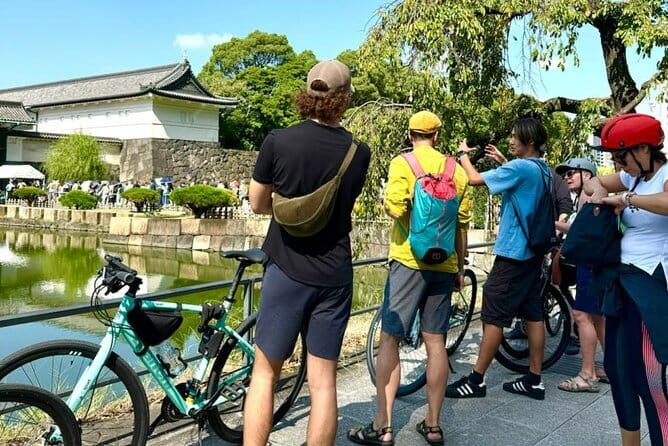
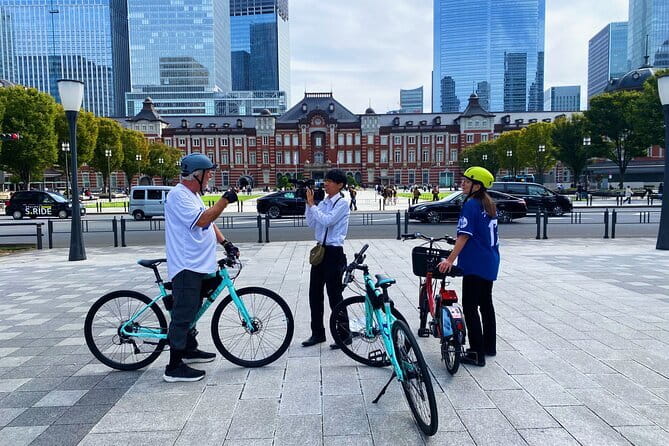
Between the temple and the Imperial Palace gate stops, you roll through Tokyo Station Marunouchi Ekimae Hiroba, with a chance to appreciate the iconic red-brick facade. This is one of those places where you can feel the contrast: historic architecture sitting inside a city that keeps building upward.
The stop is short, so aim to do two things quickly: get a photo that includes the facade, and then take a few seconds to notice how the station area flows into surrounding streets. On foot, you might only notice the crowd and platforms. On a bike, you understand the geography of how people move through the area.
If you care about photography, this stop is a good warm-up. You are already in the Tokyo center, you know where the group is heading next, and you get a clean landmark moment before moving toward the more street-level neighborhoods.
Olympic-site stop, then the fashion streets of Aoyama and Shibuya

After the palace area, the ride shifts from formal landmarks into neighborhoods with their own character.
One stop is Japan National Stadium, tied to the 2020 Olympics and Paralympics. You get time to look around, and it gives the tour a modern Tokyo anchor, not just older sights.
Then the ride leans into style streets:
- Aoyama Street is a quick taste of upscale shopping areas and distinctive architecture.
- Shibuya Cat Street adds a different street vibe, mixing trendier shopping with smaller vintage feel.
- You bike through the area in a way that helps you understand how Shibuya became Shibuya, even if you do not go deep into specific stores.
These stops are time-limited, which is both a plus and a tradeoff. It keeps the energy up and preserves your ability to cover the rest of Tokyo in the same afternoon. The downside is you will not have time to browse every shop or linger at every corner.
You can also read our reviews of more city tours in Tokyo


Shibuya Crossing, then a smart ending near Harajuku
You finish with Shibuya Crossing, one of the most famous crosswalks on Earth, and you bike through it with the group at a pace that still feels like sightseeing instead of rushing.
After that, the tour ends near Yoyogi Park and Harajuku Station, with the stated finish area around Jinnan, a shopping and dining neighborhood between Yoyogi Park and Shibuya. That is a practical way to end, because you are not stranded in the middle of nowhere. You can easily walk into dinner options or keep going with trains and more exploring.
If you are planning the rest of your day, I would use the ending area to your advantage. The tour’s strongest benefit is momentum, and finishing near Harajuku means you can keep that momentum into the evening without redoing travel.
E-bike vs pedal bike: choose based on your day, not your ego
This is the tour’s biggest decision point.
An e-bike helps a lot in Tokyo heat and on small hills, and some regular-bike riders do lag behind on climbs. If you are doing this tour as part of a vacation week where your schedule already includes lots of walking, an e-bike can save your legs for later. It also makes the ride feel smoother and less demanding at stop-and-go moments.
That said, pedal bikes can work if you are comfortable riding and you are not expecting a workout-free ride. One practical tip: pay attention to how the e-bike fits. There are mentions of e-bikes feeling small for some people, and if your bike does not feel right, let the guide know right away so it can be adjusted.
Helmet rental is available for ¥1000 and requires cash. If you want the added comfort and safety, plan to bring the money for it. The tour also includes bike insurance, which helps peace of mind if something unexpected happens.
Price and value: what $59.45 really buys you
At $59.45 per person for around three hours, you are paying for three things at once: time, guidance, and logistics.
You cover about 18 kilometers, which is a lot for a short half-day. You also get an in-person guide, English and Japanese support, and the included bike plus a raincoat if needed. For many visitors, that combination is what makes the price feel fair. You are not just renting wheels, you are getting a planned route with context.
Where your wallet might still add up is optional items:
- Food and drink are not included.
- Helmet rental costs extra if you want one.
- Child seat setup costs extra if needed (¥3000), and you must contact in advance.
Also, keep expectations aligned. This is not a museum tour, and it is not a slow neighborhood amble. It is a focused ride that prioritizes coverage and explanations over long stays at each location.
The one drawback to be honest about: how hidden this really is
The tour markets the concept of lesser-known spots, but several of the main stops are major tourist landmarks, including Zojo-ji and the Imperial Palace area. That is not a problem if you came for Tokyo highlights plus added commentary. It is a mismatch if you were expecting only obscure backstreets and non-famous locations.
My advice: treat the phrase as a promise of contrast, not total obscurity. You will still recognize several stops, but you also get the benefit of arriving by bike through the middle of neighborhoods rather than only from tourist lanes.
Who should book this bike tour, and who should skip it
This tour is a strong match if you want:
- a short time-efficient way to see central Tokyo
- a guide to provide context while you are riding
- a fun way to mix famous sights with less-familiar streets
- a small-group experience that does not feel like a conveyor belt
It may not be the best choice if:
- you are not comfortable riding around pedestrians and city traffic
- you prefer quiet, slow sightseeing with lots of stops for reading and wandering
- you want deep time at major landmarks, like long interior visits
If you are traveling solo, this is especially appealing. A solo rider can often get a more personal feel since the group stays small.
Should you book this Tokyo Bike or E-bike tour?
Yes, if your goal is a lively, efficient introduction to Tokyo that keeps you moving while still giving you stories and photo stops. This is the kind of activity that can turn a stressful first-day logistics problem into an enjoyable ride with a clear path.
Book it with a few smart preparations: choose the e-bike if you are heat-sensitive or plan to be active later in your trip, bring cash for a helmet rental if you want one, and wear clothing that works for cycling. Also, if you expect only obscure streets, adjust your expectations and look at it as a highlights tour with extra local texture.
If you want Tokyo in one half-day, this is a very practical way to get there.
FAQ
How long is the bike or e-bike tour?
The tour lasts about 3 hours.
How much distance will we cover?
You will ride through about 18 kilometers of Tokyo during the tour.
What is included in the price?
The tour includes use of a bicycle, a raincoat on rainy days, an in-person guide (English and Japanese), a mini pouch for your phone or wallet, and bike insurance.
Is a helmet included?
No. Helmet rental is available for ¥1000, and you should bring cash if you want one.
What should I bring for rainy weather?
You will receive a raincoat on rainy days, but it is still smart to bring weather-appropriate clothing and protection for your phone.
Do I need good fitness to join?
The tour is for travelers with moderate physical fitness. You will be riding during the full tour, so you should be comfortable with an active city experience.
What is the group size?
The tour has a maximum of 7 travelers.
Where do we meet and where does the tour end?
You start in Shibakoen (Shiba Park building area, Minato City) and end near Yoyogi Park in the Jinnan area between Yoyogi Park and Shibuya.
What is the cancellation policy?
You can cancel for a full refund if you cancel at least 24 hours before the experience start time. The experience requires good weather, and if it is canceled due to poor weather, you will be offered a different date or a full refund.
More Cycling Tours in Tokyo
More Tours in Tokyo
More Tour Reviews in Tokyo
Not for you? Here's more nearby things to do in Tokyo we have reviewed


Tokyo City Tours, side by side.
 ★ 5.01-Day Tokyo Bus TourFrom $12914,250 reviews
 ★ 4.5TOKYO SKYTREE® Admission ticketFrom $1311,192 reviews
 ★ 4.6teamLab Planets TOKYO Digital Art Museum Entry TicketFrom $259,779 reviews
 ★ 4.0Mt Fuji & Hakone Cruise, Drum Show Bullet Train 1 Day from TokyoFrom $1497,413 reviews
 ★ 5.0Shinjuku Food Tour (13 Dishes at 4 Local Eateries)From $866,603 reviews
 ★ 4.4Tokyo Mt Fuji 5th St & Hakone Cruise Bus Tour w/Bullet TrainFrom $1545,024 reviews
 ★ 5.0Flagship 2-Hours Official Street Go-Kart Tour – Tokyo Bay ShopFrom $644,974 reviews
 ★ 4.5From Tokyo: Mount Fuji Full-Day Sightseeing TripFrom $684,970 reviews
This tour also belongs to