
Review · TOKYO CITY TOURS
Tokyo 3 Hour E Bike Tour of the City Bayside Areas
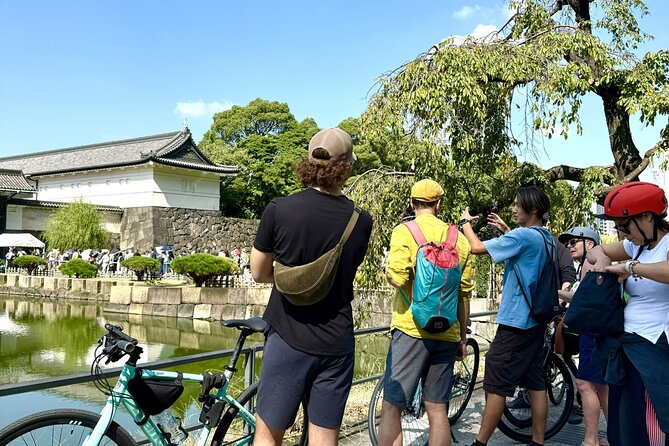
Tokyo is easier on two wheels. This 3-hour Tokyo bayside E-bike tour strings together famous sights and lesser-seen streets without tiring you out. You’ll move through Ginza, Tsukiji, and the calmer garden side of town, guided end-to-end by an English speaker.
I especially like that you get a real mix of Tokyo types in one loop: theater and shopping streets, temple and market stops, then a quiet garden break on foot. I also like the value of an electric bike for a short time window, since it lets you cover more ground than a walking-only plan and keeps the pace comfortable.
One thing to consider: it’s only about 3 hours, so each stop is brief. If you want deep time in museums or long market browsing, you may feel slightly rushed, especially around Tsukiji.
Key highlights you will feel right away
- Electric bikes make this short loop doable even if your legs are not keen on Tokyo hills
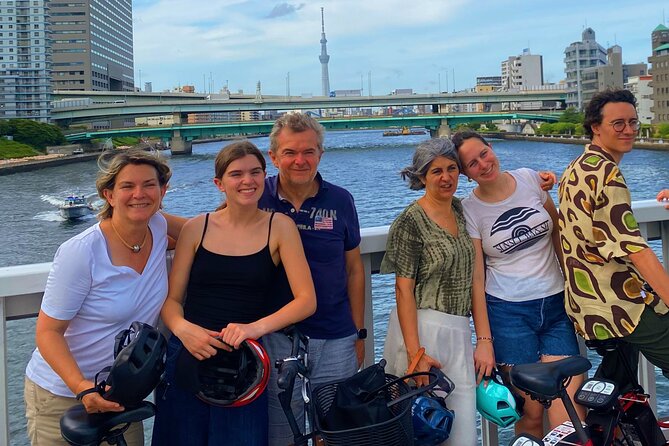
- Small group size (max 7) keeps the ride calm and organized
- Ginza to Tsukiji to Tsukishima gives you variety, not the same skyline photo again and again
- Kiyosumi Gardens is built in as a walking reset (entrance fee included)
- Tsukiji snack break helps you taste the area without turning the tour into a food mission
- Optional Fukagawa Fudodo visit means you can choose your level of temple time, plus it is cash-only
Why a Tokyo bayside E-bike loop is a smart way to see the city
Tokyo can be intense. Streets are busy, blocks feel long, and getting from one “must-see” to another can turn into a transit puzzle. This tour solves that by pairing sightseeing with an electric bike, so your effort goes into steering and enjoying the views, not constantly fighting the clock.
The bayside focus also matters. Instead of staying in one single neighborhood bubble, you glide through several areas with noticeably different vibes. You go from the slick, upscale feel of Ginza into the temple-and-market center of Tsukiji, then out toward the more residential and garden-y tone that makes Tokyo feel like more than just big streets.
You also get a guide who helps you keep your head in traffic. One review specifically called out safe riding through busy streets and another praised guides for taking people through backstreets. That is exactly what you want in a city where your navigation instincts might be yelling at you to walk instead.
You can also read our reviews of more cycling tours in Tokyo
Price and timing: what $87.96 gets you in practice
At $87.96 per person for about 3 hours, this is not the cheapest activity in Tokyo. But it is priced like a guided “coverage tour,” and that is where it makes sense. You are not just paying for a bike. You are paying for an English-speaking guide, a controlled route, and planned stops so you do not spend your limited time figuring out logistics.
Timing is the other big part of the value. With 3 hours, you can fit this between other plans, including a market morning or an afternoon garden wander. Reviews also mention short photo-friendly breaks and smooth pacing, which is what makes a time-limited tour feel worth it.
One more practical detail: it is a mobile ticket, and the start point is near public transportation. That means you can usually build it into a day without extra wandering around stations.
Meeting point to final temple: where the tour starts and ends
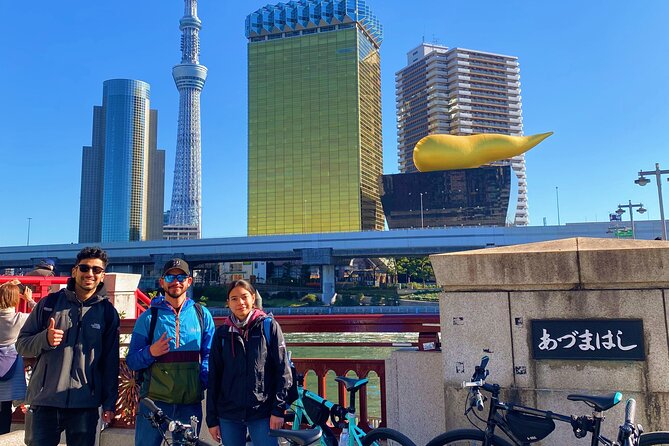
You start at 1-3 Hibiyakōen, Chiyoda City, Tokyo 100-0012. The end is at Fukagawa Fudou-dō (Naritasan Tokyo branch temple), 1-chōme-17-13 Tomioka, Koto City, Tokyo 135-0047. Your route is a true point-to-point flow, not a “circle back to the shop” loop.
This matters because it changes how you plan your next step. Since the tour ends near the Fukagawa Fudou-dō area, you can continue your day in that part of Koto, instead of restarting your transit route from where you began. If you are the type who likes to minimize backtracking, you will appreciate that.
Group size is kept small, with a maximum of 7 travelers. That tends to help with quiet communication, and it also keeps stops from turning into a traffic jam.
Ginza to Kabuki-za: the luxury-meets-theater opening stretch
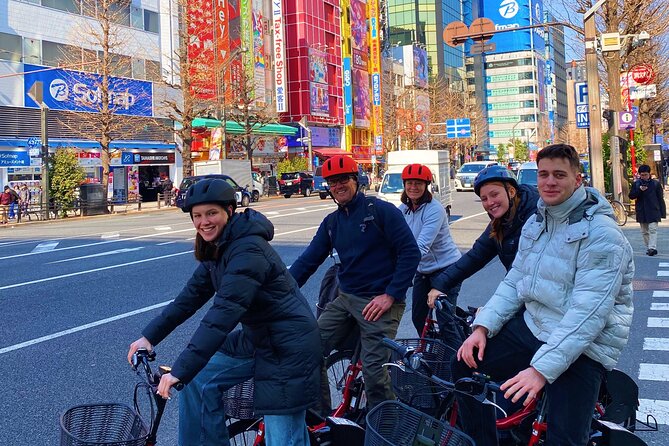
You kick off in Ginza, which is known for its polished, upscale shopping atmosphere. Expect a quick cycle through the district with a short stop time. Even though it is only about 10 minutes, Ginza is a good opener because it gives you an instant sense of Tokyo’s “big city” rhythm.
Next comes Kabuki-za. This is your theater stop, where classical Japanese performing arts take center stage. In a short tour, this is a smart pick because it is iconic and visually distinctive, even if you do not spend long enough to fully absorb a whole show plan.
The possible drawback here is that both stops are brief. If you are hoping to wander storefronts or linger for a long photo session, you may want to mark these places for a return visit on another day. The tour is doing its job, just do not expect a slow amble.
Tsukiji temple and fish market: tasting Tokyo’s daily pulse
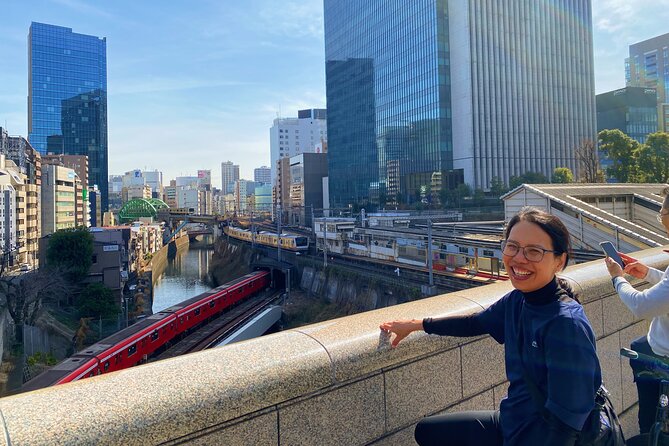
Then the tour shifts into Tsukiji, and it is one of the strongest parts of the route. You start with the Tsukiji Hongwanji Temple, the Hongan-ji Temple area in the heart of Tsukiji. Even with about 15 minutes, temple stops in Tokyo hit differently on a bike tour. The contrast makes you slow down mentally, and it gives your eyes a break from street level intensity.
After that, you head to the Tsukiji Fish Market area. You get around 20 minutes to walk and then a quick snack break. This is where the tour becomes more than sightseeing. You get to experience the market neighborhood in a short, practical way, without turning your schedule into a full market day.
A review highlighted that the fish market stop and snacks were a great inclusion, and another mentioned sashimi as part of the experience. The tour plan does not lock you into one specific food plan, but the time is clearly built for tasting while you are there. If you are hungry, this stop helps you avoid the awkward situation of arriving to Tsukiji and realizing you have not eaten yet.
You can also read our reviews of more city tours in Tokyo

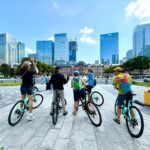

Tsukishima Monja Street and the mini-island feel
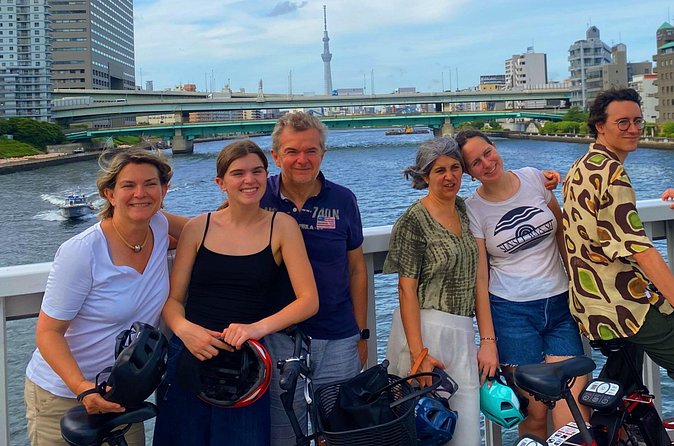
From Tsukiji, you cycle toward Tsukishima Monja Street, where the vibe turns more traditional and street-food friendly. The stop is about 10 minutes, so again, it is a taste, not a full neighborhood exploration. But Tsukishima is often the kind of place you would miss if you stayed only on the most obvious tourist routes.
One review called out that the area around this side of the route felt like a mini fisherman’s island. That detail lines up with Tsukishima’s character as a small-feeling slice of the city you can actually see from the street. You get those atmosphere shots quickly from the bike path, and then you get enough time on foot to feel the local street energy.
If you love photos that look lived-in, this is where you start collecting them. If you prefer polished shopping streets, you may find this leg a little more casual, so calibrate expectations.
Sumiyoshi Jinja: a shrine stop that feels like locals route it
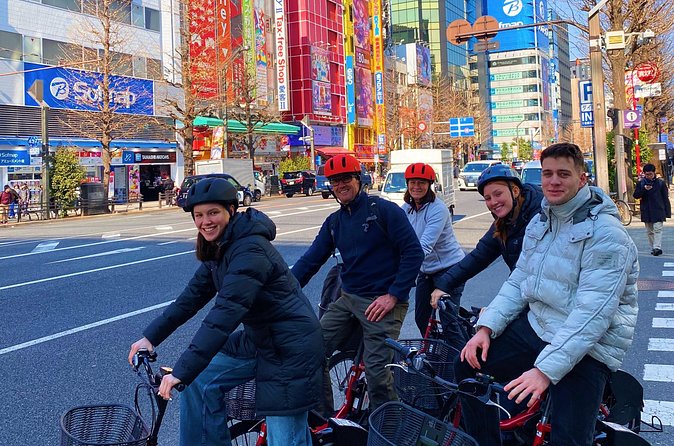
Next up is Sumiyoshi Jinja, described as a local shrine in a traditional Japanese town. You get about 10 minutes here. Shrines can be fast, but they are also exactly the kind of stop that makes Tokyo feel human, not just famous.
I like this stop for two reasons. First, it breaks the ride with a calm moment. Second, it gives you a cultural anchor, so the day is not only about big-name sights.
The main consideration is timing. If you want to read everything on-site or slow down for a longer spiritual break, 10 minutes may not be enough. Think of it as a respectful sample.
Kiyosumi Gardens: your walking reset with included entry
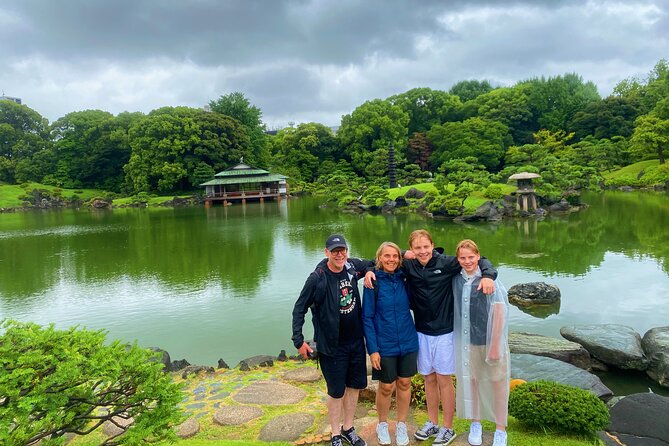
This is the part of the tour that turns into a breath of fresh air. You stop the bikes and walk through Kiyosumi Gardens, with about 25 minutes on foot. The entrance fee for Kiyosumi Gardens is included, which is a nice little money-saver and a time-saver too. You do not need to hunt for payments or figure out ticketing mid-tour.
Gardens are also where the electric bike tour format really pays off. You arrive without exhausting yourself, then you slow down where it makes sense. The result is that you get both movement and stillness, which is the best mix for a short 3-hour itinerary.
One practical tip: bring comfortable walking shoes. The tour does include cycling, but you will do a chunk of walking here. Also, if it is crowded or windy, use your 25 minutes strategically: wander for photos, then find a quieter corner before your time is up.
Optional Naritasan Fukagawa Fudodo Honden visit, and how the money works
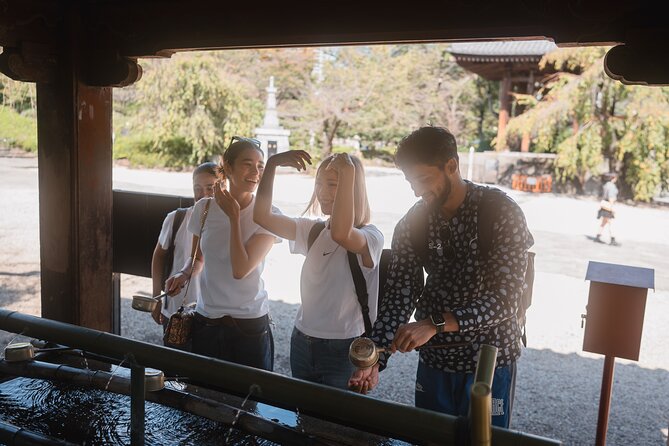
Near the end, you reach Naritasan Fukagawa Fudodo Honden. This entrance is optional and has a fee of ¥1000, paid in cash only. If you decide not to enter, that is fine, but the tour still ends here.
That optional structure is actually helpful. It gives you control based on your energy and interest level at that moment. If you feel like a temple visit will be meaningful, you have the chance. If you prefer to conserve time for the rest of your Tokyo day, you can skip it without guilt.
The cash-only note matters, so I would plan ahead. Keep some yen aside before you arrive at the end point.
E-bike riding in Tokyo: what to expect and how to make it easy
This tour is designed for people with moderate physical fitness needs. That usually translates to being comfortable enough to ride for stretches, plus getting on and off the bike a few times as you stop at each location.
The reviews focused on two things that you should care about most. One is that the bikes are easy to ride, which is exactly what you want if this is your first time on an e-bike. The other is safe guidance through busy streets, which reduces stress and helps you stay oriented.
A small-group format also helps. With a maximum of 7, you can follow instructions without feeling like you are in a moving crowd. That makes the tour less chaotic and more like a guided city outing.
Who this tour suits best, and who should think twice
This tour fits best if you want a guided, efficient intro to Tokyo’s bayside areas and you like moving around on an electric bike. It works well for couples, friends, and solo travelers, and you can bring family too, as the tour is described for multiple group types.
You might think twice if:
- you want long stops or lots of free time in one neighborhood
- you dislike riding in dense urban areas, even with a guide and planned route
- you are the type who wants to eat slowly at every stop, since food is only a quick snack break during the market segment
On the flip side, if you like short, well-paced city hits with built-in breaks, this is a strong match.
Should you book this Tokyo 3-hour E-bike tour?
Yes, if you want a simple way to cover Tokyo bayside highlights in a short window, without complicated planning. The electric bike, small group size, and included Kiyosumi Gardens entry make it feel like a planned experience instead of just renting a bike and hoping for the best.
I would book it sooner rather than later, since it is commonly purchased about 67 days in advance. That is a sign the dates do fill up.
If your ideal day is slow and deep in one place, you may prefer a longer neighborhood-based plan. But if your goal is to see a wide spread of Tokyo, safely and efficiently, this tour is a very practical choice.
FAQ
How long is the Tokyo 3 hour E-bike tour?
The tour runs for about 3 hours.
What does the tour cost?
The price is $87.96 per person.
How big is the group?
The tour has a maximum of 7 travelers.
Where do we meet, and where does the tour end?
You meet at 1-3 Hibiyakōen, Chiyoda City, Tokyo 100-0012. The tour ends at Fukagawa Fudou-dō (Naritasan Tokyo branch temple), 1-chōme-17-13 Tomioka, Koto City, Tokyo 135-0047.
Is there an English speaking guide?
Yes. An English speaking guide is included.
What is included in the price?
Included items are use of an electric bike, an entrance fee for Kiyosumi Gardens, and the English speaking guide.
What entrance fees are not included?
Food and drinks are not included. Also, there is an optional entrance fee for Fukagawa Fudodo Temple after the tour of ¥1000 cash only.
Is the Fukagawa Fudodo stop optional?
Yes, it is optional. If you do not enter, the tour will still end there.
Do I need a certain physical fitness level?
The tour is recommended for travelers with a moderate physical fitness level.
What if the weather is bad, or I cancel?
The experience requires good weather. If it is canceled due to poor weather, you will be offered a different date or a full refund. There is free cancellation, with a full refund if you cancel at least 24 hours in advance.
More Cycling Tours in Tokyo
More Tours in Tokyo
More Tour Reviews in Tokyo

Not for you? Here's more nearby things to do in Tokyo we have reviewed


Tokyo City Tours, side by side.
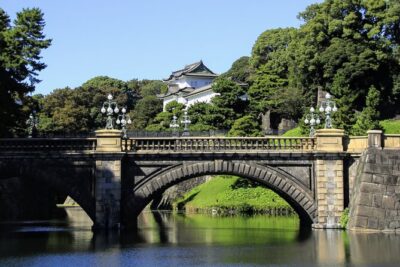 ★ 5.01-Day Tokyo Bus TourFrom $12914,250 reviews
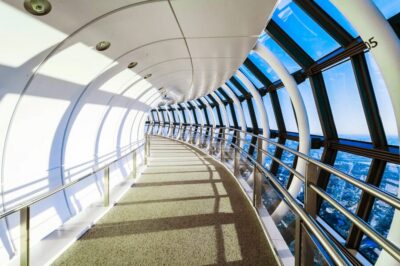 ★ 4.5TOKYO SKYTREE® Admission ticketFrom $1311,192 reviews
 ★ 4.6teamLab Planets TOKYO Digital Art Museum Entry TicketFrom $259,779 reviews
 ★ 4.0Mt Fuji & Hakone Cruise, Drum Show Bullet Train 1 Day from TokyoFrom $1497,413 reviews
 ★ 5.0Shinjuku Food Tour (13 Dishes at 4 Local Eateries)From $866,603 reviews
 ★ 4.4Tokyo Mt Fuji 5th St & Hakone Cruise Bus Tour w/Bullet TrainFrom $1545,024 reviews
 ★ 5.0Flagship 2-Hours Official Street Go-Kart Tour – Tokyo Bay ShopFrom $644,974 reviews
 ★ 4.5From Tokyo: Mount Fuji Full-Day Sightseeing TripFrom $684,970 reviews
This tour also belongs to