
Review · IMPERIAL PALACE TOURS
Tokyo Imperial Palace with Kagurazaka Alley Tour
Cobbled lanes and imperial walls, in one walk. This Tokyo Imperial Palace with Kagurazaka Alley tour stitches together major landmarks and a side of the city most visitors skip, led by a guide who explains what you are seeing, not just where to look.
I really like two parts of the experience. First, you get Tokyo Station to Imperial Palace as a quick orientation to the city’s power center, then you shift gears into Kagurazaka’s narrow backstreets and the atmosphere of old Tokyo. Second, the guide energy matters, in a good way, like when Sho and Aya shared details that go past the basics, including symbolic notes such as the meaning of fish on palace roofs and how architectural features connect to Japanese culture.
The main thing to consider is that this is a walking tour with time outdoors, and early starts can feel chilly. Also, the Imperial Palace stop is more about gardens, moats, and exterior views than getting a full, inside look.
Key takeaways before you go
- Small group (up to 8 travelers) keeps the pace relaxed and questions welcome
- Mobile ticket makes check-in feel painless on a phone
- Old-meets-new route: Tokyo Station and the Imperial Palace grounds, then Kagurazaka’s alleys
- Multiple alley stops in Kagurazaka including Geisha Alley, Hyogo Yokocho, and Kakurenbo Yokocho
- Guide-led cultural context, from Edo-era connections to symbolic architecture notes
Tokyo’s power center meets a quieter backstreet, and that combo works
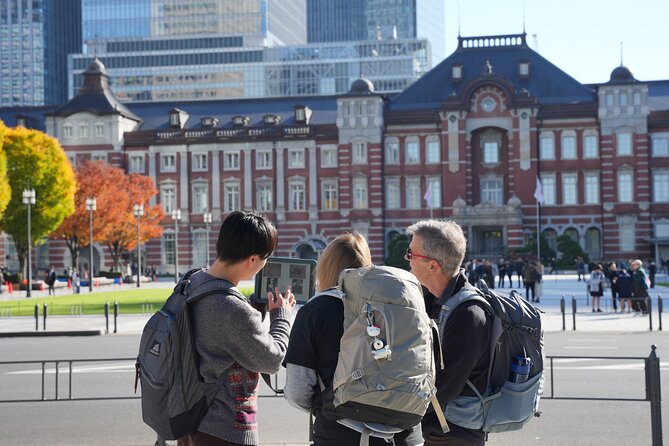
What makes this tour click is the contrast. You start in Marunouchi around Tokyo Station, a place built for movement and modern life. Then you move into the Imperial Palace area, where the scale is calmer and the city seems to hold its breath. After that, Kagurazaka shifts the mood again, into tight lanes, old-styled storefronts, and alleyways you can easily miss if you only follow big-name sights.
I also like that the route is not just a checklist. Your guide is there to translate the space. When you are standing near gates, walls, gardens, and shrine spaces, it makes sense why Tokyo is full of symbolism, roof details, and street patterns tied to older eras like Edo and the Tokugawa Shogunate.
This is also a smart choice if you want something more human than a bus tour. The group stays small, the walking pace feels manageable, and you can actually stop and ask, without someone rushing you along.
And if you are a detail person, you will probably appreciate the kind of connections a good guide brings up. In the past, I have seen how a guide like Sho can turn a quick stop into a short lesson on Japanese history, and how Aya has a knack for sharing architectural meanings and even capturing group photos for you along the way.
You can also read our reviews of more tours and experiences in Tokyo.



Start at Shin-Marunouchi and let Tokyo Station set your bearings
The meeting point is at the Shin-Marunouchi Building at 1-chōme-5-1 Marunouchi (Chiyoda City). The start time is 9:00 am, so give yourself time to navigate the station district before you meet up.
This early meetup is useful because Tokyo Station is one of those places where, even if you know the station name, you might still feel turned around. A short orientation at the start helps you understand the city’s layout before you move into the Imperial Palace area.
You only spend about 5 minutes at Tokyo Station in the tour flow, so it is not a long photo session. Think of it as a reset point. You get to see the scale, get oriented, and then the tour quickly transitions into quieter territory.
Practical note: because the tour begins at a specific building address, do not just search for Tokyo Station and hope. Use the meeting pin and arrive a few minutes early, especially if you are still sorting out train lines that morning.
Imperial Palace grounds: what you see is the point
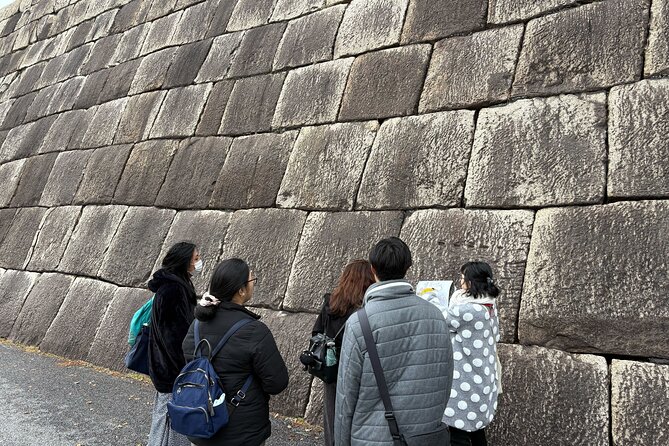
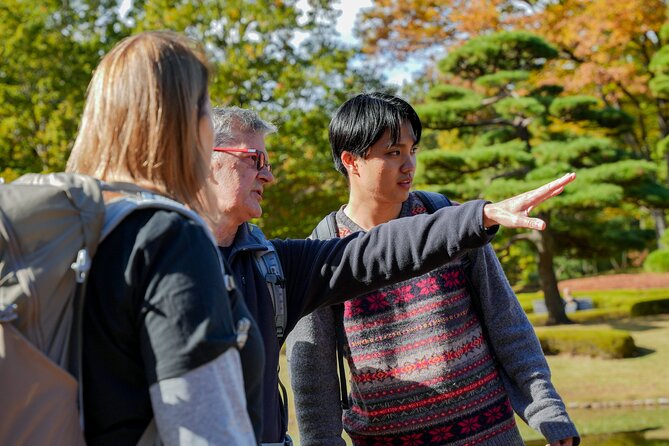
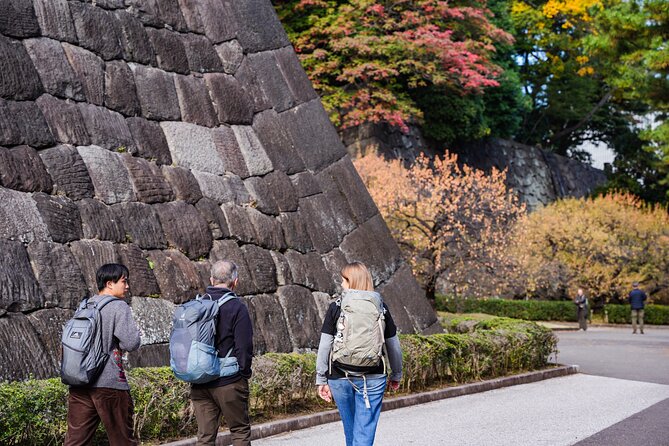
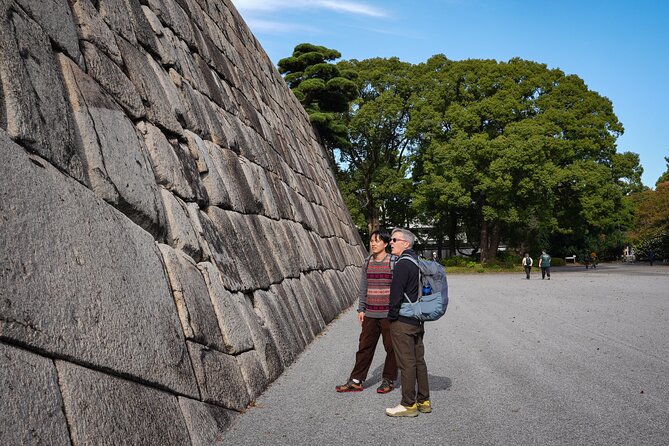
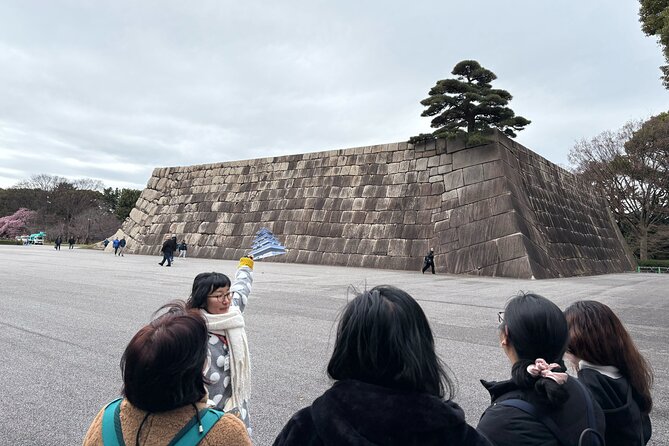
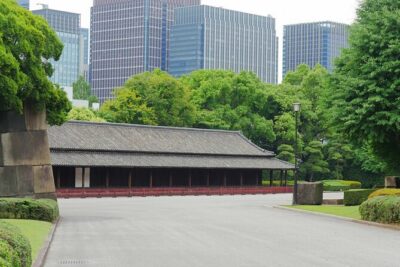
The Imperial Palace stop runs about 55 minutes. It is free to visit the palace area, but access is not about wandering everywhere inside the building itself. Instead, you focus on the grounds and surroundings: gardens, the moat, and the broader park spaces that frame the palace.
One reason this stop works in a short walking tour is that it gives you a clear sense of how power and nature share the same space. The grounds are big, the views are structured, and the architecture you can see from outside has meaning. When a guide brings up symbolic roof details, it helps you look at what you thought was just a pretty building and realize it is part of a larger system of tradition.
I also like that the tour does not treat this as a dead stop. In past departures, guides have connected what you see to deeper cultural links. One guide, described as having strong plant knowledge, explained how botanical details can connect to broader Buddhist tradition and the architecture around you. Even if plants are not your top interest, you will likely enjoy how the guide makes the grounds feel less like scenery and more like a story you can read.
Expect you will be outdoors for much of the time, so wear layers if you go in cooler months. If you tend to get cold easily, you will feel happier with a warm top and comfortable walking shoes.
Nippon Budokan: an Olympic-era landmark, used for real events
The tour route includes a stop at Nippon Budokan, in Kitanomaru Park. It is famous as an indoor arena that was built in 1964 for martial arts events during the Tokyo Olympics, and it is still used today for a wide range of events.
Even if your focus is the Imperial Palace and Kagurazaka, I like this quick inclusion because it anchors Tokyo’s history in modern life. It reminds you that the city’s big landmarks are not frozen in time. They were built for specific moments and then adapted for new uses.
Because the exact time for this stop is not specified in the details you have, treat it as a shorter pause rather than a full attraction stop. In practice, that means it is probably best to keep your energy for the longer Kagurazaka walk later.
If you enjoy street-level storytelling, this is a good time to ask your guide about how Tokyo reuses spaces. Arenas, shrines, gates, and alleys all have their own timelines, and the guide can help you see the connections.
Tokyo Daijingu Shrine: a brief Shinto moment before Kagurazaka
Next comes Tokyo Daijingu Shrine, about 15 minutes on the schedule. The shrine is in the Kanda district and was established in 1880. It is dedicated to Amaterasu, the sun goddess, and to the spirits of Japan’s imperial family.
This short stop is a nice breath between big landmarks and the more street-level experience of Kagurazaka. You get the chance to reset your senses. Plus, because this shrine stop is brief, it does not steal time from the alley wandering where you will do most of your walking.
What I like most about a quick shrine visit on a tour like this is the way it helps you notice cultural patterns. You start to see Tokyo as more than districts and buildings. You also notice how spiritual spaces shape the rhythm of neighborhoods.
Also, since admission is listed as free, this stop costs you nothing beyond your attention. Show up calm and curious. A good guide can help you interpret what you are seeing without making it feel like a lecture.



Kagurazaka: cobblestone lanes and three alley stops that feel like Tokyo
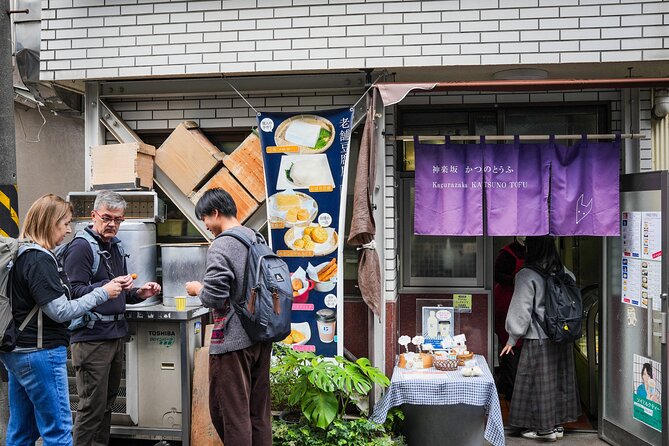
This is the heart of the experience. Kagurazaka is known for mixing old and new Japan. Once connected to geisha culture, it now features narrow cobbled alleys with traditional-style restaurants, cafés, and boutique shops.
The main walk through Kagurazaka runs about 30 minutes, which is just enough time to get a real feel for the neighborhood without burning out. You will likely slow down naturally because the lanes are tight and the street angles constantly change what you can see.
You also hit several specific alleys, and that is where the tour becomes more than a general neighborhood walk:
- Geisha Alley in Kagurazaka: a historic street with narrow lanes and traditional teahouse vibes. Expect nostalgic charm and a sense of old Tokyo.
- Hyogo Yokocho: a narrow alley with small eateries and traditional shops, built for quiet strolling and casual stops.
- Kakurenbo Yokocho: a hidden alley with small bars and eateries, giving you a cozy, intimate atmosphere.
These alley stops are exactly the type of place you might miss on your own because they do not always look like top attractions on maps. A guide helps you find them, but more importantly, helps you understand what kind of atmosphere each lane is known for.
I also like the tour includes Edo-era context in and around this area. One of the stops connected to the Edo Castle story is Ushigome Mitsuke, a gate associated with the defensive structure of Edo Castle. The gate itself no longer exists, but the location and explanation help you connect the modern streets you walk on to older city planning and security ideas.
How the guide makes this tour worth $52.84, not just minutes
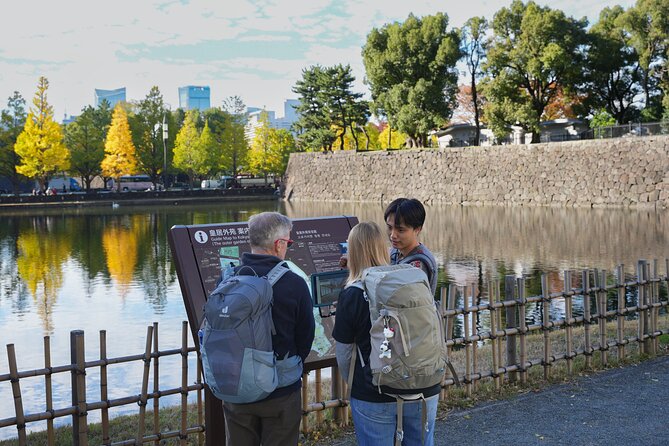
At $52.84 per person for about 3 hours 30 minutes, the value is not only in the places you visit. It is in the guide’s ability to make the route meaningful and easy to follow.
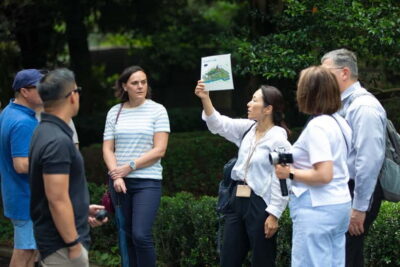
The tour is small-group, with a maximum of 8 travelers, which directly affects how the experience feels. With a group this size, you can ask questions when something catches your attention, rather than saving them for later. You can also take photos without feeling like you are stepping on everyone’s time.
This also explains why the experience tends to earn top marks. In past departures, guides such as Sho have been praised for their enthusiasm and strong Japanese history explanations. Aya has been noted for knowledge and for taking group pictures, which sounds small until you realize you might not otherwise get a decent photo of your whole group in a place with tight lanes.
You should also know that the guides bring different strengths. One departure highlighted a guide who could connect botanical details with Buddhist tradition and architecture. That is a useful reminder: this is not a one-note tour. If you care about architecture, symbolism, plants, or just how Tokyo’s past shows up in street corners, your guide can likely tune the storytelling.
If you like asking why, this tour rewards you.
What to wear and how to plan your day around this route
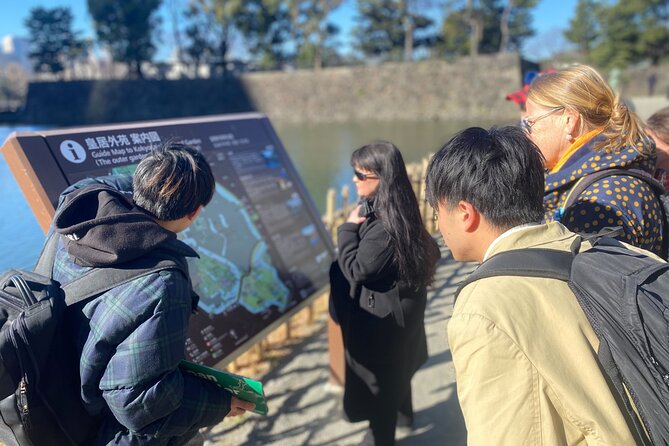
Because this is a walking tour with multiple outdoor stops, your comfort is part of the experience quality.
I recommend:
- Comfortable shoes for uneven, cobbled streets in Kagurazaka
- Layers for the early 9:00 am start and any chilly mornings
- A charged phone for the mobile ticket and for navigation after the tour ends
The pace should feel laid-back, but it is still about covering enough ground to see Tokyo Station, the Imperial Palace grounds, Budokan, Tokyo Daijingu, and then multiple Kagurazaka alleys. If you plan to do another major activity right after, give yourself a buffer, especially because the tour ends in Kagurazaka.
The endpoint is 3-chōme-2-202 Kagurazaka, Shinjuku City, near the main street of Kagurazaka and close to a FamilyMart convenience store. If you want to continue exploring on your own, that is a good drop-off spot because it places you right where the streets are.
Price and logistics: simple, with one real watch-out
Let’s be practical about the cost and time.
You pay $52.84 per person for roughly 3.5 hours, and admission is listed as free for the major ticketed stops. That matters because it means you are not paying extra at each location for entry fees. You also get a guide-led walking route that strings together areas that are far more connected when someone explains the linkages.
Two logistics pieces to keep in mind:
- Timing: the tour starts at 9:00 am. If you are jet-lagged, plan for a slower start earlier that morning.
- Walking and outdoors: the Imperial Palace grounds and Kagurazaka lanes are not weather-proof. If you know you will be miserable in cool air, bring a layer you will actually wear.
As for fitness, the information says most travelers can participate. That is a good sign, but cobblestones can still be a factor for people with mobility issues. If that is you, consider wearing supportive shoes and moving carefully through the alleys.
Should you book this Kagurazaka and Imperial Palace walking tour?
I think this is a strong pick if you want a Tokyo itinerary that mixes the big historic sites with the small streets where daily life happens.
Book it if:
- You want a small-group experience with a guide who explains cultural meaning
- You like walking tours that end in a neighborhood you can keep exploring
- You want a clear route that takes you to Tokyo Station and the Imperial Palace grounds, then down into Kagurazaka’s alley system
Skip it if:
- You are hoping for a long, inside-only Imperial Palace visit. This tour focuses on the grounds and exterior-facing experience.
- You do not like early starts or outdoor walking.
FAQ
How long is the Tokyo Imperial Palace with Kagurazaka Alley tour?
The tour lasts about 3 hours 30 minutes.
Where do I meet for the tour?
You meet at the Shin-Marunouchi Building, 1-chōme-5-1 Marunouchi, Chiyoda City, Tokyo 100-6590, Japan.
What time does the tour start?
The tour starts at 9:00 am.
How big is the group?
The tour is limited to a maximum of 8 travelers.
Is the ticket mobile?
Yes, you receive a mobile ticket.
Are there admission fees at the stops?
Admission is listed as free for Tokyo Station, the Imperial Palace, and Tokyo Daijingu Shrine.
What places does the tour include?
It includes Tokyo Station, the Imperial Palace, Nippon Budokan, Tokyo Daijingu Shrine, and Kagurazaka with alley areas such as Geisha Alley, Hyogo Yokocho, Kakurenbo Yokocho, and also the Ushigome Mitsuke gate area.
How far in advance should I book?
On average, this tour is booked 42 days in advance.
What is the cancellation policy?
You can cancel for a full refund up to 24 hours in advance of the experience start time.
Is this tour suitable for most travelers?
The information states that most travelers can participate.
More Tours in Tokyo


More Tour Reviews in Tokyo
Not for you? Here's more nearby things to do in Tokyo we have reviewed












Imperial Palace Tours, side by side.
 ★ 5.0Imperial Palace and Shogun Historical Walking TourFrom $222,251 reviews
 ★ 4.9Imperial Palace Japanese History Walking TourFrom $32987 reviews
 ★ 4.9Imperial Palace and Shogun Walking TourFrom $16935 reviews
 ★ 5.0Imperial Palace East Garden and Edo Castle Walking Tour in TokyoFrom $25510 reviews
 ★ 4.8Imperial Palace East Gardens Walking TourFrom $19353 reviews
 ★ 4.5Imperial Palace, Sensō-ji Temple, & Tokyo Tower TourFrom $40339 reviews
 ★ 5.0Tokyo Castle, Imperial Palace, Shogun & Garden Walking TourFrom $31211 reviews
 ★ 4.7Edo Castle & East Garden of the Imperial Palace TourFrom $42112 reviews
This tour also belongs to