
Review · ASAKUSA TOURS
Asakusa: TOKYO SKYTREE Exploration after History Tour
Temple lanes meet skyline views here.
This Asakusa to Skytree experience strings together a guided walk through iconic sights and then lifts you up to Tokyo’s tallest building, with observation deck tickets already handled.
I like the way the guide connects each stop to everyday meaning, like explaining the contrast between Japanese and Western dragon stories and making sure the big religions of the area make sense early on. I also like the value of including Skytree entry for both the upper and lower observation decks, plus a full hour for you to shop and wander at the base afterward.
One catch to keep in mind: once the Skytree tickets are purchased for your date, the tour is non-refundable and dates cannot be changed.
Key Things Worth Noticing
- Max 8 people, plus headsets for groups of 3 or more so you can actually hear the guide
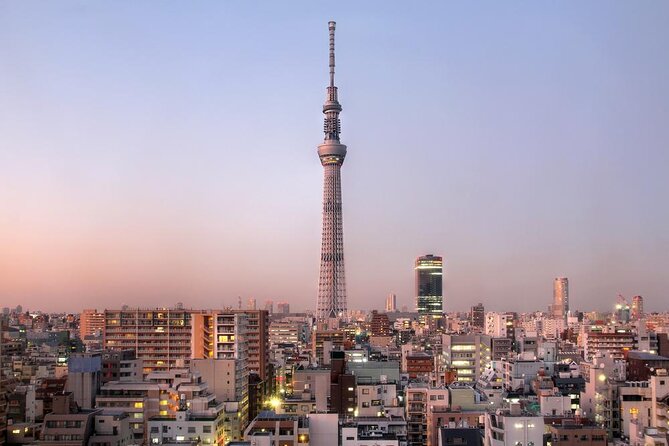
- Skytree combo tickets for both upper and lower observation decks included
- Religion primers early so Senso-ji, the shrine complex, and prayer make more sense
- Nakamise Shopping Street with context, including Buddhist symbols like the vajra (tokko) and links to ukiyo-e woodblock prints
- Meaningful stops beyond photos, including Kaminarimon’s dragon symbolism and the West-meets-East comparisons at Hozomon
- Good pace for an afternoon, starting at 1:30 pm and lasting about 3 hours 30 minutes
Why This Asakusa to Skytree Plan Fits One Afternoon
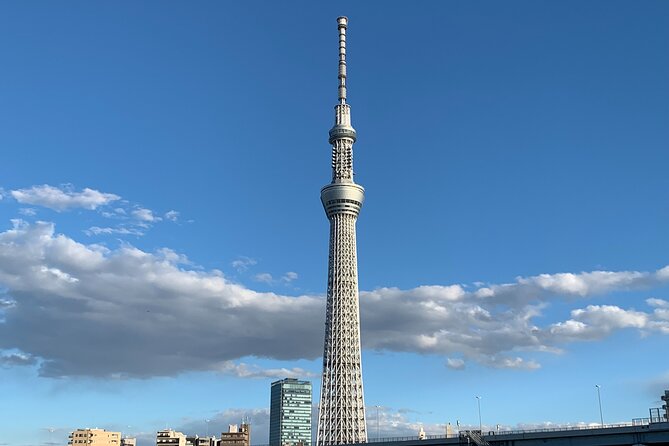
This tour is built for people who want more than one photo-op. You get a guided walk through classic Asakusa without guessing your way through what you are looking at, and then you finish with the payoff view from Tokyo Skytree.
The timing works well if you like structured wandering. You start at 1:30 pm near Kaminarimon, spend the early part with temples, gates, and shopping street history, and then transition to Skytree for about an hour of time near the tower. That flow means you are not splitting your day into too many separate logistics.
If you care about hearing the guide, the small group size (up to 8) matters a lot. Add the fact that headsets are provided for groups of 3 or more, and you will spend less time leaning in or playing silent games with your hearing.
You can also read our reviews of more historical tours in Tokyo

Meeting at Kaminarimon, Then Getting the Meaning Fast
You meet at 2-chome-20-6 Kaminarimon in Taito City, and the tour ends at Tokyo Skytree in Oshiage. It runs about 3 hours 30 minutes total, starting at 1:30 pm.
What I like here is that the tour does not treat Asakusa like a checklist. It gives you a quick foundation before the crowds and the big names hit. That matters, because Asakusa is visually busy, and without context you can leave feeling like you only saw buildings and souvenirs.
Early on, you also get a straightforward orientation at the Asakusa Culture Tourist Information Center. You learn the basics of Buddhism and Shinto, which helps when you later see the main temple, the shrine, and the way prayer is handled in different traditions.
The guides named in the feedback, including Taka, Junko Yamashita, Sue, and Keiko, seem to lean into this teaching style. People repeatedly highlight friendly, clear explanations and an unrushed pace, which is exactly what you want for a walk where you will be looking up at gates and down at details in shopping street stalls.
Sumida Park and the Edo Story You Hear Without Reading a Book
You begin along the Sumida River at Sumida Park. It sets the stage with a key historical idea, Japan’s long period of isolation under the Edo shogunate, and how that shaped the country for over 200 years.
You might think this would be dry history. It is not, because it gives your brain a framework for what comes next. Asakusa did not become a cultural magnet by accident, and understanding the isolation phase helps you grasp why so many traditions survived and stayed visibly part of everyday life.
This stop also acts like a breather. You get an easy entry into the area before you move into the tighter, more crowded zones like Kaminarimon and Nakamise.
Kaminarimon’s Dragon Gate: A Detail Most People Miss
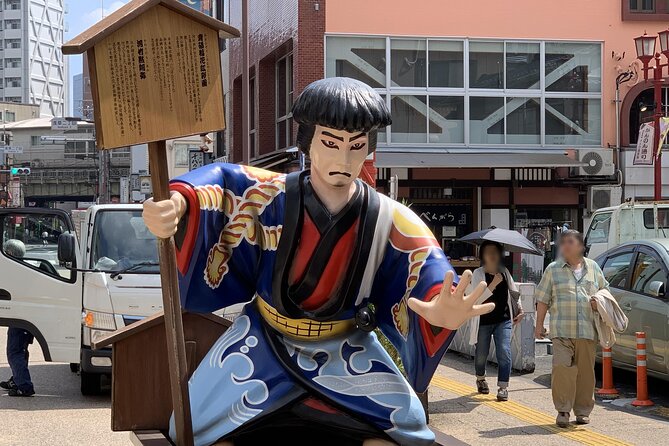
Then you hit Kaminarimon, the iconic gate that essentially acts as Asakusa’s headline. The tour focuses on a clever contrast: Japanese dragon symbolism compared with Western roles, and why the dragon matters differently in each tradition.
This is one of those moments where a short guide explanation makes the whole place click. Without it, the gate can feel like a backdrop for selfies. With it, you start noticing patterns, carvings, and meanings instead of just moving through.
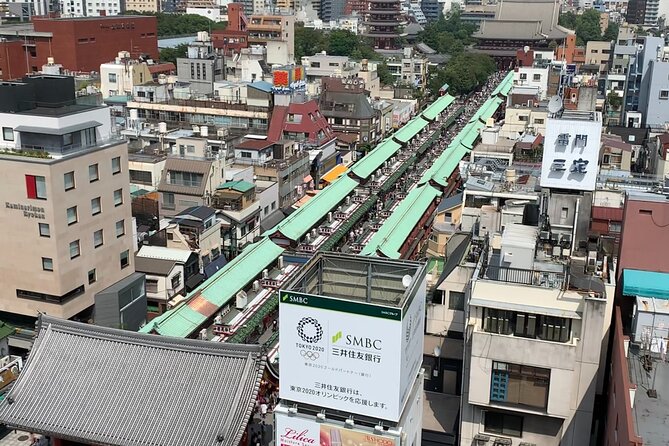
After Kaminarimon comes the shopping street. But instead of turning it into an unsupervised stroll, the tour gives you things to look for while you walk.
Nakamise Shopping Street with Symbol Lessons, Not Just Souvenirs
You spend about 40 minutes on Nakamise Shopping Street. The good part is the way the guide turns the street into a mini lesson. You learn about Buddhist symbols connected to items and imagery you will see in shops, including the vajra (tokko). You also get context for the impact of ukiyo-e woodblock prints, which helps explain why certain designs and motifs keep showing up.
This is where you get to shop at a comfortable pace. It is also where you can decide what kind of souvenir you want, because the street is not only candy and trinkets. It is also a visual reminder that art and religion have overlapped in Japan for a long time.
Practical tip: if you know you want gifts, set a budget before you reach the busiest sections. Nakamise can tempt you fast, especially once you realize how many items connect to cultural themes you are already hearing about.


Hozomon and Senso-ji: When the Tour Compares Beliefs
Next is Hozomon, where the guide brings up a surprising comparison about similar ways of thinking between Japan and the West from about 1,000 years ago. This is not meant to turn the story into a debate. It is meant to help you see that people across regions can wrestle with the same big ideas in different forms.
Then you arrive at Senso-ji Temple, described as Tokyo’s oldest Buddhist temple. The tour includes another clear comparison theme, this time also touching on how prayer works differently in Buddhism versus Shinto. That’s a big deal because visitors often treat all ceremonies as the same thing.
You can use this stop to slow down. Watch what people do, but also check what you think you are seeing. The guide’s explanations give you permission to pay attention instead of just snapping pictures and moving on.
From the feedback, the guides’ ability to answer questions and keep a steady pace is a major reason people recommend this. If you like asking why people behave a certain way in sacred places, this tour format gives you room.
Asakusa Shrine: The Shared-Ground Story at the Finish of the Walk
You end the walk part at Asakusa Shrine, where the tour highlights the peaceful co-existence of a Shinto shrine and a Buddhist temple sharing the same grounds for over a millennium. That is the kind of fact that sounds like trivia until you see the space and understand how people have used it for generations.
This stop works especially well after Senso-ji because your brain has already been trained on the religion basics. Now you see the blending in real geography, not just in explanations.
Also, this is a good place to reset your energy before the transition to Skytree. The tour wraps up the walking portion, and you move on by train.
The Train to Skytree, and Why the Tickets Matter
After the shrine, you take the train to Tokyo Skytree. Train fare is not included, and you should budget JPY 160 from Asakusa Station to Tokyo Skytree Station.
This matters for two reasons. First, it keeps you from getting surprised at the point of travel. Second, it helps you time your expectations, because you cannot assume this will be a walk all the way.
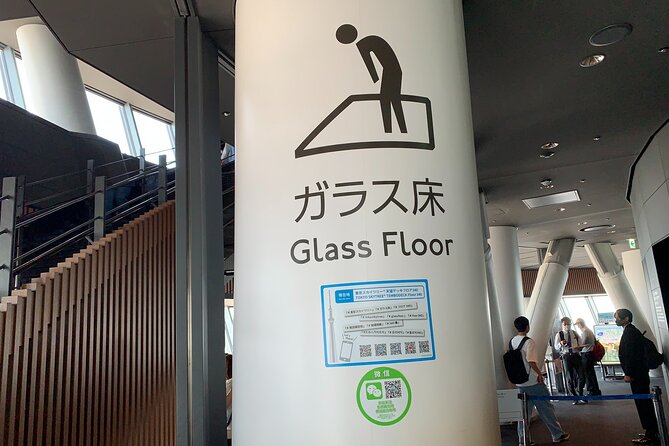
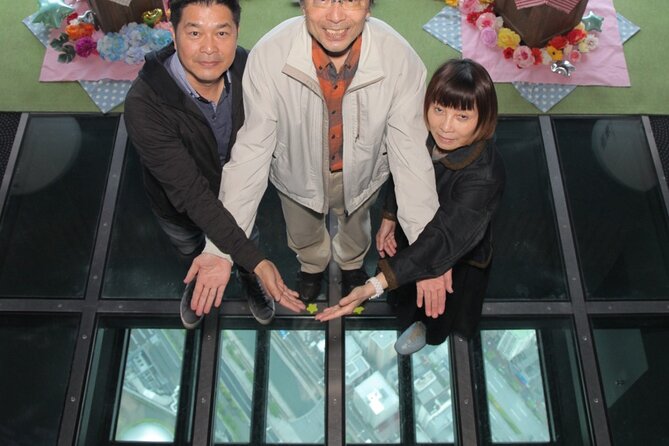
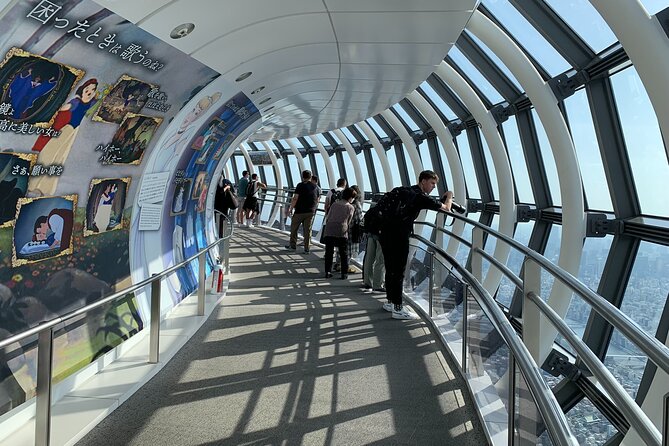
Now for the part you probably actually booked for: the Skytree observation decks. Your ticket includes entry for both the upper and lower observation decks. That combo is valuable because it gives you options depending on how you want to look at the city, close details versus longer-distance views.
One more practical note: Skytree tickets sell quickly. The tour provider buys them as soon as your booking is made, and the dates cannot be changed. That is good for securing your spot, but you should only book if you are confident about your date.
Skytree Time Below: Shopping and Views at Your Own Tempo
At Skytree, you get about 1 hour in the complex below the observation decks. This is your time to shop, grab a meal, and explore at your own pace rather than following a fixed script.
If you care about photos, treat this like a mini window for your best shots. Observation deck time is fixed by the ticket, but the surroundings give you variety, including casual photo spots and places to browse before you head up or after you come back down.
Weather is always a wildcard in Tokyo, and views depend on it. If the sky looks promising, plan to take extra time on the decks and slow down for the angles you care about most.
Price and Logistics: Is $118.24 Good Value?
The price is $118.24 per person, with the added detail that tours like this are often booked around 107 days in advance on average. That tells you something important: Skytree is in demand, and locking tickets early is part of the value here.
What you get for that money is not only walking and guiding. You also get Tokyo Skytree combo tickets for the upper and lower decks included. You also get a guide for the Asakusa portion and small-group attention with headsets for groups of 3 or more. Plus, the tour uses a mobile ticket, which is convenient for a day you are moving around a lot.
The main logistical cost you should account for is the train fare (JPY 160) between stations, because it is not included. Also, there is no hotel pickup and drop-off, so you should plan to get to the start point under your own steam.
Is it worth it? For me, yes if you want a guided meaning-first walk plus secured Skytree ticket access. If you are the type who likes to DIY Asakusa and already plans to buy Skytree tickets yourself, you might find a cheaper route. But you would be giving up the guide explanations and the time-saving ticket handling.
Who This Tour Suits Best (And Who Might Not Love It)
This fits best if you want structure without feeling rushed. You get a guided tour that focuses on what you are seeing, from dragons at Kaminarimon to religion differences at Senso-ji, and then a clear payoff with city views from Skytree.
It is also a good pick for families and mixed-age groups because the walking route is designed around major landmarks, and the small-group size helps keep attention on everyone. In the feedback, families specifically mention enjoying the pace and the guide’s friendliness.
Who might not love it? If you dislike group tours, or if you want full freedom to linger in shops without a time plan, you may feel slightly constrained by the set flow and the included Skytree schedule. And if you cannot commit to your date, the non-refundable nature of the Skytree ticket purchase is a real issue.
Should You Book This Asakusa and Skytree Tour?
I would book it if you want two major Tokyo experiences stitched together cleanly, without sorting out directions and without worrying about Skytree ticket timing. The value is in the combination: Asakusa with context, then Skytree with included decks and your own time to shop after.
I would think twice if your schedule is fragile. Because Skytree tickets get purchased early and cannot be changed, this is not the kind of tour you should choose if you might need to shift plans at the last minute.
Overall, this is a practical, meaning-forward afternoon that ends where most people want to end up anyway, up above Tokyo.
FAQ
How long is the Asakusa to Tokyo Skytree tour?
It runs for about 3 hours 30 minutes.
What Tokyo Skytree tickets are included?
Your ticket includes admission to both the upper and lower observation decks.
Is the train fare included from Asakusa to Skytree?
No. Train fare of JPY 160 from Asakusa Station to Tokyo Skytree Station is not included.
Where does the tour start and end?
It starts at 2-chōme-20-6 Kaminarimon, Taito City, Tokyo 111-0034, Japan, and ends at Tokyo Skytree1-chōme-1-2 Oshiage, Sumida City, Tokyo 131-0045, Japan.
How big is the group?
The tour has a maximum of 8 travelers.
Is hotel pickup included?
No hotel pickup or drop-off is included.
Can I cancel or change the booking date?
No. The experience is non-refundable and dates cannot be changed because the Skytree tickets are purchased for the booked date.
Do they use a mobile ticket?
Yes, the tour uses a mobile ticket.
More Historical Tours in Tokyo
More Tours in Tokyo

More Tour Reviews in Tokyo
Not for you? Here's more nearby things to do in Tokyo we have reviewed


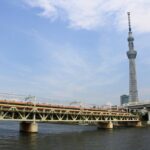

Asakusa Tours, side by side.
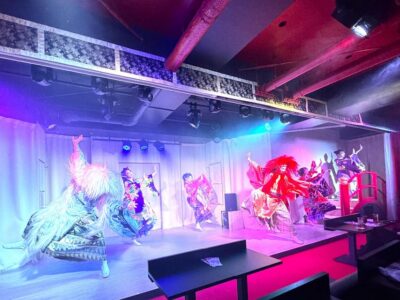 ★ 4.8Japanese Dance Cabaret Theater Asakusa-Kaguwa TicketFrom $492,270 reviews
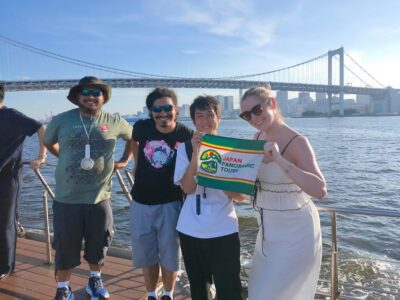 ★ 4.7Meiji Shrine, Asakusa, Skytree Bus Tour and CruiseFrom $1221,986 reviews
 ★ 4.9Roll and Authentic Sushi Making Class in AsakusaFrom $581,957 reviews
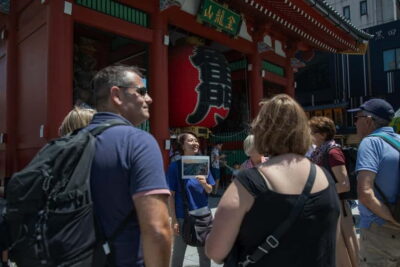 ★ 4.8Asakusa Walking Tour with Sensoji Temple VisitFrom $221,583 reviews
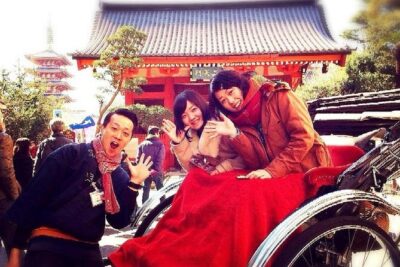 ★ 5.0Tokyo Asakusa Rickshaw TourFrom $421,375 reviews
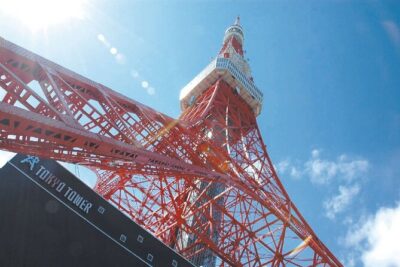 ★ 4.5Tokyo Panoramic 1 Day: Meiji Shrine, Asakusa, Odaiba and SKYTREE®From $851,222 reviews
 ★ 5.0Tokyo Go Kart: Asakusa, Skytree, and Akihabara **IDP MUST**From $99988 reviews
 ★ 4.7Asakusa, Skytree & Akhihabara Go-Kart City ExperienceFrom $96761 reviews
This tour also belongs to