
Review · TOKYO SUMO EXPERIENCES
Exclusive Sumo Morning Practice in Tokyo with Photo Opportunity
Most people see sumo from far away.
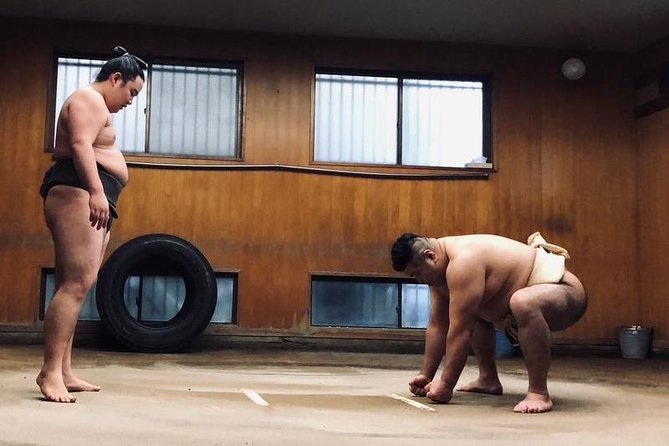
This early-morning tour takes you into a sumo stable practice session near Tokyo Skytree, where you watch warm-ups and sparring in a way you cannot get from TV or even a tournament day. I love the chance to get close enough to see how focused the wrestlers are, and I love how the guide turns the rituals and training into something you actually understand, with English-friendly explanations from guides like Hana, Kentake, and Yuki. One possible drawback is that seating is first come, first served, so being a few minutes late can mean you sit a bit farther back.
The whole thing is built for real vacation schedules, about two hours at a morning start, with a small group capped at 10. You also get a photo opportunity and time to pose, which is a rare perk with athletes in a training setting.
Key things I’d plan around before you go
- First-come seating matters, with late arrivals potentially sitting 2 to 3 rows back.
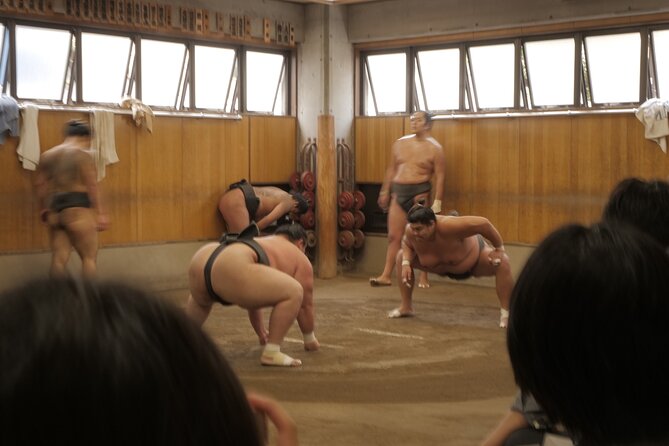
- You can expect a real training feel, with serious, concentrated practice rather than a staged show.
- The stable has strict rules, with tatami flooring being the only allowed area.
- The guide role is huge here, with praised English explanation from guides like Kentake and Yuki.
- The timing is short and focused, with the main action often feeling like it fits well inside the first hour.
Why a sumo stable morning beats tournament sightseeing
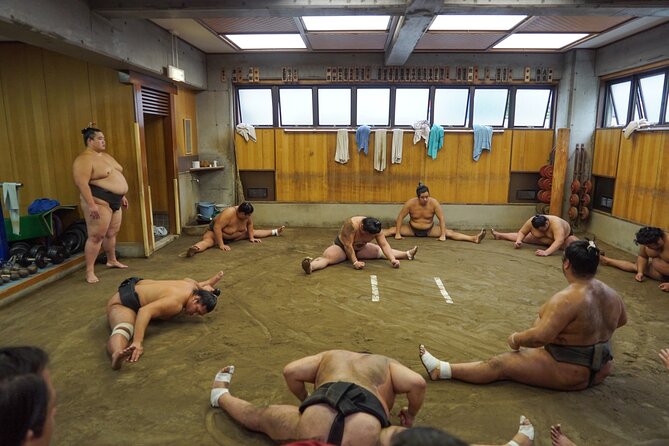
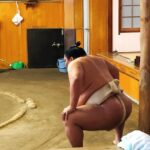
A sumo stable morning is a different world than watching bouts in a packed arena. In the stable, you see the training logic right away: warming up, sparring, and drilling that builds timing and balance over time. It also feels more personal, because you are watching athletes as workers, not as performers.
This tour is also one of those experiences that is hard to recreate on your own. You do not just stroll into a stable for practice, and most people in Japan never get that access. Here you are there early enough to catch the daily rhythm, plus you get context so it makes sense as you watch.
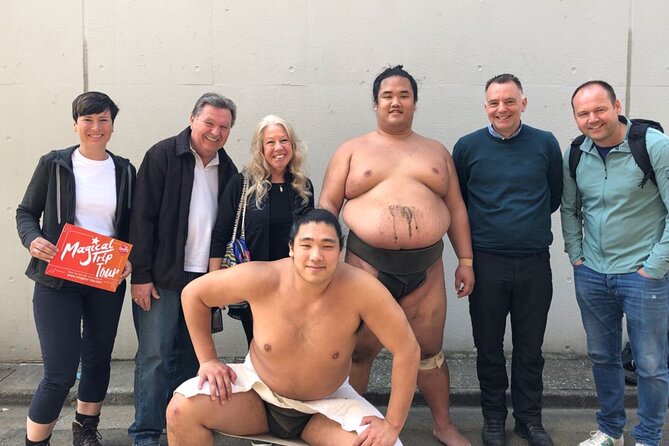
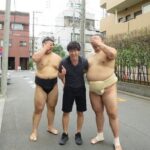
Two details make a big difference in how satisfying this feels. First, the guide helps you read what you are seeing, so the ritual is not just a bunch of unfamiliar moves. Second, the practice includes a photo opportunity, and the wrestlers are said to be friendly about pictures, which turns the experience from watching into meeting.
More Tokyo tours and experiences for the shortlist

Getting there at Oshiage Station, and what to look for
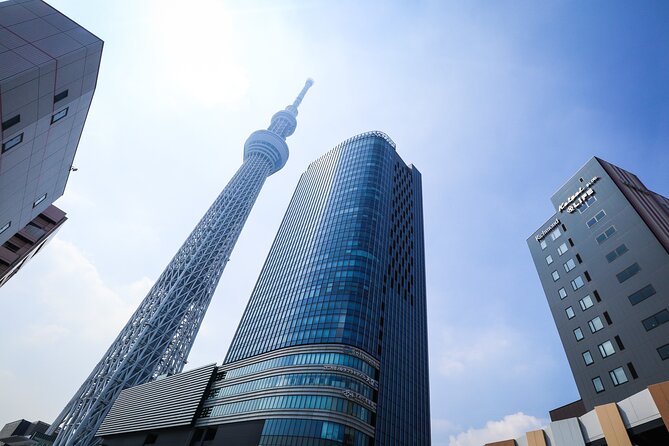
Your morning starts at Oshiage Station in Tokyo. The meeting point is specifically inside the station area at the taxi stand, in the station rotary. The address is listed as Sumida City, Oshiage, 1-chōme, with the exact “station rotary” wording.
This is convenient if you are already using public transit, since the meeting point is described as being near transit. It also keeps the group together and reduces your stress before an early start.
That said, the meeting location can be a little confusing at first. One review mentioned confusion at the start, then everything clicked once they found the right spot. My practical tip: arrive a few minutes early, scan for your group size and your guide, and ask staff at the taxi stand area if you cannot see the meeting instructions clearly.
The two-hour flow, from warm-ups to photo time
The tour is about two hours total and runs in the morning, starting at 8:00 am. In that time you will visit a sumo stable around Tokyo Skytree, where you watch practice unfold in a compact training space.
Here is the typical rhythm you should expect:
- You meet your guide at the station and head to the stable.
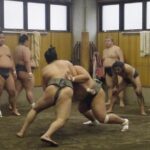
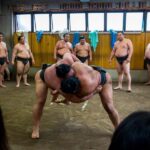
- You watch morning practice, including warm-ups and sparring.
- You get time for photographs and the chance to pose for pictures.
A couple of reviews suggest that about an hour can already feel sufficient, since practices can get repetitive once you understand the mechanics. I take that as a reassurance rather than a warning. It means you are not stuck in an all-day event, and you will still get value from the context and close viewing.
The photo part is worth planning for. You will want your camera ready, and you will want to think about how you will stand so you can capture both the moment and the wrestlers’ faces clearly. The tour includes chances for photos with wrestlers, and at least one review also mentions a photo at the end involving the whole stable and the sensei.
Inside the stable: the tatami-only rule (and why it matters)
Sumo stables have rules, and this tour respects them. The big one is simple: all areas in the stable are off-limits except the tatami (straw flooring) areas.
That matters because it changes how the experience feels. You are not roaming. You are observing from allowed zones, and the stable staff are keeping things orderly during training. It is also a safety and respect issue, since stable spaces are not designed for visitor movement.
Your best strategy is to follow your guide’s direction quickly and quietly. Move only when instructed, keep your bag manageable, and treat the tatami area like an active workplace space. You will get better photos too, because you will not be doing last-second repositioning that bumps others.
One more practical point: bring patience and follow the “no wandering” vibe. Even if the stable feels small, there is a reason it is controlled. You are seeing training, not a museum floor.
Seating is first-come, and front-row access is not guaranteed
This tour has a maximum of 10 travelers, which helps keep the experience calm and easier for the guide to manage. Still, seating is first come, first served.
If you arrive late, you may be seated 2 to 3 rows from the front. That does not mean it is a bad view, but it can change photo quality and how clearly you see details in matches and warm-ups.
My suggestion is boring but effective: show up early, confirm you are in the right group, and when you reach the stable, do not hesitate. Take the first seating offered within the allowed areas. If front-row viewing matters most to you, your timing matters more than anything else on this tour.






The guides make or break this experience
This is a tour where the guide does a lot of heavy lifting. Reviews repeatedly praised guides for clear, professional explanation, and English was specifically mentioned as a comfort for some visitors.
You may meet guides such as Hana, Kentake, or Yuki. Names matter here because you can see a pattern in what people liked: proactive explanations, strong professionalism, and a focus on helping you understand the philosophy behind training, not just the surface actions.
What you get from good guiding in a sumo setting:
- Why certain warm-ups and sparring drills exist
- How to interpret focus and intensity during training
- Cultural meaning, explained in a way that does not feel like a lecture
One review even pointed out that the practices are intense and serious, and that it is not just a spectacle. That is a big part of why this tour works for sports fans and culture fans at the same time. You leave seeing the sport as a discipline, not as a caricature.
If you want to maximize your experience, ask questions when your guide gives a moment for it. In a small group, there is often more time to get answers than you would get on a large tour.
Price and value: what $99.10 buys you
At $99.10 per person, this is not a budget activity. But it does not try to compete with low-cost sightseeing. It is priced like an access-and-instruction experience: small group size, morning stable access, an English-speaking guide, and photo time.
You are paying for four things that are hard to DIY:
- Stable access during practice hours
- Small-group attention with a max of 10 travelers
- Interpretation so you understand what you are watching
- A built-in photo opportunity and posing time
Compared with a typical “see a thing” tour, this feels more interactive. You are not just looking at sumo-related sights from outside. You are watching training up close, then getting explanation so it sticks.
If your goal is to experience sumo in the most direct way possible, this price starts to make sense fast. If your only interest is a quick photo and you do not care about context, you might not get your money’s worth.
What to wear and bring for an 8:00 am practice
Because this is a morning practice in Japan, you should plan for the real weather. The tour notes that summer in Japan is very hot and humid, and it recommends bringing water and wearing a hat to prevent heat stroke.
Even if you are not going in peak summer, that advice is still smart. Early mornings can still be muggy, and you will be outside or moving before you settle into the stable’s allowed viewing zones.
Wear comfortable shoes and clothes you can sit in without fuss. You will likely be in the allowed tatami area and watching for a while. You do not want your outfit to be the limiting factor in how long you can comfortably focus.
Who this is perfect for, and who should think twice
This tour is a strong fit for:
- Sports fans who want something beyond a highlight reel
- Culture-minded travelers who care about how traditions work daily
- People who like small groups and guided context
- Anyone who wants a rare photo opportunity with wrestlers in a training setting
It may be less ideal if:
- You are easily frustrated by rules and restricted movement. The tatami-only access is real.
- You want flexibility on arrival time. Seating is first come, first served.
- You expect a full tournament experience. This is practice, not a match day.
One last thought: if you are hoping for a loud, cinematic show, you might find the pace more disciplined and repetitive. That is part of the point. This experience shines when you appreciate training focus.
Should you book this exclusive sumo practice?
Book it if you want close-up sumo with context, not just a tourist version of sumo. The small group size, the morning timing, the stable access, and the photo opportunity all point to a high value-for-you experience if you are the kind of traveler who likes to see how things actually work.
Consider booking with extra care if you are sensitive about seating, because late arrival can put you a couple of rows back. If that would bother you, arrive early at Oshiage Station and move quickly to the stable seating once you arrive.
If sumo is a top interest for your Tokyo trip, I’d treat this as one of your priority activities, not a casual add-on. It is short, it is specific, and it gives you a perspective you cannot easily get any other way.
FAQ
Where do I meet for the tour?
You meet at the taxi stand area inside Oshiage Station, in the station rotary (Sumida City, Oshiage, 1-chōme).
What time does the practice start?
The start time is 8:00 am.
How long is the experience?
It runs for about 2 hours.
How many people are in the group?
The tour has a maximum of 10 travelers.
Will I get to take photos with the wrestlers?
Yes. The experience includes a photo opportunity and you can pose for pictures with the wrestlers.
Are there rules about where I can go in the stable?
Yes. The tour states that all areas are off-limits except the tatami (straw flooring) areas.
What is the cancellation policy?
You can cancel for a full refund if you cancel up to 24 hours before the experience starts. Free cancellation is available based on local time.
More Morning in Tokyo
More Tour Reviews in Tokyo
Not for you? Here's more nearby things to do in Tokyo we have reviewed












Tokyo Sumo Experiences, side by side.
 ★ 4.8Sumo Show and Dining ExperienceFrom $792,742 reviews
 ★ 5.0the SUMO showFrom $891,960 reviews
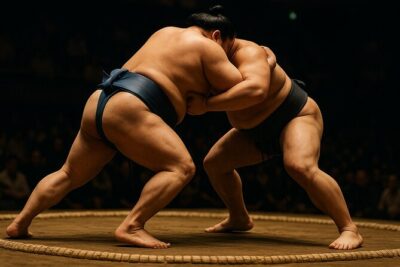 ★ 5.0Tokyo Shinjuku Sumo Show & Experience with PhotoFrom $791,750 reviews
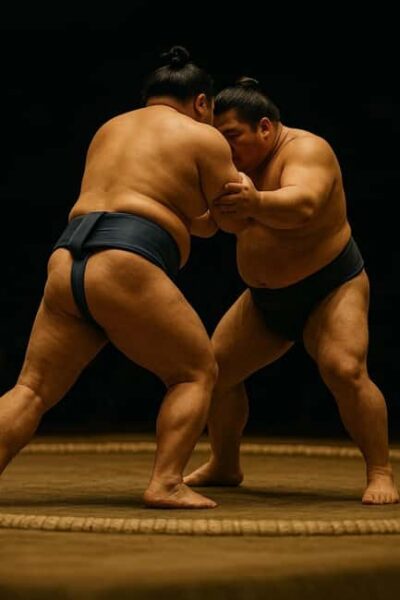 ★ 4.8Sumo Show and Experience in ShinjukuFrom $691,001 reviews
 ★ 4.7Luxury Sumo Show Experience & Japanese cuisine & DrinkFrom $103577 reviews
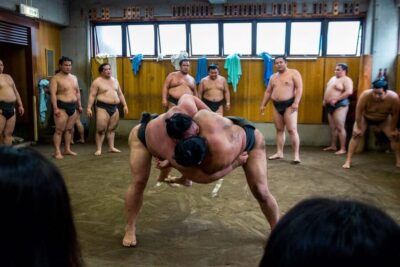 ★ 4.8Sumo Morning Practice Viewing TourFrom $81570 reviews
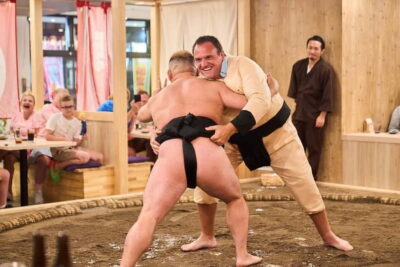 ★ 4.8Tokyo Sumo Experience: Chanko & Mochi with a Former ProFrom $103567 reviews
 ★ 5.0Ultimate Sumo Tournament: Tokyo, Osaka, Nagoya, FukuokaFrom $184468 reviews
This tour also belongs to